You probably grew up thinking dinosaurs began and ended with T. rex, Triceratops, and maybe Velociraptor if you were really paying attention. But once you scratch the surface, you find creatures so bizarre, so ingenious, and so over-the-top that T. rex starts to feel almost… predictable. When you see what else was walking around back then, you realize the Mesozoic world was less like a single movie monster and more like a whole sci‑fi franchise.
As you meet these underrated dinosaurs, you’ll see armour that functions like a living tank, necks that turn herbivores into organic cranes, and claws that look like they were stolen from a horror film. You’ll also notice something humbling: many of these “lesser-known” species were better adapted to their niche than any celebrity carnivore. By the time you finish, you may not look at that famous tyrant lizard quite the same way again.
1. Therizinosaurus: The Freddy Krueger Herbivore
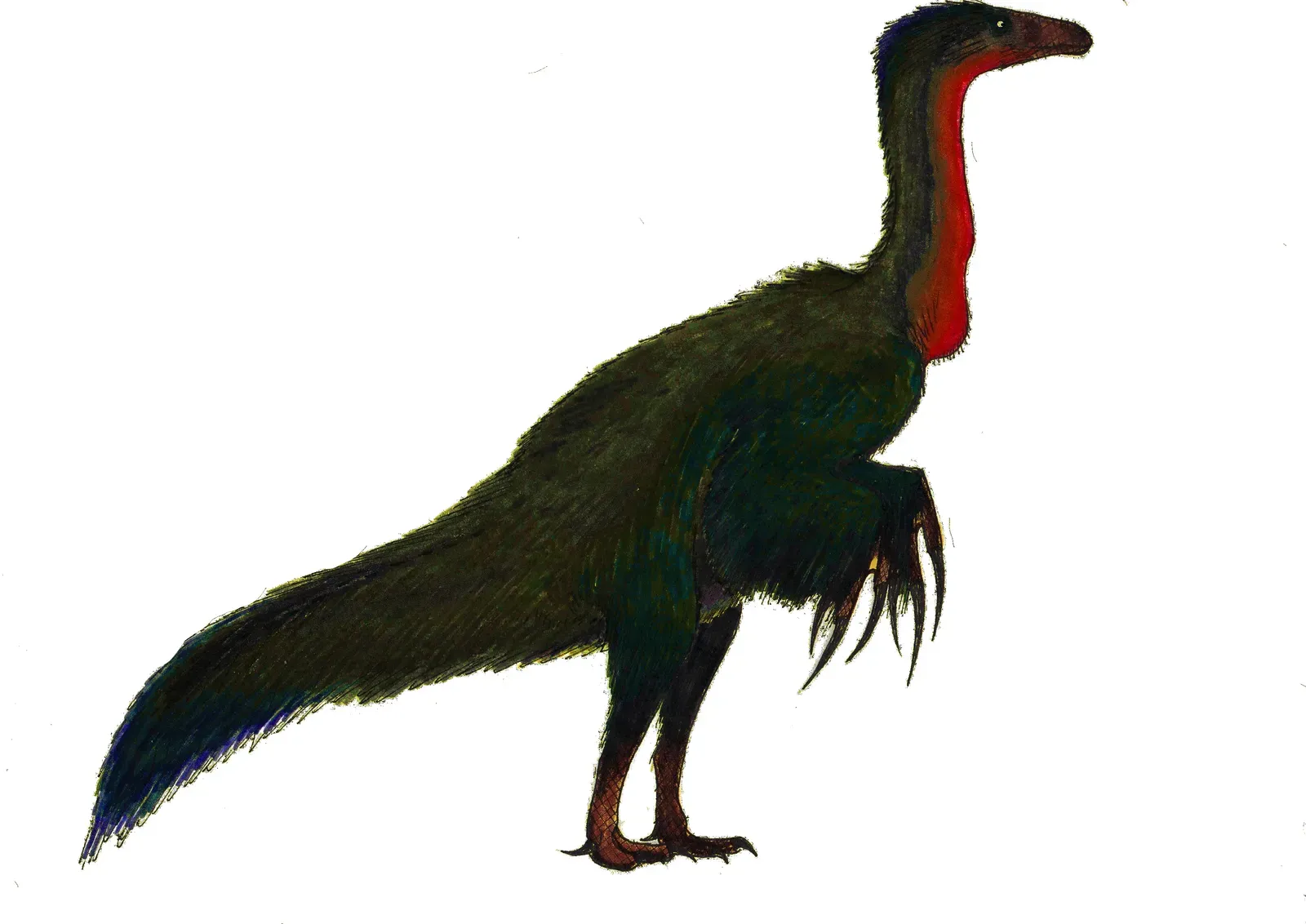
If you only ever see one dinosaur that makes you rethink everything, let it be Therizinosaurus. You look at its claws first: scythe-like blades on each hand that could be as long as your arm, the longest known claws of any animal in Earth’s history. Then you process the rest of it – pot-bellied body, long neck, small head, and a beaked mouth with leaf-shaped teeth – and suddenly you’re not looking at a classic predator at all, but a huge, slow, plant-eating oddball that used its nightmare hands for reaching, pulling, and maybe intimidation instead of shredding meat.
When you compare it to T. rex, Therizinosaurus quietly wins the “weird factor” by a mile. While T. rex relied on brute force and a crushing bite, this animal seems to have taken a completely different evolutionary path, turning a theropod blueprint into something closer to a giant, upright ground sloth in feathers. You can imagine it raking down branches, dragging foliage closer, or simply standing there as a visual warning no predator wanted to test. In a lineup of dinosaurs, this is the one you’d keep staring at.
2. Deinocheirus: The Duck-Camel-Sloth Mashup
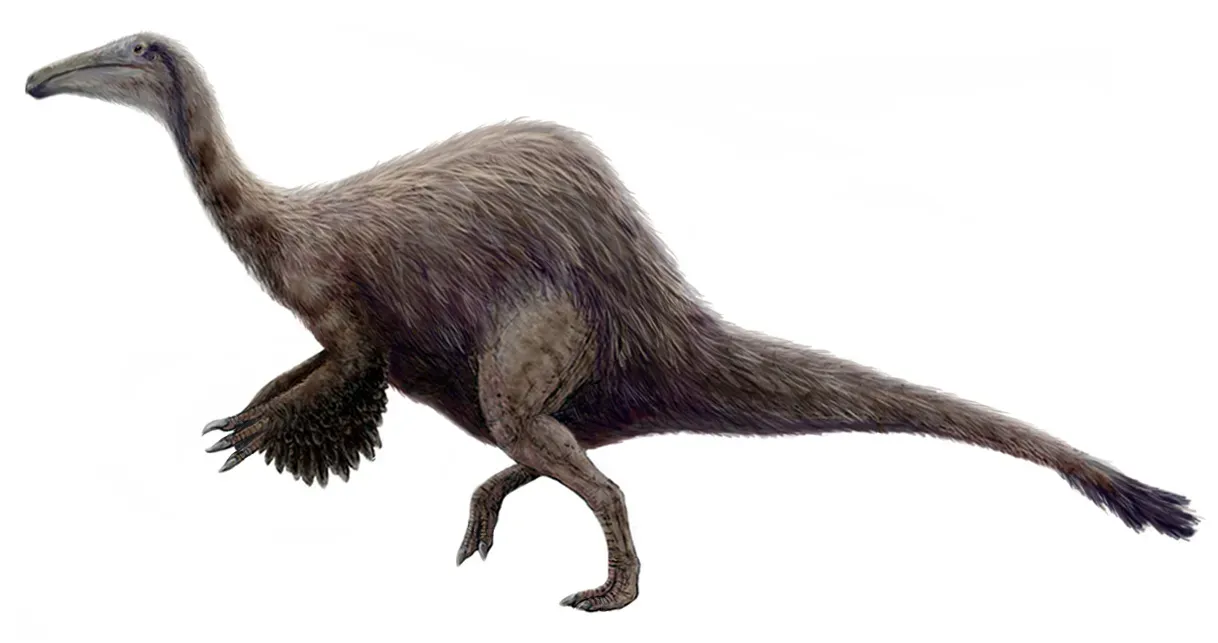
Unlike the ruthless hunter you might expect, you’re most likely looking at a large omnivore or plant-eater that spent a lot of time near rivers and lakes. Its broad, duck-like snout and massive gut suggest it was more about scooping and sifting food than ripping things apart. While T. rex embodies the classic “movie monster,” Deinocheirus feels more like a living, lumbering contradiction – huge but probably slow, armed but not a dedicated killer, and so visually odd that if someone painted it in a fantasy book, you’d assume they were exaggerating.
3. Amargasaurus: The Spined “Sailboat” Sauropod
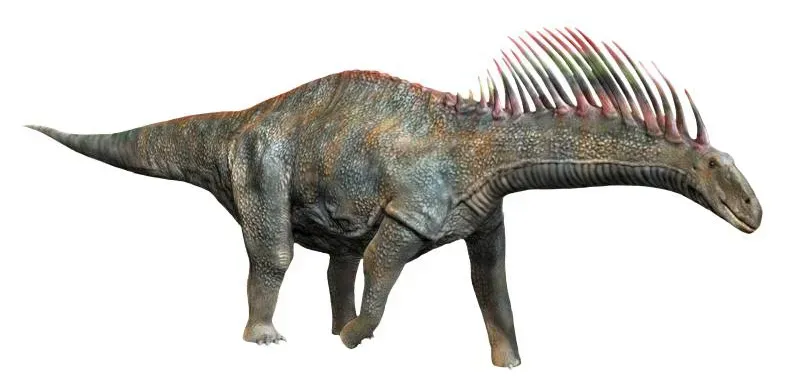
When you think of long‑necked sauropods, you probably imagine enormous, gentle giants like Brachiosaurus or Argentinosaurus. Amargasaurus flips that mental image on its head. It was relatively small for a sauropod, but what it lacked in size, it made up for with style: twin rows of tall spines running along its neck and back, some reaching impressive lengths. You can picture those spines supporting a sail of skin, standing naked as spikes, or wearing a mix of keratin sheaths and soft tissue – whichever version you favour, it looks more like a fantasy dragon than a “standard” plant-eater.
What makes Amargasaurus so compelling for you is that scientists still debate what those spines were actually doing. They might have helped regulate body temperature, acted as a display to impress mates or warn rivals, or even produced sound if covered in vibrating tissue. Compare that to T. rex, whose body plan feels straightforward by comparison: big head, big teeth, big tail. Amargasaurus shows you that some plant‑eaters were trying out design experiments that seem almost too wild to be real, and yet there they are in the fossil record.
4. Psittacosaurus: The Parrot-Faced Underdog
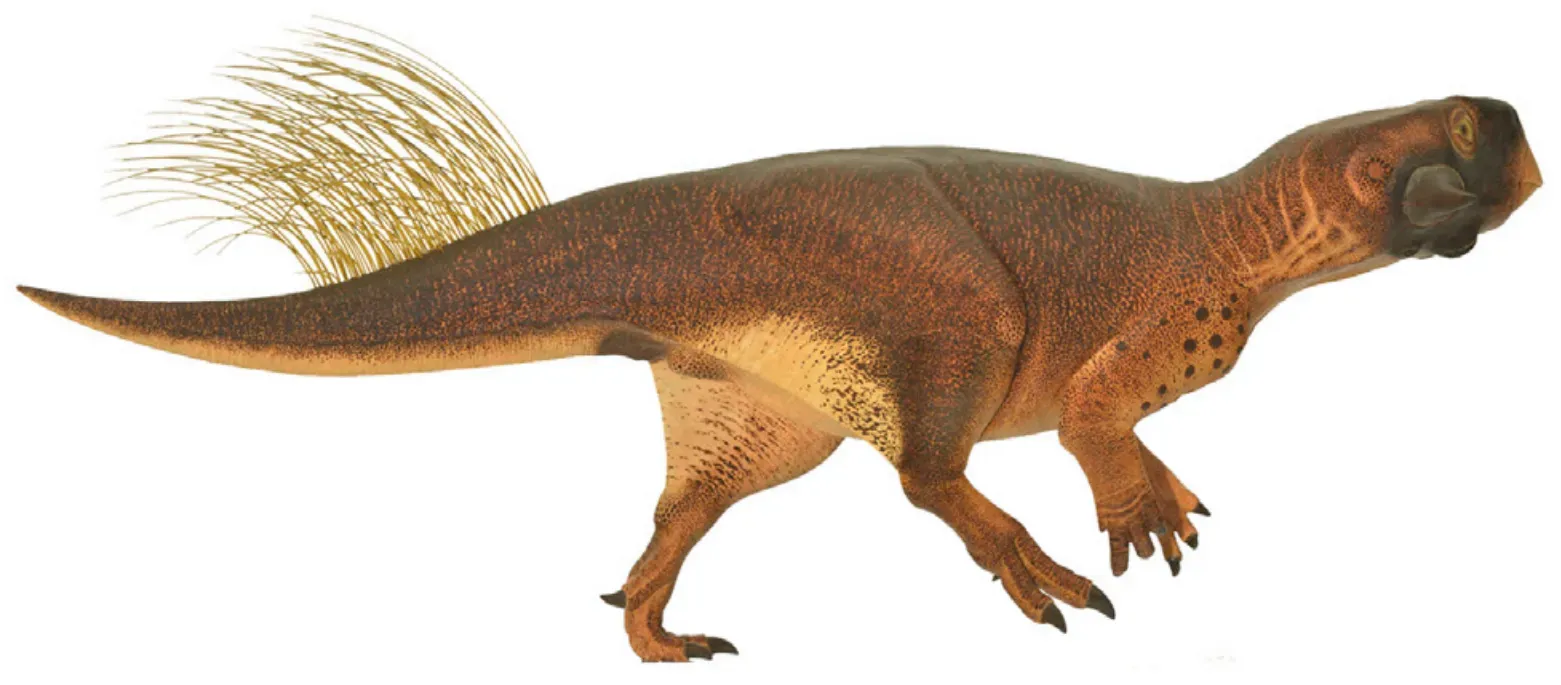
If you ever wanted proof that small dinosaurs could be just as fascinating as the giants, Psittacosaurus is your best friend. This little creature, about the size of a medium dog, had a short, parrot‑like beak and walked mainly on two legs, with a long balancing tail behind it. You can think of it as a scrappy, early cousin of the famous horned dinosaurs like Triceratops, living long before its more heavily armed relatives took over the spotlight. It may not look intimidating, but its design is all about efficiency and agility.
What really pulls you in are the details preserved in some fossils: evidence of skin, colour patterns, and even bristle-like structures on the tail. That kind of preservation lets you imagine more than just a skeleton; you start seeing how it might have blended into its environment, moved in groups, and survived among larger predators. While T. rex grabs attention with sheer size and power, Psittacosaurus quietly tells you how diverse and adaptable the smaller herbivores were, filling ecological roles closer to modern antelope, gazelles, or even big birds on the ground.
5. Ankylosaurus: The Living Tank With a Tail Hammer
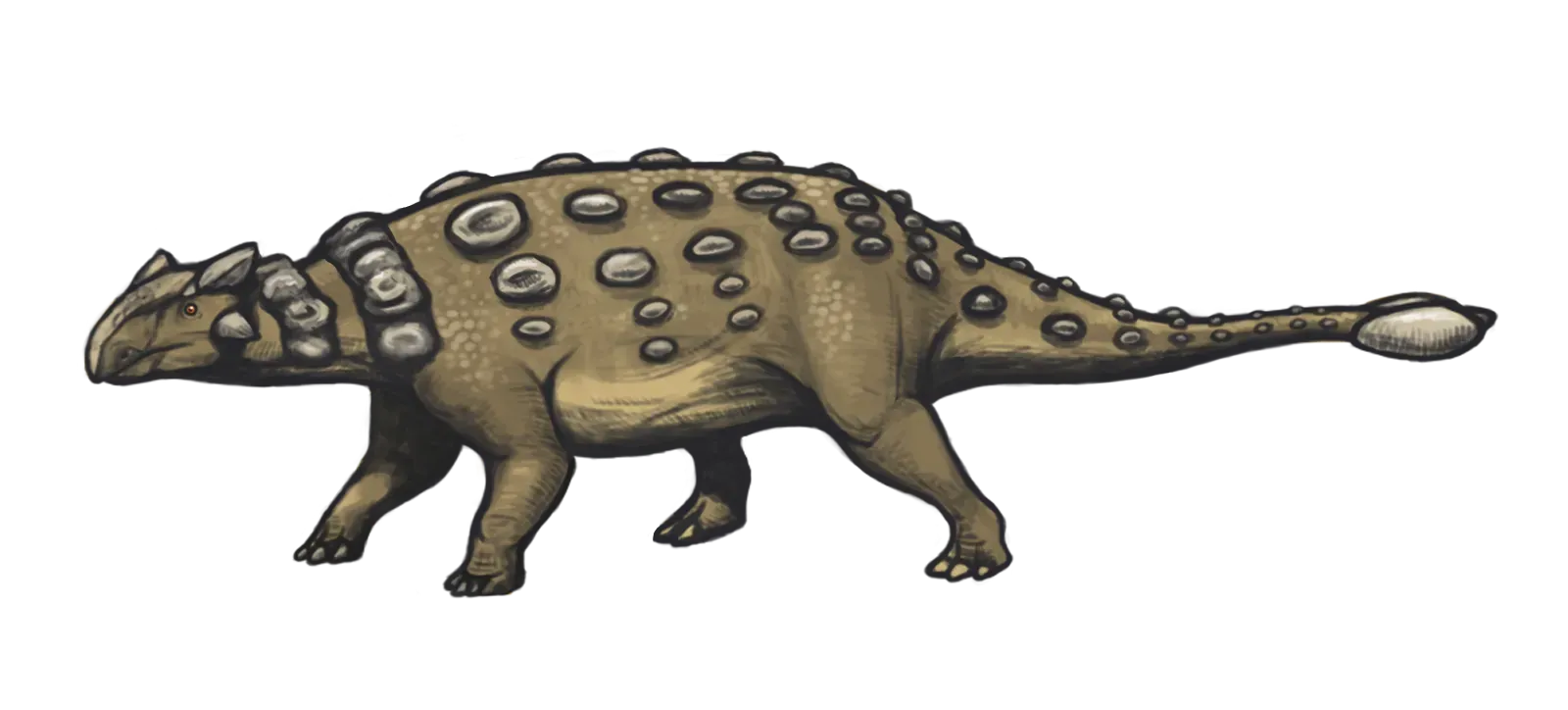
If you ever felt sorry for herbivores constantly being chased by predators, Ankylosaurus will restore your faith in defensive engineering. This dinosaur was built like a low-slung armoured vehicle, covered in heavy bony plates and knobs that turned its back into a nearly impenetrable shield. The highlight for you, though, is the massive tail club – a solid ball of bone at the end of a stiffened tail that could be swung like a war hammer. Against a hungry theropod, that’s not just defence, that’s payback waiting to happen.
Some research suggests those tail blows could have been strong enough to break bones, including the legs of would‑be attackers. Imagine T. rex sizing up a meal and realizing one wrong move could mean a shattered limb; that kind of risk changes the whole game. Instead of picturing herbivores as helpless, Ankylosaurus forces you to see them as active players in an arms race. Where T. rex represents peak offense, Ankylosaurus stands for peak defence, and in a fair fight on tough terrain, you might actually bet on the walking tank.
6. Pachycephalosaurus: The Dome-Headed Enigma
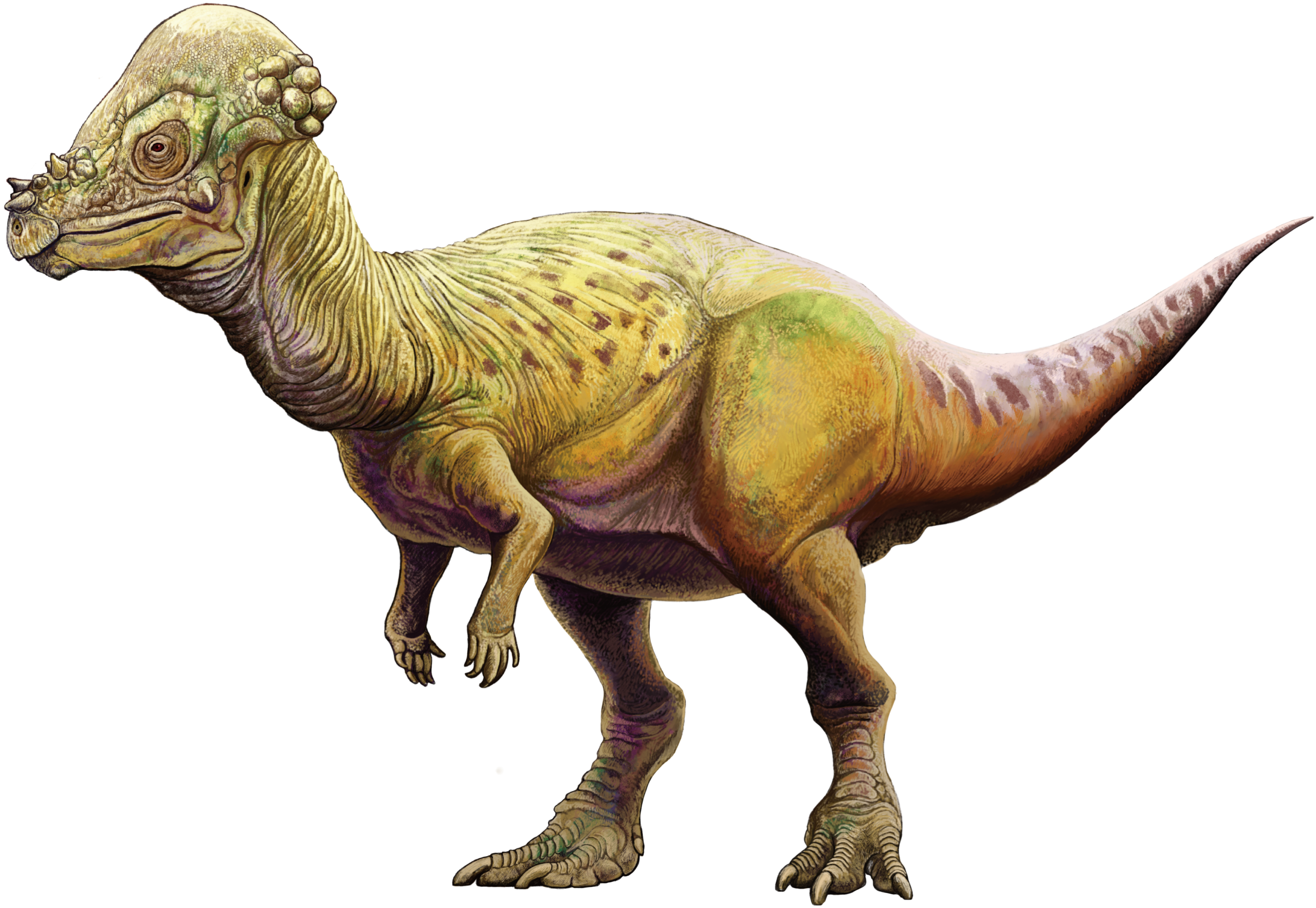
You probably recognize Pachycephalosaurus from its thick, domed skull, but it still lives in the shadow of flashier dinosaurs. That dome could be more than twenty centimetres thick, surrounded by bumps and small spikes, turning its head into a living battering ram. The tempting image for you is obvious: two individuals slamming into each other like rams, using their skulls to win mates or settle disputes. For a long time, that head‑butting idea was the default explanation, and it’s still the picture many people carry in their minds.
But when you dig into the science, the story becomes more complicated and, frankly, more interesting. Some researchers argue that repeated high‑speed collisions might have been too risky for the brain and neck, suggesting instead that these dinosaurs could have used their heads for pushing contests, flank‑butting, or simply as visual displays that shouted strength without constant impacts. Whatever side you lean toward, Pachycephalosaurus shows you that dinosaur behaviour can be much more nuanced than simple “fight or bite,” and it deserves more attention than the quick cameo it usually gets.
7. Spinosaurus: The Semi-Aquatic Super Predator
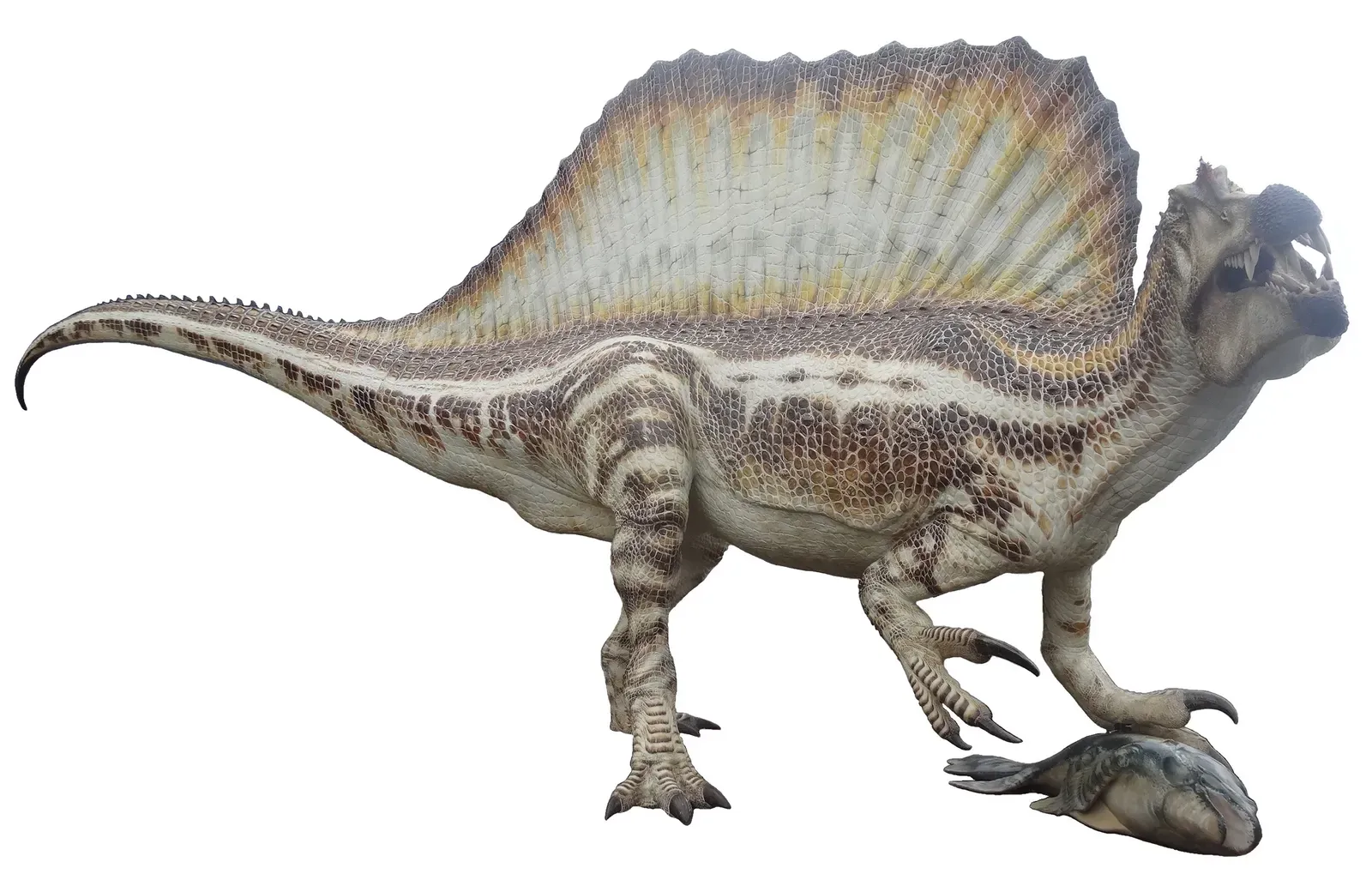
Even if you’ve heard of Spinosaurus from movies, you may not realize how radically your picture of it has changed over the last couple of decades. Fossils from North Africa point to a long, crocodile‑like snout full of conical teeth, limbs and tail adapted for swimming, and a body that may have spent much of its time in and around water. Instead of imagining a land-based rival to T. rex, you’re better off picturing an immense, fish‑hunting predator cruising river systems, more like a monstrous mix of heron, crocodile, and bear than a classic dry‑land killer.
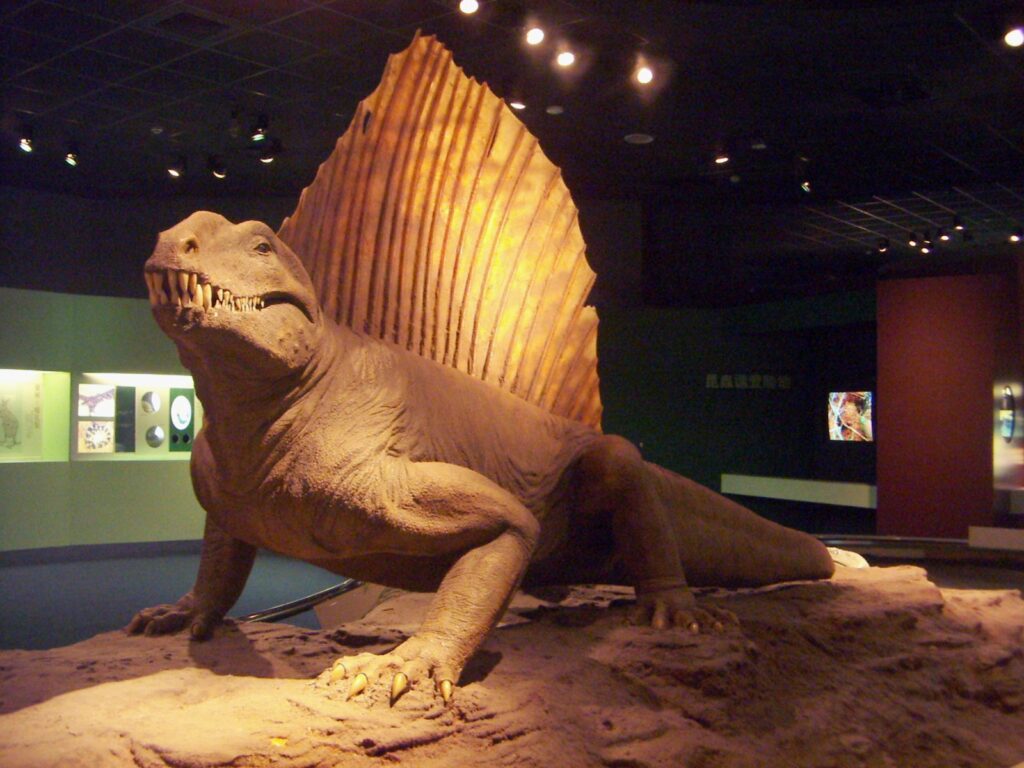
The tall sail on its back, formed by elongated vertebral spines, adds another layer of mystery. Was it a display structure, a heat regulator, a storage area for fat, or part of helping it move in water? You do not get a simple answer yet, and that uncertainty is actually what makes Spinosaurus so compelling. While T. rex dominated coastal plains and forested valleys on land, this animal may have ruled a parallel world of river channels and lagoons, carving out a niche that no other large theropod matched quite so well.
8. Seismosaurus (Diplodocus hallorum): The Misunderstood Giant
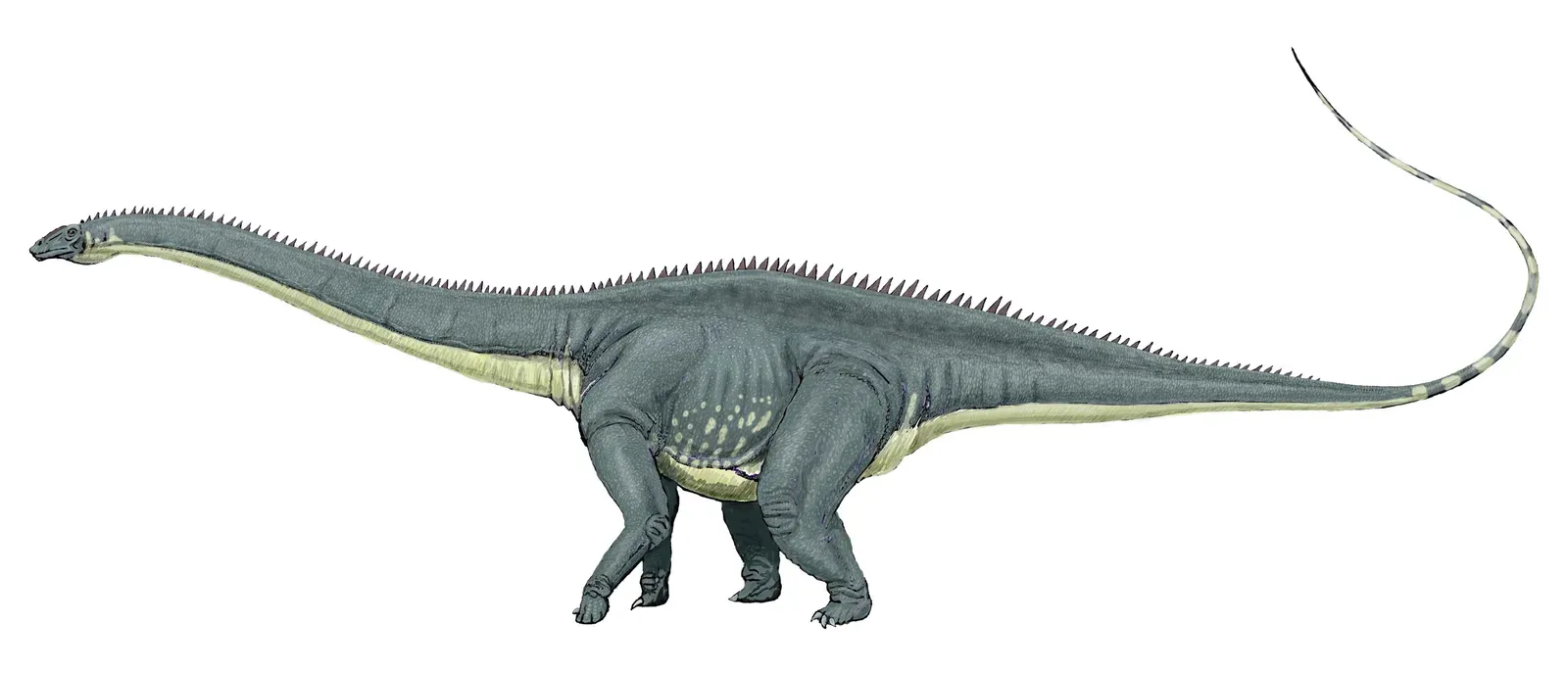
For a while, the name Seismosaurus – “earth‑shaker lizard” – sounded like something dreamed up just to outdo every other dinosaur. Early estimates painted it as one of the longest creatures ever to walk on land, a titanic sauropod that could make the ground tremble under its weight. Later work suggested those original size estimates were a bit too generous, and the animal has since been reclassified as a particularly large species of Diplodocus, now called Diplodocus hallorum. Even with that correction, you’re still dealing with a dinosaur longer than many city buses lined up together.
What makes this animal worth your attention is how it reflects the reality that dinosaur science is always in flux. Names change, size estimates get revised, and your favourite “record holder” might lose a title but gain a clearer identity. Instead of sulking about Seismosaurus turning into a Diplodocus species, you can appreciate that you’re looking at a long, whip‑tailed herbivore that pushed the limits of body length. While T. rex impresses you with bulk and bite force, this giant quietly dominates the landscape by sheer scale and reach, browsing high and low with an energy‑efficient body plan.
9. Monolophosaurus: The Crested Mid-Size Predator
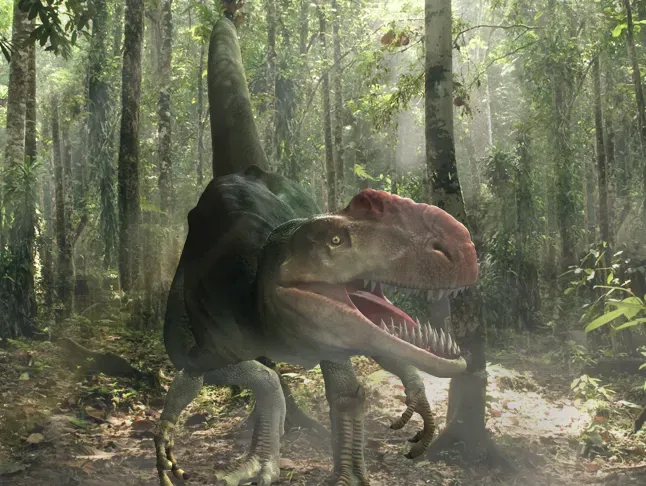
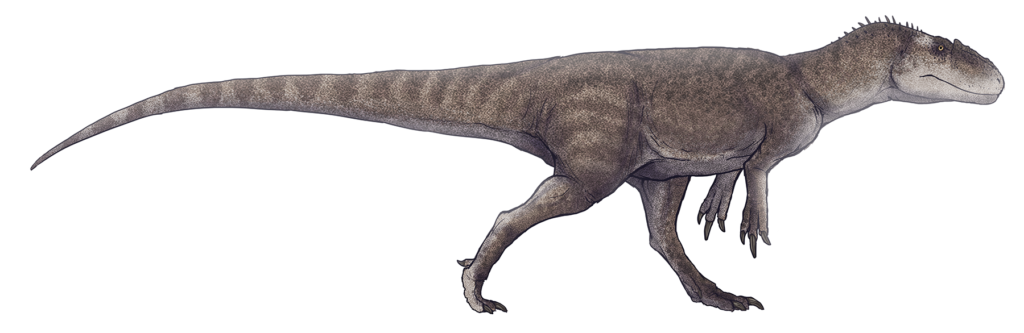
If you like your carnivores a bit more subtle than the usual celebrity monsters, Monolophosaurus is a great dinosaur to explore. It was a medium‑sized theropod from what is now China, and what sets it apart for you is the single prominent crest running along the top of its skull. That bony ridge may not have changed how it hunted, but it almost certainly changed how it looked to others of its own kind, turning an otherwise streamlined predator into something instantly recognizable. In a crowded ecosystem, that kind of visual signature matters.
Compared to T. rex, Monolophosaurus did not rule its environment through brute size or power; instead, it probably filled a more moderate role, chasing down smaller prey and avoiding direct confrontations with the biggest animals around. You could think of it as the wolf to T. rex’s bear – agile, adaptable, and effective without being the top heavyweight. Its crest hints at complex social behaviours, from visual communication to mate choice, reminding you that not every interesting dinosaur needs to be the largest or most lethal to be worth your admiration.
10. Tenontosaurus: The Workhorse Herbivore of the Mid-Cretaceous
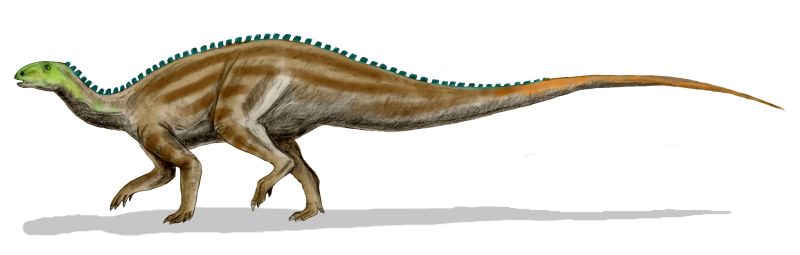
Tenontosaurus will never win a popularity contest on looks alone, and that’s exactly why you should give it some attention. It was a sturdy, medium‑to‑large herbivore from North America with a long tail, strong hind limbs, and a fairly ordinary‑looking head. At first glance, it seems plain compared to horned dinosaurs or plated stegosaurs. But when you look at the fossil record, you keep running into Tenontosaurus over and over, especially in sites that also preserve the small raptor Deinonychus. That repeated pairing has led to famous discussions about predator‑prey interactions and pack hunting.
Instead of starring as a flashy showpiece, Tenontosaurus is more like the backbone of its ecosystem, the reliable plant‑eater that fed a whole chain of carnivores. In a way, it plays a role closer to modern deer, wildebeest, or kangaroos – not individually dramatic, but ecologically crucial. While T. rex often steals the stage in museum halls, animals like Tenontosaurus did much of the day‑to‑day work of turning plants into dinosaur biomass. When you start caring about these “background” species, you begin to see prehistoric worlds as living systems instead of just highlight reels of killers.
11. Protoceratops: The Hornless Horned Dinosaur Cousin
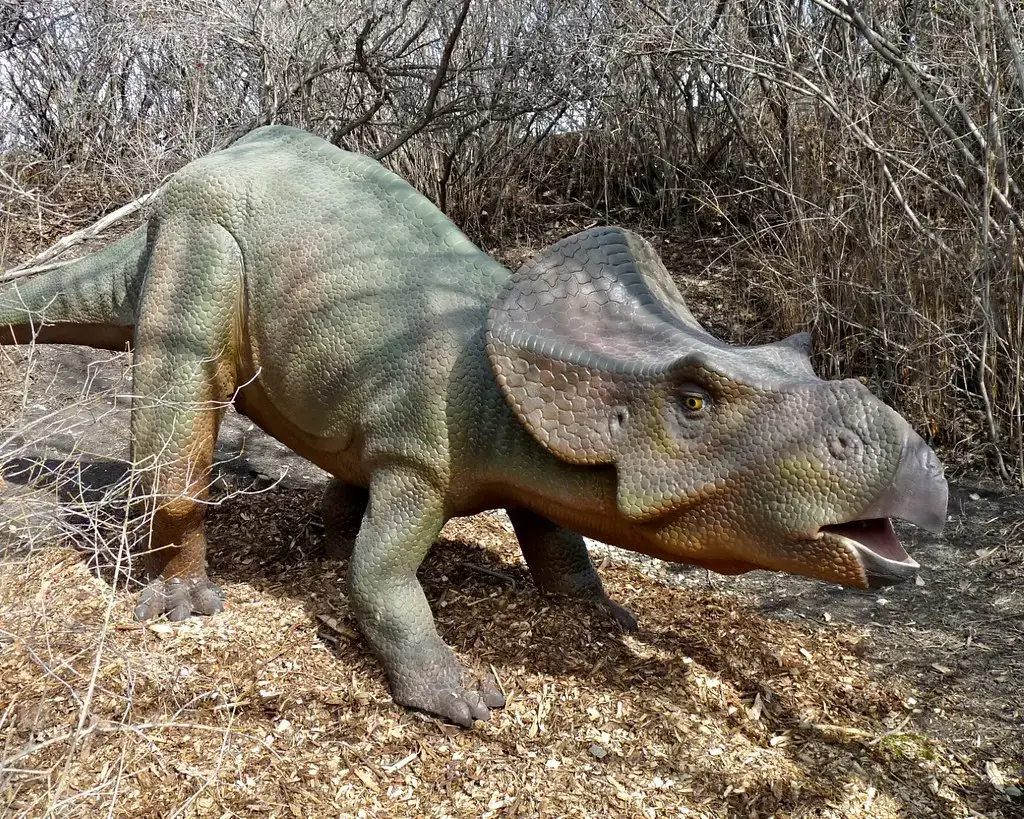
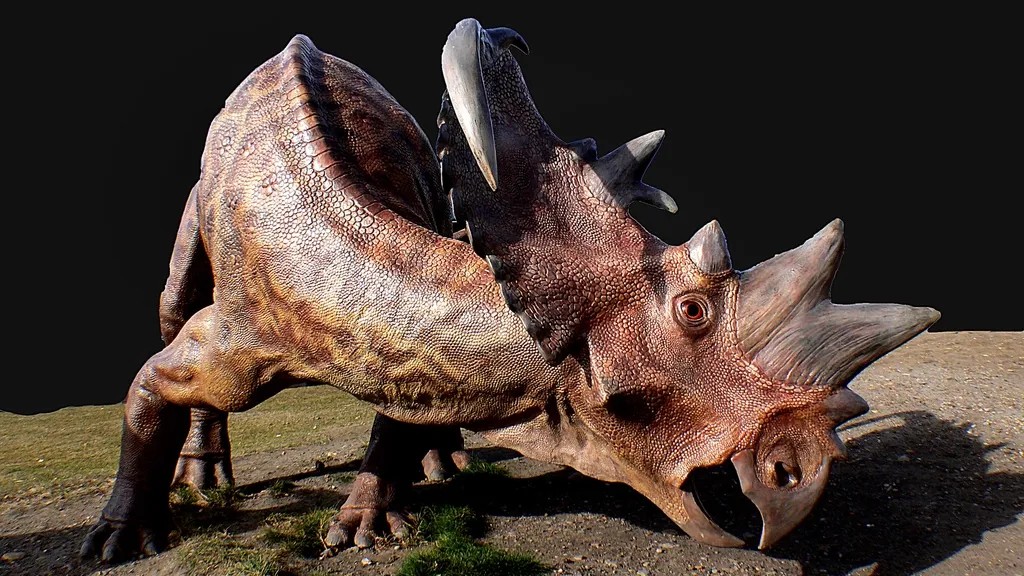
Before the era of giant horned dinosaurs like Triceratops, you had smaller trailblazers such as Protoceratops. This compact herbivore from Mongolia carried a bony frill at the back of its skull but lacked the long facial horns you might associate with its more famous relatives. You can picture it as a tough little plant‑eater, moving in groups across desert dunes and scrubby landscapes, using its strong beak to shear through vegetation. Its fossils are so common and well-preserved that they have become icons of the region’s Late Cretaceous life.
One of the most striking fossils you’ll hear about shows a Protoceratops locked in combat with a Velociraptor, both animals apparently buried mid‑struggle when a sand dune collapsed. That snapshot of interaction gives you a more intimate view than a towering T. rex skull ever could. Protoceratops might not have horns worthy of movie posters, but it helps you understand how ceratopsians evolved, how they behaved, and how even mid‑sized herbivores fought hard for survival. In terms of raw storytelling power, this “lesser” dinosaur arguably outshines its giant cousins.
Conclusion: Looking Beyond the Celebrity Carnivore
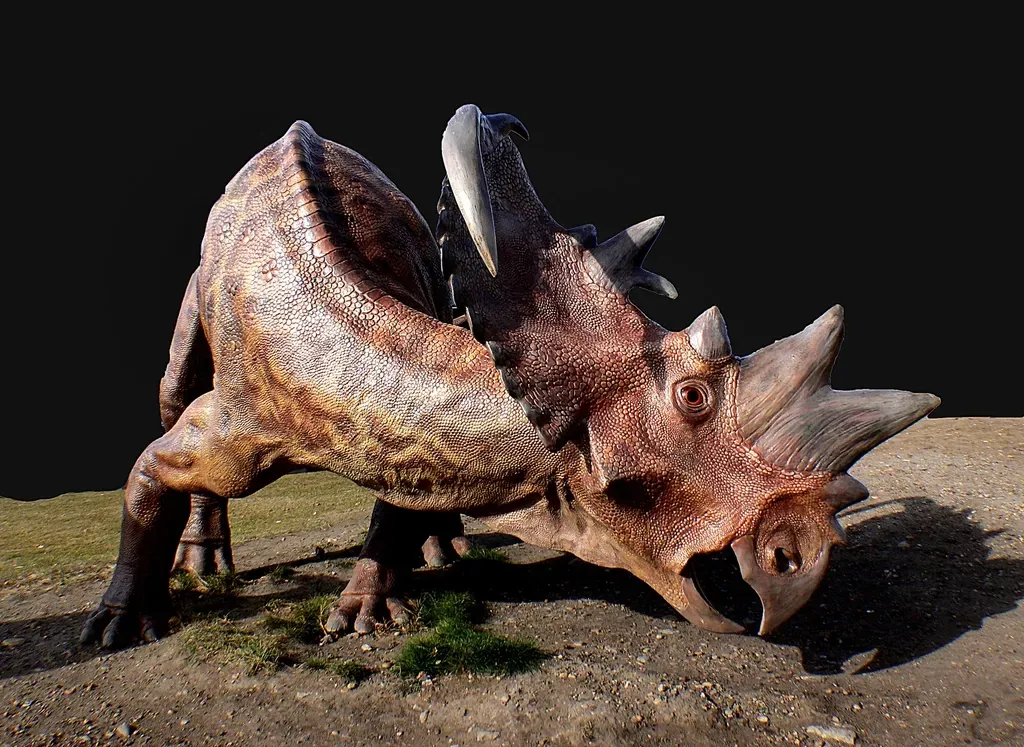
When you line these dinosaurs up in your mind, a pattern starts to emerge: the most interesting stories are rarely about the most famous name. Therizinosaurus and Deinocheirus show you how strange evolution can get when it retools carnivorous blueprints for plant‑eating or omnivory. Amargasaurus, Ankylosaurus, and Pachycephalosaurus remind you that defence, display, and social behaviour can be just as dramatic as sharp teeth. Even the “ordinary” ones like Tenontosaurus and Psittacosaurus are quietly shaping entire ecosystems while the headliners hog the attention.
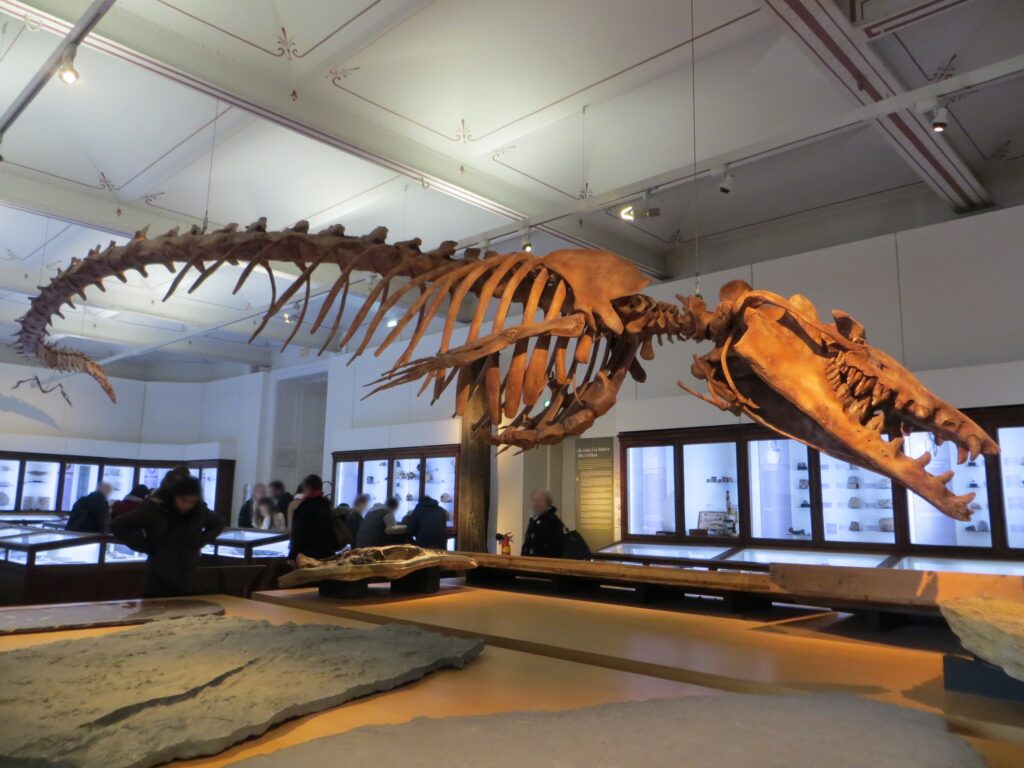
If you keep T. rex on a pedestal, you miss the full, wild diversity of the dinosaur world – the duck-snouted swimmers, the parrot‑beaked sprinters, the earth‑shaking sauropods, and the tank‑plated bruisers that turned the Mesozoic into something richer than any single villain or hero. The next time you walk past a museum display, you might find yourself lingering a bit longer at the less crowded exhibits, giving those overlooked skeletons the recognition they deserve. Now that you know what you’ve been missing, which “lesser-known” dinosaur will you champion as your new favourite?