You probably picture dinosaurs ruling the land, but in the late Cretaceous oceans, a very different kind of monster sat at the top of the food chain: the mosasaurus. This reptile was not a dinosaur, but it terrorized the seas with a power and presence that would make even a T. rex think twice. When you dive into what scientists have pieced together from fossils, you start to see just how alien, specialized, and downright terrifying this animal really was.
As you explore these ten facts, you will get a clearer sense of what it would feel like to be a small fish, a sea turtle, or even a shark in a world where mosasaurus was hunting nearby. You will see how its body was built, how it likely moved, how it hunted, and why it vanished with the rest of the non-avian dinosaurs. By the end, you might find yourself looking at the modern ocean and imagining what it would be like if these giants still cruised the depths alongside whales and great white sharks.
1. You Are Meeting an Apex Predator That Was Not a Dinosaur
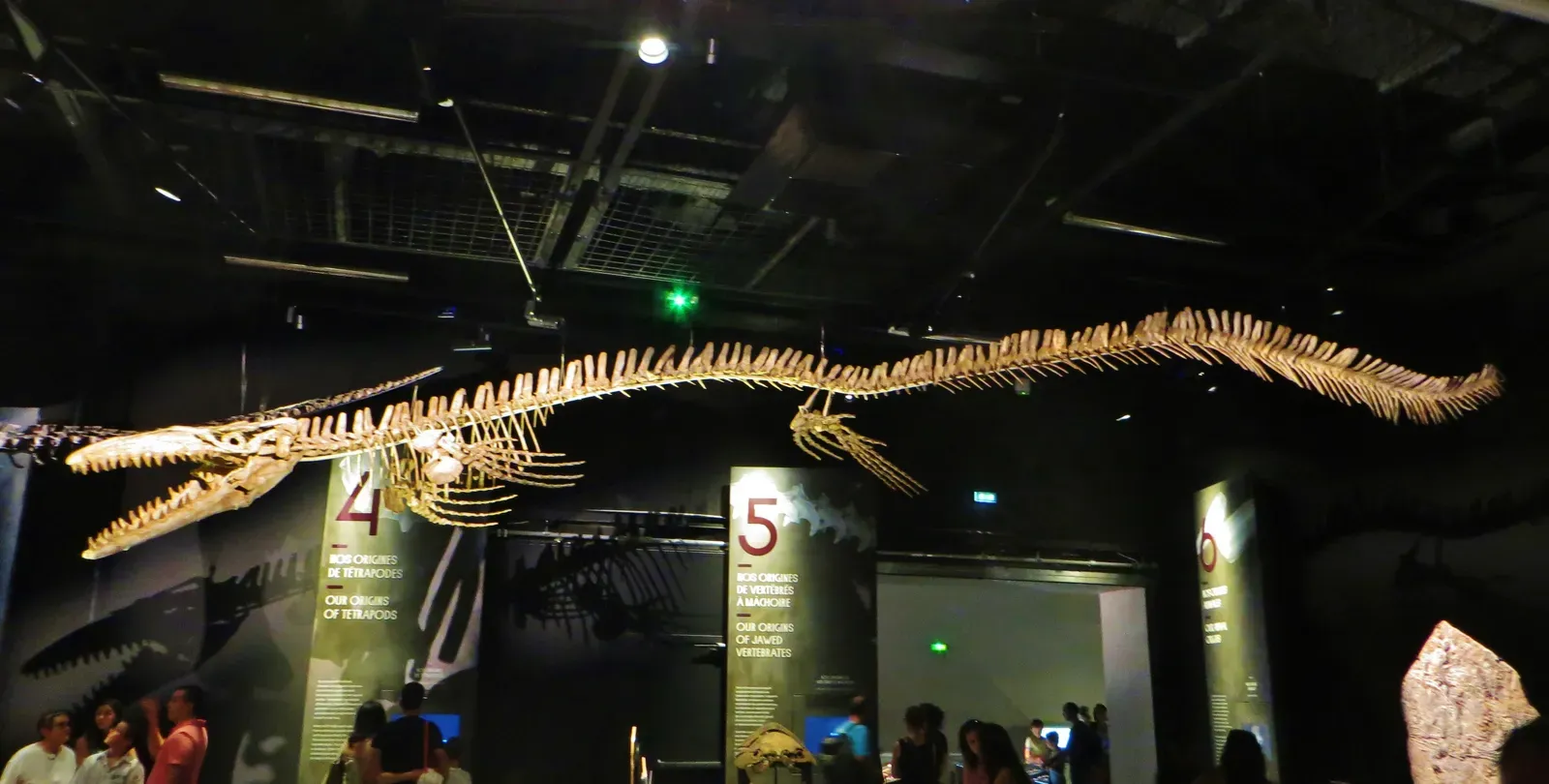
When you first hear “mosasaurus,” you might automatically lump it in with dinosaurs, but you would actually be dealing with a giant marine reptile from a different branch of the tree of life. You can think of it as a distant cousin of modern monitor lizards and snakes that returned to the water and became overwhelmingly successful there. If you picture something like a monstrous, supercharged Komodo dragon that has become fully aquatic, you are surprisingly close to what paleontologists think you would be looking at.
As an apex predator, mosasaurus sat at the very top of the food web in many late Cretaceous seas, which means nothing regularly hunted it once it was fully grown. You would have seen it preying on fish, ammonites, sea turtles, other marine reptiles, and possibly even other mosasaurs. In that environment, if you were another large marine animal, you would be constantly aware that something bigger, faster, and better armed might be nearby. The ocean was not a calm, blue world; it was more like a three‑dimensional battlefield, and mosasaurus was one of its heavy tanks.
2. You Would Be Looking at a Reptile the Size of a Bus (or Bigger)
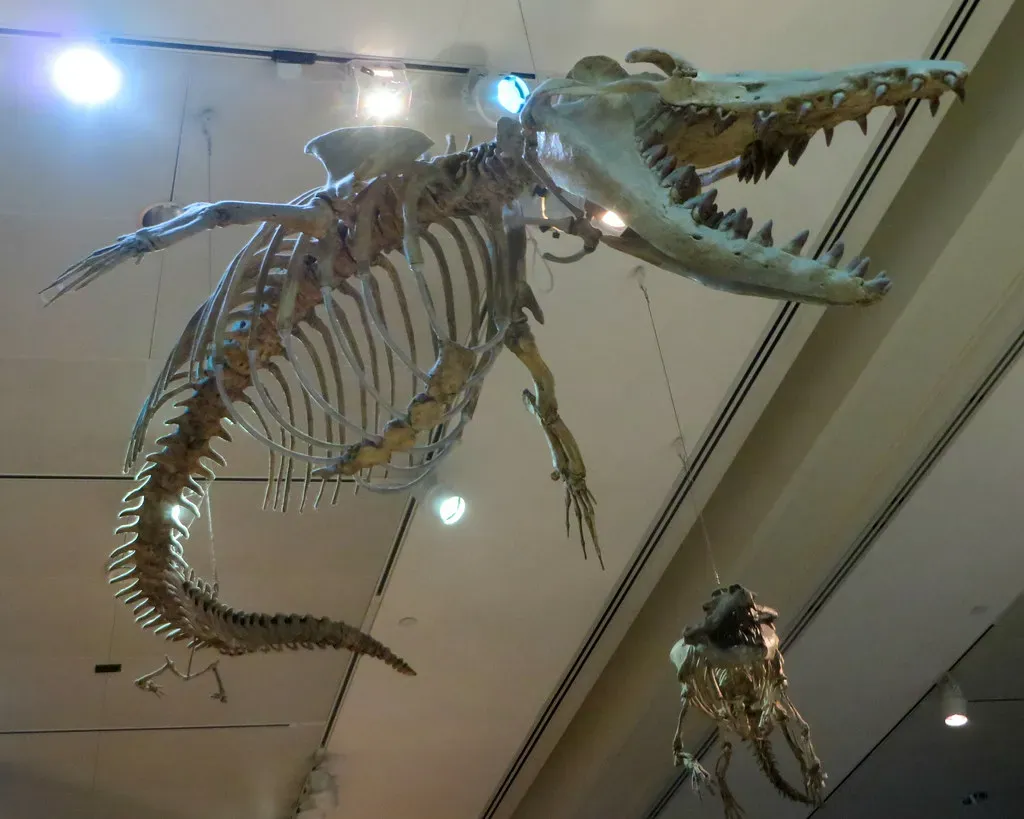
If you could stand next to a mosasaurus, you would probably feel tiny. Some of the largest species, like Mosasaurus hoffmanni, are estimated to have reached lengths of around fifteen to seventeen meters, which puts them roughly in the size range of a modern city bus or even a small humpback whale. You are not just talking about length, either; this animal carried a deep, muscular body and a massive skull that made it feel solid and powerful rather than long and flimsy.
To make that size more real, you can imagine swimming in the ocean and suddenly seeing a shape glide out of the gloom that is longer than a telephone pole and thicker than you are tall. The head alone would be longer than your entire upper body, with a jaw that could open wide enough to swallow you whole. When you picture that kind of bulk moving quickly through the water, the idea of being in the same ocean starts to feel a bit like standing on a runway with a jet bearing down on you, only this jet has teeth and a hunger for meat.
3. You Would See a Body Built Like a Reptilian Torpedo
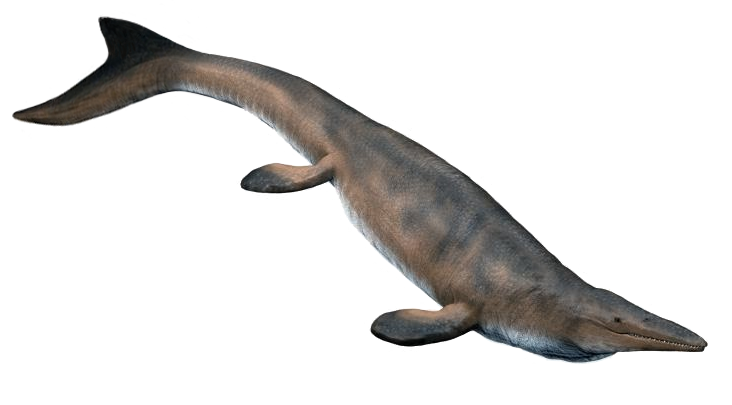
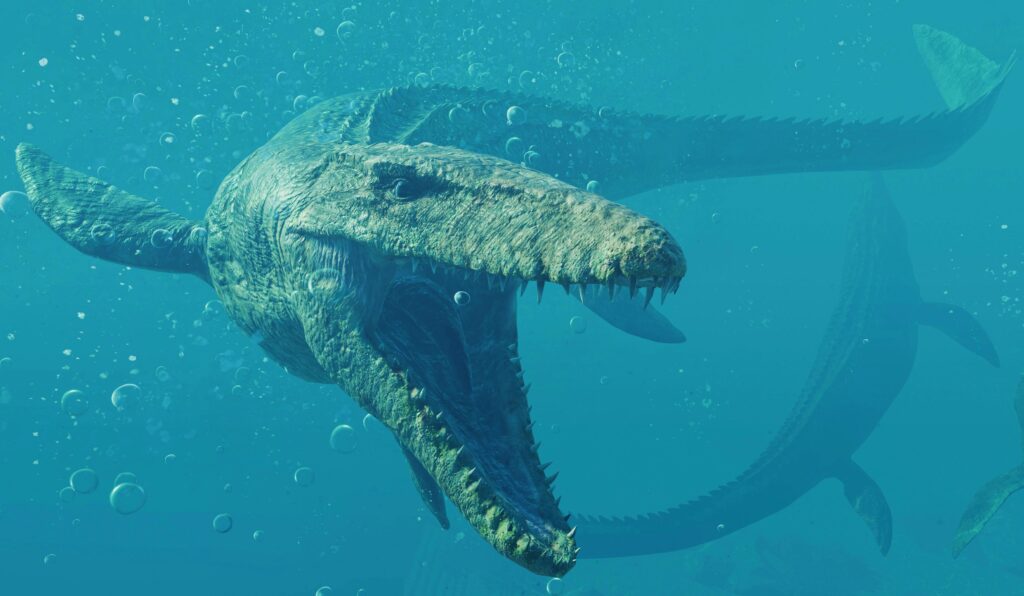
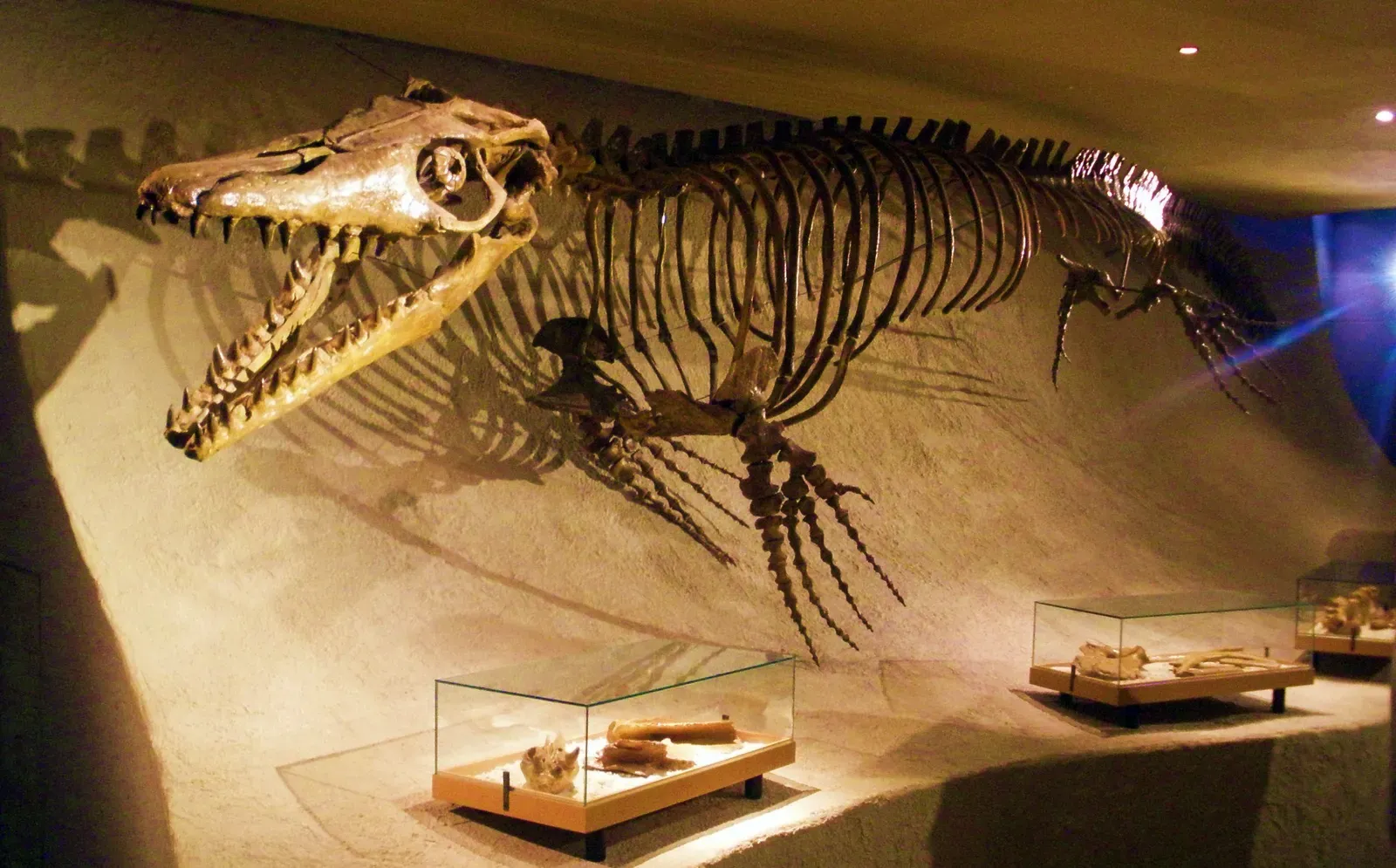
If you watched a mosasaurus swimming from a distance, you would see a body that looked surprisingly streamlined and adapted for speed. Its torso was elongated and somewhat flattened, and its skin likely smoothed over the contours of powerful muscles to minimize drag. Instead of the sprawled legs you might associate with lizards on land, you would see limbs reshaped into flippers, helping it steer and stabilize its huge body in the water.
What might surprise you even more is the tail. Evidence from some beautifully preserved mosasaur fossils suggests that they had a tail fluke somewhat like that of a shark, with a downward bend at the end of the spine supporting a larger lower lobe. That means when you imagine this animal moving, you should not see a lazy, eel‑like wiggle; you should picture a strong, rhythmic sweep of the back half of the body, turning it into a living torpedo capable of burst speed attacks on unsuspecting prey.
4. You Would Face a Mouth Full of Teeth Designed to Grip and Tear
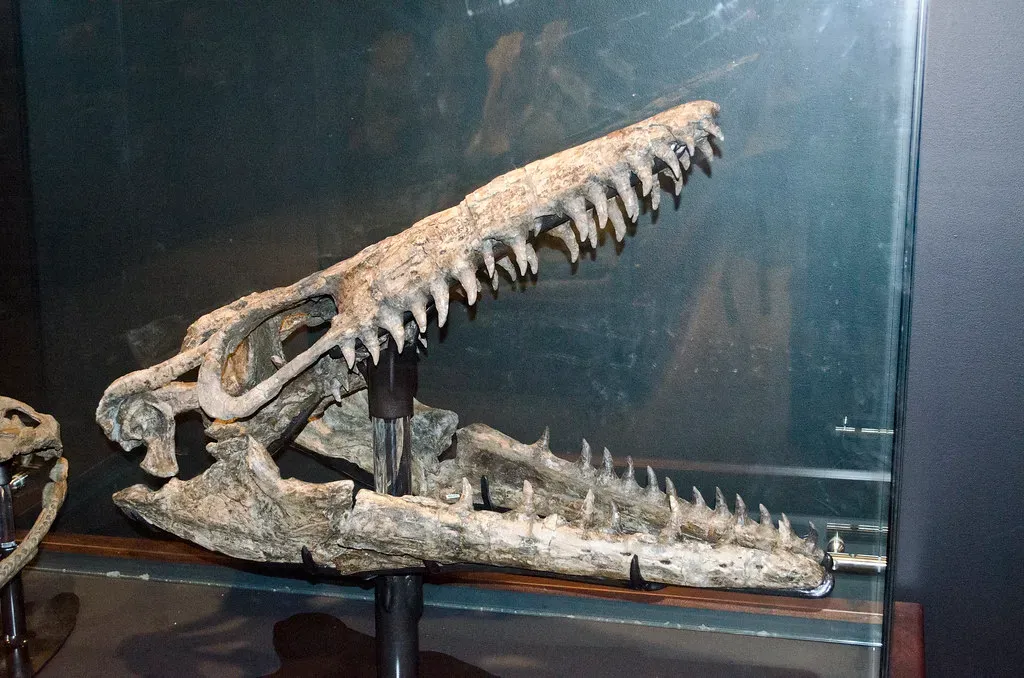
If you dared to look a mosasaurus in the face, your eyes would probably go straight to the jaws. You would see rows of conical, slightly curved teeth, ideal for gripping slippery prey and preventing it from escaping once bitten. These teeth were not delicate needles; they were sturdy weapons anchored in a powerful jaw that could clamp down with crushing force, making escape nearly impossible once you were caught.
Inside that mouth, you would also find another unsettling detail: extra teeth on the palate, called pterygoid teeth, that helped move prey toward the throat. This double‑armed system meant that even if you somehow slipped from the main tooth row, you might still be dragged backward into the digestive system. If you try to imagine struggling inside that mouth, you quickly realize that you would not be dealing with a simple bite; you would be fighting an entire feeding machine built to ensure that once you go in, you do not come back out.
5. You Would Witness Hunting Strategies Closer to Modern Sharks Than Dinosaurs
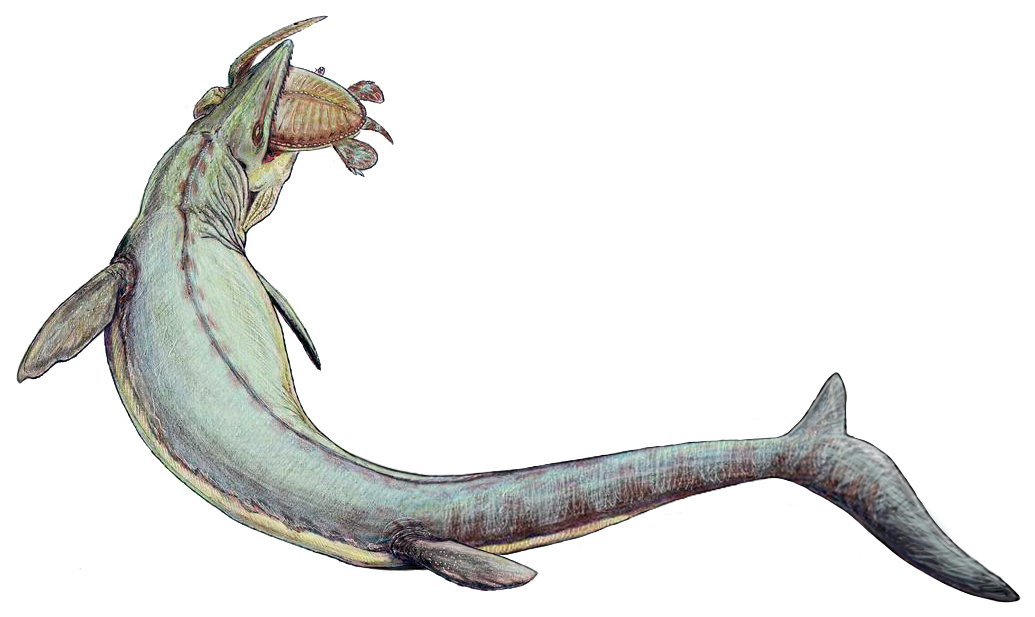
Based on its body shape and teeth, you can reasonably picture mosasaurus using hunting strategies similar to modern large marine predators, like sharks or orcas, rather than land‑based dinosaurs. You would see it using the open water to its advantage, approaching from below or from the side, using the dim light and murky depths to stay hidden until the very last moment. With a powerful tail flick, it could close the gap rapidly and strike before its prey even realized it was being stalked.
Different prey probably required different strategies, and you can imagine mosasaurus adapting to each. When going after fast fish, it might have used quick pursuit, while slower, heavily armored animals like turtles could have been rammed or bitten in vulnerable areas. You would also have to consider that a predator this large might have sometimes targeted weaker or injured animals, just as many modern predators do, making the Cretaceous seas a harsh place where any sign of weakness could be a fatal invitation.
6. You Would Find Evidence That It Gave Birth in the Water
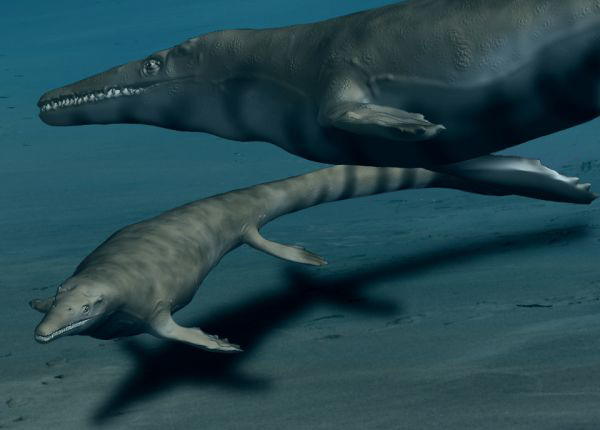
If you could time‑travel and explore a Cretaceous sea nursery, you would not see mosasaurus hauling itself onto a beach to lay eggs like a sea turtle. Instead, evidence from fossilized embryos and juveniles suggests that mosasaurs were fully viviparous, meaning they gave birth to live young in the water. That tells you they were truly committed to a marine lifestyle and did not need to return to land at all, not even for reproduction.
When you picture that, you might imagine a smaller, but still impressively sized, young mosasaur swimming near the surface while staying close to deeper water for safety. Just like many marine animals today, the juveniles would likely have faced high risks from other predators, including larger mosasaurs. For you, this means that the Cretaceous sea was full of mosasaurs at various life stages, all competing, growing, and hunting in a complex, constantly shifting ecosystem.
7. You Would See a Sense World Dominated by Water, Not Land
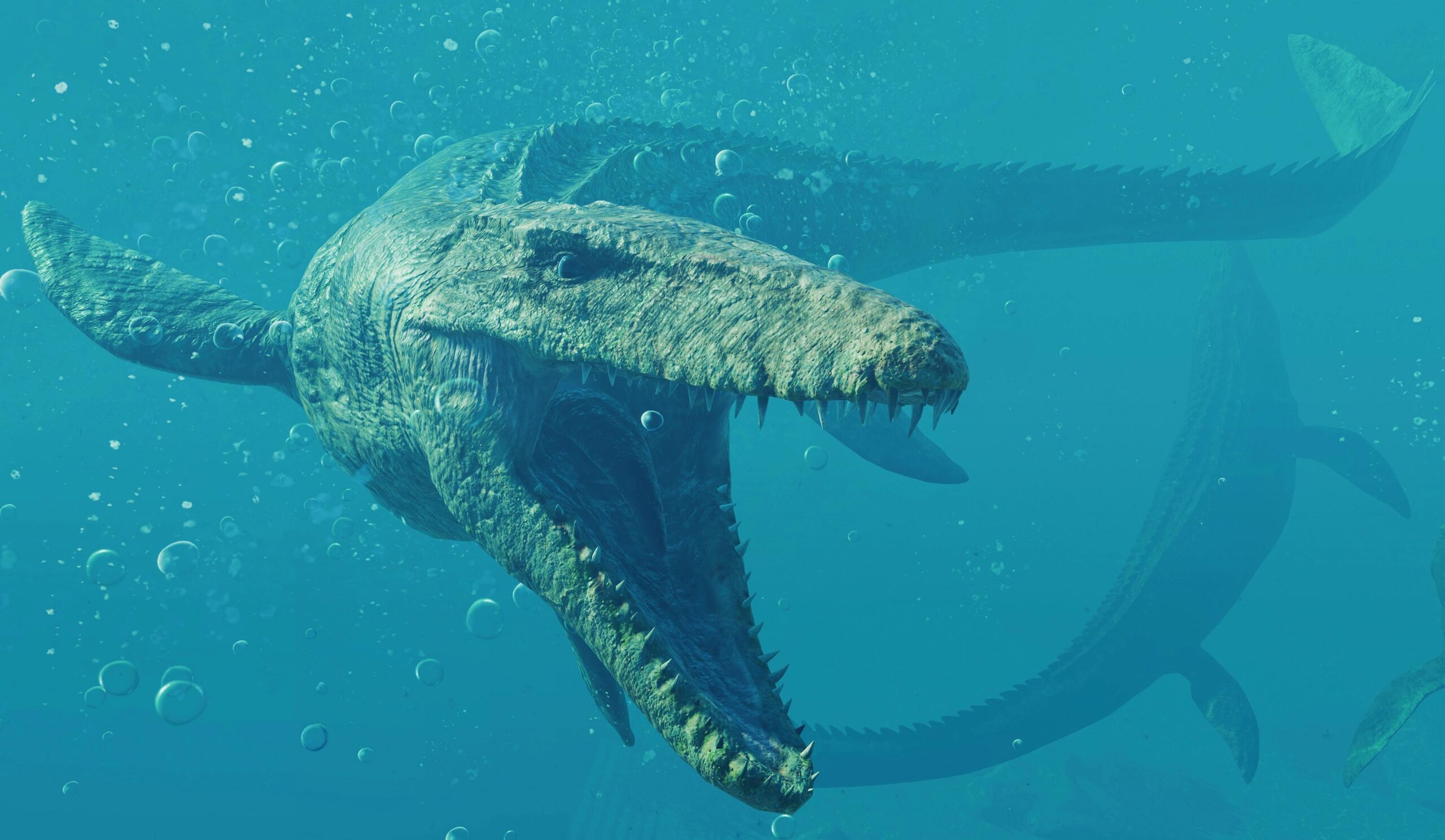
To understand mosasaurus, you have to imagine how you would sense the world if you lived entirely in the ocean. Studies of skulls suggest that mosasaurs had large eye sockets, so you can infer that vision was important to them, especially in clearer waters near the surface. You might imagine one cruising along, scanning for movement and shape contrast, just like modern marine predators that rely on spotting silhouettes against the light above.
At the same time, you should not underestimate their other senses. The internal ear structure of mosasaurs shows adaptations consistent with hearing well underwater, and their snouts would have carried receptors that helped them pick up chemical traces in the water. If you were a potential prey item, it would not be enough to simply stay quiet; your scent and motion could still give you away in a medium where vibrations and molecules travel quickly and efficiently.
8. You Would Watch It Compete With Sharks and Other Giants
Mosasaurus did not rule an empty ocean; it shared its world with large sharks, plesiosaurs, and other mosasaurs. If you could follow one through its daily life, you would see more than just hunting; you would see competition. When a large carcass drifted down through the water, you might see multiple predators circling, testing each other and occasionally clashing over the valuable meal. Being top predator did not mean being alone; it meant constantly asserting your dominance.
Some fossil sites preserve bite marks on bones that match mosasaur teeth, and occasionally you see evidence that they may have attacked each other. For you, that paints a picture of an ocean where even the strongest animals were not entirely safe from their own kind. It is a bit like watching lions or wolves compete over territory today, but translated into a dark, deep world where the only boundaries are defined by who is strong or bold enough to hold them.
9. You Would Learn About Mosasaurus Through Rocks in Many Parts of the World
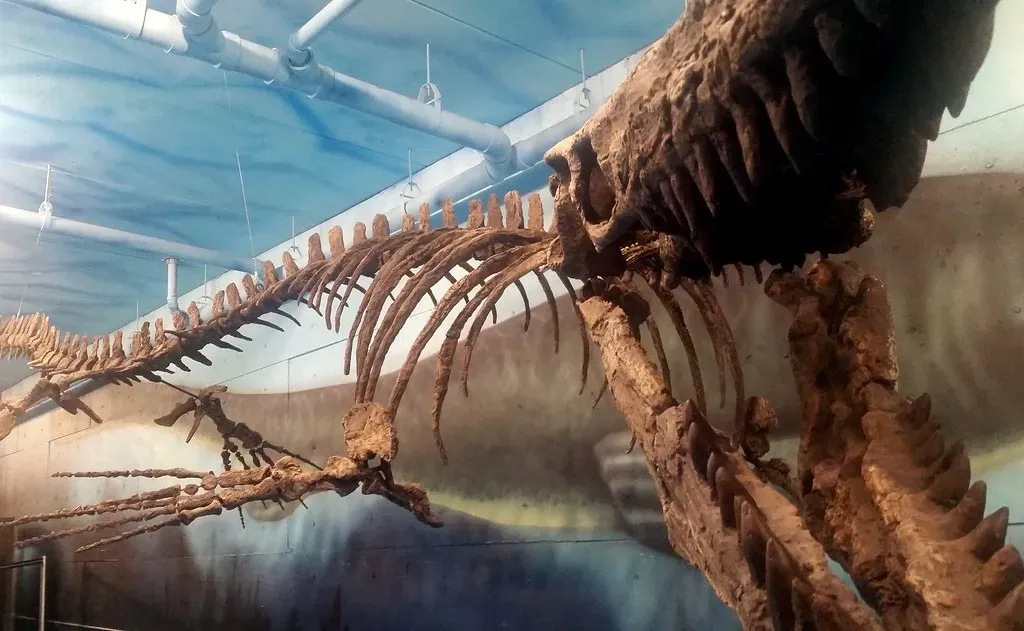
If you went looking for the story of mosasaurus today, you would not have to limit yourself to one country or one coastline. Fossils of mosasaurs have been found on multiple continents, including Europe, North America, and parts of other regions that were once covered by shallow seas. That wide distribution tells you that these animals were highly successful, spreading into many different marine environments before the end of the Cretaceous.
One of the most famous early discoveries came from rocks in what is now the Netherlands, where the name Mosasaurus was originally coined from fossils found near the Meuse River. Since then, you would see paleontologists uncovering new specimens from chalk cliffs, limestone quarries, and river valleys all over the world. When you imagine each fossil as a frozen snapshot of a once‑living animal, you start to see mosasaurus not as a single monster but as part of a widespread and thriving family of marine predators.
Even though the basic image of mosasaurus is now fairly well known, you should realize that the details are still a work in progress. New finds sometimes reveal soft tissue outlines, skin impressions, or better preserved skulls that refine how you imagine its shape and behavior. You are not dealing with a closed case; you are watching a long‑running scientific mystery slowly fill in, one bone at a time.
10. You Would See Its Reign End With the Same Catastrophe That Killed the Dinosaurs
If you could watch the very end of the Cretaceous from the viewpoint of a mosasaurus, you would feel the world change violently and suddenly. Around sixty‑six million years ago, a massive asteroid impact and the global chaos that followed triggered one of the most dramatic mass extinctions in Earth’s history. Conditions in the oceans shifted rapidly as food chains collapsed, temperatures changed, and sunlight was cut back, creating an environment where large, specialized predators like mosasaurus could no longer thrive.
From your perspective, that means mosasaurus did not fade away gently or evolve into something you might recognize today. Instead, it vanished entirely, leaving no direct descendants, while other lineages, like small marine organisms and the ancestors of modern fish, birds, and mammals, managed to pull through. When you look at the ocean now, full of whales, sharks, and giant squids, you are essentially seeing a different cast of giants filling ecological roles that mosasaurus once dominated. The ghosts of those reptiles are still there in the rocks, but their time passed in a catastrophe that reshaped the entire planet.
Conclusion: Imagining Your Ocean With Mosasaurus in It
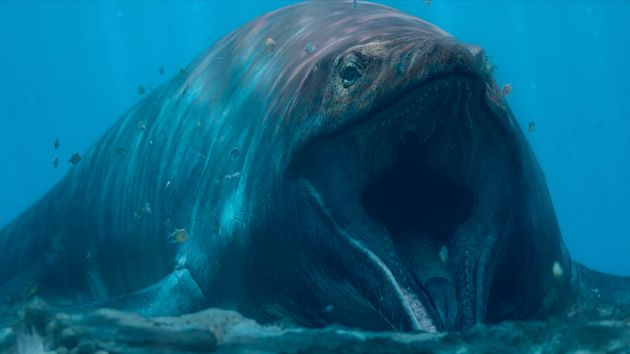
When you put all these facts together, you are really being asked to imagine an ocean that feels both familiar and deeply alien. You recognize the idea of top predators, complex food webs, and vast, open water, but instead of whales and great white sharks, you are sharing the sea with a giant reptile that evolved from land‑living ancestors and then perfected life in the water. You see a creature with bus‑sized bulk, a torpedo‑like body, and jaws designed to make every hunt brutally efficient.
Thinking about mosasaurus pulls you out of the comfort of modern nature documentaries and forces you to picture yourself as a small, fragile visitor in a world built for something far larger and more dangerous. At the same time, you get a front‑row seat to evolution’s creativity, watching how life experiments with form and function over millions of years. Next time you stand on a beach and look out at the waves, you might quietly wonder what it would feel like to know that somewhere beyond the breakers, a creature like mosasaurus could be gliding silently beneath the surface, deciding whether you are worth a closer look. If that were still true today, would you even dare to go for a swim?