
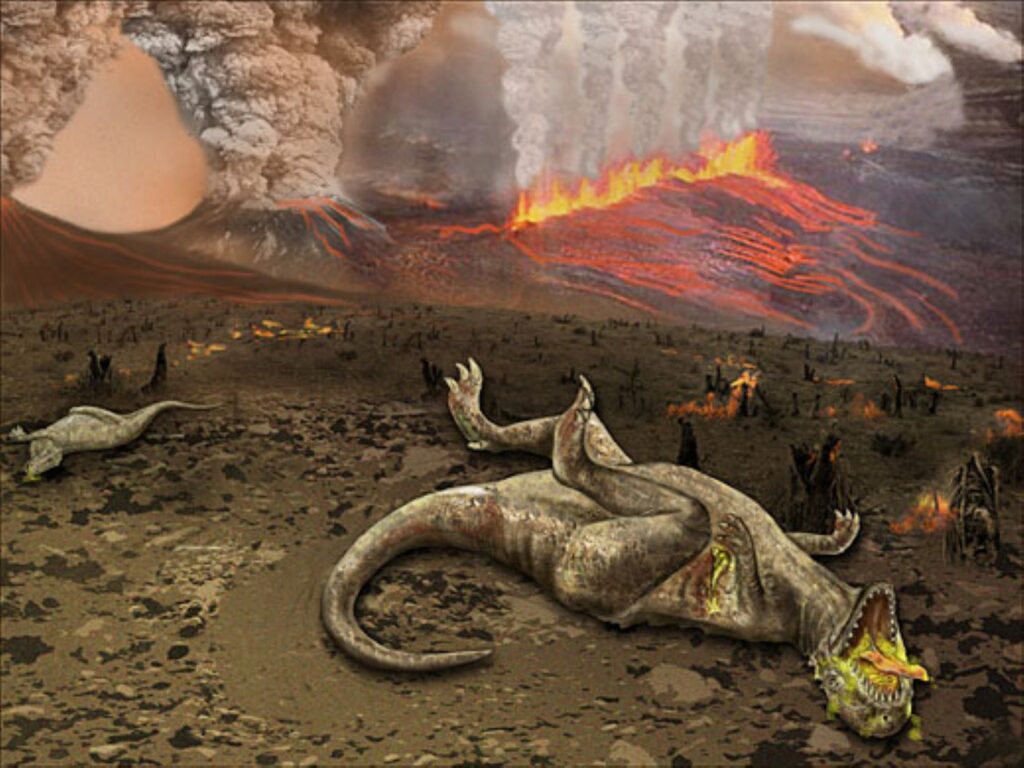
If you grew up picturing one giant rock from space instantly wiping out the dinosaurs, you are definitely not alone. That dramatic image is powerful, and the asteroid was absolutely central to what happened. But when you start digging into the geology, the climate records, and the fossil evidence, you find a messier story hiding underneath the simple headline.
You discover hints of a world already under stress: volcanic eruptions belching out gases for hundreds of thousands of years, seas changing level, ecosystems shifting long before the final day. The asteroid impact was more like the last shove given to someone already standing at the edge. Once you see it that way, the end of the Cretaceous stops being just a disaster movie and starts to look more like a layered mystery that you can slowly piece together from rocks, bones, and chemistry.
The Asteroid: Catastrophic, But Not Alone
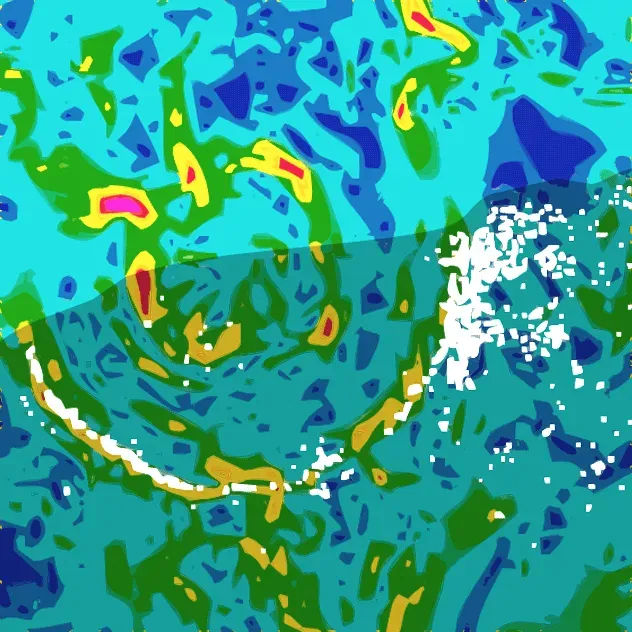
You cannot talk about the end-Cretaceous without starting with the asteroid, because the evidence for it is overwhelming. You see a thin global layer of clay rich in iridium, a metal rare on Earth’s surface but more common in some meteorites, right at the boundary between Cretaceous and Paleogene rocks. That layer acts like a time stamp, showing you that something abrupt and planet-wide happened at the same moment dinosaur fossils vanish from the record.
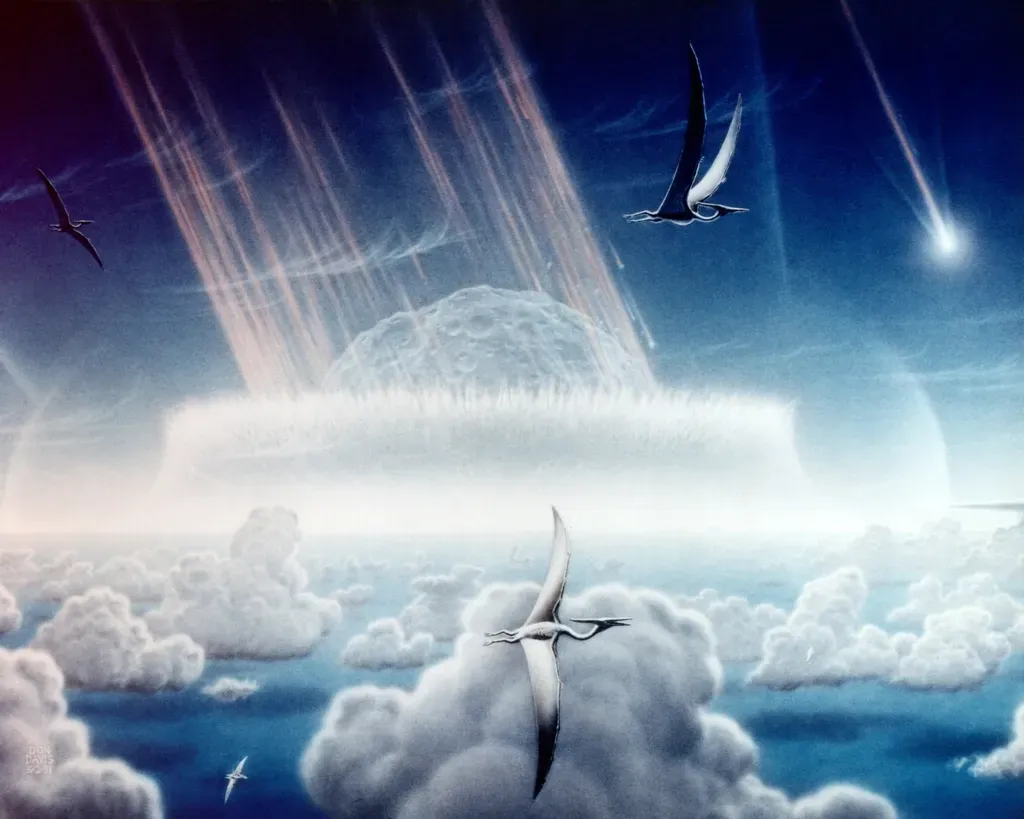
When you look at the buried Chicxulub crater in today’s Yucatán region of Mexico, you are staring at the scar of that event. The impact released unimaginable energy in seconds, triggering shock waves, tsunamis, wildfires, and debris that darkened the sky. But even as you appreciate how violent that day was, the more you read the science, the more you see that this was not a clean, single-cause story. The asteroid struck a world already dealing with long-term change, which means you have to widen your view beyond that one terrifying moment.
Deccan Traps Volcanism: A Planet Under Slow Siege
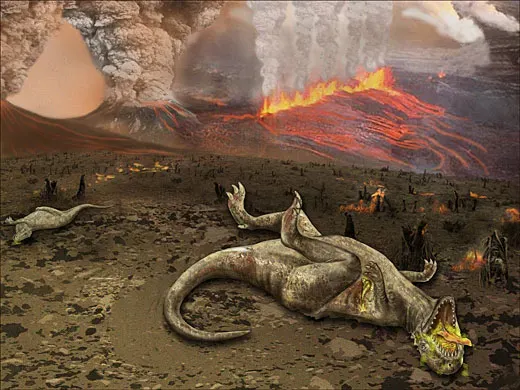
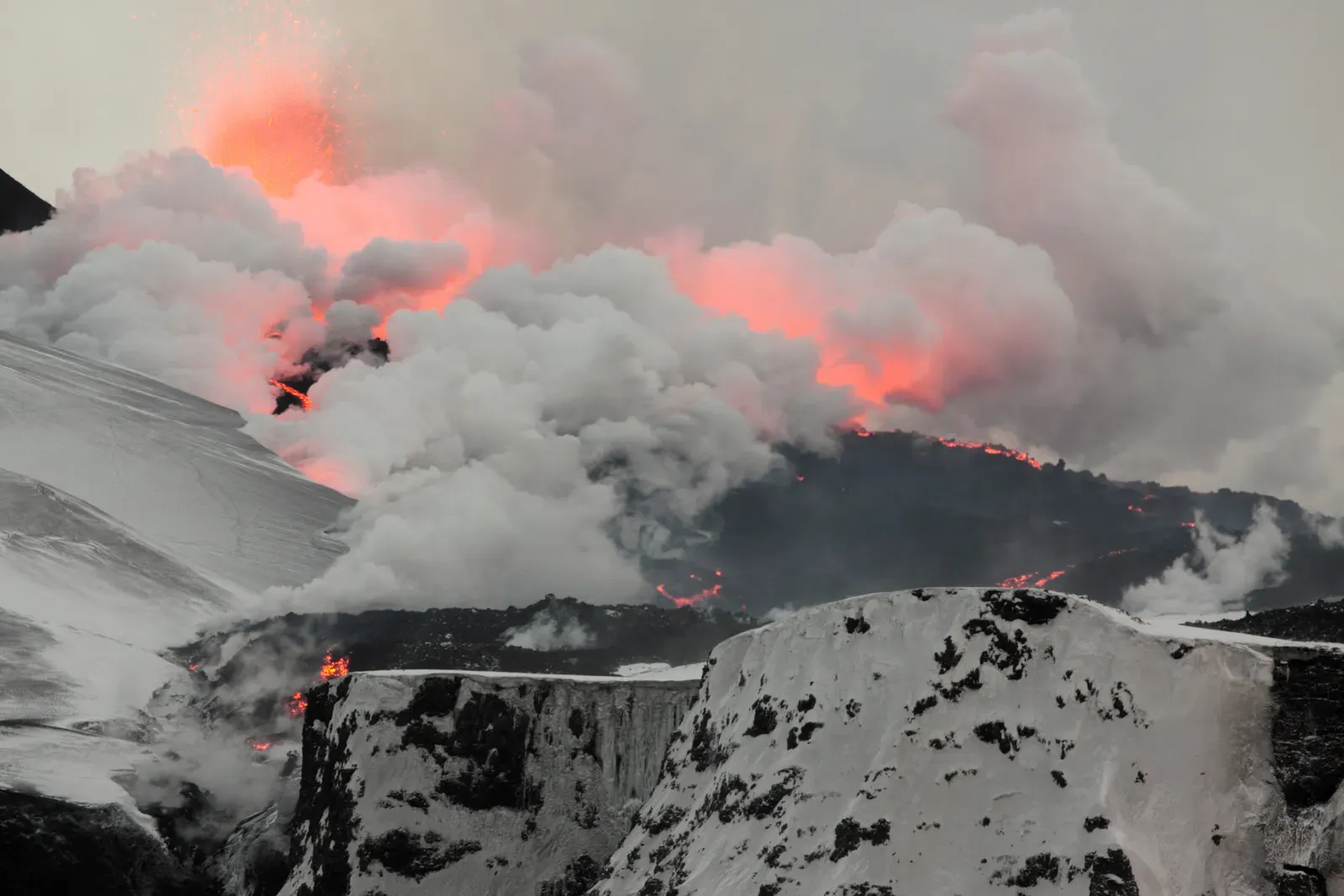
If the asteroid was a sudden punch, the Deccan Traps eruptions in what is now India were a slow, choking grip. You are dealing with one of the largest volcanic provinces on Earth, where layer upon layer of basalt lava built up over hundreds of thousands to a few million years around the time of the extinction. That kind of sustained volcanism does not just create rocks; it pours greenhouse gases like carbon dioxide and climate-cooling sulfur compounds into the atmosphere.
When you imagine this, picture your planet as a system constantly trying to balance its temperature and chemistry. Long-lived eruptions shove that balance off center by warming the climate, acidifying the oceans, and perhaps sending pulses of cooling aerosols into the sky. You start seeing how, even before the asteroid arrived, ecosystems might have been strained. Coral reefs, plankton communities, and land animals were living through a world that was gradually becoming less stable, with the asteroid slamming into a system already pushed toward the edge.
Climate Whiplash: From Greenhouse Heat to Impact Winter
You are not just looking at one climate shift at the end of the Cretaceous; you are looking at a brutal sequence of swings. Long-term volcanism could have driven a warmer greenhouse world, where temperatures crept up and ocean chemistry drifted from what many species were adapted to. Then, in an instant on geological timescales, the asteroid impact likely kicked off an “impact winter,” as dust and soot blocked sunlight and photosynthesis crashed.
Imagine you are a plant or a plankton species already coping with warmer seas and changing chemistry, and then light levels suddenly plummet for months or years. Food webs that relied on photosynthesis would have unraveled from the bottom up. When you put this together, you are not just seeing one bad climate event; you are seeing a one-two punch of long warming followed by abrupt cooling and darkness. That kind of climate whiplash is far harsher for life than a single, short-lived disturbance would have been.
Stressed Ecosystems Before the Final Blow
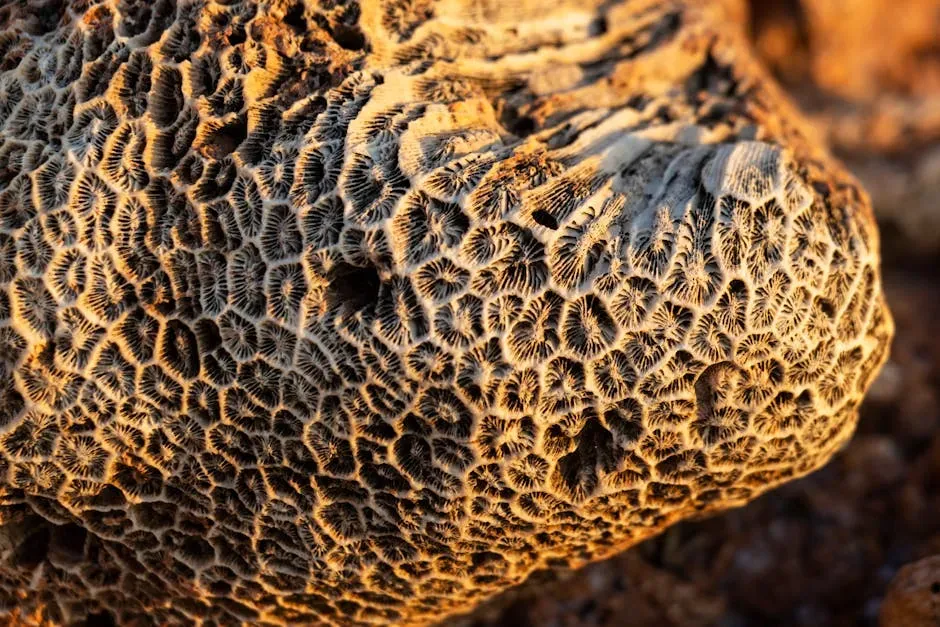
If you flip through the fossil record like chapters in a book, you notice that the story of life was already changing before the last page. In some places, dinosaur diversity appears to have shifted in the final few million years of the Cretaceous, with certain groups becoming more common and others fading. Marine records show turnovers in ammonites, foraminifera, and other organisms that suggest ecosystems were adjusting, not quietly cruising along in perfect stability.
You can picture ecosystems as networks, where each species depends on many others like knots in a net. When long-term environmental pressure tugs on that net, some strands start to fray even if the whole thing has not torn yet. By the time the asteroid hit, that web of life may already have been weakened by climate change, sea-level fluctuations, and volcanism. The impact then did not just knock over a robust system; it hit one that had less resilience left, making collapse much more likely and more widespread.
Winners, Survivors, and the Role of Luck
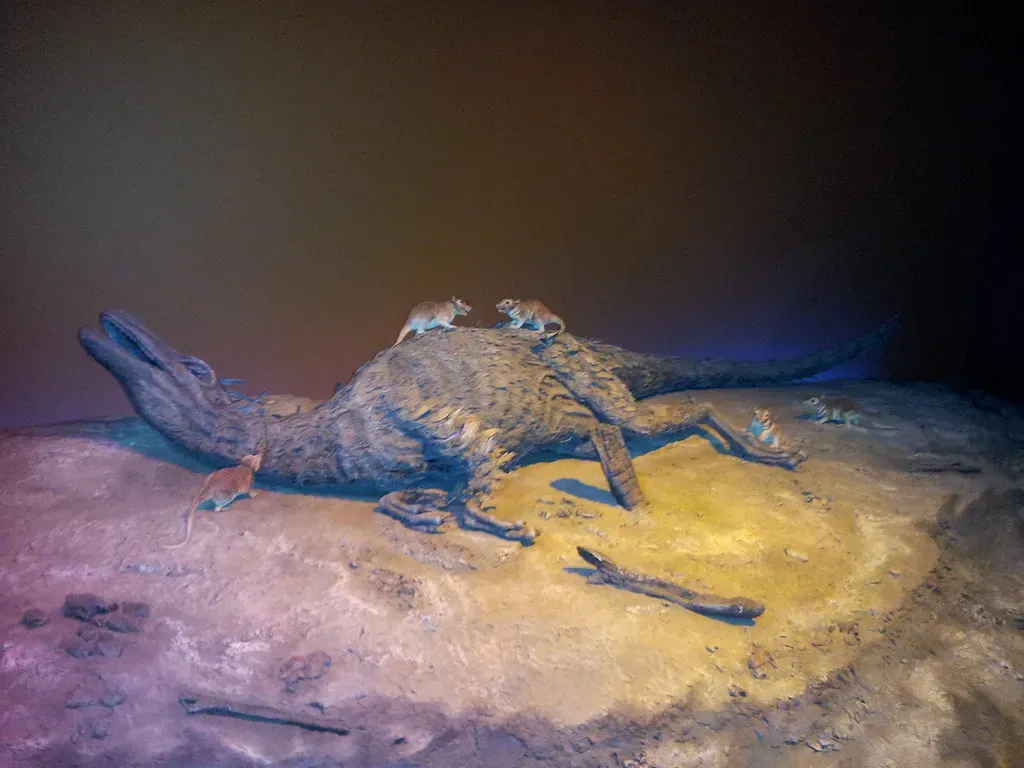
When you think about the end-Cretaceous, your mind probably jumps first to the losers: the non-avian dinosaurs, the ammonites, and many others that never returned. But you also need to pay attention to who made it through, because that is where you see how complex the crisis really was. Small mammals, some birds, certain reptiles, and many plants survived, suggesting that traits like small body size, flexible diets, and the ability to hide or go dormant mattered a lot.
You might be tempted to tell a neat story that the survivors were simply better adapted or more “fit,” but that risks flattening the nuance. You are dealing with a chaotic combination of local conditions, random chance, and biology. A mammal burrowed underground during the worst fallout, or a plant with hardy seeds, might have survived simply because of where it was and what it could do in that exact moment. That mix of adaptation and luck reminds you that mass extinctions are not tidy competitions; they are messy filters that sometimes spare life for reasons that feel almost arbitrary from your vantage point.
Why the Complexity Matters for You Today
It might be tempting to treat the end-Cretaceous as ancient drama that has nothing to do with your life, but the complexity of that extinction actually has uncomfortable echoes in the modern world. You live at a time when climate is changing rapidly, oceans are becoming more acidic, and ecosystems are being disrupted long before any single “event” might strike. When you see how multiple stressors lined up in the Cretaceous, it becomes harder to shrug off today’s overlapping pressures as separate or harmless.
By recognizing that the asteroid was part of a broader web of causes, you get a sharper, more realistic picture of how planetary crises unfold. They build slowly, through layered changes, and then sometimes snap suddenly when a final push arrives. That story should make you wary of assuming that if there is no single dramatic disaster yet, everything is fine. Instead, it nudges you to ask where your own world might already be fraying at the edges before any obvious breaking point appears.
When you put all these threads together, you stop seeing the end-Cretaceous as a simple “rock falls, dinosaurs die” plot and start viewing it as a complex, tragic chain of events. Long-term volcanism, shifting climates, stressed ecosystems, and finally a devastating impact all worked together to reshape life on Earth. You are left with a picture of a planet that can absorb a lot, but not everything, and of species that can be thriving one moment and gone in the next geological blink.
If there is a takeaway for you, it is that planetary change is rarely about just one cause, one villain, or one dramatic moment. It is usually about how many pressures build, interact, and finally cross a threshold you cannot easily reverse. So when you look around at your own time, with its rising temperatures and changing oceans, you might quietly ask yourself: are you watching the early chapters of a story you would rather not see repeated, or did you always think it would take an asteroid to change everything?