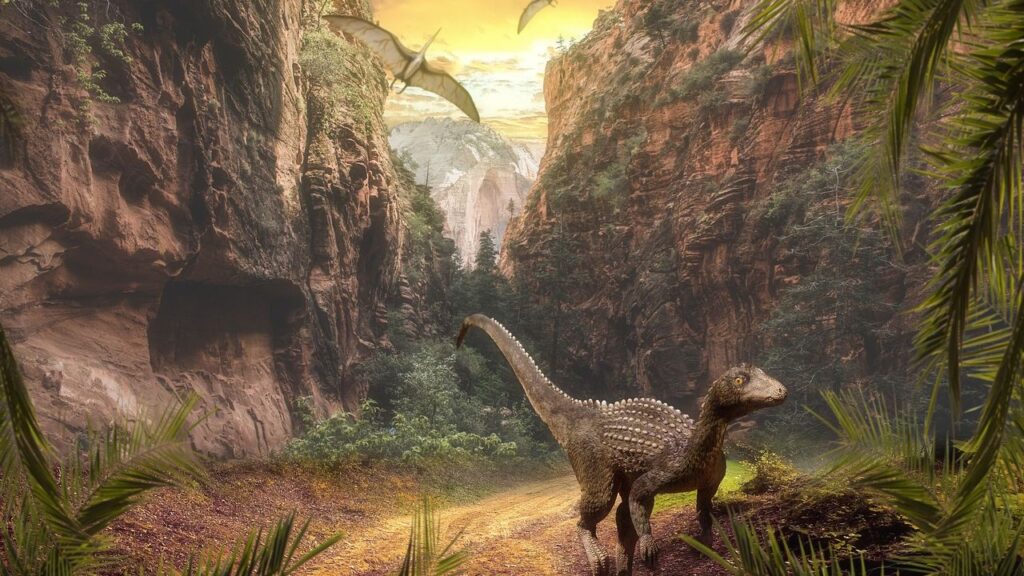
Paleontologists have recovered the fossilized remains of a small dinosaur that lived during the Middle Jurassic, some 166 million years ago. The animal measured roughly the size of a large dog and sustained itself on a strictly plant-based diet. Its unearthing provides a fresh window into an ancient ecosystem where much larger creatures dominated the landscape.
Unearthing a Modest Jurassic Resident
The specimen came to light after decades of limited access to the site where it was first spotted. Researchers eventually assembled enough skeletal material to confirm both its modest dimensions and its herbivorous habits. This find stands out because complete or near-complete remains from the Middle Jurassic remain uncommon in the fossil record.
Scientists pieced together the evidence through careful excavation and analysis. The resulting picture shows a creature that would have moved through undergrowth rather than towering over it. Its presence alongside larger contemporaries highlights the diversity that existed even in that distant time.
Life in an Era of Giants
During the Middle Jurassic, the world hosted an array of dinosaurs that ranged from massive predators to enormous herbivores. The newly described animal occupied a much smaller niche, feeding on vegetation that larger species might have overlooked. Its survival strategy likely involved agility and a low profile amid the giants.
Such small herbivores would have played a distinct role in their environment. They could exploit food sources closer to the ground and perhaps avoid direct competition with bigger plant-eaters. The discovery underscores how varied dinosaur communities truly were, even when the spotlight often falls on the largest members.
Further study of the bones may reveal more about growth patterns and daily habits. For now, the evidence already shows that not every Jurassic dinosaur needed to be enormous to thrive.
Why This Find Matters Today
Each new specimen from the Middle Jurassic helps fill gaps in our understanding of dinosaur evolution. The dog-sized herbivore demonstrates that smaller forms persisted and adapted alongside their outsized relatives. Continued work at similar sites promises additional insights into how these animals lived and interacted.
The fossil also reminds researchers that important discoveries can wait for years before full examination becomes possible. Patience and persistence in the field continue to yield results that reshape our view of prehistoric life. This particular animal, modest in size yet significant in context, adds one more piece to a still-unfolding story.