

Human language is so familiar that we forget how bizarre it really is. A few kilograms of brain tissue somehow coordinate sounds, gestures, and symbols into stories, laws, jokes, poetry, and late‑night arguments about nothing in particular. When you zoom out and look at how language emerged and transformed over deep time, it starts to feel less like a simple tool and more like one of the strangest “technologies” evolution ever produced.
I still remember reading, for the first time, that no one actually knows exactly when language began, only that at some point our ancestors went from grunts and gestures to gossip, myth, and mathematics. That blew my mind. Since then, every new study I’ve seen has confirmed the same thing: language is older, messier, and more flexible than any tidy origin story. Here are nine of the most fascinating, science‑grounded insights into how our species learned to talk, sign, and text its way through history.
1. No One Knows Exactly When Language Began

It sounds almost unbelievable, but for all our clever tools, we still cannot pinpoint when language truly appeared. Bones fossilize, but grammar doesn’t, and the trickiest parts of language are the invisible ones: syntax, shared meanings, and the mental choreography behind them. Paleoanthropologists can track when our vocal tract became capable of producing a wider range of sounds, and when our brains expanded, yet that still only tells us what was possible, not what actually happened.
Most scholars now think language didn’t pop into existence overnight like a software update; it probably emerged gradually over many thousands of years. Early hominins likely relied heavily on gestures, facial expressions, and simple vocal calls, which slowly knit together into more complex proto‑languages. The debates today are less about whether language is ancient and more about just how ancient it is – some tie it to the rise of Homo sapiens, while others push its roots back toward earlier species in our lineage. Either way, the uncertainty itself is oddly thrilling: we live with a capacity so central to being human whose birthday we simply cannot mark.
2. Our Bodies Quietly Rewired Themselves For Speech
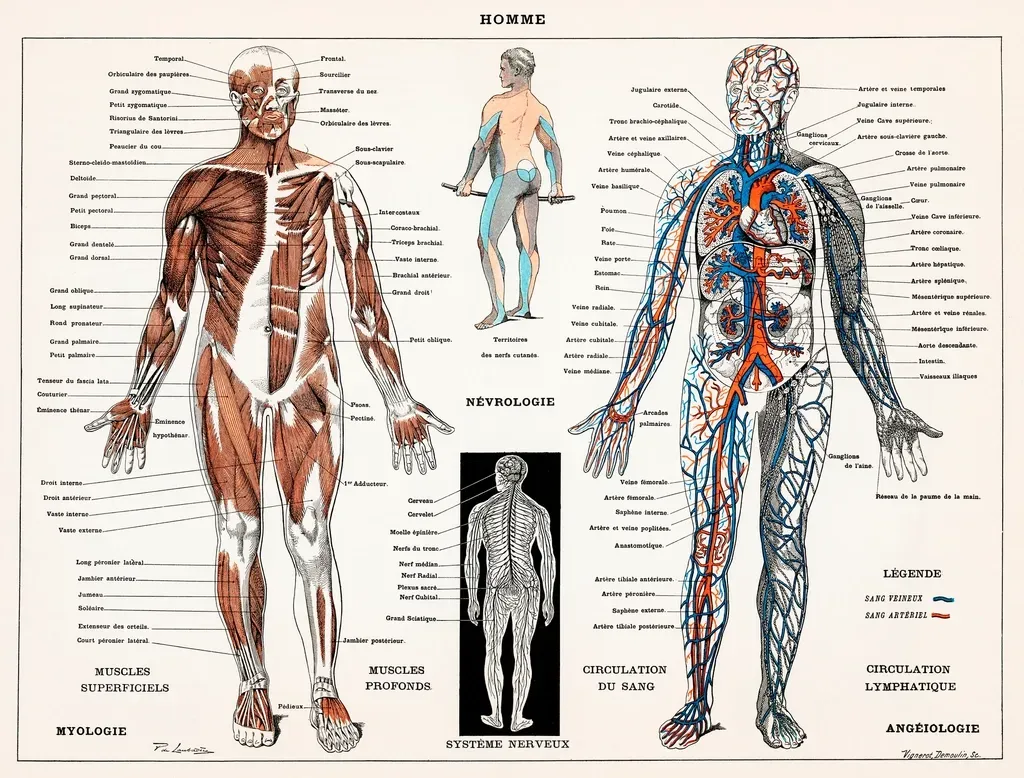
Language is not just in the mind; it is written into our anatomy. Compared with other primates, humans have a descended larynx, a reshaped tongue, and a more flexibly controlled breathing system, all of which make our range of speech sounds far richer. These changes came with trade‑offs: a lower larynx, for example, increases the risk of choking, which is a serious evolutionary price to pay unless the benefits are huge.
Those benefits likely came from what language allowed our ancestors to do together. Coordinating hunts, sharing knowledge about food or dangers, teaching skills, and building alliances all become more powerful when you can refer to things that are not right in front of you. Brain imaging studies also show that areas involved in fine motor control – especially for the hands and mouth – are deeply linked with language regions, suggesting a long evolutionary partnership between movement and speech. It’s as if evolution kept repurposing old circuitry for a new, more sophisticated kind of social signaling.
3. Gesture May Be Older Than Speech

Watch two people in a loud bar, or a traveler pantomiming to ask for directions in a foreign country, and you get a glimpse into what early communication might have looked like. Many researchers think gesture came first, with vocal sounds gradually taking on more of the workload. Our primate cousins support this idea: apes use rich gesture systems to communicate intentions, moods, and even surprisingly subtle social messages.
Human sign languages drive this point home. They are fully fledged languages with their own grammar, slang, and poetry, yet they rely entirely on the body rather than the voice. In some deaf communities, complex sign languages have emerged within just a few generations, proving that the human brain is ready to build language out of movement alone. This makes it very plausible that before speech dominated, our ancestors were already “talking” passionately with their hands, faces, and bodies, long before anyone uttered a structured sentence.
4. All Languages Are Complex – Even The “Simple” Ones

There’s a persistent myth that some languages are basic or primitive while others are refined and advanced. Linguistic research has shredded that idea. Whether you look at a small Indigenous language spoken by a few hundred people or a global language used in international politics, you find intricate patterns, exceptions, and rules that children somehow master by the time they are in primary school. Complexity may show up in different places – sounds, word structure, sentence patterns – but it is always there.
Some languages pack astonishing detail into single words, stacking pieces that indicate who did what, when, to whom, and how. Others keep words relatively simple but rely on flexible word order, particles, or tone to carry the load. When I first studied a polysynthetic language that could fit an entire English sentence into one long verb, I remember feeling almost cheated by how clunky my own native tongue suddenly seemed. The big takeaway: there are no “baby” languages on Earth; every living language is a masterpiece of collective engineering, refined by countless generations of speakers.
5. Children Are Tiny Language Revolutionaries
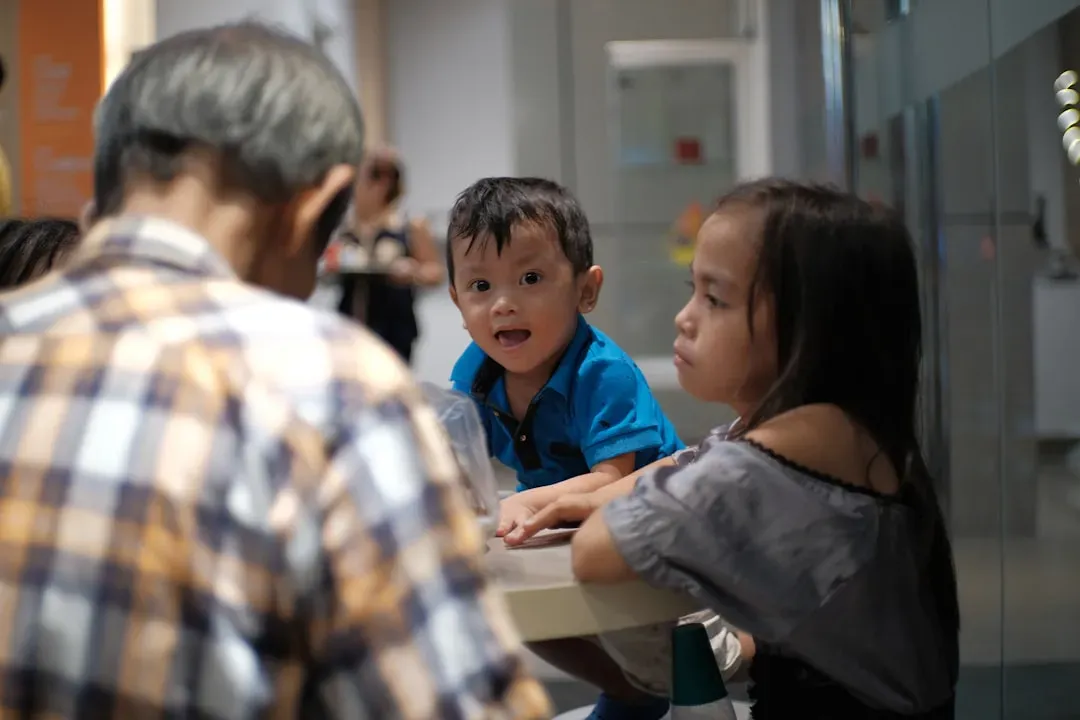
One of the most surprising discoveries in modern linguistics is how powerful children are in shaping language. When kids grow up with an imperfect or limited communication system, they do not just copy it; they systematically expand and regularize it. Studies of emerging sign languages show children spontaneously adding consistent grammar and structure that adults had never fully developed. In other contexts, when adults create a basic trade jargon to get by, children can transform it into a full language within a few generations.
You can even see smaller versions of this at home. Kids twist words, over‑apply rules (like saying “goed” instead of “went”), and invent slang that older speakers then adopt. At first, this looks like “mistakes,” but it actually reveals deeply creative pattern‑building. Rather than treating language as a static, inherited system, children behave like active engineers, tuning it for clarity, efficiency, and play. In a very real sense, every generation rewrites the code of human language, and children are the lead developers.
6. Languages Constantly Split, Fuse, And Morph

We often talk about languages as if they were separate species: English here, Spanish there, Mandarin over there. But if you look across history, languages behave more like swirling clouds than neatly bounded boxes. They split when populations move apart and stop talking regularly, gradually accumulating changes in sound, vocabulary, and structure until mutual understanding breaks down. That is how Latin slowly branched into the Romance languages over centuries, and similar processes are behind many of the world’s language families.
At the same time, languages can fuse and borrow heavily from each other when communities mix through trade, migration, or conquest. This is how new mixed languages and creoles arise, pulling grammar and vocabulary from different sources but stabilizing into coherent systems of their own. Modern English, for example, carries layers from Germanic roots, Norse contact, Norman French influence, and later global borrowings. The story of any language you speak is really the story of countless past encounters, power shifts, and creative mashups.
7. Writing Is A Recent – and Radically Disruptive – Innovation
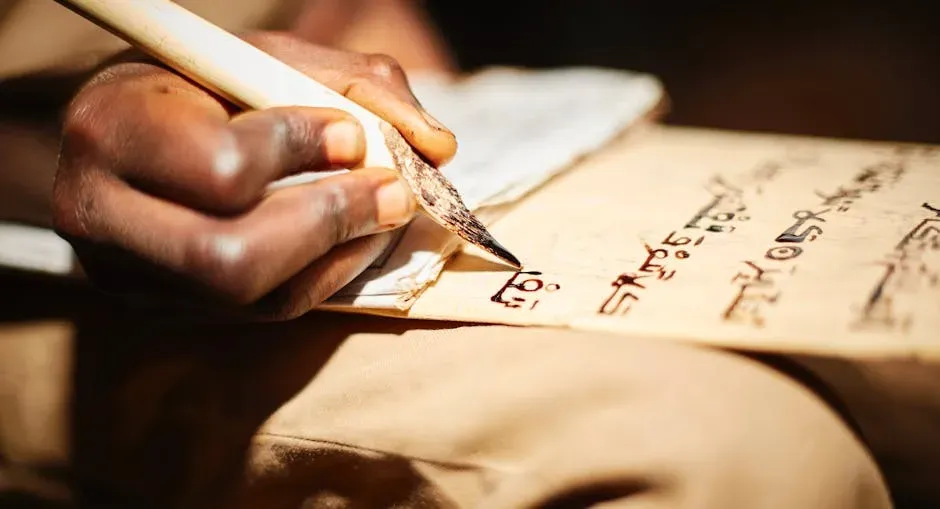
Spoken language is ancient; writing is shockingly recent by comparison. For most of human existence, everything had to be remembered, retold, and performed. The earliest known writing systems emerged only a few thousand years ago, originally not to capture poetry and philosophy, but to keep track of things like grain, taxes, and trade obligations. Over time, symbols that began as little pictures or tallies evolved into systems that could represent words, syllables, and eventually individual sounds.
Once writing spread, it changed what language could do. Laws no longer depended entirely on memory, stories could reach people who had never met the storyteller, and scientific knowledge could accumulate more reliably across generations. On the flip side, written standards sometimes froze particular forms of language and labeled others as “wrong” or “uneducated,” even though spoken varieties are just as legitimate. Personally, I find it humbling that the entire world of books, emails, and text messages sits on top of an invention so young that in evolutionary terms it might as well have appeared yesterday.
8. Technology Is Pushing Language Into New Shapes

From the printing press to smartphones, technology has been a relentless driver of language change. Today, digital communication has compressed our messages into quick bursts: posts, chats, captions, and replies that often blend speech‑like informality with writing‑like permanence. Abbreviations, emojis, and memes might look trivial on the surface, but they are doing real linguistic work by signaling tone, emotion, and social alignment in channels where we cannot rely on voice or facial expressions.
What fascinates me is how fast these changes move. A phrase or meme can circle the globe in days, then vanish or mutate into an in‑joke known only to people who “were there” at the right time. Far from “ruining” language, these shifts reveal how adaptable our communication system is. Humans are constantly hacking their own languages to fit new tools and new rhythms of life, whether that is squeezing meaning into a subject line or orchestrating a full‑blown story one disappearing message at a time.
9. Language Shapes Thought – But Not Like A Straightjacket

There is a long‑running debate over how much language influences the way we think. Research suggests a nuanced answer: the language you speak can tilt your perception and attention in certain directions, but it does not lock your mind into a single mold. For instance, speakers of languages that treat directions in terms of north, south, east, and west often develop an impressive sense of orientation, because their everyday speech constantly demands it. Speakers of languages with rich color vocabularies can become quicker at noticing certain color distinctions.
At the same time, people are clearly capable of learning new concepts and ways of seeing the world, even if their original language did not highlight them. You can learn to think in different frames, switch between them, and even borrow metaphors from other languages you encounter. From my perspective, the exciting part is not whether language rigidly shapes thought, but how it nudges and invites us into certain mental grooves – grooves that change as our languages evolve. In other words, the stories and labels we inherit do help script our reality, but we are always free to improvise new lines.
Conclusion: Language As Our Most Human Experiment
When you step back from the details, a pattern jumps out: language is not a finished product we received from the past, but an ongoing experiment we are all participating in. Our anatomy, our children, our migrations, our technologies, and even our arguments about “proper grammar” are all forces tugging at this shared system, stretching and reshaping it in ways no single person controls. That, to me, is what makes the evolution of language so riveting – it is evolution happening in fast‑forward, visible every time you overhear a teenager use a word you thought you understood in a completely new way.
It is tempting to mourn supposed declines or to romanticize some golden age when people supposedly spoke “better,” but the evidence tells a different story: language has always been messy, inventive, and slightly out of control, and that chaos is exactly what makes it powerful. If anything, we should be more worried about language becoming too rigid than about it changing too fast. So the next time you notice a new turn of phrase, a shifting meaning, or a sign language blooming in a community that previously had none, remember that you are watching a very old process play out in a very modern world. Looking ahead, the real question is not whether language will keep evolving – it will – but what kind of linguistic future we are willing to help create.