

You reveal more about yourself in an average Tuesday than in any personality test you’ve ever taken. The way you answer a text, choose a seat in a room, react to a late bus, or even arrange the things on your desk can quietly expose how your mind is wired. Psychologists have spent decades studying traits like introversion, openness, and conscientiousness, and what keeps showing up is this: our tiny, ordinary habits are often louder than our carefully chosen words.
As you read through these ten everyday clues, try something fun: do a quiet audit of your own behavior. Notice where you nod along and where you feel a bit called out. None of these clues are perfect or absolute, and context always matters, but together they form a surprisingly sharp mirror. You might realize that your “random quirks” are not random at all – they are your personality, hiding in plain sight.
1. How You React When Plans Suddenly Change

Think about the last time someone canceled on you at the last minute. Did you feel secretly relieved, mildly annoyed, or completely thrown off for the rest of the day? Your emotional response to sudden change is a powerful clue about traits like flexibility, neuroticism, and need for control. People who are lower in anxiety and more open to experience tend to adapt faster, sometimes even enjoying the unexpected free time or new opportunities that appear.
On the other hand, if a shift in plans instantly spikes your stress, it can suggest a higher sensitivity to uncertainty and a stronger preference for structure. That’s not a flaw; it simply means your nervous system likes predictability the way some people like adrenaline. If you notice yourself replaying the change in your head, trying to mentally re-organize everything, that persistent rumination often points to a more anxious, conscientious personality that hates loose ends and unfinished scripts.
2. Your Default Response Time to Messages

Some people respond to messages almost as soon as they see them, while others let texts marinate for hours or even days. This simple pattern can hint at underlying traits like conscientiousness, agreeableness, and introversion–extroversion. Fast responders often score higher in responsibility and social engagement; they feel an internal pressure to close loops and hate the idea of leaving someone “on read,” even if it’s just a casual chat.
Slower responders, in contrast, may be more introverted, more laid-back, or more selective with their energy. They often need time to think, to craft the right words, or to simply be in the right headspace to engage. It is not automatically rudeness; it can be a boundary around constant accessibility in a world that never stops buzzing. If your unread messages stress you out, that’s one kind of personality. If you can ignore them entirely while you recharge, that’s another.
3. The Way You Use Your Free Time When No One Is Watching

What you naturally drift toward when you have a free evening and zero obligations says a lot about your core drives. Some people immediately reach for social plans, calls, or group activities, revealing a more extroverted, stimulation-seeking personality that recharges through people and novelty. Others light up at the thought of a quiet night in, a book, a solo game, or a long walk, which points toward introversion and a need for internal, rather than external, stimulation.
Beyond the social angle, your free-time choices also hint at traits like openness and conscientiousness. Do you experiment, learn, and tinker with new skills, or do you prefer familiar comforts and reliable routines? Someone who spends their free time organizing, planning, or optimizing may lean heavily into order and achievement. Someone who loses hours in daydreaming, creative projects, or rabbit holes of curiosity often scores higher in openness and imagination. Either way, what you do when nobody is grading you is one of the clearest reflections of who you actually are.
4. How You Handle Minor Annoyances and Delays

From slow Wi‑Fi to long lines, tiny frustrations expose the parts of our personality that polite situations rarely touch. If you find yourself sighing loudly, checking the time every thirty seconds, or mentally composing complaints, that intensity can signal higher levels of irritability and emotional reactivity. People with higher neuroticism tend to experience these everyday hassles as more personally aggravating, as if the universe is deliberately testing them.
By contrast, those who shrug, joke about it, or simply switch to a different task while they wait often show higher emotional stability and better impulse control. They treat minor annoyances as background noise rather than a personal attack. If you instinctively look for a workaround or a silver lining, that resourceful, problem-solving mindset reflects a personality that is more resilient and solution-oriented, rather than one that gets stuck in the feeling of being inconvenienced.
5. Your Relationship With Order, Mess, and Your Stuff

Walk into your living space or glance at your work desk: it is basically an x‑ray of your personality. People who maintain clear surfaces, labeled folders, and consistent systems tend to score higher on conscientiousness and self-discipline. They often feel calmer when everything has a place and the environment is predictable. For them, tidiness is not about appearances; it is about mental clarity and a sense of control.
Meanwhile, a messy space does not always equal chaos or laziness. Some creative, highly open personalities thrive in what looks like disorder from the outside but feels intuitive to them on the inside. They may have multiple projects scattered around, visual reminders everywhere, and a physical environment that mirrors the many threads running through their mind. The key clue is not just how your space looks, but how you feel in it: energized and inspired, or stressed and overwhelmed.
6. How You Make Everyday Decisions, Big or Small

Watch yourself choose a meal, a movie, or a route to work. Do you decide quickly with a sense of “good enough,” or do you research, compare, and agonize over every option? Quick deciders tend to be more comfortable with risk, ambiguity, and imperfection. They often prioritize momentum over perfection, which is linked to traits like lower anxiety and sometimes higher extraversion and confidence.
In contrast, people who sift through reviews, ask multiple opinions, and feel pressure to make the “best” choice often show a blend of conscientiousness and anxiety. They care deeply about outcomes and hate the idea of regret, so they try to optimize everything, even small choices. This can be a strength in high-stakes decisions but exhausting in day-to-day life. If you notice yourself constantly second-guessing, that tendency toward overthinking is not random; it is a behavioral fingerprint of your personality type.
7. Your Social Energy After a Long Day

After work or school, what feels like relief: meeting up with people or shutting the door and being totally alone? Your answer is one of the most reliable everyday clues about introversion and extraversion. Extroverted personalities often feel a lift when they step into a social space, even if they were tired before. Conversation, noise, and shared experiences act like a mental battery charger for them.
Introverted personalities, by contrast, may enjoy people deeply but find that too much interaction drains rather than boosts their energy. After a long day, they want silence, one-on-one connection, or low-stimulation environments. Neither style is better; they are simply different operating systems. If you consistently feel guilty for wanting to cancel or leave early, it might not be that you are antisocial; it might just be that your energy math works differently.
8. How You Talk to Yourself When You Make a Mistake
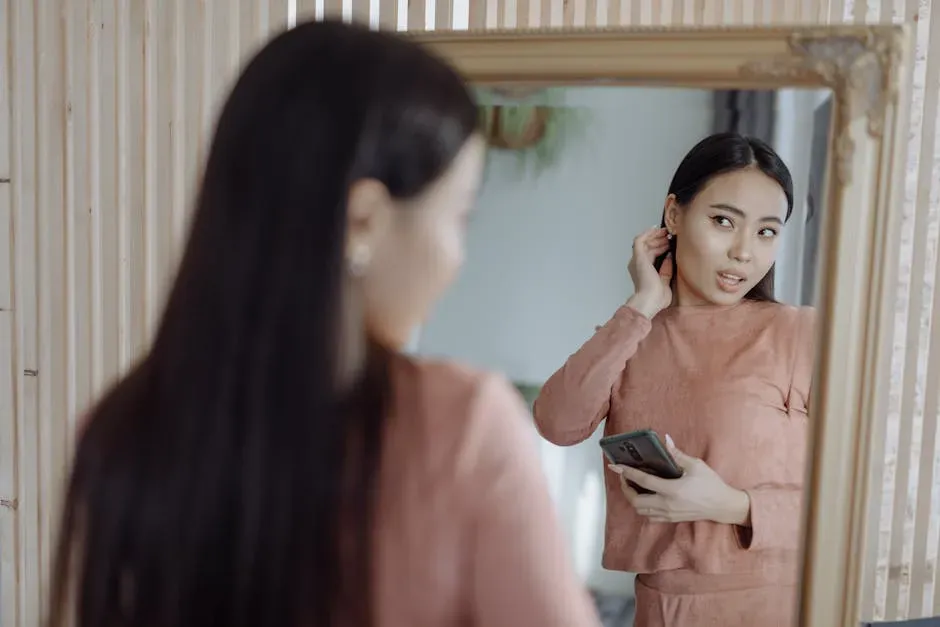
Everyone messes up, but the voice in your head when you do is a huge personality clue. Some people instinctively respond with harsh self-criticism, replaying their errors and calling themselves names they would never use on a friend. This pattern often shows higher neuroticism and a self-concept that is more fragile or perfectionistic. It can drive achievement, but it also increases stress and burnout risk over time.
Others are more likely to say something internally like, “That was rough, but fixable,” and shift into problem-solving mode. This more compassionate, pragmatic self-talk points toward higher emotional stability, better self-acceptance, and sometimes higher agreeableness directed inward. Pay attention to whether your inner voice sounds like a coach, a critic, or a panicked alarm bell. That tone is not just about mood; it is a consistent reflection of how your personality treats you under pressure.
9. Your Favorite Kind of Conversation

Listen to the types of conversations that light you up. Some people thrive on quick, light banter, small talk, jokes, and frequent topic changes. This often reveals a more socially bold, stimulation-seeking personality that loves breadth over depth. These people can be the glue in a group setting, keeping the energy high and everyone included, even if they never dive too far below the surface.
Others get restless with surface-level chatter and perk up only when the discussion turns to ideas, values, or personal experiences. That preference for depth often aligns with introversion, higher openness, and sometimes higher empathy. They may not talk as much in a crowd, but they remember details, ask thoughtful questions, and prefer fewer, closer connections. What you consider a “good conversation” is one of the clearest windows into what your inner world craves.
10. How You Respond to Rules, Norms, and “The Way Things Are”

Think about how you feel when you are told, “That’s just the way it is,” or “Those are the rules.” Some people feel reassured; clear rules reduce uncertainty and make expectations obvious. This comfort with structure tends to show up in more conscientious, dutiful personalities who value stability and predictability. They like knowing what lane they are in and what success looks like within it.
Others feel an almost automatic urge to push back, ask why, or bend things to fit their own logic. That little streak of rebellion often reflects higher openness, independence, and sometimes lower agreeableness with authority. These personalities can be innovators and disruptors, but also the ones who struggle most in rigid environments. Whether you instinctively conform, quietly adapt, or openly challenge the status quo is an everyday clue to how your personality negotiates with the world around it.
Conclusion: Your Life Is a Personality Test You’re Already Taking

If you step back for a moment, you might notice something humbling and a bit uncomfortable: you do not need a complex quiz to , because your life is already doing that every day. The way you handle that canceled plan, those unread messages, that messy desk, or that crowded room is not random; it is your pattern. I find that both thrilling and slightly confronting, because it means we are all far more transparent than we like to pretend.
The good news is that personality is not a prison sentence. These clues are not labels meant to trap you; they are mirrors you can use to understand yourself better and, if you choose, to gently tweak the habits that are holding you back. Maybe you decide to be kinder in your self-talk, more honest about your social limits, or more accepting of your need for structure or spontaneity. In the end, the real power is not in naming your “type,” but in noticing your patterns and owning them. Now that you have seen some of your own clues more clearly, which one are you most tempted to change – and which one are you finally ready to embrace?