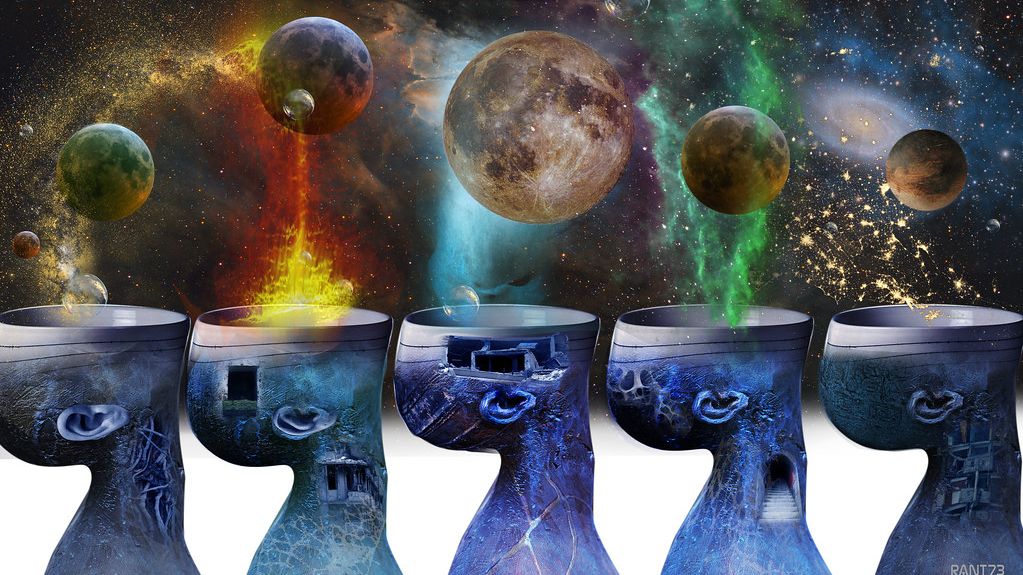
You know that eerie feeling when you stare up at the night sky and it almost feels like something is staring back? For most of us, that’s just a passing shiver, quickly buried under emails, errands, and streaming queues. But for many ancient philosophies, that feeling was not a glitch in perception – it was a clue. They saw the universe not as a giant lifeless machine, but as a living mind, a vast field of awareness in which we swim like fish in an invisible ocean.
From India to Greece to Indigenous traditions across the planet, a surprisingly consistent idea shows up: consciousness is not just a human brain thing. It is woven into the fabric of reality itself. Today, as neuroscientists, physicists, and philosophers wrestle with the mystery of consciousness, some of those old ideas are quietly sneaking back into serious conversations. Are the ancients simply projecting human feelings onto the cosmos – or did they glimpse something we’re only now learning how to talk about?
The Ancient Intuition: Reality As A Living Mind
One of the most striking patterns across ancient worldviews is how rarely they imagined a dead, mechanical universe. Instead, they leaned toward something more like a gigantic psyche. The cosmos was thought to breathe, desire, remember, and in some mysterious way, know. When early philosophers and mystics looked at storms, seasons, and star patterns, they did not just see physical events; they sensed intention and meaning, as if reality itself had a kind of inner life.
This did not always mean a single personalized god pulling strings like a cosmic puppeteer. Often it was closer to what we might now call a field of awareness, like a background operating system running through everything. The idea that matter and mind are completely separate would have sounded bizarre to many ancient thinkers. For them, what we call “the universe” and what we call “consciousness” were two sides of the same mysterious coin, different expressions of one living whole.
Indian Vedanta And The Idea Of Cosmic Consciousness
In the Indian Vedantic tradition, the universe is not just sprinkled with a little consciousness here and there; it is rooted in consciousness all the way down. The core insight is that behind all changing forms – galaxies, plants, animals, your stream of thoughts – there is a single, unchanging awareness sometimes called Brahman. This is not a creator god in the usual sense, but the pure, boundless consciousness from which everything else arises, like waves rising and falling on the surface of a vast ocean.
Interestingly, the same tradition insists that the consciousness you feel when you say “I am” is not fundamentally separate from that cosmic awareness. The everyday self may feel small, anxious, and isolated, but at a deeper level it is said to be identical with the core of the universe. That is a wild claim. It suggests that what we call “inner experience” is not a private bubble sealed inside a skull, but a local expression of something unimaginably larger. Even if you do not buy the metaphysics, it is hard to deny how powerful and stabilizing that picture of reality can feel.
Buddhist Mind-Only Schools And A World Made Of Experience
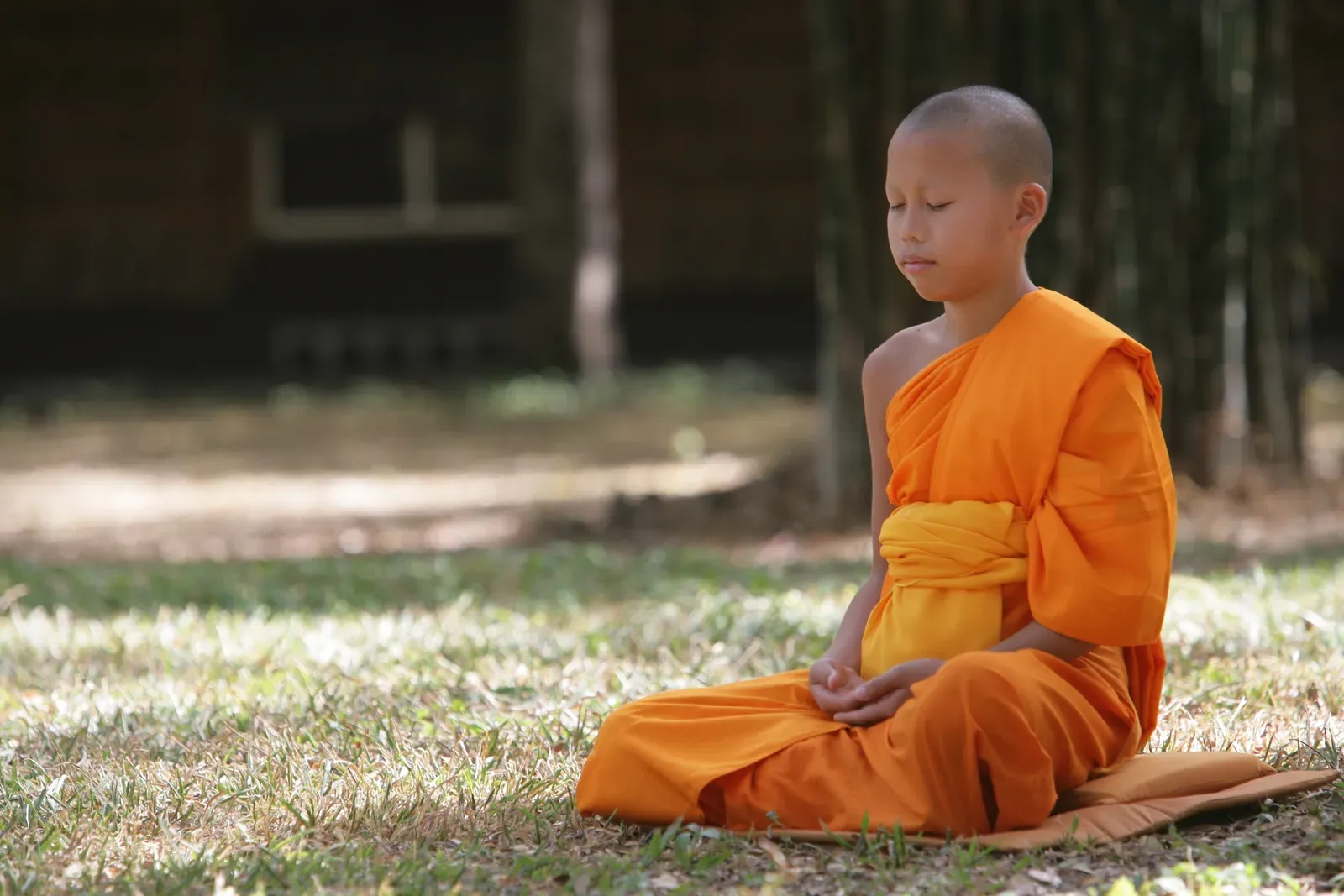
Some Buddhist schools went in a different but equally radical direction, arguing that what we call the “external world” is inseparable from mind. In certain strands of Buddhist thought, especially the so‑called mind‑only or yogic schools, experience is not just a thin layer painted on top of matter. Instead, everything we encounter is understood through mental processes, and there is no way to peel mind away and be left with some completely mind‑independent universe we can still talk about. Reality, as it shows up for us, is always already filtered, shaped, and colored by awareness.
To be clear, many Buddhists stop short of saying that some giant cosmic self is out there dreaming the universe. Their focus is usually more practical: questioning our automatic assumption that the world “out there” is just solid, fixed stuff while our inner life is a sort of secondary add‑on. By turning that assumption inside out, they invite us to see experience itself as primary. A universe where experience is the starting point ends up feeling uncomfortably close to the idea of a universe that is, in some deep way, conscious.
Greek Panpsychism: Mind In Every Corner Of Nature
Ancient Greek philosophy is often remembered for its logic and early science, but woven through it is a stubborn intuition that everything in nature has some inner spark. Early thinkers like Thales have been interpreted as suggesting that all things are full of mind, not just humans or animals. Later philosophers argued that the cosmos is an ordered, living whole, sometimes described as a world‑soul, with all its parts participating in different degrees of awareness, however faint or primitive that awareness might be.
This view, known in modern terms as panpsychism, refuses the sharp line many of us take for granted between “living, conscious beings” and “dead, unconscious matter.” Instead, it pictures a continuum. Rocks and rivers might not have thoughts the way you do, but they are not entirely devoid of inner aspect either. In this frame, human consciousness is not a miracle that popped up from nowhere, but a highly organized expression of something that is already quietly present throughout the universe. Whether you find that poetic or plausible, it is miles away from a cold, clockwork cosmos.
Indigenous Cosmologies And A Sentient Earth
Many Indigenous traditions never divided mind and matter in the harsh way modern industrial culture tends to do. Mountains, rivers, forests, animals, even the weather were often understood as relational beings with their own perspectives and forms of awareness. The land was not just scenery and resources; it was kin. When you live inside a worldview like that, the question is not whether the universe is conscious, but how to be in right relationship with all the other minds that accompany you.
From this angle, consciousness is not a rare exception that shows up only in creatures with big brains. It is a shared quality of existence, expressed differently in each form of life and landscape. Modern people sometimes romanticize this, but there is also a hard ethical edge to it. If the world around you is alive and aware, exploitation starts to look a lot like abuse. Even if you treat these cosmologies as metaphor rather than literal description, they push us to notice how numb and disconnected a purely mechanical picture of the universe can make us feel.
Modern Science, The Hard Problem, And Why Consciousness Won’t Stay In Its Box
Fast‑forward to contemporary neuroscience and physics, and you might expect the ancient idea of a conscious universe to be thoroughly buried. Instead, consciousness has become a genuine headache for many scientists. We can map brain activity in staggering detail, but explaining how raw experience – pain, color, the taste of coffee – emerges from electrical patterns is still an unsolved puzzle. This gap, often called the hard problem of consciousness, leaves room for more adventurous theories, including some that sound suspiciously close to older philosophies.
To be fair, mainstream science does not endorse the claim that the universe literally “knows” things the way you know your name. Most researchers work from the assumption that consciousness is a biological phenomenon emerging from brains. But a growing minority of philosophers and a few physicists question whether that story really adds up. When they say that consciousness might be a fundamental feature of reality, they are not secretly smuggling in ancient theology; they are trying to make sense of the fact that subjective experience stubbornly resists being flattened into mere data.
Panpsychism’s Comeback: An Old Idea In A New Outfit
Over the last couple of decades, panpsychism has quietly stepped back into philosophical respectability. The updated version does not claim that stones gossip or that electrons have secret opinions. Instead, it suggests that every physical system has some extremely simple, perhaps unimaginably basic, form of experience that scales up in complexity as systems become more integrated and organized. Human consciousness would then be what happens when countless tiny packets of proto‑experience weave together in intricate ways.
This might sound like spiritual wishful thinking, but it actually arises from a very sober frustration: attempts to get consciousness from dead, purely objective matter keep running into walls. By building mind into the foundations of physics, panpsychism tries to avoid the magic trick where awareness suddenly appears out of nowhere. Does that prove the universe is conscious in the way ancient philosophies imagined? Not really. But it does show that the line between old metaphysical visions and new scientific theories is thinner than many people assume.
Living As If The Universe Is Conscious: Psychological And Ethical Ripples

Even if you stay agnostic about the metaphysics, there is something undeniably powerful about relating to the universe as if it is, in some sense, awake. When you walk through a forest imagining it as a community of living subjects rather than a collection of objects, your nervous system responds differently. Awe comes more easily. Gratitude feels more natural. You might notice your own thoughts and emotions softening at the edges, as if they are not sealed inside your head but participating in a wider field of experience.
On a more practical level, a universe imagined as conscious nudges us toward different ethical choices. It becomes harder to justify reckless exploitation of ecosystems if you think of them as possessing their own forms of presence and value. The idea that everything is embedded in a web of awareness can foster humility: suddenly, humans are not lonely geniuses on a dead rock, but relatively young participants in an ancient, mysterious intelligence. Whether or not that is literally true, there is something psychologically sane about a worldview that pulls us out of our narrow self‑obsession and into relationship with the wider cosmos.
Conclusion: A Bold Claim Sitting On A Thin Edge Of Evidence
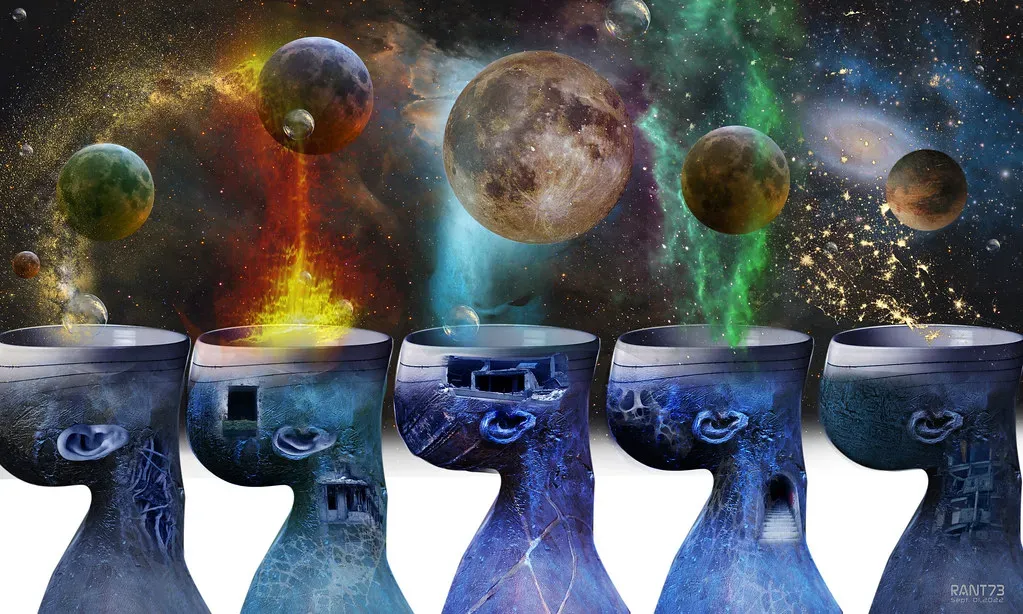
So, is the universe conscious? If we are being brutally honest, we do not know. Ancient philosophies offer rich, poetic, and sometimes brilliantly coherent visions of a living cosmos. Modern theories like panpsychism show that a mind‑suffused universe is not automatically anti‑scientific nonsense. But the hard data we have right now does not compel that conclusion. At best, it keeps the door open. The claim that the universe is conscious is still a daring leap, one that rests more on intuition, philosophical elegance, and existential hunger than on decisive proof.
Personally, I lean toward treating the idea as a powerful working hypothesis rather than a settled fact. When I look up at the night sky, it feels more honest to admit that I have no clue what kind of reality I am standing inside, and that a conscious universe is at least as plausible as a permanently dead one. Maybe the ancients were wrong, or maybe they were onto something we have not yet learned how to measure. Either way, the real question might be this: how does your life change, moment to moment, depending on which story you choose to live inside – an indifferent machine, or a vast, mysterious mind?