
You know that coworker who talks over everyone, rolls their eyes in meetings, or fires off passive‑aggressive emails like it’s a sport? Most of us have worked with someone who seems allergic to basic respect. And while part of you wants to snap back, another part knows that matching their behavior will only drag you down, not lift you up.
Here’s the twist most people never consider: you can demand respect without uttering a single word. Your body, your timing, your silence, and even the way you move through a room constantly broadcast signals about what you’ll tolerate. When you use those signals intentionally, rude people often recalibrate on their own. Think of it like adjusting the thermostat in a room: you quietly change the setting, and everyone else starts behaving differently without quite knowing why.
1. Master The “Calm Face” That Silently Sets Boundaries

Nothing disarms a rude person faster than a face that refuses to play their emotional game. Most people either flinch, frown, or nervously smile when someone is disrespectful, which unintentionally rewards the behavior with a reaction. A calm, neutral expression instead sends a different message: you are noted, but you’re not impressive, and you’re certainly not in control of my emotions. Psychologists often describe this as emotional regulation, and it is closely tied to how others judge your authority and stability.
Practically, this looks like relaxing your jaw, softening your eyebrows, and letting your eyes rest steadily on the person without glaring or shrinking away. You are not “mean‑mugging” them; you are simply not performing for their drama. I once had a manager who loved to raise his voice in meetings. The day I stopped reacting with nervous laughter and just looked at him with a calm, attentive face, his tone noticeably dropped. People quickly learn which nervous reactions feed their ego and which calm faces make them feel exposed. Your silence plus a composed expression often says, “You do not intimidate me,” far louder than any comeback ever could.
2. Use Posture Like Armor: Stand And Sit As If You Belong There

The way you occupy physical space tells rude people a lot about what they can get away with. When you hunch, fold into yourself, or fidget, you signal that you’re easy to dismiss or talk over. On the other hand, an upright posture with your shoulders back and spine tall quietly radiates self‑respect. Studies in nonverbal communication have repeatedly linked open, grounded posture with perceptions of competence and leadership, and rude people tend to hesitate before trying to bulldoze someone they view as confident.
Try this in your next tense interaction: plant both feet on the ground, sit or stand tall, and keep your movements deliberate and unhurried. Avoid crossing your arms tightly; instead, rest your hands lightly on the table or in your lap, showing you’re not bracing for impact. Think of your posture as a silent contract that says, “I belong in this room, at this table, in this discussion.” You may notice that the office interrupter starts to hesitate ever so slightly before cutting you off, or that their tone softens without you saying a word. Rudeness thrives on perceived weakness; strong posture makes it clear there is no easy target here.
3. Control Your Gaze: Eye Contact That Ends Subtle Disrespect

Eye contact is one of the most powerful tools you have, and rude people know it. They often rely on you looking away first, glancing down, or nervously darting your eyes around the room to keep the power tilt in their favor. When you hold steady, calm eye contact for just a moment longer than usual, you flip that script. You’re not challenging them to a staring contest; you’re conveying that you see exactly what they’re doing and that you’re not rattled.
In practice, this might look like pausing when someone interrupts you, turning your head toward them, meeting their eyes briefly but firmly, and then returning to your task or to the person you were originally engaging with. That tiny beat of intentional gaze often communicates, “I noticed that, and no, you don’t run this show.” Social psychology research suggests that people interpret sustained but non‑aggressive eye contact as a sign of confidence and higher status. Over time, this kind of clear, calm gaze can re‑train even the chronic interrupter to think twice before taking that cheap shot again.
4. Let Silence Do The Heavy Lifting When Someone Crosses The Line
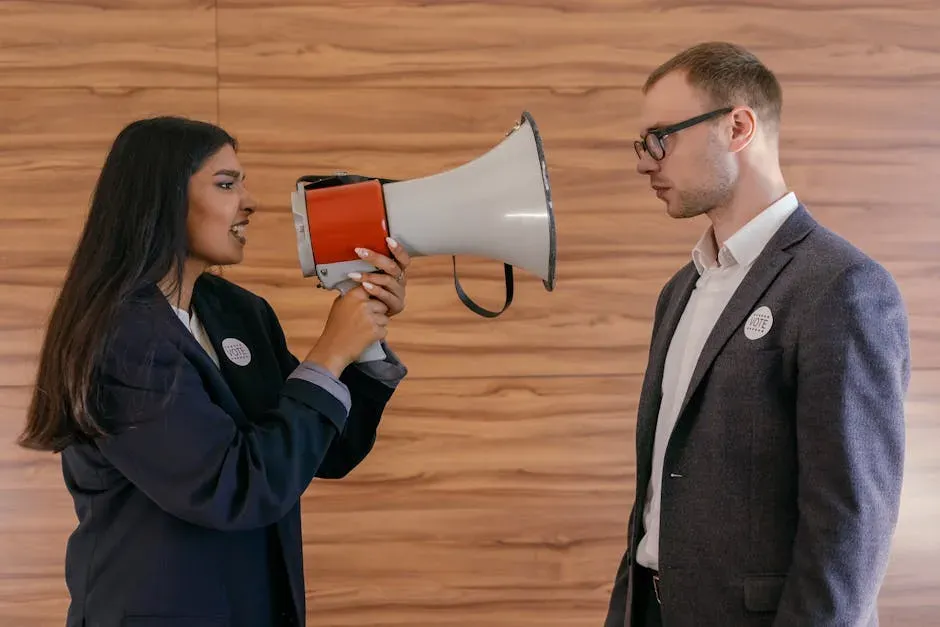
Silence might be the most uncomfortable tool in your arsenal – and that is precisely why it works. Rude people often feed off quick reactions: arguments, defensive explanations, or emotional outbursts. When they drop a disrespectful comment and the room falls into a deliberate, pointed silence, the social pressure boomerangs back onto them. That quiet beat forces them to sit with what they just did without being rescued by your nervous chatter.
Here’s how this can work in real life: someone makes a snide remark in a meeting instead of acknowledging your work. Instead of laughing it off or immediately defending yourself, you simply stop, look at them neutrally, and say nothing. Let the silence stretch for a couple of seconds longer than feels comfortable, then calmly return to what you were doing or move on with the agenda. You have not escalated; you have not attacked. You have simply refused to smooth over their bad behavior. Many people underestimate how often silence makes others self‑correct. Your quiet refusal to fill the gap can be a subtle but powerful demand for respect.
5. Redraw The Room: Where You Sit And Stand Signals Your Status

The physical layout of your workspace can either amplify or undercut the respect you get, and most of us never even think about it. Rude people often take advantage of those who tuck themselves away at the edge of the table or stand hesitantly in the background. By choosing your spot more intentionally – closer to the center of the table, not hidden behind a monitor, not literally in the shadow of someone else – you send a silent message that you expect to be seen and considered.
Next time you walk into a meeting, try this experiment: instead of heading automatically for the furthest corner, take a seat where you have a clear line of sight to the key people in the room. Place your notebook or laptop in front of you with purpose, not as if you’re trying to shrink behind it. Even in hallway conversations, step slightly forward instead of hanging back on the edge of the group. Environment and proximity shape social hierarchies more than most people realize. When your physical position says, “I am part of the core here,” the chronic interrupter or eye‑roller often finds it slightly harder to pretend you are irrelevant.
6. Let Your Work And Routines Quietly Speak For You

Rude coworkers are often loud in the moment but surprisingly fragile in the long run when faced with consistent, visible competence. You do not have to boast, clap back, or constantly justify yourself. Instead, make your standards so steady and clear that they become impossible to argue with. Be on time, follow through, and keep your work organized in ways that others can easily see. Reliability may sound boring, but in the politics of respect, it is quietly explosive.
There is also power in micro‑rituals that convey you value yourself and your time. Finishing tasks before deadlines, closing your laptop at the end of a meeting instead of lingering anxiously, or walking with purpose rather than scurrying from place to place – all these things send subtle signals. Over time, your consistency forces even rude people to adjust how they treat you, because your results create a social reality they cannot easily dismiss. In my experience, some of the loudest critics eventually become strangely careful around the colleague whose work is always solid. Your silence, backed by proof, often earns the kind of respect that arguments never will.
Conclusion: Respect Without Noise Is Still Respect

Many people secretly believe that the only way to deal with rudeness is to fire back with a sharper comment, loop in a higher‑up, or start a cold war of passive‑aggression. That can feel satisfying for a moment, but it rarely changes the long‑term dynamic. Using your body language, silence, positioning, and steady performance is slower and less flashy, but it is also far more sustainable. It shifts the power balance without turning you into the very thing you dislike in others.
At work, your reputation is built at least as much on what you do not react to as on what you say. When you master the art of the calm face, grounded posture, clear eye contact, strategic silence, intentional placement, and consistent excellence, you are no longer begging for respect – you are defining the terms of engagement. Some rude people will never become kind, but many will quietly adjust when they realize their old tactics no longer land. The real question is this: the next time someone is disrespectful at work, will you let your silence speak for you, or will you hand them your power by reacting exactly how they expect?