

You know that feeling when you walk into a room and instantly scan every face, every tone of voice, every tiny sigh, just to decide if it’s safe to breathe out? If that sounds familiar, you are not just “too sensitive” or “overthinking everything” – your nervous system may still be running the survival program it learned in childhood. Many adults only feel able to relax once they’ve checked that everyone else is calm, cheerful, and not secretly simmering, and it can be exhausting in ways that are hard to explain to people who did not grow up this way.
I remember realizing, in my own life, that I never truly watched a movie; I monitored the people watching the movie. Were they annoyed? Bored? Quietly mad at me? That was my default state, and it made sense once I learned how closely it mapped onto my childhood environment. When you grow up in a home where emotional tension meant danger – yelling, withdrawal, shaming, or unpredictable punishment – your body learns that any shift in mood might be the first rumble before the earthquake. This article unpacks why that happens, how it shows up in adult life, and what it actually takes to stop needing everyone else to be okay before you can be okay.
Why Your Nervous System Treats Other People’s Moods Like a Weather Alert

Here is the surprising part: your habit of checking everyone’s mood is not just “in your head”; it is literally wired into your nervous system. When children grow up in environments where conflict, addiction, volatility, or silent resentment show up again and again, their brains adapt to detect the earliest signs of trouble. The body’s stress response gets paired with tiny cues – a shift in voice tone, a door closing a bit too hard, footsteps in the hallway – and over time, those cues become like sirens that mean brace yourself, something bad might be coming.
In psychology, this is closely related to what is called hypervigilance: a chronic state of scanning for threats, even when there is no obvious danger in the present. It is not a character flaw; it is a survival strategy that once made complete sense. The catch is that the same system that helped you dodge emotional explosions as a kid now sparks up in harmless settings – at dinner with friends, on a work call, or lying on the couch with your partner. Your body still acts like the emotional climate around you is a weather warning system you must track constantly, or else.
How Growing Up With Emotional Tension Rewires Your Sense of Safety

In a healthy emotional environment, children learn that strong feelings can be uncomfortable but are not automatically dangerous. A parent might snap, apologize, repair, and move on, showing that tension does not equal catastrophe. But in homes where emotional tension often led to humiliation, the silent treatment, physical violence, or unpredictable rage, the lesson is completely different: emotions are landmines, and your job is to tiptoe around them. Over time, safety becomes less about your own internal state and more about predicting and managing everyone else’s.
Because of this, many adults from these backgrounds grow up without a stable internal anchor for safety. Instead of asking, “How do I feel?” their first instinct is, “How does everyone else feel, and what does that mean for me?” Your nervous system basically uses the group’s mood as its operating system. If everyone seems fine, you can finally exhale. If anyone seems off, even slightly, your mind rushes to find what went wrong, often landing on you as the problem, whether or not that’s true. It is an efficient strategy when danger really is around the corner, but deeply draining when applied to everyday adult life.
The Hidden Cost of Being Emotionally On Guard All the Time

Living this way looks, on the surface, like being thoughtful, considerate, or “the responsible one,” but inside it feels like never getting to put your armor down. You might find that you cannot truly enjoy a vacation, a party, or even a quiet evening until you have confirmed that everyone else is content. This constant scanning can lead to chronic stress symptoms: poor sleep, tension headaches, digestive issues, exhaustion that never feels fully resolved, and a baseline sense of anxiety that you can never quite explain.
Emotionally, the cost is even more subtle. When you prioritize everyone else’s mood, your own needs become background noise. You might say yes when you want to say no, laugh when you want to cry, or smooth over conflicts that actually matter to you because the idea of someone being upset feels intolerable. Over time, this self-erasure can turn into resentment, burnout, or a numbness where it becomes hard to even know what you feel anymore. It is a painful paradox: the very strategy that once kept you safe can slowly disconnect you from your own life.
Why You Feel Responsible for Everyone’s Emotional Weather
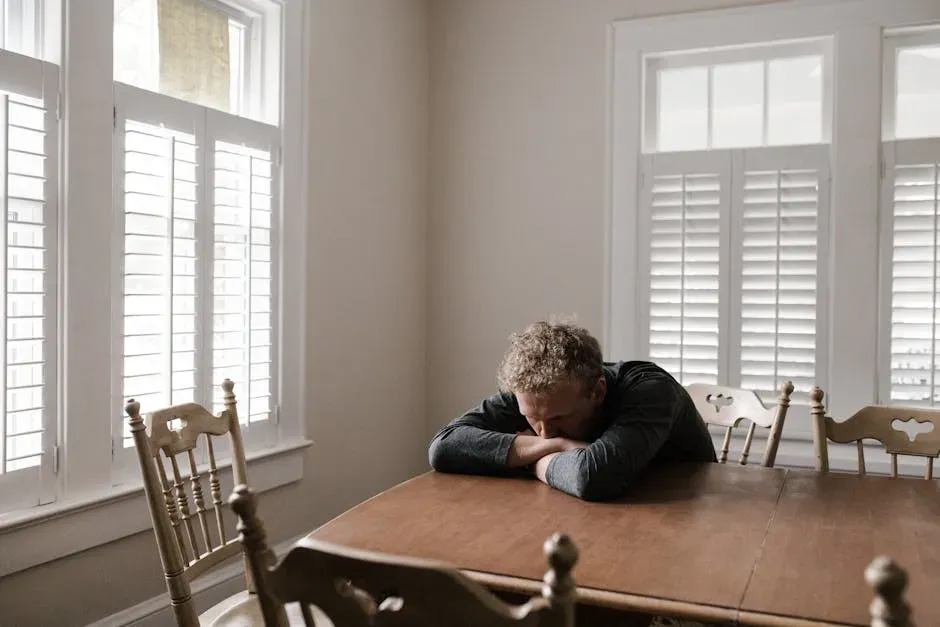
Many people who grew up around emotional chaos quietly carry a deep, almost invisible belief: if I can keep everyone else calm, then nothing bad will happen. This belief often started from actual experiences, like realizing that if you were extra helpful, funny, quiet, or perfect, the explosions were less intense or less frequent. In that sense, becoming emotionally responsible for the room was not irrational; it was adaptive. The problem is that, as adults, this turns into a kind of emotional over-functioning where you feel guilty, anxious, or on edge any time someone around you is upset, even when it has nothing to do with you.
This can show up in small everyday moments: a coworker sends a short email and you immediately wonder what you did wrong; your partner is quiet and your mind spins through every possible offense you could have committed. Instead of allowing other people to own their moods, you feel pulled to fix, soothe, or explain them away, even when no one asked you to. Underneath it all is often an old equation from childhood: other people’s bad moods equal danger, and your job is to neutralize that danger. It is not that you enjoy this role; it is that your nervous system is convinced your safety depends on it.
People-Pleasing, Over-Apologizing, and the Illusion of Control

One of the most recognizable side effects of growing up around emotional tension is chronic people-pleasing. If you learned early that your worth was tied to how easy, helpful, or low-maintenance you were, then it makes sense that, as an adult, you bend over backwards to keep everyone comfortable. You might apologize constantly, rush to fix problems that are not yours, or downplay your own feelings to avoid being “too much.” On the outside, this can look like kindness, but on the inside, it is often fear dressed up as generosity.
There is also a quiet illusion of control built into these patterns. If you can anticipate every need, avoid every possible conflict, and read every mood accurately, then maybe, just maybe, nothing will explode. It feels safer to believe that everything is your responsibility than to accept that some things are out of your hands. Letting go of that illusion can be terrifying, because it means facing the truth that even if you do everything “right,” other people can still be angry, disappointed, or unhappy. Paradoxically, though, that acceptance is exactly what opens the door to real freedom.
Relearning Safety: From External Mood Checks to Internal Grounding

The good news is that while your nervous system learned to equate emotional tension with danger, it is also capable of learning something new. Healing starts with noticing the pattern in real time: catching yourself scanning the room, noticing your shoulders tensing when someone sighs, or feeling that wave of anxiety when a text message sounds a bit off. Instead of immediately trying to fix anything, you can experiment with pausing and turning inward: What is happening in my body right now? What story is my mind instantly telling me? Often, the story is an old one, dragged from a past that no longer fits the present.
Grounding practices – like feeling your feet on the floor, taking slower breaths, or gently naming what you feel – help remind your nervous system that you are not trapped in that childhood home anymore. Over time, you can start building a new reference point for safety that lives inside you, not in the emotional temperature of the room. This does not mean becoming indifferent or cold; it means you can care about how others feel without making their mood the dictator of your own peace. That shift is subtle at first, but it is one of the most powerful forms of recovery from growing up around emotional chaos.
Setting Boundaries Without Feeling Like You Are Causing an Earthquake

For people who link emotional tension with danger, the idea of setting boundaries can feel almost unthinkable. Saying no, asking for space, or disagreeing can trigger a flood of fear that you are about to provoke some terrible reaction. That fear often comes straight from earlier experiences where asserting your needs did, in fact, lead to shaming, guilt-trips, or anger. As an adult, even when you are dealing with safer, more mature people, your body sometimes reacts as if you are still facing that same old threat.
Learning to hold boundaries is partly a psychological skill and partly a physical one. It can help to start small: saying you cannot take a call right now, asking for quiet time after work, or gently naming when a joke went too far. Each time you set a boundary and the world does not end, your nervous system gets a new data point: tension is uncomfortable, but it is not always catastrophic. Some relationships will resist your boundaries, and that can be painful, but it is also clarifying. You start to see which connections can handle the real you – not just the endlessly accommodating version you learned to perform.
Choosing Peace Without Needing Everyone Else to Be Calm First

One of the most radical shifts you can make, in my opinion, is deciding that your peace is not something other people are allowed to control. That does not mean ignoring people’s feelings or becoming self-absorbed; it means refusing to let every furrowed brow or quiet mood hijack your nervous system. When you grew up equating emotional tension with danger, this feels almost rebellious, like breaking a sacred rule. But as an adult, you are allowed to let someone else be annoyed, disappointed, or distant without immediately translating that into “I am unsafe” or “I did something wrong.”
At some point, you realize that constantly scanning everyone’s mood before relaxing is no longer an act of love; it is a leftover survival strategy that keeps you stuck. The homes you grew up in might have taught you that safety lived in everyone else’s emotional state, but that was never the full truth. Real safety now looks more like this: being able to notice tension without collapsing, to tolerate discomfort without rushing to erase yourself, and to choose groundedness even when the room is not perfectly calm. That is not easy work, and it is certainly not instant, but it is a different kind of life – one where you finally get to be more than the person who keeps the peace. And honestly, isn’t that the version of you that should have existed all along?