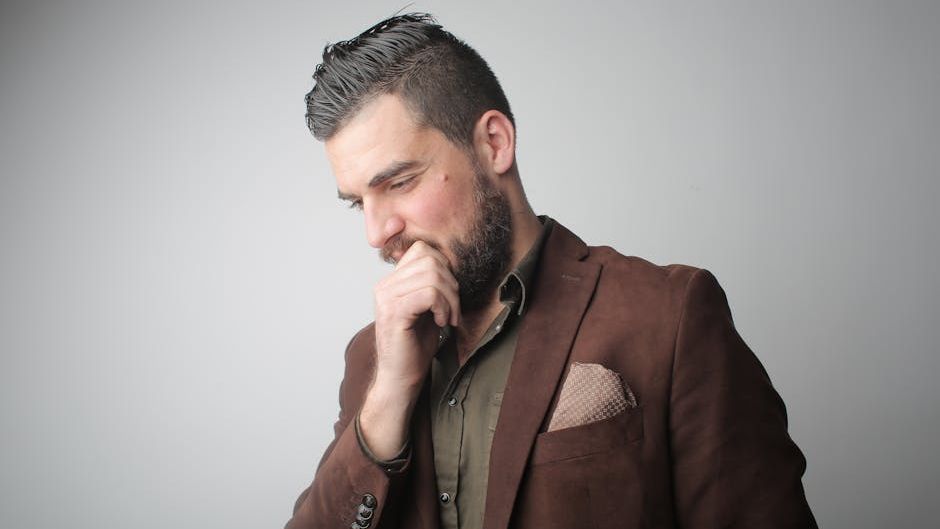
Have you ever noticed how your brain can go from a simple “What if I mess up?” to a full-blown disaster movie in about three seconds? One small uncertainty at work, in your relationship, or about your health, and suddenly you are mentally packing a bag for the apocalypse. It feels irrational, dramatic, maybe even a little embarrassing. But underneath that mental chaos, something surprisingly logical may be happening: your mind could be trying, in its own clumsy way, to protect you from future pain by over-preparing you for every possible threat.
In psychology, this constant scanning for danger is not just random anxiety; it is often tied to past experiences of feeling blindsided, humiliated, abandoned, or totally unprepared. Instead of seeing your worst-case thinking as a personal flaw, it can help to view it as an overactive survival strategy – a system that once helped you get through something hard and then never really switched off. When you understand why your brain keeps doing this, you can stop blaming yourself, start working with your mind instead of against it, and slowly turn down the volume on the internal alarm siren.
When Worst-Case Thinking Is Really Your Brain’s Safety System On Overdrive

It can feel confusing when your life looks relatively stable on the outside, yet inside your head you are constantly rehearsing everything that could go wrong. From a neuroscience perspective, that is often your brain’s threat-detection system doing its job a little too enthusiastically. Areas involved in fear and threat processing, like the amygdala, can become highly reactive if you have experienced intense stress, chronic criticism, or painful surprises in the past, nudging you to expect danger even when things are mostly fine now.
In a way, your mind is running mental fire drills: If I imagine the worst, maybe I will not be caught off guard again. This can show up in work emails you reread ten times, social interactions you replay at night, or medical symptoms you catastrophize after a quick internet search. The goal is not to torment you; it is to minimize the risk of being blindsided. The problem is that this system does not have an off button by default, so it keeps searching for threats even when the situation is low-stakes, leaving you exhausted, tense, and constantly on edge.
The Hidden Link Between Catastrophizing And Past Experiences Of Feeling Blindsided

People rarely start imagining worst-case scenarios for no reason at all. Often, there is a history behind it: a breakup that came out of nowhere, a job loss you did not see coming, a health scare that changed everything overnight, or even childhood moments when adults were unpredictable and you felt powerless. When something painful hits you from the blind side, your nervous system quietly updates its rulebook: never let this happen again. From that point on, imagining the worst can become a way of trying to see everything coming before it arrives.
I have seen this pattern in my own life after big disappointments – suddenly my brain starts pre-loading disaster scenes anytime I care about something. If you have ever gone through betrayal, financial instability, or an unexpected rejection, worst-case thinking can be your mind’s way of trying to stay one step ahead of the next blow. It is not that you are “dramatic” or “too sensitive”; you are trying to regain a sense of control. The irony is that this attempt to prevent future pain often recreates the feeling of threat in the present, even when nothing has actually gone wrong yet.
How Catastrophic Thinking Shows Up In Everyday Life (And Why It Feels So Convincing)

Catastrophic thinking rarely announces itself as irrational; it usually feels eerily reasonable in the moment. You send a message to someone and they do not reply right away, so your brain fills in the silence with a story where they are angry, done with you, or talking behind your back. A small mistake at work turns into an internal prediction of being fired, broke, and starting all over again. A minor physical symptom becomes the opening act of a devastating diagnosis. These mental leaps can happen so fast that you hardly notice the jump from possibility to certainty.
Part of why these thoughts feel so believable is that your brain is biased toward remembering negative or threatening information more strongly than neutral experiences. If you once forgot a deadline and got harsh feedback, your mind might now store that event as proof that mistakes equal disaster. So when something vaguely similar appears, your brain dusts off the old memory and uses it as evidence that the worst outcome is coming again. Over time, this can create a mental pattern where your attention locks onto danger, your body reacts as if it is already happening, and it becomes hard to imagine any alternative endings to the story.
The Science Of Mental Time Travel: Rumination, Prediction, And “Protective” Worry

One of the more fascinating things about the human mind is how easily it travels through time. You can be sitting in your kitchen and simultaneously replaying something from five years ago while also forecasting what might go wrong three months from now. Psychologists sometimes describe this as mental time travel. When it is healthy, it lets you learn from the past and plan for the future. When it becomes excessive and negative, it turns into rumination and catastrophizing, where you keep revisiting pain and pre-living disaster.
From your brain’s point of view, this is an attempt at protective problem-solving: If I keep running through worst-case scenarios, maybe I can find the one magic move that prevents me from getting hurt again. The catch is that this kind of “protective” worry is open-ended and rarely satisfied. There is always one more angle, one more risk you have not considered, one more what-if that steals your attention. Instead of efficient planning, you end up stuck in a loop – feeling like you are preparing, while actually just repeatedly activating fear circuits that never get to relax.
When Worst-Case Imagining Helps You Prepare (And When It Quietly Turns Against You)

It is important to admit something that often gets overlooked: thinking about what might go wrong is not always a bad thing. In moderation, it is a key part of realistic planning. Pilots, doctors, engineers, and even parents rely on mentally rehearsing possible problems so they can respond quickly when something actually does go sideways. There is a kind of grounded, practical form of “what if” thinking that looks like: If this happens, here is what I will do. It stays specific, time-limited, and usually leaves you feeling more capable, not more helpless.
The trouble begins when that same skill detaches from context and becomes global and relentless. Instead of asking, “What would I do if this meeting goes badly?” you start asking, “What if my entire career collapses because of this?” Your imagination jumps from small triggers to sweeping, life-ruining outcomes. You may catch yourself thinking, “If I worry enough now, I will not be shocked later,” but notice how you end up living inside the shock long before anything has happened. What started as a tool for preparation slowly turns against you, draining energy, disrupting sleep, and training your nervous system to expect pain at every turn.
How To Work With Your Brain Instead Of Fighting It: From Catastrophizing To Grounded Preparation

If you recognize yourself in all of this, the goal is not to “stop thinking negatively” overnight – that is neither realistic nor fair. A more compassionate and effective approach is to retrain how your brain handles threat, uncertainty, and planning. One practical step is to gently separate possibilities from probabilities. You can tell yourself: This scary outcome is possible, but how likely is it, and what else might happen? Writing out three to five more neutral or positive alternatives can interrupt the brain’s tendency to treat the worst case as the only case.
Another strategy is to move from abstract dread to concrete, limited planning. Instead of circling around fears like, “What if this presentation is a disaster?” ask, “What are two small things I can do today to feel one notch more prepared?” Maybe that means practicing once, asking a colleague for feedback, or jotting down backup notes. You are not denying that something could go wrong; you are acknowledging it and then channeling your energy into a specific action. Over time, your brain starts to learn that you can face uncertain situations without needing to mentally live out every catastrophic version first.
Rewriting The Old Rule: You Can Be Surprised By Life Without Being Destroyed By It

Underneath most chronic worst-case thinking there is a quiet belief that sounds something like: I will not survive being blindsided again. That belief often comes from real pain, real shock, and real moments when you felt totally unprepared. But as you move through more of life, it can become outdated without you even noticing. You may have already gotten through things you once thought would break you, yet your brain is still operating under the old rule that any surprise equals devastation.
Part of healing is updating that rule with lived evidence: yes, being unprepared can hurt, but you are more resilient, more resourceful, and more supported now than your fear gives you credit for. This might look like remembering specific times you handled sudden changes, reached out for help, or adapted faster than you expected. You do not have to enjoy surprises or pretend they are fun, but you can slowly trust that not every unexpected twist will shatter you. When your brain truly starts to believe that, the urge to pre-live every disaster can soften, because the stakes no longer feel like emotional life or death.
Opinionated Conclusion: Your Worst-Case Mind Is Not Broken – But It Deserves Better Instructions

I do not think worst-case thinkers are weak, irrational, or overly dramatic. If anything, they are often some of the most caring, conscientious, and observant people in the room. The problem is not that your mind sees danger; it is that no one ever taught it how to distinguish between useful preparation and self-torture. Your brain is trying to be the overprotective friend who never wants you to be hurt again, but it keeps choosing methods that wound you daily in the name of protection. That is not a character flaw; it is a training issue.
In my view, the work is not about forcing yourself to “think positive” or pretending the world is safer than it is. It is about giving your mind better instructions: fewer disaster rehearsals, more grounded planning; less looping on what you cannot control, more focus on what you can influence today; less faith in the loudest fear, more trust in your proven resilience. The next time your imagination starts scripting the worst possible ending, you might pause and quietly ask: Is this actually preparing me, or is it just hurting me? And if it is mostly hurting, what new story do you want your mind to practice instead?