
There is something quietly alarming about the way certain men talk about the world. You hear it in the constant complaints, the bitter jokes about women, the belief that everyone else is winning while they are destined to lose. It can sound like simple frustration, but research over the past decade has been circling around a sobering idea: when men consistently see the world through a specific, negative lens, they are much more likely to struggle with anxiety, depression, aggression, and other psychological problems.
This is not about casually having a bad day or venting once in a while. It is about persistent patterns of thinking: seeing life as a rigged game, believing other people are mostly threats, or assuming that emotions are signs of weakness. Studies in psychology consistently show that this kind of worldview is linked to worse mental health outcomes in men. In other words, the way you explain the world to yourself does not just color your mood; it can quietly shape the course of your mental health. Let’s dig into what that worldview actually looks like, why it is so common, and what can be done about it.
Seeing The World As A Battleground: The “Hostile Worldview” Problem

One of the strongest predictors of psychological issues in men is what researchers often call a hostile or cynical worldview: the sense that most people are selfish, out to use you, or secretly against you. Men who endorse beliefs like “you can’t trust anyone” or “most people will take advantage of you if they can” are more likely to report depression, generalized anxiety, higher stress, and even physical health problems over time. This lens makes everyday life feel like a constant low-level war, where every interaction is potentially dangerous or humiliating.
When you move through the world expecting hostility, your brain stays in a kind of constant defensive mode. That chronic vigilance can lead to irritability, sleep issues, and a tendency to misread neutral situations as threats, which in turn fuels conflict in relationships and at work. Research on “hostile attribution bias” shows that men with this mindset are more likely to interpret ambiguous actions – like a late reply, a neutral facial expression, or a coworker’s disagreement – as intentional disrespect. Over time, that does not just damage social connections; it reinforces the very belief that the world is against you, locking in a painful psychological loop.
Viewing Life As Rigged And Hopeless: The Trap Of Global Pessimism

Another pattern that shows up repeatedly in studies is global pessimism: the belief that the future is mostly bleak, society is collapsing, and personal effort will not really change anything. This is more than healthy skepticism; it is a default expectation that things will go badly. Men who lean into this worldview tend to report more depressive symptoms and feelings of hopelessness, and they are at higher risk for giving up on goals, careers, or relationships that might actually be salvageable. When the script in your head says, “Why bother, it won’t work anyway,” your motivation drops long before reality has a chance to prove you wrong.
Psychologists often talk about explanatory style – how you explain good and bad events – as a key driver of mood. Men with a more pessimistic explanatory style are more likely to see setbacks as permanent (“it will always be like this”), personal (“it’s because I’m broken”), and pervasive (“this ruins everything”). That style has been consistently linked to depression and anxiety across many studies. What makes this especially tricky is that a pessimistic worldview can feel intellectually sophisticated or “realistic,” even when it is noticeably more negative than the available facts. As a result, some men defend their despair as clear-eyed truth, not realizing it is quietly poisoning their mental health.
Women As Enemies Or Objects: How Misogynistic Worldviews Correlate With Distress

In recent years, researchers have paid closer attention to how men’s beliefs about women connect to their psychological well-being. A consistent finding is that strongly misogynistic or adversarial views – seeing women mainly as manipulators, gold-diggers, or enemies in a gender war – are linked to higher levels of anger, loneliness, and depressive symptoms. When a man reads every romantic or social interaction through the lens of “women are the problem,” he often ends up feeling chronically rejected and deeply resentful, which only deepens his sense of isolation.
Studies on hostile and benevolent sexism show that these attitudes do not stay neatly in the “opinions” box; they bleed into mental health and behavior. Men who hold more hostile sexist beliefs are more likely to report difficulty forming close relationships and controlling aggression, and they also tend to struggle with shame when their life does not match rigid gender expectations. Misogynistic online subcultures can amplify this, feeding a story that men are victims of a stacked system while discouraging vulnerability or self-reflection. That might feel bonding in the short term, but over time it reinforces bitterness, envy, and a sense of permanent victimhood that makes psychological healing harder.
Rigid Masculinity: When “Real Men” Beliefs Turn Against You

Another powerful factor is how rigidly a man believes in narrow, traditional rules of masculinity: the idea that a “real man” must always be tough, unemotional, dominant, financially successful, and sexually experienced. Research on what is often called traditional masculine ideology or hegemonic masculinity finds that men who tightly cling to these rules are at higher risk for depression, substance abuse, relationship problems, and even suicidal thoughts, especially when they feel they are failing at one or more of these standards. When your entire sense of worth rests on not showing weakness, every human need – rest, comfort, reassurance – can feel like a personal defeat.
This worldview turns ordinary human experiences into evidence of failure: losing a job, struggling with money, feeling nervous, wanting affection – all become signs that you are not “man enough.” Men who endorse beliefs like “men should deal with their own problems” are less likely to seek therapy, talk to friends, or ask for help, even when they are clearly suffering. That avoidance can make short-term distress spiral into long-term psychological damage. It also tends to narrow their emotional vocabulary; if every feeling is either anger or numbness, it becomes much harder to understand what is really going on inside or to build truly intimate, supportive relationships.
The World As A Hierarchy Of Winners And Losers: Status-Obsessed Thinking

Many men are quietly tormented by a worldview that reduces life to a brutal status ladder: some people are winners, most are losers, and your value is measured by income, looks, social influence, or sexual success. Studies on social comparison and status anxiety show that men who constantly rank themselves against others, especially in competitive environments or on social media, report higher stress, lower self-esteem, and more symptoms of depression and anxiety. If every scroll or conversation becomes proof that you are behind, you live in a world where contentment is almost impossible.
This status-obsessed way of seeing the world often comes with black-and-white thinking: you are either impressive or invisible, superior or worthless. Achievements bring only brief relief, because there is always someone richer, fitter, more popular, or more admired. Over time, that can erode intrinsic motivation; instead of doing things because they matter to you, you do them to avoid feeling like a failure. When setbacks happen – and they always do – this fragile sense of worth can collapse quickly, sometimes leading to desperate attempts to “catch up,” like risky financial decisions, extreme dieting, or unhealthy work hours that only add more psychological strain.
Everything Is Someone Else’s Fault: Externalizing And Victim Mindsets

Another worldview closely tied to psychological issues is chronic externalization: the belief that almost all of your problems are caused by other people, systems, or bad luck, and that you have little or no role in your own outcomes. Men who regularly blame partners, bosses, society, or entire groups for their struggles tend to feel more powerless, angrier, and less hopeful about change. Research on locus of control shows that a heavily external focus is associated with higher anxiety and depression, because it undermines the sense of agency that protects mental health.
None of this means systemic issues or real injustices are not real; of course they are. The psychological danger appears when a man’s inner narrative leaves him with no space for self-reflection or personal responsibility at all. In that mindset, feedback feels like an attack, growth feels pointless, and every setback confirms the story that the world is uniquely unfair to him. Over time, this can harden into a victim identity that is deeply painful: you feel wronged but also stuck, resentful but unable to imagine a different path. That emotional dead end is strongly linked to chronic frustration, relationship breakdowns, and low engagement in therapy or self-help efforts.
When Emotion Is The Enemy: Numbing, Dismissing, And Quiet Collapse
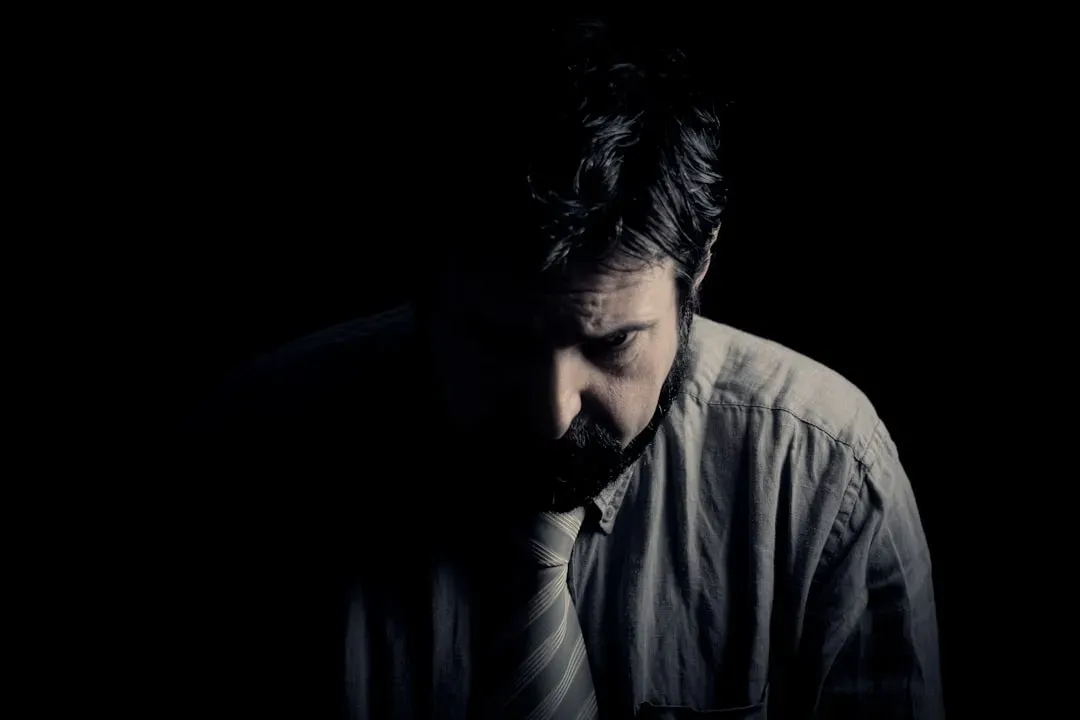
A subtler but equally dangerous worldview is the idea that emotions are threats to be suppressed, not signals to be listened to. Many men are raised – directly or indirectly – to see sadness, fear, or tenderness as weaknesses that must be controlled or hidden. Studies on emotional suppression in men find that those who believe they should always be stoic and self-contained are more likely to experience higher physiological stress, greater risk of depression, and difficulties in close relationships. They may look “fine” on the surface, while internally feeling desperately alone.
When you see emotion as the enemy, you lose access to some of the very tools that protect mental health: the ability to name what you feel, reach out to others, and adjust your life when something is not working. Instead, emotional pain gets pushed down through distraction, workaholism, alcohol, compulsive gaming, or other numbing strategies. Those coping habits might work in the short term, but they rarely solve the underlying problem, so the distress keeps resurfacing – sometimes as unexplained anger, health complaints, or sudden outbursts. It is like trying to live in a house where all the smoke alarms are turned off; it seems quieter, right up until the fire gets out of control.
Shifting The Lens: How Changing Your Worldview Can Ease Psychological Pain

The striking thing across all this research is not just that certain worldviews are linked to more psychological issues in men – it is that these lenses are not fixed. Cognitive and behavioral therapies, for example, are built on the idea that our thoughts and interpretations can be examined, tested, and gently reshaped. Studies show that when men learn to challenge hostile assumptions, broaden rigid masculinity beliefs, and adopt a more balanced view of themselves and others, symptoms of depression and anxiety often decrease. In practice, that might look like catching yourself when you think “everyone is against me” and asking what evidence you actually have, or noticing when “I’m a failure” is really just “I had a setback in one area.”
I have seen this up close in my own life: the times I have sunk the deepest were usually the times I was absolutely convinced my bleak worldview was simply “how it is.” Only later did I realize I was wearing a kind of psychological filter that highlighted threats and erased possibilities. Shifting that lens did not mean pretending everything was fine; it meant allowing for the idea that not everyone was an enemy, that effort could matter, and that needing help did not make me less of a man. That kind of change is not instant and it is certainly not easy, but the research – and a lot of lived experience – suggests it is possible, and often transformative.
Conclusion: The World Hasn’t Changed – But Your Story About It Can

When studies say that men who see the world a certain way are more likely to have psychological issues, they are not delivering a moral judgment; they are describing a pattern. A hostile, rigid, status-obsessed, blame-heavy worldview makes life feel like a constant siege, and it is no surprise that men who live in that mental landscape are more likely to end up anxious, depressed, lonely, or numb. Pretending these beliefs are just “common sense” or “the harsh truth” might feel strong in the moment, but the data and the human consequences tell a different story: this way of seeing the world costs a lot, and the bill usually comes due in your mental health and relationships.
My own opinion is simple and a bit blunt: the bravest thing a man can do is not to double down on cynicism, but to question it. That does not mean ignoring real problems or pretending society is fair; it means refusing to let bitterness, misogyny, or rigid masculinity define your entire reality. The world may be complicated and sometimes cruel, but if your only lens is hostility and defeat, you will miss the people, chances, and changes that could actually help you heal. The studies point in a clear direction: change the way you see the world, and over time, your inner world starts to change too. So the real question is this – if your current worldview is quietly destroying your peace, are you willing to try on a different one?