If you think Hollywood has dreamed up the weirdest dinosaurs, the fossil record is here to gently (and hilariously) prove you wrong. In just the last ten or so years, paleontologists have dug up creatures so bizarre that, if you sketched them in a notebook as a kid, someone would’ve told you to dial it back. Yet here they are: real animals that once hunted, glided, paddled, and strutted across ancient Earth.
What I love about these discoveries is how they shatter that old “big scaly lizard” stereotype. Instead of endless T. rex clones, we keep finding bat-winged tree-dwellers, semi-aquatic raptor cousins, and river-diving hunters with streamlined bodies that look more like modern birds or otters than anything in Jurassic Park. Let’s dive into five standouts from roughly the last decade that genuinely feel stranger than fiction, yet are grounded in solid, peer‑reviewed science.
Yi qi: The Real-Life “Dragon” With Bat-Like Wings
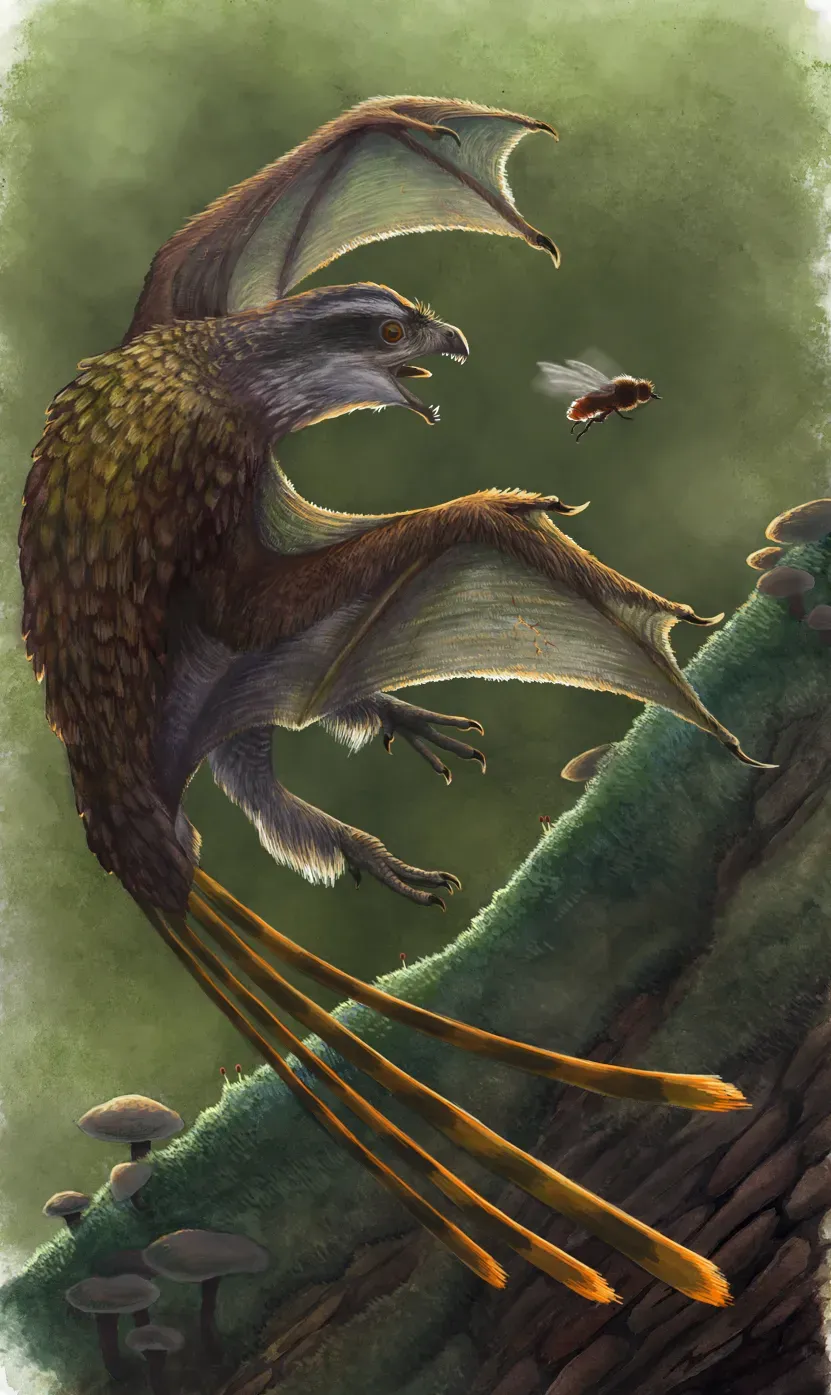
Imagine a pigeon‑sized dinosaur, fluffy with simple feathers, perched in a Jurassic forest – but when it takes off, it does not flap bird‑style feathered wings. Instead, stretched between its fingers and a long rod of bone jutting from its wrist is a dark, leathery membrane, more like a bat or a flying squirrel than any bird. That is Yi qi, whose name in Mandarin means “strange wing,” and it absolutely lives up to the title. Fossils from northeastern China clearly preserve a styliform bone and traces of skin that formed a membranous wing, a completely different flight experiment from feathered bird wings or the long finger of pterosaurs.
What makes Yi qi truly wild is that it shows evolution trying a third, completely separate way to get a dinosaur off the ground. It belonged to a tiny, tree‑dwelling group called scansoriopterygids, and most researchers think it probably glided or made short controlled hops between trees rather than powered flight. Even in that modest role, though, a fuzzy, bat‑winged dinosaur defies almost every pop‑culture image we have of these animals, and in my opinion it is one of the clearest examples that real evolution is far more experimental and “sci‑fi” than any movie concept artist.
Ambopteryx: The Tiny Glider That Proved Yi qi Was Not a One-Off
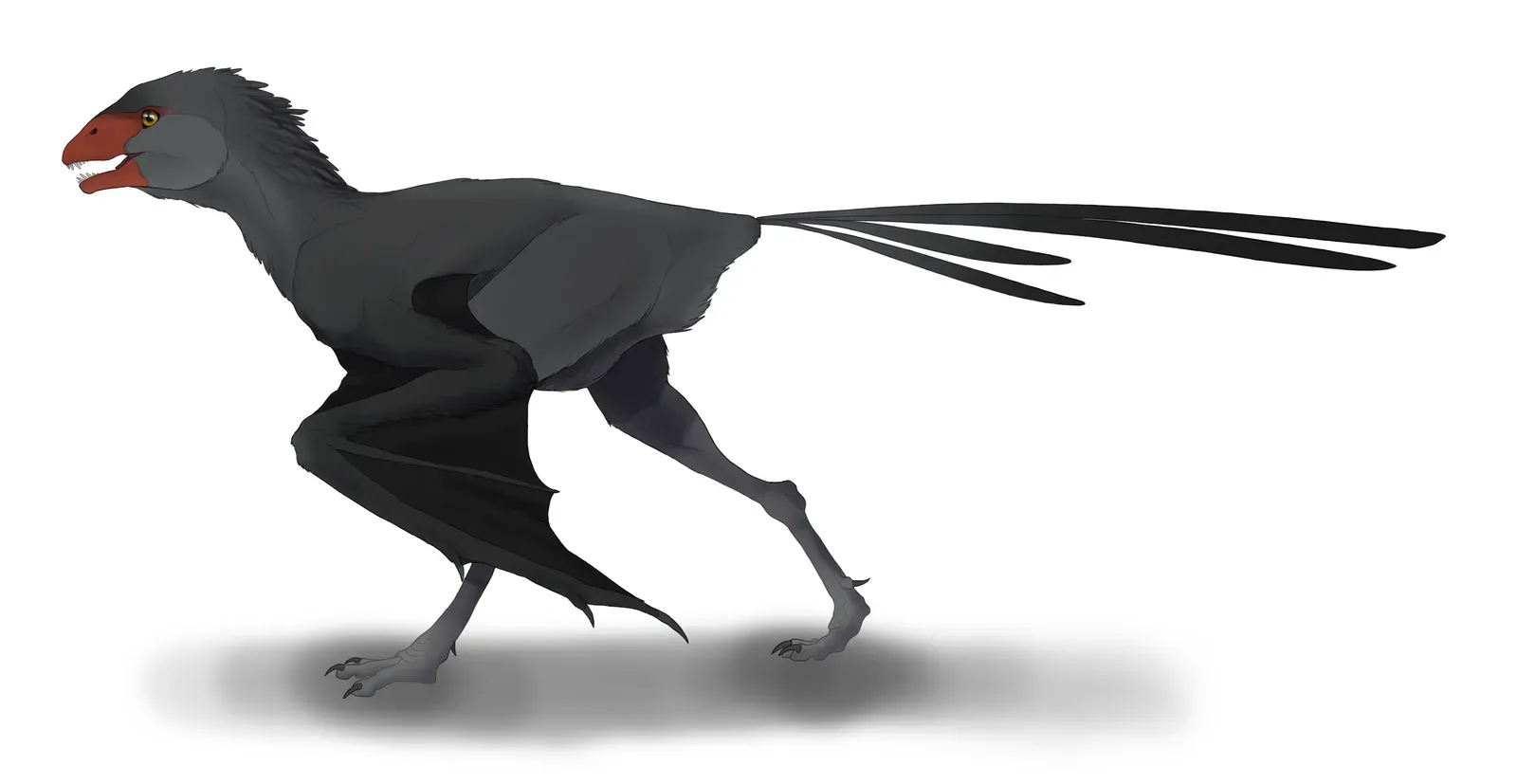
When Yi qi was first described, some people quietly wondered if it might be a total oddball, a one‑time evolutionary dead‑end. Then another scansoriopterygid turned up in the same general region of China with the same basic weirdness: a membranous wing supported by an elongated styliform bone. Named Ambopteryx, this little dinosaur cemented the idea that there was an entire branch of tiny, tree‑climbing theropods experimenting with bat‑like wings tens of millions of years before birds took over the skies. In other words, Yi qi was not a freak accident; it was part of a broader, genuinely strange dynasty.
Ambopteryx was probably about the size of a small crow, with a combination of feathers and this stretched skin membrane, like someone grafted together a bird, a bat, and a sugar glider. What blows my mind is that, in a forest packed with gliding insects, early birds, and pterosaurs, these little scansoriopterygids carved out their own aerial niche using yet another design solution. To me, their existence is a direct challenge to the lazy idea that evolution has only a handful of tricks; clearly, nature is willing to throw weird prototypes at the wall over and over just to see what might work.
Halszkaraptor: The Semi-Aquatic “Duck-Raptor” Nobody Asked For
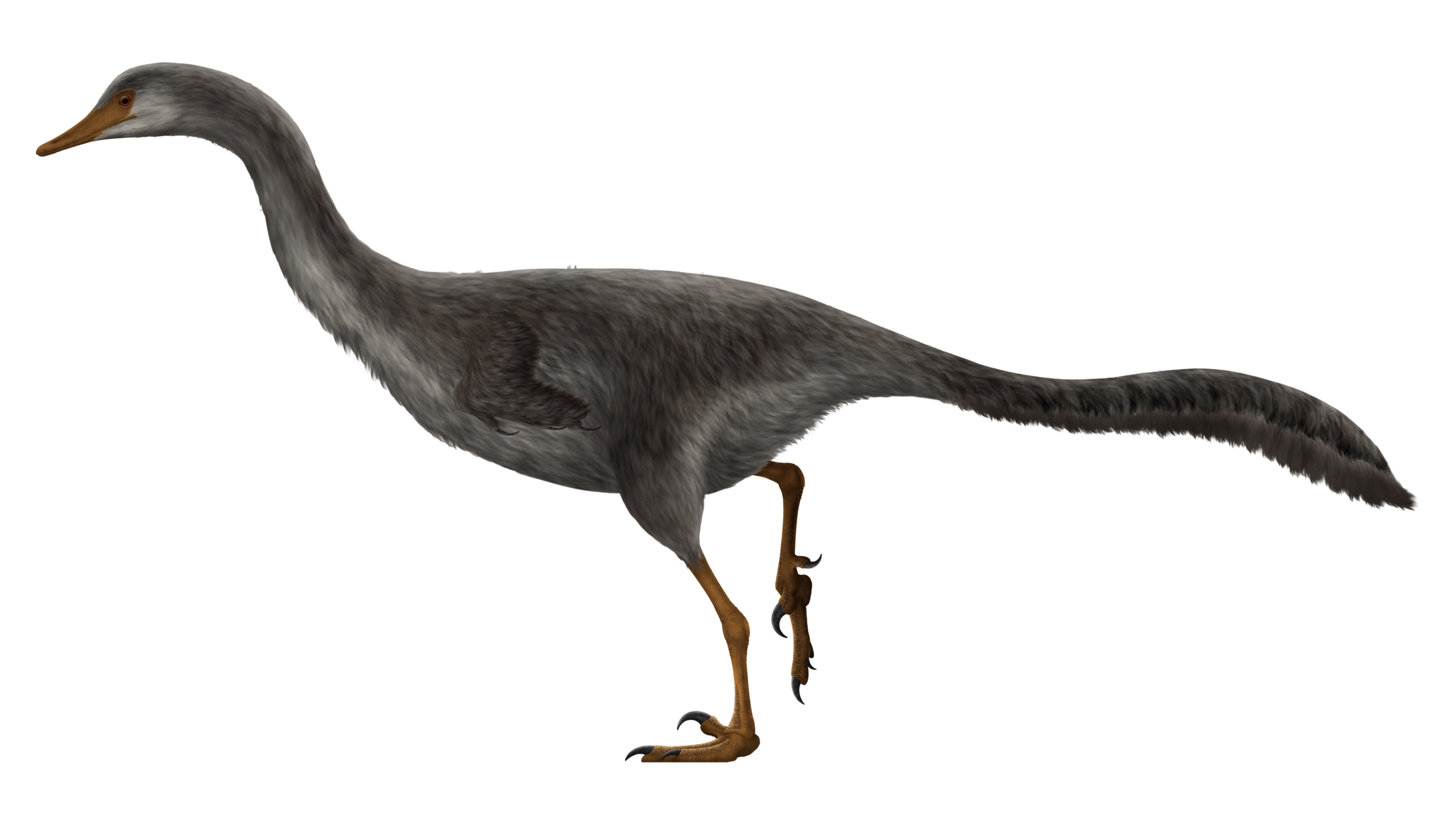
Take a moment and picture a classic raptor: long tail, sickle claws, narrow snout full of teeth. Now, gently toss that mental image into a lake. Halszkaraptor, described from fossils in Mongolia, looks like someone told evolution to merge a Velociraptor relative with a duck and an otter. Its skeleton shows a long neck, paddle‑like forelimbs, and limb proportions that strongly hint at an amphibious lifestyle, spending serious time in the water as well as on land. When researchers scanned the skull with advanced imaging, they found features consistent with a sensitive snout, like modern water birds and crocs that hunt by feel in murky water.
What makes Halszkaraptor so strange is not just that it could probably swim; it is that it sits inside a group of dinosaurs we usually think of as strictly land‑based, hyper‑agile hunters. Here, one branch seems to have gone full niche‑breaker, dabbling in a semi‑aquatic, maybe fish‑eating or small‑prey‑snatching lifestyle. Whenever I read about it, I can’t help imagining it paddling through a Cretaceous marsh, neck snaking through the water like a living periscope, then hopping onto land and sprinting with that same raptor‑style body plan. It feels almost comically over‑designed, but the bones back it up.
Natovenator: The Streamlined “Swimming Hunter” Built Like a Dinosaur Loon
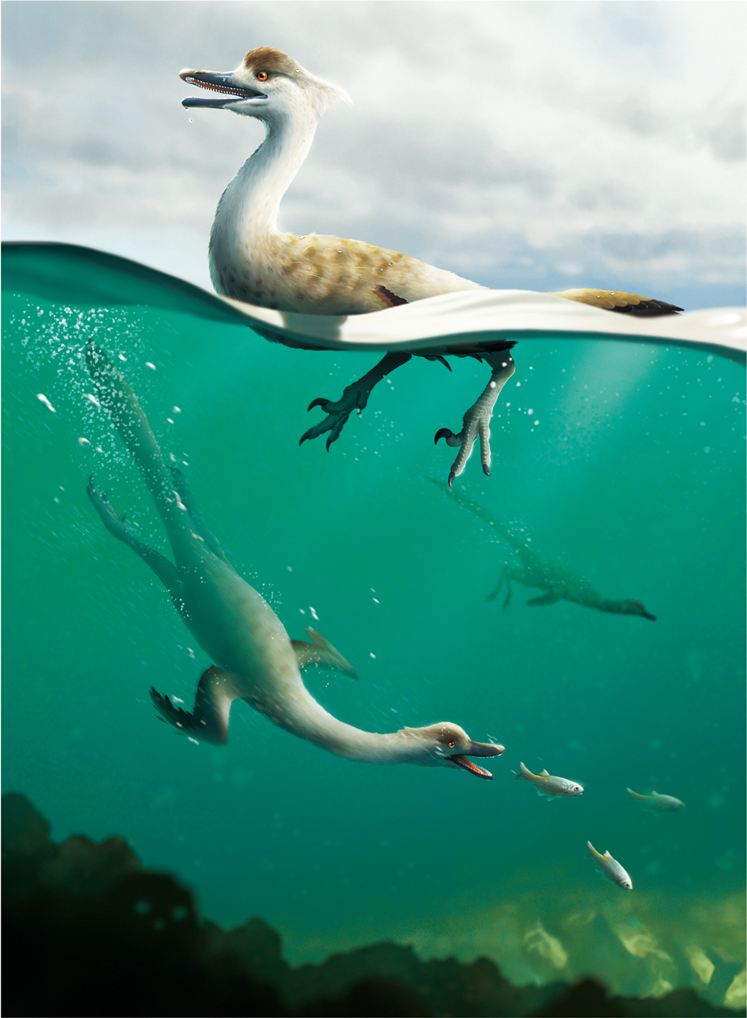
Halszkaraptor opened the door to the idea of semi‑aquatic raptor cousins, but Natovenator marched right through it and dove into the pond. Discovered in southern Mongolia and formally described only in the last few years, this dromaeosaurid has a rib cage and torso shaped in a way that strongly suggests streamlining for life in the water. The ribs curve back in a smooth sweep, tucking the body into a hydrodynamic form much more like a diving bird – think loon or cormorant – than a typical land‑roaming dinosaur. Its name literally combines Latin roots for “swimming hunter” and “many teeth,” hinting at a lifestyle of chasing prey underwater.
To me, Natovenator might be the most disruptive of the recent oddballs because it is the first clear case of a non‑bird dinosaur with a truly streamlined, aquatic‑adapted body. We already accepted that birds evolved from small theropods, but this shows that, even before birds really diversified, some of their cousins were independently testing life as diving predators. It is a reminder that the dinosaur world did not divide neatly into land stomper, flying bird, or giant sea reptile; instead, there were blurry edges and creative overlaps, including a sleek, toothy hunter that would not look out of place gliding below the surface of a modern lake.
Ubirajara jubatus: The Punk-Rocked Show-Off With Shoulder Spears
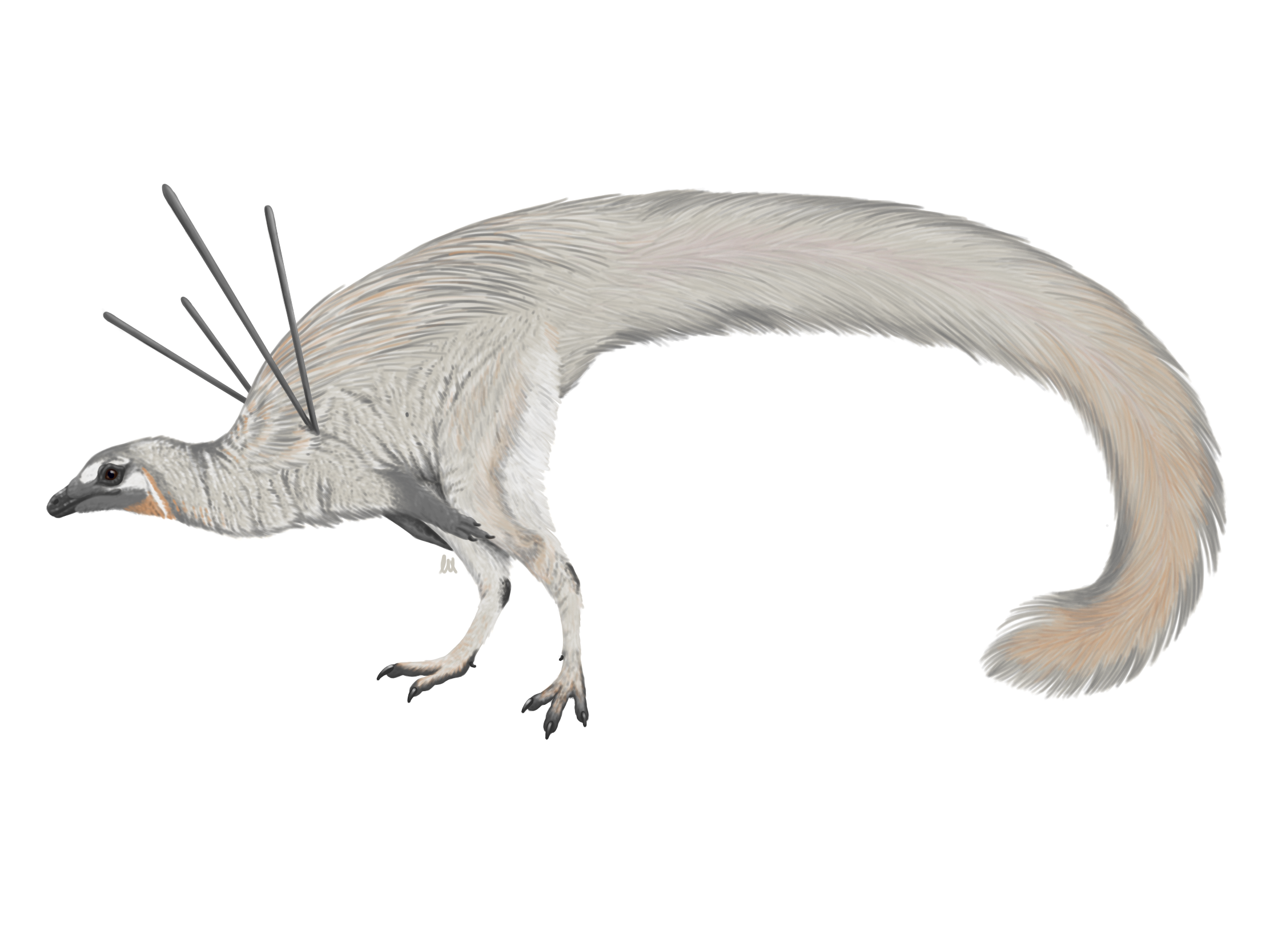
While some weird dinosaurs retooled their entire body plan for flight or swimming, Ubirajara jubatus seems to have poured its evolutionary budget into sheer style. This small theropod from what’s now Brazil, described within the last decade, had a mane‑like covering along its neck and back and, most strikingly, long, flat, ribbon‑like structures projecting from its shoulders. These rigid “spears” were not weapons; they were almost certainly display structures, the sort of thing you would flare, rattle, or wave during courtship rituals or dominance shows, much like a bird of paradise or a peacock stretching its tail.
What fascinates me about Ubirajara is that it highlights just how early and how extravagantly dinosaurs were playing with visual communication. This was not a late, refined flourish in the age of giant horned ceratopsians; this was an earlier, smaller animal already burning energy on dramatic ornamentation that seems almost impractical from a survival point of view. In my opinion, it is one of the clearest fossil reminders that sexual selection – the pressure to impress mates or intimidate rivals – can push evolution into truly flamboyant territory. If you saw a modern animal with shoulder flags and a shaggy mane dancing in a rainforest, you would call it over the top; the fact that a dinosaur got there first just underscores how wild deep time really was.
Conclusion: Real Dinosaurs Make Fiction Look Tame
Looking at these five species side by side, it is hard not to feel that our usual picture of dinosaurs is embarrassingly narrow. We cling to giant teeth and thunderous footsteps, while the fossil record keeps handing us bat‑winged tree gliders, river‑paddling raptor cousins, sleek diving hunters, and punk‑haired show‑offs brandishing shoulder banners. Personally, I think these discoveries are quietly rewriting the emotional tone of dinosaurs from “scary lizards” to “a kaleidoscope of experiments,” where each new fossil is more like a strange new character entering an already crowded story. The last decade has basically confirmed that, if an ecological niche existed in the Mesozoic, some dinosaur probably tried to fill it in a spectacularly weird way.
There is a tempting urge to treat each of these species as an exception, a quirky side note, but I think that misses the bigger point. The more we dig, the more it looks like oddity was the rule, not the exception: complex feathers, bizarre wings, amphibious habits, and outrageous display structures may have been normal parts of dinosaur ecosystems rather than rare gimmicks. That makes our planet’s past feel far more alive and unpredictable, and it also makes me skeptical whenever someone claims we “basically understand” dinosaurs now. If this is what just ten or so years of discovery can do, how many more stranger‑than‑fiction species are still asleep in stone, waiting to upend our imagination all over again – and which of these would you have guessed actually walked the Earth?