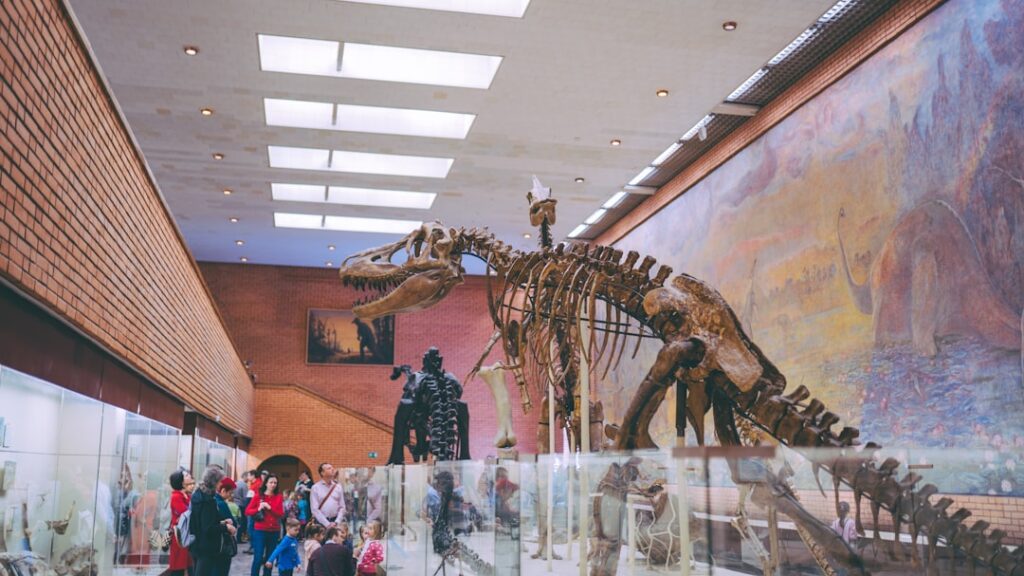
If you grew up staring up at a towering T. rex in a dimly lit hall, your brain probably still thinks that is what cutting-edge dinosaur science looks like. The awkward truth is that a lot of local museums are frozen in the 1990s, or even earlier, while dinosaur research has sprinted ahead. What feels timeless and majestic to visitors can look painfully out of date to paleontologists, like someone proudly showing off a flip phone in the age of smartphones.
Over the last few decades, new fossils, better imaging technology, and whole new scientific methods have basically rewritten huge parts of the dinosaur story. Yet the physical exhibits in many places just have not kept up. That creates a strange gap: the science in research papers is radically modern, while the science on the museum floor is quietly decades behind. Once you know what to look for, you start to notice the embarrassing little giveaways everywhere.
1. Your T. rex Still Stands Upright Like a Giant Tail-Dragging Kangaroo
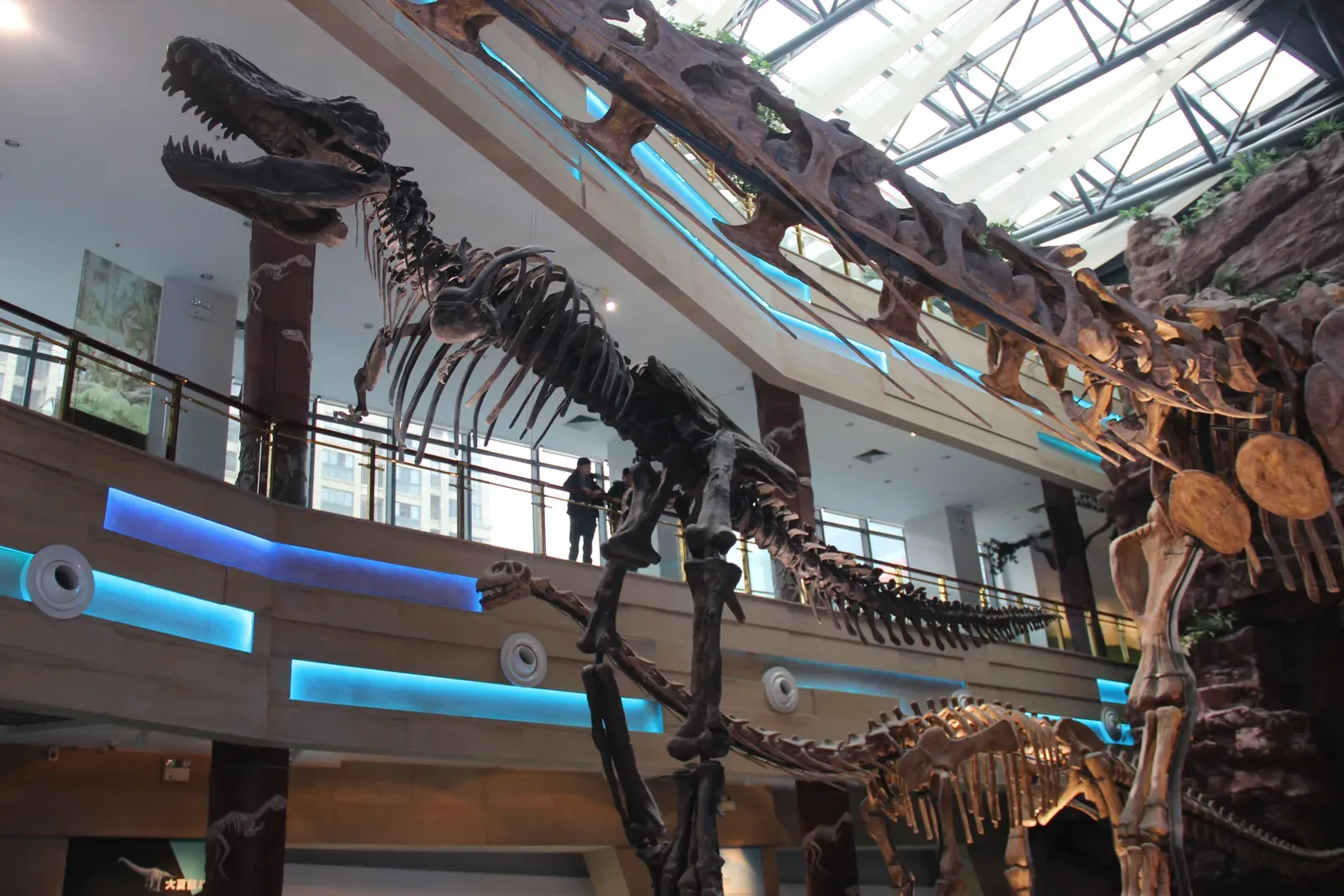
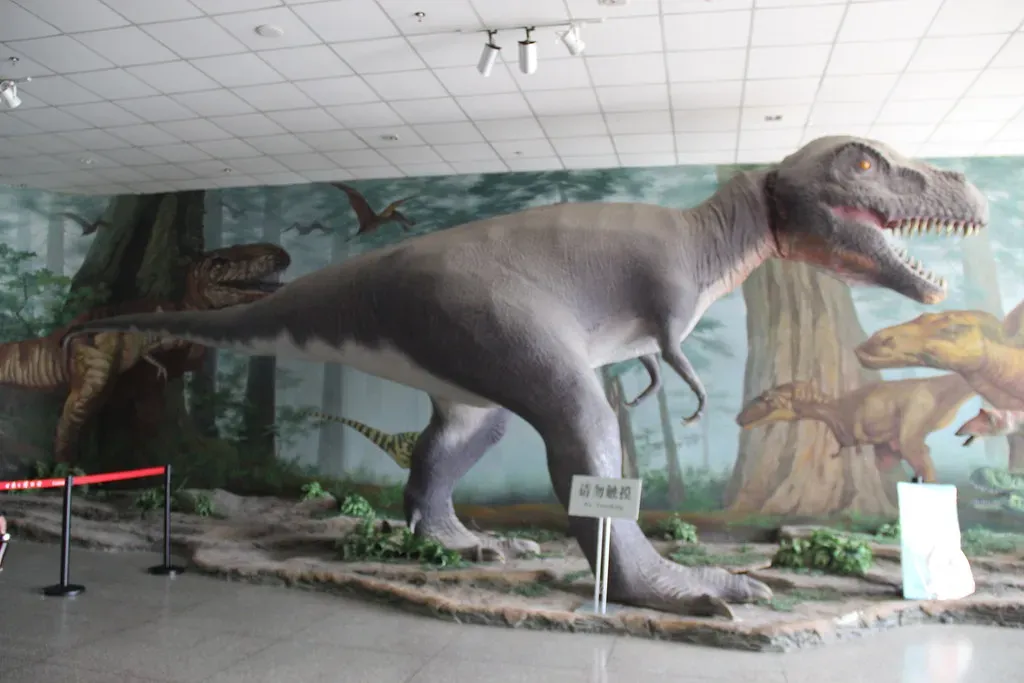
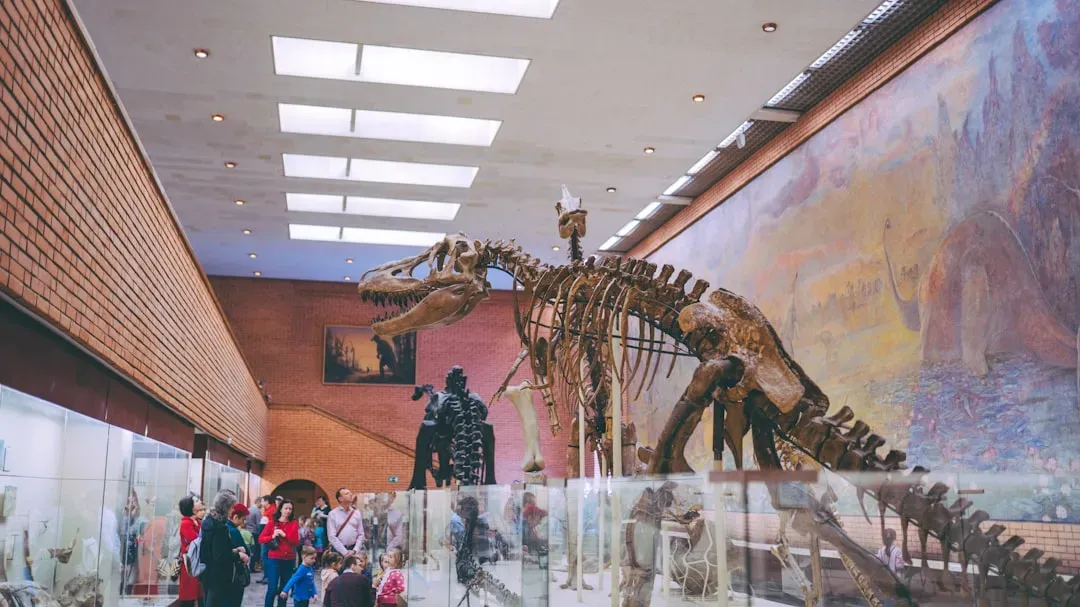
One of the easiest red flags that a dinosaur exhibit is outdated is the classic “Godzilla pose” Tyrannosaurus rex: body bolt upright, tail dragging on the ground, head glaring straight ahead. We have known for a long time that big theropods like T. rex held their bodies horizontally, with their tail stiffly out behind them as a counterbalance, more like a gigantic, murderous bird than a lumbering reptile statue. If you still see a tail trench carved into the fake sand under the skeleton, that display is not just a little old; it is basically a time capsule from mid‑twentieth‑century thinking.
The embarrassing part is that this is not some obscure technical correction buried in specialist journals. The horizontal posture has been widely accepted for decades, and many major museums quietly re‑mounted their star skeletons years ago. So when a local museum keeps the old pose, it signals budget issues, lack of will, or just not paying attention. It is a bit like walking into a car showroom and seeing a shiny new model proudly displayed with wooden wagon wheels. Visitors might not be able to pinpoint what is wrong, but on some level, they can feel it.
2. Naked, Scaly Raptors That Look More Like Movie Monsters Than Real Animals
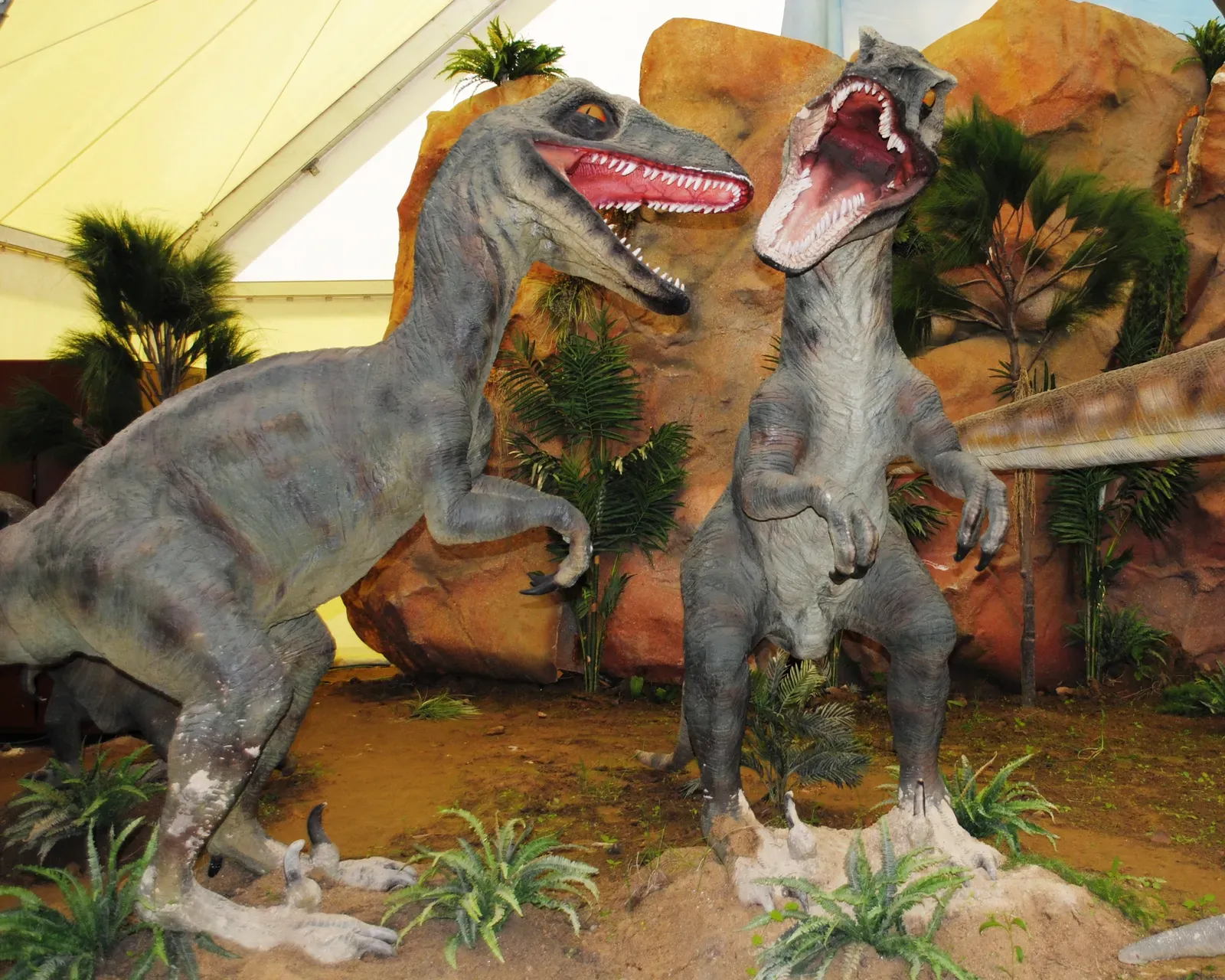
If your raptors still look like miniature dragons with lizard skin, no feathers, and shrink‑wrapped skulls, the science on that wall is older than many of the kids taking selfies in front of it. Over the last few decades, an avalanche of fossils – especially from China – has shown that many theropods closely related to birds were covered in feathers or feather‑like structures. Creatures like Velociraptor were not bald reptilian assassins; they were more like lethal, bird‑like predators with complex plumage, possibly used for display, insulation, or even brooding behavior.
Seeing a “naked” raptor in 2026 is a bit like seeing a medical chart with cigarettes still recommended for stress relief. It tells you the exhibit is running on very old assumptions. Many curators know this and feel the tension: the old Hollywood version is familiar and dramatic, while the scientifically updated, feathery version can look wrong to visitors raised on movies. But science does not care about childhood nostalgia. When museums cling to the scaly fantasy version, they quietly teach guests yesterday’s errors instead of today’s best understanding.
3. Dinosaurs Displayed as Lonely Reptiles, Not Part of Lively Ecosystems
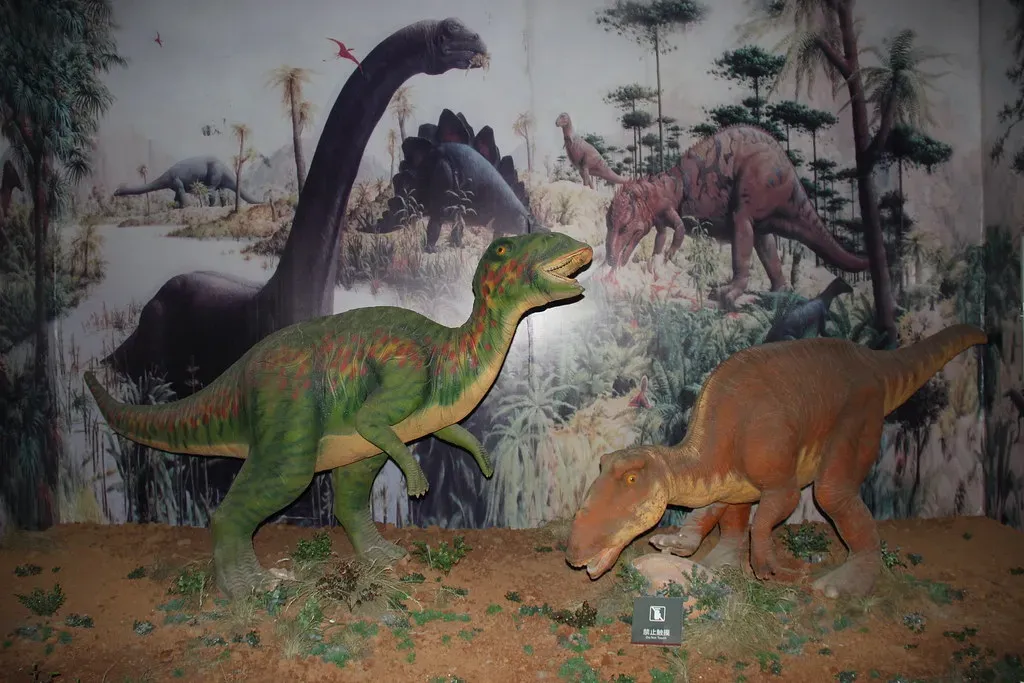
Another subtle but telling sign of an outdated dinosaur hall is the way animals are presented like isolated action figures: a lone predator here, a single herbivore there, each one in its own little bubble of fake rock. Modern paleontology paints a much richer, messier picture. Dinosaurs lived in dynamic ecosystems with insects, plants, mammals, fish, and other reptiles, all tangled up in food webs, migration patterns, and changing climates. When an exhibit shows just a few big skeletons without any sense of environment or community, it reflects a very old-school, trophy‑style mindset.
More current exhibits try to show things like nesting colonies, herd behavior, predator‑prey interactions, and seasonal environments based on sediment data and fossil assemblages. When your local museum still treats each dinosaur like a standalone celebrity, it misses the point that these were wild animals in complex worlds, not monster statues. That kind of lonely, diorama-lite presentation quietly undercuts one of the most exciting messages of modern science: that deep time was bustling, noisy, and interconnected, not just a line‑up of giant skeletons against a painted backdrop.
4. Old-School “Cold-Blooded Lizards” Instead of Active, Warm-Running Animals
Check the wall labels: if they still describe dinosaurs as slow, sluggish, cold‑blooded reptiles that only woke up when the sun warmed them, that language is a fossil in its own right. For decades now, evidence from bone microstructure, growth rates, and even oxygen isotopes has pointed toward many dinosaurs having high metabolisms, fast growth, and active lifestyles. They were not giant crocodiles sunbathing all day; they were closer, in many ways, to large, high‑energy birds and mammals that needed a lot of food and moved constantly.
It is admittedly tricky to communicate something like “mesothermy” or complex metabolic modeling in a simple hallway panel, and some museums choose to avoid it altogether. But when exhibits lean heavily on the old cold‑blooded narrative, it shapes how visitors think about evolution and animal biology in misleading ways. Kids walk away imagining dinosaurs as lumbering tanks, not as powerful, agile animals tearing across floodplains or hunting in packs. That mismatch between what the science suggests and what the signage says makes the entire hall feel like a throwback, even if the bones themselves are priceless.
5. Static Text Panels That Ignore New Discoveries and Ongoing Debates
One of the most quietly embarrassing parts of many dinosaur exhibits is not the skeletons at all, but the text around them. If the panels still talk about a single, neat cause for the dinosaur extinction, or present every detail as settled fact, you are looking at a snapshot from a time when the science seemed simpler. In reality, research keeps uncovering new species, revising family trees, and debating everything from growth stages to behavior. Good exhibits now try to show that science is a moving, questioning process, not just a list of final answers set in stone like the fossils themselves.
When labels have not changed in decades, you can run into glaring issues: species names that have been revised, outdated reconstructions, or confident statements that modern work has softened or overturned. It is a bit like walking into a tech museum and finding a display panel proudly announcing that dial‑up internet is the cutting edge of connectivity. Visitors deserve to know not just what we think we know now, but also how those ideas changed and why earlier versions were wrong. Ignoring that evolution of knowledge makes the whole exhibit feel more like a dusty shrine than a living window into science.
Conclusion: Why This All Matters More Than Just Dinosaur Nerd Trivia
It is tempting to shrug and say that a few old‑fashioned dinosaur poses or scaly raptors are no big deal, just harmless nostalgia. But museum halls are where a lot of kids and adults get their first serious encounter with science, and those visuals and words stick. When exhibits are decades out of date, they quietly pass along myths that can take years to unlearn, and they miss an enormous opportunity to show how thrilling it is when new evidence flips our understanding upside down. I still remember visiting a small museum as a kid, staring at a tail‑dragging T. rex, and later feeling almost betrayed when I found out in a book that scientists had known for ages that pose was wrong.
Updating dinosaur exhibits is not just about being trendy or keeping up appearances; it is about being honest, curious, and alive to change. A museum that admits “we used to think this, now we think that, and here is why” teaches skepticism, flexibility, and wonder all at once. If your local hall of fossils still looks like a movie set from another era, it is fair to feel a mix of affection and secondhand embarrassment. Maybe the real question is not whether the dinosaurs are outdated, but whether the museum is willing to evolve as fast as the science. When you walk past that old T. rex again, will you still see a monument, or will you quietly wish it could finally step into the present?