Imagine hiking through what’s now downtown Los Angeles or the plains of Texas and seeing a shaggy, bear‑sized sloth browsing calmly beside you. No zoos, no fences, just wild megafauna strolling where highways and suburbs now sprawl. It sounds like something out of a fantasy game, but for a long stretch of Earth’s recent past, that was simply reality across the Americas.
We tend to picture the Ice Age as a world owned by mammoths and saber‑toothed cats, but giant ground sloths quietly ruled their own corner of that stage. They were massive, oddly graceful, and surprisingly sophisticated plant‑processing machines that shaped entire ecosystems. Once you meet them properly, it’s hard not to feel a strange nostalgia for an age you never lived through. Let’s walk back into that forgotten world.
Colossal Oddballs: What Giant Ground Sloths Actually Were
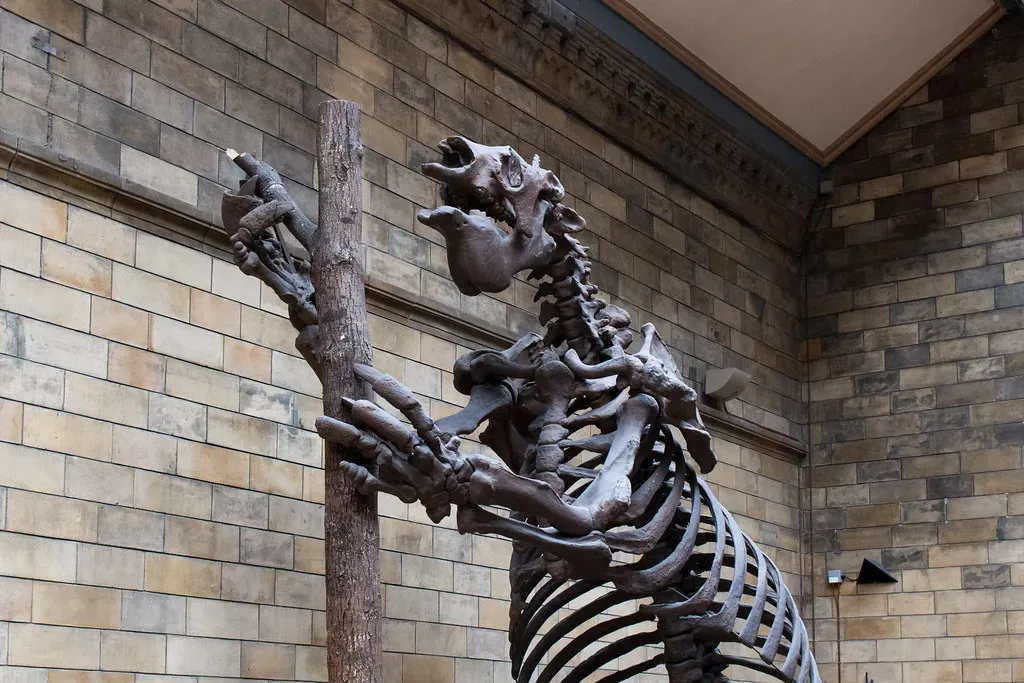
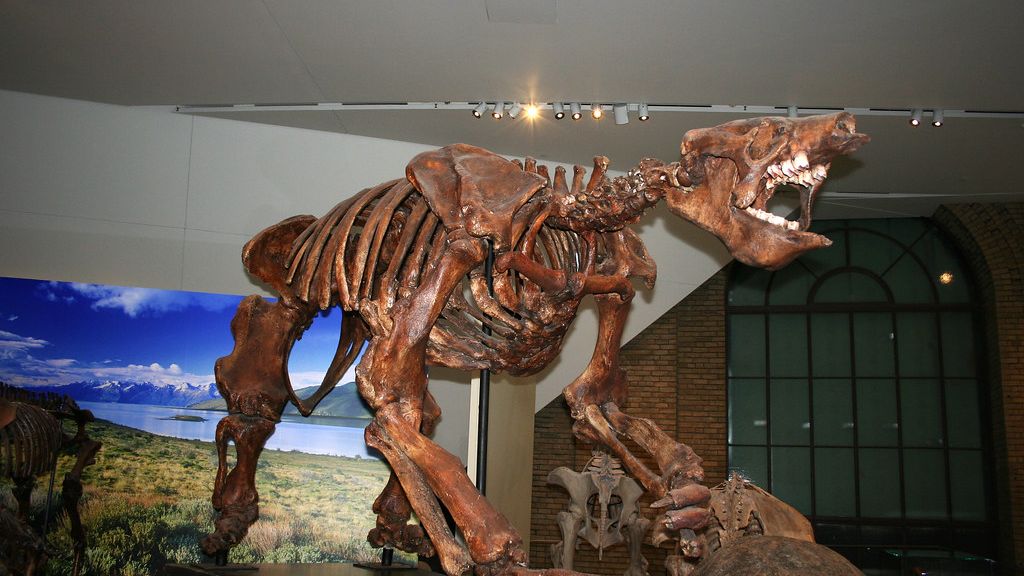
One of the biggest surprises about giant ground sloths is just how diverse they were. Paleontologists group them into several families, including the megatheriids and mylodontids, and they ranged from dog‑sized species to true heavyweights that could rival modern elephants in mass. Megatherium, the poster child from South America, could stretch over six meters from nose to tail and weigh several tons, while Eremotherium, a relative that wandered into North America, was not far behind in size. These weren’t just “big tree sloths”; they were their own distinct experiment in being huge on land.
Anatomically, they looked like something a special‑effects team might design after a long night and too much coffee. They had massive barrel‑shaped bodies, short but powerfully built limbs, and long, thick tails that could act like a third leg. Their skulls were blunt and deep, with simple peg‑like teeth adapted for grinding tough vegetation rather than slicing it. In some species, the skin even contained small bony plates called osteoderms, giving them a built‑in layer of armor. If you crossed a bear, a tank, and a sloth, you’d be getting close to the general vibe.
A Continent of Giants: Their Spread Across the Americas
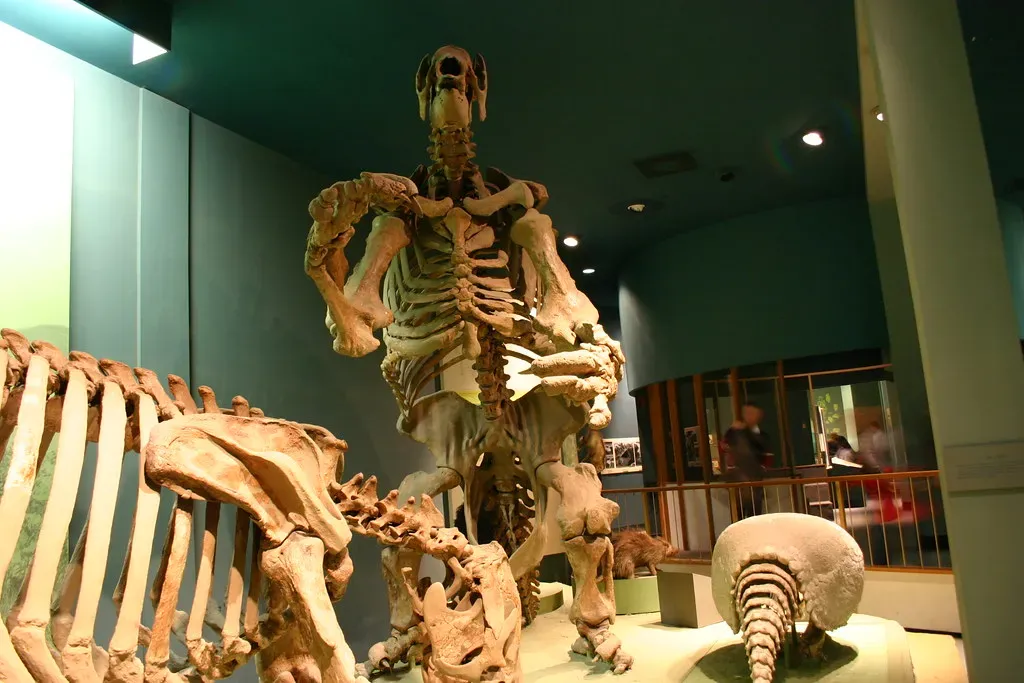
For a long time, giant ground sloths were mostly a South American story. That continent spent much of its history isolated, evolving a famously odd roster of mammals: terror birds, weird hoofed herbivores, and, among them, these spectacular sloths. When the Isthmus of Panama rose and linked North and South America a few million years ago, it triggered what scientists call the Great American Biotic Interchange. Ground sloths took that new land bridge as an open invitation, spreading northward into Central America, Mexico, and up through large parts of what’s now the United States.
Fossils show their footprint was truly continental. Ground sloth remains have been found from coastal Brazil to the high Andes, and from Florida and Texas up into parts of the American Midwest. In some caves and dry shelters, you even get preserved dung, giving a weirdly intimate look at their former presence. Standing on a modern prairie or in a desert canyon, it’s wild to realize that the same spot might once have held a browsing Eremotherium calmly stripping branches from shrubs, while mammoths and bison grazed nearby. These animals weren’t fringe oddities; they were core players in Ice Age ecosystems.
Built to Browse: How They Lived, Moved, and Ate
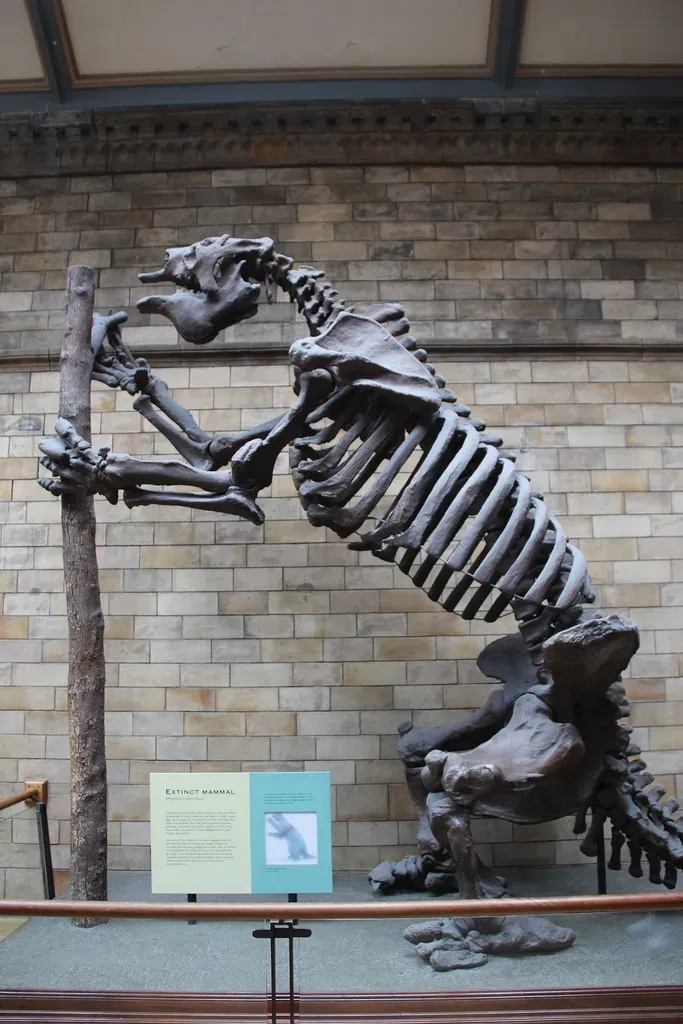
Despite their size, giant ground sloths were not clumsy brutes dragging themselves around like slow motion bulldozers. Their pelvic structure and strong tail suggest that many species could rear up, balancing in a tripod stance on their hind legs and tail, freeing their front limbs to reach high into trees. Picture a multi‑ton animal slowly lifting itself upright to pull down branches several meters above the ground, like a living crane calmly reshaping the vegetation around it. That ability alone would have given them access to food that smaller herbivores could not easily reach.
Their diet seems to have been mostly plant‑based, but not limited to soft leaves. Tooth structure, microwear, and even fossilized stomach contents and dung indicate they consumed tough shrubs, branches, and possibly even cacti in drier regions. Some species show adaptations for grinding more abrasive vegetation, hinting at regional specializations almost like dietary “dialects” across the continent. They probably moved at a slow but steady walk, not built for sprinting but more than capable of covering ground during migrations or seasonal shifts. In a sense, they were like living pruning tools, quietly trimming, breaking, and opening up vegetation wherever they went.
Engineers of the Ice Age: How Sloths Shaped Their World
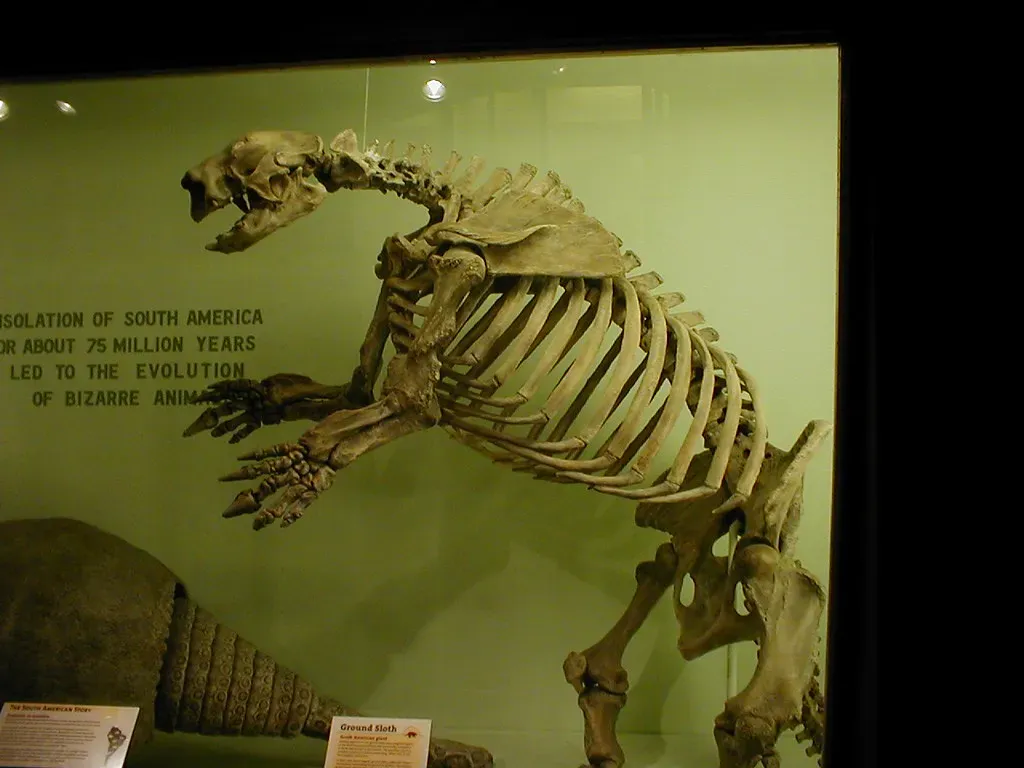
It’s easy to underestimate herbivores, but large plant‑eaters can be powerful ecosystem engineers, and giant ground sloths likely fit that role. By browsing shrubs and trees, trampling young saplings, and possibly knocking down branches or even small trees when they reared up, they would have helped maintain mosaics of open habitat within forests and woodlands. Over thousands of years, those choices – what to eat, what to ignore, where to rest – add up, influencing everything from undergrowth density to fire regimes. Their feeding might have been especially important in transitional zones where forests met grasslands, helping to keep those edges dynamic and diverse.
There is also tantalizing evidence that some ground sloths dug or modified burrows in certain regions, leaving behind large underground tunnels. Whether these were used year‑round or more opportunistically, any large underground structure changes how water moves through soil and how other animals use the landscape. On top of that, like many big mammals, they likely dispersed seeds in their dung over considerable distances, effectively planting new vegetation far from the parent plants. A world with giant sloths was not just a world with one more big herbivore; it was a world where their bodies, habits, and even their waste helped shape the living map of the Americas.
Humans, Climate, or Both? The Mystery of Their Disappearance
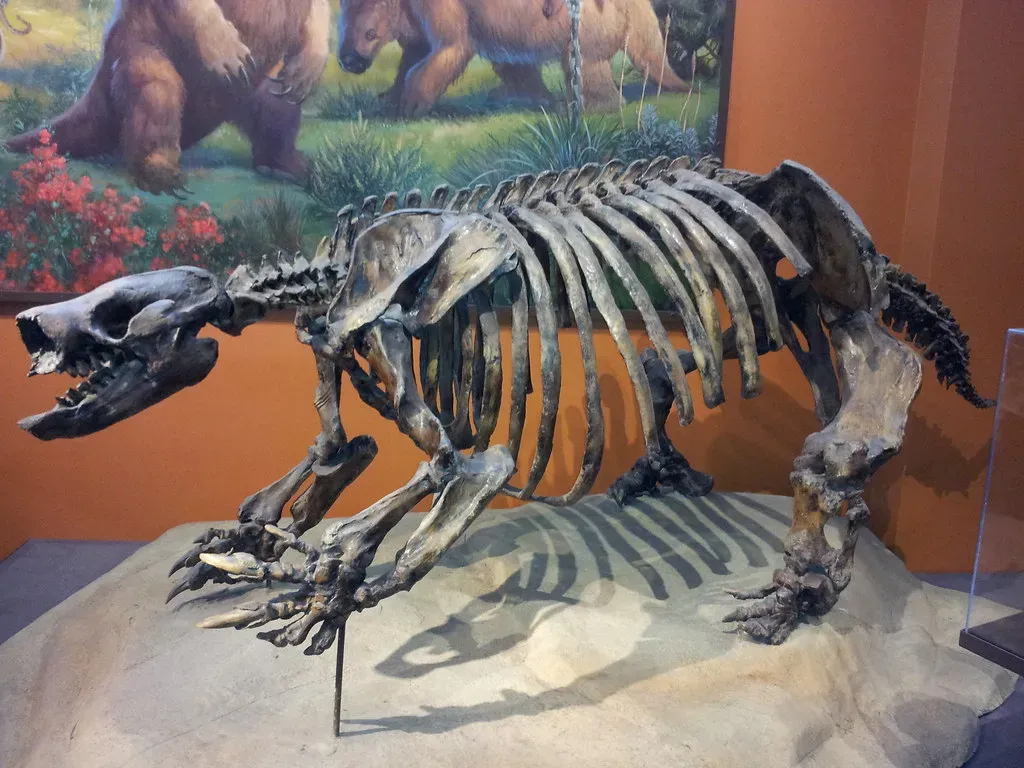
Giant ground sloths survived wave after wave of natural climate change for millions of years, only to vanish relatively quickly near the end of the last Ice Age. Their disappearance roughly coincides with two big shifts: the warming and ecological reshuffling that followed the peak of glaciation, and the spread of modern humans across the Americas. This timing has fueled a long and sometimes heated debate: were they pushed over the edge by climate pressures alone, hunted into oblivion by people, or hit by a combination of stresses that finally became too much? The honest answer is that the evidence points to a messy, overlapping story rather than a single clean culprit.
We do have clear signs that humans and ground sloths overlapped. There are archaeological sites where bones of large sloths show cut marks or appear in contexts that strongly suggest human activity and butchery. At the same time, changing vegetation patterns, melting ice sheets, and shifting rainfall would have been constantly rearranging their habitats, squeezing some populations while opening niches elsewhere. My own take is that if you are a slow‑breeding, large herbivore already trying to track shrinking patches of suitable habitat, even low levels of targeted hunting can tip you into a downward spiral. It is not a heroic story for our species, but it is a soberingly plausible one.
The Sloths We Have Left, and What Their Past Is Trying to Tell Us
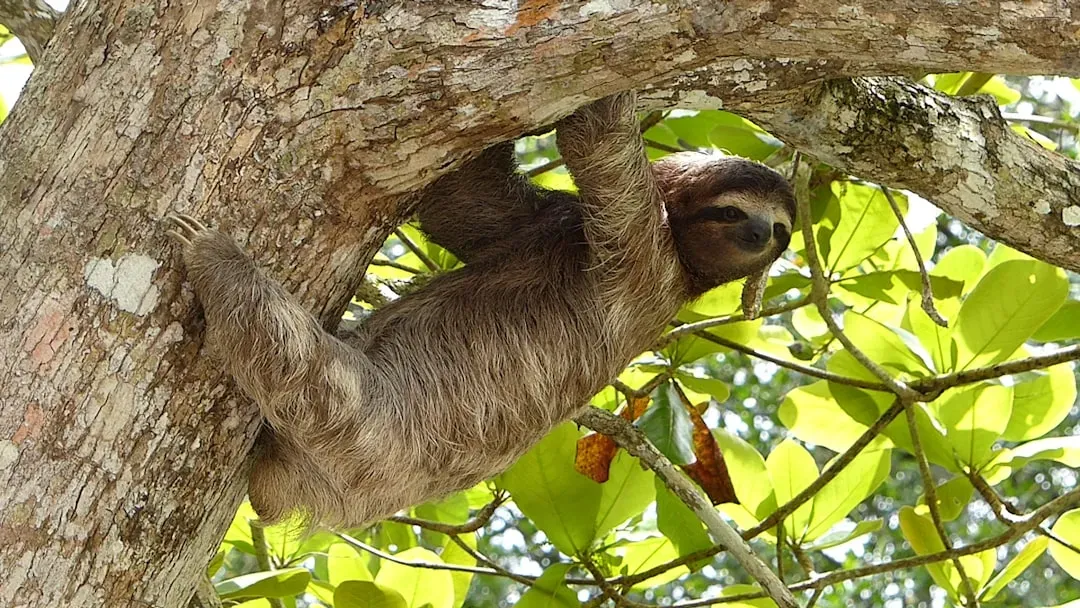
When people hear “sloth” today, they picture the small, tree‑dwelling species hanging in tropical canopies, blinking slowly and living life at half speed. Genetically and anatomically, those modern sloths are distant cousins of the ground giants, not direct miniaturized descendants, but they do hint at how wildly flexible the sloth blueprint has been. From canopy grazers to continent‑scale megafauna, this lineage has tried nearly every strategy the New World had to offer. Knowing that the same broad group once produced monsters that could look mammoths in the eye changes the way you see that sleepy animal on a rainforest branch.
For me, learning about giant ground sloths hits in two ways at once. On one hand, it fills the Ice Age with richer, stranger characters than the usual mammoths and saber‑toothed cats, making the past feel more layered and alive. On the other hand, it is a sharp reminder of how quickly we can prune away entire branches of the tree of life, often without fully grasping what we are cutting. We are living in a time when many large animals are under intense pressure from habitat loss, climate change, and hunting, just as those sloths once were. If anything, their story is warning us that “we survived past climate swings” is not a guarantee against what humans can do in a geological blink.
Opinionated Echoes: What a World Without Giant Sloths Says About Us
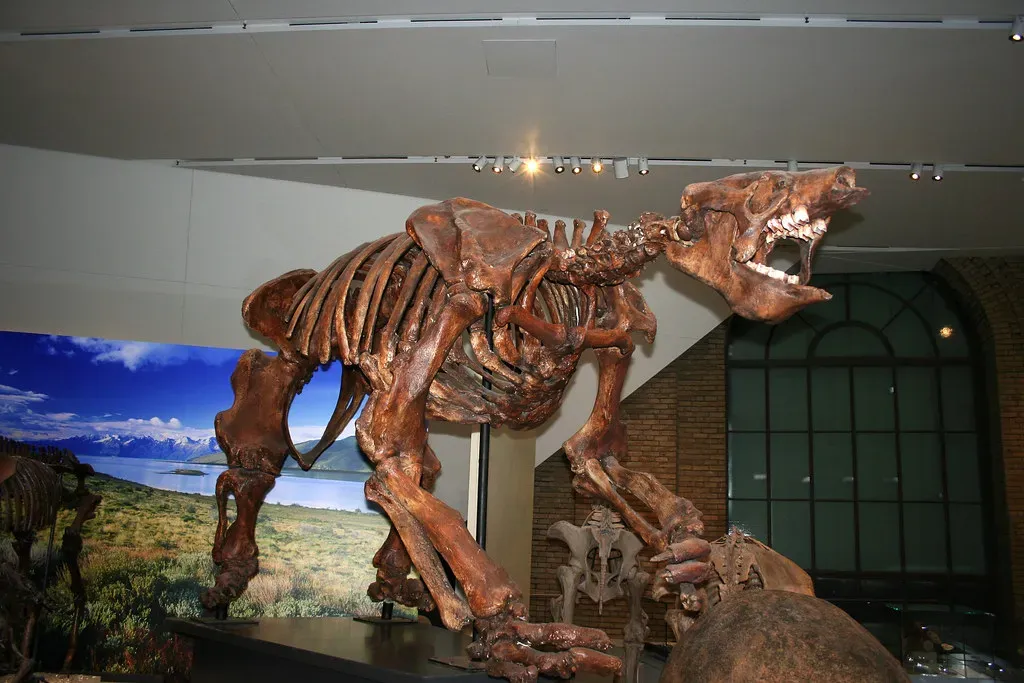
I think the most unsettling part of the giant ground sloth story is not that a strange animal disappeared, but that we almost erased the memory that it had ever been here. Until fossils started turning up in caves and riverbanks, no one walking across the Americas would have guessed that elephant‑sized sloths once browsed where their neighborhoods and farms now stand. In that sense, our landscapes are haunted not just by what is gone, but by what we have forgotten we lost. It makes the modern world feel a bit thinner, like a movie that has had some of its best supporting characters quietly edited out.
Personally, I do not think we should romanticize the past as some perfect Eden, but I do think we should be honest about the scale of what vanished, and often about our role in that loss. The was not just a quirky footnote; it was a full‑blown chapter in the story of life that ended fast and, most likely, partly because of us. If knowing that does not nudge us to take current extinctions more seriously, I am not sure what will. When you look at a quiet forest clearing or an empty stretch of plain today, it is worth asking yourself: whose footsteps should be echoing here alongside ours, and what will future people say about the giants that walked away on our watch?