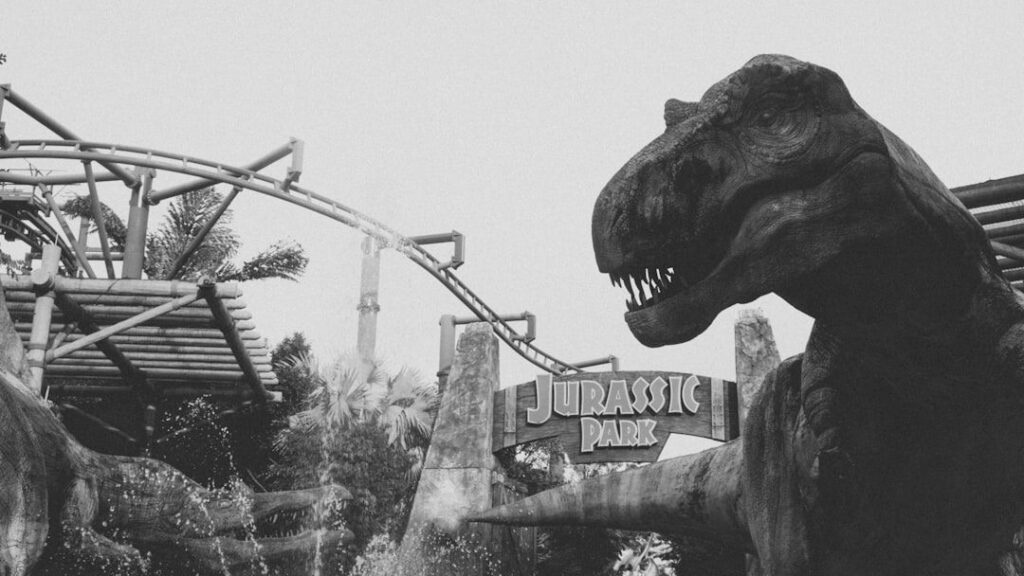
When Jurassic Park hit theaters in 1993, it didn’t just introduce audiences to a dinosaur – it burned a specific image into the collective brain of an entire generation. The T. rex was a roaring, scaly, teeth-bared terror that could outrun a jeep and spot you the moment you blinked. That image has been so dominant for so long that most people still carry it around like fact. Here’s the uncomfortable truth: almost every iconic detail in that film is wrong, and the real animal is somehow stranger and more impressive than the version Hollywood invented.
In the three decades since that movie changed pop culture forever, paleontologists have cracked open T. rex skulls with CT scanners, analyzed proteins locked inside its bones for 68 million years, and rebuilt its muscles from scratch using biomechanical modeling. What they found didn’t just tweak the picture – it shredded it. Some of the biggest surprises are still barely known outside of scientific circles. The last few on this list will genuinely change how you see this animal.
#11 – T. Rex Probably Had Lips Covering Its Teeth
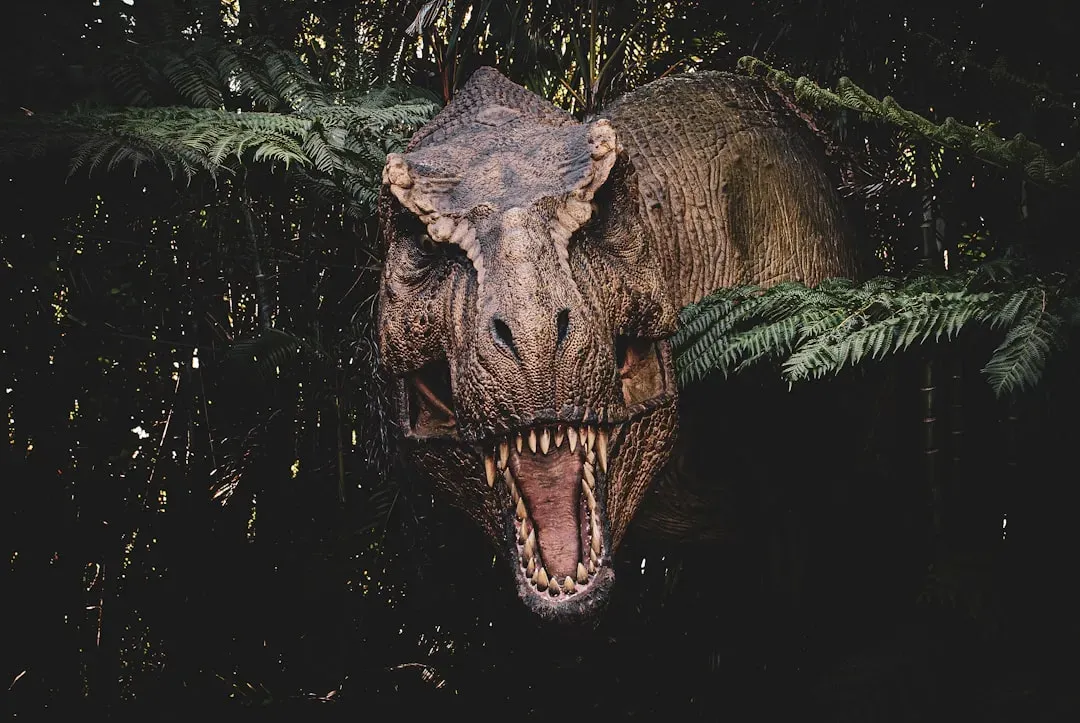
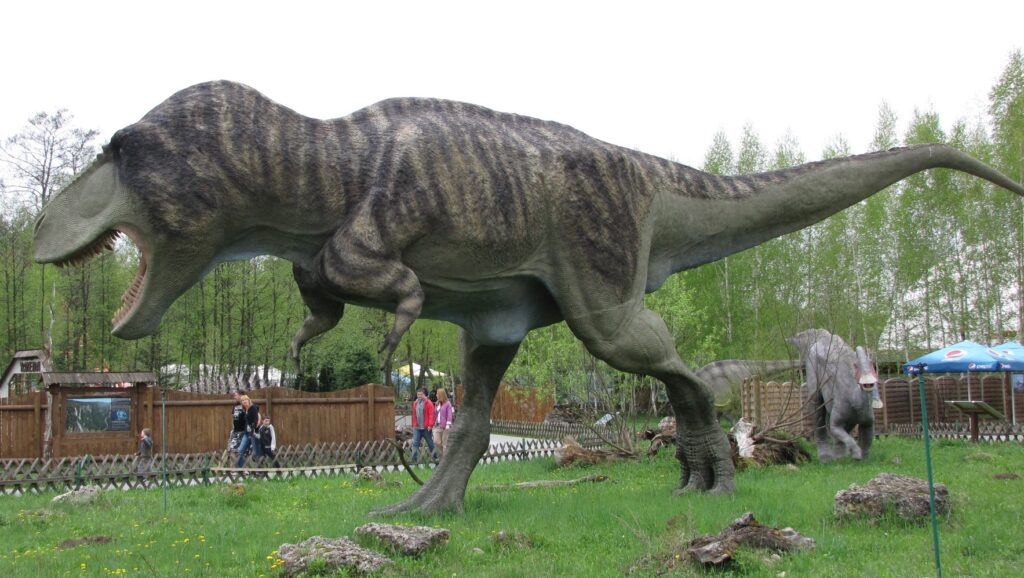
The permanent toothy grin is one of the most iconic images in movie history. Every action figure, every movie poster, every theme park logo – all of them show a T. rex with its full arsenal of teeth on naked display, even with its mouth closed. It looks terrifying. It also appears to be completely wrong.
A landmark 2023 study published in the journal Science looked closely at enamel thickness and tooth wear patterns across theropod dinosaurs and found that fully exposed teeth would have dried out, cracked, and degraded rapidly in open air. Modern reptiles with exposed teeth – crocodilians, for instance – have teeth with specific structural adaptations for that exposure. T. rex didn’t. Its enamel matched animals that keep their teeth covered by soft tissue, meaning lips. Sealed-mouth T. rex looked less like a monster and more like a very large, very dangerous lizard with its face relaxed. The grin was never real.
Fast Facts
- The 2023 lips study was published in the journal Science by lead author Thomas Cullen and colleagues
- T. rex’s jaw foramina – tiny nerve and blood vessel holes – were arranged in a lizard-like row, not scattered like a crocodile’s
- Theropod enamel wear was even on all sides, a telltale sign teeth stayed moist and covered
- Dinosaur lips wouldn’t curl into a snarl – they were closer to a monitor lizard’s fixed, scaly covering
- Modelling lipless theropod jaws showed the lower jaw would have had to dislocate just to close the mouth
#10 – Its Bite Force Was Stronger Than Any Land Animal Alive Today
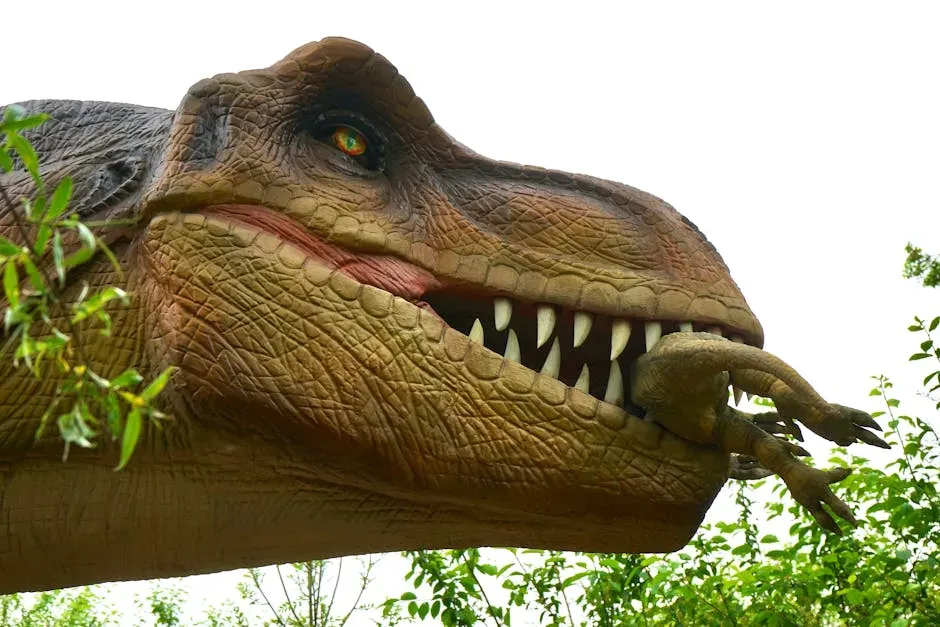
Early estimates were humbling enough – somewhere in the range of a large crocodile, which already sounds nightmarish. Then computer modeling ran the actual numbers using jaw muscle geometry and bone stress analysis, and the results were staggering. Adult T. rex could generate between 35,000 and 57,000 newtons of force at the back teeth. To put that in perspective, a saltwater crocodile – the strongest living bite on Earth – maxes out around 16,000 newtons. T. rex didn’t just bite harder. It bit harder by a factor that breaks the comparison entirely.
What that force actually did to prey isn’t theoretical – it’s written in the fossil record. Deep gouges in Triceratops hip bones and Edmontosaurus vertebrae show puncture-and-pull feeding behavior, where T. rex didn’t just bite through flesh but drove its teeth into bone and ripped. Juveniles were already delivering over 5,600 newtons in their early teens, roughly matching a spotted hyena. The bite force scaled dramatically with body size, meaning the full-grown adult wasn’t just the apex predator of its ecosystem – it was operating at a biological extreme that hasn’t been matched on land before or since.
Quick Compare
- Adult T. rex: 35,000 – 57,000 newtons
- Saltwater crocodile (strongest living land bite): ~16,000 newtons
- Teen T. rex (age 13): ~5,641 newtons – equivalent to a spotted hyena
- Adult alligator: ~4,500 newtons
- Adult human: ~300 – 600 newtons
#9 – T. Rex Had Hawk-Level Binocular Vision
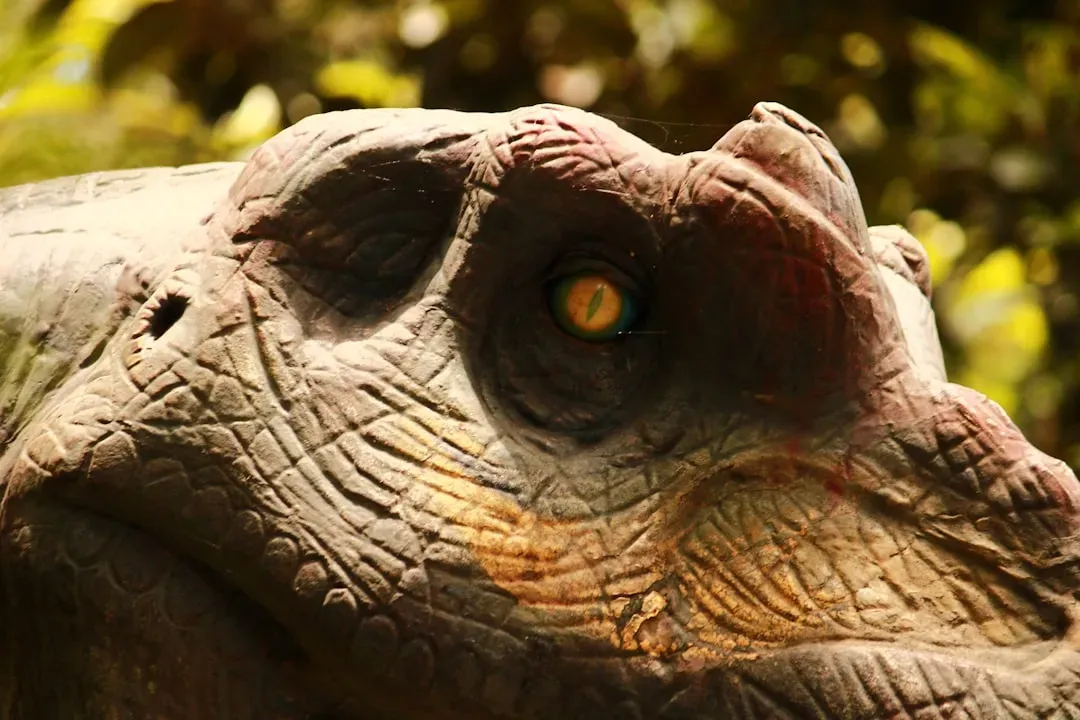
One of the most quoted scenes in Jurassic Park involves characters standing absolutely still while T. rex scans the area directly in front of them, missing them entirely because – as Jeff Goldblum explains – the dinosaur’s vision is based on movement. It’s a great scene. It’s also, according to skull anatomy, complete nonsense. CT scans of T. rex braincases show forward-facing eye sockets that created significant overlap in the visual fields – the same arrangement that gives hawks and owls their precise depth perception. This wasn’t an animal that needed movement to register a target.
The visual acuity estimates derived from eye socket size and neural geometry suggest T. rex could resolve fine detail at distances that rival or exceed modern raptors. It wasn’t scanning for motion in a blur – it was seeing the world in sharp focus, from far away, with excellent depth judgment. For a predator operating in the late Cretaceous forests and floodplains of what is now western North America, that meant it could pick out a hadrosaur moving through dense vegetation from hundreds of meters away. Staying perfectly still would not have saved anyone. The scene is fiction built on a misread of animal biology that scientists had already begun questioning before the film even came out.
#8 – It Had One of the Most Powerful Noses in Dinosaur History
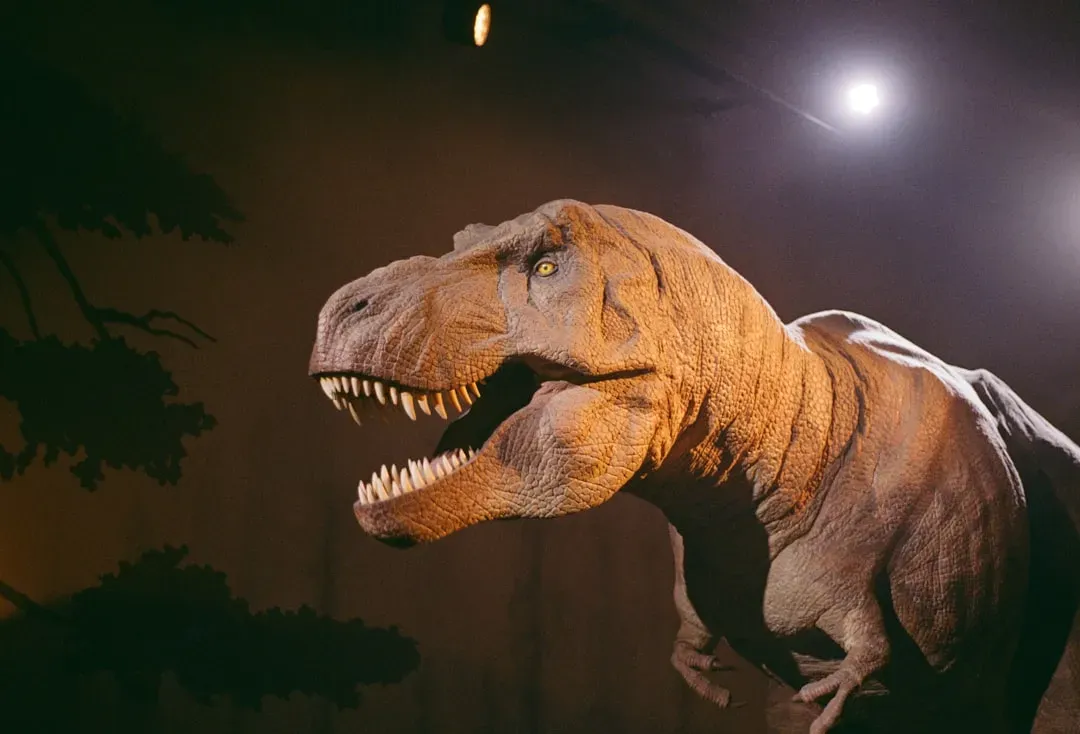
If the eyes were hawk-sharp, the nose was something closer to a bloodhound’s. Detailed reconstructions of the nasal cavity – built from endocast impressions inside fossilized skulls – revealed olfactory bulbs that were enormous relative to total brain size. This wasn’t a vestigial sense used occasionally. It was a primary system, likely the first sense that locked onto prey before the eyes even came into play. T. rex could almost certainly detect the scent of a carcass or living animal from miles away, even through dense forest cover.
This reframes how we think about its hunting strategy. The image of T. rex crashing through the underbrush using brute speed to chase things down doesn’t match the sensory profile. An animal with this kind of olfactory capacity would more likely operate the way large predators with exceptional scent detection do today – reading the wind, following a trail, closing distance before the prey even knew it was being approached. Fossil evidence of healed injuries on prey animals suggests some hunts were prolonged, not explosive. The nose may have been doing most of the work long before the jaws came into range.
At a Glance
- T. rex’s olfactory bulbs were among the largest of any theropod dinosaur relative to brain size
- Modern comparisons: scent-processing brain regions in T. rex rival those of turkey vultures and large dogs
- Healed bite wounds on prey fossils suggest stalking over long distances, not pure ambush
- Combined with binocular vision and acute hearing, T. rex ran a fully integrated predator sensory system
#7 – Top Speed Was Probably Under 20 km/h
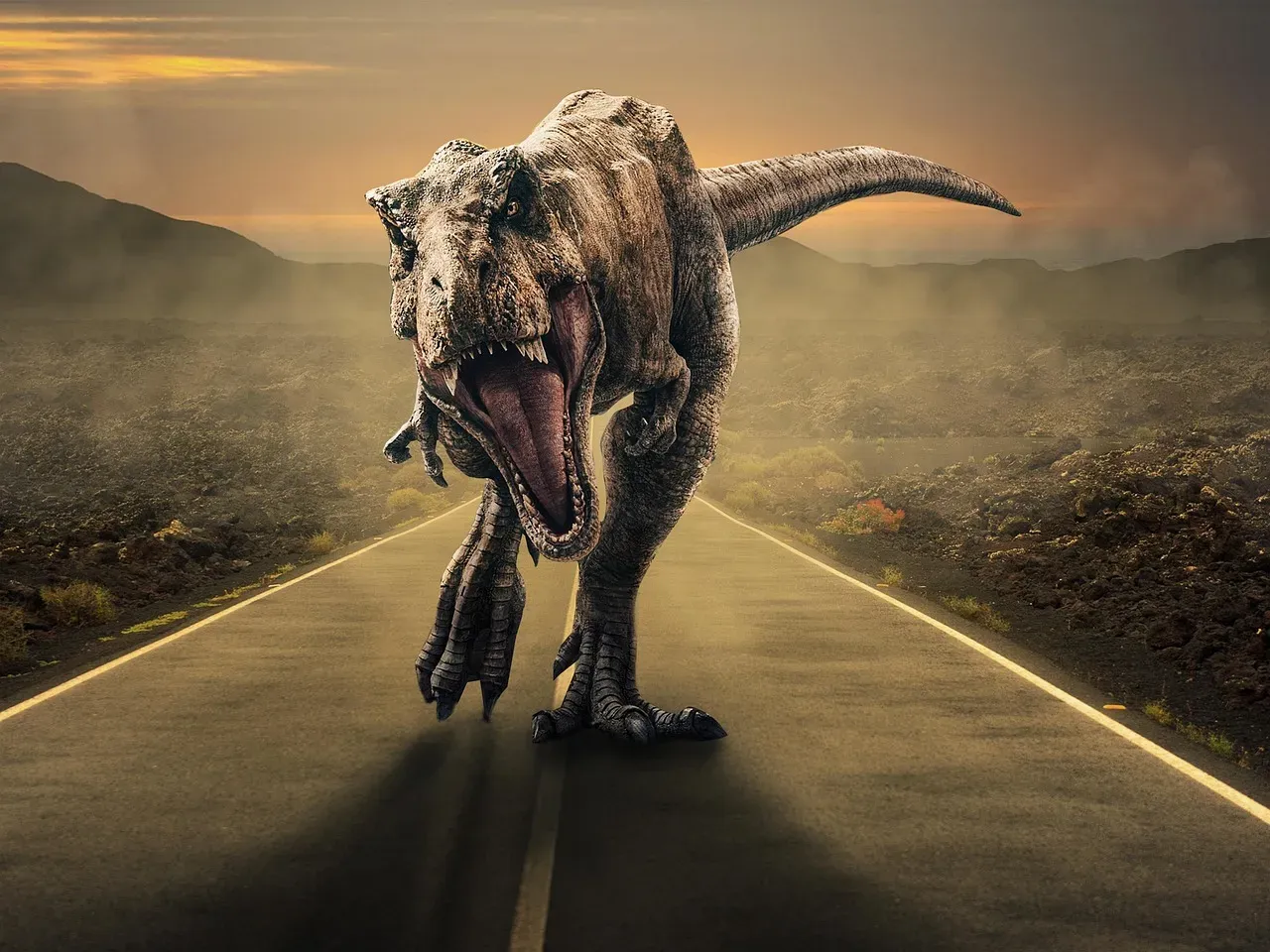
The jeep-chasing scene in Jurassic Park is cinema gold. It is also, biomechanically speaking, a fantasy. Multiple independent studies using leg bone proportions, muscle mass estimates, and locomotion modeling have converged on the same uncomfortable conclusion: T. rex was not fast. The most generous estimates place sustained running speed at roughly 17–27 km/h – about the pace of a moderately fit human jogger. Some models suggest even that is optimistic for a fully grown adult pushing eight tons of mass through its skeleton at speed. One analysis found that at previously proposed top speeds, T. rex would have literally shattered its own foot bones.
The reason comes down to physics. At that body size, the leg bones required to support high-speed running would need to be so thick they’d represent an impossible proportion of total body mass. T. rex’s actual leg proportions suggest it was built for power and endurance over short distances, not pursuit speed. This fits a predator profile closer to a lion or a crocodile than a cheetah – an ambush specialist that closed distance quickly over a short burst, then used overwhelming force to end the encounter. Prey that could maintain any reasonable speed for more than a few seconds had a genuine shot at survival. The movie got the teeth right. It got the speed completely wrong.
#6 – It Took Up to 40 Years to Reach Full Size
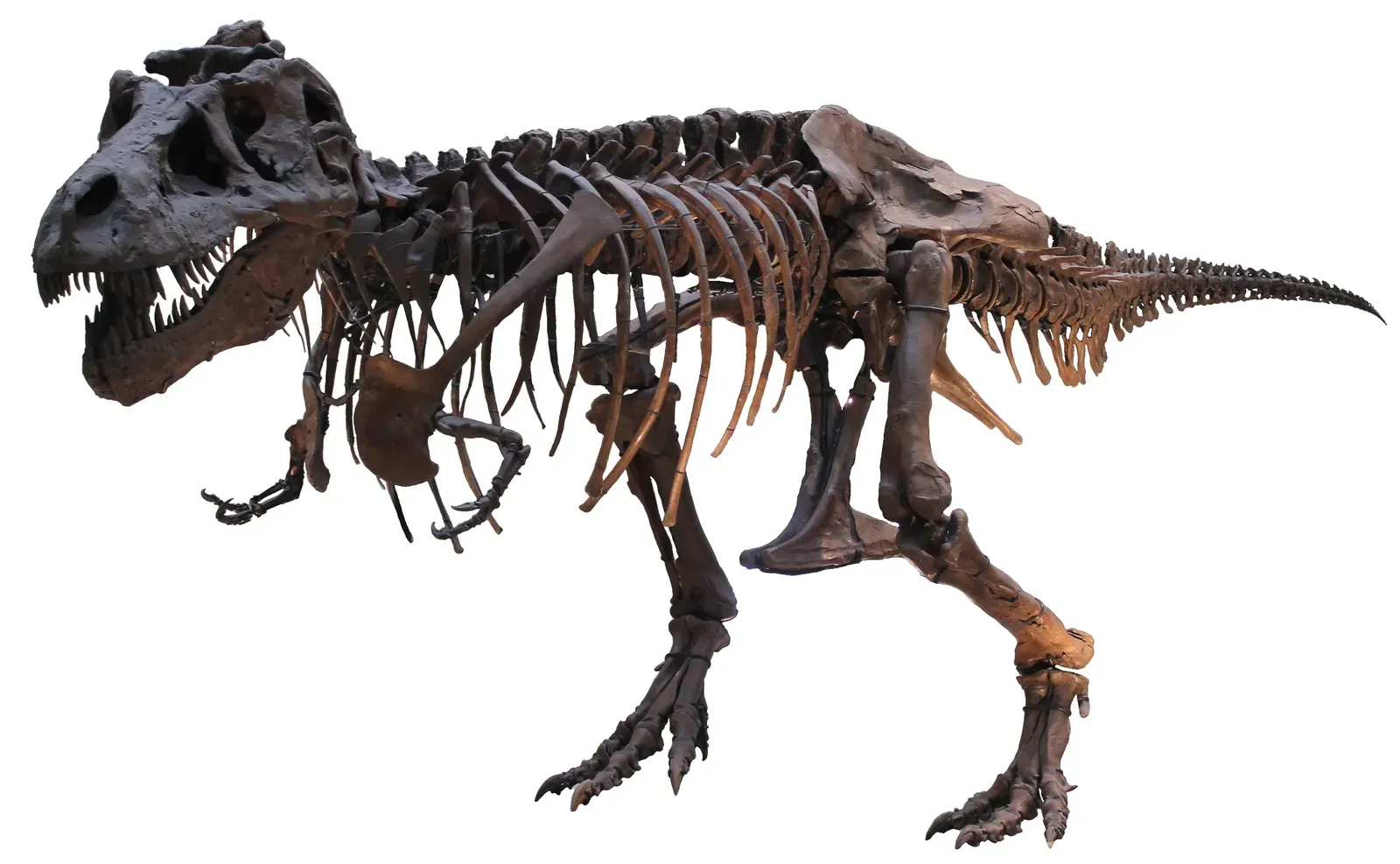
The original growth model for T. rex was already dramatic – explosive teenage growth spurts pushing the animal to near-adult size by around age 20, the dinosaur equivalent of hitting a massive second puberty. That picture has since been revised by histological studies, which examine growth rings in fossilized bone the same way dendrochronologists read tree rings. A 2026 analysis of 17 specimens stretched the timeline considerably. Growth was steadier and more prolonged than the burst model suggested, with many individuals still adding significant mass well into their mid-30s.
Full adult size – somewhere around eight metric tons – appears to have arrived closer to age 35 to 40 in the most complete individuals. That extended subadult phase is ecologically significant. It means T. rex occupied a “teenager” niche in its ecosystem for far longer than previously thought, competing with different prey and potentially different rivals than the full adults. Resource stress in lean years could slow growth further, compressing or stretching the timeline based on conditions. The animal we think of as the definitive T. rex – the massive, fully realized apex predator – was the product of decades of growth, not a few violent years of rapid expansion.
#5 – Soft Tissue and Proteins Survived Inside a 68-Million-Year-Old Bone
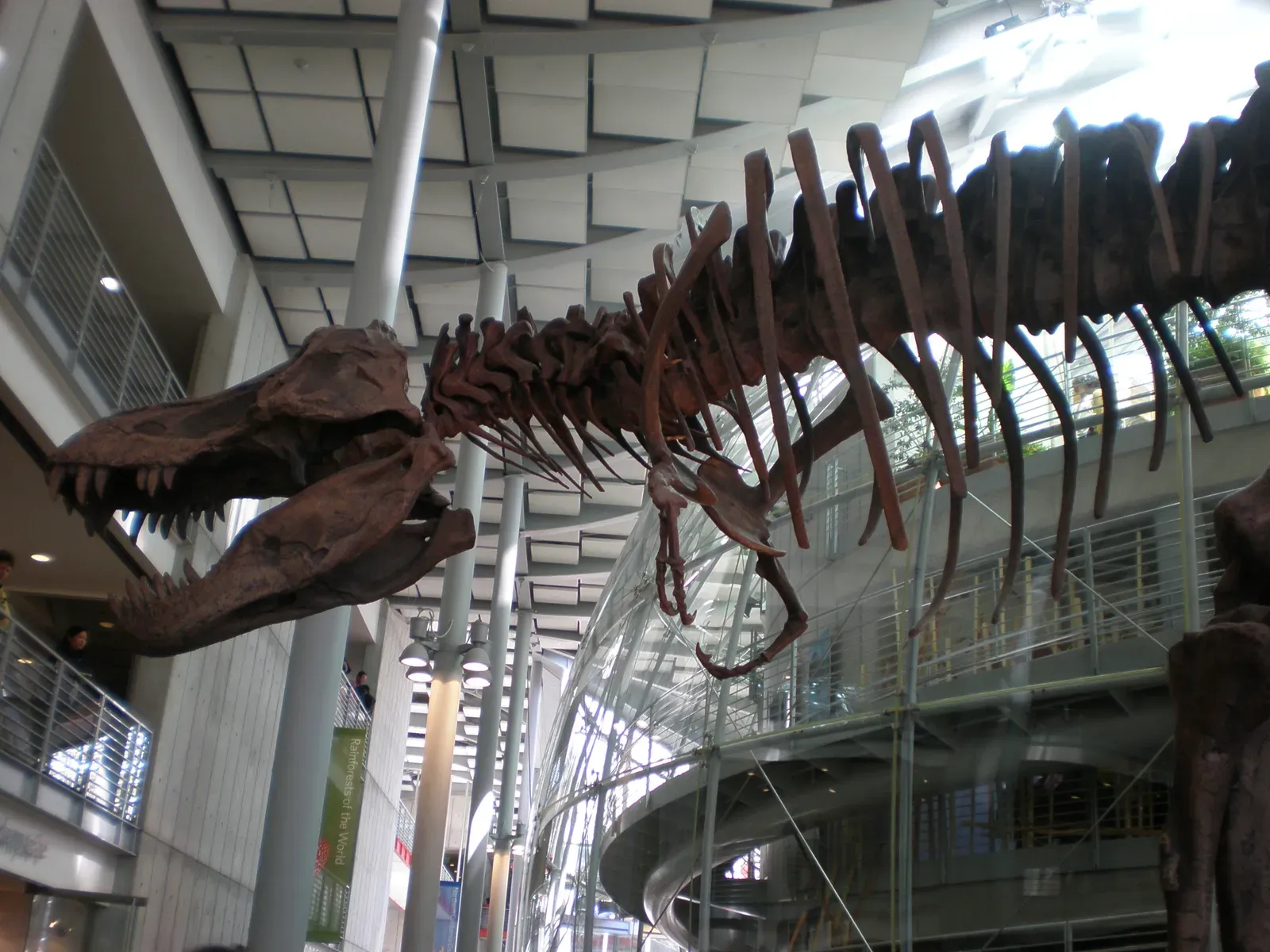
In 2005, paleontologist Mary Schweitzer reported something that genuinely shocked the scientific community: flexible, translucent tissue recovered from inside a T. rex femur. The initial reaction from many researchers was disbelief. Organic material simply wasn’t supposed to survive 68 million years of geological time. Contamination was the obvious first explanation. Subsequent testing, replication, and independent analysis over the following years confirmed the find was real – original collagen proteins, partially preserved inside the bone’s internal structure, still identifiable after nearly seven decades of millions of years in the ground.
The implications reach well beyond one dramatic discovery. The preservation appears to depend on specific conditions – rapid burial, low oxygen, particular mineral environments – that essentially sealed the organic material away from the processes that normally destroy it. Even more striking, the protein sequences recovered share structural similarities with collagen found in modern birds, adding biochemical weight to the already-strong evolutionary link between theropod dinosaurs and avian species. It means that in certain circumstances, we aren’t just studying the shapes dinosaurs left behind. We’re studying the actual molecular remnants of what they were made of.
The tissue is still soft, it’s still transparent, and it’s still flexible.
Mary Schweitzer, paleontologist, on the 2005 T. rex soft tissue discovery
Worth Knowing
- The soft tissue was found inside a T. rex femur from Hell Creek Formation, Montana
- Preservation likely required rapid burial, low oxygen, and specific mineral conditions
- Protein sequences recovered matched collagen structures found in modern birds – direct biochemical evidence of the dino-bird link
- The discovery prompted new research into how organic molecules can survive deep geological time
#4 – Close Relatives Wore Feathers or Fuzzy Coats
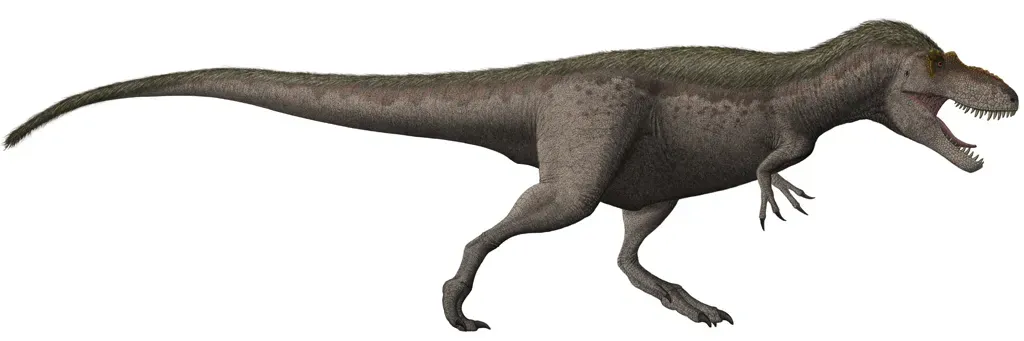
No adult T. rex specimen has yet produced direct feather impressions – the fossil record for integument on large tyrannosaurids is frustratingly incomplete. But the broader tyrannosaur family tree has made the picture hard to ignore. Yutyrannus huali, a large tyrannosauroid from Early Cretaceous China described in 2012, preserved clear evidence of filamentous feather-like structures across much of its body despite reaching nearly a ton in size. Earlier, smaller tyrannosaurs appear to have been covered in simple proto-feathers as a baseline condition for the entire lineage.
This creates a genuine open question about T. rex specifically. The prevailing interpretation is that large adult T. rex likely had reduced or patchy covering – large body size generates heat, and thick insulation becomes a liability – but that juveniles and subadults may have retained more extensive fuzzy coats before shedding them as they grew. Some skin impressions from large tyrannosaurids do show scaly patches on parts of the body, suggesting a mosaic rather than full feathering. The honest answer is that we don’t know the full picture yet. But the default assumption of head-to-tail scales, borrowed from the reptiles we already knew, almost certainly isn’t right either.
#3 – Nanotyrannus Was a Separate Species, Not a Young T. Rex
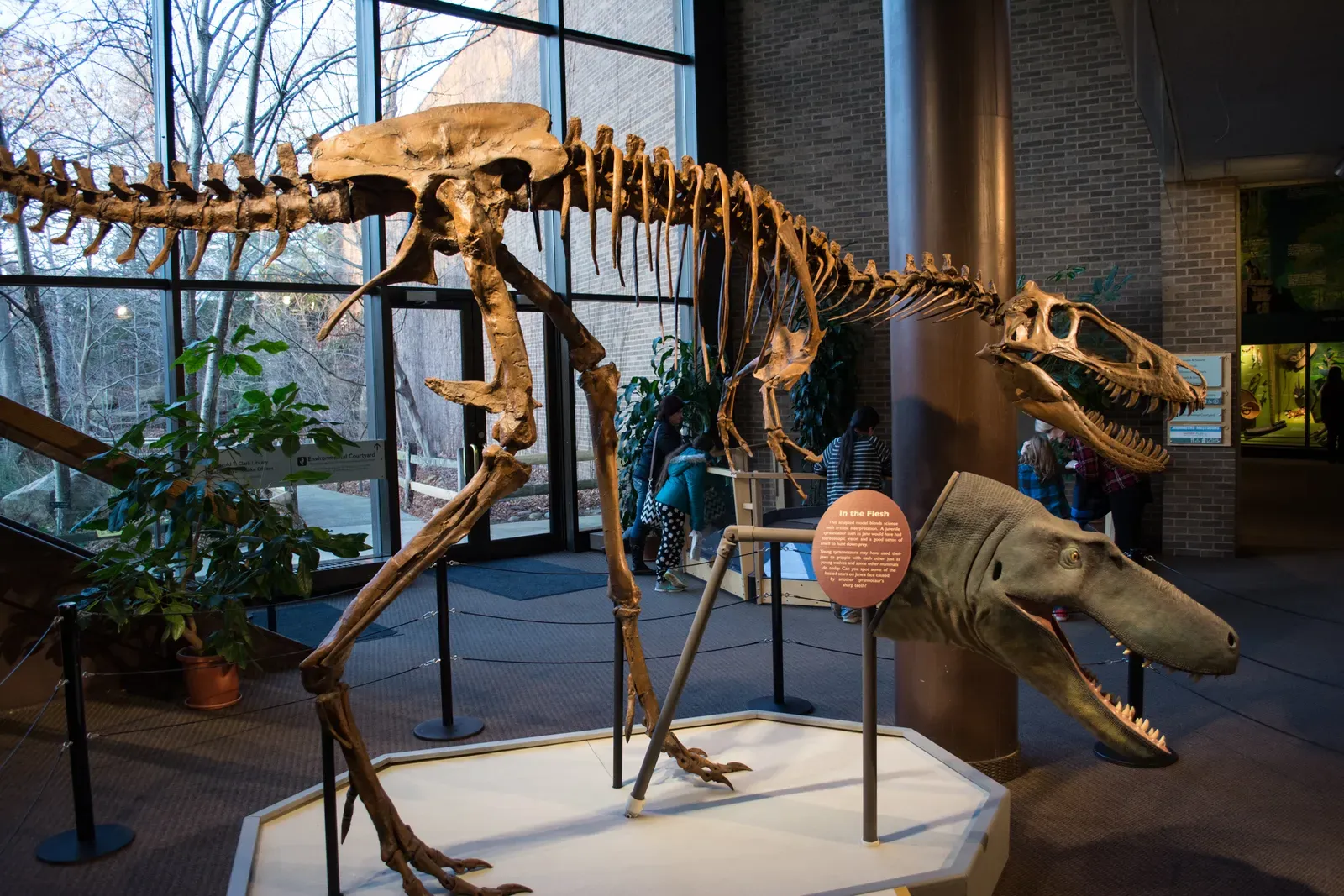
For decades, small tyrannosaur fossils from the Hell Creek Formation were filed under “juvenile T. rex” and set aside. The logic seemed reasonable – T. rex grew slowly and dramatically, so small specimens were just young ones. But a significant contingent of researchers never accepted that interpretation, pointing to proportional differences in the skulls and teeth that didn’t match a growth series leading to T. rex adults. The debate ran for years without a definitive specimen to settle it. Then the Dueling Dinosaurs came along.
Analysis of this extraordinary specimen – a Nanotyrannus and a Triceratops preserved together in combat position – confirmed what the dissenters had argued: Nanotyrannus was a distinct species that reached full adulthood at a much smaller size, not a T. rex teenager frozen mid-growth. The study, published in Nature in October 2025, was co-authored by Lindsay Zanno of NC State University and the North Carolina Museum of Natural Sciences. It shared its ecosystem with T. rex, filled a different predatory niche, and has been misidentified in museum collections for generations. This isn’t a minor taxonomic footnote. It splits the predator guild of one of the most studied fossil environments on Earth and means that population estimates, feeding ecology models, and growth studies built around “juvenile T. rex” specimens may need substantial revision.
Why It Stands Out
- The Dueling Dinosaurs fossil – a Nanotyrannus locked in combat with a Triceratops – was unearthed in Montana’s Hell Creek Formation
- Published in Nature (October 2025): Nanotyrannus confirmed as a fully grown adult, not a teenage T. rex
- A separate December 2025 study in Science confirmed Nanotyrannus adulthood by analyzing growth rings in the hyoid (throat) bone
- Researchers identified two Nanotyrannus species: N. lancensis and a newly named N. lethaeus
- Dozens of T. rex growth and behavior studies built on “juvenile” specimens may now require revision
#2 – Multiple Individuals Sometimes Traveled Together
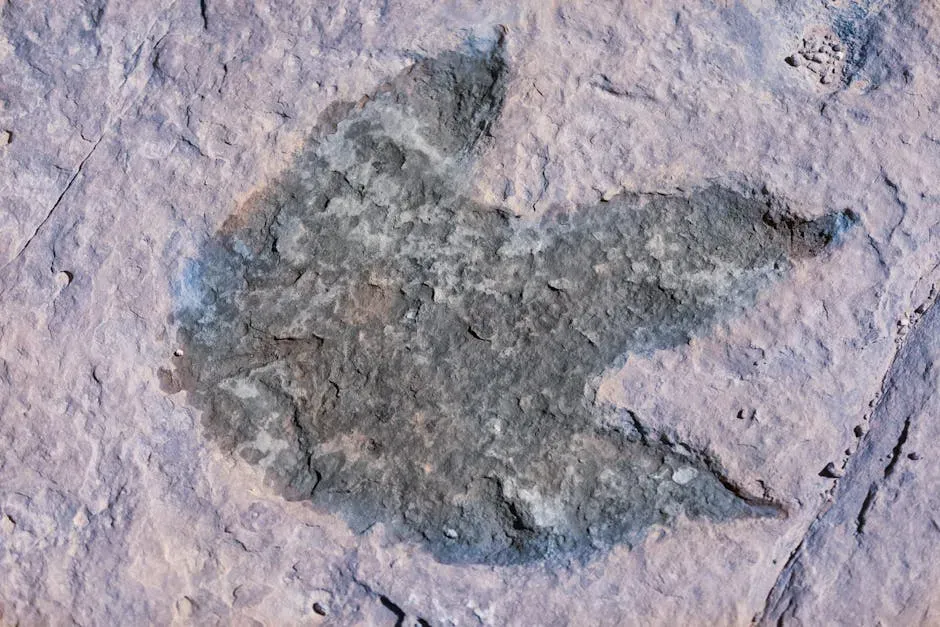
The solitary monster is one of T. rex’s most enduring characterizations – a lone apex predator that tolerated no company and had no use for social structure. The fossil evidence has been quietly undermining that image for years. Trackway sites in western Canada preserve multiple large tyrannosaurid footprints moving in the same direction at roughly the same time. Several bone beds contain the remains of multiple T. rex individuals of different ages in close spatial association, deposited under conditions that suggest they died together rather than being washed in from different locations.
None of this proves coordinated pack hunting in the way wolves operate. The honest interpretation is more cautious: these animals were at minimum tolerant of each other under certain conditions, and possibly gregarious in ways that served their survival. What tips the evidence toward genuine social interaction – rather than just coincidence – are the skulls. Older T. rex individuals frequently show healed bite marks on their faces from other T. rex. The size and spacing of those bites match conspecific contact, meaning these animals were close enough to each other, regularly enough, to leave marks. Whether those interactions were cooperative, competitive, or something more complex, the purely solitary model doesn’t survive the data.
#1 – Its Brain Was Built for Problem-Solving, Not Just Eating
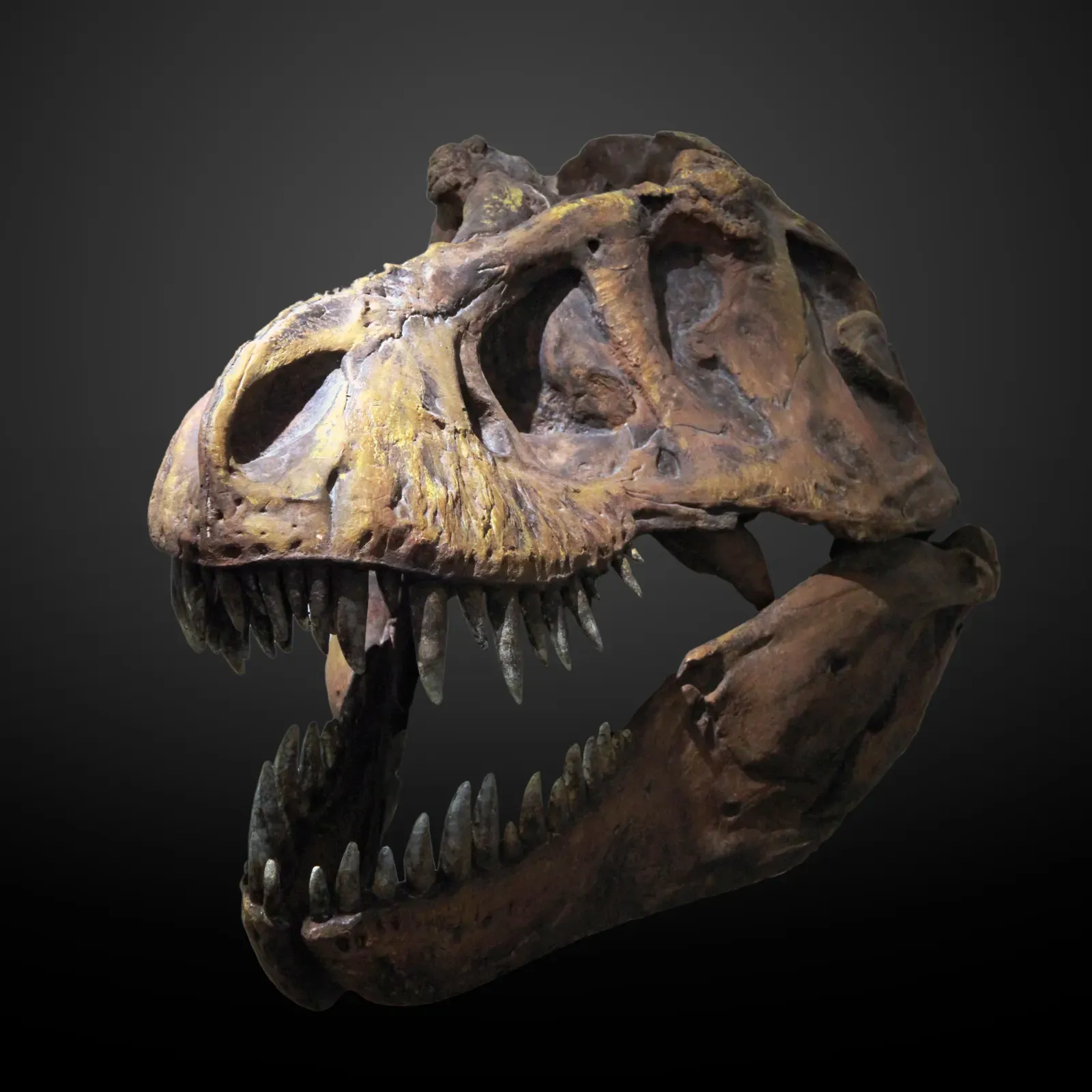
The dumb-but-powerful predator is a seductive image – all muscle and instinct, no cognition. CT scans of T. rex braincases have been chipping away at that image for years. The cerebrum was enlarged relative to earlier theropods. The regions associated with processing olfactory, visual, and auditory input were well-developed and integrated in ways that suggest something more than reflexive, stimulus-response hunting behavior. This was an animal capable of synthesizing sensory information from multiple channels simultaneously and adjusting its behavior accordingly.
What that means in practical terms is harder to pin down – we can’t run behavioral experiments on an extinct animal. But the neurological architecture fits a predator that could learn, adapt, and potentially remember. It helps explain how T. rex maintained its position at the top of a complex, competitive ecosystem for roughly three million years across a wide geographic range. That isn’t the track record of an animal running purely on instinct. The brain was the weapon that aimed all the others – the bite force, the vision, the smell, the ambush timing – and it was far more sophisticated than the thundering, reactive monster the movies handed us.
At a Glance: The Real T. Rex vs. The Movie Version
- Teeth: Covered by scaly lips – not permanently exposed
- Speed: ~17–27 km/h max – not jeep-chasing fast
- Vision: Binocular, hawk-level acuity – not movement-dependent
- Smell: Bloodhound-class olfactory system – hunted by scent first
- Social life: Possibly gregarious – not strictly solitary
- Brain: Built for learning and adaptation – not pure instinct
The Verdict – and Why It Actually Matters
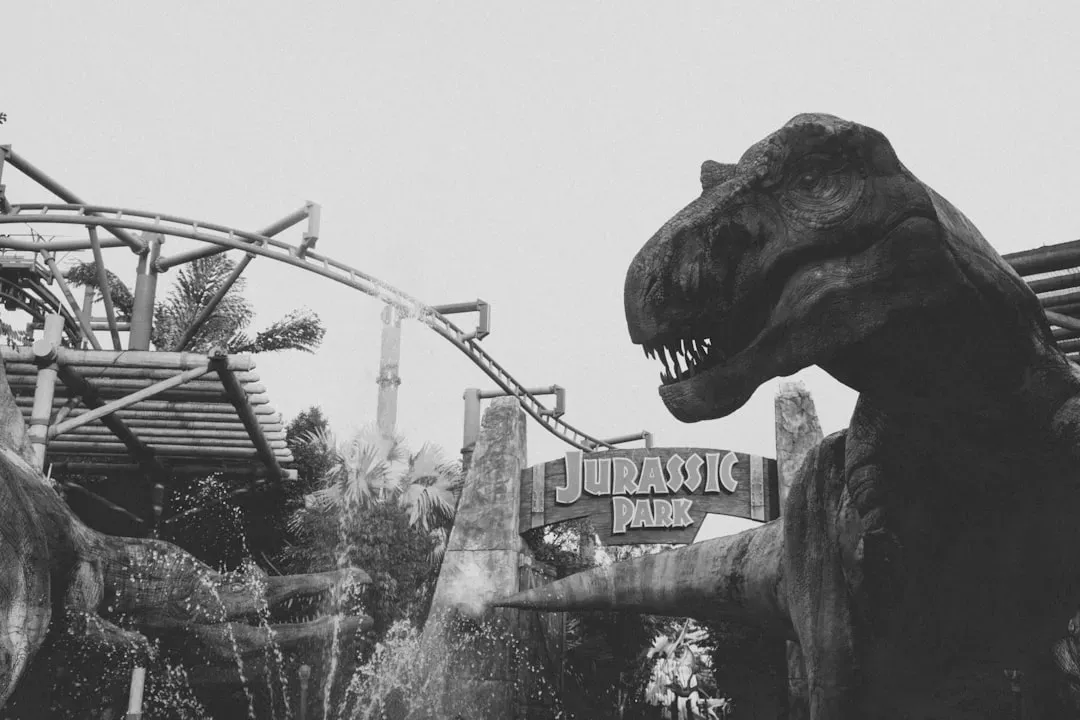
Here’s the opinion worth stating plainly: Jurassic Park was a masterpiece of filmmaking, and it was also one of the most effective pieces of scientific misinformation ever produced – not through malice, but through the power of vivid imagery lodged in the brain before the facts had a chance to compete. The lipped, keen-nosed, ambush-hunting, slowly maturing, possibly social, neurologically sophisticated animal that emerges from three decades of post-film research is not less impressive than the movie version. It is dramatically more impressive, and far weirder. A T. rex that followed scent trails for miles, processed information through a brain built for adaptation, and may have traveled in loose groups alongside a second tyrannosaur species we only just confirmed existed – that animal deserves better than the cartoon it’s been reduced to.
The Nanotyrannus confirmation alone should have rewritten every popular science headline for a year. The soft tissue proteins should have changed how the public thinks about what fossils actually are. The lips should have retired the classic logo permanently. None of those things happened at the scale they deserved, because the Jurassic Park image is simply too deeply embedded to dislodge easily. But the science keeps coming – CT scans, isotopic analysis, more bone beds, better imaging – and every new study moves the real T. rex further from the movie and closer to something genuinely unprecedented. That’s not a loss. That’s the whole point of doing the work.