Everyone knows T-Rex. The massive skull, the tiny arms, the thundering footsteps that shook the Jurassic Park fences. It has spent decades as the default symbol of prehistoric danger, the creature parents point to when they want to terrify a five-year-old. But here’s what the fossil record has been quietly screaming for years: T-Rex never even made the podium. The real monsters were underwater, and some of them made the famous tyrant look roughly as threatening as a golden retriever.
We’re not talking about marginally bigger. We’re talking about creatures with skulls the size of cars, bite forces that tripled T-Rex’s best effort, and body lengths that pushed into blue whale territory. The ocean didn’t just produce dangerous animals. It produced things that seem physically impossible until you hold the bones in your hands. The eleven entries below go from genuinely terrifying to something that will make you quietly grateful you weren’t alive in the Triassic.
#11 – Dunkleosteus: The Armored Tank With a Built-In Guillotine
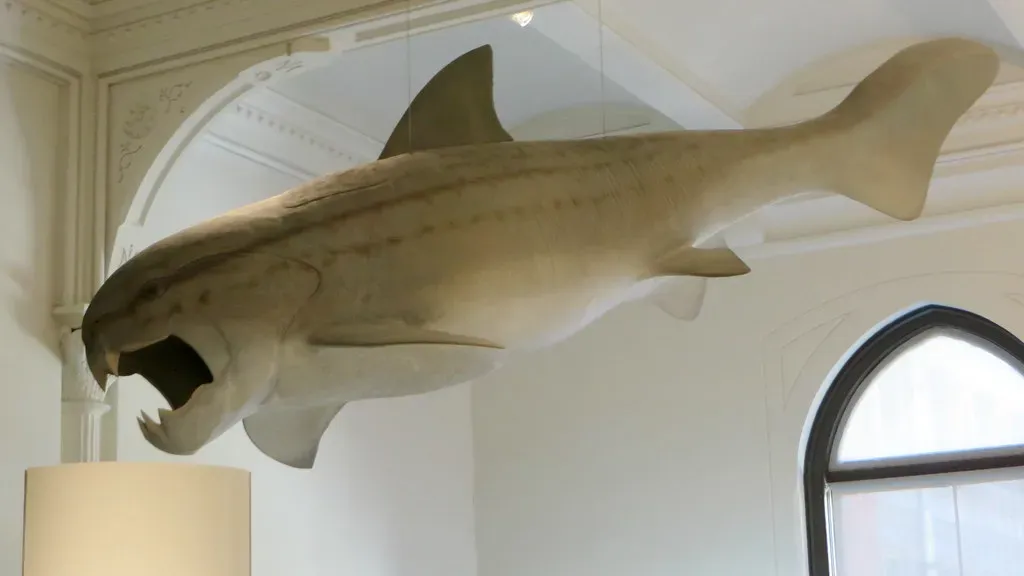
Dunkleosteus didn’t have teeth in the way most predators do. Instead, it had interlocking bone plates that self-sharpened every time the jaws snapped shut, functioning less like a bite and more like a pair of industrial shears. This placoderm prowled Devonian seas between 382 and 358 million years ago, well before dinosaurs were even a concept, and it dominated shallow coastal waters the way an apex predator should: without apology.
What makes Dunkleosteus genuinely unsettling isn’t just its armor or its size. It’s the bite force measurements. Biomechanical studies on jaw mechanics have estimated its bite at up to 11,000 pounds of total force, with pressure at the fang tip reaching extraordinary levels – strong enough to punch through the armor of other Devonian creatures. When food grew scarce, fossil evidence suggests it turned on its own kind. That’s not aggression born of desperation. That’s a creature so confident in its own invulnerability that even its social behavior was terrifying.
Fast Facts
- Era: Late Devonian, approximately 382–358 million years ago
- Classification: Placoderm fish – the world’s first pelagic superpredator
- Jaws: Self-sharpening bone plates, no true teeth; opened in roughly 1/50th of a second
- Bite force: Estimated up to 11,000 lbs of total force; rivals large alligators and T-Rex
- Diet: Sharks, arthropods, ammonoids, and almost certainly other Dunkleosteus
#10 – Leedsichthys: The Gentle Giant That Still Outweighed T-Rex by a Landslide
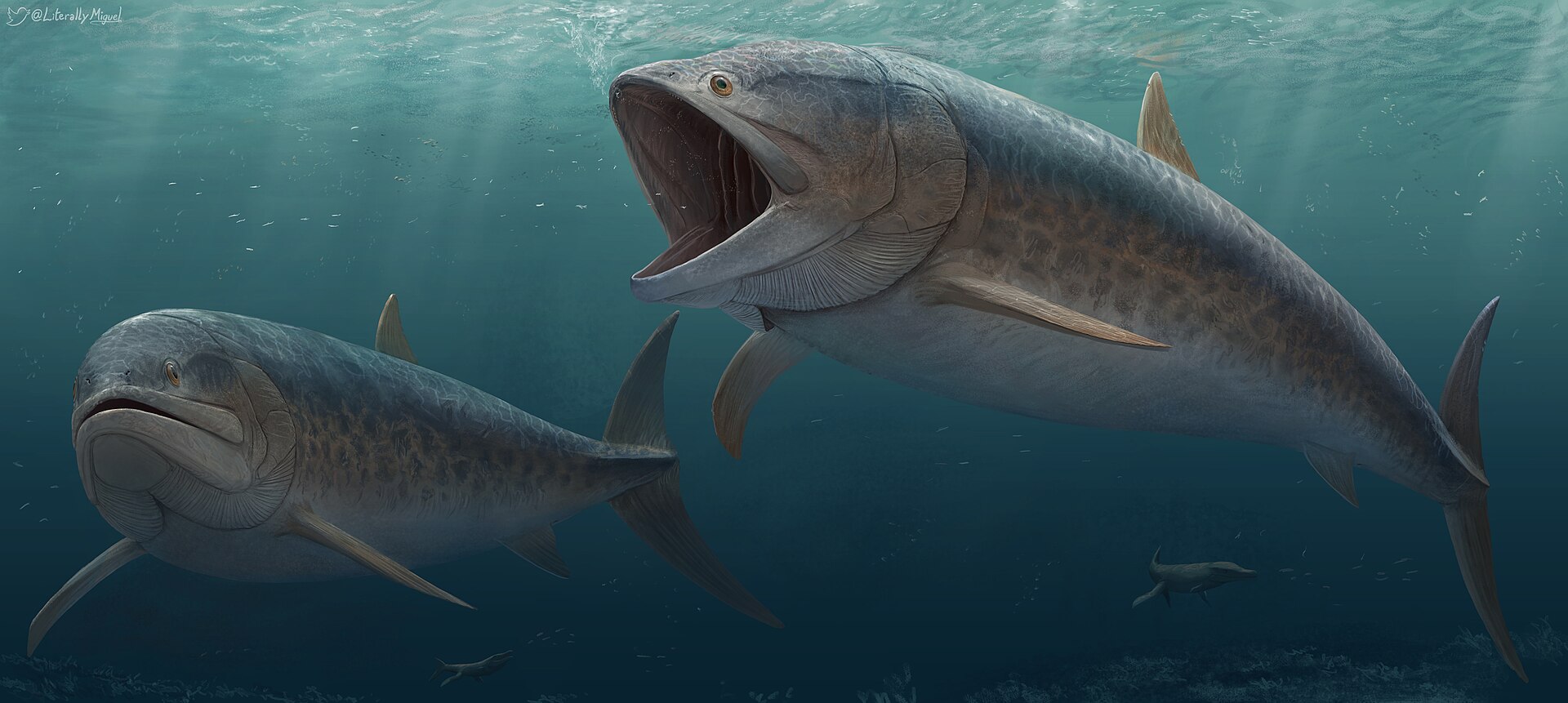
Leedsichthys looked peaceful. It cruised Jurassic oceans with its mouth hanging open, filtering plankton the way a modern whale shark does, generating no drama, threatening nobody. But “peaceful” and “small” are not the same thing, and Leedsichthys proved the difference emphatically. Current estimates place some individuals beyond 16 meters in length and up to 20 tons in weight, making it the largest bony fish ever recorded and a creature that simply could not have existed on land.
The reason complete fossils are so rare is that Leedsichthys had a mostly cartilaginous skeleton, the kind of material that doesn’t preserve well over 165 million years. What we do have paints a picture of something that made T-Rex look compact. It didn’t need teeth, speed, or aggression to dominate. It survived purely through scale, a strategy the ocean enables and land never could. If it bumped into you by accident, the accident was fatal.
#9 – Kronosaurus: A Skull the Size of a Small Car, and a Matching Attitude
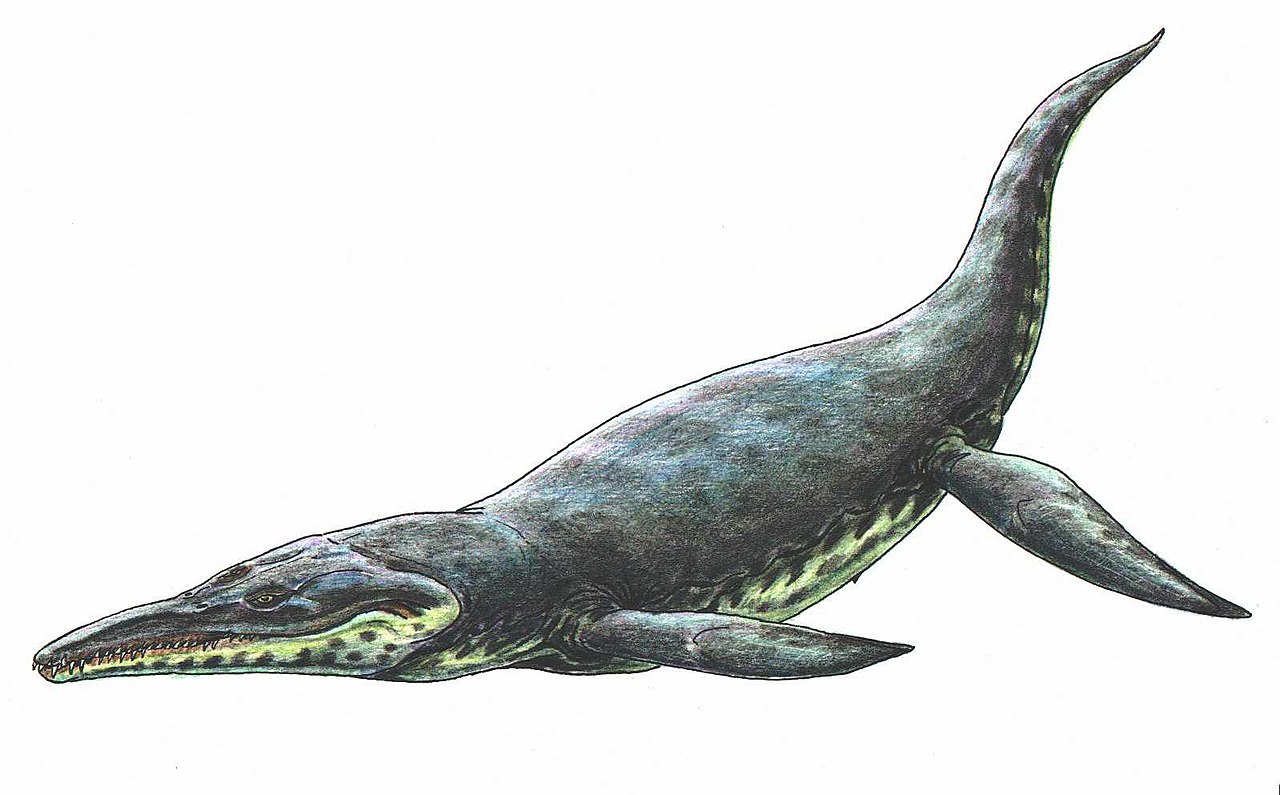
Kronosaurus was built like someone took a crocodile, removed every design compromise that land life requires, and scaled it up to fill a 10-meter ocean predator. Four powerful flippers gave it propulsion and agility in equal measure. Its short neck compared to other plesiosaurs wasn’t a limitation; it was a choice. All that mass went directly into jaw power instead, and the jaws delivered.
The skull alone measured over 3 meters, which means the head of Kronosaurus was larger than many complete dinosaur specimens housed in museums today. Weight estimates reach 10 tons in some analyses. It preyed on marine reptiles, fish, and anything else that crossed its path in Early Cretaceous seas. T-Rex had a fearsome skull too, roughly 1.5 meters at its largest. Kronosaurus doubled that, and then some.
Quick Compare: Kronosaurus vs. T-Rex
- Skull length: Kronosaurus ~3 m | T-Rex ~1.5 m
- Body weight: Kronosaurus up to ~10 tons | T-Rex ~8–9 tons
- Habitat: Open Early Cretaceous ocean | Land (Late Cretaceous)
- Limbs: Four paddle flippers | Two legs, two vestigial arms
- Primary prey: Marine reptiles, large fish | Hadrosaurs, ceratopsians
#8 – Liopleurodon: The Jurassic Apex Predator With a Controversial but Deadly Resume
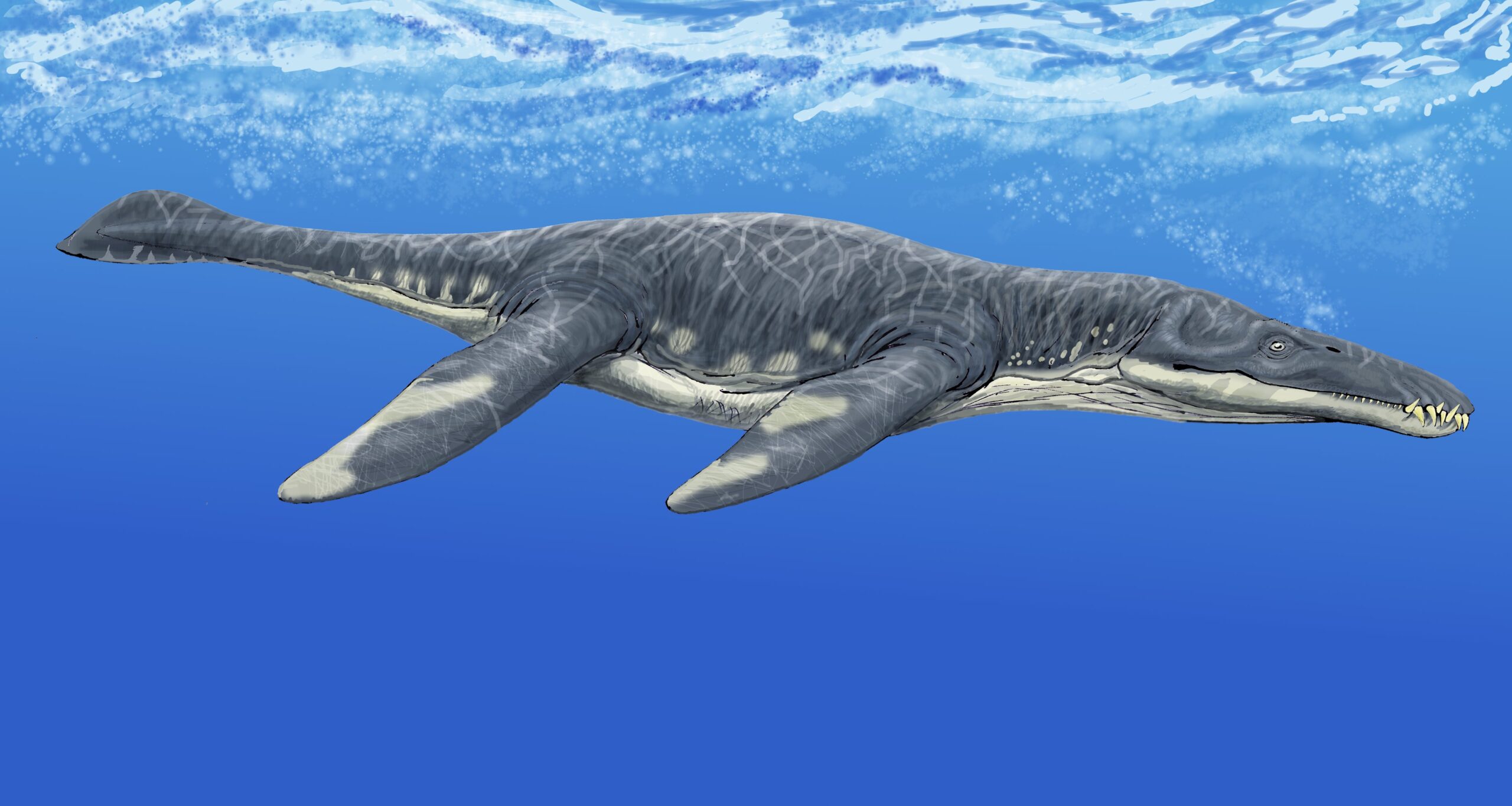
Liopleurodon has a complicated reputation. The BBC’s Walking With Dinosaurs special famously inflated it to fantasy proportions, and paleontologists have spent years walking that back. But here’s what gets lost in the correction: even the conservative, peer-reviewed estimates describe a pliosaur reaching 8 to 10 meters with a bite force exceeding 4 tons. The exaggerations were wrong. The animal was still catastrophically dangerous.
What made Liopleurodon effective wasn’t raw size. It was skull proportion. The jaws were designed to generate enormous crushing force relative to its body, allowing it to target ichthyosaurs and other marine reptiles that would have made a meal of most things in those Middle Jurassic waters. It didn’t need to be 25 meters long to dominate. It needed to be faster, stronger, and more committed than everything else in its ecosystem. By all available evidence, it was.
#7 – Tylosaurus: The Mosasaur That Proved Lizards Could Rule an Ocean
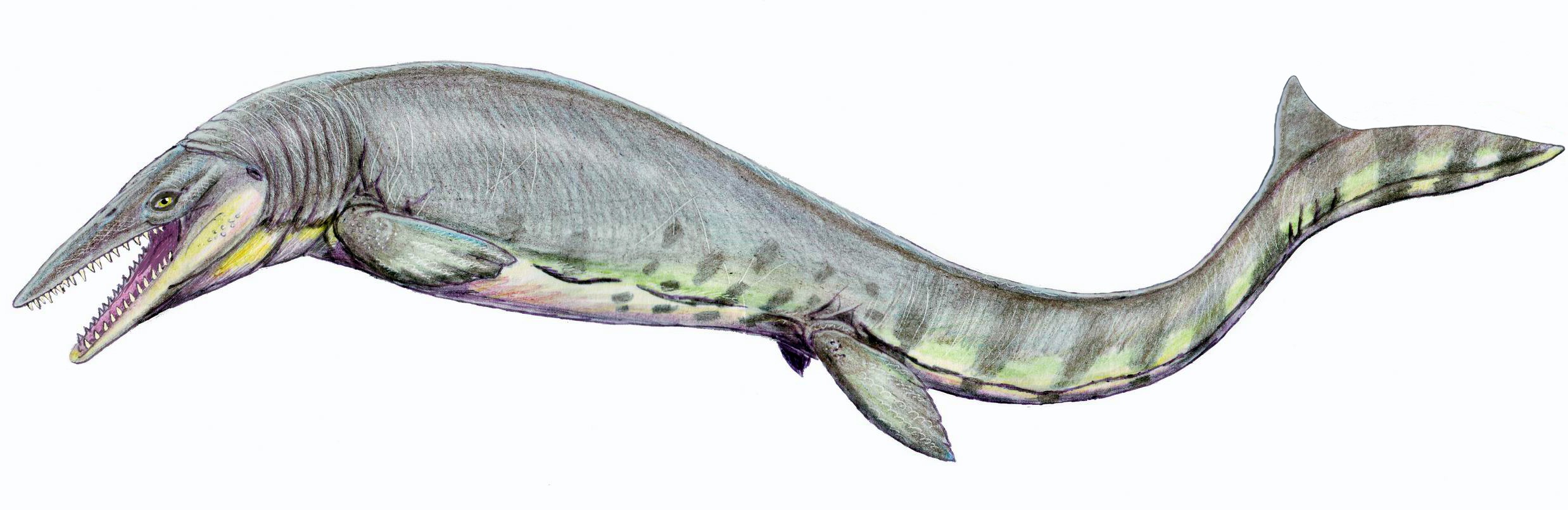
Tylosaurus reached 14 meters and descended from lizard ancestors, which is the kind of evolutionary fact that takes a moment to fully land. This was not a fish, not a mammal, not a shark. It was essentially a lizard that decided the ocean was preferable and spent millions of years becoming perfectly shaped for it. The long, muscular tail generated explosive bursts of speed. The streamlined body cut through water with efficiency. The teeth handled the rest.
Fossil bite marks on bones from this period tell a specific story: Tylosaurus regularly attacked prey close to its own size, including other mosasaurs. That’s not opportunistic scavenging. That’s a predator comfortable enough in its own power to pick fights it had no guarantee of winning. It shared a world with T-Rex but occupied a completely different dimension of threat, one where the rules of land combat didn’t apply and size limits didn’t either.
Worth Knowing
- Tylosaurus belonged to the mosasaur family – marine lizards that evolved from land-dwelling ancestors
- At up to 14 meters, it was one of the largest mosasaurs ever found
- Its snout was reinforced and blunt, likely used for ramming prey or rivals
- Fossil stomach contents have included fish, birds, sharks, and other mosasaurs
- It ruled the Western Interior Seaway, the shallow inland sea that once split North America in two
#6 – Shonisaurus: The Triassic Ichthyosaur That Reached Whale Proportions Before Whales Existed
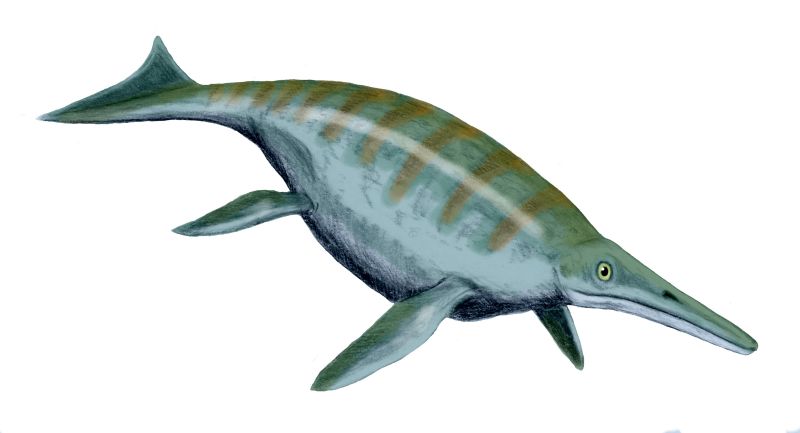
Shonisaurus sikanniensis lived approximately 215 million years ago, long before the first true whale ever existed, and yet it had already solved the engineering problem of building a warm-seas giant. At nearly 21 meters long, it was dolphin-shaped at a scale that defies easy visualization. The streamlined body wasn’t just for aesthetics; it enabled efficient long-distance cruising across ancient oceans that had no modern equivalent.
It hunted squid and fish using rows of conical teeth, filtering impressive volumes of prey through sheer swimming endurance. What makes Shonisaurus genuinely significant is the timing. This level of marine gigantism appeared remarkably early in the ichthyosaur lineage, suggesting the ocean was generating size experiments from the very beginning. And as you’ll see in the top two entries, those experiments kept escalating well past anything that made logical sense.
#5 – Livyatan: The Miocene Whale That Hunted Other Whales for Sport
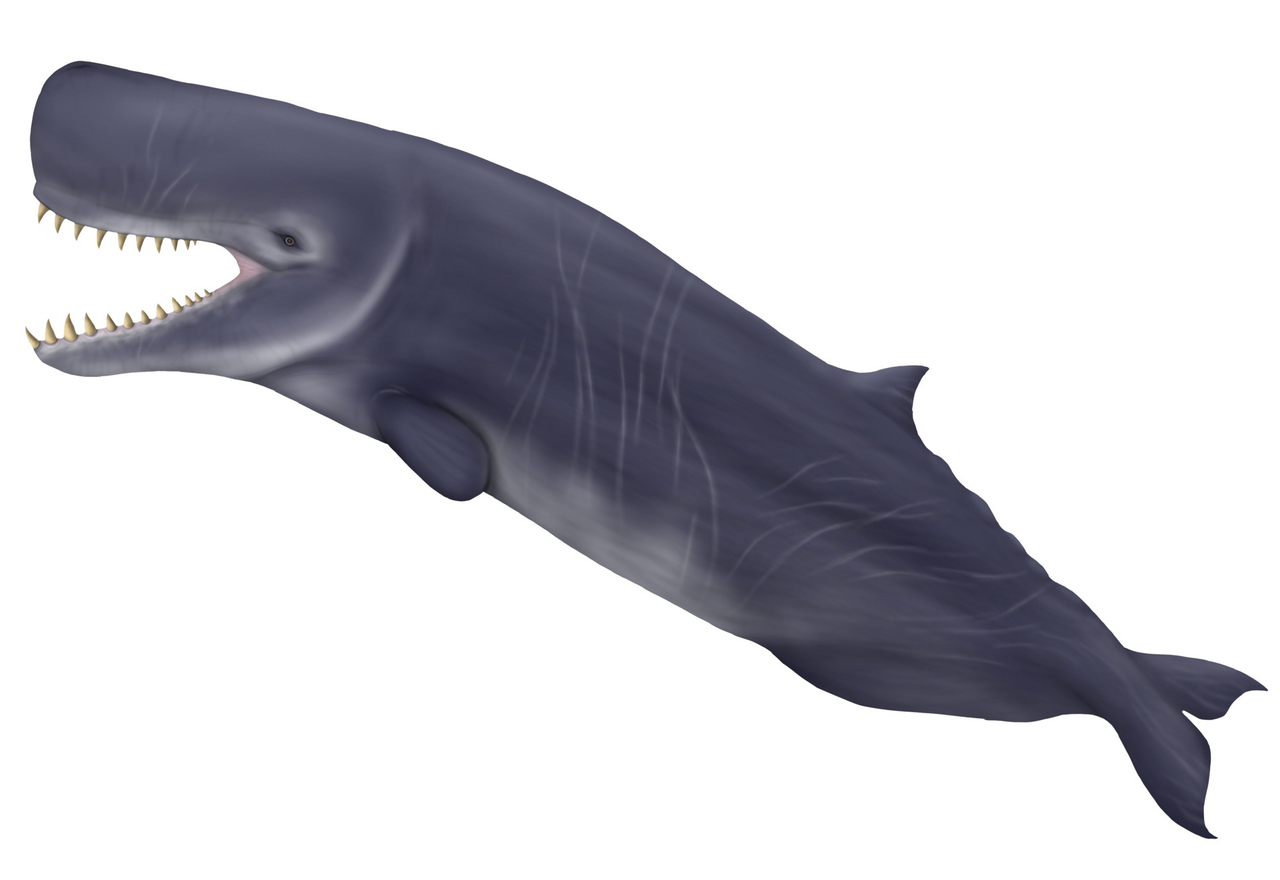
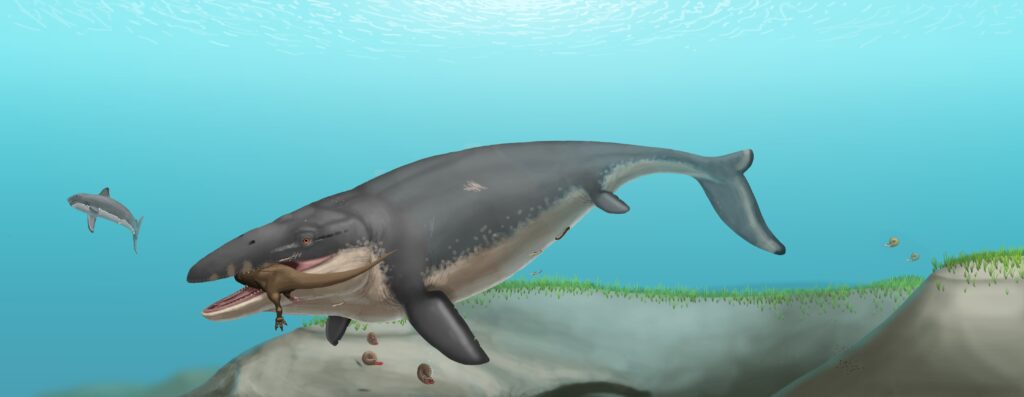
The name Livyatan melvillei combines the Hebrew leviathan with a nod to Herman Melville, the author of Moby-Dick, and whoever chose that name understood the assignment completely. This was a predatory sperm whale that lived roughly 12 to 13 million years ago, stretched 13.5 to 17.5 meters, and carried teeth up to 36 centimeters long. Those aren’t filter-feeding structures or defensive tools. They are weapons – the largest functional teeth ever recorded in any known animal, with whale experts describing theirs as “the biggest tetrapod bite ever found.”
Livyatan didn’t hunt squid. It hunted other whales. Its skull – roughly 3 meters long and nearly 2 meters wide – shows adaptations for both powerful raptorial biting and crushing, suggesting it engaged in extended, violent hunts against prey that could fight back. During the Miocene, it overlapped geographically and temporally with early megalodon populations, meaning these two giants were almost certainly competing for the same large prey. That arms race between Livyatan and megalodon is one of the most viscerally exciting ecological dynamics in the entire fossil record.
The ocean is a more powerful evolutionary force than the land. It has no walls.
Richard Ellis, marine naturalist and author of The Search for the Giant Squid
#4 – Basilosaurus: The Serpentine Whale That Evolution Refused to Keep Small
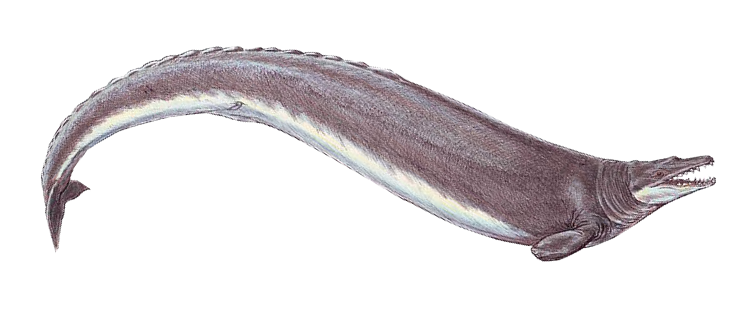
Basilosaurus is one of those animals that looks like a mistake until you understand what it was doing. At 18 meters long with a body stretched into something resembling a massive sea serpent, it retained small vestigial hind limbs that served no swimming function, evolutionary leftovers from its land-walking ancestors. It lived 40 to 34 million years ago and represents one of the clearest windows we have into the transition from land mammal to fully aquatic whale.
But Basilosaurus wasn’t merely a transitional curiosity. Fossil stomach contents confirm it was an active, capable predator that fed on fish and smaller marine mammals. Its elongated body gave it a reach advantage in confined coastal environments, and its sheer length outpaced T-Rex without trying. The fact that it still had hind limbs while hunting at this scale is a reminder that evolution doesn’t optimize cleanly. It just builds on whatever is already there, and sometimes what’s already there is terrifying enough.
#3 – Mosasaurus: The Cretaceous Sea Lizard That Dominated Right Up to the Asteroid
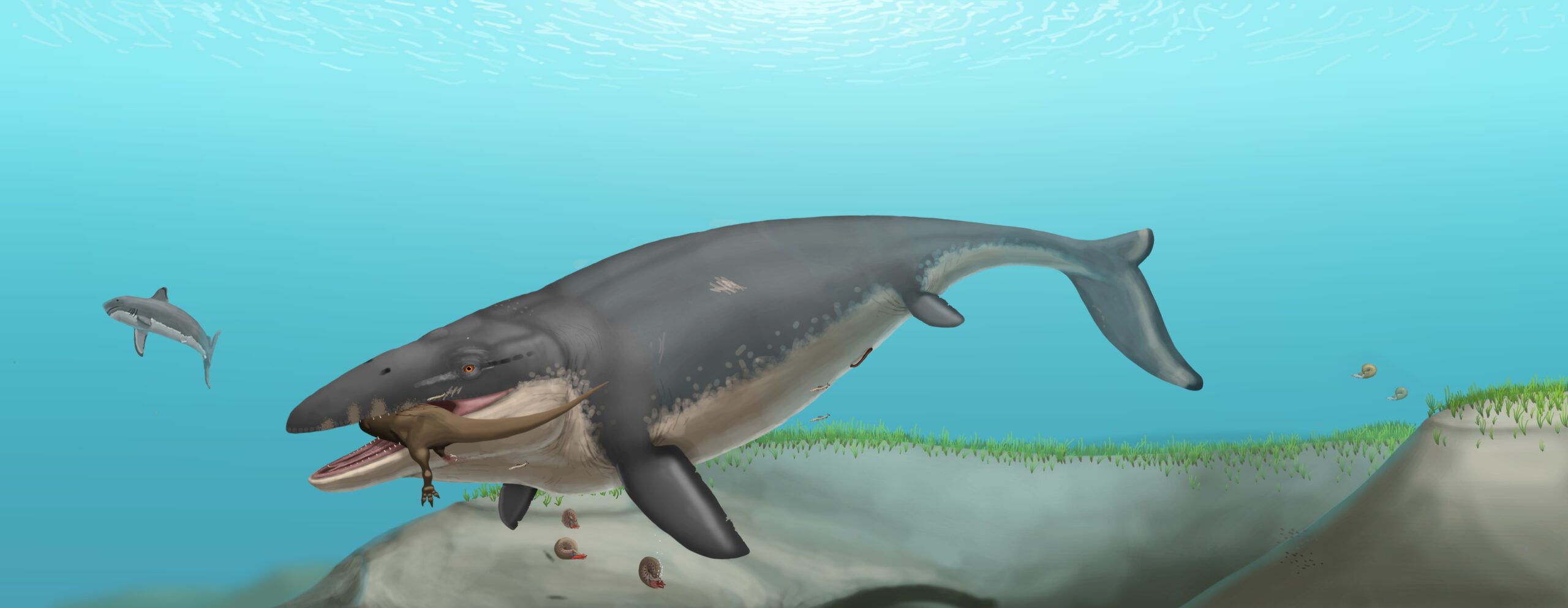
Mosasaurus hoffmannii is arguably the most successful large predator in the history of the oceans, not because of one dramatic characteristic but because of consistent, ruthless effectiveness over time. These marine lizards dominated the final 20 million years of the Cretaceous, thriving in every major ocean, feeding on ammonites, fish, turtles, seabirds, and each other. They weren’t specialists. They were generalists with double-hinged jaws that let them swallow prey in configurations that shouldn’t have been geometrically possible.
Size estimates for the largest individuals range from 12 to 17 meters, depending on the specimen and the methodology. At the upper end, Mosasaurus approached the total length of the largest known sharks. It didn’t go extinct because it failed. It went extinct because an asteroid ended the entire ecological system it operated in. T-Rex died in the same event, on land, with no ocean to hide in. Mosasaurus came closer to outlasting the age of dinosaurs than any land predator ever did.
At a Glance: Why Mosasaurus Was Built Different
- Double-hinged jaws let it swallow prey whole at improbable angles
- Thrived across every major ocean for roughly 20 million years straight
- Ate almost anything: ammonites, turtles, fish, seabirds, and fellow mosasaurs
- Largest individuals matched or exceeded the length of the biggest known sharks
- Survived longer into the end-Cretaceous than T-Rex before the asteroid hit
#2 – Megalodon: The Shark Whose Bite Force Still Staggers Paleontologists
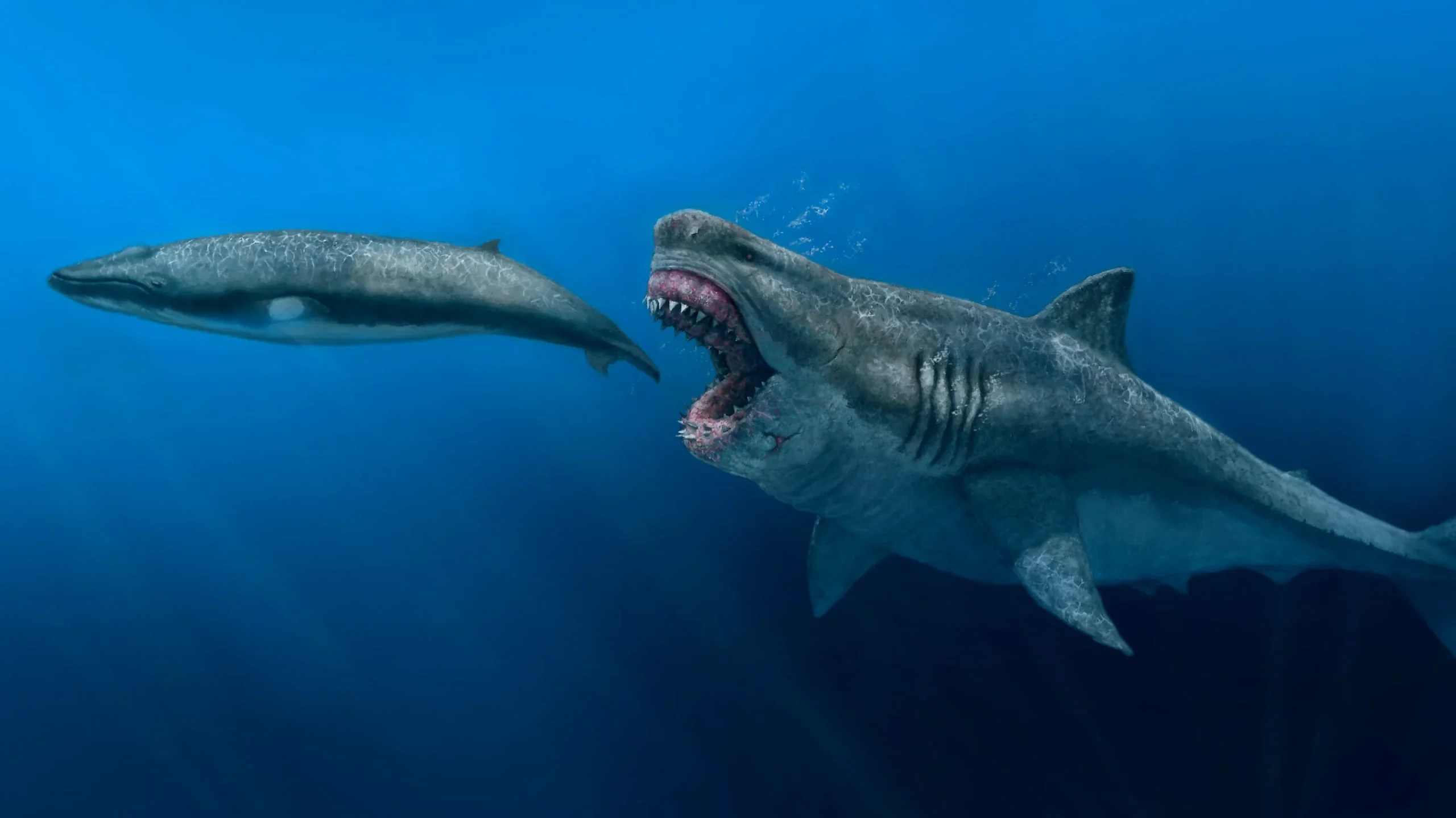
Megalodon is the one entry on this list that most people have heard of, and it still manages to be underestimated. The standard facts are staggering enough: up to 65 feet long, 50 tons or more, serrated teeth up to 7 inches that left unmistakable gouge marks in whale bones found worldwide. It was the apex macropredator of the Miocene and Pliocene, and its hunting range spanned virtually every ocean on the planet. But the number that truly separates it from everything else is the bite force.
Biomechanical studies estimate megalodon’s bite at somewhere between 30,000 and 40,000 pounds of force – roughly 10 times more powerful than a great white shark, and more than three times stronger than the best documented T-Rex bite of around 8,000 to 12,800 pounds. It didn’t just eat whales. Fossil evidence suggests it actively shaped whale evolution, driving certain species toward smaller body sizes as a survival response to being hunted. When a predator is powerful enough to change the direction of another species’ evolution, it has moved beyond dangerous into something closer to geological force.
#1 – Ichthyotitan: The Triassic Behemoth That Nearly Matched a Blue Whale
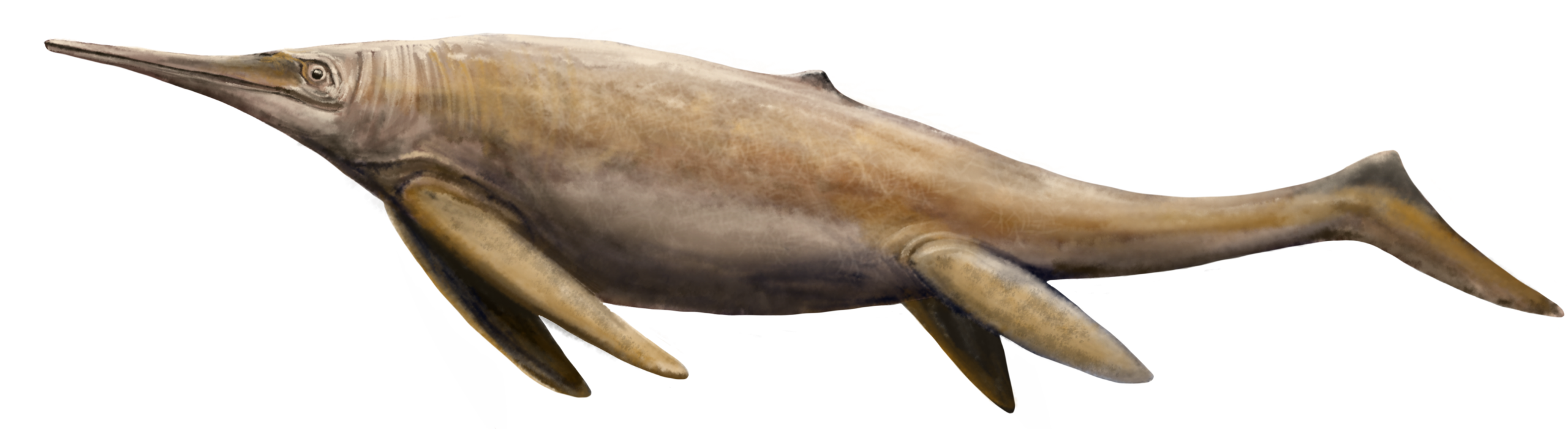
In 2024, paleontologists formally described Ichthyotitan severnensis – meaning “giant fish lizard of the Severn” – based on two jaw fragments recovered from Somerset, England, and the numbers they published were not subtle. The fossils were found years apart: the first by fossil collector Paul de la Salle in 2016, the second by then-11-year-old Ruby Reynolds and her father Justin in 2020, both along the Somerset coastline. This ichthyosaur lived approximately 205 million years ago, during the Late Triassic, and the jaw bones suggest a total body length of around 25 meters – making it likely the largest marine reptile ever formally described. Remarkably, bone structure in the more recent specimen revealed the animal was still growing when it died.
Twenty-five meters. A jaw fragment from a Somerset cliff face rewrote the upper boundary of what marine reptiles ever achieved. No land dinosaur, including T-Rex, ever approached this scale, not even close. The ocean didn’t just produce bigger animals. It produced animals operating at a completely different magnitude of existence – animals that make the most famous land predator in history look like something you’d find in a tide pool. Ichthyotitan is the fossil record’s final word on the subject, and it is not a gentle one.
Why It Stands Out
- Formally named in a 2024 paper published in PLOS ONE – one of the most significant paleontology announcements of the decade
- Known from two lower jawbone fragments, each over 2 meters long; the individual was still growing at death
- Estimated body length of ~25 meters places it in blue whale size territory
- Discovered partly by an 11-year-old girl walking the Somerset beach – citizen science at its finest
- Considered the largest marine reptile and possibly the largest macropredator ever formally described
The honest takeaway from this list is that our cultural obsession with T-Rex says more about us than it does about prehistoric life. We love T-Rex because it walked on land, because we can stand next to its skeleton in a museum, because it feels knowable. The ocean giants don’t offer that comfort. They lived in a medium we can’t enter safely, at depths and distances that remain alien, and they grew to sizes that the human brain genuinely struggles to map onto reality. Megalodon didn’t just hunt whales. Ichthyotitan was the size of one. These weren’t animals operating at the edge of what biology allows. They were animals that redrew the edge entirely, and the land dinosaurs we celebrate so loudly never even knew they existed.