Humans like to imagine prehistoric beasts as creatures of a distant, unreachable past – roaming a world of glaciers and stone tools, cut off from anything that feels like “real history.” But that picture is way too simple. Some of the most iconic Ice Age animals were still around when people were building monumental temples, inventing writing, or even debating philosophy in marble cities. In a few cases, they disappeared only a blink before the modern age really kicked in. What always blows my mind is how close the timelines actually get. While scribes were recording the deeds of pharaohs, woolly mammoths were still trudging across a remote Arctic island. When Shakespeare’s plays were being performed, the wild ancestors of our cows were still stomping through European forests. Once you start lining up the dates, prehistory stops feeling like a remote fairy tale and starts to look uncomfortably close – and a lot more like a warning than a story with a neat ending.
1. Woolly mammoth – still alive when the pyramids were already ancient
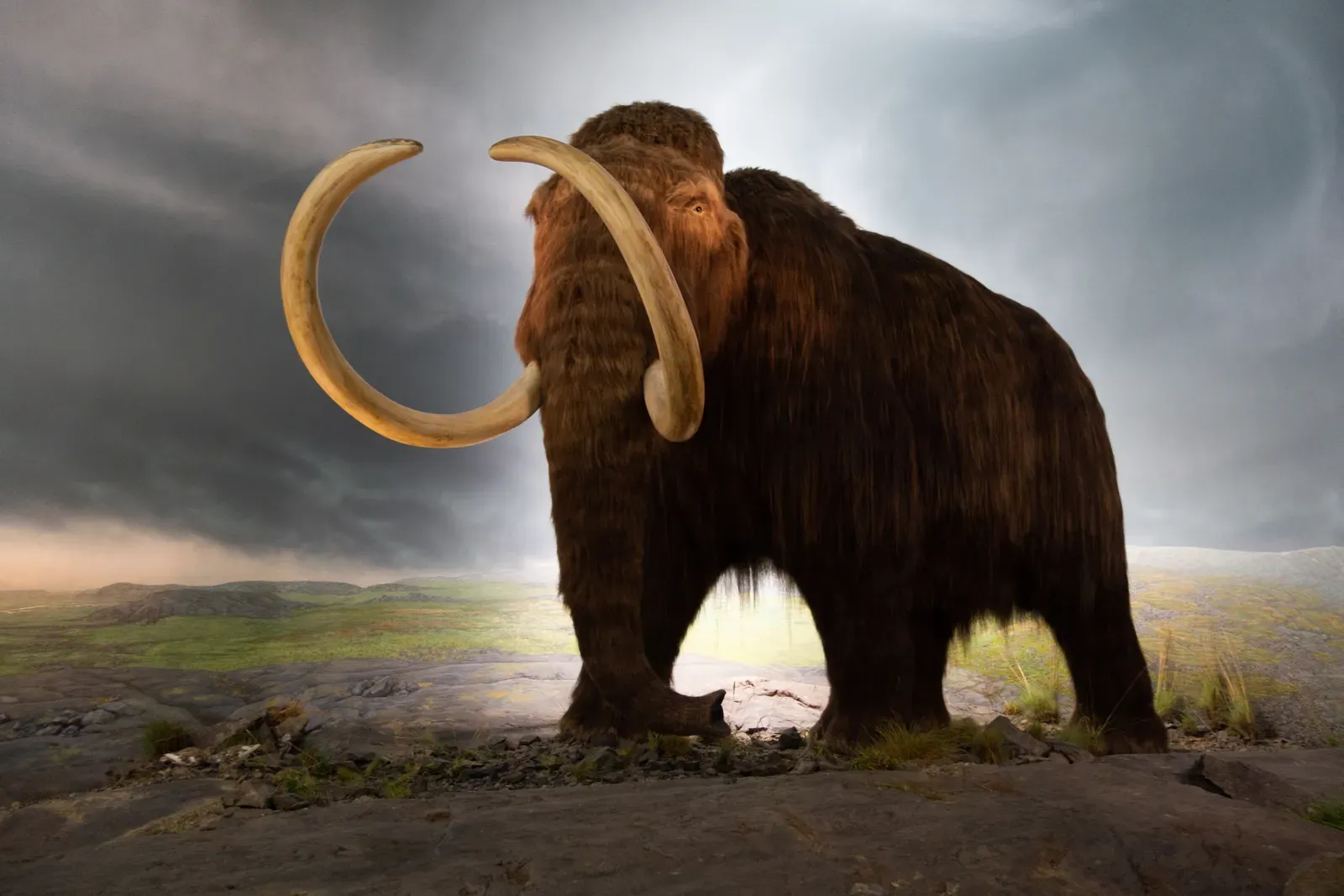
Ask most people when woolly mammoths died out, and you’ll probably hear something like “at the end of the Ice Age” and a vague wave toward “ten thousand years ago.” That’s partly true: most mainland mammoth populations disappeared around that time, as climates warmed and humans spread across the mammoth steppe. But a small, isolated group of dwarf woolly mammoths survived on Wrangel Island in the Arctic Ocean until roughly four thousand three hundred years ago – centuries after the Great Pyramid of Giza had already been standing in Egypt. Radiocarbon dating of bones and tusks from the island has repeatedly pushed their final extinction into the late third millennium BCE, overlapping with complex Bronze Age societies and early written records. ([nature.com](https://www.nature.com/articles/nature02890?utm_source=openai))
Picture that for a second: while scribes were recording royal lineages and merchants were sailing busy trade routes, a few hundred furry mammoths were still trudging over tundra on this isolated speck of land. Genetic studies suggest these island mammoths went through a severe population bottleneck, accumulating harmful mutations while hanging on in a fragile, tiny population right to the end. ([arstechnica.com](https://arstechnica.com/science/2024/06/last-population-of-mammoths-survived-a-severe-population-bottleneck/?utm_source=openai)) There’s no evidence humans ever met these last survivors; rising seas had cut Wrangel off long before, and people only arrived there millennia later. In a way, the mammoths did everything “right” by retreating to a remote refuge, yet they still lost the long game. It is a sobering reminder that isolation can save a species for a while – but not always forever.
2. Columbian & other American mammoths – neighbors of the first Americans
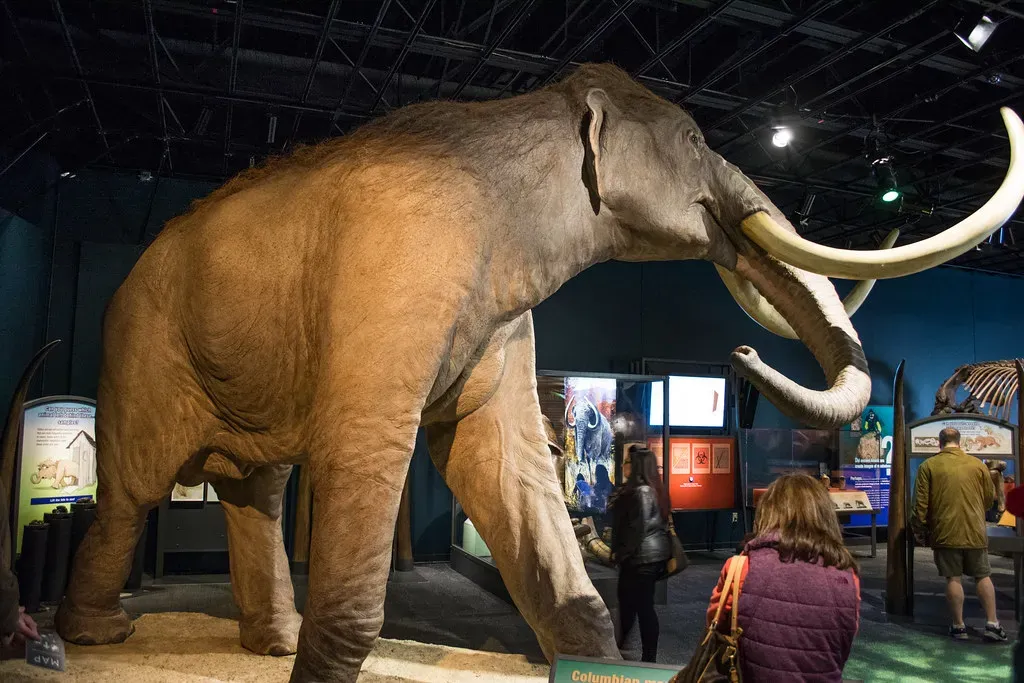
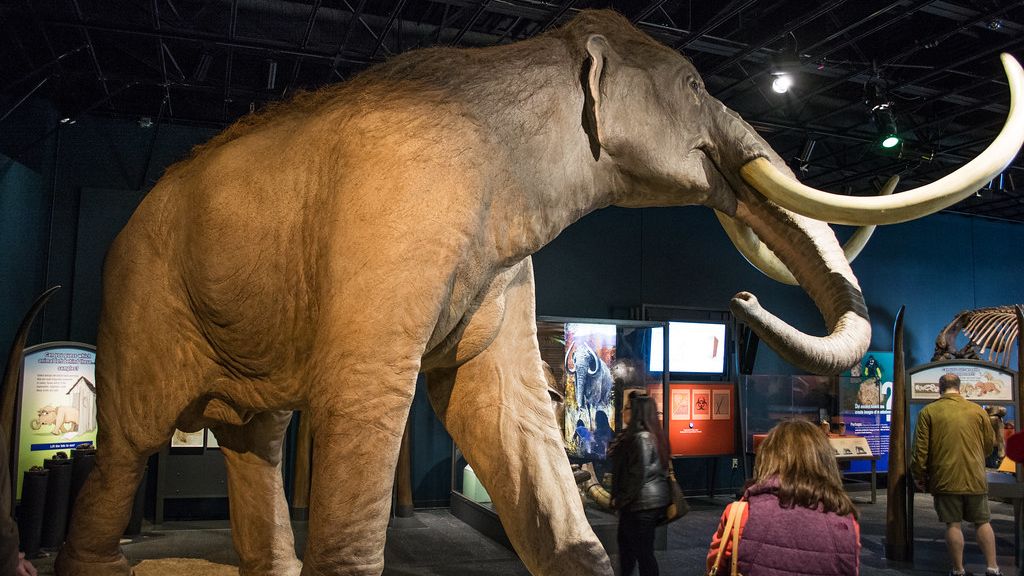
Closer to home, the mammoths that once roamed North America also lasted longer than most of us realize. The Columbian mammoth and late woolly mammoths on the continent did not vanish in a single neat “Ice Age finale.” They were still sharing the landscape with the very first people to spread across the Americas, coexisting for at least a couple of thousand years. Paleontologists keep uncovering sites where mammoth remains and human tools overlap in time, showing that these animals were not just fossils in the ground but active parts of the lives, myths, and diets of the earliest Americans. Isotopic and dating studies suggest scattered, dwindling populations persisted in different pockets into the early Holocene, well after the glaciers had retreated. ([arxiv.org](https://arxiv.org/abs/1211.4911?utm_source=openai))
It is entirely plausible that stories of enormous shaggy elephants, dangerous hunts, and giant bones shaped the oral traditions of early societies here, even if those stories never made it into written form. The sad twist is that by the time writing and large-scale cities appeared in the Americas, the mammoths were long gone. What we see instead in Indigenous rock art and myths are echoes: giant beings, powerful animals, sometimes strangely familiar silhouettes that may well be cultural fossils of those ancient neighbors. To me, that feels like losing a whole category of living things right before human cultures developed the tools to fully record and remember them.
3. Giant Irish elk – towering antlers into the age of early farming
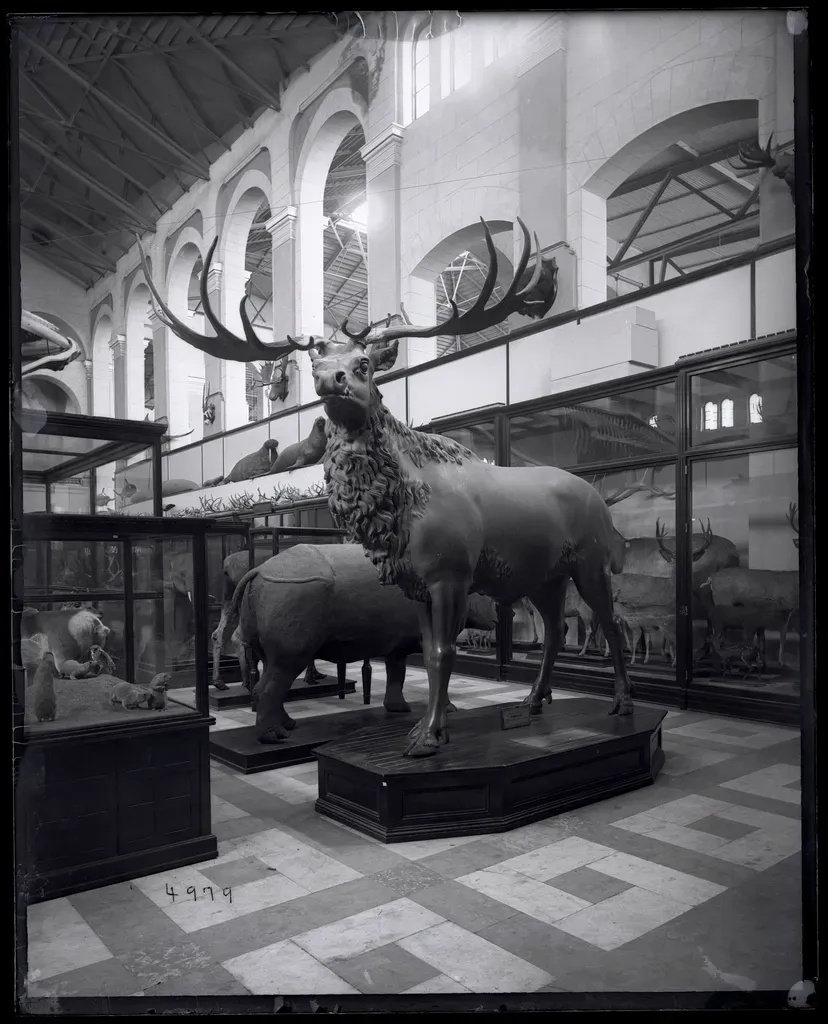
The so‑called Irish elk, more accurately a giant deer, is famous for its absurd antlers – spreading well over three meters from tip to tip and turning the animal into a walking natural sculpture. For a long time, textbooks placed its extinction around the end of the Pleistocene, suggesting it vanished together with much of the other Ice Age megafauna. But more recent radiocarbon dating has told a different story. Fossils from western Siberia show that giant deer survived there until about seven thousand seven hundred years ago, several thousand years later than previously thought. That places their final disappearance squarely within the Holocene, at a time when early farmers were already tending crops and domestic animals in various parts of Eurasia. ([nature.com](https://www.nature.com/articles/nature02890?utm_source=openai))
Imagine Mesolithic and early Neolithic hunter‑gatherers in northern Eurasia encountering deer the size of a modern moose but crowned with antlers so huge they almost look like parody. These animals were not just bit players in some distant glacial saga; they lived in forests and open woodlands that would have looked surprisingly familiar to us today. Their eventual extinction probably involved a messy mix of climate-driven habitat change and human hunting pressure rather than a single dramatic catastrophe. In my view, the giant deer’s late survival challenges the comforting idea that “we” only ever overlapped with these creatures in some primitive, pre-agricultural world. They were still out there when people were experimenting with settled life and reshaping landscapes – and then they were not.
4. Ground sloths on Caribbean islands – the surprisingly recent “lost neighbors”
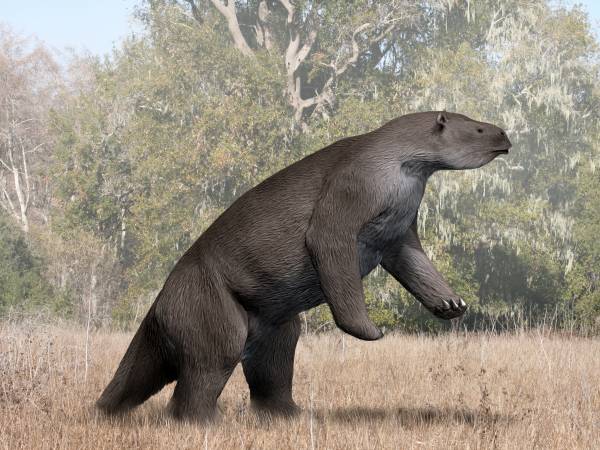
When most people think ground sloths, they picture South American giants like Megatherium lumbering across Ice Age plains and disappearing roughly ten thousand years ago. That did happen on the mainland, where large ground sloths vanished along with other megafauna near the Pleistocene–Holocene transition. ([en.wikipedia-on-ipfs.org](https://en.wikipedia-on-ipfs.org/wiki/Megatherium?utm_source=openai)) But on a handful of Caribbean islands, their smaller cousins hung on for far longer. Cave deposits in places like Cuba and Hispaniola show that insular ground sloths survived well into the mid‑Holocene, with some of the youngest dates landing around five thousand to four thousand years ago. That means people arriving on these islands likely encountered living ground sloths, not just their bones – and may even have hunted them.
To put that in human terms, those last Caribbean sloths were alive at roughly the same time as early urban civilizations in Mesopotamia and the Old Kingdom in Egypt. National Geographic once put it nicely: you “just missed” the last ground sloths by a few thousand years, even though they feel like deep-time creatures. ([nationalgeographic.com](https://www.nationalgeographic.com/science/article/you-just-missed-the-last-ground-sloths?utm_source=openai)) Their island story fits a pattern we see again and again: large, slow‑breeding animals tuck themselves away on remote islands and manage to dodge extinction for millennia, only to blink out relatively quickly once human arrival, hunting, and habitat change catch up with them. Personally, I think that narrative – a long, quiet survival followed by a short, sharp end – is more haunting than any sudden meteor impact.
5. Aurochs – the wild cows that survived into the age of kings and gunpowder
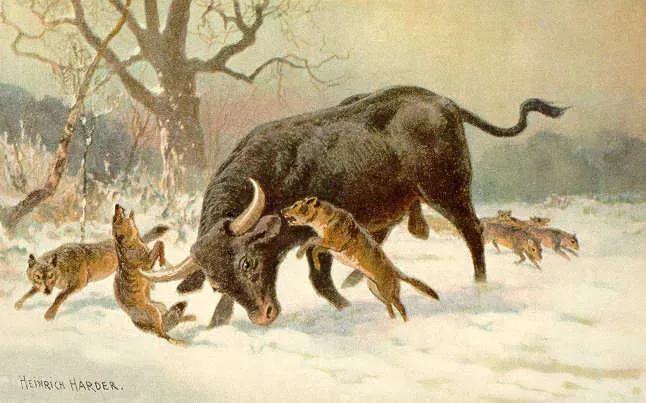
The aurochs, the wild ancestor of modern cattle, is technically prehistoric but died out in a time that feels almost uncomfortably close. These massive, long‑horned bovines once roamed across much of Europe, North Africa, and parts of Asia, shaping ecosystems and human culture alike. Over thousands of years, people domesticated them into the cattle we know today, but small wild populations lingered on. The last known aurochs – a cow – died in the Jaktorów Forest in Poland in 1627, recorded in historical documents as the end of the species. ([en.wikipedia.org](https://en.wikipedia.org/wiki/Aurochs?utm_source=openai))
Stop and line that up with history: the printing press had already transformed Europe, the Protestant Reformation had come and gone, and telescopes were pointed at the skies when the final wild aurochs dropped out of existence. Shakespeare had been dead for more than a decade. This was not some hazy prehistory; this was early modern Europe, with bureaucrats keeping detailed records and elites commissioning portraits. To me, aurochs blur the line between “prehistoric beast” and “historical animal” so thoroughly that the line almost disappears. The idea that the wild version of such a foundational domesticated species vanished under the watch of literate, organized states is both fascinating and quietly damning.
6. Wild horses in Eurasia – Ice Age icons into recorded history
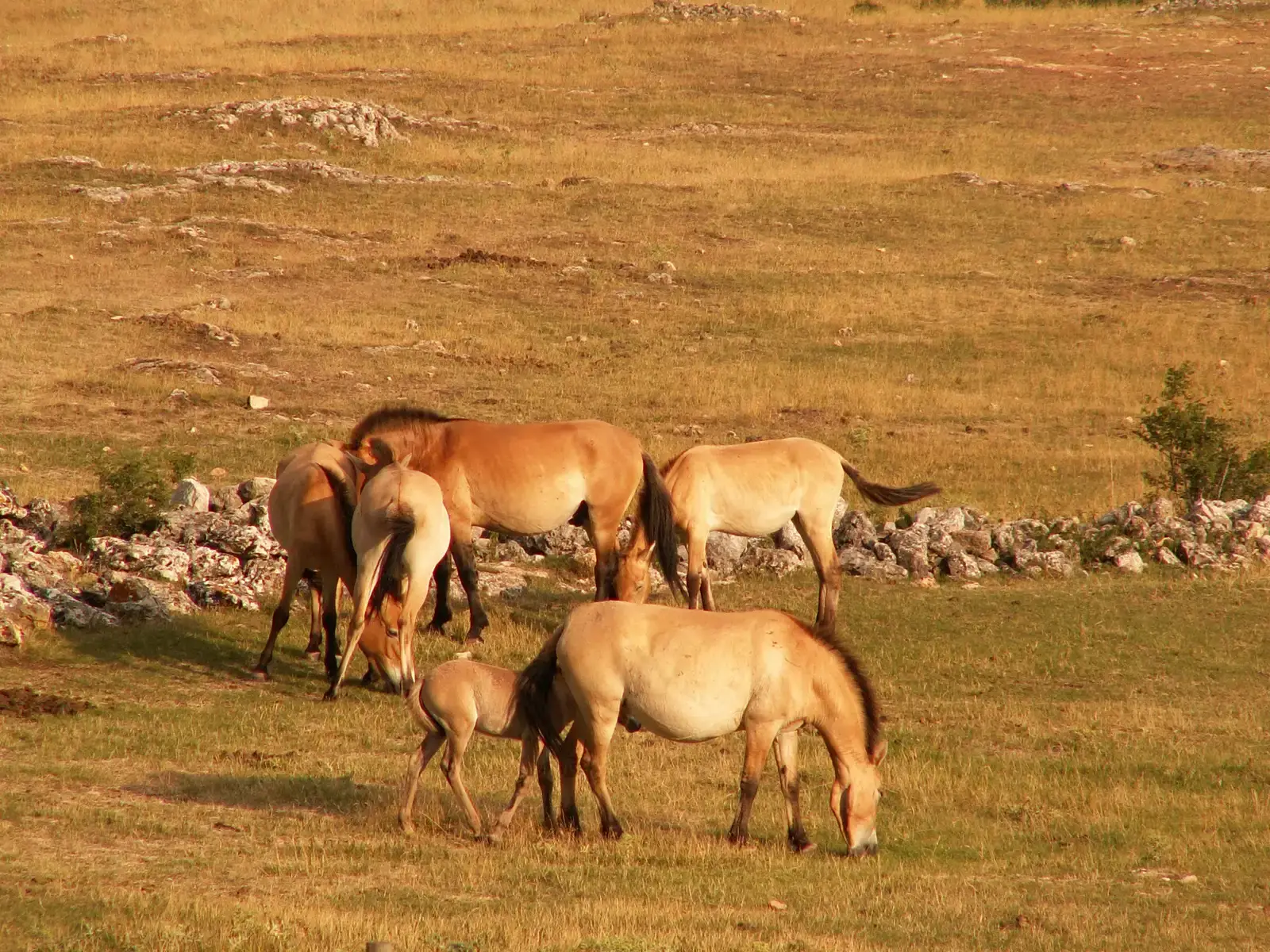
Horses are a tricky case, because the species never really went extinct – it just changed faces. The wild horse of Eurasia, often referred to as Equus ferus, gave rise to the domestic horse that completely reshaped human societies. Yet for a long time, truly wild populations (not feral domestic animals) persisted on the steppes and in remote regions. Archaeological and historical evidence suggests that free‑ranging wild horses survived in parts of Europe and western Asia into the late Holocene, crossing paths with Bronze Age charioteers, Iron Age warriors, and early literate civilizations. Some scholars see echoes of these last wild lineages in the horse depictions of ancient art and myths of untamable steppe stallions.
By the time we get to classical antiquity and the Middle Ages, the boundary between wild and feral becomes harder to draw, but the point remains: a genuinely prehistoric large herbivore that evolved long before modern humans was still out there, hooves pounding over steppe grass, not just in human corrals. The closest living analogue today is the Przewalski’s horse, once thought to be the last purely wild horse, which itself nearly went extinct in the twentieth century before captive breeding pulled it back from the brink. In my opinion, the horse story underlines something uncomfortable: even when we manage not to wipe a species out entirely, we often reduce it to a shadow of its former wild self, fenced, managed, and genetically funneled into whatever suits us.
7. European wild ass (hydruntine) – gone only a few centuries before classical writers
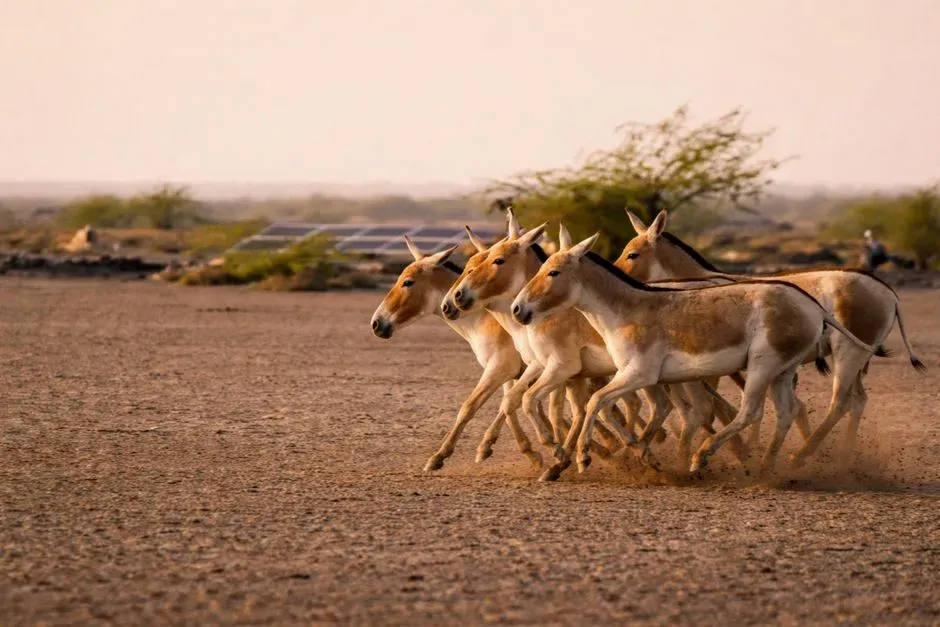
The European wild ass, often called the hydruntine (Equus hydruntinus), is one of those creatures that sounds almost made‑up until you look at the bones. This small, swift equid once lived across parts of Europe and western Asia, adapted to open, dry habitats. For a long time, it was treated as a vague, poorly understood fossil species fading out around the end of the Pleistocene. Newer radiocarbon work and zooarchaeological studies, however, show that hydruntines survived in refuges like Anatolia and the Near East until roughly two and a half thousand years ago. ([reddit.com](https://www.reddit.com/r/pleistocene/comments/1qqwavn/pleistocene_megafauna_relict_populations_other/?utm_source=openai)) That puts their last stand well within the timeframe of early Greek city‑states and the expansion of the Persian Empire.
What makes the hydruntine particularly intriguing is that it probably overlapped in time and space with literate cultures that were already describing animals in considerable detail, yet it slipped through the cracks of clear identification. Some ancient references to wild asses, onagers, or unusual equids might well be talking about these late survivors without us realizing it. To me, that is a little unsettling: an entire Ice Age lineage could disappear almost in front of history’s eyes and still end up as a taxonomic puzzle for modern scientists to argue over. It suggests that our written record, despite all its power, is surprisingly easy to outpace if you happen to be shy, fast, and inconveniently similar to your relatives.
8. Cave hyena – the Ice Age predator that outlasted the mammoths
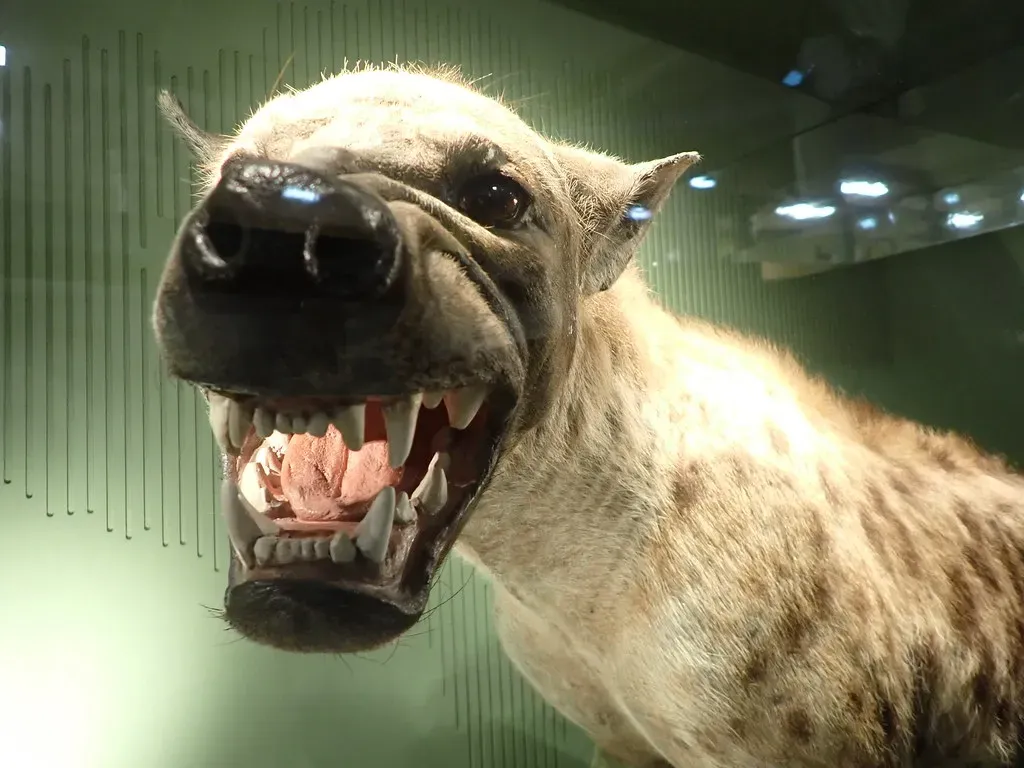
Cave hyenas – the robust, cold‑adapted cousins of modern spotted hyenas – prowl through Ice Age documentaries as classic villains, laughing predators lurking outside Neanderthal firelight. For a long time, they were assumed to have vanished as Europe warmed and the megafauna thinned out. Yet some of the latest fossil dates suggest cave hyenas may have lingered in parts of the Iberian Peninsula until around seven thousand years ago, far into the Holocene. ([reddit.com](https://www.reddit.com/r/pleistocene/comments/1qqwavn/pleistocene_megafauna_relict_populations_other/?utm_source=openai)) That would make them contemporaries of early farming communities in southwestern Europe, which were already raising crops and domestic animals.
Imagine early Neolithic villagers trying to protect their first sheep and cattle from a predator line that had once hunted mammoth carcasses and stalked woolly rhinoceros. The shift from Ice Age prey to human-linked livestock may have created both opportunities and conflicts for the last cave hyenas, but in the long run, it was a losing game. As forests changed, prey communities shifted, and human pressure intensified, these specialized predators lost their foothold. Personally, I find the cave hyena’s late survival more evocative than the saber‑toothed cats’ more distant extinction: it is easier to picture a world where hyenas were still laughing in European nights while people were planting wheat and building permanent houses.
9. Moa of New Zealand – Ice Age giants erased in less than two centuries
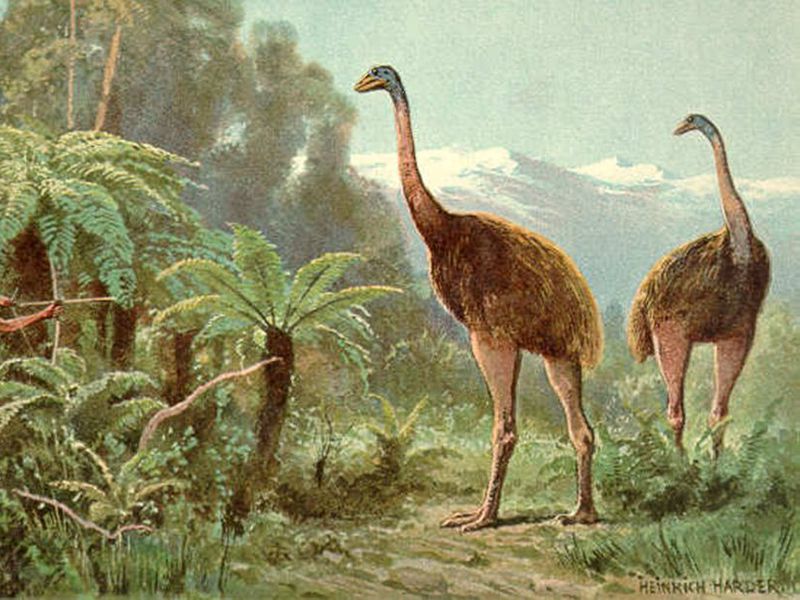
New Zealand’s giant flightless moa are often treated as “prehistoric style” animals, but chronologically they barely miss the early modern period. When Polynesian navigators first reached New Zealand around the thirteenth century CE, multiple species of moa, some over three meters tall, still roamed its forests and shrublands. In a devastatingly short time – probably less than two hundred years – intensive hunting and widespread burning of habitat drove every moa species to extinction. By the early fifteenth or at most early sixteenth century, they were gone. This means moa survived through classical antiquity, the European Middle Ages, and the rise of powerful civilizations in Asia, only to vanish just before Europeans even knew New Zealand existed.
The moa story is not “late” in the geological sense, but it feels brutally recent when you realize how compressed the timeline is and how intensively people impacted them. Archaeological sites show heaps of moa bones, specialized hunting tools, and evidence that virtually every part of the bird was used – meat, feathers, bones, and eggs. To me, moa are one of the clearest examples of how fast even enormous, seemingly invincible animals can disappear in the face of efficient human hunting and rapid land transformation. They were Ice Age giants living right into the global age of exploration; they just did not last long enough to make it into European charts and chronicles.
10. Great auk – a Pleistocene survivor lost in the age of science
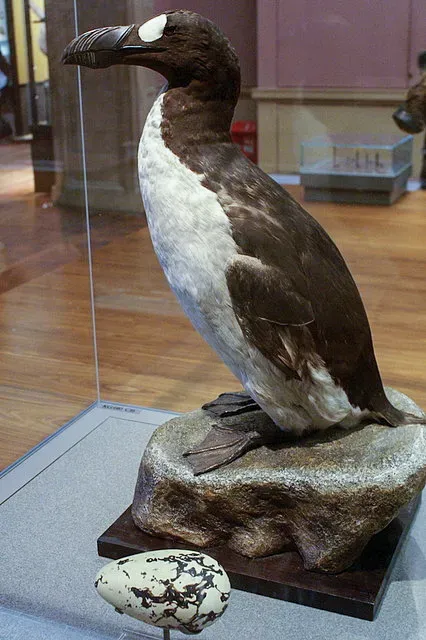
The great auk looks like something out of a Pleistocene seabird gallery: a large, flightless bird of the North Atlantic, perfectly adapted for swimming in cold waters, with a fossil record stretching back into the Middle Pleistocene. Yet its extinction is painfully modern. The very last confirmed great auks were killed in 1844 on Eldey Island off Iceland, at a time when steam engines were already changing the world and Charles Darwin was developing his ideas on evolution. ([britannica.com](https://www.britannica.com/animal/great-auk?utm_source=openai)) For centuries before that, sailors, fishermen, and coastal communities had hunted great auks for meat, oil, and feathers, relentlessly chipping away at populations that had once shrugged off glacial cycles.
What makes the great auk such a chilling example is that we did not just “inherit” it from prehistory; we documented its final decline in real time. Naturalists described it, collectors coveted its eggs and skins, and yet no one stepped in quickly enough to stop the last birds from being clubbed to death. Genetic and demographic studies on preserved specimens suggest that, up until intense human exploitation ramped up in the early modern period, great auk populations were surprisingly healthy and resilient. ([en.wikipedia.org](https://en.wikipedia.org/wiki/Great_auk?utm_source=openai)) In other words, this was a survivor of multiple Ice Ages that only faltered once industrial-scale hunting and commercial demand arrived. To me, that is about as clear a verdict on human responsibility as you can get.
11. Dwarf mammoths of the Channel Islands – tiny Ice Age relics off California
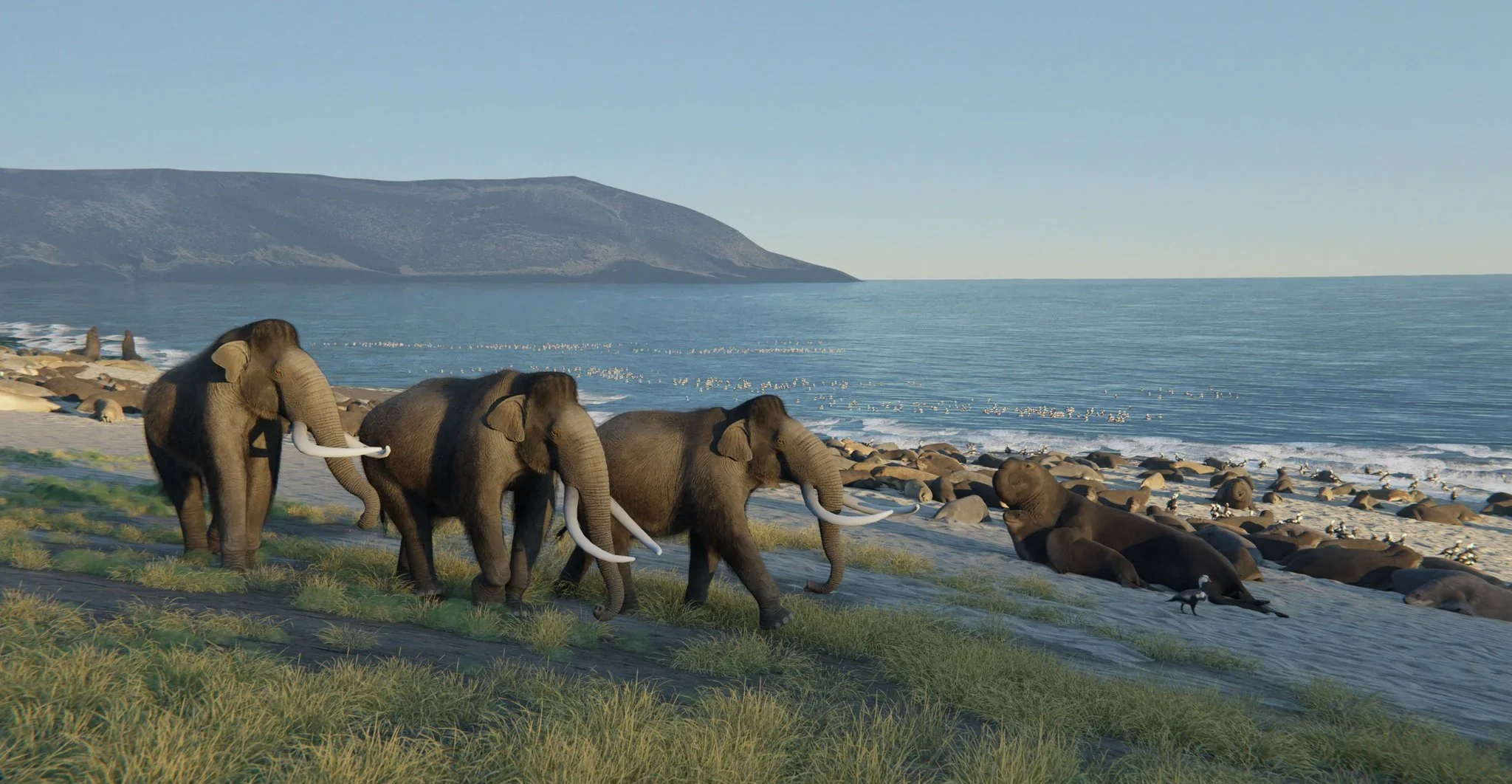
The famous Wrangel Island mammoths are not the only mammoths that shrank themselves to survive on islands. Off the coast of what is now southern California, the Channel Islands once hosted a population of dwarf mammoths that evolved from Columbian mammoths stranded there during low sea‑level stands. Over generations, natural selection favored smaller bodies in the resource‑limited island environment, producing mammoths that stood only about as tall as a large horse. These insular dwarfs persisted long after their mainland ancestors disappeared, finally dying out in the early to mid‑Holocene, probably around thirteen to eleven thousand years ago – a time when humans were already present on the islands and along the neighboring mainland coast. ([phys.org](https://phys.org/news/2019-10-mammoths-died-remote-island.pdf?utm_source=openai))
In human terms, this means that some of the earliest people along the Pacific coast may have seen, hunted, or at least stumbled upon the bones of living mammoths that were comically small compared with their Pleistocene forebears. It is almost a myth ready‑made: giant beasts that shrink into fairy‑tale versions of themselves on distant islands, only to vanish once people arrive. To me, the Channel Islands mammoths reinforce an uncomfortable pattern. Over and over, Ice Age animals buy themselves thousands of extra years by retreating to isolated refuges. But when humans finally reach those last corners – whether in the Arctic, the Caribbean, New Zealand, or off California – the clock usually runs out fast.
Conclusion: Prehistory is closer than we like to admit
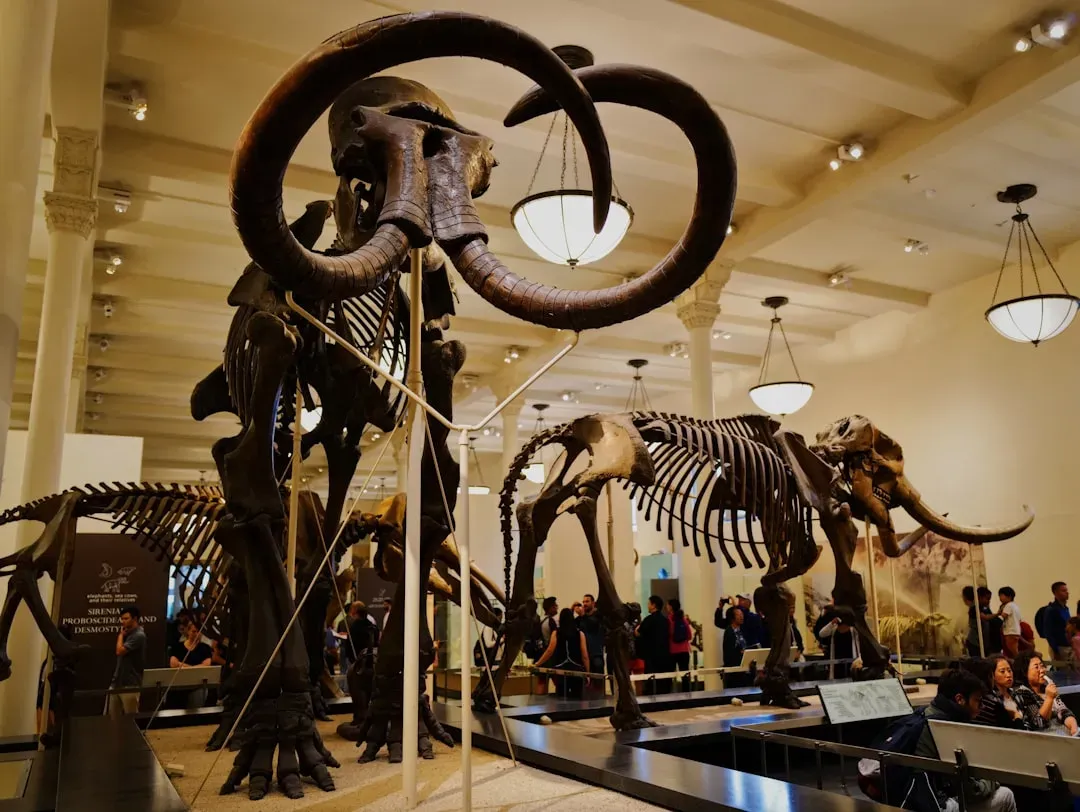
Putting all these stories side by side, one thing becomes hard to escape: prehistory is not some sealed-off chapter that ended neatly before “real” history began. Woolly mammoths lumbered through the Arctic while stone cities rose along the Nile. Giant deer browsed Siberian woodlands while early farmers experimented with crops. Aurochs, great auks, moa, and perhaps strange wild equids and hyenas were still out there as literate civilizations blossomed, empires fought, and philosophers argued. In many cases, these animals did not fade away until human hunting, habitat change, and expanding technology turned up the pressure from nuisance to collapse. That overlap makes our species look less like an innocent latecomer and more like the main character in the closing act of a very long story.
My own take is that these near‑miss extinctions are more than just cool trivia; they are mirrors held up to our present. If mammoths could hang on for six thousand years on a remote island and still lose, how confident should we be that today’s elephants, rhinos, or great apes can weather a planetary onslaught of deforestation, climate change, and industrial hunting? We are no longer stone‑tool hunters stalking mammoths on a steppe, but in ecological terms, we are still doing something very similar at a vastly larger scale. The line between “prehistoric” and “modern” turns out to be mostly a human comfort blanket – and once you strip it away, the question left hanging is simple and uncomfortable: which of today’s animals will future people be shocked to discover almost made it into their own modern history?