If you tried to design a terrifying meat‑eater out of spare dinosaur parts, you probably would not have come up with Carnotaurus. Tiny demon‑like horns, absurdly small arms, a bulldog‑short face, and a body built more like a sprinting greyhound than a lumbering lizard – it almost sounds like a prank the fossil record played on us. Yet this oddball from Late Cretaceous South America was very real, and it was almost certainly a top predator in its ecosystem.
What makes Carnotaurus so fascinating is how everything about it seems to break the “rules” we casually imagine for a big carnivorous dinosaur. It was not a copy‑paste cousin of Tyrannosaurus; it was its own bizarre experiment in speed, power, and specialization. The more paleontologists study its skeleton, the more it looks like an animal that pushed several traits to extremes, from its skin to its skull. Let’s dig into what turned Carnotaurus into one of the weirdest hunters the dinosaur age ever produced.
A Demon Bull With Horns and a Bulldog Skull
The first thing that makes Carnotaurus look so strange is right there in its name: “meat‑eating bull.” Unlike most large theropods, it had a pair of blunt, thick horns over its eyes, giving its skull an almost demonic profile. These were not delicate, ornamental crests. They were sturdy, bony projections fused into a short, deep skull, which is why so many artists depict it as a kind of prehistoric attack bull on two legs.
Its face was also unusually short and tall, more like a muscular bulldog’s head than the long, knife‑like snouts of many other carnivorous dinosaurs. This compact construction may have allowed for strong neck muscles and a powerful bite over a shorter range rather than long, sweeping jaw snaps. When you put the horns, the deep snout, and the thick neck together, you get a predator that seems set up more for brutal, close‑quarters attacks and head‑driven behavior than elegant, jaw‑only strikes.
The Arms So Tiny They Make T. rex Look Generous
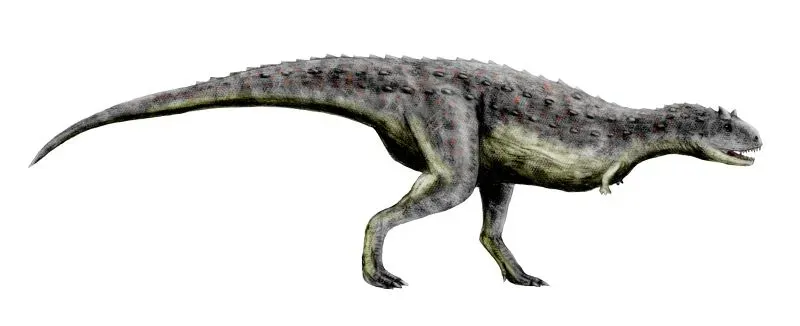
Everyone jokes about Tyrannosaurus rex having small arms, but Carnotaurus quietly wins that contest for sheer ridiculousness. Its arms were so reduced they were almost vanishing, with tiny forelimbs that looked like stubby hooks tucked tight against the body. The hands were weird too, twisted and stiff, with limited flexibility and not much use for grabbing, slashing, or bracing. If you imagined it trying to hug anything, you’d probably just laugh.
This tells us something important about how this animal hunted: it clearly was not using its forelimbs to wrestle prey the way earlier carnivores might have. Instead, Carnotaurus was effectively all head, neck, legs, and tail when it came to doing real work. That extreme reduction suggests its evolutionary path favored streamlining the body for speed and balance, cutting away anything that did not contribute much to the job. In a way, it is like a racing car stripping out the interior – if the arms weren’t pulling their weight, evolution simply kept shrinking them.
A Sprinter’s Body Built for Speed and Agility
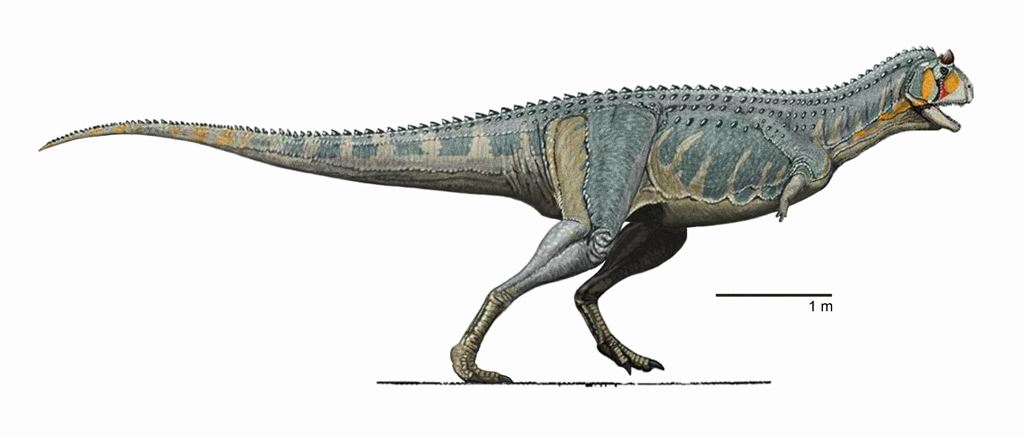
At first glance, Carnotaurus just looks like another big theropod, but if you actually trace the lines of its skeleton, a different picture emerges. Its legs were long and relatively slender for its size, and its tail was unusually stiff and muscular, forming a powerful counterbalance. Many paleontologists interpret this combination as a sign that Carnotaurus was built more like a sprinter than a slow, stomping giant. In simple terms, it was probably fast – certainly for something that could weigh over a ton.
The hips and tail bones show special adaptations where muscles would attach, hinting at a body tuned for quick bursts of acceleration and agile turns. Instead of just walking something down and overpowering it, Carnotaurus may have relied on sudden chases or lunges, swerving after nimble prey in open or semi‑open habitats. If you picture it as a two‑legged cheetah‑bull hybrid rather than a sluggish monster, you are probably closer to how it moved through its Late Cretaceous world.
Armor‑Like, Bumpy Skin Instead of Feathers
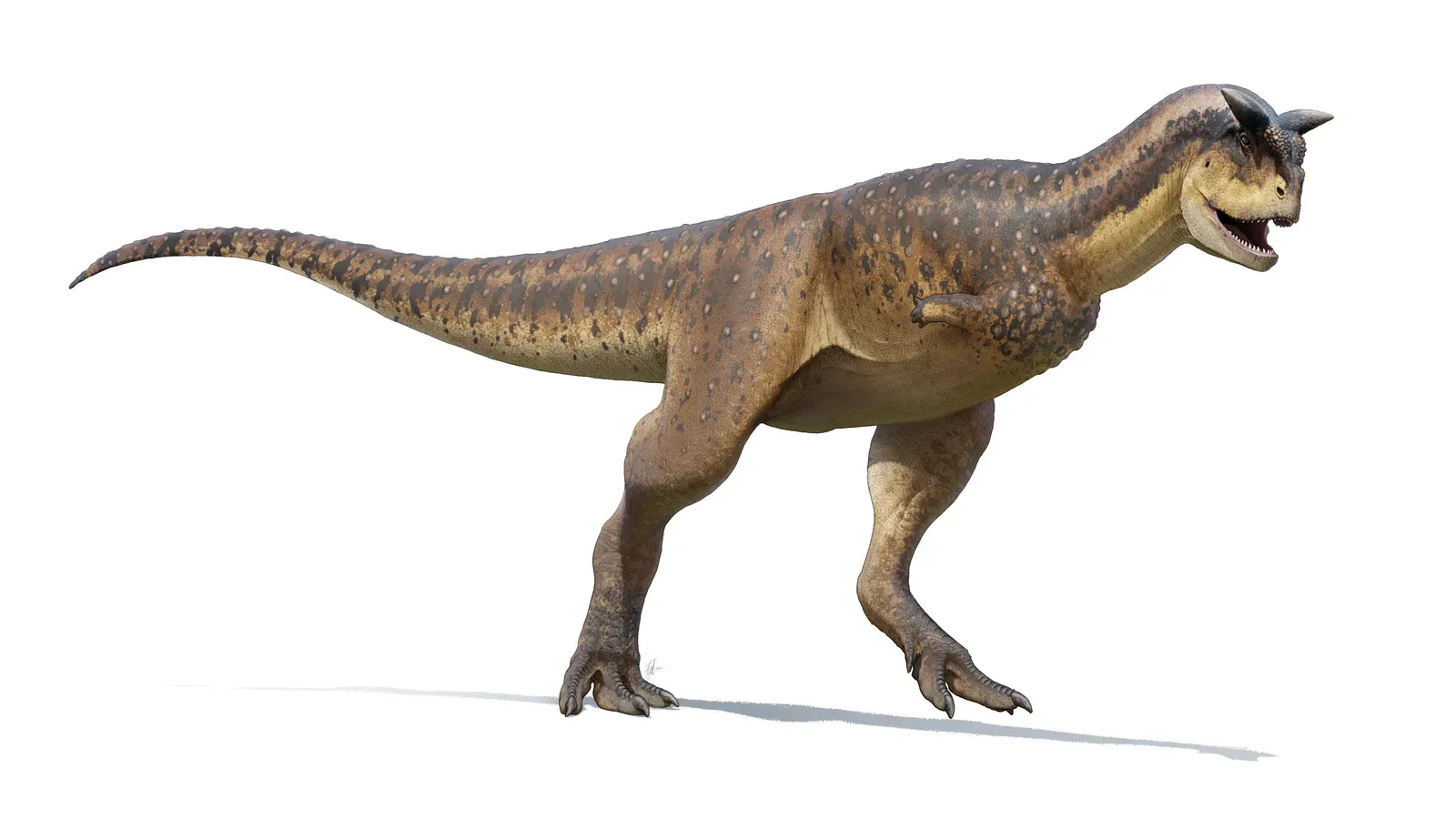
One of the strangest and coolest things about Carnotaurus is that we do not just have its bones; we also have impressions of its skin. That is rare for large theropods, and in this case, the skin was covered in small, polygonal scales with rows of larger bumps or knobs running along the sides. It looked almost like natural body armor, more reptilian and rugged than the fluffy or feathery look now suspected for many other dinosaurs.
This pebbly, knobby surface suggests that Carnotaurus was not hiding under a subtle texture. It might have had a highly visible, tactile skin pattern that played a role in display, camouflage, or both. In strong sunlight, those raised bumps could catch the light and shadow, breaking up its outline like the rough skin of a crocodile or certain lizards today. When you combine that with the horns and compact head, you end up with a predator that probably looked even stranger and more intimidating in real life than in museum mounts.
Bite Strategy: Smashing, Shaking, or Side‑Slamming Prey
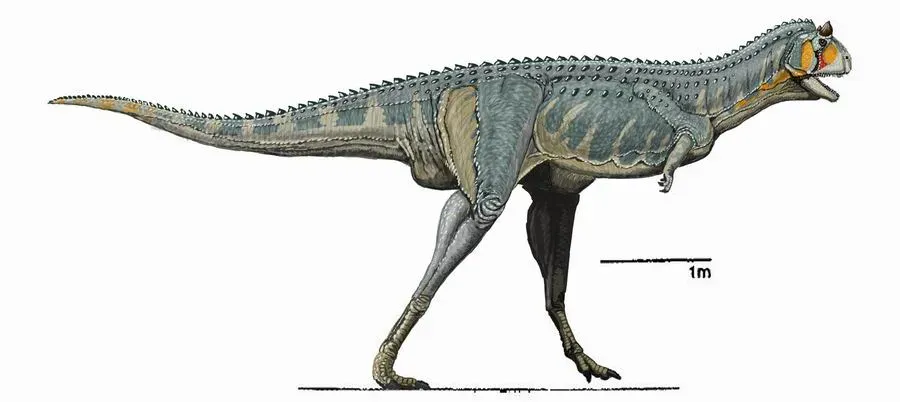
The shape of Carnotaurus’s skull and neck has fueled plenty of debate about how exactly it used its head in combat. Its teeth were not the giant bone‑crunchers of a tyrannosaur, and its jaws may not have been optimized for deep, crushing bites. Instead, some researchers have proposed that Carnotaurus used rapid head movements, slashing and snapping rather than clamping down and holding like a crocodile. The compact skull and strong neck muscles support that image of quick, repeated strikes.
Others have suggested that its rigid neck and strengthened vertebrae might have allowed for powerful side‑to‑side movements, similar to some modern predators that shake or jerk prey violently. Paired with the horns, it is possible Carnotaurus sometimes used its head almost like a hammer or battering ram against prey or rivals. While the exact behavior is still up for interpretation, what stands out is that its attack style probably did not perfectly match the more familiar movie image of a big theropod. It likely hunted and killed in its own idiosyncratic way.
Horns for Combat, Display, or Weird Dinosaur Social Life
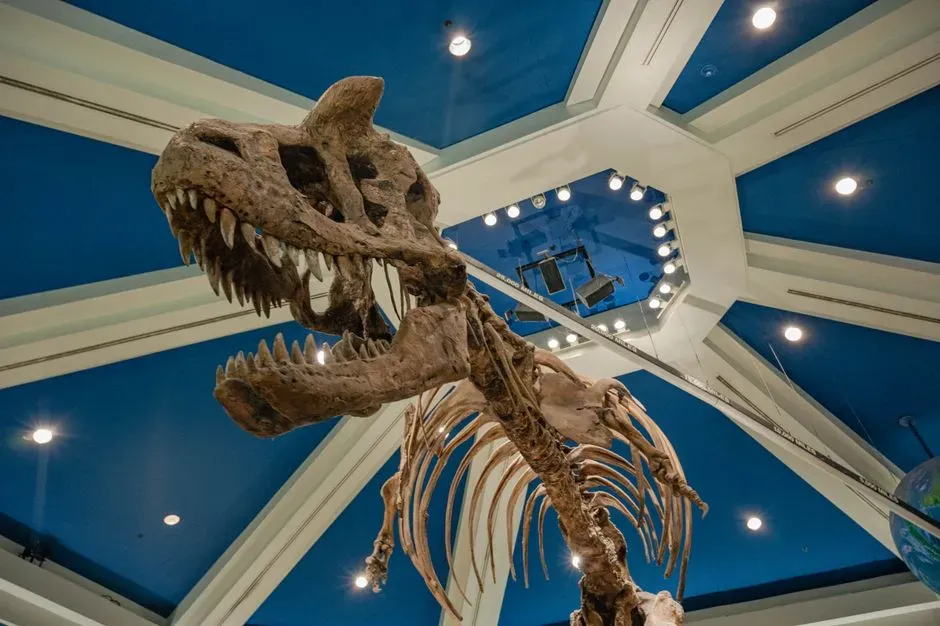
Those trademark horns on Carnotaurus’s head are not just spooky decorative details; they raise tricky questions about behavior. One idea is that they were used in combat, either by butting or pushing against other members of the same species in dominance contests. The reinforced skull and neck support the possibility of head‑to‑head shoving or ramming, even if it was more about controlled pressure than full‑speed collisions. Think less runaway train crash and more sumo match with helmets.
Another possibility is that the horns were visual signals, helping individuals recognize each other or advertise strength and maturity. Many modern animals use head ornaments this way, from antelopes to lizards, and it would not be surprising if Carnotaurus did something similar. I like to imagine that in life, those horns may have been highlighted by color patterns or scars, making older animals look even more battle‑worn. Whatever the exact function, the horns underline how weirdly specialized this dinosaur was compared with most of its predatory cousins.
A South American Original in a World of Copycats
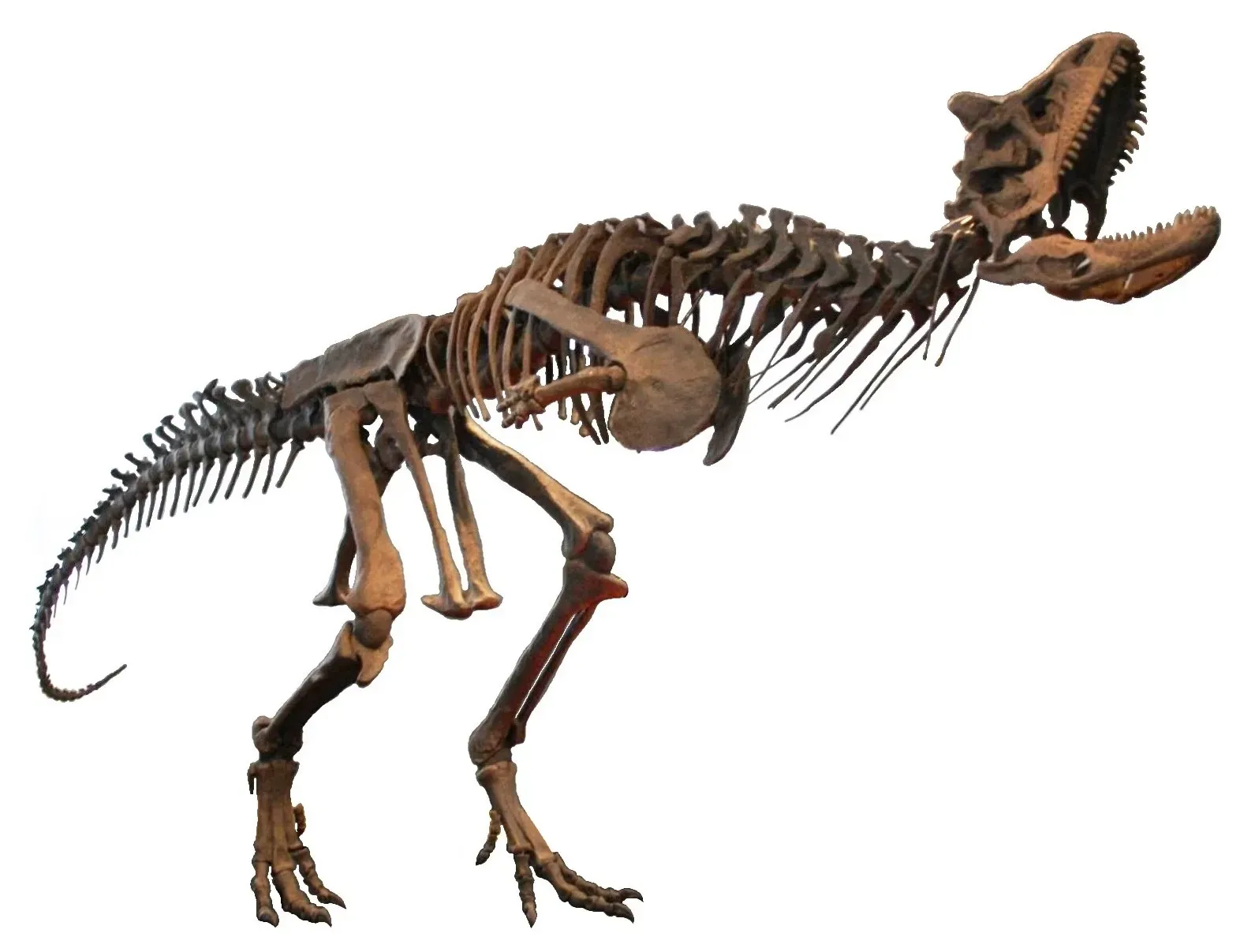
Carnotaurus did not live in the same neighborhoods as the most famous meat‑eaters from North America and Asia, and that geographic isolation shaped its weirdness. It evolved in what is now South America when that continent was off doing its own thing, separated from others by oceans. In that semi‑isolated evolutionary arena, its lineage – the abelisaurids – branched off into a distinct style of predator: short‑faced, horned, and often short‑armed compared to their counterparts elsewhere. Carnotaurus was one of the most extreme examples of this trend.
In its own ecosystems, it may have filled a top‑predator niche without direct competition from tyrannosaurs or similar giants, which left evolution free to experiment in stranger directions. That context matters, because it reminds us that dinosaur life was not uniform worldwide; different continents hosted their own unique predators built from the same basic blueprint. Carnotaurus stands out today not just because it looks bizarre to us, but because it reflects how diverse and inventive dinosaur evolution really was when given room to run.
Conclusion: A Predator So Odd It Redefines “Normal” Dinosaur Danger
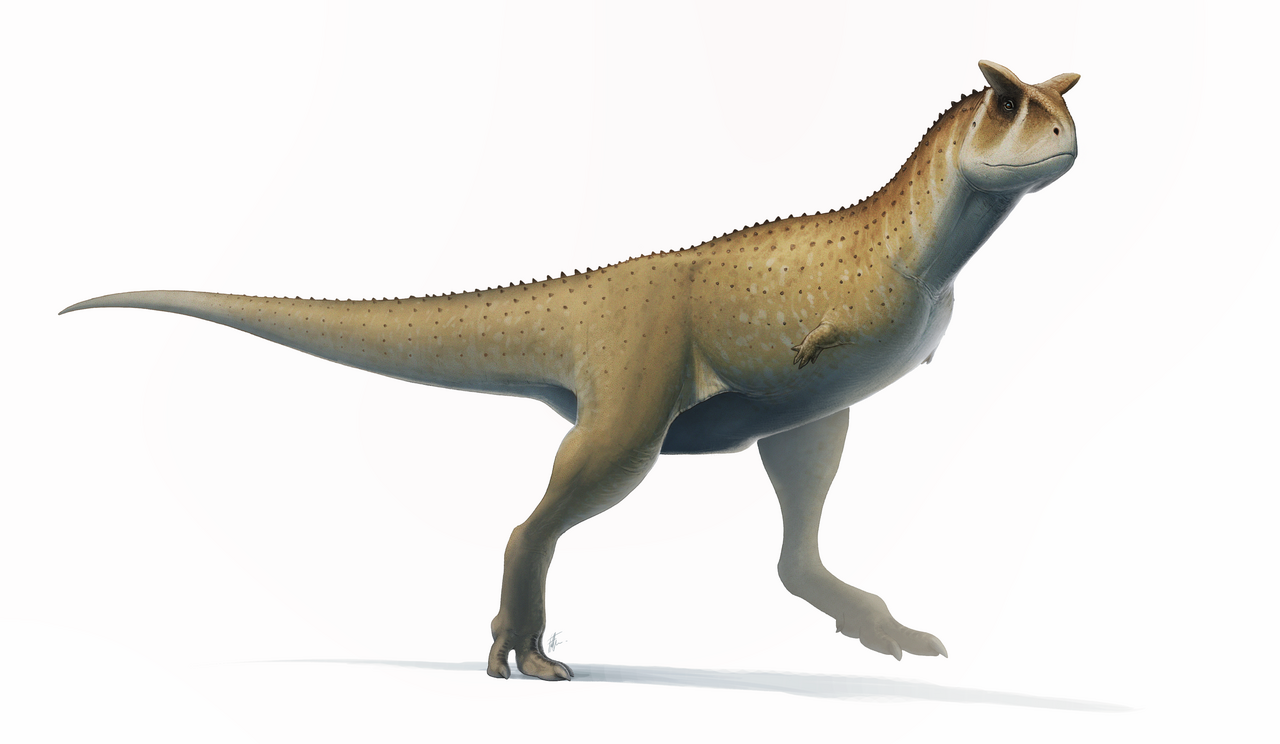
To me, Carnotaurus feels like the dinosaur that forces us to admit our mental picture of “typical” meat‑eaters is way too narrow. Everything about it – the demon‑bull horns, the absurdly reduced arms, the sprinting build, the armored skin, the compact smashing skull – says that being a successful predator never had to mean looking like a textbook tyrannosaur. It managed to turn the same basic ingredients into a creature that is both fearsome and frankly a little comical, like nature’s mash‑up of a bull, a crocodile, and a racehorse.
In an age full of dramatic carnivores, Carnotaurus stands out as one of the weirdest not because it was less effective, but because it was so intensely specialized. That weirdness is exactly what makes it memorable and, in my view, one of the most underrated icons of the dinosaur world. When I picture it sprinting across a Late Cretaceous floodplain, horns forward and tiny arms pinned uselessly to its sides, it feels more real – and more mysterious – than any sleek movie monster. The real question is, the next time you think of a scary dinosaur, will you still imagine the usual suspects, or will a horned, bulldog‑faced sprinter crash into that picture instead?