
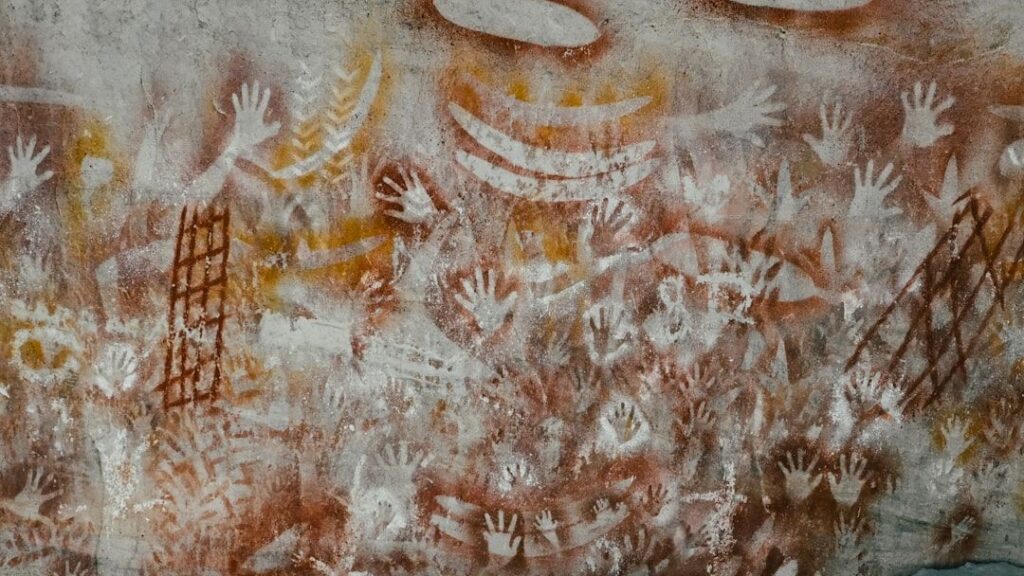
Walk into a Paleolithic cave (even just in your imagination) and you can almost feel the temperature drop. There are no neon signs, no screens, no written words, just flickers of torchlight and animals racing across stone walls. Yet in those ancient images, painted more than thirty or even forty thousand years ago, you’re face to face with minds that are startlingly familiar. These are not random scribbles from a barely-conscious species. They are deliberate, layered, symbolic works that quietly dismantle the old stereotype of early humans as dull, grunt-only cave dwellers.
What the oldest cave paintings really challenge is our sense of intellectual superiority. We like to think of ourselves as the pinnacle of thinking, but these works show that abstract thought, planning, and creativity have been with us for a very long time. From the drama of hunting scenes in Lascaux to the ghostly hand stencils in Indonesian caves, the message is clear: by the time humans were walking into the deep dark with pigment in hand, they were already thinking deeply about life, death, and meaning. Once you see that, it is very hard to unsee it.
Ancient Art That Pre-Dates Written History By Tens Of Thousands Of Years
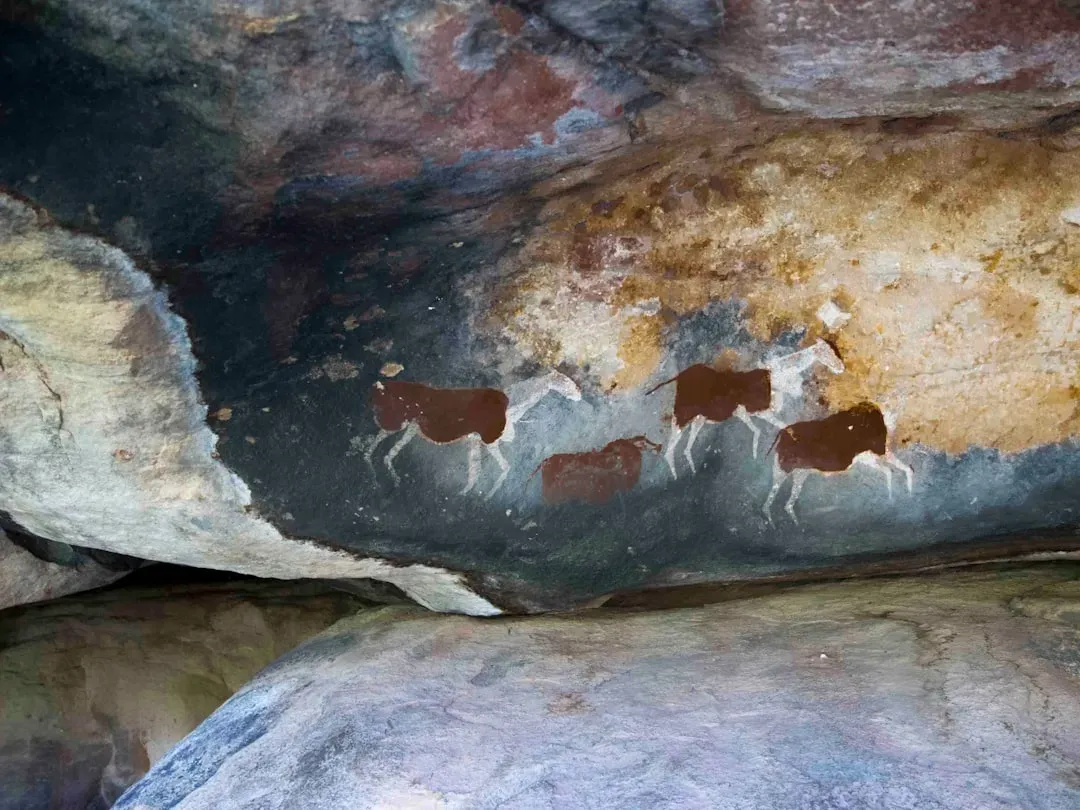
One of the most shocking facts about cave paintings is just how old some of them are. Sites like Chauvet in France and Sulawesi in Indonesia contain art that goes back more than thirty or even forty thousand years, long before agriculture, cities, or writing. When you stand in front of those images (or photos of them), you’re not just looking at “old stuff”; you’re looking at visual messages from people who lived during an Ice Age world, when mammoths and woolly rhinos were still around.
This enormous time depth alone tells us something powerful about human intelligence. If people had the cognitive capacity to create such sophisticated paintings this early, then the mental foundations of modern intelligence were already in place. The gap between them and us isn’t about basic brainpower; it’s about accumulated technology, knowledge, and social complexity. In other words, the hardware was already there, humming along, even if the software of modern life had not yet been installed.
Planning In The Dark: Evidence Of Complex Foresight And Coordination
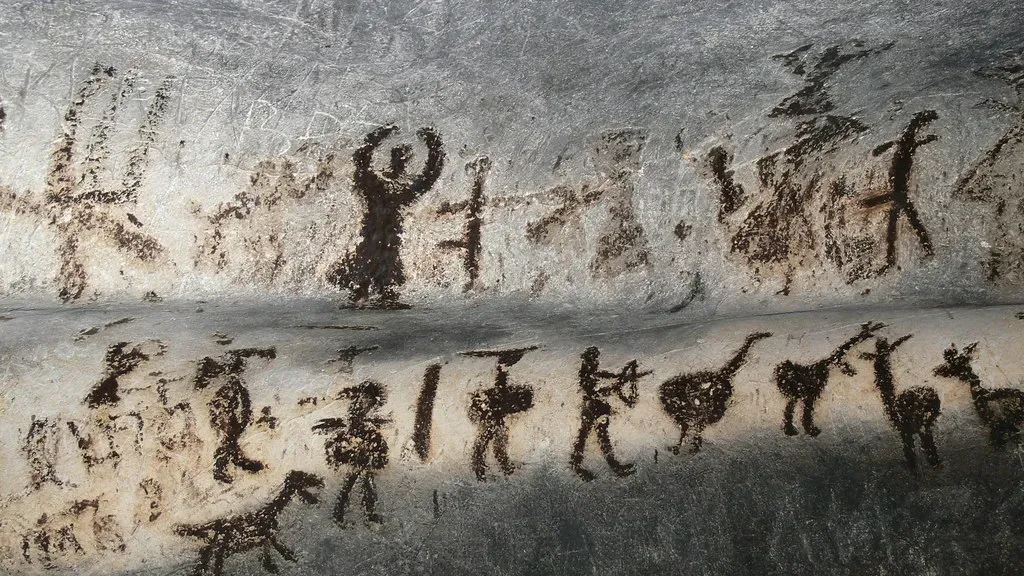
Cave paintings were not dashed off on a sunny afternoon at the entrance of a shelter. Many of the most spectacular works are deep inside winding cave systems, far from natural light. To get there, people had to plan routes, prepare torches or lamps, bring pigment and tools, and probably coordinate with others for safety. That alone shows a high degree of foresight, risk assessment, and logistical planning. This is not casual doodling; it’s a coordinated project.
On top of that, specific surfaces were chosen to amplify the effect of the art. Artists deliberately picked bulges, curves, and cracks in the rock so an animal’s shoulder might swell with the stone, or a horse’s head would seem to emerge from a natural bump. That means they were mentally rotating shapes, imagining finished scenes before any paint touched rock. If you have ever tried to plan a mural or even rearrange furniture in your head, you know how much mental effort that takes. They were clearly up for it.
Symbolism, Storytelling, And The Birth Of Abstract Thought
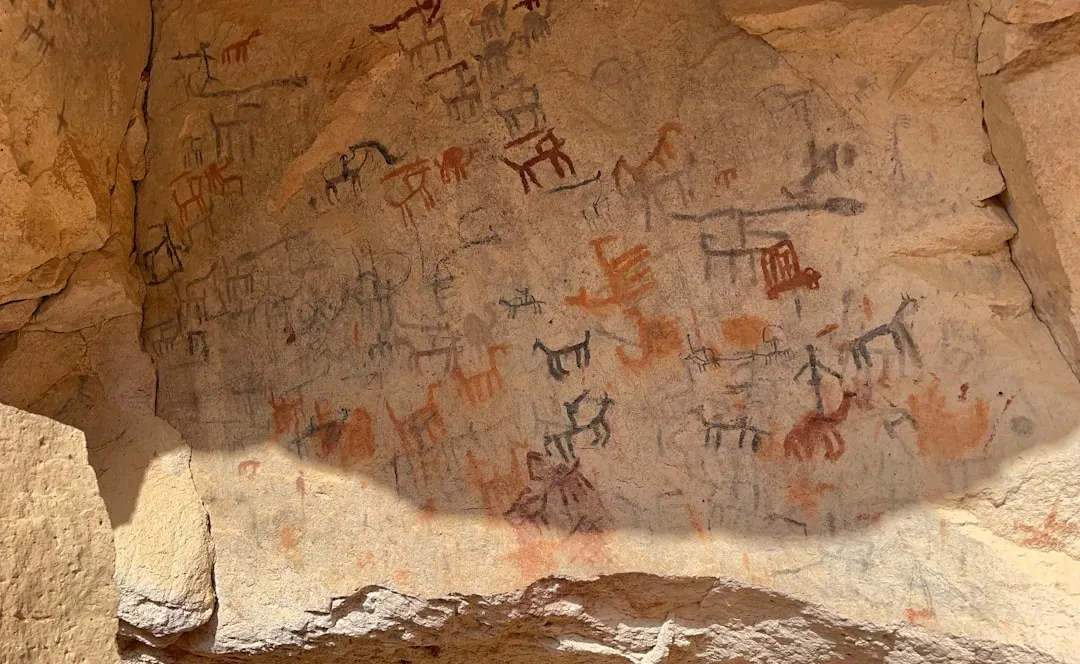
At first glance, cave paintings look like “just animals.” Horses, bison, lions, deer, handprints, maybe dots and lines. But the more archaeologists study them, the more layers appear. Some scenes seem to show sequences of events, like hunts or confrontations, as if an early form of storyboarding was happening on the walls. Others combine animal species, strange shapes, and human-like forms in ways that feel symbolic rather than purely descriptive. That leap from copying reality to arranging symbols is a major sign of abstract thought.
When you see repeated patterns of dots, zigzags, and hand stencils across distant sites and time periods, it suggests shared symbolic traditions or proto-systems of meaning. Even if we can’t fully decode them, the intent is clear: these marks meant something beyond themselves. To me, that argues strongly against the idea that language, religion, or myth appeared suddenly. Instead, cave art looks like a visual echo of minds already weaving stories, creating categories, and juggling invisible concepts long before anyone carved a written letter.
Early Science? Keen Observation And Animal Psychology
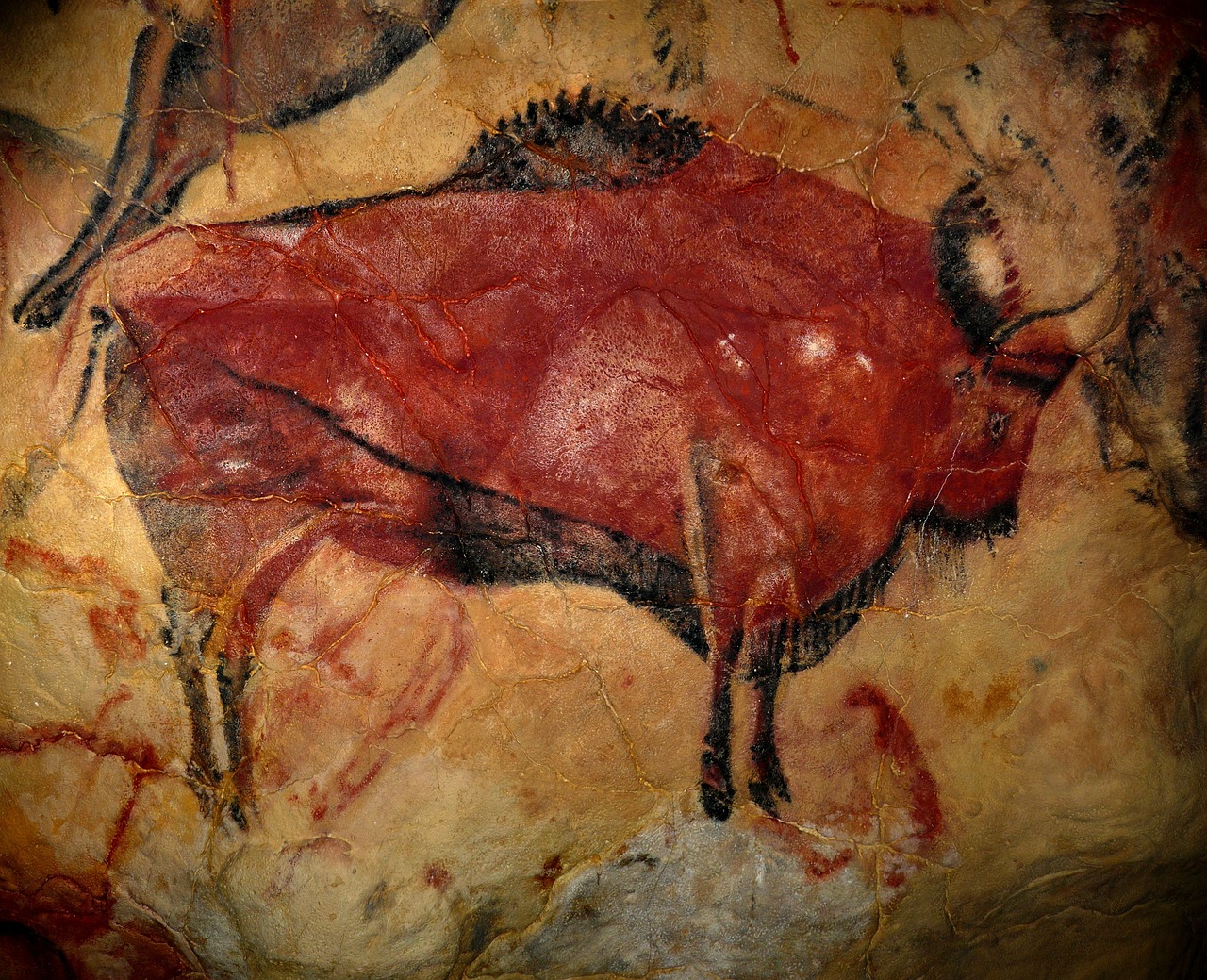
Some of the oldest cave paintings show a level of anatomical accuracy that would impress a modern wildlife illustrator. Artists captured the exact curve of a bison’s hump, the different gaits of a horse, and even subtle details of horns and hooves. That kind of precision doesn’t come from vague impressions; it comes from long, careful observation. These painters knew their animals the way a dedicated surfer knows waves or a mechanic knows engines, down to tiny, consequential details.
Even more intriguing, many images suggest that early humans were not just drawing bodies, but behaviors. Animals appear in herds, turning, charging, and reacting, sometimes overlapping as if to imply motion. Some scholars argue that these combinations hint at knowledge of migration patterns, mating seasons, or hunting strategies. Whether or not every interpretation holds up, it’s hard to deny that this is a form of early “field science”: watch, remember, analyze, and then record in a medium that outlives the moment. The canvas just happened to be a cave.
Social Brains At Work: Ritual, Identity, And Group Memory
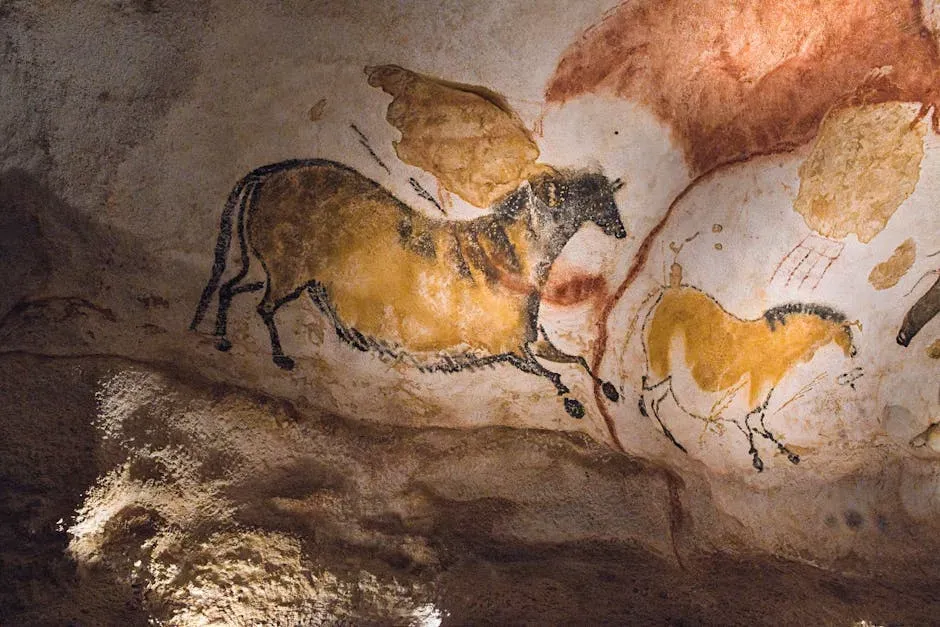
Creating a painting deep inside a cave was probably not a solo, casual hobby the way sketching is today. Many researchers think it involved group activities, perhaps rituals or gatherings that had emotional weight. Imagine a small community, torches flickering, watching as images slowly emerge on stone while someone chants, tells a story, or gives instructions. The process itself could reinforce shared beliefs, group identity, and a sense of belonging. That is social intelligence in action, not just raw IQ points.
These paintings also likely served as external memory devices for the group. Just as we now use photo albums or cloud drives, early humans could have used cave walls to archive crucial information about game animals, sacred stories, or clan symbols. By fixing those memories onto rock, they made them accessible to people who were not there when the original events happened. That move – from memory locked in individual brains to memory shared in public space – is a huge step in the evolution of culture, and it takes a sophisticated social brain to value and maintain it.
Technology Behind The Art: Pigments, Tools, And Multi-Step Problem-Solving
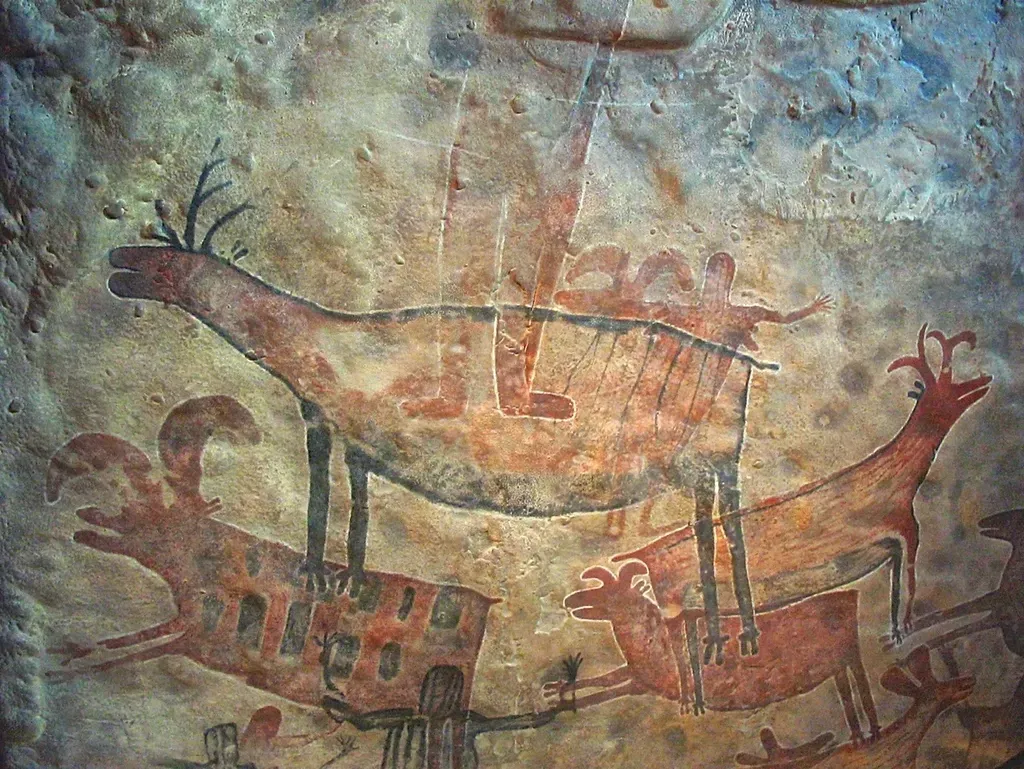
It’s easy to forget that every painting we admire today required a whole chain of technological decisions behind the scenes. Early artists had to find suitable pigments like ochre, charcoal, and manganese, then grind and mix them with binders to get the right consistency. They experimented with techniques such as blowing pigment through tubes, using brushes made of hair or plant fibers, and engraving outlines into the rock. Each step demanded trial and error, memory of what worked, and the ability to teach those methods to others.
When you think about this from a problem-solving angle, it’s impressive. They were basically running small, ongoing experiments in material science without calling it that. How do you make a color last on damp stone? How do you get a fine line versus a broad one? How can you apply pigment to a ceiling without it falling onto your face? These are not trivial questions. The answers they found show flexible intelligence, creativity under constraint, and a practical understanding of chemistry and physics, even if they never used those words.
Rethinking “Primitive”: How Cave Art Collapses The Superiority Myth
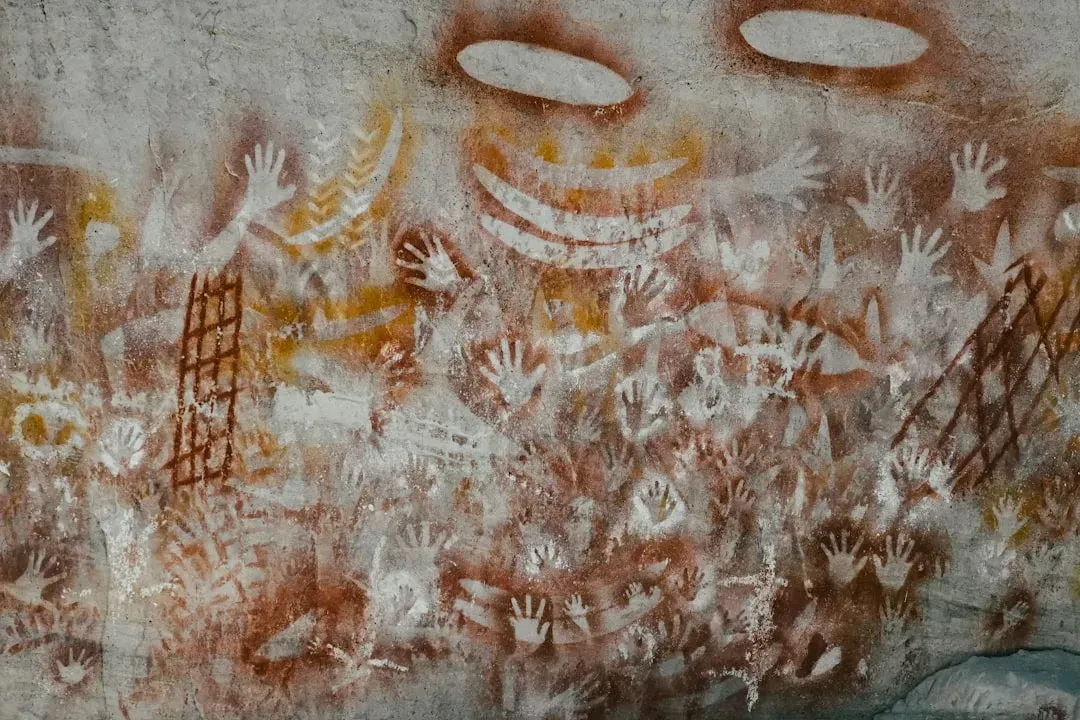
For a long time, popular culture pushed the image of “cavemen” as clumsy, dim, and barely more advanced than animals. The oldest cave paintings blow that stereotype apart. When you look at the grace of the bison in Altamira or the complexity of layered images in Lascaux, it’s very hard to hold onto the idea that those artists were intellectually inferior. The art is not just competent; it’s often outright stunning, even by modern standards. That should make us uncomfortable in a good way.
Personally, I think we cling to the word “primitive” because it flatters us. It lets us pretend that intelligence is a straight upward line leading to ourselves as the final destination. Cave art suggests a different story: humans reached a fully modern-looking level of imagination and symbolic thinking much earlier than many of us assumed. What changed over millennia was less the mind itself and more the world we built around it. Once you admit that, it becomes harder to feel smug about our smartphones and easier to feel awe at the minds that painted by flickering flame.
What These Ancient Walls Whisper About Our Future
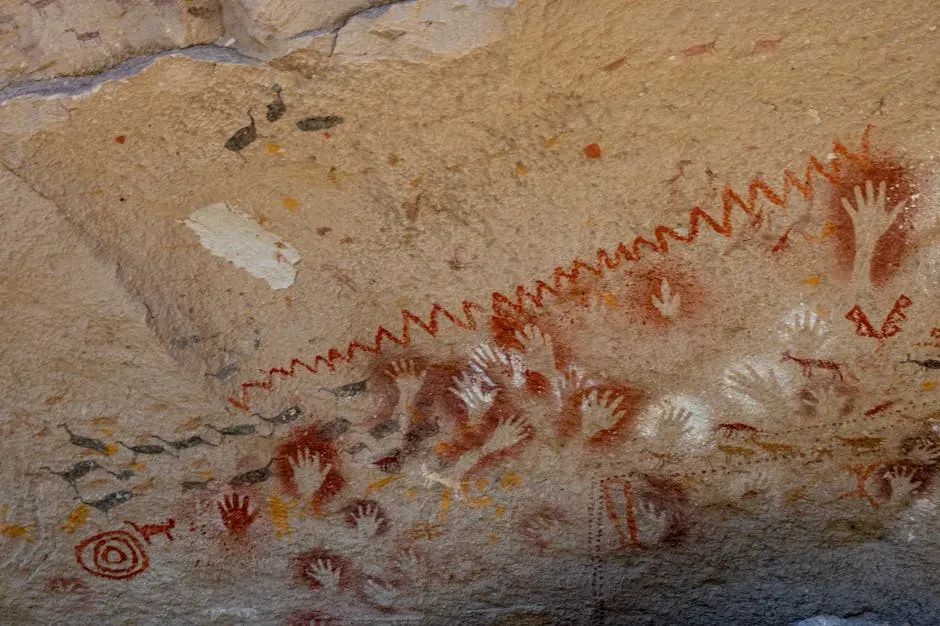
Standing back from all of this, the oldest cave paintings feel like a mirror held up not just to our past, but to our future. They tell us that the fundamentals of human intelligence – creativity, planning, symbolism, collaboration – were already present in people who had none of our modern tools. That is both humbling and oddly comforting. If our ancestors could imagine entire worlds into existence with nothing but pigment and stone, then our own potential might be less about new gadgets and more about how we choose to use our very old brains.
My opinion is that we underestimate early humans because it lets us underestimate ourselves. It is easier to believe that intelligence is tied to devices or degrees than to admit that the core abilities we admire – art, empathy, foresight, wonder – are ancient features, not recent upgrades. The caves remind us that we are part of a very long experiment in thinking, one that started in darkness with a handful of people daring to leave marks for others to see. The real question is whether, thousands of years from now, anyone will look at what we leave behind and feel the same shock of recognition. Would you bet against it?