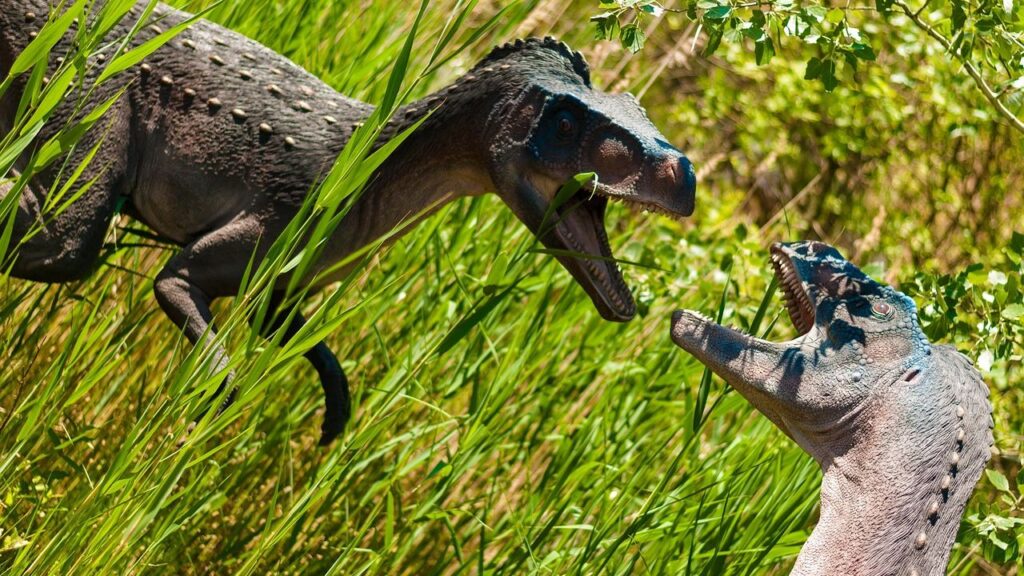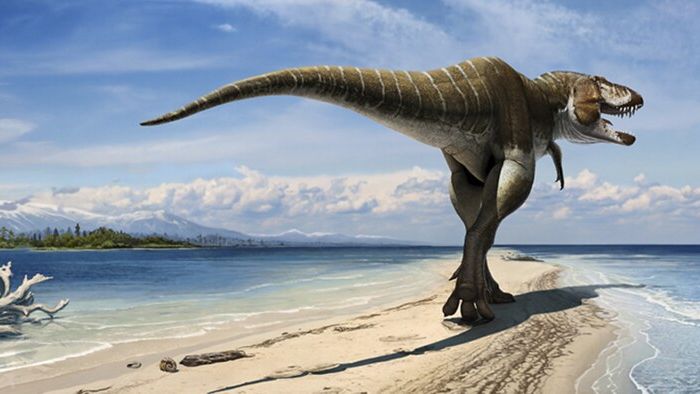
If you could stand on the shores of southern Utah about eighty million years ago, you would barely recognize the place. Imagine crashing waves instead of red rock deserts, dense coastal forests instead of dry canyons – and somewhere in that muggy heat, a massive predator stepping out of the trees, jaws lined with serrated teeth, built to tear flesh in chunks. That animal is Lythronax, nicknamed the “Gore King,” and it may have ruled one of the strangest coastal ecosystems North America ever hosted.
What makes Lythronax so fascinating is not just that it was a big, scary carnivore, but that it shows up in time earlier than most of its famous tyrannosaur cousins while already looking surprisingly modern. It is a dinosaur that forces scientists to rethink how quickly tyrannosaurs evolved into apex predators and how they spread across ancient continents. When I first read about it, I remember thinking it sounded like the prequel to Tyrannosaurus rex that nobody expected to find – same brutal design, different world.
Meet Lythronax: The Early Tyrant of the Late Cretaceous
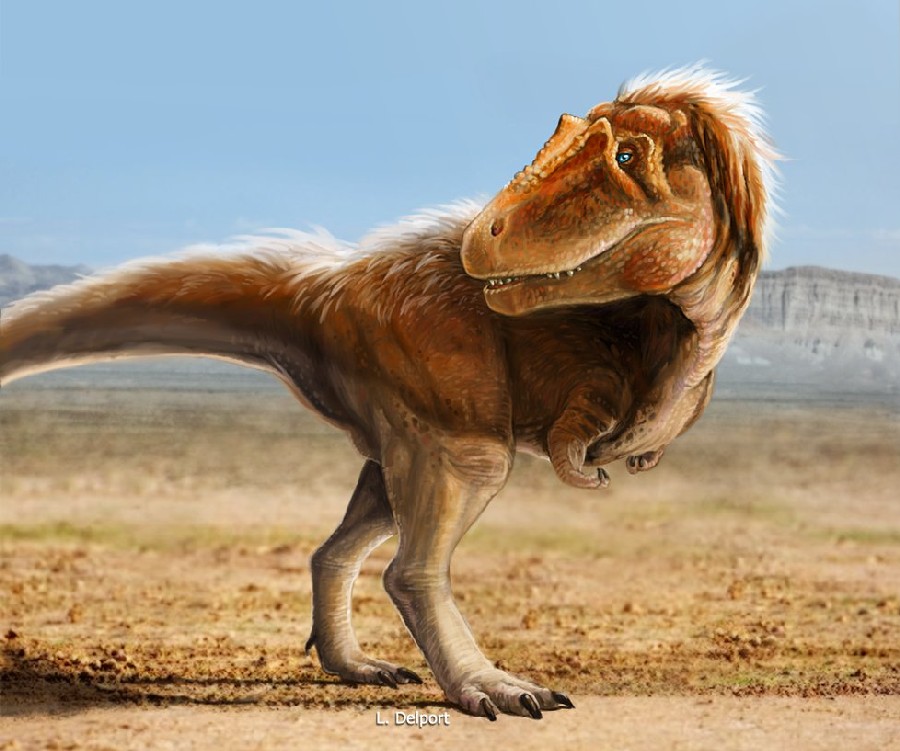
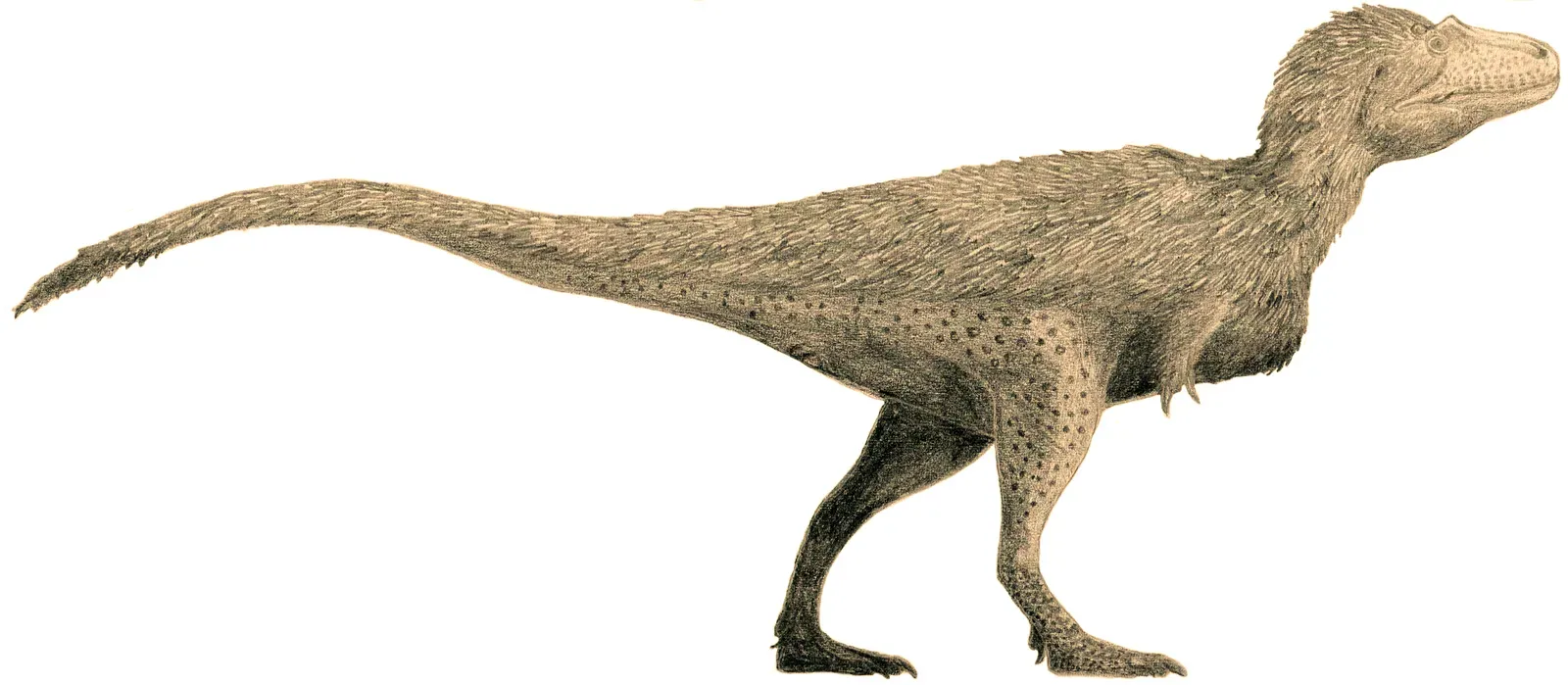
Lythronax lived during the Late Cretaceous, roughly eighty million years ago, which puts it well before the time of Tyrannosaurus rex, yet it already carries the unmistakable tyrannosaur blueprint. It was a large, two‑legged carnivore with a massive skull, powerful jaws, and relatively short forelimbs, standing several meters long and weighing as much as a large modern rhinoceros. Its name, Lythronax argestes, translates to something close to “gore king of the southwest,” a nod to both its formidable appearance and its discovery in what is now southern Utah. You can almost picture it as the heavyweight champion of its coastal neighborhood, stalking anything unlucky enough to cross its path.
What really grabs paleontologists, though, is how advanced Lythronax looks for its age. Many expected early tyrannosaurs to be more lightly built, with proportionally smaller heads and longer arms, but Lythronax bucks that expectation. Instead, it shows a robust skull and body plan that feels much closer to the classic image of a later tyrant like T. rex. That means the “big‑headed, bone‑crushing” tyrannosaur style likely emerged earlier than once thought, compressing the evolutionary timeline and suggesting there was a rapid burst of change in these predators long before they hit their final, famous form.
Utah as It Once Was: An Oceanfront Home for a Gore King
Today, Utah feels about as far from an ocean coastline as you can get, but back in the Late Cretaceous, the region sat along the shores of a vast inland sea. This seaway cut North America into eastern and western landmasses, turning the west into a long, narrow strip of land known as Laramidia. Lythronax roamed the southern end of this landmass, in a world that likely included swamps, deltas, and lush coastal plains crisscrossed by rivers that emptied into warm, shallow waters. Instead of dry sandstone and open sky, think humid air, dense vegetation, and the sounds of distant waves mixing with the calls of strange reptiles and birds.
In that setting, Lythronax did not exist in isolation; it moved through a tangled food web full of plant‑eating dinosaurs, crocodile‑like reptiles, turtles, and early birds. The coastal environment would have offered a rich buffet of herbivores, from horned dinosaurs to duck‑billed species, along with scavenging opportunities whenever the sea or storms washed animal carcasses ashore. This kind of habitat favors large opportunistic carnivores, and Lythronax fits the bill perfectly. To me, picturing it there feels a bit like imagining a giant, land‑based equivalent of a great white shark cruising a coastline, always on the lookout for its next meal.
Skull, Teeth, and Bite: Designed for Devastation
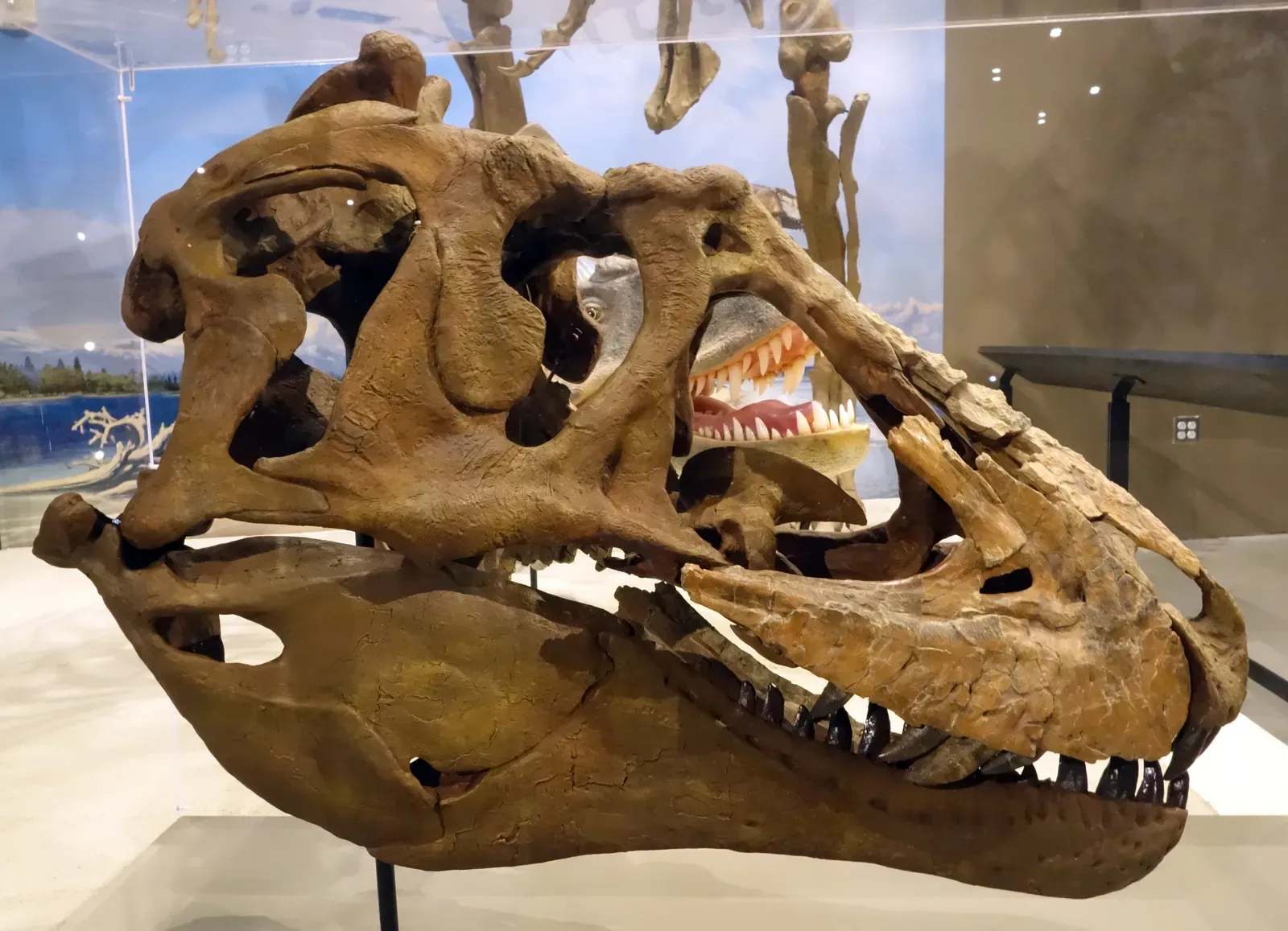
The most striking feature of Lythronax is its oversized skull, which is wide toward the back and packed with thick, serrated teeth ideal for slicing through flesh and possibly even cracking bone. That skull shape suggests powerful jaw muscles, giving it a bite strong enough to clamp down and hold struggling prey while tearing off large chunks. Its teeth were not thin daggers but more like sharp, curved railroad spikes with tiny serrations along the edges, turning every bite into a kind of prehistoric serrated knife attack. This sort of toolset makes sense for an animal that may have needed to tackle multi‑ton herbivores or rip through heavy carcasses already partly decomposed.
Another interesting detail is how the forward‑facing position of Lythronax’s eyes hints at enhanced depth perception, which is the visual superpower of a predator that relies on accurate strikes. With a broad skull and eyes that looked a bit more toward the front than to the sides, it likely had decent binocular vision, helping it judge distances when lunging or closing in on prey. Combined with a sturdy neck and a muscular body built for powerful movements rather than graceful sprints, you get the sense of a hunter that relied on ambush or short, brutal chases, not marathon runs. If you imagine a modern lion but scaled up, slowed a bit, and armed with a mouthful of saw‑toothed knives, you are somewhere in the right emotional neighborhood.
Hunting, Feeding, and Living Like a Coastal Apex Predator
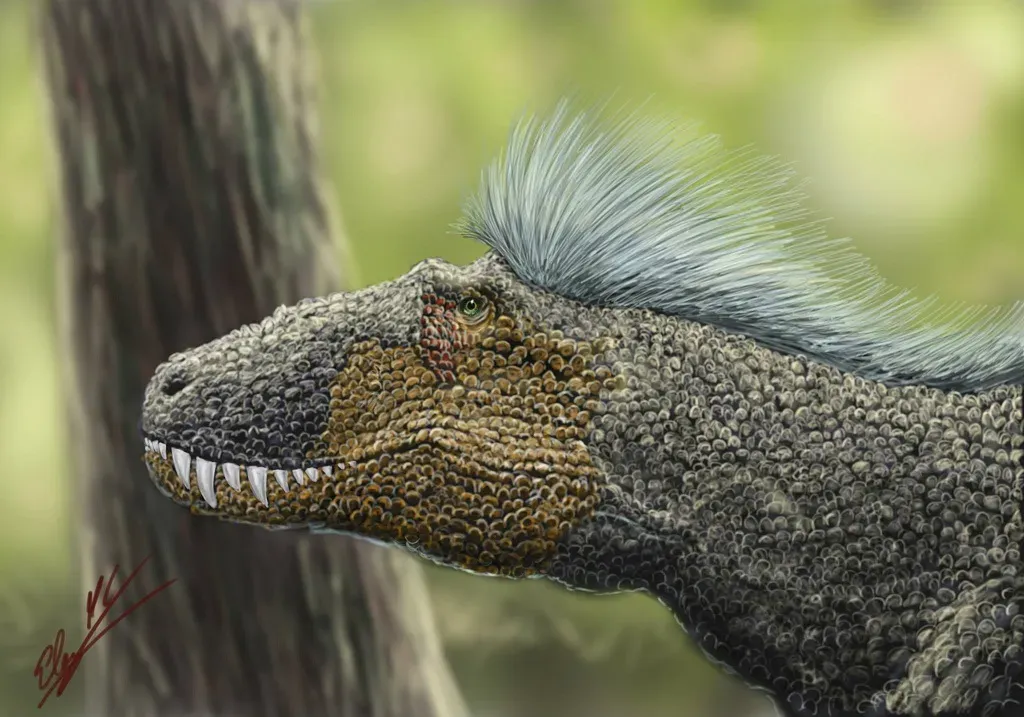
We will probably never witness how Lythronax actually hunted, but the clues from its anatomy and environment paint a vivid, if cautious, picture. On coastal floodplains, large herbivores might have congregated near rivers and low‑lying areas, which become natural ambush zones for a lurking carnivore. Lythronax, with its heavy build and strong bite, seems more like a bruiser that relied on close‑range power rather than long‑distance speed, perhaps using cover in forests or river margins to get as close as possible before making a sudden charge. Once it landed a solid bite, its jaws and neck could do the rest of the work.
At the same time, it would be naive to imagine Lythronax as a pure, clean hunter that never scavenged. Large predators today, from lions to bears, scavenge whenever the opportunity arises because dead meat is still calories with less risk. In a coastal environment where storms, floods, and the sea itself could deposit carcasses, Lythronax likely took advantage of anything edible, whether freshly killed or not. That flexibility might have been a key part of what kept it at the top of the food chain, a kind of ruthless opportunist that could switch between active hunting and scavenging as conditions changed.
What Lythronax Reveals About Tyrannosaur Evolution
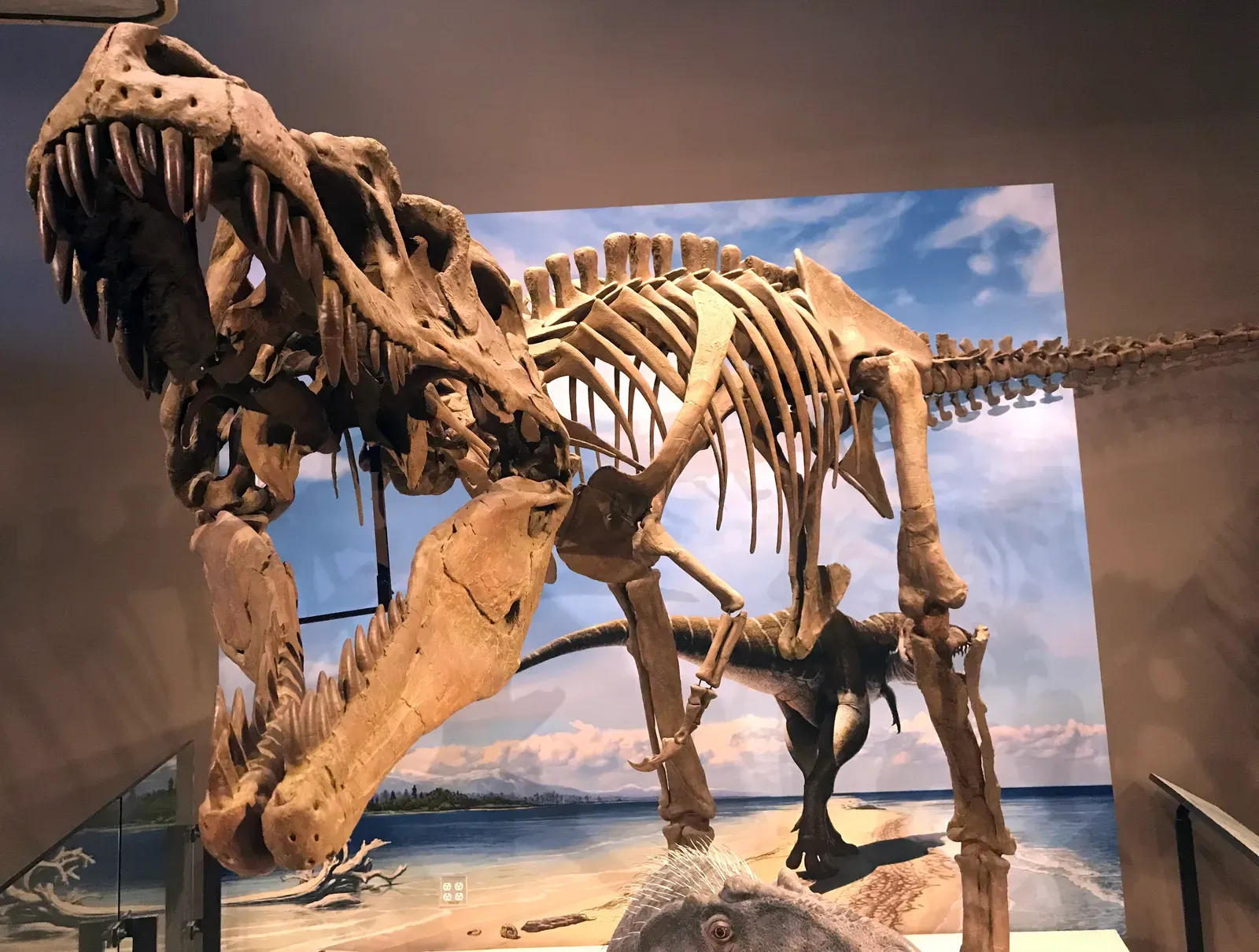
One of the biggest scientific shocks from Lythronax is how it rewires the story of tyrannosaur evolution. For a long time, the standard picture went something like this: early tyrannosaurs were smaller, more lightly built animals, and the truly massive, deep‑skulled forms appear late in the Cretaceous, culminating in T. rex. Lythronax disrupts that neat line by showing that a large, robust, big‑headed tyrannosaur already existed around eighty million years ago, earlier than many of its famously bulky cousins. That suggests that the key design features of tyrant dinosaurs emerged earlier and perhaps evolved in a more complex, branching pattern than a simple, straight march toward T. rex.
Another layer of intrigue is how Lythronax’s anatomy links it closely with later tyrannosaurs from farther north, hinting at ancient patterns of movement and isolation across Laramidia. Because the western side of North America was a long, narrow landmass squeezed between mountains and sea, different regions may have hosted distinct lineages of dinosaurs with limited mixing between them. Lythronax seems to represent a southern branch of the tyrannosaur family that developed a big‑skulled, apex‑predator lifestyle relatively early. For me, that makes it less of a side character and more of a co‑star in the evolutionary story, showing that tyrannosaurs were experimenting with their iconic body plan earlier and in more places than we once thought.
Digging Up a Gore King: Discovery, Debate, and Mystery
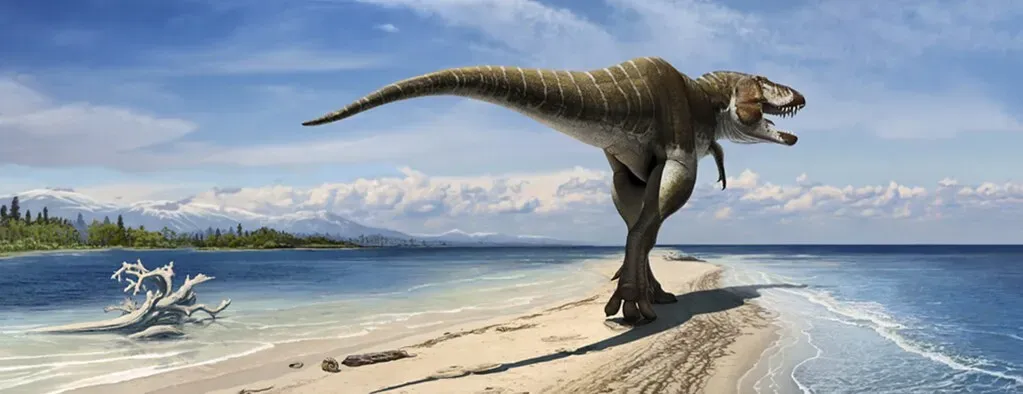
The bones of Lythronax came out of the rock in southern Utah, in a region that has become a treasure trove for Late Cretaceous fossils. The partial skeleton that defined the species was enough to give researchers a good look at its skull, teeth, and parts of the body, but not so complete that every question could be answered. That is one of the constant frustrations and thrills of paleontology: you rarely get the full animal, just scattered pieces that demand careful interpretation. In the case of Lythronax, those pieces were compelling enough to establish it as a distinct tyrannosaur and to anchor it solidly in that coastal environment.
Of course, with any dinosaur known from incomplete remains, there is ongoing debate and room for revision. Future discoveries might clarify its exact size, refine its family tree, or even reveal unexpected twists in how it looked and lived. Maybe more skeletons will show growth stages, revealing how a young Lythronax differed from a full‑grown adult, or they might uncover injuries that hint at fights or close encounters with prey. For now, though, Lythronax sits as a key puzzle piece in the story of North American dinosaurs, and it carries that wonderfully dramatic title of “Gore King” precisely because it embodies so much power, mystery, and scientific intrigue all at once.
The Gore King’s Legacy: Why Lythronax Still Matters Today
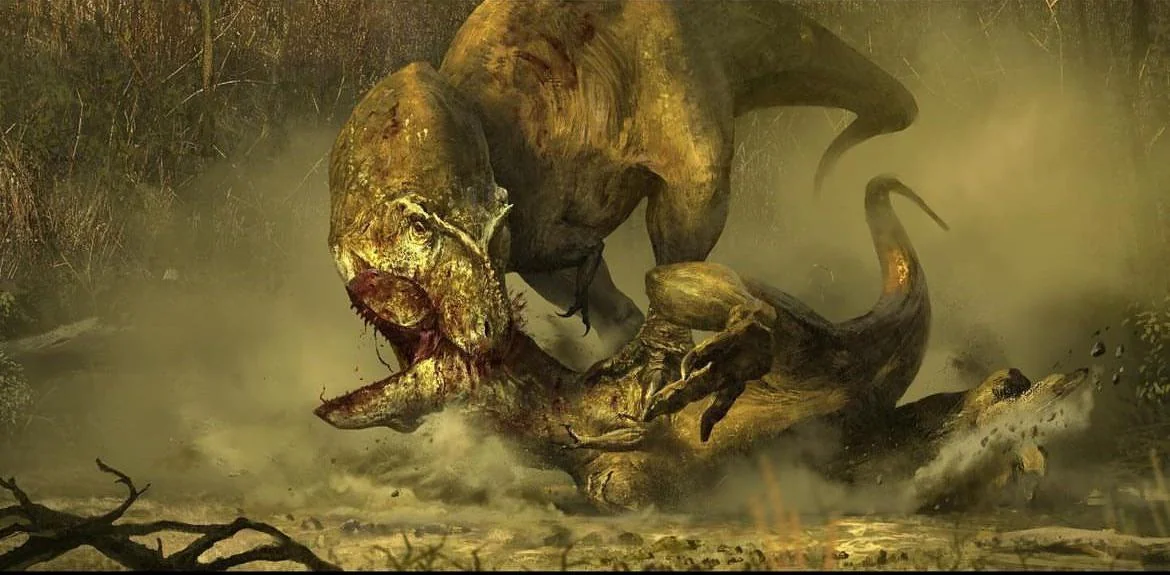
In my view, Lythronax matters not just because it looked terrifying, but because it reminds us how provisional our stories about the past really are. Every time we think we understand the sequence of evolution, a fossil like this steps in and rewrites the plot by arriving earlier, in a different place, or in a more advanced form than expected. Lythronax forces us to see tyrannosaurs as a diverse, regionally varied group, not just a single iconic species and its understudies. It shows that evolution experiments locally, on real landscapes, under specific climate and geographic conditions, and some of those experiments turn out to be successful enough to dominate their ecosystems.
Personally, I think that is the true legacy of the “Gore King”: it challenges the comfortable, textbook narrative and replaces it with something messier, more dynamic, and more honest. Lythronax tells us that deserts can hide the bones of forgotten oceans, that what looks like the middle of nowhere today was once a bustling shoreline, and that a predator every bit as fearsome as T. rex was already stalking those coasts millions of years earlier. It is a reminder that our planet is full of stories we have barely started to uncover, and each new discovery asks us to update our mental picture of deep time. When you look at a quiet Utah canyon now, can you imagine a massive tyrant dinosaur once ruling that space – and what else might still be waiting in the rocks to surprise us next?