Imagine a peaceful, long‑necked dinosaur, quietly browsing on plants in a Jurassic forest… that also happened to swing a built‑in morning star at anything that got too close. That is the strange, slightly shocking reality of Shunosaurus, a dinosaur that looked like a smaller, chunky cousin of the famous sauropods, but hid a serious weapon at the end of its tail. Most people know about the spiked backs of Stegosaurus or the clubbed tail of Ankylosaurus; far fewer realize that some long‑necked dinosaurs were also armed.
Shunosaurus turns that old image of slow, helpless plant‑eaters completely on its head. Instead of being an easy target, it was more like a walking tank with a flail attached. Once you know that, it becomes hard to see it as just another “gentle giant.” Let’s dive into what we actually know about this animal, how that tail weapon worked, and why it matters for the bigger story of dinosaur evolution.
A Short, Chunky Sauropod That Broke the Stereotype
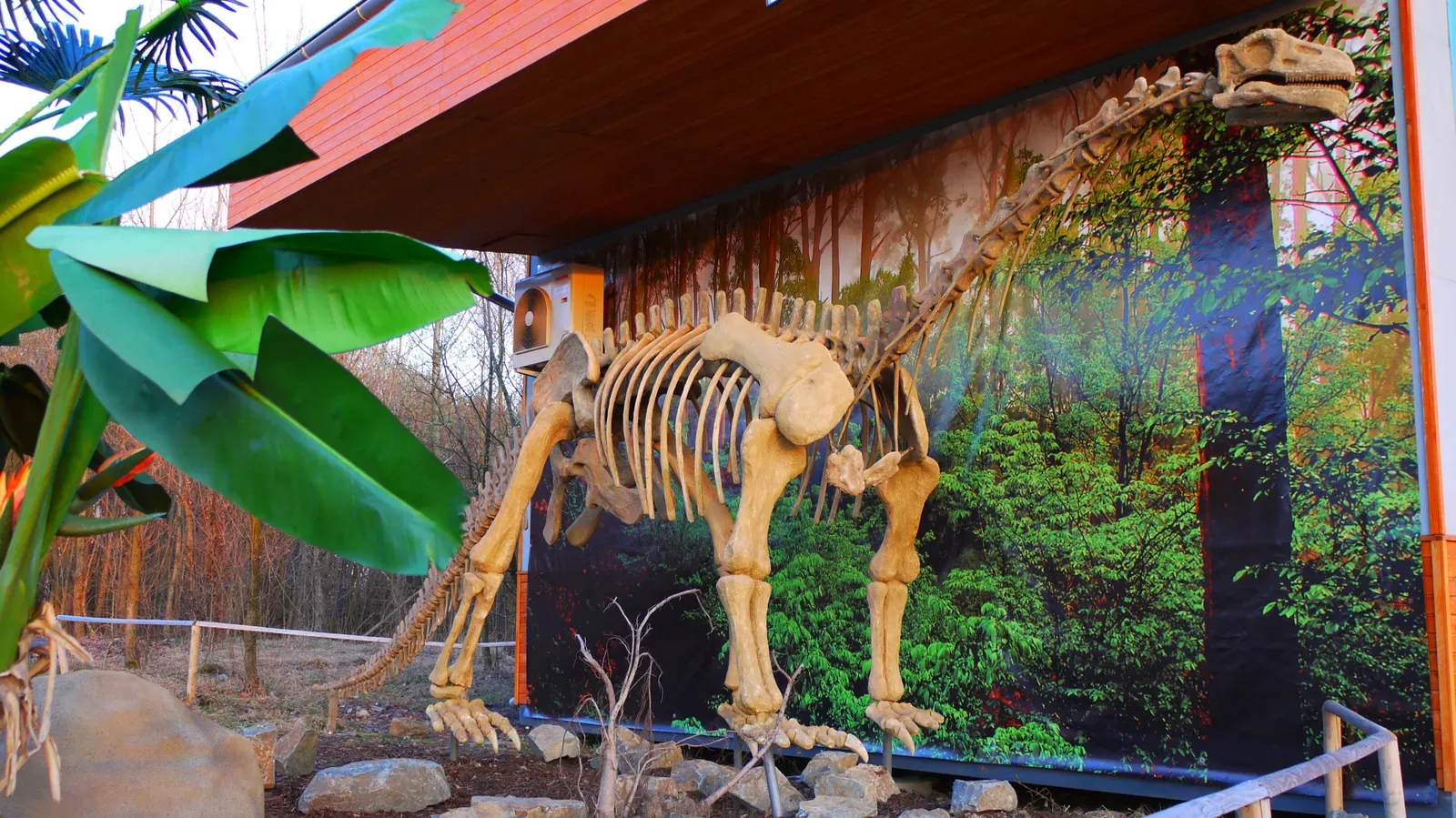
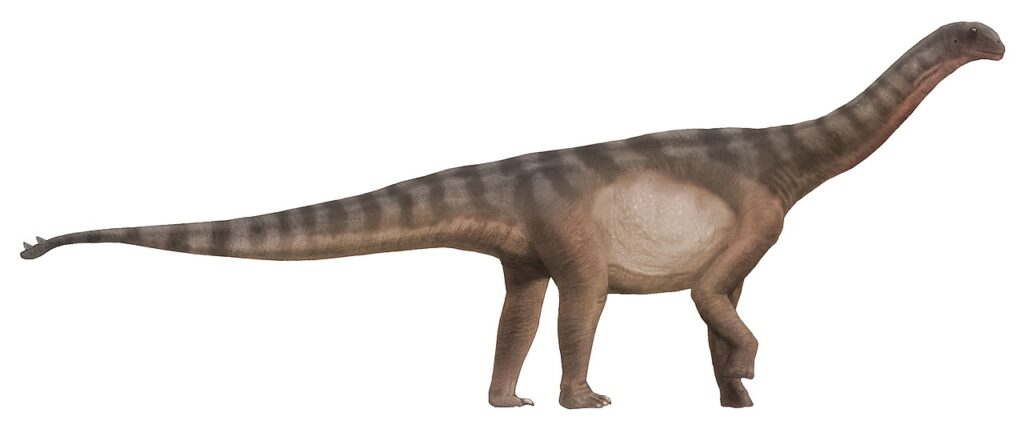
Most of us picture sauropods as enormous animals with ridiculously long necks and even longer tails, stretching across river plains like living cranes. Shunosaurus, which lived in what is now China during the Middle Jurassic, does not quite fit that mental image. It was smaller than celebrities like Brachiosaurus or Diplodocus and had a more compact, barrel‑bodied build, like someone had taken a classic sauropod and hit the “shrink and thicken” button. That alone already makes it stand out in a group usually defined by extremes of size.
Because it was not one of the mega‑giants, Shunosaurus often gets skipped in popular dinosaur books and documentaries, which is a shame. Its proportions tell us a lot about the early evolution of long‑necked dinosaurs and how varied they actually were. Instead of a tall browsing specialist, Shunosaurus seems more like a mid‑height feeder, probably moving through fern‑rich floodplains, picking at low and medium vegetation with far less fuss than its skyscraper‑sized relatives. It is a reminder that not every sauropod was trying to be the tallest animal in the forest.
The Tail Club: A Built‑In Jurassic Morning Star
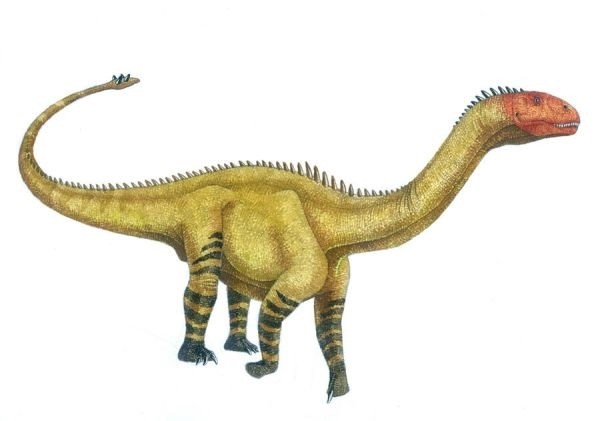
The real plot twist with Shunosaurus sits at the end of its tail: a bony club with spikes. Unlike the purely whiplike tails of many sauropods, the last few tail vertebrae of Shunosaurus were modified and expanded, forming a sturdy mass of bone. In at least some specimens, there were additional bony projections that gave the whole structure a menacing, mace‑like look. This was not decoration. This was hardware.
Functional anatomy studies suggest that the tail of Shunosaurus could be swung with considerable force, especially when combined with its relatively low center of gravity and sturdy body. Think of it like a heavy hammer on a flexible handle: the power is not only in the weight but also in the speed and arc of the swing. While we will probably never see a fossilized moment of impact, the structure itself screams “contact sport,” not gentle signaling or display. For a plant‑eater, that is a surprisingly aggressive upgrade.
Why Would a Plant‑Eater Need a Weapon Like That?
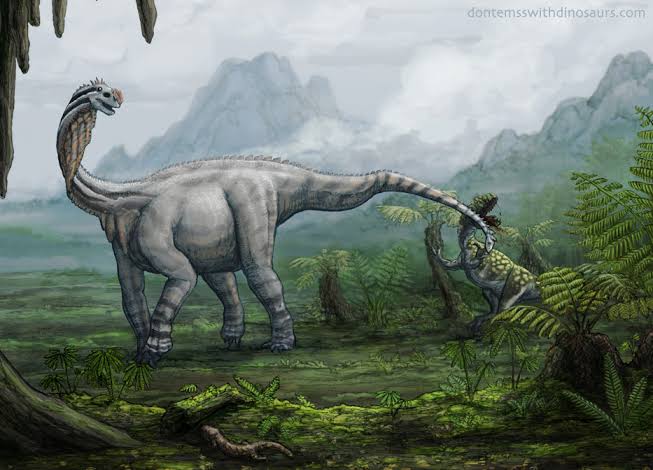
It is easy to forget that herbivores often live in a world of constant threat. In the Middle Jurassic ecosystems of what is now China, Shunosaurus shared its environment with large predators, including big theropods armed with sharp teeth and claws. A medium‑sized sauropod would make a tempting target, especially juveniles or individuals that got separated from the herd. A tail club is a pretty clear evolutionary answer to that kind of pressure: if you come too close, you risk a bone‑shattering blow.
There is also a social angle that is harder to prove but worth considering. In many animals today, physical structures used in defense double as tools for shoving, sparring, or intimidating rivals. The same tail that could smash into a predator’s leg might also be used in dominance disputes within a group, or as a show of strength during mating season. We cannot be certain about that behavior, but evolution rarely wastes a good weapon on just one job. At the very least, Shunosaurus was not the soft target many people imagine when they think of plant‑eating dinosaurs.
How the Tail Club Might Have Worked in Real Life
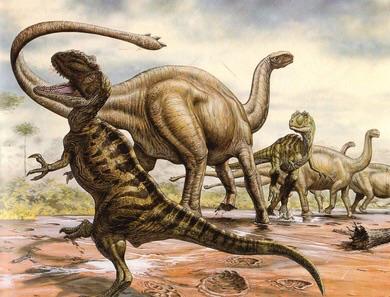
Picture a predator trying to circle behind a Shunosaurus, aiming for the hindquarters where many big carnivores like to attack. Instead of a helpless back end, it would find itself facing a swinging, spike‑equipped mass of bone. The flexibility of the tail near its base, combined with stiffness toward the tip, probably allowed for controlled but powerful strikes. Even if the club did not always land perfectly, a glancing blow to a leg or rib could have been enough to make an attacker think twice.
If you have ever accidentally smacked your shin on a low table, you already know how sensitive long bones can be to sudden force. Now scale that up to dinosaur size, add speed and spikes, and you start to understand why a tail club is such a serious deterrent. A smart predator would look at a group of Shunosaurus and calculate the risk: a mouthful of meat versus the chance of a crippling leg injury. In many cases, it might have decided to go hunting for something less dangerous instead.
What Shunosaurus Tells Us About Sauropod Evolution
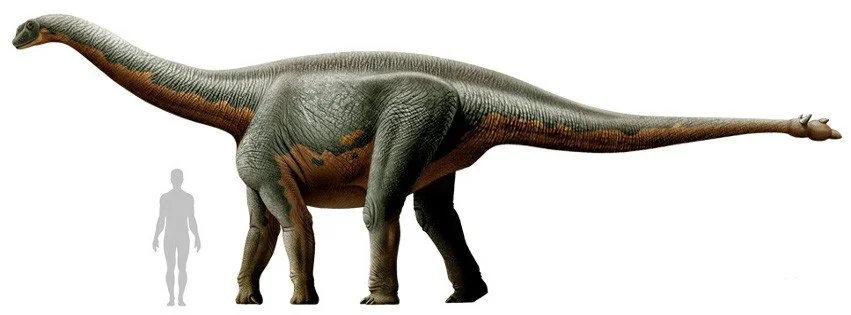
Shunosaurus is not just a cool oddball; it helps scientists connect important dots in the story of sauropod evolution. Its combination of features – moderate size, relatively short neck, robust body, and that unusual tail weapon – suggests that early sauropods experimented with a wider range of body plans and lifestyles than the later giants we know best. Instead of a straight line from small ancestors to colossal, high‑browsing specialists, the family tree looks more like a branching shrub full of unexpected adaptations.
The tail club is especially interesting because it hints that armor and active defense were not limited to the classic “armored dinosaur” groups. Some long‑necked dinosaurs clearly faced enough danger that heavy defensive structures were worth the biological cost of growing and carrying them. That challenges the outdated stereotype of sauropods as slow, defenseless victims that survived only by getting big. Shunosaurus shows that, at least in some lineages, natural selection was also pushing for toughness, agility, and the ability to hit back hard.
Reimagining Shunosaurus: Not a Gentle Giant, but a Tough Survivor
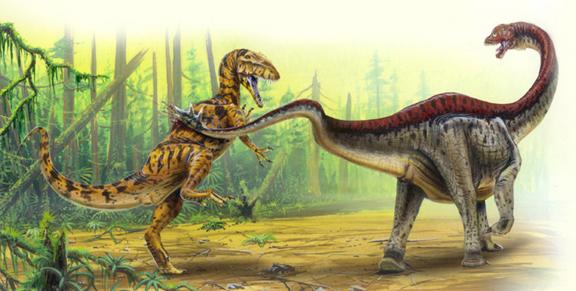
Once you know about its tail weapon, it is hard to keep seeing Shunosaurus as a harmless, lumbering vegetarian. To me, it feels much more like a compact, no‑nonsense survivor, the kind of dinosaur that did not go looking for trouble but was absolutely ready if trouble found it. I picture it in a herd, adults forming a living wall with their tail clubs angled outward, a moving fortress for the younger animals in the middle. That image feels far more honest to the fossils than the old picture of passive, doomed plant‑eaters.
In my opinion, the most exciting thing about Shunosaurus is how it forces us to adjust our mental models of prehistory. It proves that even familiar dinosaur groups can surprise us with strange, clever solutions to the challenges of their world. The tail club is not just a neat trivia fact; it is a symbol of how life refuses to be predictable. Next time someone talks about sauropods as gentle giants, you might be tempted to ask: would you still call them gentle if one of them could swing a spiked mace at your kneecaps?
Conclusion: A Dinosaur That Refuses to Be Ordinary
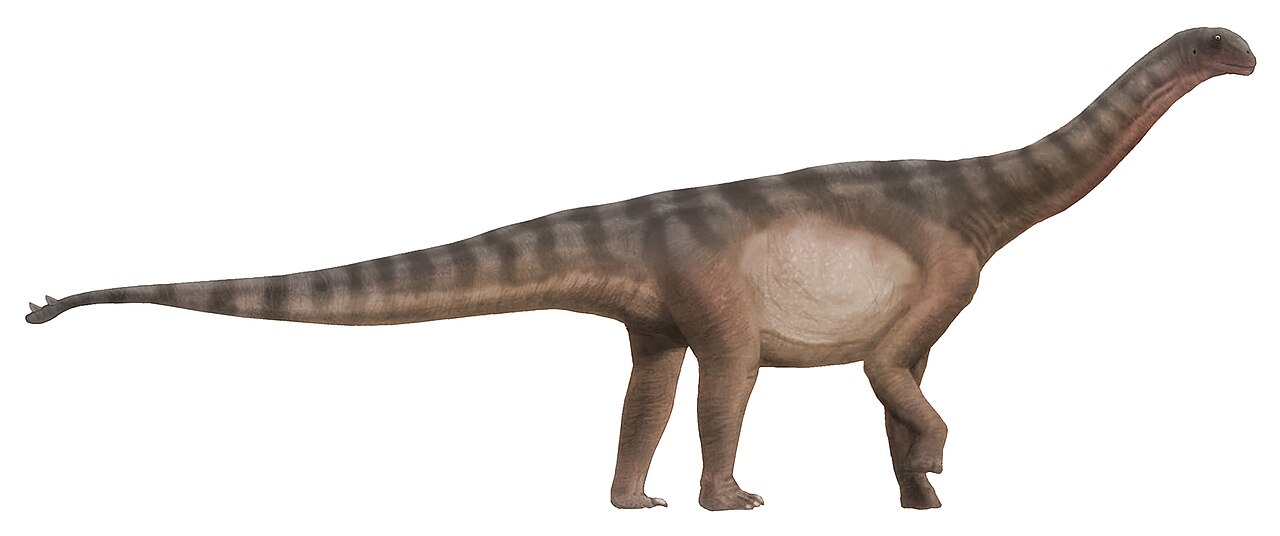
Shunosaurus carried a weapon on its tail, and that simple fact should permanently change the way we think about long‑necked dinosaurs. Instead of living fossils frozen in old illustrations, they come into focus as real animals dealing with fear, danger, competition, and survival. A tail club with spikes is not an ornament; it is a statement that even plant‑eaters had to fight for their place in the Jurassic world. To me, that makes Shunosaurus one of the most underrated dinosaurs we know.
My honest take is that Shunosaurus deserves to sit right alongside the big names in any dinosaur fan’s mind. It may not have been the tallest or the heaviest, but it was armed, adaptable, and anything but helpless. In a way, it represents all the weird, in‑between species that quietly carried the story of evolution forward while the flashier giants stole the spotlight. The next time you imagine dinosaurs, will you picture only towering necks and tiny heads, or will you also remember the unexpected tail club waiting in the shadows?