Imagine discovering a gigantic marine reptile with a neck so long it looks almost fake, then putting the head on the wrong end and publishing it as scientific fact. That is, more or less, what happened with Elasmosaurus, and it set the tone of confusion, debate, and quiet embarrassment in paleontology. This animal did not just challenge our understanding of prehistoric oceans; it exposed how hard it is to correctly interpret fossils that look nothing like anything alive today.
Elasmosaurus has become a kind of legend in science history: the sea reptile whose skeleton was famously misassembled, whose lifestyle was repeatedly reimagined, and whose very body plan kept tricking experts. Even now, in the mid‑2020s, researchers are still arguing about exactly how it swam, hunted, and moved that absurdly long neck. If you’ve ever looked at dinosaur illustrations and assumed scientists have everything neatly figured out, the story of Elasmosaurus is a humbling reminder that nature loves to mess with our confidence.
The Sea Monster With a Neck That Broke the Rules
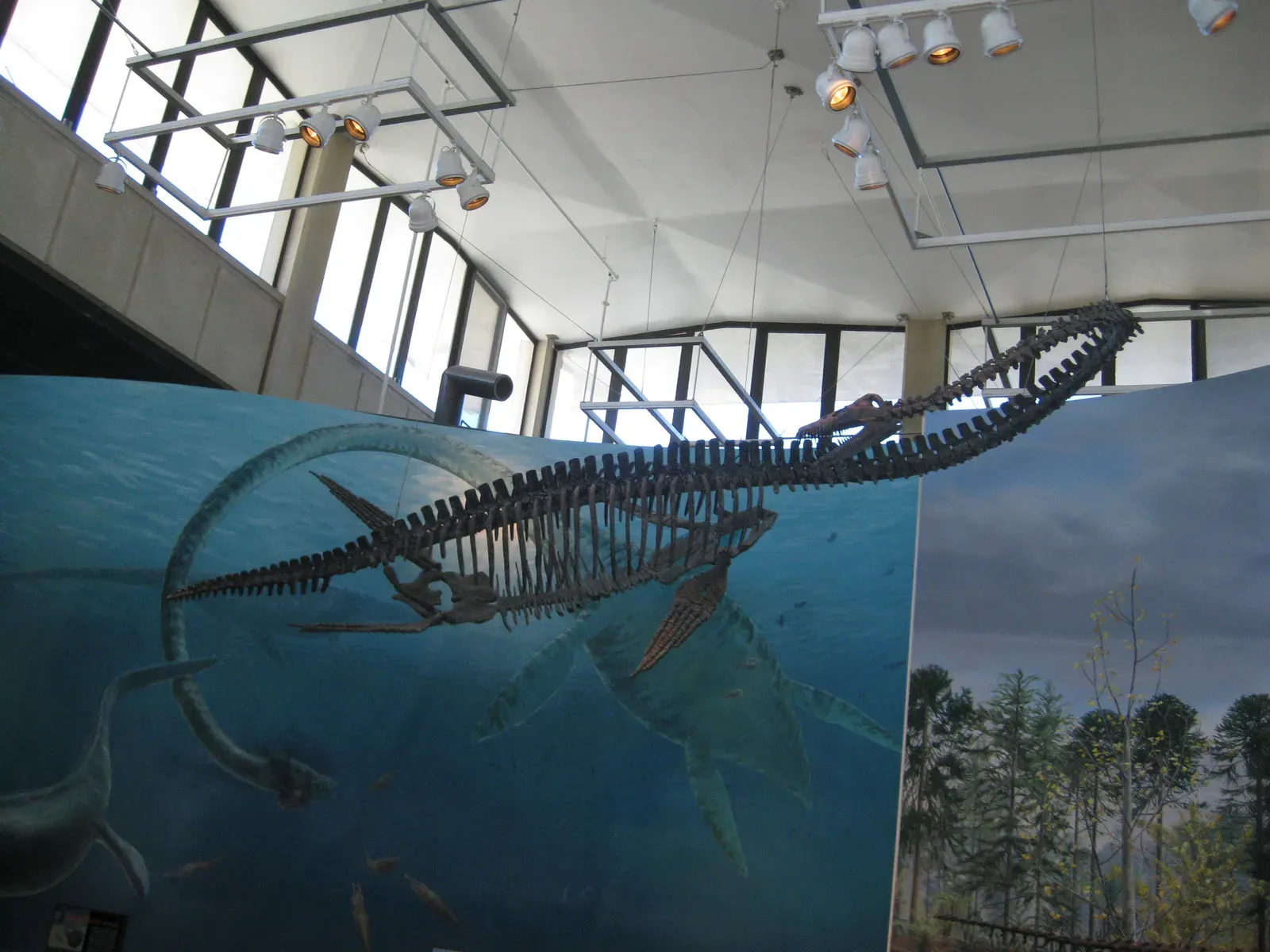
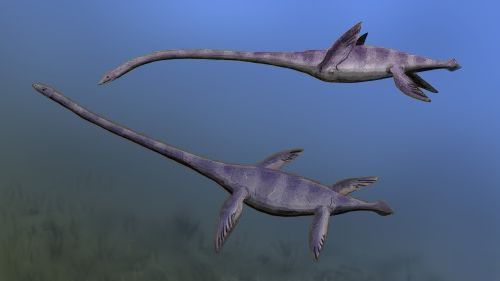
At first glance, Elasmosaurus almost feels like a prank from evolution: a torpedo-shaped body, four powerful flippers, and a neck made up of dozens of vertebrae stretching out like a living periscope. When it was described in the nineteenth century, that neck was so extreme that it barely fit into the scientific imagination of the time. Most big reptiles people knew about were chunky, heavy, and relatively short-necked, so finding an animal with a neck longer than its entire body plus tail felt almost like finding a dragon in the rocks.
This bizarre body plan was not just visually shocking; it was conceptually disruptive. Scientists had to ask basic questions: How do you support a neck like that in water? Can it lift its head high like a swan, or is that just artistic fantasy? Could such an animal chase fast fish, or did it have to be an ambush predator? Because nothing alive today has quite that combination of traits, paleontologists could not simply copy-paste a modern analogy the way they sometimes do with crocodiles or birds. Elasmosaurus forced them to think from scratch, which is exciting – but it also opened the door to a long chain of interpretive mistakes.
The Famous “Backwards” Skeleton and an Awkward Correction
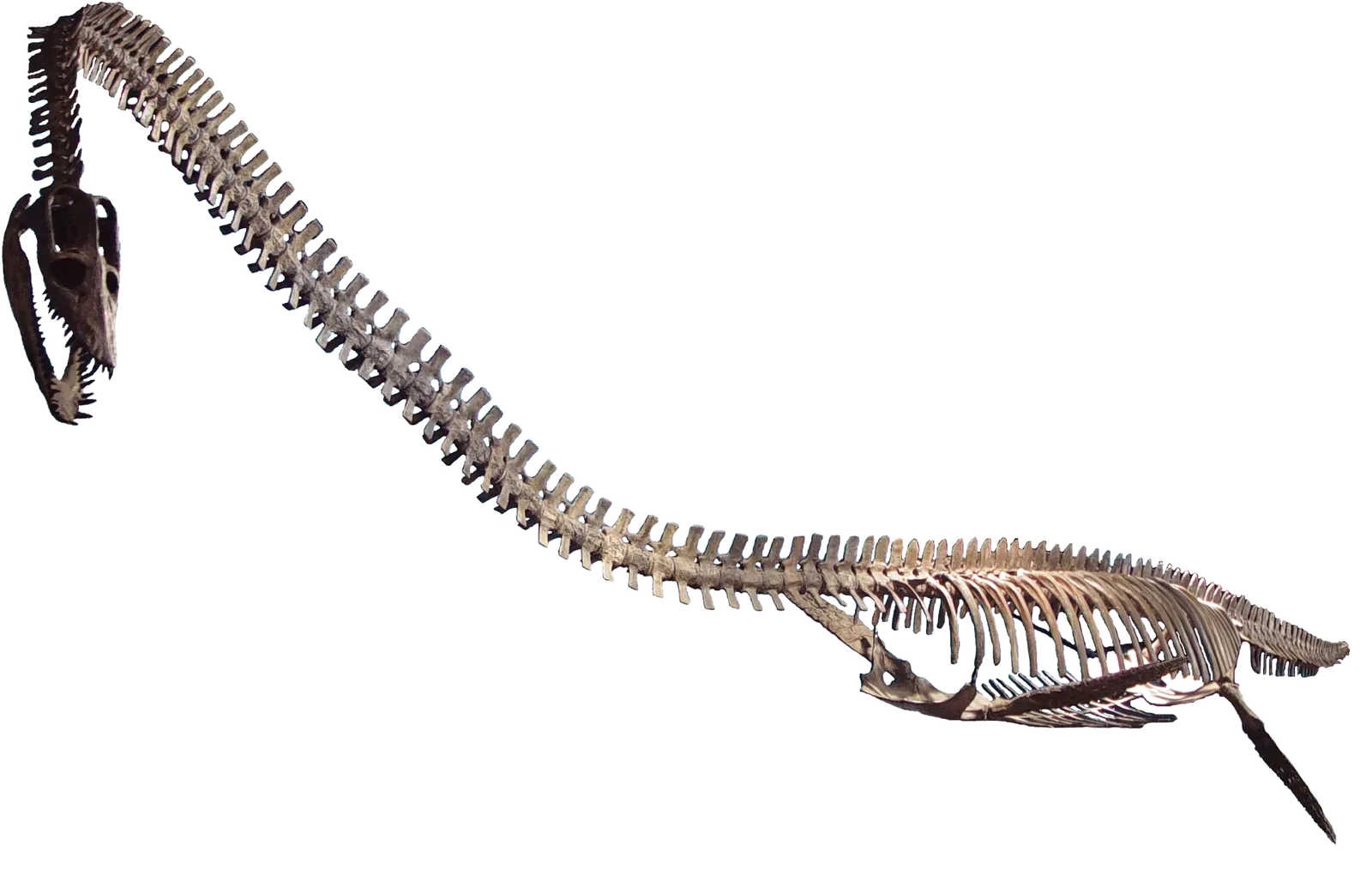
The most legendary error surrounding Elasmosaurus happened right at the beginning: when its skeleton was first reconstructed, the head was placed on what we now know was the tail end. To be fair, the fossils were incomplete and the overall layout was wildly unfamiliar, but the result was still a spectacular misinterpretation. For a time, the official reconstruction essentially presented a sea reptile with a long, snake-like tail coming out of what everyone thought was the front of the body. It would be funny if it had not been so influential.
When the mistake was pointed out, it was not just a quick, polite correction. Scientific egos were involved, reputations were on the line, and the whole situation highlighted how fragile early interpretations really were. The fact that such a basic anatomical orientation could be wrong made other aspects of the animal suddenly feel less secure too. If the head could end up on the wrong end, what else had been misread? That incident cast a long shadow, and for decades it quietly made scientists more cautious – and sometimes more stubborn – about revising their views on Elasmosaurus.
Neck Nightmares: How Do You Even Use a Neck That Long?
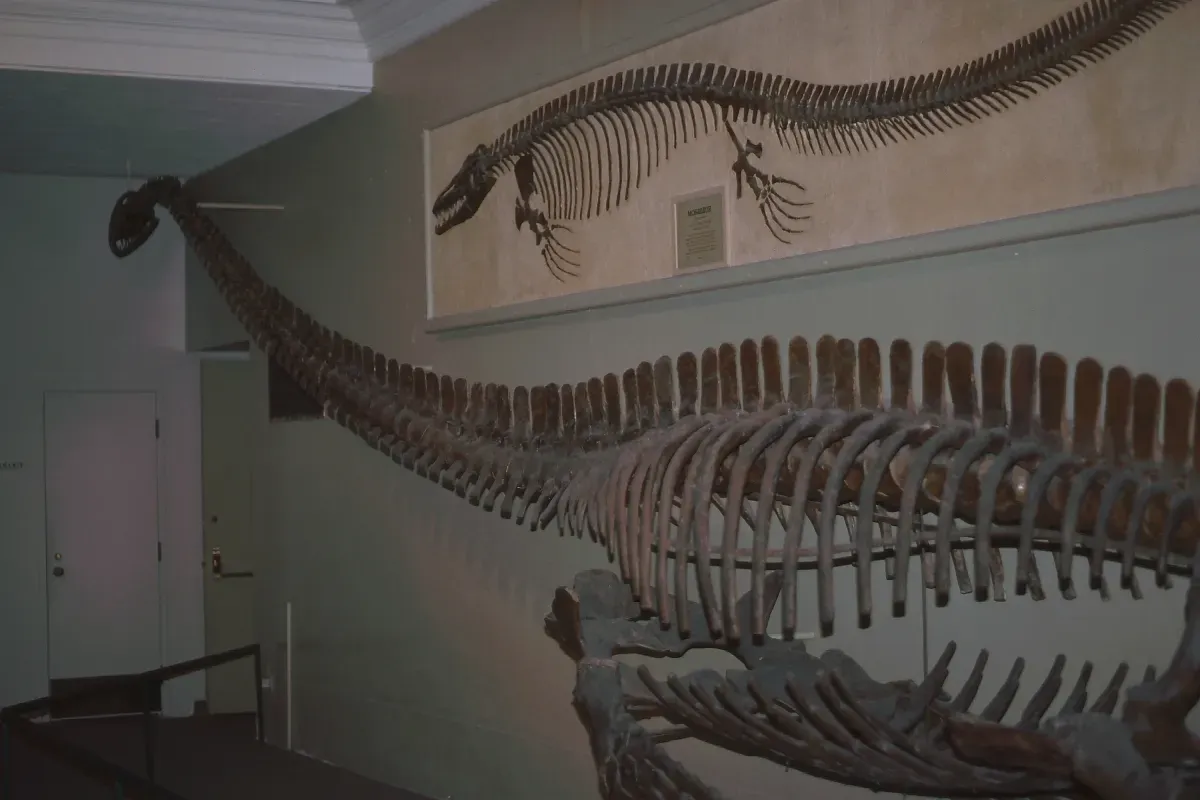
The neck of Elasmosaurus is the main reason it kept confusing scientists long after the head was finally put in the right place. With a huge number of cervical vertebrae, this animal’s neck stretched out like a biological fishing rod. Early artists loved to show it arched dramatically above the surface of the water, almost graceful and swan-like, surveying the horizon. It looked cinematic, but later biomechanical studies started to suggest that such poses were probably unrealistic and would have put enormous strain on the joints.
Instead, many researchers now suspect that the neck worked best when mostly kept horizontal, sweeping through the water rather than pointing straight up. But even that opens new questions: Did Elasmosaurus sneak up on prey by keeping its bulky body farther away, striking with just the small head at the end of a long reach, like a living fishing lure? Or was the neck more rigid than we imagine, allowing only gentle curves rather than tight bends? The lack of soft tissue preservation means we are still debating how flexible or stiff it really was. Over the decades, this has led to a carousel of competing neck theories, each confident in its time, only to be dialed back by the next wave of analysis.
Clumsy Cruiser or Agile Hunter? The Swimming Debate
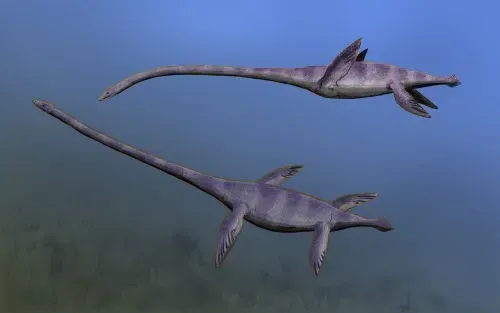
For a long time, paleontologists could not agree on whether Elasmosaurus was a sleek, fast swimmer or a more lumbering cruiser. With four large flippers, some researchers imagined it flapping through the water like a sea turtle or even “flying” underwater somewhat like a penguin. Others pointed out the drag of that long neck and argued that high-speed chases were probably unrealistic, at least over long distances. Modeling locomotion in an extinct animal that looks like nothing modern is a bit like trying to reverse-engineer a missing aircraft from only a handful of metal scraps.
Modern computer simulations and comparisons with a variety of marine animals have started to favor the idea of Elasmosaurus as a relatively strong, steady swimmer rather than a sprinting speed demon. It may have used all four flippers in a coordinated, underwater flight motion, giving it good maneuverability in three dimensions. But exactly how efficient that stroke was, and how the neck affected balance and turning, are still debated. Every time someone publishes a new study on plesiosaur swimming, it nudges the image of Elasmosaurus a little in one direction or another, which means the picture most people have in their heads is always slightly out of date.
From Surface Prowler to Deep Diver: Conflicting Lifestyle Theories
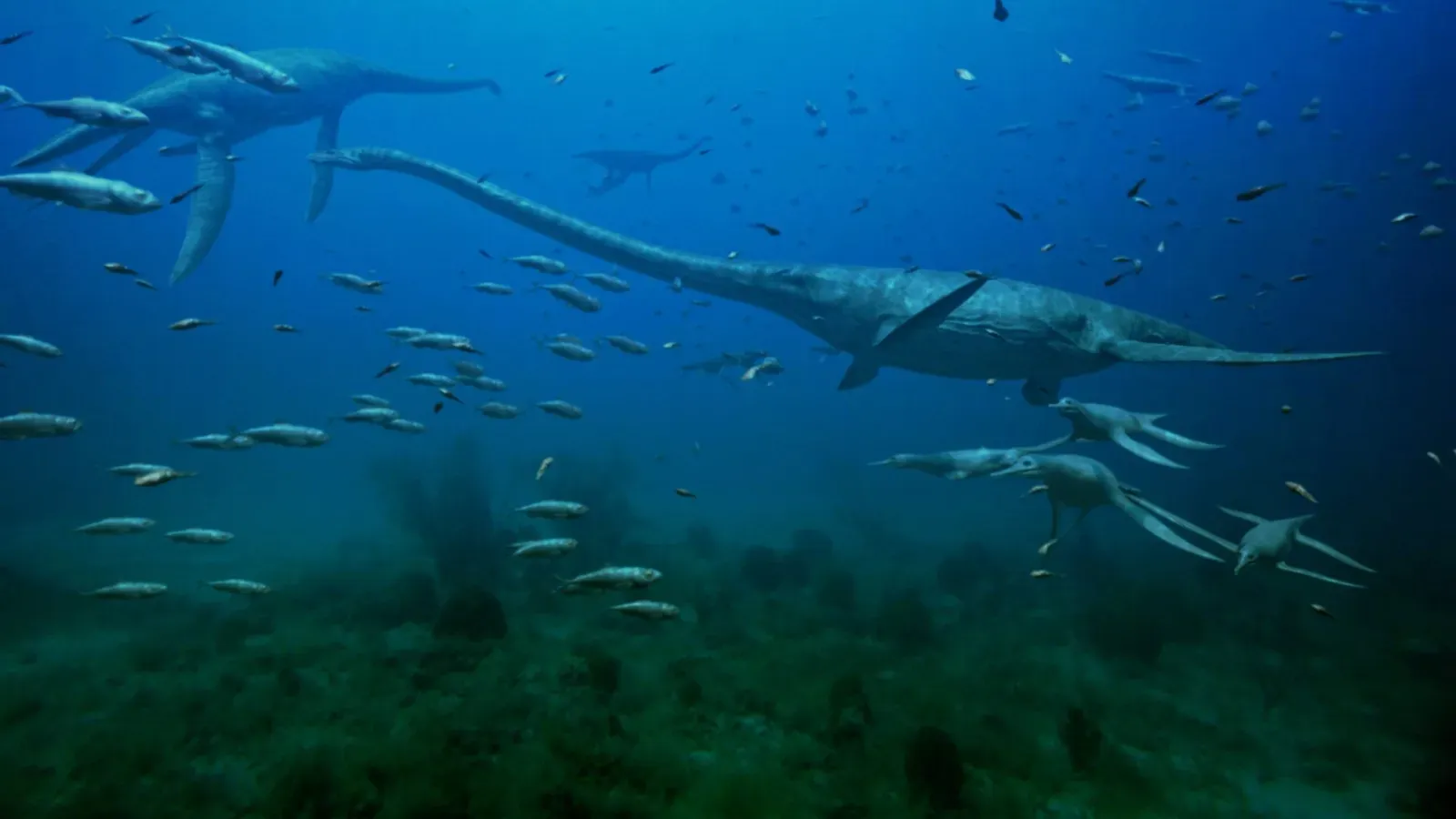
Elasmosaurus has been cast in more roles than some movie actors. At various points, scientists suggested it was a surface feeder picking off fish and squid near the top of the water column, a stealthy hunter lurking deeper and reaching up with its neck, or even a filter-feeding experiment gone wrong. Each new find – another fossil with stomach contents, a better-preserved skull, a different set of teeth – pushed the story in a slightly different direction. Because the evidence is patchy, interpretations have tended to swing like a pendulum between bold speculation and cautious understatement.
Some traits, like the shape and spacing of the teeth, support an active predatory lifestyle, grabbing slippery prey rather than sieving plankton. At the same time, the neck’s extreme length makes fast, twisting body movements harder, which pushes many researchers toward an image of ambush-style tactics or careful maneuvering rather than high-speed pursuit. The lack of modern equivalents means there is no easy, comforting comparison, and that has kept Elasmosaurus in a kind of identity crisis for generations. Personally, I think that constant reimagining is part of its charm; it is the prehistoric animal that refuses to settle into a single, boring stereotype.
Misleading Art, Old Assumptions, and the Power of First Impressions
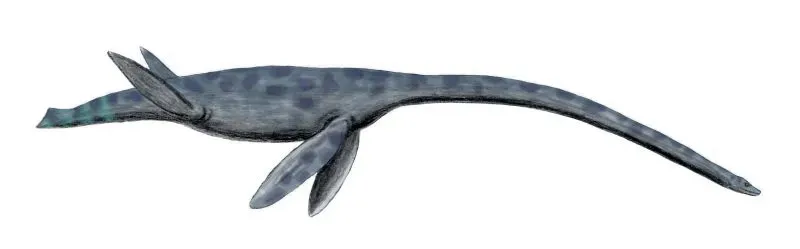
One underappreciated reason Elasmosaurus confused people for so long is simply this: early illustrations were incredibly misleading, and once a dramatic image takes hold, it is hard to shake. Those classic paintings with swan-necks, rearing bodies, and heads snapping at pterosaurs flying overhead were visually stunning but not especially realistic. Yet they appeared in books, magazines, and museum displays for decades, shaping public imagination and even subtly influencing scientific expectations. When you grow up seeing an animal one way, it becomes strangely difficult to see it differently, even when the evidence says you should.
Old assumptions also lingered in more technical ways. Early paleontologists often tried to slot Elasmosaurus into familiar categories, assuming it must fit comfortably into known ecological niches like modern fish-eating reptiles or marine mammals. Those mental shortcuts made some hypotheses seem reasonable when they were actually just convenient. Over time, as new fossils, modern imaging, and biomechanical models piled up, those neat early ideas started to crumble. The story of Elasmosaurus is a reminder that first impressions in science can be dangerously sticky, and that even experts can get stuck chasing a beautiful but wrong picture.
Technological Revolutions and the Slow Untangling of a Mystery

What finally began to clear up the mess around Elasmosaurus was not a single discovery, but a technological revolution in how we study fossils. Better preparation techniques revealed details in bones that earlier workers had simply missed or accidentally damaged. Advanced imaging, like CT scanning, allowed scientists to peer inside skulls and vertebrae without breaking them open, giving fresh clues about muscle attachment, joint motion, and even possible sensory capabilities. Suddenly, researchers could move from rough guesswork to testable models of how this animal might have moved and lived.
On top of that, powerful computers made it possible to simulate swimming mechanics, neck movements, and even feeding strategies in virtual environments. These tools rarely give simple, final answers, but they do help eliminate obviously impossible scenarios, which gradually narrows the range of plausible lifestyles for Elasmosaurus. The picture that is emerging is more nuanced and less theatrical than the old sea monster posters, but it is also more grounded and, in a quiet way, even more astonishing. It turns out the real animal does not need much exaggeration to feel unreal; a genuine marine reptile with that kind of neck is already mind-bending enough.
What Elasmosaurus Really Teaches Us About Scientific Humility
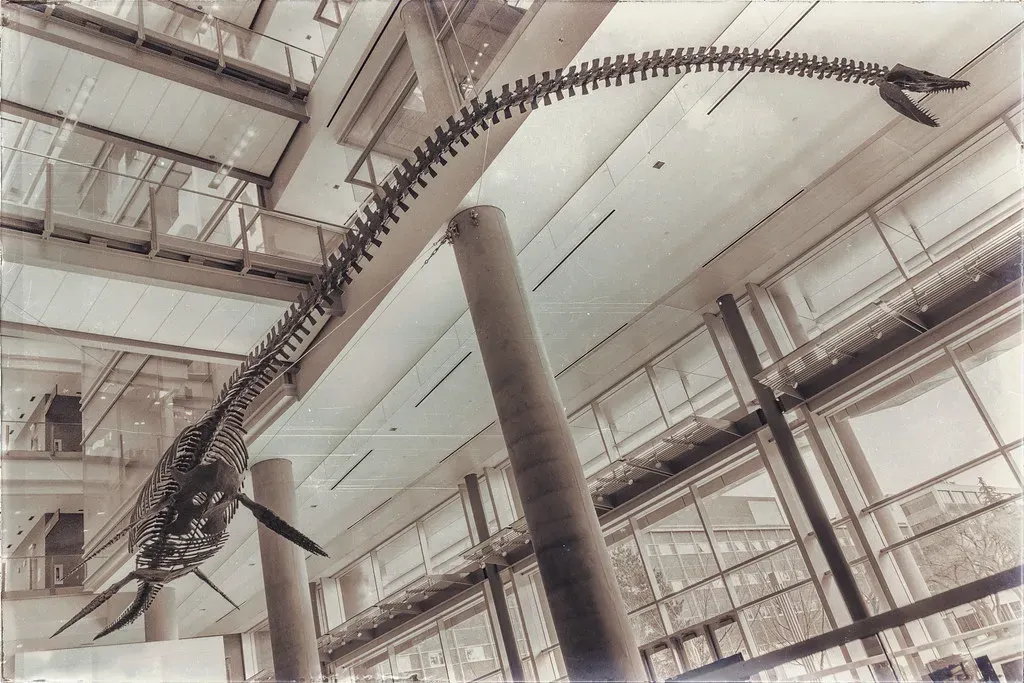
To me, the most important part of the Elasmosaurus story is not the wrong-way skeleton or the endless neck debates, but what it says about how science actually works. , this animal has been a moving target: every generation of scientists thought they were closing in on the truth, only for new methods or new fossils to peel back yet another layer. That might sound frustrating, but it is also exactly what you want from a healthy scientific process – old ideas challenged, flashy pictures retired, new models tested, and uncertainty openly admitted instead of swept under the rug.
If anything, Elasmosaurus has forced paleontologists to practice humility in the face of weirdness. It reminds us that when evidence is fragmentary and analogies are poor, confidence should come slowly, not instantly. I actually like that we still do not have every detail nailed down; it keeps this ancient reptile alive in our imagination and keeps researchers asking better questions instead of declaring victory. In a world that loves simple, final answers, Elasmosaurus is a stubborn reminder that some truths arrive in pieces, over decades, and never feel completely finished. And honestly, would you really want a creature this strange to be fully explained, or is it more fun knowing there is still a little mystery left swimming out there in the fossil record?