If you think great white sharks are the final boss of the ocean, mosasaurs are what happens when the game developers decide to get ridiculous. These were not just big reptiles; they were apex predators so massive and specialized that even the largest modern sharks would have looked like oversized snacks cruising by. The wild part is that, for millions of years, mosasaurs absolutely ruled the seas, and then vanished right before the age of whales and today’s sharks really took off.
When you dive into what we actually know about mosasaurs, the numbers and details feel almost unfair to great whites. Mosasaurs stretched longer, bit harder, and hunted bigger prey in deeper waters than any shark swimming today. They were more like underwater dragons than lizards, armed with double rows of teeth and a body tuned for high-speed ambushes. Let’s unpack the ten most jaw-dropping things about these prehistoric monsters that make great white sharks look, frankly, a little underwhelming.
1. Their Sheer Size Was Next-Level
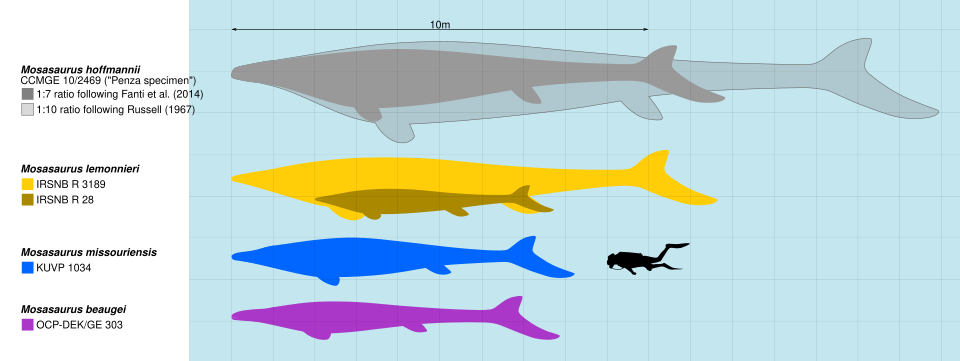
Great white sharks are undeniably impressive, with the biggest confirmed individuals reaching roughly about six meters in length. That sounds huge until you meet the largest mosasaurs, which are estimated to have reached around seventeen to eighteen meters from snout to tail. Imagine a predator almost as long as a city bus, bearing down on you in the dim light of the Late Cretaceous seas. In that comparison, the great white becomes more like the mid‑sized family SUV parked beside a semi truck.
Not every mosasaur species reached those extreme lengths, of course, but several genera, like Mosasaurus and Hainosaurus, pushed into a scale that no modern shark can really match. Even conservative estimates still put the biggest mosasaurs far beyond the bulk of any living shark. When paleontologists find their vertebrae and skull fragments, they are dealing with bones the size of dinner plates and jaws large enough to swallow a human whole without even trying. If you lined one up next to a great white, the shark would look like a sidekick, not the star.
2. Their Skulls Were Built Like Armored Weapons
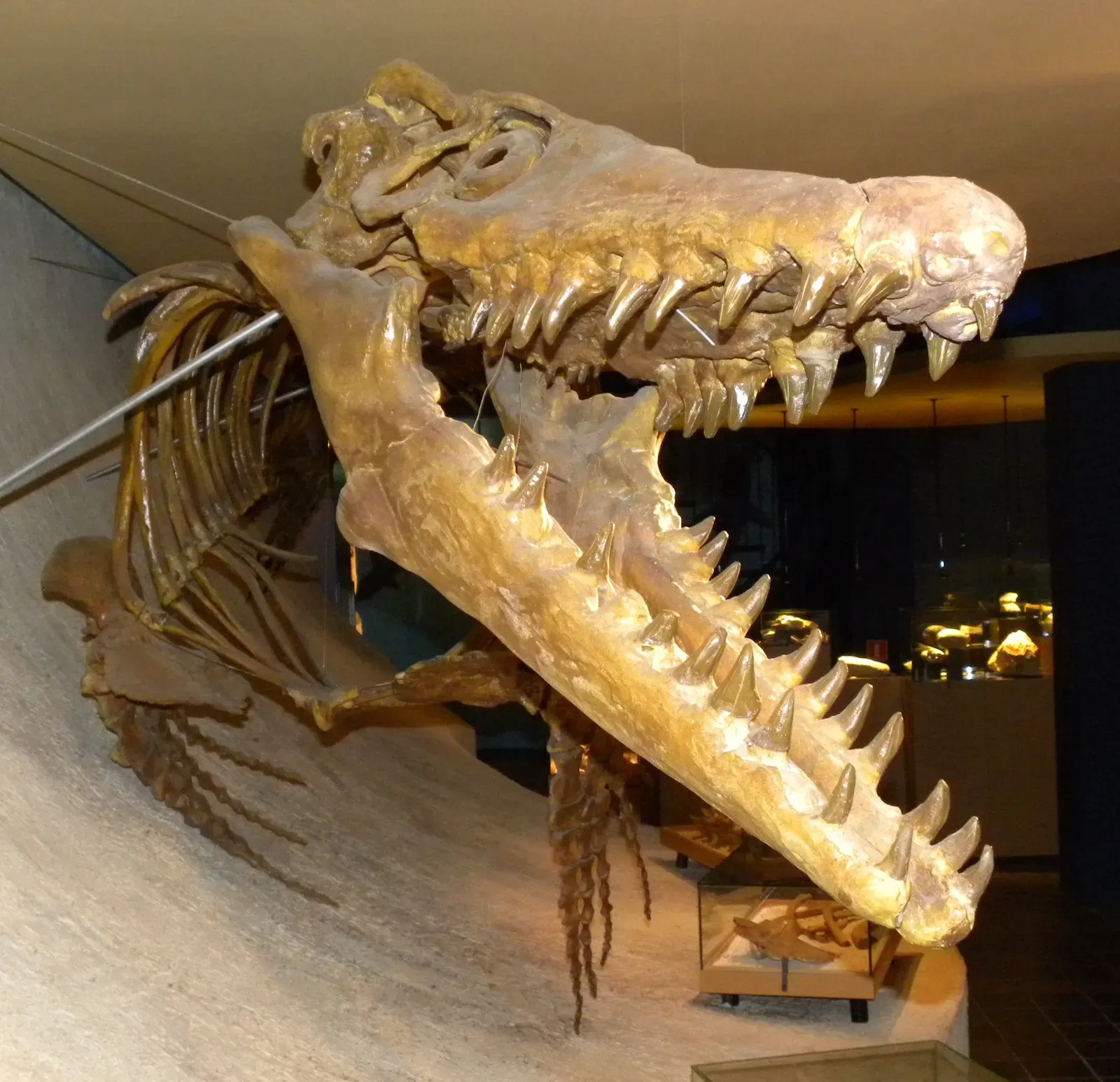
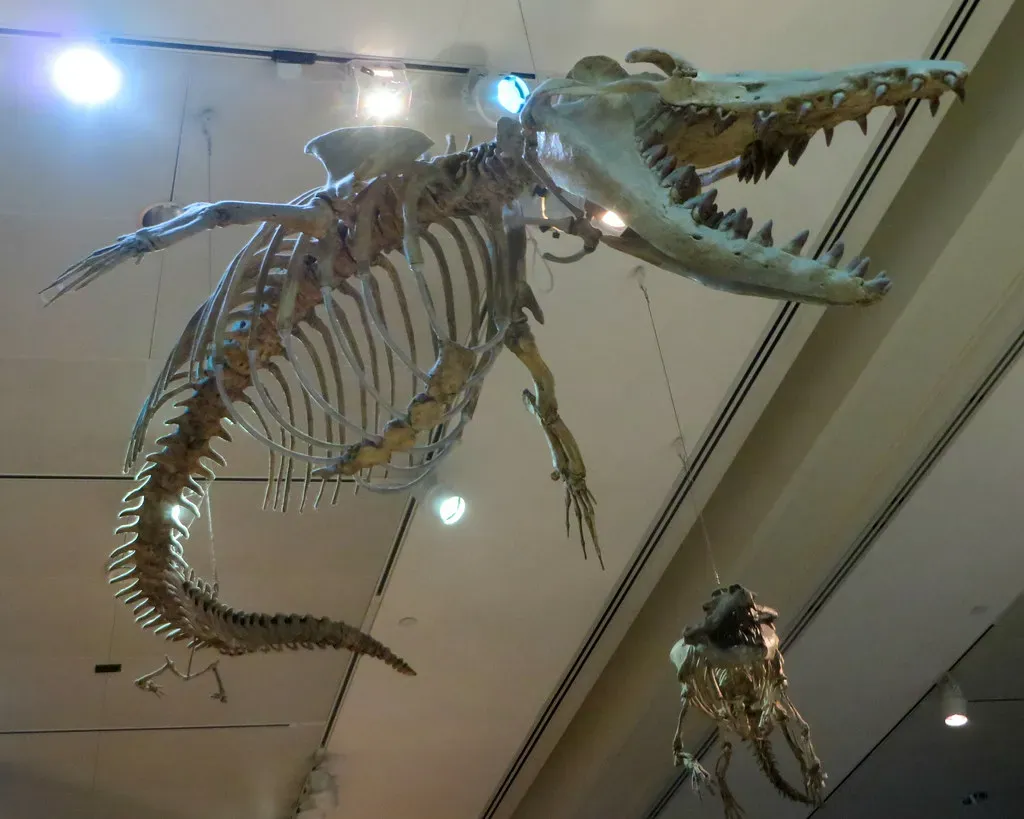
A great white’s head is powerful, but compared to a mosasaur skull it starts to look surprisingly minimalistic. Mosasaur skulls were heavily built, with thick bones, deep jaws, and reinforced joints designed to withstand massive stresses. Some species had skulls over a meter and a half long, packed with conical, recurved teeth that curved slightly backward to grip slippery prey. That entire structure worked like a biological bear trap, clamping down and refusing to let anything escape.
On top of that, the flexible joints in the skull let different parts move slightly relative to each other, which helped them handle large, thrashing prey. Picture a hybrid between a monitor lizard’s skull and a crocodile’s, then scale it up and fine‑tune it for open‑ocean hunting. Where a great white looks streamlined and clean, a mosasaur’s head is all brutal function, bristling with ridges, muscle attachment sites, and deep-set eye sockets. Standing in front of one in a museum, you can almost feel how utterly unforgiving that bite must have been.
3. Double Rows of Teeth Turned Their Mouths Into Conveyer Belts of Doom
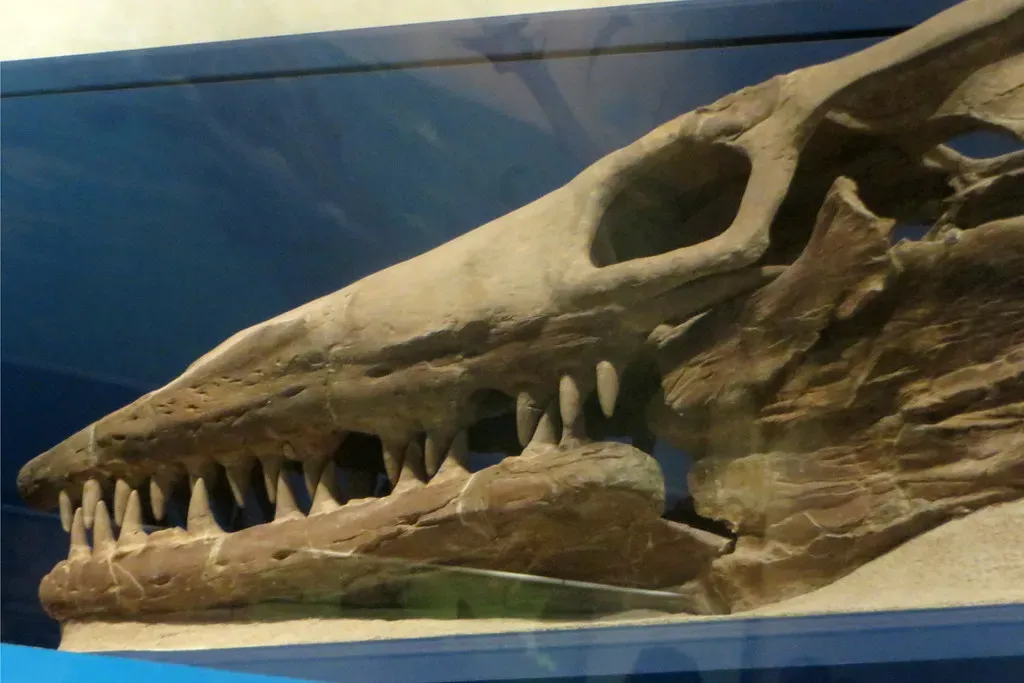
Most people know great whites have multiple rows of replacement teeth, constantly cycling forward as old teeth fall out. Mosasaurs, though, took the concept of terrifying mouths in a very different direction. Like many lizards and snakes, they had additional teeth on the bones of the palate, tucked further back inside the mouth. These inner teeth helped grip and drag prey deeper in, making any attempt at escape almost impossible once the jaws had closed.
Imagine being a fish, or worse, a smaller marine reptile, and realizing that getting bitten once did not just mean sharp teeth at the front, but an entire internal gauntlet of spikes behind them. Instead of just slicing and releasing, mosasaurs could clamp down, hold, and manipulate prey, using those extra teeth like anchors. In contrast, great whites often attack by biting, tearing, and waiting for the victim to bleed out. Mosasaurs seem more like grab‑and‑commit predators: once the conveyor belt of teeth got hold of you, there was no exit strategy.
4. They Swam Like Supercharged Sea Dragons
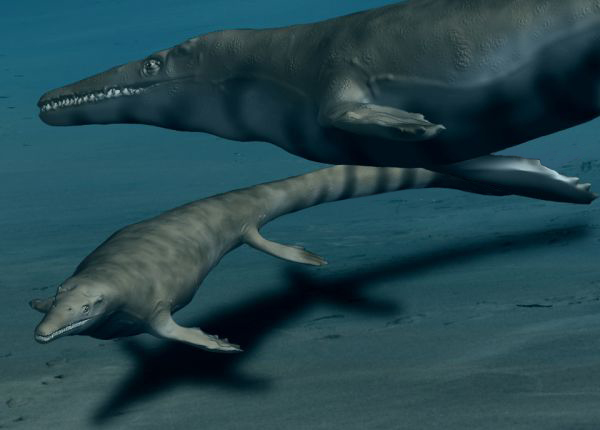
For a long time, people imagined mosasaurs as giant, sluggish lizards flailing through the water with awkward, side‑to‑side motions. Then better fossils showed they had a powerful tail fluke, very similar in shape to that of modern sharks. That tail, combined with a long, streamlined body, turned mosasaurs into serious hydrodynamic machines, capable of fast cruising and explosive bursts of speed. They were not lazy floaters; they were pursuit predators tuned for open water.
Great whites are extremely efficient swimmers, but mosasaurs had the advantage of four flipper‑like limbs acting as stabilizers and control surfaces, plus that shark‑like tail doing the heavy lifting. The overall effect is like comparing a modern sports car to a heavy SUV: both can move fast, but one is clearly built for performance at every angle. When you picture a mosasaur rocketing up from the depths with its tail beating like a living scythe, the idea of it bullying sharks in the same water stops feeling far‑fetched.
5. Their Diet Included Other Large Marine Reptiles
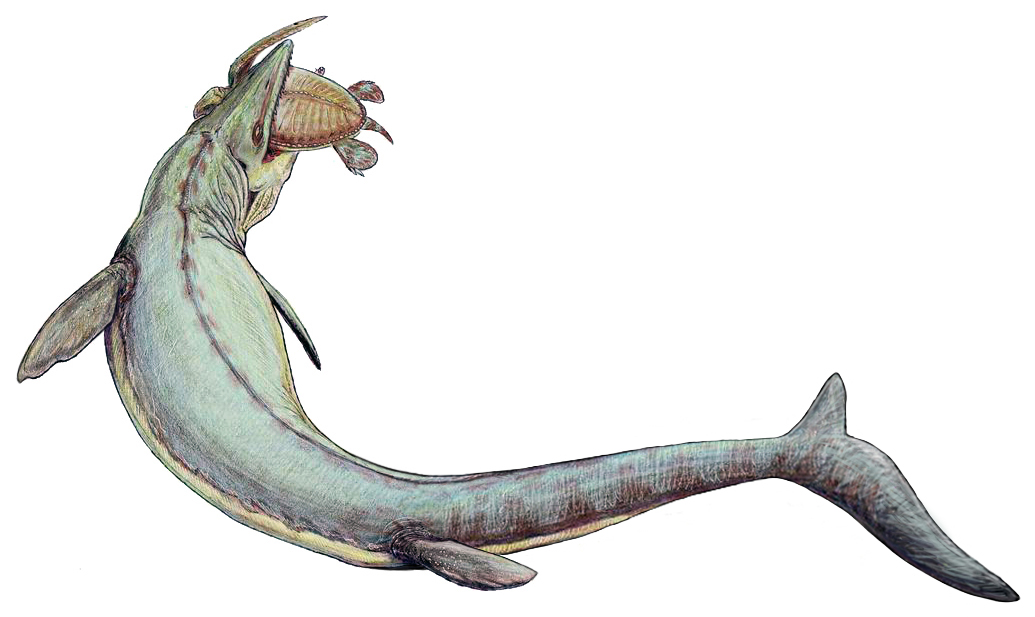
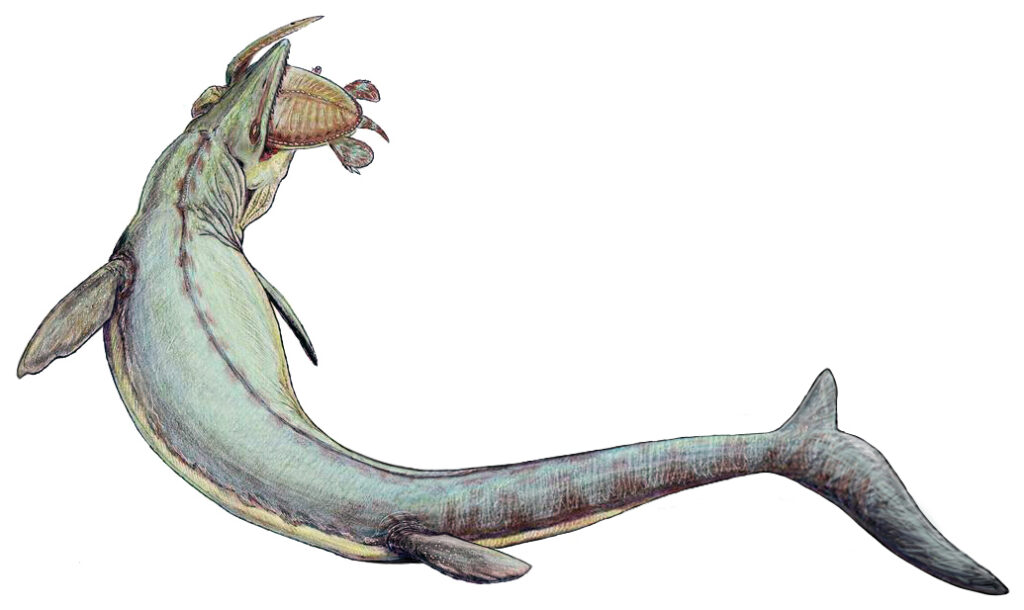
Great white sharks will attack dolphins, smaller sharks, seals, and sometimes even whales, which already sounds intense. Mosasaurs, however, lived in seas that were basically a prehistoric monster mash: plesiosaurs with long necks, giant sea turtles, huge fish, and other mosasaurs all crammed into the same ecosystems. Fossil stomach contents and bite marks show that mosasaurs did not just go after small fry; they regularly tackled big vertebrates, including members of their own group.
That means we are talking about predators that casually snacked on armored turtles and chunked through the bones of other marine reptiles. Some fossils show mosasaur bones with healed bite marks from other mosasaurs, suggesting brutal intraspecific fights or cannibalism. Compared to that, a great white attacking a seal suddenly feels like a relatively tame, everyday occurrence. Mosasaurs operated in an environment where being at the top meant constantly wrestling other ocean titans for the same prey, and they were well equipped for the job.
6. They Ruled Entire Global Oceans, Not Just a Few Coasts
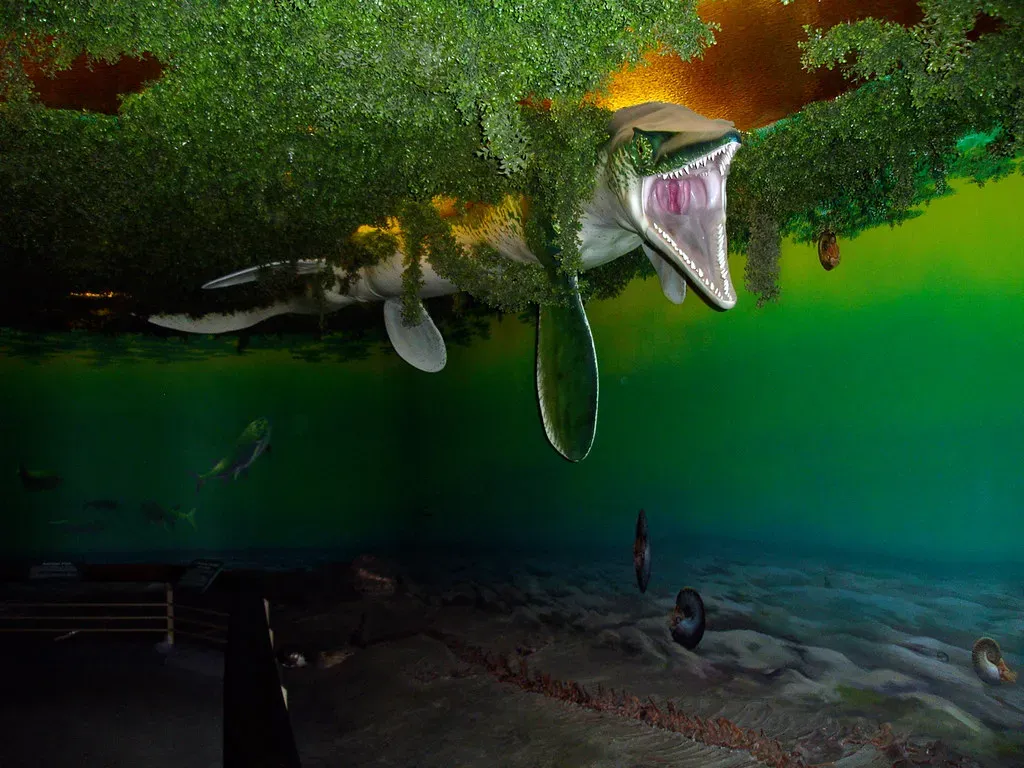
Great white sharks have a wide range today, but they are still patchy, mostly favoring certain coastal and offshore regions. Mosasaur fossils, by contrast, have turned up on multiple continents and in what used to be various epicontinental seas that split up ancient landmasses. They occupied shallow inland seaways, open oceans, and coastal environments across what is now Europe, North America, Africa, and beyond. In the Late Cretaceous, if you were swimming in warm marine waters, odds were high there was a mosasaur somewhere nearby.
That global spread came with a huge diversity of forms and sizes, from smaller, possibly more agile species to true giant apex predators. Instead of one superstar species like the great white, mosasaurs were more like an entire guild of marine reptiles filling top and mid‑level predator roles. To me, that is what really makes modern sharks feel a bit humbled: where we have a handful of big shark species dominating top niches, the Cretaceous seas were stacked with multiple mosasaurs sharing and shaping the food web. Great whites look more like stand‑ins compared to the original cast.
7. Their Evolution Was Shockingly Fast and Aggressive
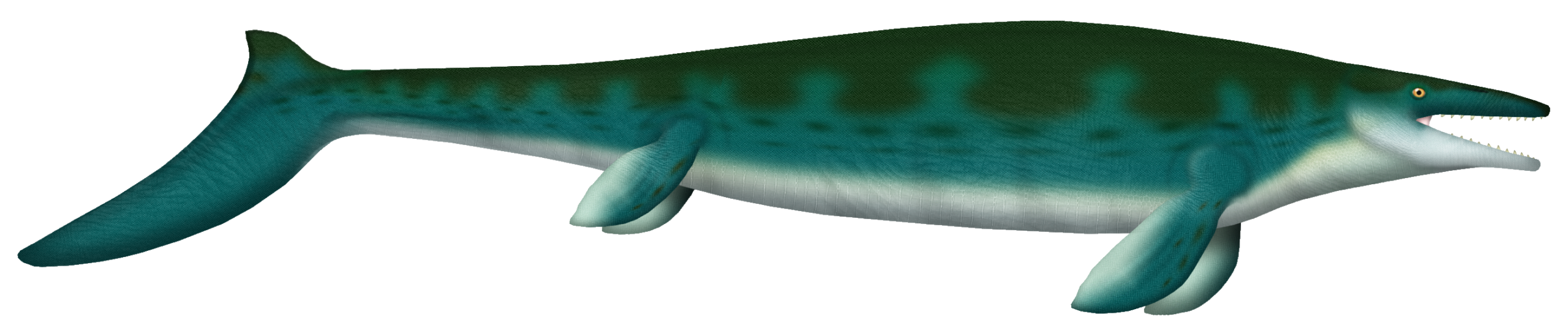
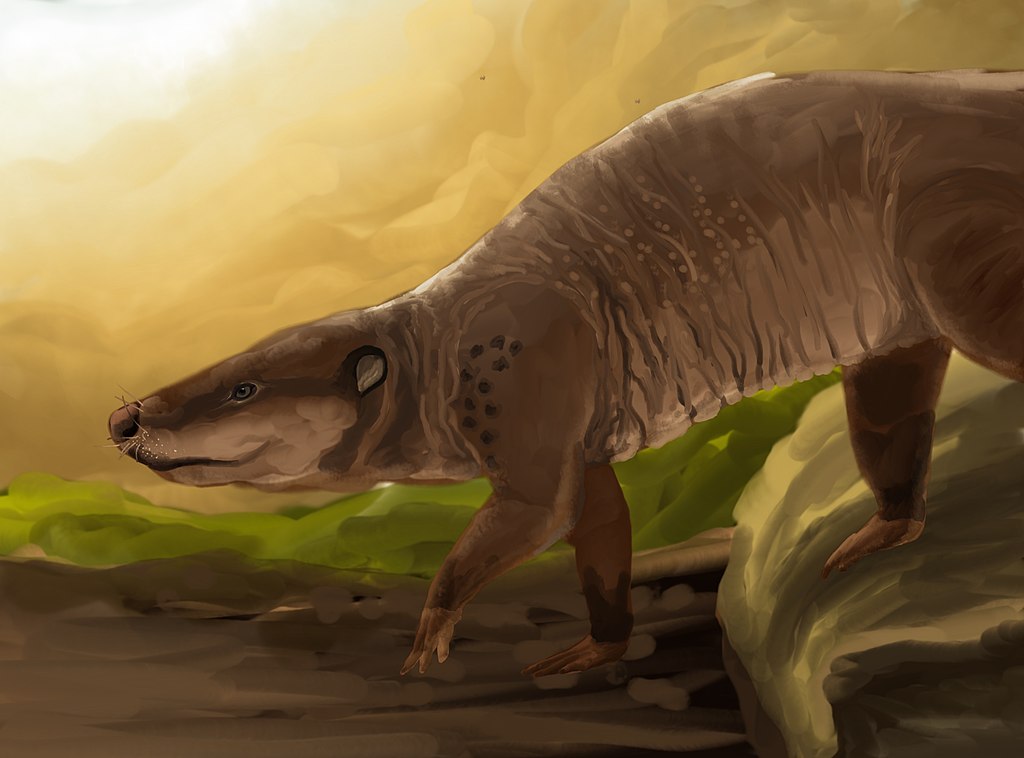
Mosasaur ancestors started out as more typical land‑dwelling lizards, probably somewhat similar to monitor lizards in overall vibe. In a relatively short geological window, they transformed into fully marine, tail‑powered super predators. Their limbs flattened into paddles, their tails developed flukes, and their bodies elongated and streamlined. Evolution hit the fast‑forward button, turning these reptiles into something closer to a reptilian equivalent of whales and sharks, but with their own unique twist.
Great whites, in contrast, are part of a shark lineage that has changed more gradually over immense spans of time, with many side branches and extinct relatives. Mosasaurs feel like the bold, experimental branch of reptile evolution that went all in on ocean life and paid off massively, at least until the end‑Cretaceous extinction knocked them out. That intensity of transformation is part of why they feel so outsized: they went from zero to ocean overlord in a blink of deep time. When you compare that arc to the more measured story of sharks, mosasaurs come across as the reckless, overachieving cousins who burned bright and fast.
8. They Hunted with Keen Senses Tailored to the Dark Sea
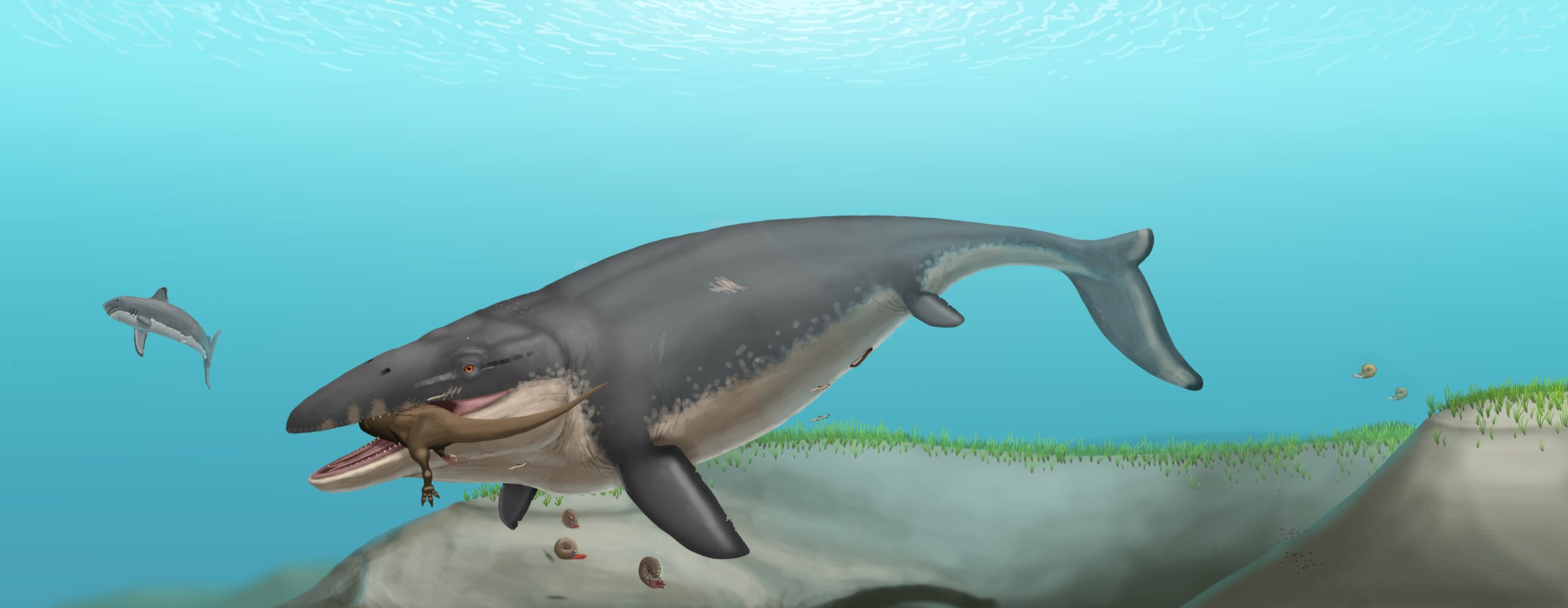
Great whites are famous for sensing electrical fields, spotting contrast in low light, and detecting blood from far away. Mosasaurs did not have exactly the same toolkit, but their fossils hint at sophisticated sensory setups of their own. Their eye sockets and sclerotic rings suggest well‑developed vision, likely adapted for dim underwater environments. The structure of their inner ears points to good underwater hearing and balance, helpful for tracking movement and orienting in three‑dimensional space.
Some researchers have argued that the snouts of certain mosasaurs show features that might be linked to pressure or vibration sensing, though that is still debated. Either way, these animals were not just big blunt instruments crashing around blindly. They were tuned hunters, navigating murky Late Cretaceous waters with a combination of sight, sound, and probably a fine sense of water movement. Compared with that, a great white’s sensory array is impressive, but it is working in a modern ocean where the rivals are fewer and often smaller. Mosasaurs honed their senses in a far more crowded, chaotic arena.
9. Their Reproductive Strategy Turned Them Into True Ocean Natives
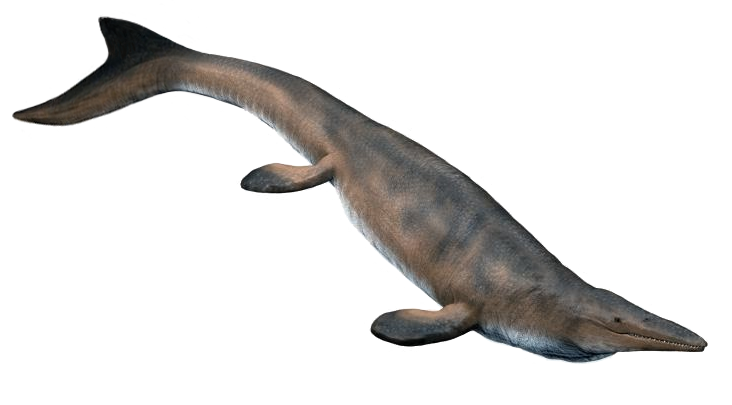
Unlike sea turtles, which crawl onto beaches to lay eggs, evidence suggests that mosasaurs gave birth to live young in the water. Fossils of pregnant individuals and small juveniles preserved in deep‑water deposits support the idea that they were fully marine from birth onward. That makes them more similar to modern whales and some sea snakes than to land‑based reptiles that only visit the ocean. They were not just visitors; they were born, lived, hunted, and died entirely at sea.
Great whites are also fully marine, of course, but they still reproduce in a way that feels more incremental compared to this massive reptilian takeover of the oceans. The fact that mosasaurs evolved viviparity while also transforming their entire body plan tells you how committed this lineage was to owning the marine realm. In my mind, that is one more layer where they outclass great whites in drama: they did not keep one foot on land, metaphorically speaking. They burned the boats and embraced the water world completely.
10. They Disappeared in a Catastrophe, Leaving the Stage to Sharks
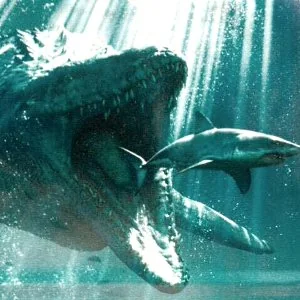
The most humbling detail in this whole comparison is that mosasaurs did not fade away because they were weak or poorly adapted. They were taken out, along with non‑avian dinosaurs and many other groups, by the end‑Cretaceous mass extinction about sixty‑six million years ago. If that asteroid impact and its aftermath had not happened, it is entirely possible that mosasaurs, or something very much like them, would still be patrolling the oceans. In that alternate timeline, great whites might never have become the ocean icons they are today.
I find that perspective strangely grounding. Great white sharks feel huge and unstoppable to us, but in deep time they are more like the next generation inheriting a throne that once belonged to something far bigger and wilder. Mosasaurs were the giant, terrifying rulers that never got a sequel. Their disappearance opened space for sharks and whales to eventually dominate. When we call great whites the top predators of the sea, we are really speaking in the present tense only; in the grand story, they are standing in the shadow of giants.
Conclusion: The Ocean’s True Heavyweights Are Gone, But Not Forgotten
When you stack mosasaurs and great white sharks side by side, it starts to feel a bit unfair to the sharks. Mosasaurs were longer, bulkier, and armed with skulls and teeth that look custom‑built to bully anything sharing their water. They evolved from land lizards into live‑bearing, tail‑driven sea dragons in a geological instant, then proceeded to dominate global oceans choked with other giant reptiles. Great whites, for all their charisma and menace today, are almost like the understudies who finally got the lead role after the original star died in a freak accident.
At the same time, I think that is exactly what makes mosasaurs so compelling: they remind us that our sense of “huge” and “terrifying” is deeply limited by what happens to be alive right now. The ocean has hosted predators that would make even our biggest sharks and whales look modest. For me, picturing a mosasaur cruising above a Late Cretaceous seafloor is a good ego check about human‑sized fears. Next time a great white documentary tries to sell you on the idea that this is the ultimate marine monster, ask yourself: compared to what used to be out there, is it really?