Every time prehistoric giants come up, the same names hog the spotlight: Tyrannosaurus, Triceratops, maybe a sauropod or two. Meanwhile, one of the largest marine reptiles to ever glide through Earth’s oceans sits in the background like that quiet guest at the party who actually has the wildest stories. That forgotten celebrity is Shonisaurus, a huge ichthyosaur whose life played out in the seas long before dinosaurs like T. rex even existed.
The strange part is not just how big Shonisaurus was, but how much of its story we still do not talk about. It lived, thrived, and vanished at a time when the oceans were rebuilding after one of the worst mass extinctions in Earth’s history, yet you rarely see it on posters, in kids’ books, or even in mainstream documentaries. Once you start digging into its history, anatomy, and the way scientists keep revising its story, Shonisaurus turns from a forgotten fossil into one of the most intriguing characters in the entire marine reptile lineup.
The Forgotten Leviathan of Nevada’s Ancient Sea
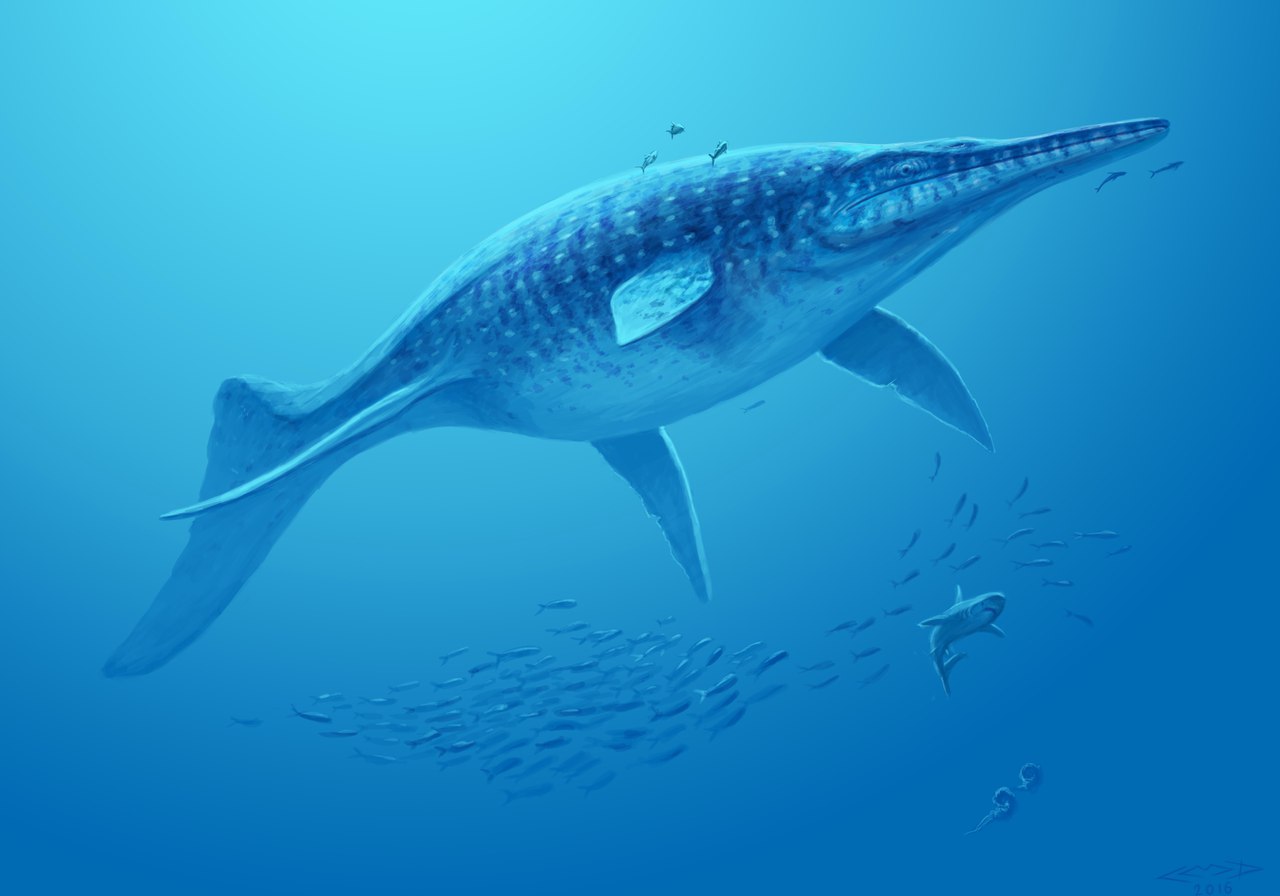
Here is the first twist: the best-known Shonisaurus fossils come from the middle of what is now Nevada, a place most of us would sooner picture as dry desert and casinos than a playground for marine giants. During the Late Triassic, more than two hundred million years ago, that region lay at the edge of a warm, shallow ocean basin, part of a sprawling seaway where early marine reptiles were experimenting with all sorts of body plans. In that setting, Shonisaurus grew to lengths that rivaled a modern blue whale’s smaller cousins, stretching tens of meters from snout to tail.
The name itself comes from the Shoshone Mountains of Nevada, where huge clusters of bones were first uncovered in the mid–twentieth century. Standing in the Shonisaurus fossil hall today, you are struck not just by size but by the number of skeletons preserved together, as if an entire group died in the same general area. That eerie congregation of bodies has sparked all kinds of questions: were they trapped in a shallow bay, killed by sudden environmental change, or did they float in after death and settle in the same place by chance? No one can prove the full story, but the scene invites you to imagine a living ocean crowded with these long, torpedo-shaped reptiles.
A Body Like a Missile, but With a Puzzle at the Front
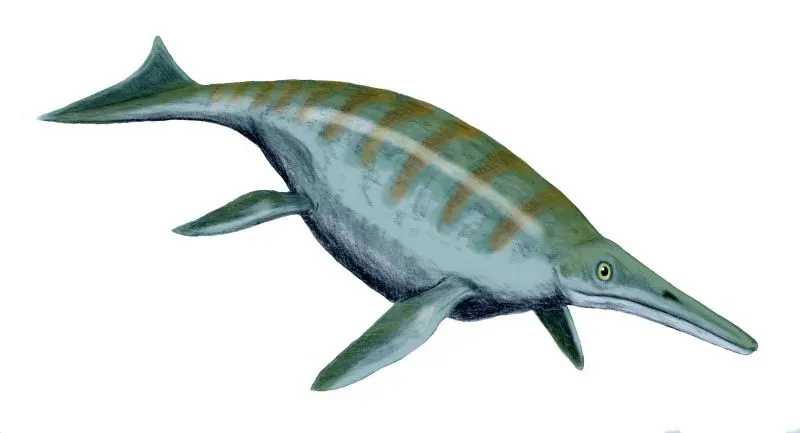
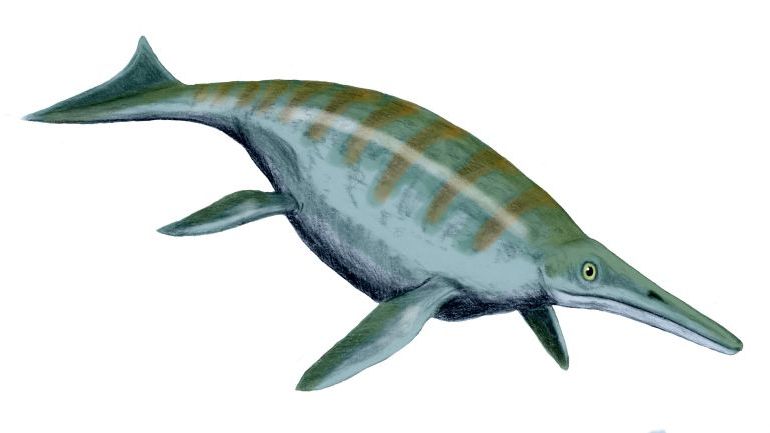
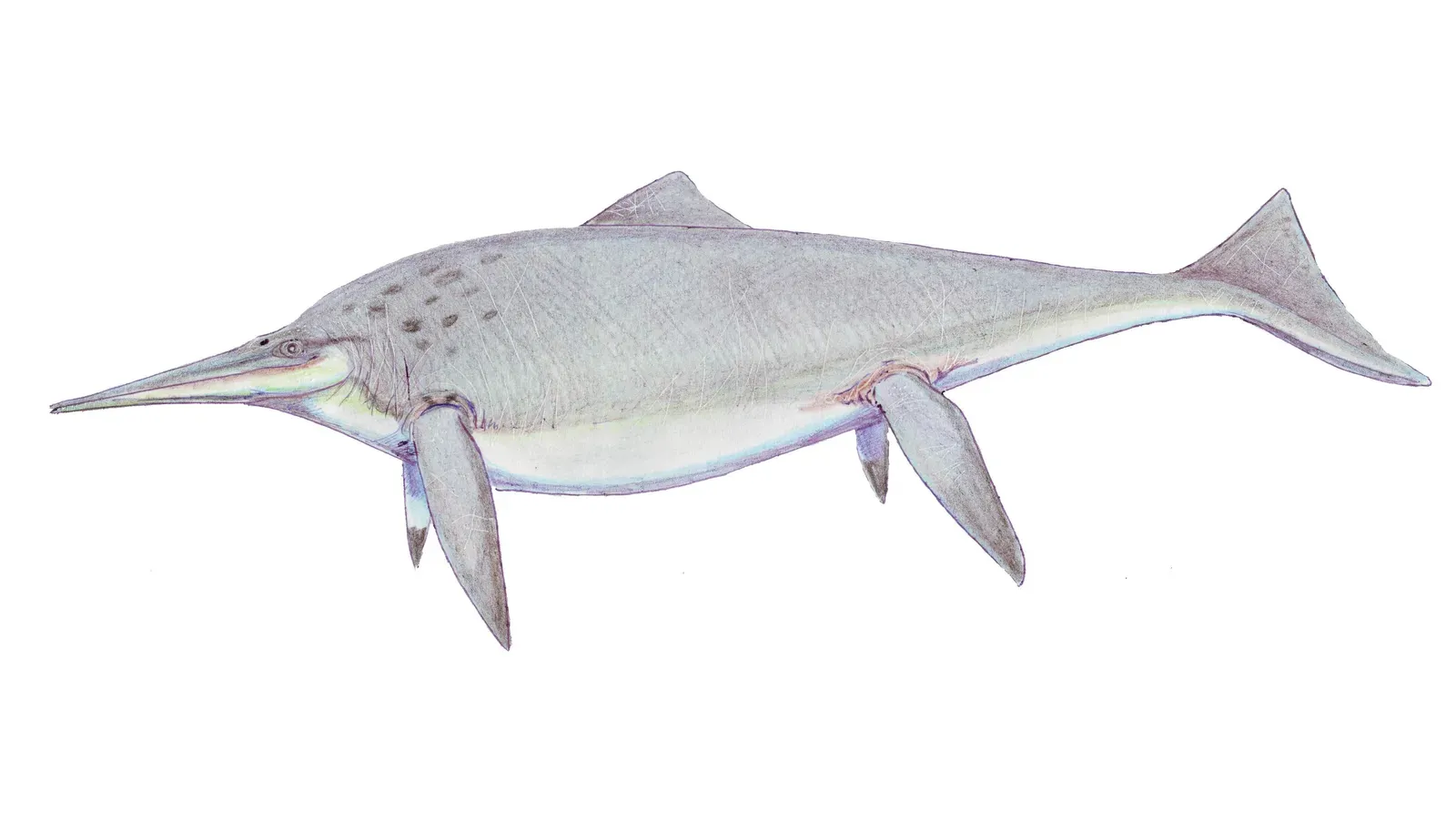
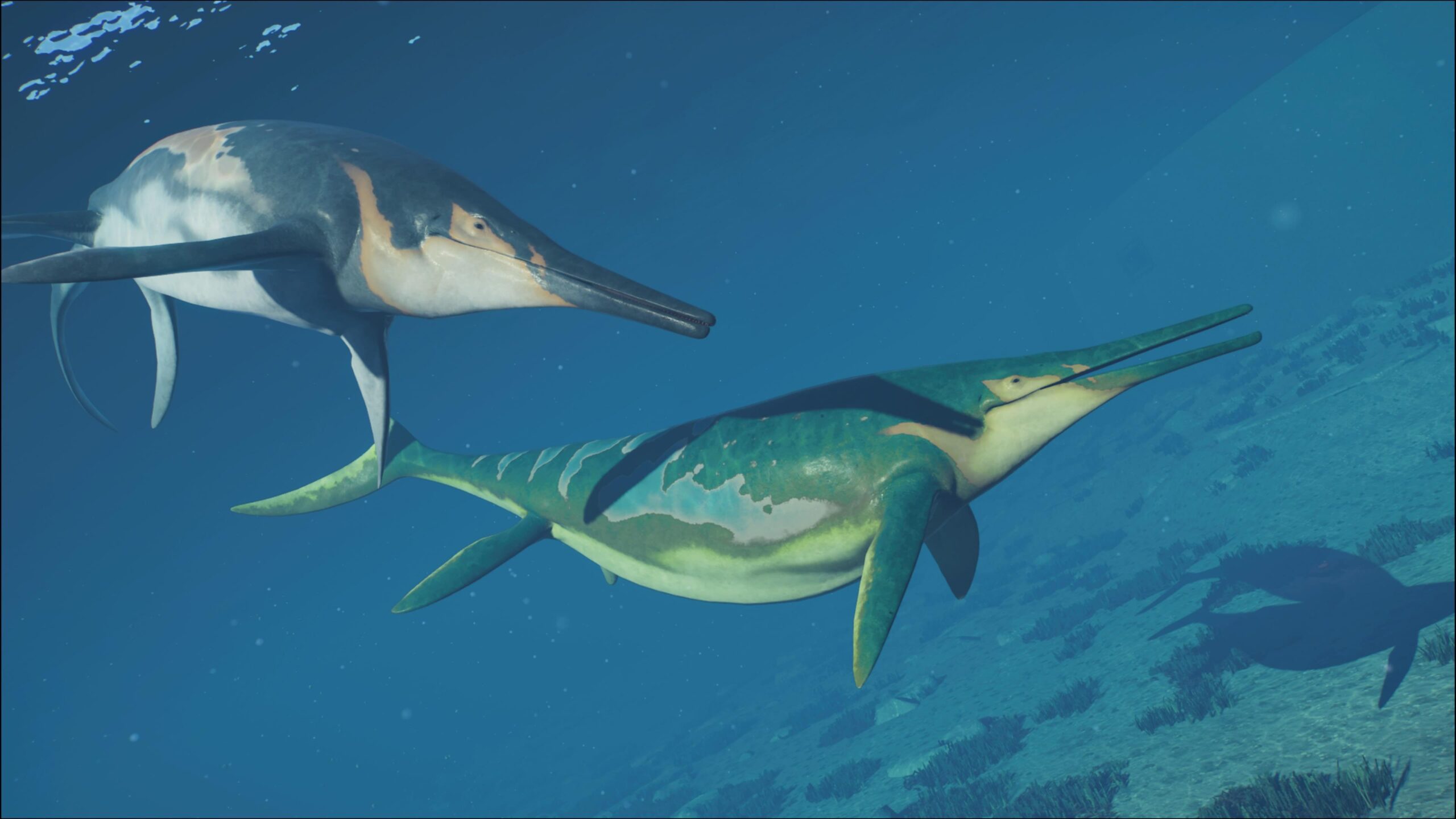
At a glance, Shonisaurus looks like someone took a modern dolphin or tuna silhouette and put it on fast-forward. Its body was streamlined, built for cruising through open water rather than hugging the shoreline, with powerful flippers that acted like underwater wings. The long, deep torso and sturdy tail suggest it was more of a distance swimmer than a quick sprinter, gliding for long stretches and then powering ahead with mighty strokes when it needed to. If you picture a cruise missile with paddles instead of wings, you are not far off.
Then you get to the head, and things get weird. Unlike many ichthyosaurs with dramatic, toothy snouts, Shonisaurus had a remarkably long, narrow, and relatively tooth-poor or possibly even toothless rostrum in adults, at least according to many current interpretations of the fossils. That has led paleontologists to debate how exactly it fed and what it was eating in such a competitive ocean. Some think it may have vacuumed up soft-bodied prey like squid and small fish, almost like a prehistoric version of a giant beaked whale, while others suspect juveniles had more teeth and shifted diet as they grew. The honest answer for now is that we are still piecing this puzzle together, and that uncertainty is a big part of what makes Shonisaurus fascinating.
Bigger Than a T. rex, but Still in the Dinosaur’s Shadow
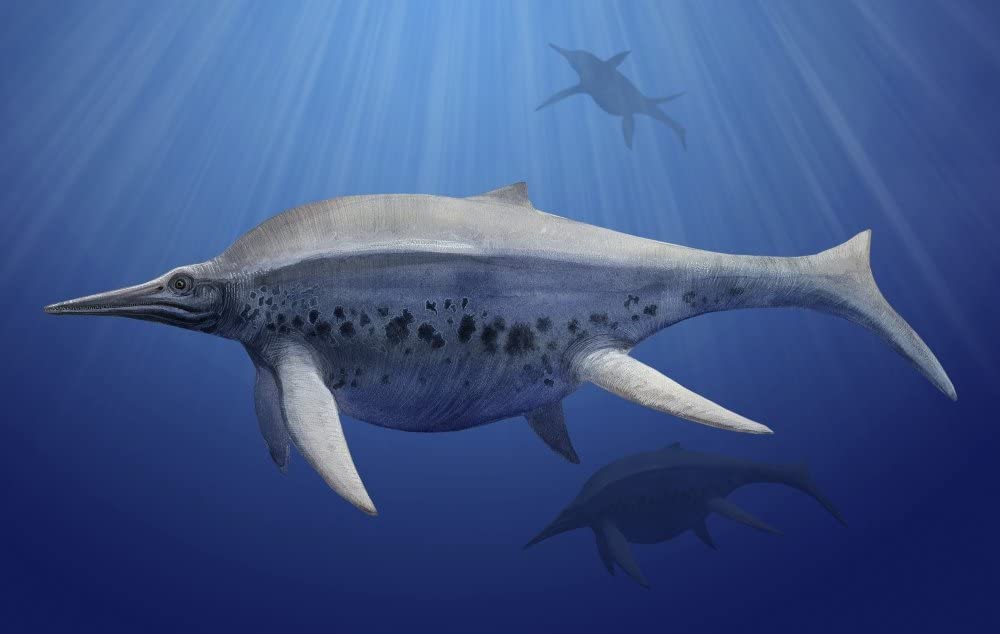
On paper, Shonisaurus absolutely crushes the size metrics of fan favorites like Tyrannosaurus rex. Even conservative estimates for some species push it into the range of more than fifteen meters, and some debated specimens that were once lumped into the Shonisaurus group were thought to reach lengths rivaling the largest predators our planet has ever seen. Yet say “Shonisaurus” in a room full of casual dinosaur fans and you will probably get blank stares, while “T. rex” instantly lights up the conversation.
Part of that is timing and branding. Dinosaurs that walk on land are easier to dramatize than streamlined marine reptiles that all sort of look “fishy” to the untrained eye. Museum marketing leans on snarling skulls and upright skeletons that tower over visitors, not elongated torpedoes suspended from the ceiling. There is also the simple fact that Shonisaurus lived far earlier than most of the iconic dinosaurs people know from movies and toys, in a Triassic world that does not get nearly as much attention. In a way, Shonisaurus is a victim of prehistoric celebrity culture: massive, impressive, and overlooked because it does not fit the usual blockbuster mold.
A Survivor of a Broken World
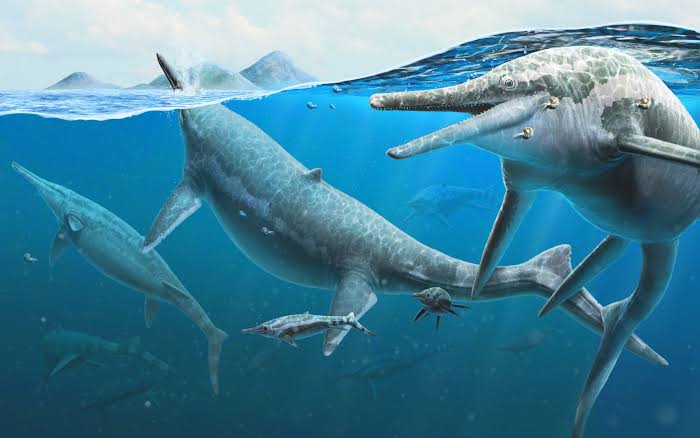
Shonisaurus did not appear in a stable, gentle Earth. It evolved not terribly long after the devastating end-Permian mass extinction, often called the Great Dying, when most marine species and a huge portion of life on land were wiped out. The Triassic oceans where Shonisaurus flourished were basically rebooted ecosystems, full of ecological vacancies and brutal competition as new groups raced to fill every possible niche. To reach such enormous size in that recovering world, Shonisaurus had to be remarkably successful at turning food into growth and survival.
There is something quietly inspiring in that story. This ichthyosaur was part of a wave of vertebrates that rebuilt marine ecosystems from the rubble of catastrophe, proving how quickly evolution can produce giants when conditions allow. When you look at those skeletons in Nevada, it is easy to forget you are looking at the descendants of survivors from the harshest biological crisis we know of. In a sense, Shonisaurus stands as living proof that even after near-total collapse, life not only comes back, it can come back in spectacular, oversized fashion.
The Taxonomy Tangle: Where Does Shonisaurus Really Belong?
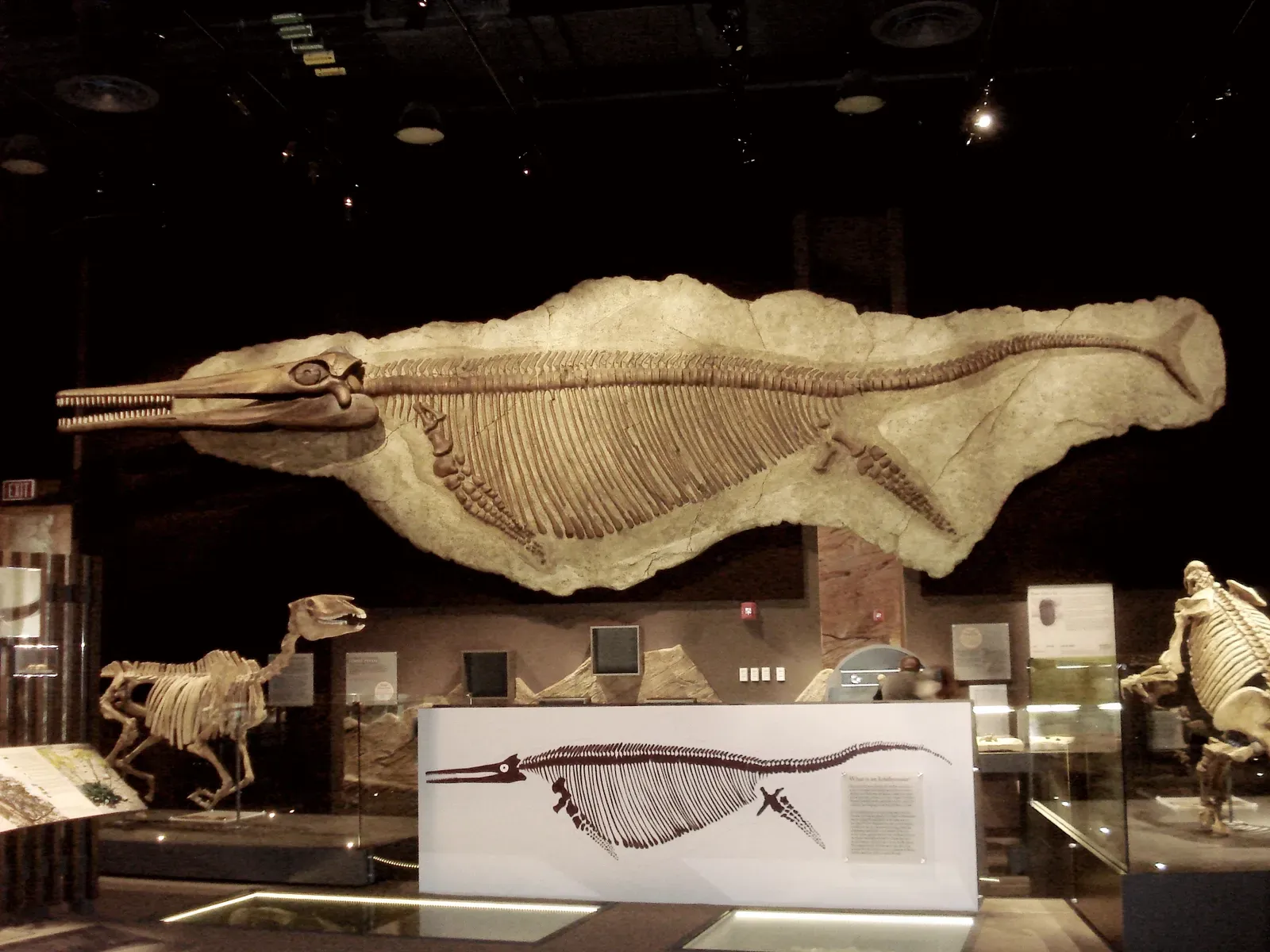
If you enjoy scientific drama, Shonisaurus delivers in the form of ongoing arguments about which fossils actually count as Shonisaurus and where it fits on the ichthyosaur family tree. Over the years, some gigantic skeletons from other parts of the world were at first assigned to Shonisaurus, only to be later split off into separate genera when more detailed studies were done. These revisions matter because they change how big we think Shonisaurus really got and how widespread it may have been across ancient oceans. One paper can turn yesterday’s headline-grabbing giant into today’s more modest, regionally limited species.
That constant reshuffling might sound frustrating, but to me it is one of the most honest parts of paleontology. Shonisaurus is a reminder that fossils are not fixed “truths” but clues open to reinterpretation as methods improve and new material appears. You will often see size estimates, relationships, and even species names shift over the span of a decade as CT scanning, 3D modeling, and new comparative studies refine earlier guesses. It may feel like the ground is always moving, but that movement is exactly how science should work, especially when we are trying to reconstruct animals that have been gone for more than two hundred million years.
Why Shonisaurus Deserves a Spot in the Popular Imagination
Here is my unapologetically strong opinion: Shonisaurus should be at least as iconic as many of the dinosaurs that dominate T-shirt racks and toy shelves. It checks all the boxes that usually make people fall in love with prehistoric animals: huge size, mysterious behavior, dramatic setting in a recovering post-extinction world, and the cool factor of being an early pioneer of the fully aquatic lifestyle among reptiles. If any creature embodies the phrase “ocean titan” from the Triassic, it is this one, gliding through warm seas above shifting seafloors where coral-like communities and early fish schools were just getting their footing back.
There is also something oddly modern about Shonisaurus. When you look at its streamlined shape, you can see the same evolutionary solutions that shaped whales, dolphins, and large pelagic fish, all converging on the same basic blueprint for life in open water. In that sense, Shonisaurus feels like a missing chapter in a story we are already familiar with, a reminder that the oceans have hosted sleek, powerful giants long before mammals ever took the plunge. If more people knew that, I suspect there would be a lot more kids drawing ichthyosaurs on their notebooks instead of only land predators with sharp teeth.
A Giant in the Shadows: Why This Overlooked Reptile Matters
For me, the strangest part of Shonisaurus’s story is not its anatomy or its size, but how quietly it sits in the background of prehistoric conversation. We live in a time when new dinosaur names trend on social media for a day and then vanish, yet this long-recognized giant still barely registers outside specialist circles and a few dedicated museum exhibits. That feels like a missed opportunity. When we only celebrate the same handful of land-based stars, we flatten the deep history of life into a narrow, dinosaur-heavy highlight reel and skip over the weird, early experiments that actually set the stage for everything that came later.
Shonisaurus matters because it widens our sense of what Earth’s past really looked like. It forces us to picture vast Triassic seas, not just dense Jurassic forests, and to appreciate the role of marine reptiles in rebuilding ecosystems after disaster. Ignoring it just because it is less “marketable” than a snarling theropod says more about our human biases than about the fossil record itself. If anything, this quiet, streamlined leviathan proves that some of the most important players in Earth’s story are not the noisy headliners but the giants that slipped beneath the waves, did their work, and left behind bones that still challenge us to pay attention. Did you expect one of the greatest forgotten giants of all time to be swimming, not stomping, its way through prehistory?