Imagine looking out over a calm Jurassic sea and seeing something glide past with a neck so long it could stretch across an entire classroom, past the hallway, and out the school gates. That is not movie magic or a comic-book exaggeration; it is paleontology. Long-necked marine reptiles like Elasmosaurus shattered what scientists thought was possible for animal body plans, leaving behind skeletons that still feel almost unreal today.
These were not dinosaurs wading in shallow water but powerful ocean predators that turned the rules of underwater design upside down. Their necks alone could be longer than a modern school bus, packed with dozens of vertebrae and wrapped in muscle, yet somehow flexible enough to twist and hunt. How did such a bizarre creature live, move, and survive in seas full of sharks and giant marine reptiles? Let’s dive into the science, the debates, and the weird beauty of one of prehistory’s strangest body shapes.
The Bizarre Body Plan: Meet the Long-Necked Plesiosaurs
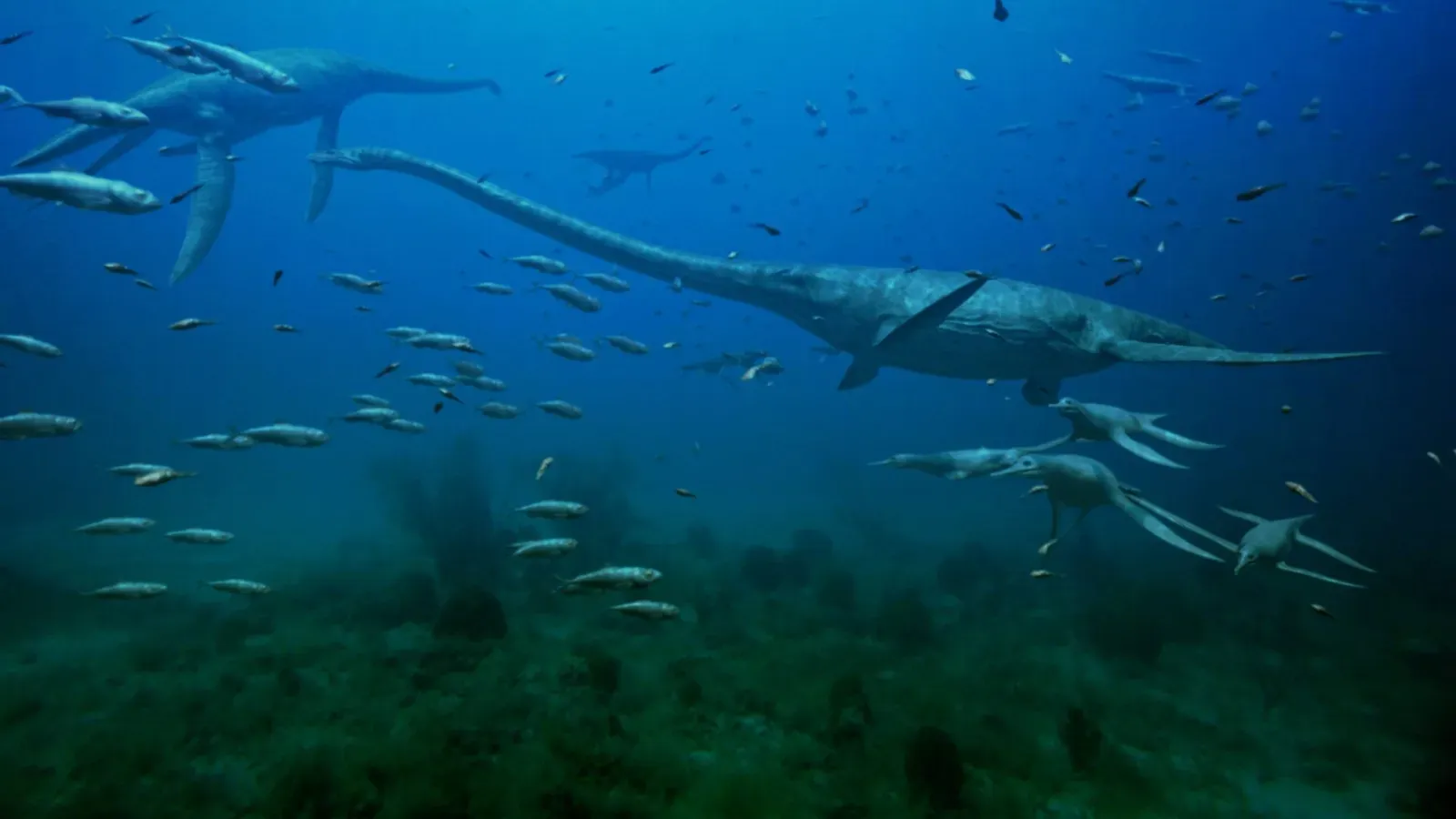
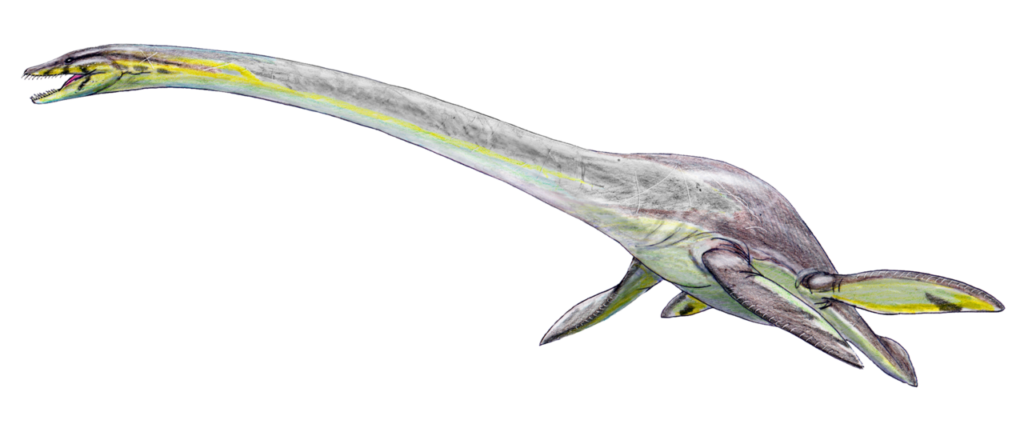
When people talk about an , they are usually talking about elasmosaurid plesiosaurs, with Elasmosaurus as the poster child. Picture a torpedo-shaped body, four huge flippers like underwater wings, a relatively small head, and then a neck that just keeps going and going. That neck could make up more than half the animal’s total body length, which is wild when you compare it to dolphins, whales, or even long-necked land animals like giraffes.
Unlike the sleek, streamlined shapes we see in most marine predators today, these plesiosaurs almost look like a mistake someone made while dragging a slider too far in a video game character creator. Yet this odd design clearly worked well enough to survive and diversify for millions of years. Their bodies were built for life far from shore, and fossil evidence suggests they were fully marine, giving birth to live young in open water rather than coming onto land to lay eggs. The ocean, for them, was home in the deepest sense.
A Neck That Defies Logic: Just How Long Was It?
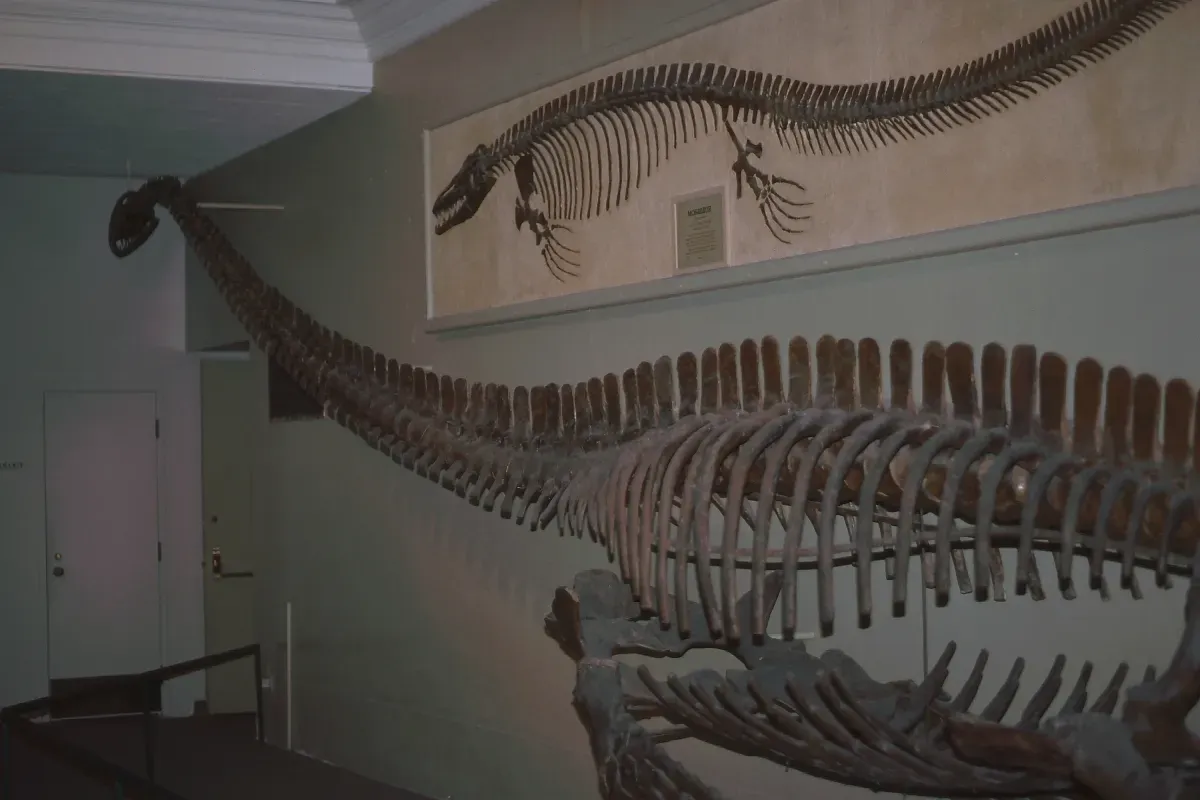
The numbers behind these animals are frankly ridiculous in the best possible way. Some elasmosaurids had necks stretching well over thirty feet, rivaling or exceeding the length of a standard school bus. Instead of the seven neck vertebrae that almost all mammals have, these creatures could have seventy or more, stacked like a horrifyingly beautiful architectural project. Each vertebra was relatively small and disk-like, but together they formed a colossal, segmented column of bone.
What makes this even more mind-bending is that all of this bone had to work in real time as a living, moving structure. The neck had to be strong enough to withstand water resistance when the animal swam, flexible enough to twist just enough to grab prey, and stable enough to avoid snapping under the animal’s own movements. Paleontologists sometimes use computer models and comparisons with modern animals to estimate just how far the neck could bend without damage. The answer seems to be: not like a snake, but more like a long, stiff fishing rod with controlled, limited flex rather than wild coils.
Hunting With a Bus-Length Neck: Predator or Gentle Drifter?
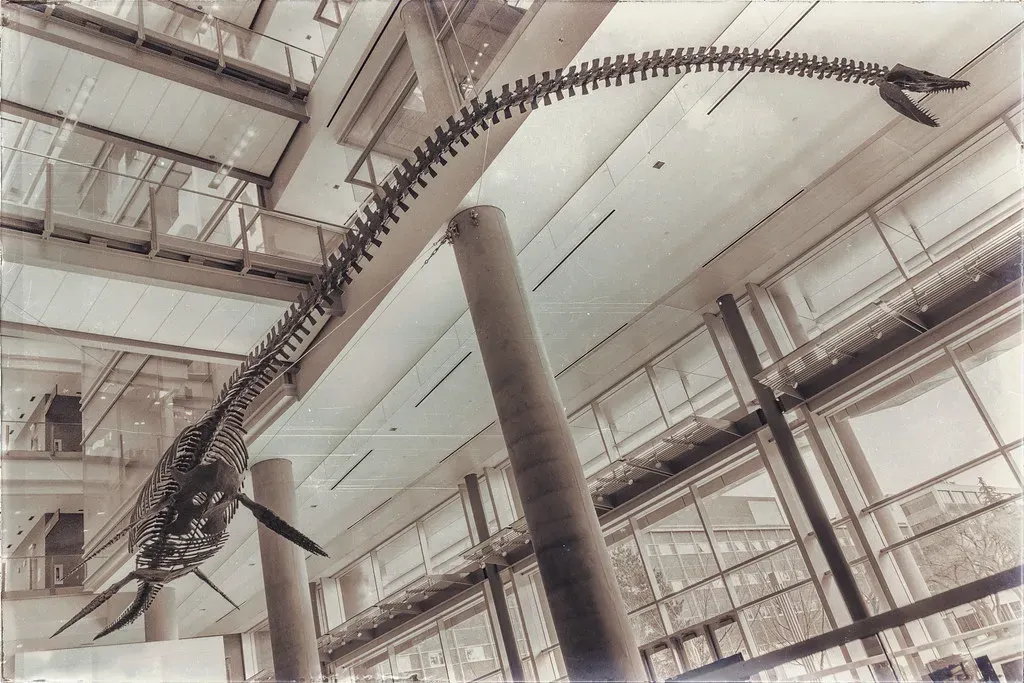
The big question is: why evolve a neck that long in the first place? One leading idea is that these plesiosaurs used their long necks to sneak up on small, fast-moving prey like fish and squid without moving their whole body. Imagine a crocodile’s stealthy jaw snap, but on a creature that stays mostly still while only the head and neck reach forward from a distance. By keeping the bulk of their body and flippers a little farther away, they may have reduced the turbulence and visual disturbance that would alert prey.
Others argue that the neck might have helped them feed in slightly different zones of the water column without having to constantly reposition their body. Some models suggest they swam using their flippers like underwater “flight,” maintaining a stable glide while the neck angled up or down to grab food. Personally, I like the idea that these animals were more agile hunters than their awkward-looking skeletons suggest. It is easy to look at them and assume they were clumsy, but nature rarely invests in such extreme designs unless there is a real advantage hidden under the weirdness.
The Engineering Problem: Blood, Bones, and Buoyancy
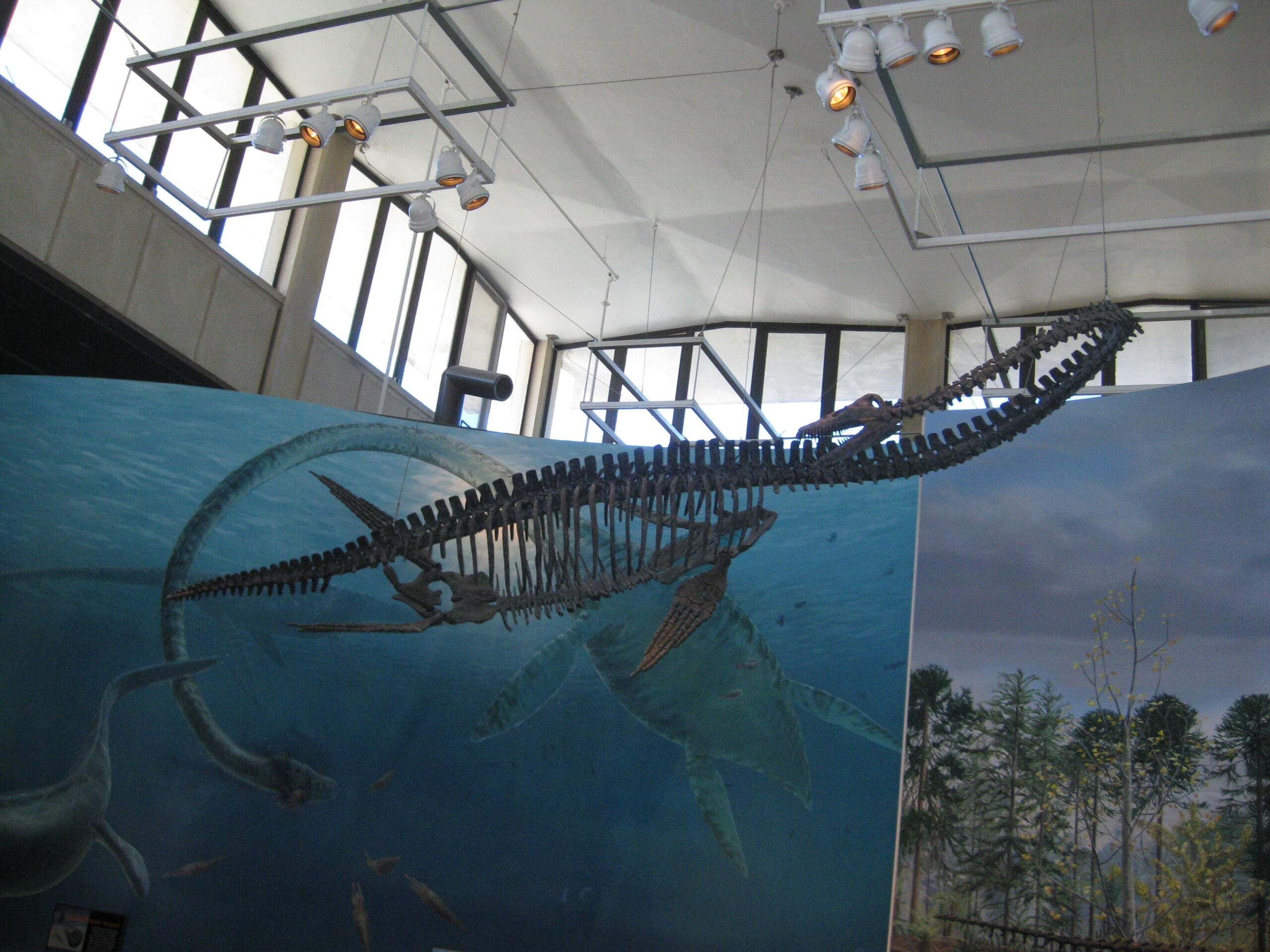
Once you get over the initial shock of that neck, the next thought is usually: how did this even work biologically? Pumping blood all the way from the heart to the brain at the end of such a long system is not trivial. Although the exact details are still debated, scientists think these creatures likely had powerful hearts and specialized blood vessels to help manage pressure and flow. Land animals with long necks, like giraffes, already show clever vascular adaptations, and marine reptiles may have had their own unique tricks to keep the brain well supplied with oxygen.
The skeletal structure had its own challenges. A neck that long could easily become a liability if it was too heavy or fragile, so the vertebrae are often relatively lightweight and carefully shaped to lock together in stable ways. Some studies suggest the neck was stiffer vertically and more flexible sideways, which would fit a lifestyle of sweeping the head laterally to catch prey. All of this had to balance with buoyancy in the water, where too much weight in the wrong place could tilt the animal awkwardly. In a way, their whole body is an engineering project that somehow got signed off by evolution and passed every real-world test for millions of years.
Myths, Mistakes, and Pop-Culture Sea Dragons
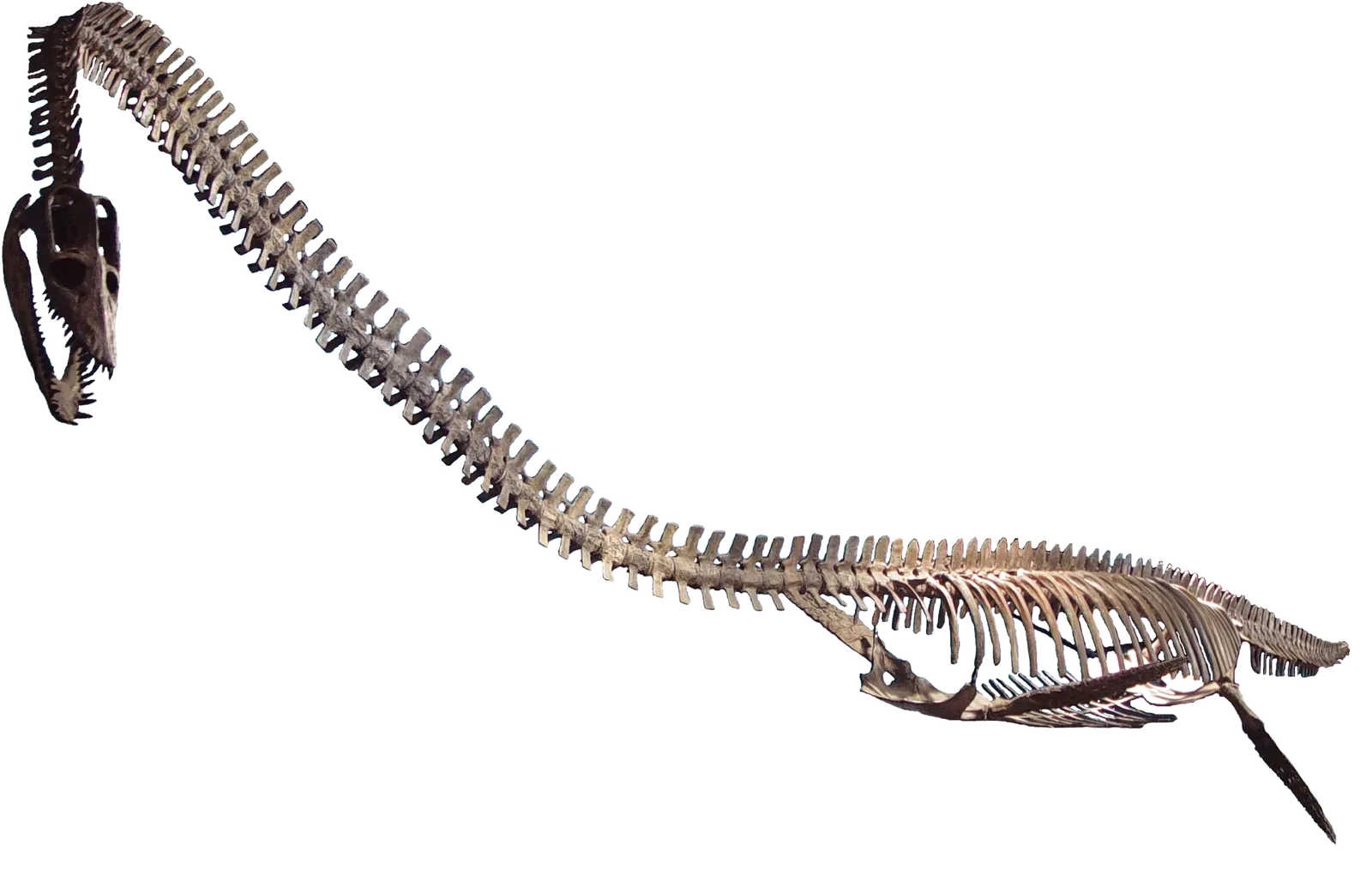
This kind of creature practically begs to be misunderstood, and history absolutely delivered on that. When Elasmosaurus was first described in the nineteenth century, its neck bones were famously reconstructed in the wrong direction, with the head where the tail should have been. That early mistake has become almost legendary in paleontology, and it shows how hard it can be to interpret such extreme anatomy from scattered fossils. It also left a long shadow, because people still sometimes picture these animals as if their bodies and necks bent in ways that probably were not physically possible.
Modern pop culture has happily run with the visual drama. Long-necked marine reptiles often get mashed together with sea serpents, lake monsters, or even sauropod dinosaurs in movies, games, and conspiracy memes. That can be fun, but it also hides how interesting the real animals are without any exaggeration. In my opinion, the actual science is cooler than the myths, because it forces you to accept that nature really did build something this outrageous, no magic or mystery needed. When a fossil looks like a creature dreamt up by a bored fantasy artist, that is exactly when I start paying closer attention.
What These Sea Giants Teach Us About Evolution
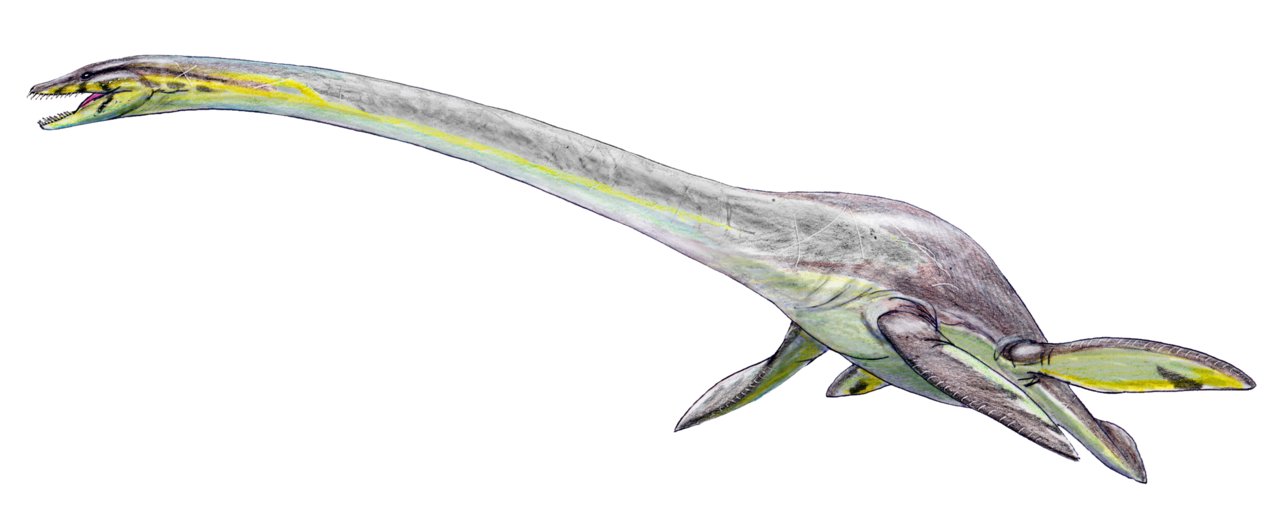
For all their strangeness, long-necked plesiosaurs are powerful reminders that evolution is not trying to design what looks normal to us; it is just solving problems in whatever way works. In their world, having a neck longer than a school bus apparently worked very well. They were not failed experiments but long-term winners in their ecosystems across vast stretches of geological time. Their success forces scientists to widen the mental boundaries of what an effective animal body can look like, especially in the ocean.
They also highlight how evolution often pushes traits to extremes when there is enough time and the right pressures. Just as some birds evolved absurdly long tails or antelopes grew spiraled horns, these marine reptiles stretched the neck concept until it became almost unbelievable. To me, that is the real lesson: the world is not built around human intuitions. When you look at an elasmosaur skeleton and feel your brain say that it should not exist, that is your cue to remember how small our sense of “normal” really is. Would you have guessed that one of the strangest necks in history belonged not to a land giant, but to a swimmer in the ancient seas?