If you could step out of a time machine into the deep past, you probably would not think, “Wow, this looks like an older version of Earth.” You’d more likely think you’d overshot and landed on an alien world. The air would feel different in your lungs, the colors of the landscape would shift in strange ways, and the animals and plants would seem like the results of a fever dream rather than anything related to the modern world.
What blows my mind is that we often reduce this mind‑bending history to a few celebrity dinosaurs and call it a day. In reality, prehistoric Earth cycled through a series of bizarre, radical experiments in life. Oceans turned green, insects became giants, forests burned like matches, and entire continents died and were reborn. Let’s walk through just how wildly different those ecosystems really were – and why visiting them would feel less like a nature hike and more like stepping onto an uncharted exoplanet.
The Air Itself Was Alien: Atmospheres That Reshaped Life
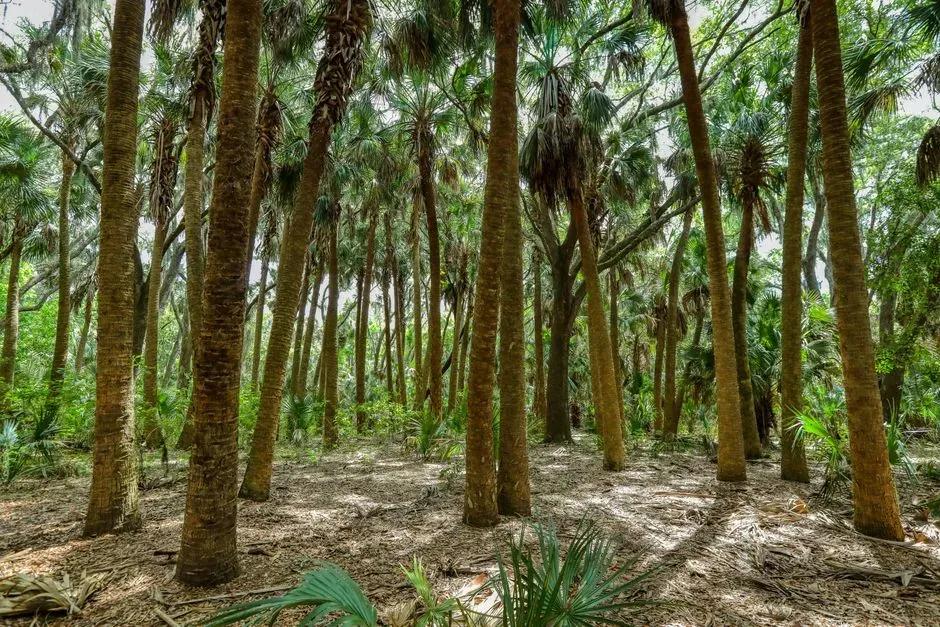
Imagine taking a deep breath in the late Carboniferous period and realizing the air is richer in oxygen than what you’re used to today. Oxygen levels were significantly higher during some intervals of Earth’s history, while at other times they dipped dangerously low by modern standards. That shifting balance of gases did not just tweak life a little; it rewired the rules of what bodies could do, how big they could grow, and even how often the world burned. In some eras, lightning storms over dense swamps could trigger firestorms that raced through entire landscapes because the air itself was so eager to burn.
On top of that, carbon dioxide levels across much of prehistory were far higher than today’s, even during periods we now worry about as extreme. That meant warmer global climates, fewer polar ice caps, and oceans that sometimes crept far inland across continents. If you dropped a modern human into, say, the mid‑Cretaceous, they might struggle emotionally as much as physically – the horizon lines, the haze in the sky, and even the way sound carried in that thicker, warmer air would feel subtly but persistently wrong, like being on a movie set where someone cranked up every dial just a bit too far.
Forests Before Flowers: Strange Plants, Dark Woods, And No Grass
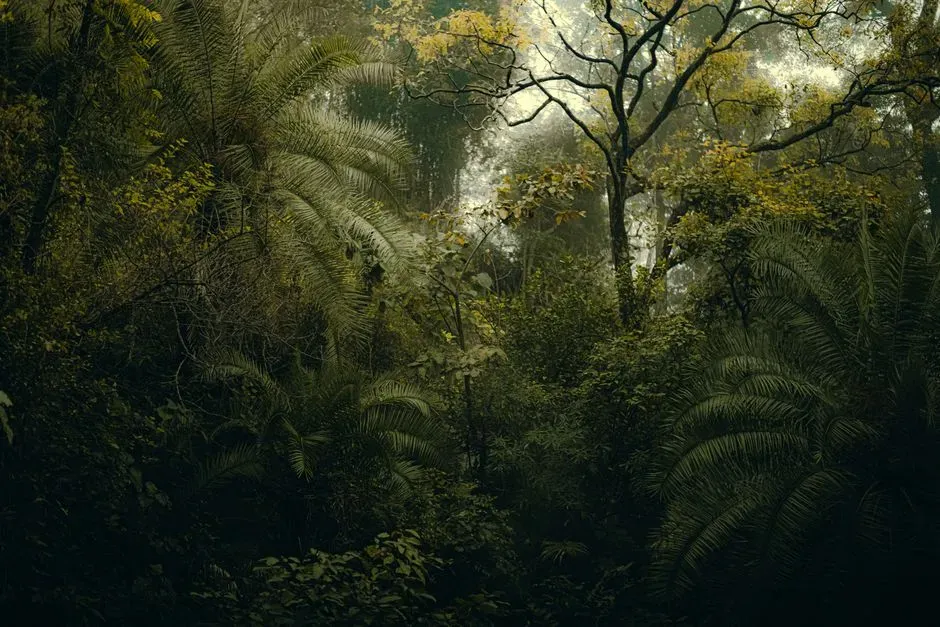
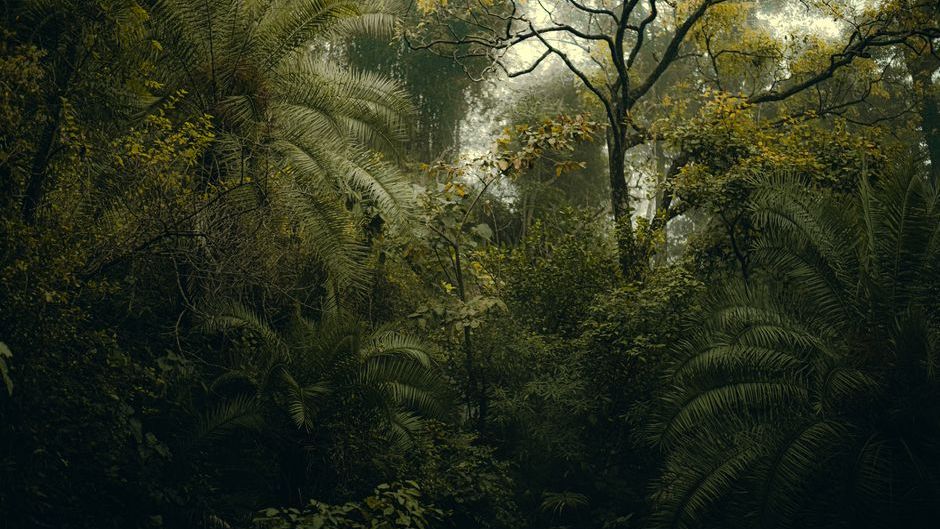
For most of Earth’s history, you could walk for a lifetime and never see a single flower, blade of grass, or fruit tree. Early forests were built from towering lycopsids and gigantic horsetails with bizarre, scaly trunks that looked more like dragon skin than bark. Seed ferns and conifers eventually joined the mix, creating humid, shadowy swamps that piled up layer after layer of dead plant matter, which over millions of years transformed into much of the coal we burn today. A stroll through a Carboniferous forest would feel like wandering through a dim, oversized terrarium, all dripping fronds and spore clouds.
The real plot twist is how late the familiar stuff shows up. Grasses are a fairly recent innovation, and the classic grassy savannas and lawns we take for granted simply did not exist for the vast majority of Earth’s history. Flowering plants arrived later still and took time to conquer landscapes, but once they did, they radically reshaped ecosystems, pollinators, and food webs. Before that revolution, the land was dominated by plant forms that, to our eyes, would look more like living fossils from a science museum exhibit than everyday greenery – beautiful, but uncannily off, like a forest drawn by someone who had only a vague description of what trees are supposed to look like.
Animal Giants And Body Plans So Weird They Look Fictional
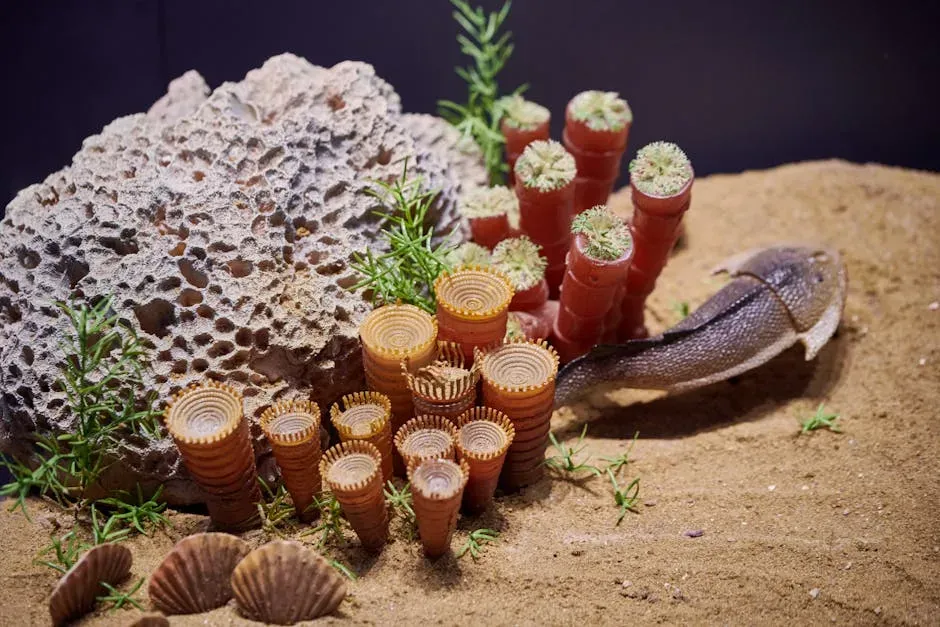
Oversized dinosaurs tend to hog the spotlight, but they were just one chapter in a much longer story of body plans that feel downright surreal. In the seas of the Cambrian period, strange creatures with frilled heads, spiny flaps, and multiple appendages swam, crawled, and floated in a chaotic experiment in body design. Many of those forms have no modern analog at all – no obvious “this is like a crab” or “this is like a fish” – and trying to classify them is a bit like trying to sort dreams into neat folders. The variety reflects a world where evolution was still discovering what worked, not yet locked into the more conservative set of designs we see today.
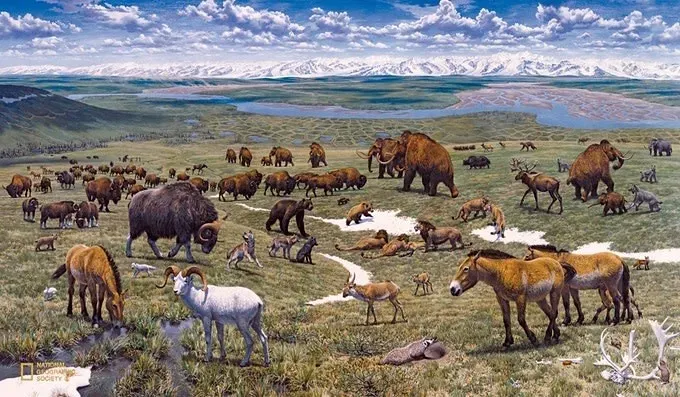
On land, the weirdness continued. There were amphibians the length of a car in coal forests, sail‑backed synapsids stalking Permian plains, and later, feathered dinosaurs with crests, horns, and display structures that seem almost too extravagant to be real. Add in the periods of super‑oxygenated air that allowed dragonfly‑like insects with wingspans as wide as a hawk’s, and you get a sense of how distorted our sense of “normal” would be in those worlds. Even in the more recent Ice Age, with its mammoths and giant ground sloths, the sheer scale and strangeness of the megafauna would make most modern ecosystems feel small and oddly stripped down by comparison.
Oceans Of Slime, Armored Fish, And Deadly Chemistry
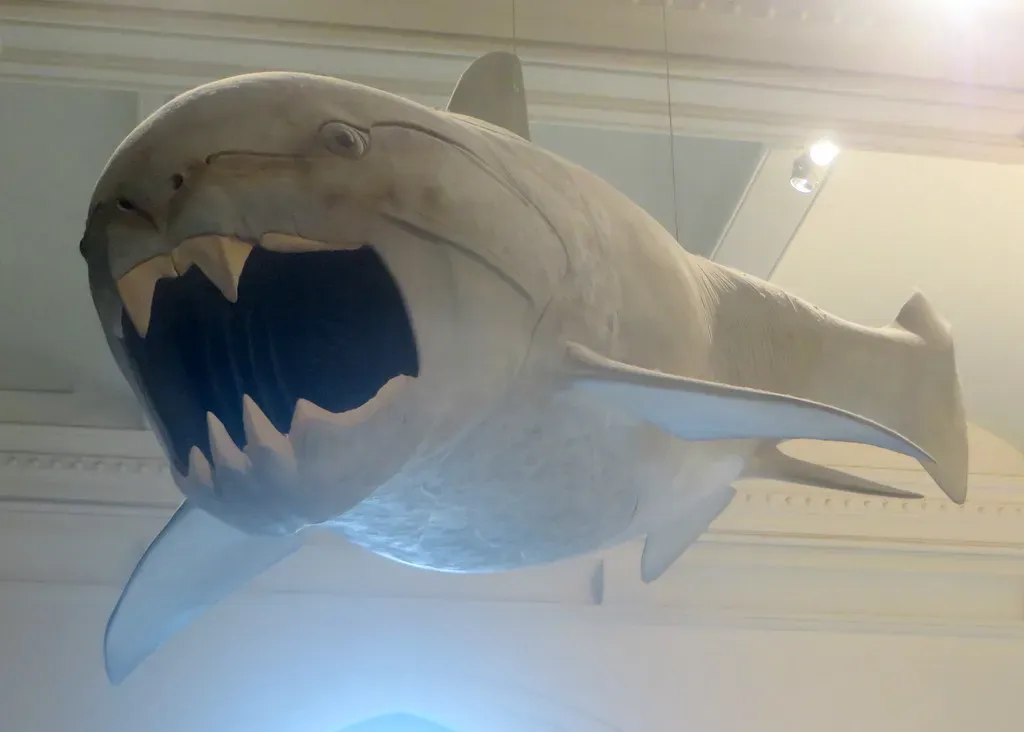
The prehistoric oceans were sometimes more like alien soup than the blue, relatively clear waters you might see on travel posters today. In some intervals, blooms of microscopic organisms could turn coastal waters murky green or even reddish, supported by nutrient cycles and climates very different from our own. Before complex reefs stabilized coastlines, shallow seas were dynamic, shifting spaces where storms could rearrange entire habitats overnight. Early reefs themselves were built by organisms that barely resemble modern reef builders, turning ancient seafloors into labyrinths of hard, living scaffolds.
Then there were the animals: armored fish with jaws like shears, invertebrates with spiral shells the size of car tires, and bizarre filter‑feeders that hovered in midwater like living vacuum cleaners. Even the chemistry of the water was often hostile compared with what we know now, swinging between warmer, low‑oxygen phases that suffocated deep life and cooler, more oxygenated states that allowed complex ecosystems to explode. Standing on the deck of a hypothetical time‑traveling research ship, you’d be staring at seas that might smell different, look thicker, and teem with life that feels as far from a modern tuna or dolphin as a dragon is from a house cat.
One of the most unsettling aspects is that some mass extinctions in the oceans were driven by runaway changes in temperature and oxygen that made large parts of the seafloor nearly uninhabitable. Picture vast “dead zones” where only bacteria and a few hardy creatures clung on, while above them, surviving predators hunted in layers of water stacked by chemistry. The modern concerns we have about warming and ocean deoxygenation are, in a sense, faint echoes of those ancient extremes, but the deep past saw versions of those changes dialed up to world‑altering levels that wiped out the majority of marine species more than once.
Continents, Supercontinents, And Landscapes In Constant Motion
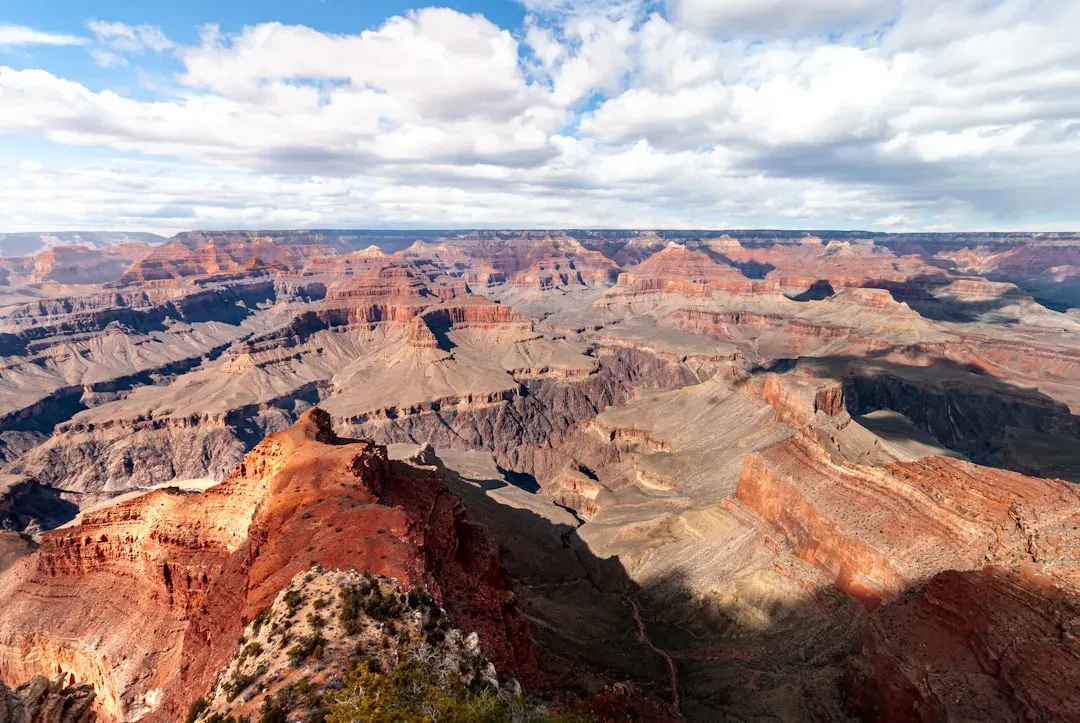
Modern maps can trick us into thinking continents are stable, permanent fixtures, but in prehistory the choreography of landmasses was far more dramatic. At various times, all the continents we know were jammed together into supercontinents like Pangaea, forming vast interior deserts so far from the sea that rainfall rarely reached them. In other eras, land broke into scattered island chains and smaller blocks, wrapped by warm, shallow seas full of life. The result was a patchwork of strange landscapes: endless dune fields, volcanic plateaus, newly formed mountain ranges, and low, swampy coasts that came and went over millions of years.
Those shifting arrangements of land and sea had enormous consequences for ecosystems. When continents clang together, they can create massive mountain belts that change wind patterns, rainfall, and river systems, reshaping where life can thrive. When they drift apart, new coastlines, bays, and inland seas open up fresh real estate for evolving species. From the ground, living through those changes would feel like living in an era of slow‑motion planetary remodeling – rivers rerouting, climates drifting from humid to arid, and familiar habitats gradually giving way to new, often harsher ones. Your favorite “forest” might become a dusty plain over just a few tens of millions of years, which sounds slow until you realize it is fast on geological time scales.
Extinction As A Reset Button: Worlds Ending And Starting Over
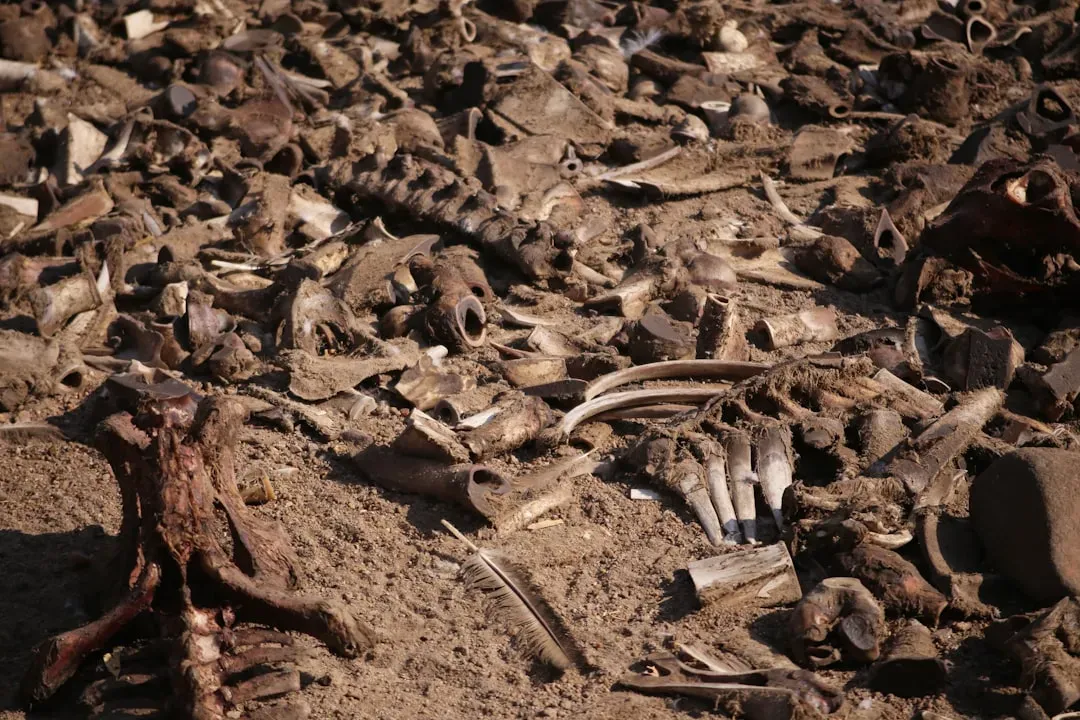
One of the most alien aspects of prehistoric ecosystems is how often they ended. Not in a dramatic fade‑out over eons, but in sharp, catastrophic pulses: volcanic outpourings that poisoned air and seas, asteroid strikes that unleashed global firestorms, and runaway climate shifts that collapsed food webs. Several times, the majority of species on Earth disappeared in relatively short windows of time, leaving ghost worlds of empty niches and scattered survivors. If you dropped in just before and just after one of these mass extinctions, you’d swear you were on completely different planets.
What followed those collapses might be even stranger. With old competitors gone, new evolutionary experiments took off, rapidly filling vacant roles in ways that would have been impossible before. Reefs returned with different architects, land herbivores grew new defenses, and predators invented new strategies. There is something both inspiring and unsettling about how quickly life can reinvent itself when forced; ecosystems we think of as ancient and stable are often just the most recent version after several full‑scale resets. From a personal point of view, I find that both hopeful and sobering: life is incredibly resilient, but it is also absolutely ruthless about erasing old worlds to make room for new ones.
Food Webs Without Us: Ecosystems That Never Factored Humans In
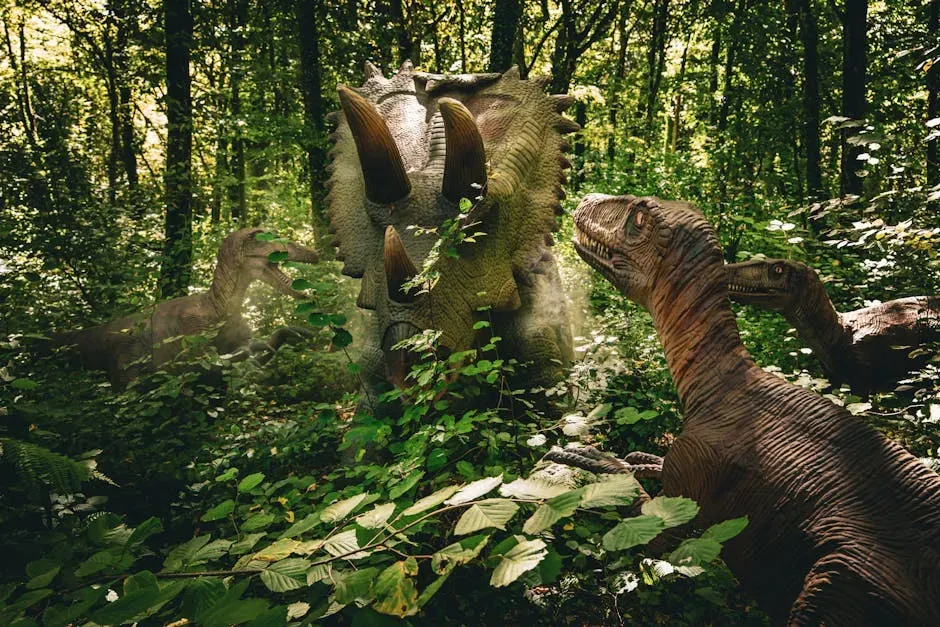
Perhaps the most otherworldly thing about prehistoric ecosystems is that they functioned with zero reference to human needs, values, or impacts. No agriculture, no cities, no domestic animals shaping landscapes, no fishing fleets trimming the oceans. Herbivores migrated based entirely on ancient climate rhythms and plant availability, while predators followed those movements in turn, creating vast, self‑contained networks of energy flow. Apex predators in the Jurassic or Cretaceous world, for example, had no idea that one day their distant relatives’ fossils would be displayed behind glass and debated in classrooms.
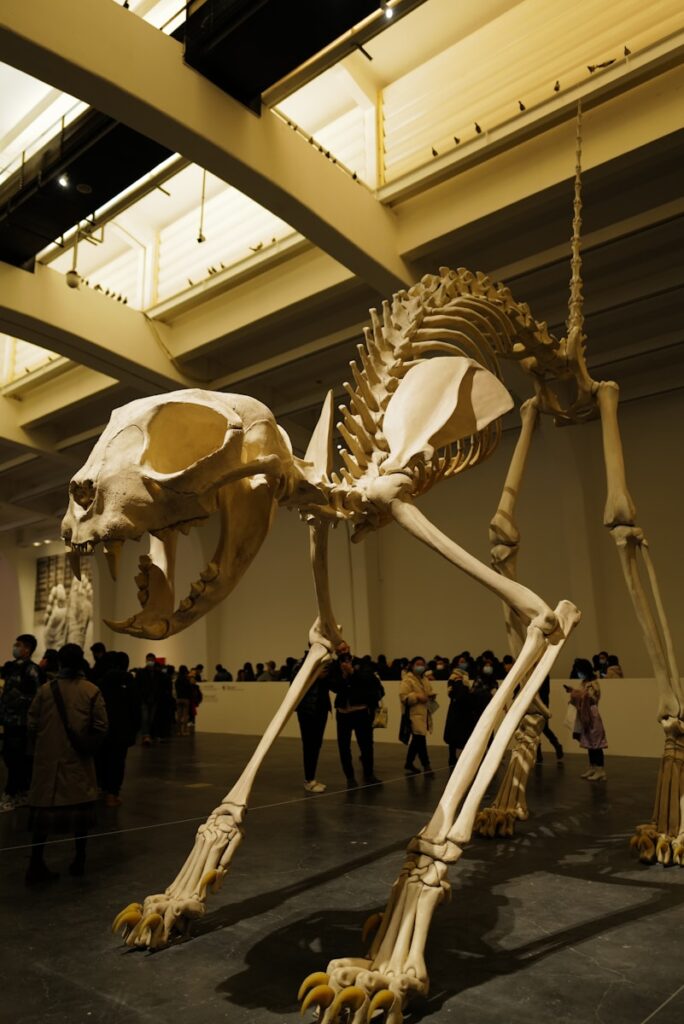
Even relatively recent prehistoric ecosystems – say, late Ice Age North America with its mammoths, saber‑toothed cats, and giant beavers – were wildly different from anything alive today. Once humans entered the picture, those systems began to change, sometimes gradually, sometimes in devastating pulses of extinction. Looking back at ecosystems that never had to account for farms, highways, or plastic waste is almost like peeking into an alternate timeline where Earth stayed a purely nonhuman planet. In a strange way, that makes those vanished worlds feel more alien than anything we might imagine on a distant moon: they are versions of our own Earth that never had to care we would one day arrive.
Conclusion: A Planet That Keeps Reinventing Itself
When you zoom out and really sit with the stories locked in rocks and fossils, one thing becomes impossible to ignore: the familiar Earth we inhabit is just one weird phase among many weirder ones. Prehistoric ecosystems were not just a rough draft of today; they were fully realized worlds with their own rules, atmospheres, giants, disasters, and quiet routines. To me, that makes our current moment feel less like the final chapter of a book and more like a surprising plot twist in an epic saga that has already run for billions of years. We are living on a planet that has repeatedly burned down its own stage and rebuilt the set from scratch.
My opinion, for what it’s worth, is that seeing Earth this way should shake us out of both arrogance and complacency. Life will almost certainly endure in some form, even if we push things too far, but there is absolutely no guarantee that our particular version of the world – our coastlines, our forests, even our familiar species – gets to stay. Prehistoric ecosystems show us that the planet has no sentimental attachment to any one arrangement of life; it just keeps reinventing itself. The real question is whether we want to be around, as a species and a civilization, to see what comes next – or if we’re willing to gamble that away on the assumption that this time, unlike all the others, Earth will stay the way we like it.