
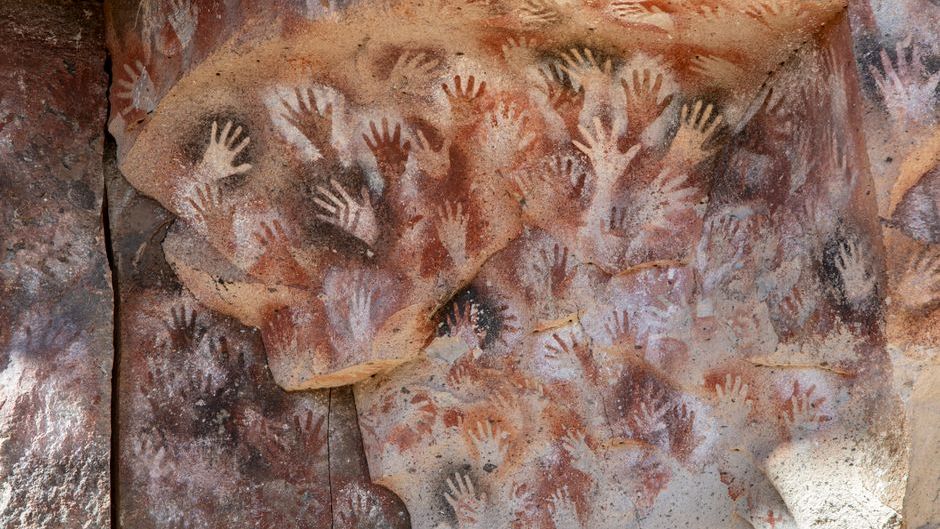
Walk into Lascaux – if you still could – and your first instinct would not be to whisper about cavemen. You would probably say something closer to what visitors say in front of a Rothko or a Michelangelo: this was not supposed to be possible, not here, not then. The walls erupt with running horses, massive aurochs, twisting deer, and that strange bird-headed figure in the Shaft that no one can fully explain. These are not doodles drawn in boredom; they are deliberate, monumental images, plotted with an eye for drama that feels unnervingly modern.
What makes Lascaux so captivating is not just its age, but its attitude. We are looking at people living close to nineteen thousand years ago, yet their sense of movement, composition, and even narrative can still outmaneuver today’s art-school brains. When I first saw photographs of the Hall of the Bulls in a dusty library book, I remember thinking that someone must be exaggerating the lighting and the angles. Then I learned those effects are baked into the rock itself. The more you dig into Lascaux, the more uncomfortable a question emerges: how much of what we call “artistic progress” is progress at all, and how much did these unknown painters already have figured out?
The Cave That Rewrote What “Caveman” Means
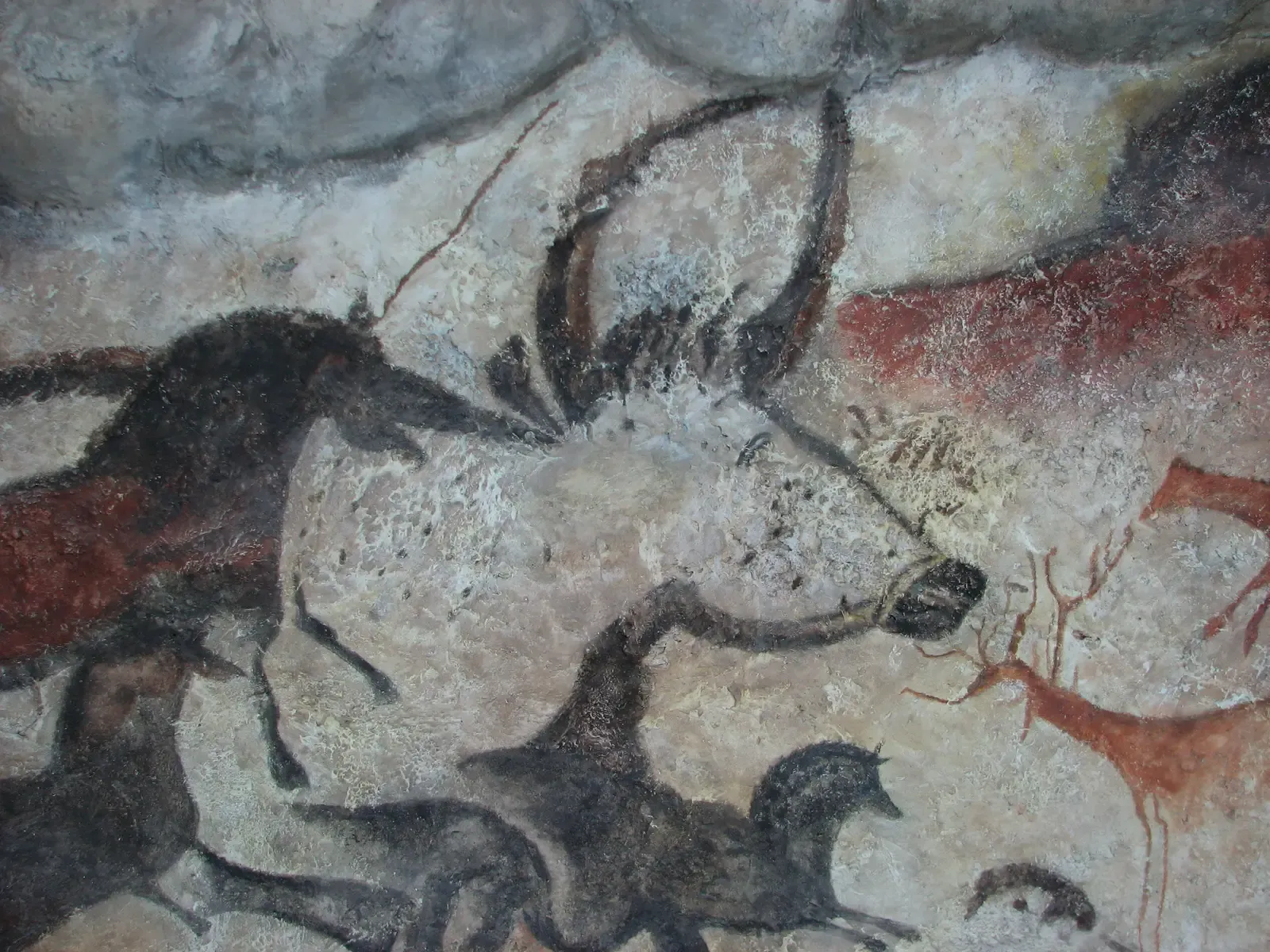
The story of Lascaux’s discovery sounds almost like a movie setup: in September 1940, four teenagers in southwestern France followed their dog into a hole on a wooded hillside and dropped straight into prehistory. Their lanterns lit up walls covered with animals that did not match any textbook notion of clumsy Stone Age art. Suddenly, the stereotype of the shaggy brute dragging a club looked embarrassingly wrong. Here were huge bulls with elegantly curved horns, horses in full gallop, and stags with antlers branching like trees, all rendered with startling confidence.
Archaeologists date the paintings broadly to the Upper Paleolithic, around the Solutrean–Magdalenian phases, roughly between about nineteen thousand and seventeen thousand years ago based on associated tools, bones, and radiocarbon samples from the cave floor. That alone would be enough to make Lascaux important. But what really shook scholars was how finished everything felt. Rather than isolated sketches, whole chambers are orchestrated like grand murals, with themes and repeated motifs. The cave forced historians to admit that people this “early” were already operating with a visual intelligence that had nothing primitive about it.
Design, Not Doodles: Composition That Feels Strangely Modern
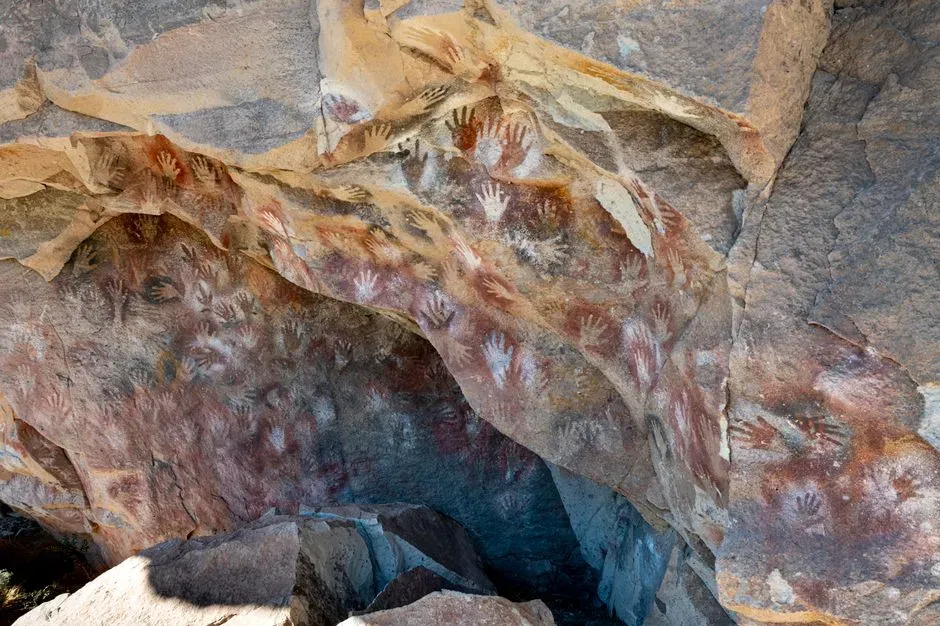
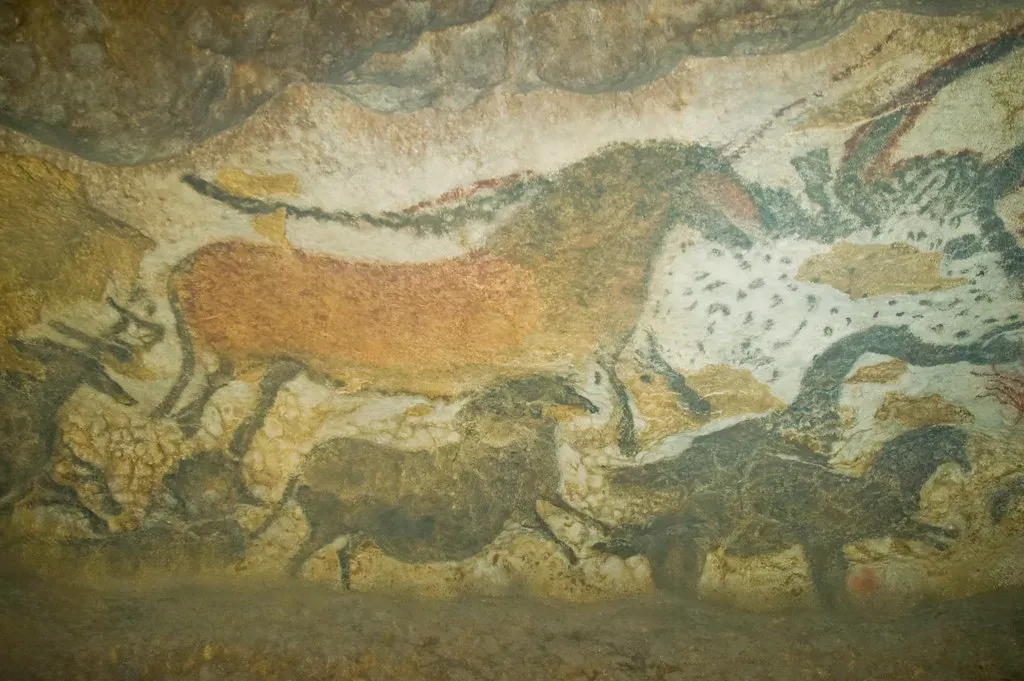
Stand (in your imagination) in the Hall of the Bulls and you immediately sense one thing: none of this is random. The gigantic aurochs circle the space like a living frieze, some nearly six meters long, their bodies overlapping and turning as if they are swooping around you. Horses cut across the bulls, and smaller animals fill gaps like carefully placed punctuation. Modern analysts have mapped these walls and found striking patterns in how the figures are sized, oriented, and grouped, suggesting that the painters were thinking like designers, not casual sketchers.
What really bothers art historians – in the best way – is that these compositions play games with perspective long before perspective was supposed to exist. Bodies twist in what looks like a deliberate effort to show multiple viewpoints at once, almost like early Cubism. In the Axial Gallery, animals are arranged along a sort of imaginary ground line; elsewhere, curves in the rock are exploited so that a flank swells out or a neck bends in three dimensions. The artists were not just painting on the cave; they were painting with the cave, integrating the rock’s topography into their visual plan.
Techniques That Rival a Contemporary Studio
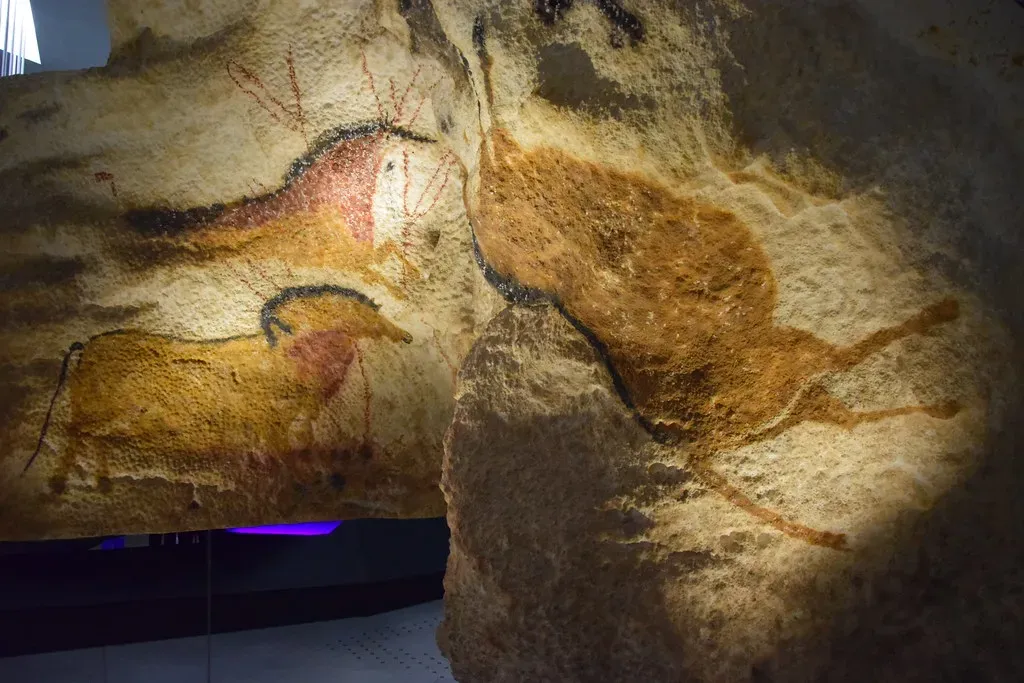
If you imagine someone smearing mud by torchlight, the actual technique at Lascaux will feel like a slap in the face. The painters used a limited but sophisticated palette based on mineral pigments – iron oxides for reds and yellows, manganese oxides and charcoal for blacks – some sourced from many kilometers away. They ground these minerals carefully and mixed them with water or animal fat to create paints that could be brushed, dabbed, or sprayed. That level of material knowledge alone implies experimentation and transmission of know-how across generations.
Close analysis shows a toolkit that would not look insane on a contemporary workbench: brushes made from animal hair or plant fibers, pads or swabs likely fashioned from moss or fur, and hollow bones or reeds used for blowing pigment in a kind of prehistoric airbrush. Broad flat areas of color, soft gradations, and stippling effects are all present. In some cases, engraved outlines were cut into the rock first, then filled with paint, giving the animals a crisp, graphic edge. When you realize these people were doing layered underdrawings, contour incisions, and spray shading by lamplight inside cramped galleries, it becomes hard to keep calling them “primitive” with a straight face.
Mastering Light, Depth, and Motion in the Dark
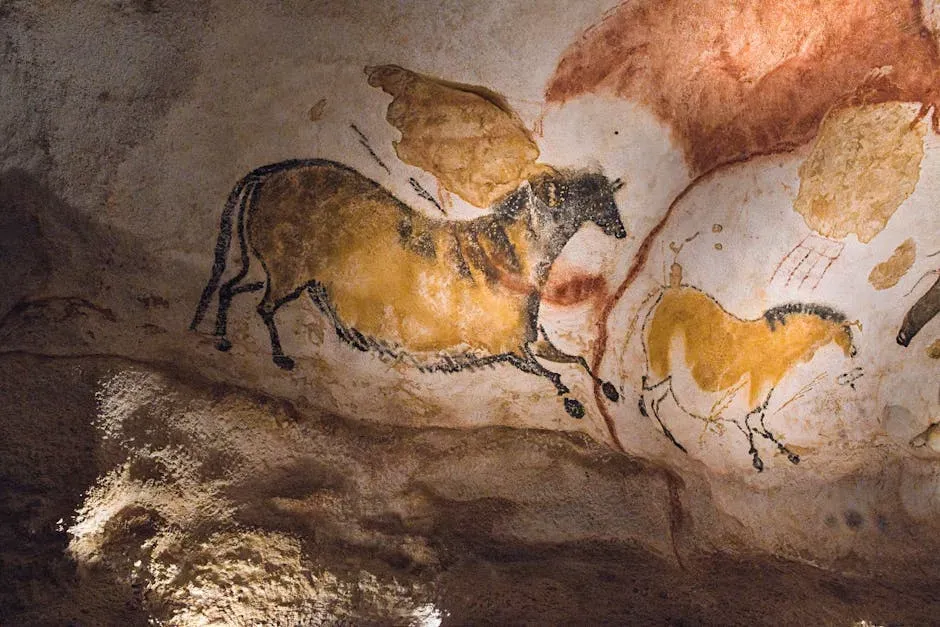
One of the strangest ironies of Lascaux is that the paintings were never meant to be seen the way we see them now: evenly lit, flattened by photography or museum replicas. The original experience would have been flickering and partial, lit by fat lamps or torches that made the animals seem to move as shadows danced across their bodies. The artists anticipated this. They placed figures where shifting light would catch a muzzle here, a flank there, creating the impression of shifting herds rather than static diagrams. It is almost like they were choreographing light itself as part of the artwork.
They also exploited the cave’s relief to crank up the illusion of volume. A natural bulge in the rock becomes a shoulder; a depression suggests a hollow belly. Some silhouettes are deliberately elongated or compressed to correct for odd sightlines, so that from a particular standing point they snap into believable proportion. This is a kind of proto-cinema: you step, the torch moves, and the scene transforms. When modern curators call the Axial Gallery the Sistine Chapel of prehistory, it is not just flattery; there really is a comparable obsession with turning a curved ceiling and wall into a fully immersive, almost theatrical environment.
The Shaft Scene: A Prehistoric Riddle That Refuses to Be Solved
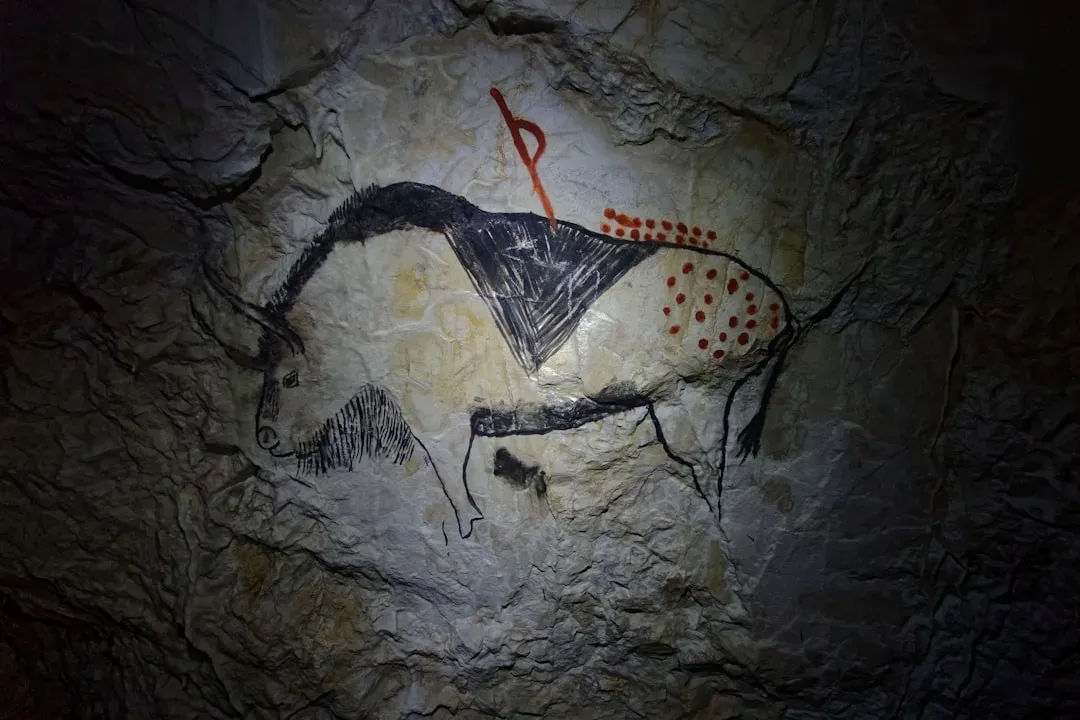
If Lascaux has a signature mystery, it is buried deep in a cramped side chamber known simply as the Shaft. Here, beneath a wounded bison spilling what looks like its entrails, lies a human-like figure with outstretched arms, a birdlike head or mask, and an erect spear or staff topped by a bird. Nearby is a rhino and other marks that do not fit neatly into any modern narrative. This is one of the very few human representations in the cave network, and it is anything but straightforward. The scene feels pointed, like a story mid-sentence, but the language has been lost.
Interpretations have multiplied for decades: hunting accident, shamanic trance, mythic tale, star chart, initiation ritual, or some mix of all of the above. Some researchers argue that the composition encodes astronomical knowledge; others see evidence of ritual death and rebirth. Personally, I think the most honest stance is to admit how alien it still feels. We can map patterns, count symbols, compare it with later myths – but there is a stubborn remainder that will not resolve into a clear answer. That stubbornness is part of Lascaux’s power: it reminds us that sophistication does not guarantee transparency, just as contemporary conceptual art can be brilliant and baffling at the same time.
A Global Visual Language Before “Art History” Existed
One of the reasons Lascaux keeps modern scholars humble is how neatly it plugs into a much wider story. Across Europe and beyond, Paleolithic caves like Chauvet, Altamira, and others show similarly confident depictions of animals, abstract signs, and rare human figures. Lascaux sits inside this network as a kind of apex example, but not an outlier. That suggests we are looking at a shared visual culture that stretched over large distances and long time spans, with conventions, experiments, and perhaps even regional “schools” of style long before any written record.
Think about what that implies for human minds of the time. These were small hunter‑gatherer groups, constantly on the move, dealing with harsh climates and dangerous megafauna, yet they made the time and effort to crawl into deep, difficult spaces to create artworks that no casual passerby would ever see. Pigments were hauled in, scaffolds were likely built, lamps were lit, and complex surfaces were patiently worked. To me, that looks less like decoration and more like a serious, shared project – a kind of visual liturgy or storytelling tradition that mattered enough to justify enormous effort, even when survival was already a full‑time job.
Why Lascaux Still Embarrasses Our Notion of “Progress”
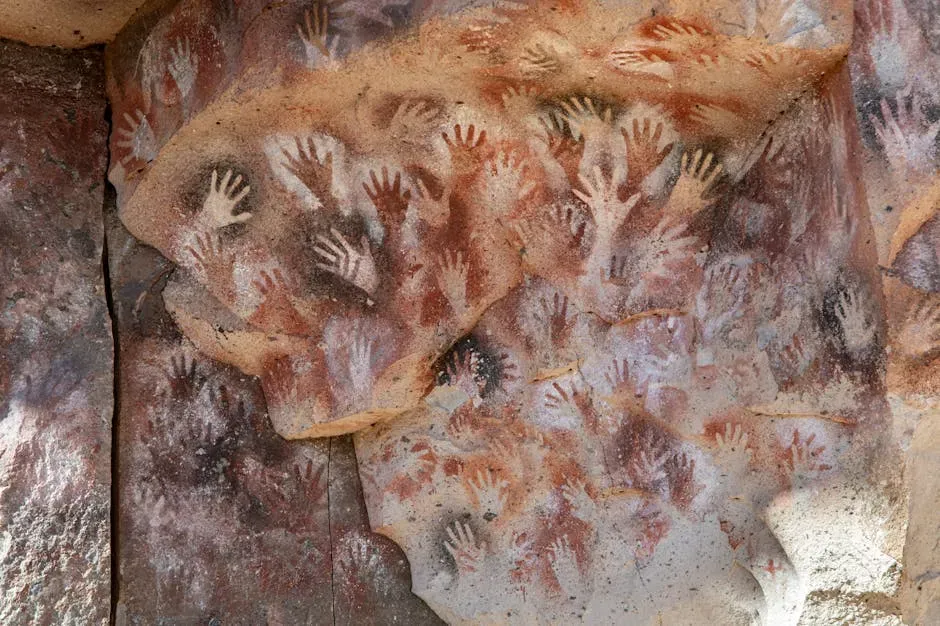
For a long time, art history liked tidy timelines: clumsy beginnings, gradual refinement, brilliant peaks in classical and Renaissance eras, then modern innovation exploding at the end. Lascaux tears up that chart. When you compare these paintings with works made thousands of years later, the idea of a clean, upward ladder of progress starts to look naive. In some respects – sensitivity to animal movement, integration with architecture, atmospheric use of light – the cave painters are not behind us at all; they are simply working with different tools toward different purposes.
My own take is a little uncomfortable for modern ego: Lascaux suggests that the cognitive hardware for complex, emotionally charged image‑making has been in place for far longer than our usual story admits. The difference between them and us is not raw intelligence, but context, materials, and cultural frameworks. That realization is both humbling and liberating. It means that when you stand in front of a photo of the Hall of the Bulls or the riddle of the Shaft, you are not looking at the work of half‑formed minds fumbling toward culture. You are looking sideways, across a terrifying gulf of time, at peers. And that raises a question worth sitting with: if people nineteen thousand years ago could already do this, what other assumptions about human potential are we still getting wrong?