
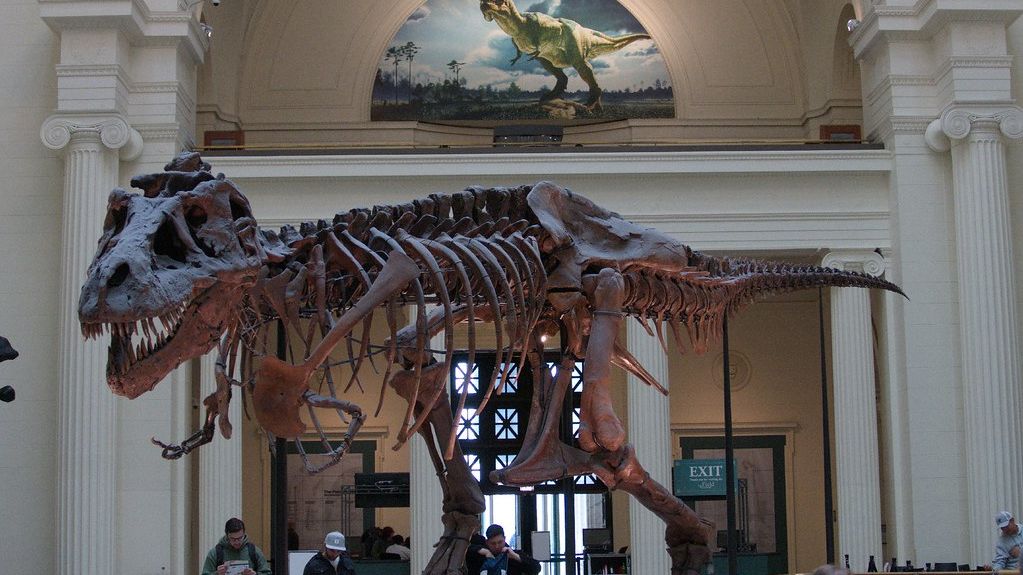
You probably think you already know Tyrannosaurus rex: the roaring movie monster, the oversized lizard stomping across pop culture. But the real animal stayed stubbornly out of reach until one fossil changed everything. When the most complete T. rex skeleton ever discovered was pulled from the rock, it was like someone had quietly swapped our cartoon for a high‑definition portrait. Suddenly, scientists were not guessing from scraps; they were reading an almost whole body.
This skeleton, nicknamed SUE, has become a kind of celebrity in its own right. Found in 1990 in South Dakota and now housed at the Field Museum in Chicago, SUE is roughly about nine tenths complete by bone volume, far more than any other T. rex known to science. That level of completeness turned SUE into a scientific gold mine: every rib, toe bone, and vertebra added another line to the story of how this animal lived, hunted, suffered, and died. The twist is that SUE did not just confirm what paleontologists already suspected; it overturned some long‑held ideas and pushed T. rex from movie monster into a fleshed‑out, deeply studied apex predator that feels startlingly real.
The Chance Discovery That Changed Dinosaur Science
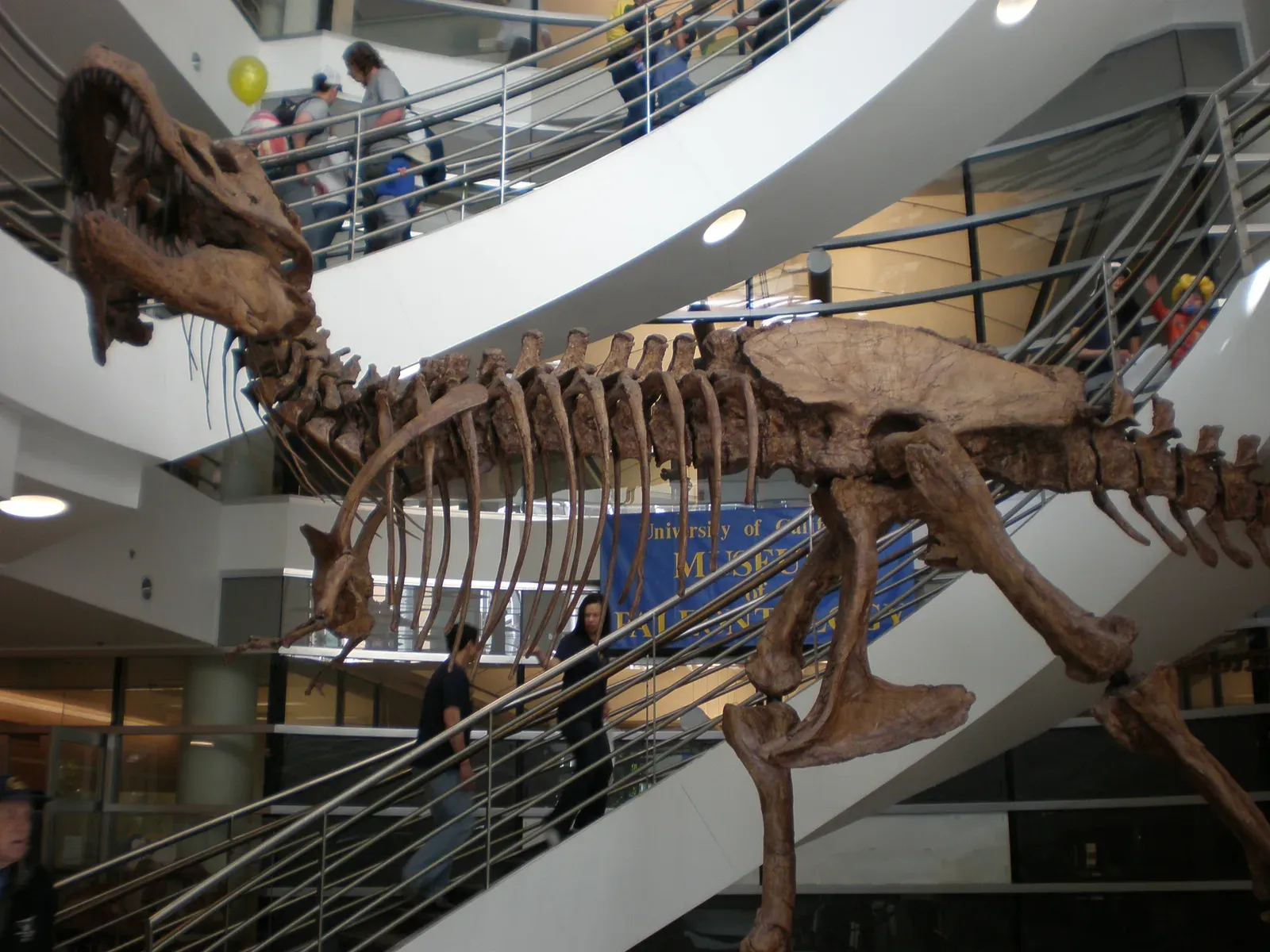
The story starts in August 1990, when fossil hunter Sue Hendrickson spotted a few weathered bones sticking out of a South Dakota cliff face after wandering away from her excavation crew. Those bones turned out to be part of the skull of a giant theropod, and once the team began digging, they realized they were looking at something unprecedented: an adult T. rex with far more of its skeleton preserved than anyone had seen before. For decades, T. rex had been known mostly from partial finds – jawbones here, vertebrae there – forcing scientists to assemble a composite animal like a Frankenstein puzzle.
What made this discovery extraordinary was not just that it was a T. rex, but how much of it was there. Preparators eventually recovered around 250 bones, representing roughly about nine tenths of the animal’s skeleton by bulk, including delicate elements like the wishbone and tiny ear bones that almost never show up intact. That is like finding not just the ancient ruins of a city, but its wiring, plumbing, and handwritten letters still on the kitchen table. From the moment SUE emerged from the rock, paleontologists knew they were dealing with a once‑in‑a‑generation specimen that would become the reference standard for T. rex research.
How “Most Complete” Really Is: Why SUE Stands Alone
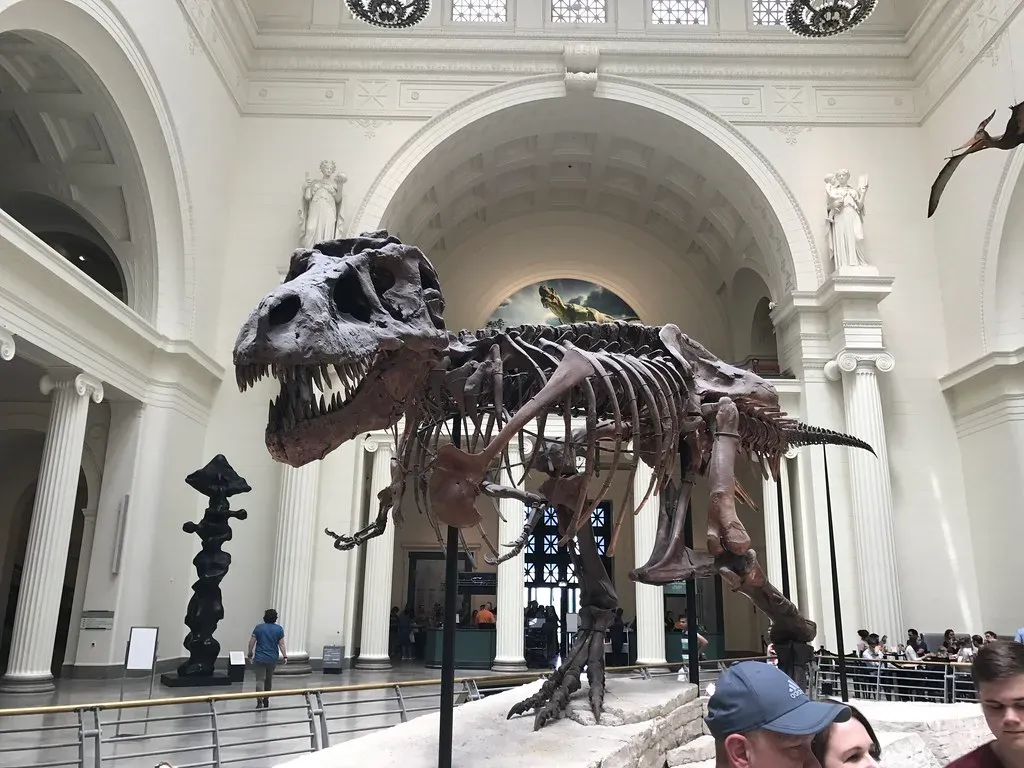
It is easy to gloss over the phrase “most complete skeleton,” but in dinosaur science that detail is everything. Most big dinosaurs are known from a frustrating handful of bones; in many species, you could literally lay out every known fossil on a large dining table. Even other star T. rexes like Scotty or Stan are only around two thirds complete or less by bone count. By contrast, SUE preserves almost the entire skeleton from snout to tail tip, including the most complete tail of any T. rex and an unusually intact rib cage and pelvis.
This kind of completeness changes the game. It allows researchers to stop patching in missing parts from other individuals or close relatives, which can quietly introduce errors, and instead rely on a single, coherent body plan. The result is that measurements of SUE’s limb proportions, skull shape, and vertebral column are considered the benchmark for the species. When you see a museum T. rex mount or a digital reconstruction in a documentary, chances are its proportions are either based directly on SUE or checked against its anatomy. In a field where most giants are ghosts of bone fragments, SUE is the rare dinosaur that feels solid.
Redrawing the Animal: Size, Posture, and the “T. Rex Look”
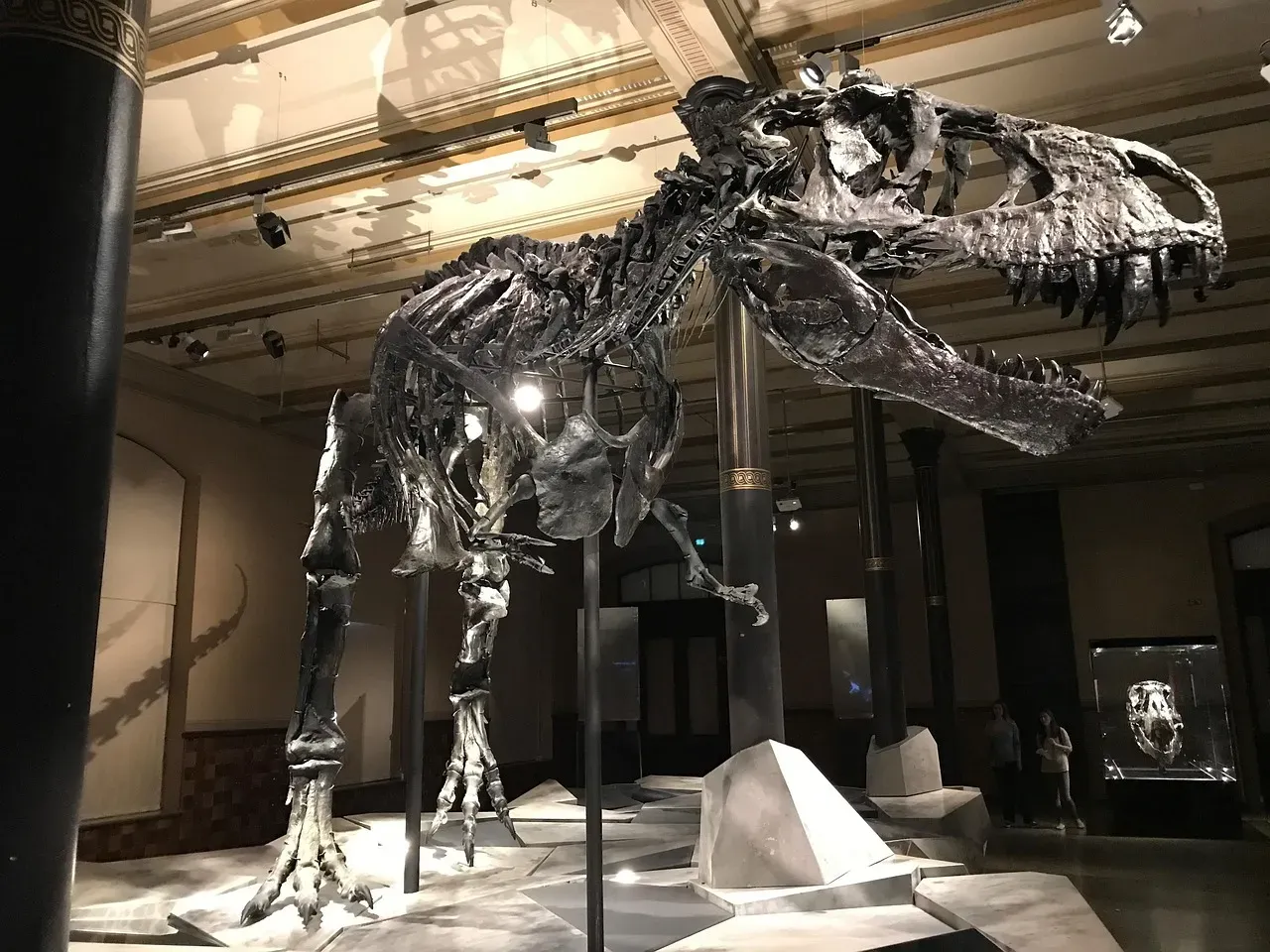
Before SUE, many T. rex mounts still leaned on older, tail‑dragging reconstructions that made the animal look like a sluggish, upright lizard. SUE’s nearly complete skeleton forced everyone to confront how the bones actually fit together in three‑dimensional space. The vertebrae and hip bones show a design built for a horizontal spine, with the tail acting as a massive counterweight to the skull, not as a limp prop on the ground. That helped solidify the now‑familiar image of T. rex as a dynamic, forward‑leaning predator with its head thrust out and tail held high.
There were surprises in the details, too. When you stand under SUE’s mounted skeleton, the head is enormous – more than a human is tall – but the legs are even more striking, built like columns yet with subtle signs of speed and agility in their proportions. Careful measurement of SUE and comparable specimens revealed that adult T. rex was not simply a heavier version of smaller predators; its limb bones, muscle attachment scars, and joint surfaces speak of an animal that could move faster than its bulk suggests, likely capable of brisk walking or fast trots rather than sprinting like a cheetah. SUE sharpened that picture, making T. rex look less like a slow movie monster and more like a specialized, power‑efficient hunter.
Reading Pain in the Bones: Disease, Injury, and a Hard Life
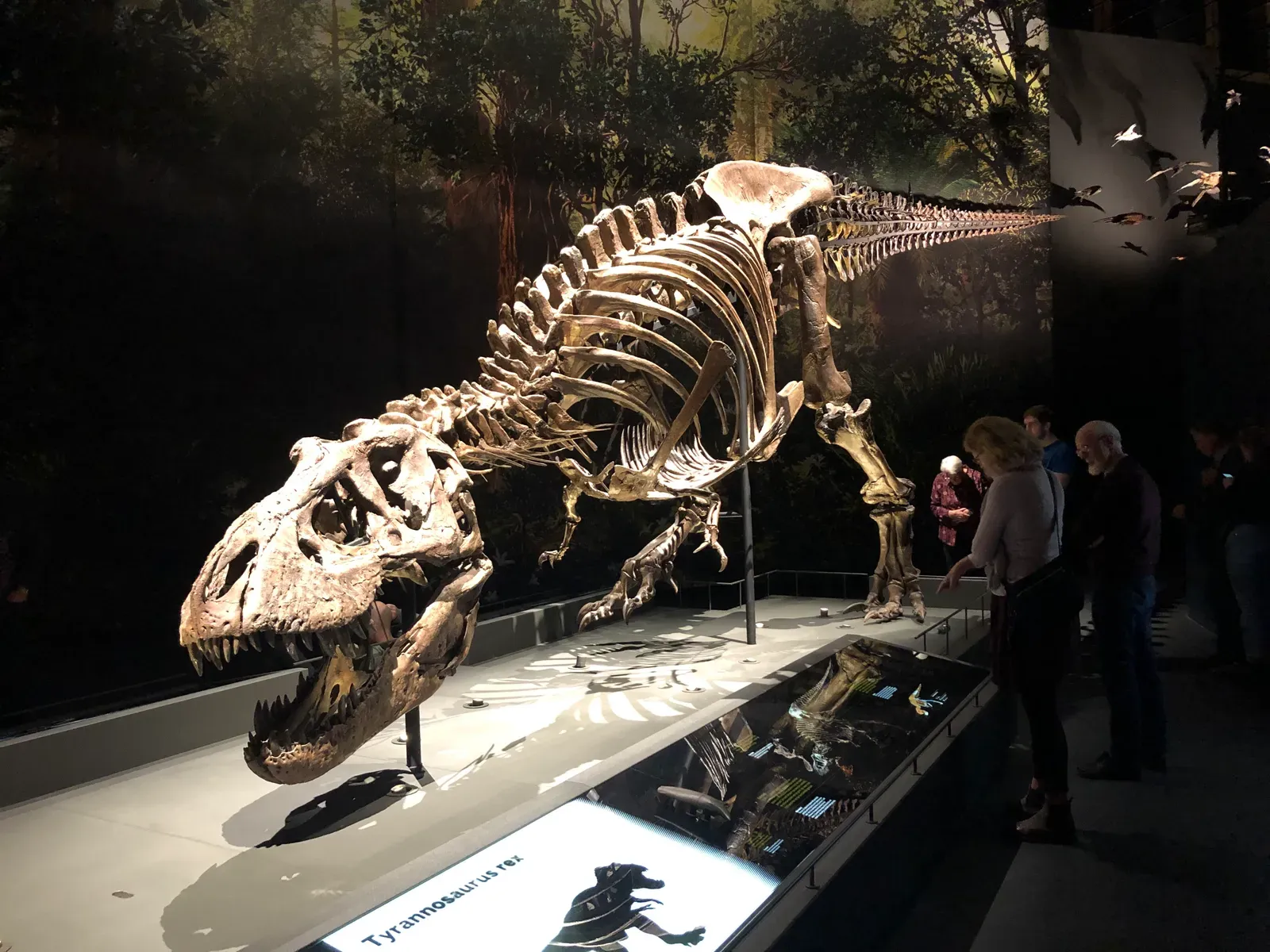
One of the most haunting things about SUE is how much suffering is written into the skeleton. Many of the bones show signs of healed fractures, infections, and arthritis. Several ribs bear evidence of old breaks that later fused, and some tail vertebrae have abnormal growths consistent with disease or injury. Even the jaw bones show puncture marks and damaged areas, probably the result of bites from other large predators – possibly even other T. rexes during fights over territory, food, or mates.
For a long time, dinosaurs were drawn as if they lived fast and died young, with little thought given to chronic illness or long‑term survival with injury. SUE’s bones tell a different story: this animal lived into late adulthood, likely around three decades, which is old for such a massive carnivore, and did so while carrying multiple serious conditions. That suggests T. rex was resilient, able to keep feeding and moving even when badly hurt, perhaps aided by scavenging behavior or social interactions that reduced the cost of hunting alone. It also makes SUE feel shockingly individual – less like a generic skeleton, more like a specific animal that had bad days, old wounds, and a tough but enduring life.
From Bones to Biology: What SUE Revealed About T. Rex’s Body
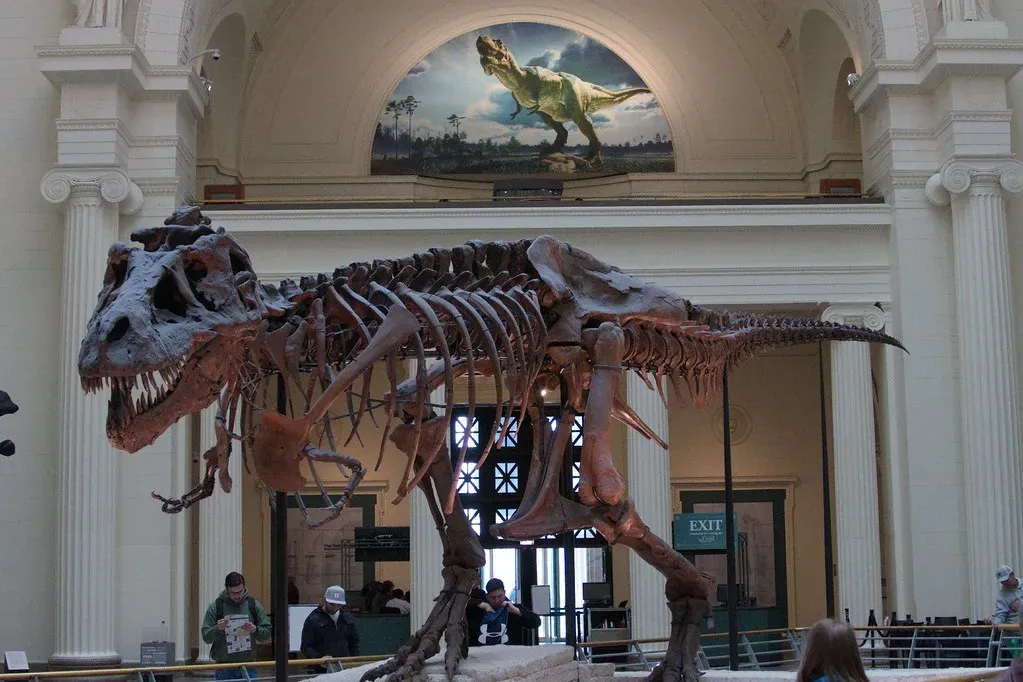
Because SUE preserves rare bones that were missing in other specimens, it gave scientists a far more detailed look at T. rex’s internal biology. The presence of a clear wishbone, for example, strengthened the evidence that large predatory dinosaurs shared key structural features with birds, not reptiles, aligning with the idea that birds are living dinosaurs. The fine bones in the skull and ear region helped refine models of T. rex’s senses, supporting the argument that it had powerful hearing and depth perception, more like an eagle or owl than a lumbering lizard.
Combined with muscle attachment scars and joint shapes, SUE’s skeleton allowed researchers to reconstruct how the jaw muscles anchored and how the neck and tail balanced the body. That work contributed to bite‑force estimates so extreme that T. rex is now considered one of the strongest biters in Earth’s history, able to crush bone and swallow large chunks of carcass. Even the structure of the ribcage and belly ribs fed into debates about how efficiently T. rex could breathe, with some reconstructions suggesting a bird‑like system of air sacs that would have made it a far more athletic animal than older cold‑blooded stereotypes implied.
Rethinking Behavior: Hunter, Scavenger, or Something in Between?
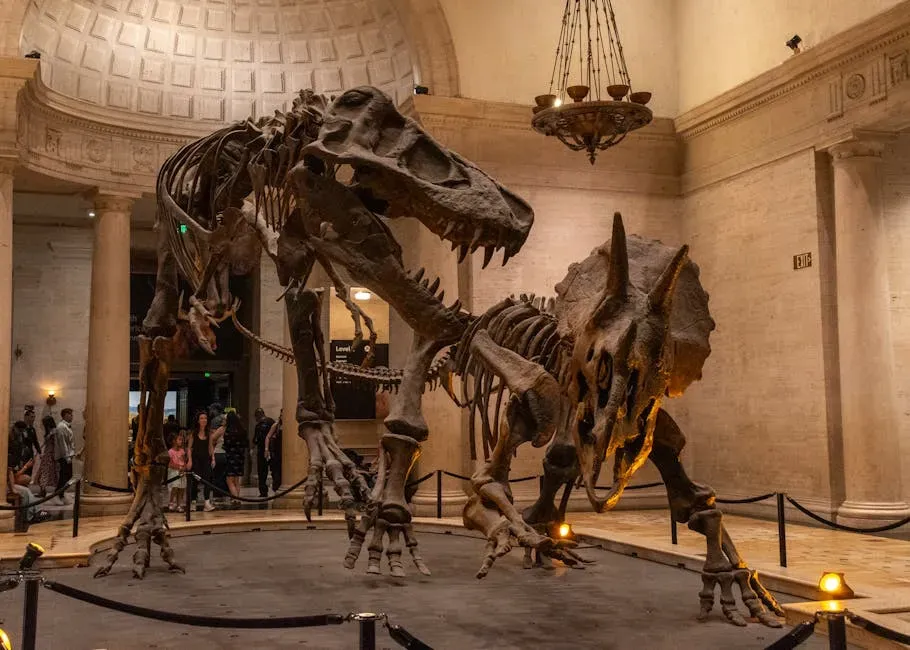
The almost complete set of teeth and jaw bones in SUE gave scientists a rare chance to study tooth wear, jaw injuries, and bite damage in detail. Some of SUE’s teeth show heavy wear and chipping that fits with repeatedly biting bone, not just soft flesh. That supports the idea that T. rex fed in a way more similar to modern hyenas than big cats, crushing bone as it fed and leaving behind heavily processed carcasses. At the same time, healed injuries to the skull and jaw suggest SUE survived serious face bites, hinting at intense face‑to‑face combat with rivals or mates.
Those lines of evidence fed into the long‑running argument over whether T. rex was primarily a hunter or a scavenger. SUE’s skeleton does not give a neat yes‑or‑no answer, but it tilts the scale toward a versatile apex predator: an animal that clearly had the tools and body plan to take down large prey, yet also exploited carcasses and probably stole kills from others when possible. In that sense, SUE helped move the conversation away from rigid labels and toward a more realistic view of T. rex as an opportunistic carnivore, just like large predators today that hunt, scavenge, and bully smaller carnivores in whatever mix the situation allows.
The Fossil That Sparked a Culture War Over Who Owns Deep Time
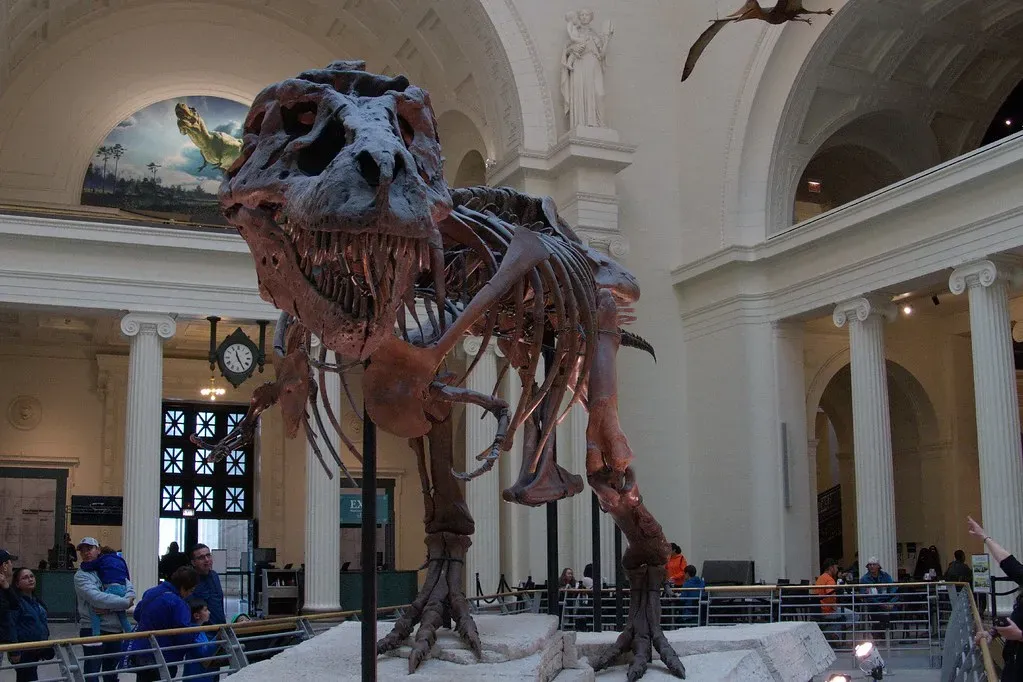
Beyond the science, SUE became a lightning rod for debates about who should control the deep past. After the skeleton’s discovery, a long and bitter legal battle played out over ownership, involving the landowner, the fossil company that excavated SUE, the local tribe, and federal authorities. In 1997, the bones were sold at auction for more than eight million dollars, an astonishing sum at the time, and purchased by a coalition that donated SUE to the Field Museum. That sale sent a message: dinosaur fossils were no longer just scientific specimens; they were big‑money assets.
That shift has only accelerated in the years since, with later T. rex specimens like Stan setting record‑smashing prices at auction and vanishing into private collections. SUE, in contrast, is publicly accessible and heavily studied, which has arguably amplified its scientific value many times over. In my view, SUE stands as the best argument that fossils of this importance belong in public institutions. The world did not just get an impressive display skeleton; it gained a shared research resource that has fueled countless studies, inspired a generation of paleontologists, and made one particular T. rex part of our collective story instead of someone’s private trophy.
Why This One Dinosaur Still Matters More Than Any Movie Monster
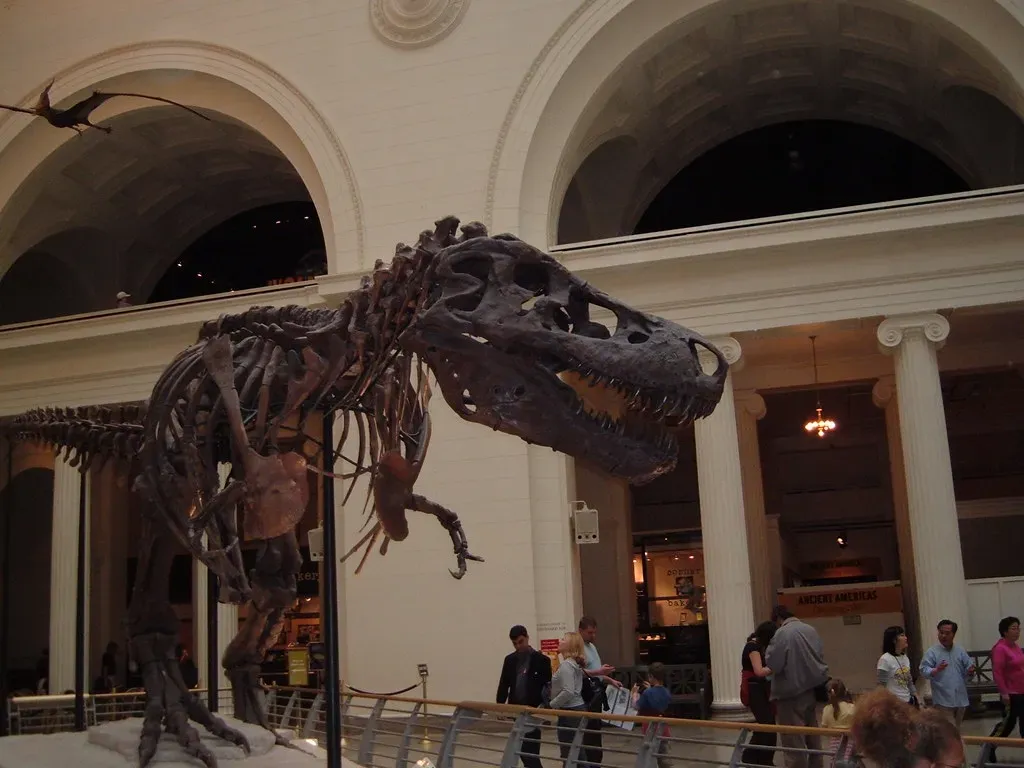
Three decades after its discovery, SUE remains the yardstick by which other T. rexes are measured and, frankly, the specimen that keeps humbling our assumptions. Every new big carnivore find – whether it is touted as larger, more robust, or more “spectacular” – still ends up compared back to this nearly complete skeleton. That is the power of having almost the whole animal: instead of arguing over vague reconstructions, scientists can return to specific bones, take new scans, and ask sharper questions. In an era of splashy dinosaur headlines, SUE quietly remains the solid baseline beneath the hype.
For me, the most extraordinary thing about SUE is not the size or the auction price, but the way this one fossil closes the distance between us and a world that vanished sixty‑six million years ago. Standing beneath that skull, you are not looking at a movie prop; you are looking at an individual who limped, healed, hunted, and aged. It is hard not to feel that if a single skeleton can rewrite so much of what we thought we knew, then our picture of the dinosaur world is still wonderfully unfinished. The real question is not whether T. rex was a monster, but what other lives and stories are still locked in the rock, waiting for the next lucky wanderer to look up and notice a few weathered bones – what would you guess we are still getting wrong?