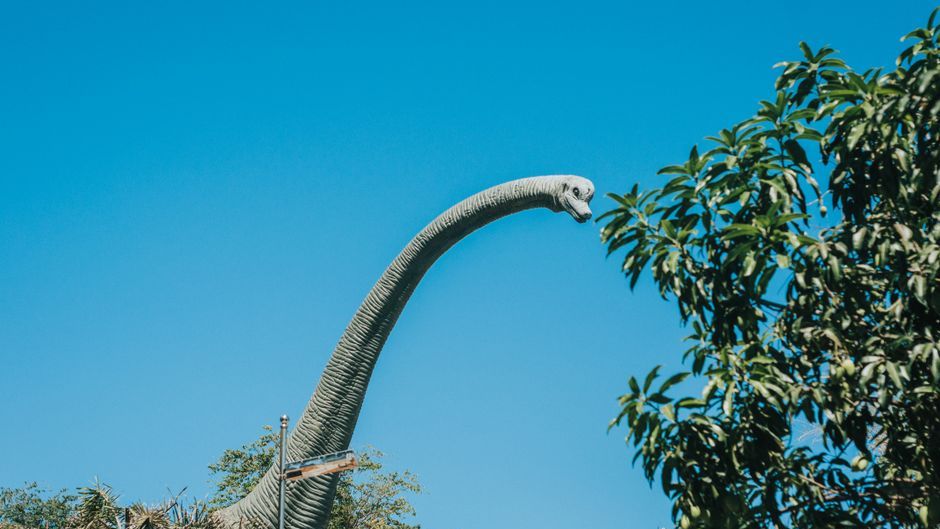
Picture a Brachiosaurus the way you’ve seen it a thousand times: front legs towering like stilts, neck arched in a perfect S-curve, head way up in the canopy like a living giraffe crane. It is such a familiar image that it feels unquestionable, almost like a childhood memory. But when you start digging into bones, muscles, blood pressure, and physics, that classic pose starts to look a lot less like science and a lot more like wishful thinking.
In the last few decades, paleontologists, anatomists, and computer modelers have quietly been pulling the rug out from under the textbook Brachiosaurus silhouette. The more carefully we compare it with real animals and with the actual joints in those vertebrae, the harder it is to justify that dramatic, permanently vertical neck. That doesn’t mean Brachiosaurus shuffled around like a horizontal sauropod plank – but the truth is probably more subtle, stranger, and, honestly, more interesting than the dinosaur posters on our childhood walls.
The Textbook Giraffe-Neck Brachiosaurus Is More Art Than Anatomy
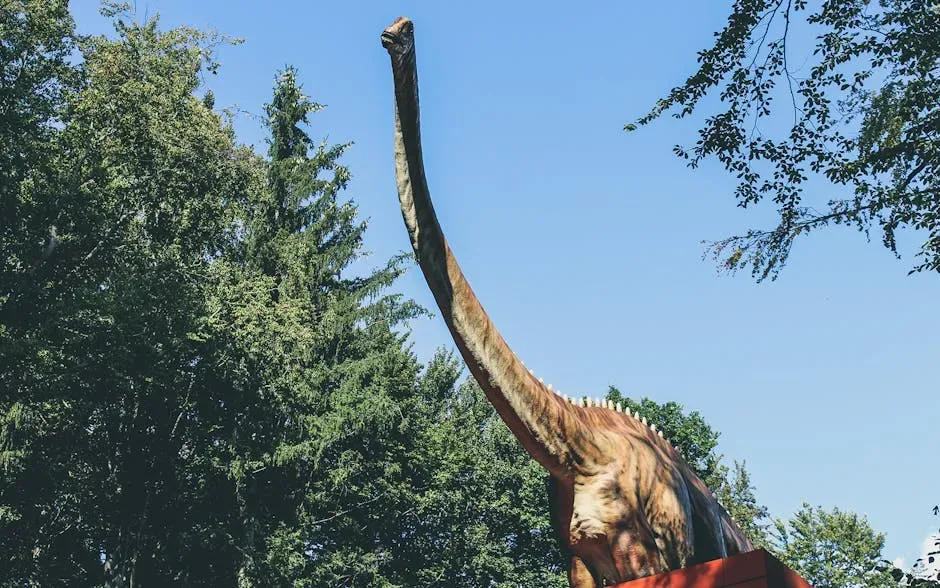
Those famous diagrams of Brachiosaurus with its neck shooting almost straight up were largely born in an era when dinosaurs were being rescued from the old swamp-monster stereotype. Artists and scientists wanted them to look active, powerful, and tall enough to tower over the tallest trees. So the neck was posed like a giraffe’s, because that was the closest living analogy people could think of, and for a long time nobody really questioned whether the bones could back that up.
But when you step back from the artwork and focus on the skeleton, that classic pose starts to feel like forcing a coat hanger into the shape you want. A giraffe’s neck, for instance, has specific joint shapes and a particular arrangement of muscles and ligaments that support the head high in the air. Brachiosaurus vertebrae are massive, complex, and not built as simple elongated giraffe copies. The old illustrations often connect those bones in ways that push them to their anatomical extremes just so the animal can hit that photogenic, skyscraper look.
Vertebrae Do Not Lie: What the Neck Bones Actually Allow
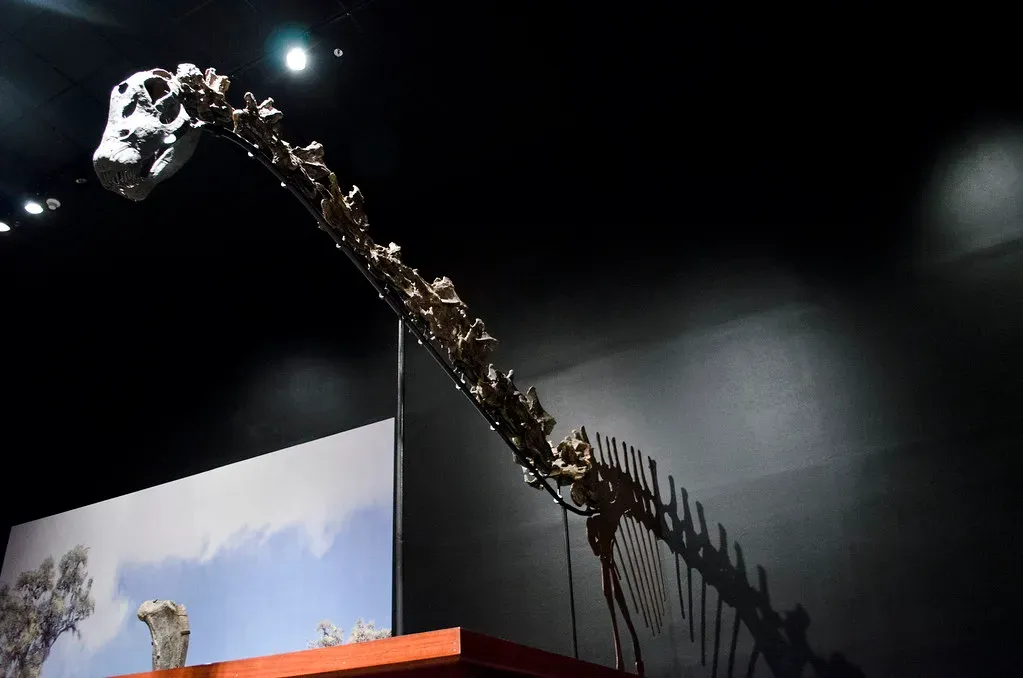
If you line up the neck vertebrae of Brachiosaurus and position them in what is called a neutral, or “resting,” alignment, the overall curve of the neck looks very different from the poster version. Neutral posture is how the bones sit when their joint surfaces are centered and not cranked to either extreme, which is usually how animals hold their heads most of the time to minimize muscle effort. When paleontologists reconstruct this neutral curve in sauropods, they often find a neck that is gently inclined, not a rigid telephone pole to the sky.
That does not mean Brachiosaurus could never raise its head higher; of course it had some flexibility. But there is a big difference between “can briefly reach” and “walks around all day like this.” Think about your own neck: you can tilt your head far back, but you would not look at the ceiling for hours without your muscles screaming. In a similar way, stacking Brachiosaurus vertebrae to maximize height ignores how animals naturally default to comfortable joint positions, not heroic ones. The realistic everyday pose likely had the neck angled forward and up, more like a long boom arm than a vertical crane.
Blood Pressure, Heart Power, and the Cost of a Sky-High Head
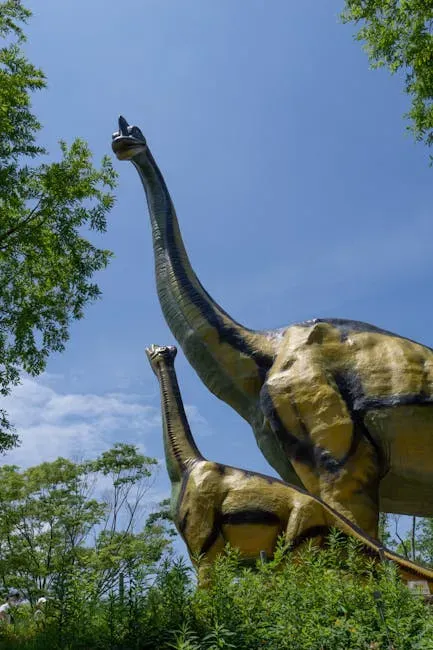
Even if you pretend the bones happily allow a nearly vertical neck, there is another brutal problem: getting blood up there. To keep a brain supplied with oxygen at extreme height, you need staggering blood pressure and a heart that looks more like a power pump than a normal organ. Estimates for a truly vertical sauropod neck often imply a cardiovascular system under immense strain, beyond what we see in the tallest living land animals, even the giraffe.
Giraffes already push the limits with thick-walled hearts and elevated blood pressure, and their necks are much shorter compared to a big sauropod. Now picture Brachiosaurus, many times heavier, trying to run that same trick on a grander scale. The higher the head, the more pressure you need to fight gravity, and the more dangerous a simple stumble or neck drop becomes for the blood vessels and the brain. A consistently high, vertical neck would not just be awkward for the skeleton; it could have been physiologically risky and extremely expensive to maintain day in and day out.
Necks Are Built for Range, Not Just for Height
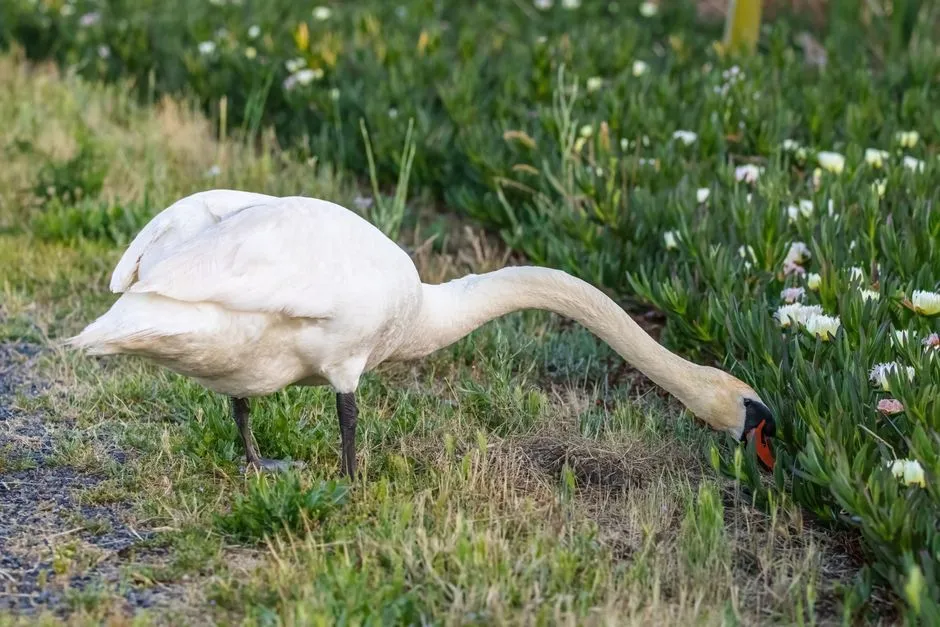
One of the biggest misconceptions buried in those old diagrams is the idea that the neck’s “main job” was simply to reach the highest leaves. In real animals, long necks are usually about reach in all directions, not just height. Think of a swan gliding along and sweeping its head across the surface of the water, or a goose grazing over a wide area without moving its feet much. Brachiosaurus, with its long neck and front-heavy posture, was probably using that neck like a slow, sweeping arm to cover a broad feeding envelope around its body.
If the neck is primarily about flexible feeding, the most useful position is not vertical but gently forward and slightly up, where the animal can swing left, right, and in arcs without huge adjustments to the rest of the body. A neck frozen straight up is almost like pointing a flashlight into the sky when you are trying to look around a room. Evolution tends to favor positions that minimize energy use and maximize useful motion, and a more moderately inclined, wide-ranging neck checks those boxes much better than the towering, almost theatrical pose of the diagrams.
Comparing Brachiosaurus to Living Animals Sends a Warning Signal
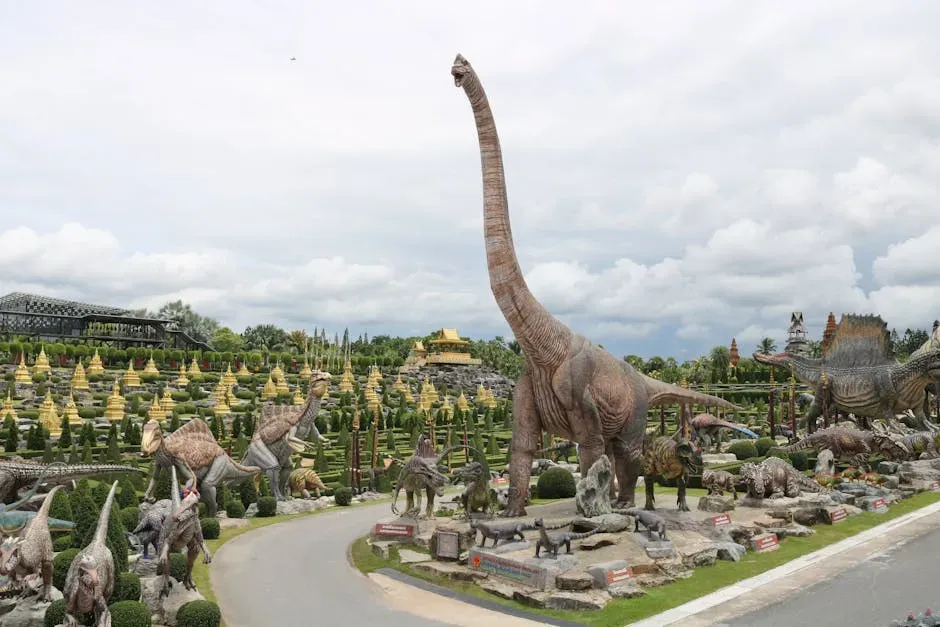
Whenever paleontologists are unsure how to pose an extinct animal, they look to living creatures with similar body plans. For Brachiosaurus and its relatives, that usually means a mix of large land mammals and long-necked birds and reptiles. Across those groups, you do not see animals holding their necks straight up as a default. Even giraffes, the classic high browsers, keep their necks at a slant most of the time and only hit the full upright pose briefly when scanning or reaching.
Large animals also tend to be conservative with energy. They pick neck and head positions that reduce muscle strain and avoid putting unnecessary load on their joints and hearts. When you realize that nearly no modern long-necked vertebrate spends all day with its neck maxed out, the idea that Brachiosaurus just lived in that extreme pose starts to feel very unlikely. The more we cross-check bones with living analogs, the more that skyward, permanent pose looks like an artistic exaggeration rather than a biological norm.
Computer Models and Biomechanics Are Quietly Rewriting the Silhouette
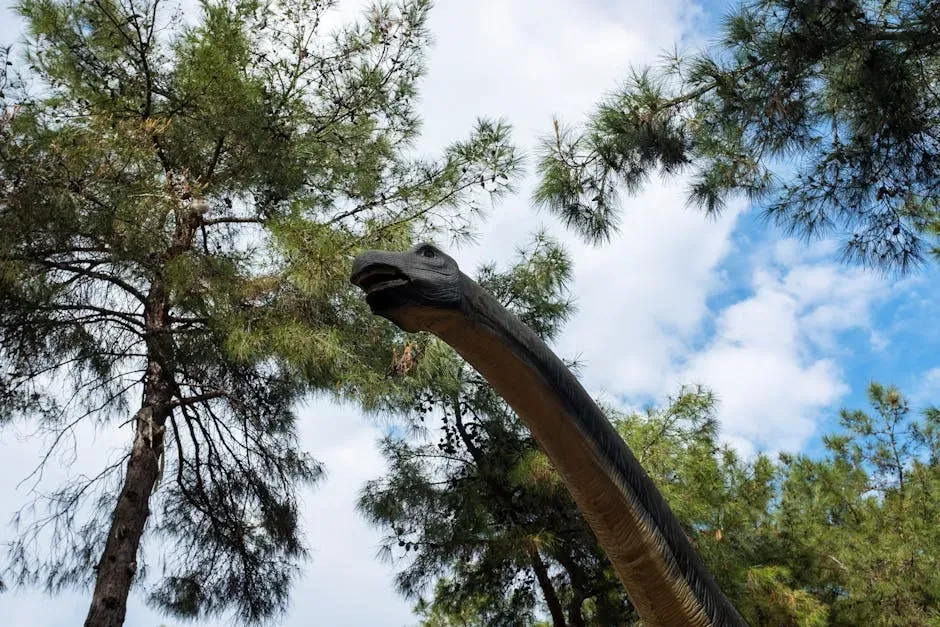
Modern reconstructions are no longer just a person with a pencil guessing where the neck might go. Researchers now plug detailed digital models of Brachiosaurus vertebrae into software that can simulate joint motion, check for bone collisions, and estimate the range of comfortable movement. These models tend to spit out neck postures that are more inclined than vertical, with a natural S-curve that keeps the head elevated but not at the literal treetop summit that classic posters love.
Biomechanical studies also look at things like ligament tension, muscle leverage, and how often an animal could realistically use its full range of motion. The result is a Brachiosaurus that probably could raise its head impressively when needed, but that spent much of its time in a more sustainable, mid-range pose. The irony is that the more accurate these reconstructions become, the less they look like the iconic image many of us grew up with. The real animal is starting to emerge as something less theatrical but far more plausible and, in its own way, even more impressive.
The Emotional Truth: Why We Cling to the Old Posture Anyway
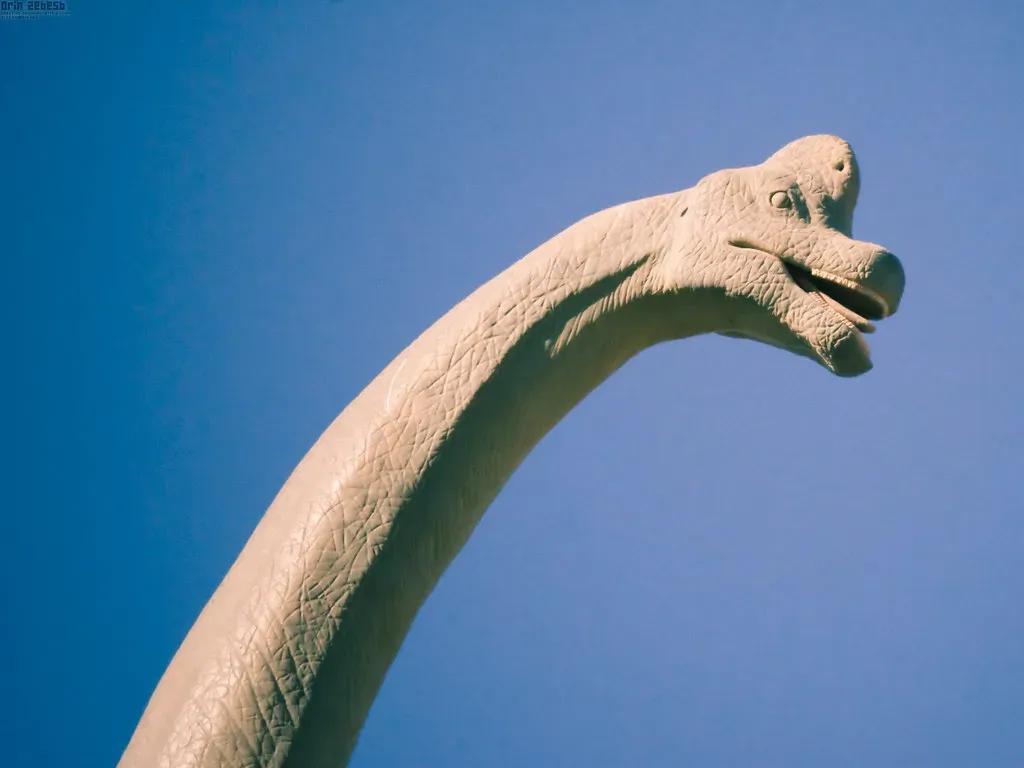
There is a psychological side to all this that has nothing to do with vertebrae and everything to do with nostalgia. That soaring-neck Brachiosaurus is burned into our brains from childhood books, museum murals, and early CGI movie scenes. It is the dinosaur that made people gasp, the one that finally pulled them out of the mud and into the canopy. Letting go of that image feels, for a lot of people, like losing a little bit of that awe.
I get it, because I had that same poster on my wall as a kid, and part of me still loves that impossible, tower-of-a-neck silhouette. But as the science sharpens, clinging to the old picture just because it feels grand does a disservice to how truly strange and carefully engineered these animals were. The real Brachiosaurus, with a neck held at a strong but not absurd incline, sweeping through space like a living crane arm, is no less majestic. It is simply majestic in a way that pays attention to physics instead of ignoring it.
Opinionated Conclusion: A Less Vertical, More Interesting Giant
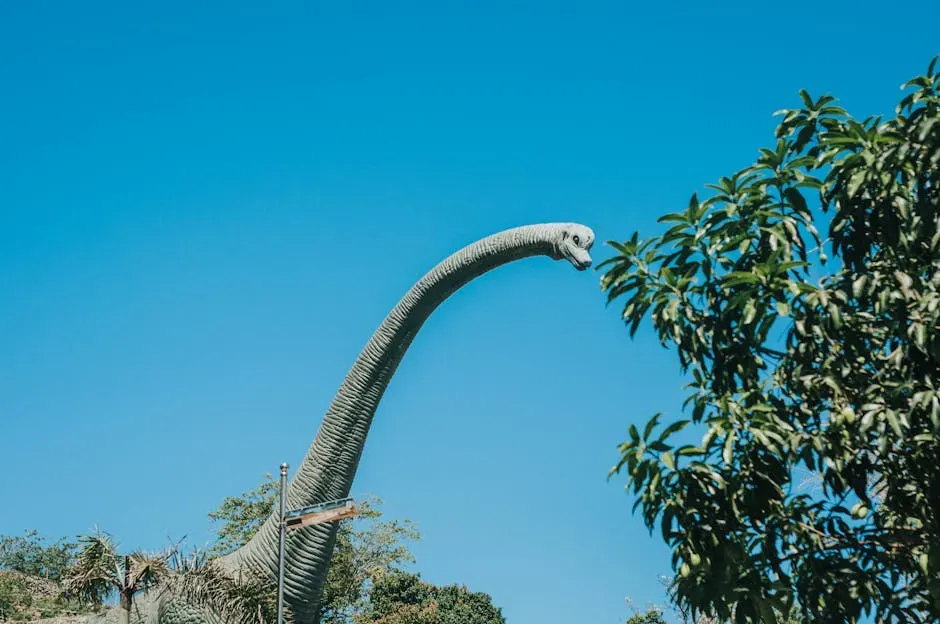
When you weigh the bone mechanics, the cardiovascular demands, the comparisons to living animals, and the computer modeling, the odds are stacked heavily against the idea that Brachiosaurus walked around with its neck pointed straight at the sky. Could it lift its head very high at times? Almost certainly. But turning that occasional reach into its everyday pose is like assuming humans spend all day standing on tiptoe just because we can. The older diagrams overshoot what the evidence can comfortably support.
In my view, the insistence on the classic vertical-neck Brachiosaurus says more about our love of dramatic silhouettes than it does about the biology of sauropods. A forward-angled, wide-sweeping neck fits the data better and paints a picture of a smarter, more efficient feeder, not just a height-obsessed tree grazer. That might not match the poster you grew up with, but it gives us a dinosaur that is less cartoonish and more real, which to me is far cooler. The next time you see that impossibly upright neck in a diagram, will you still buy it – or will you start to see it as the dinosaur version of a movie stunt shot?