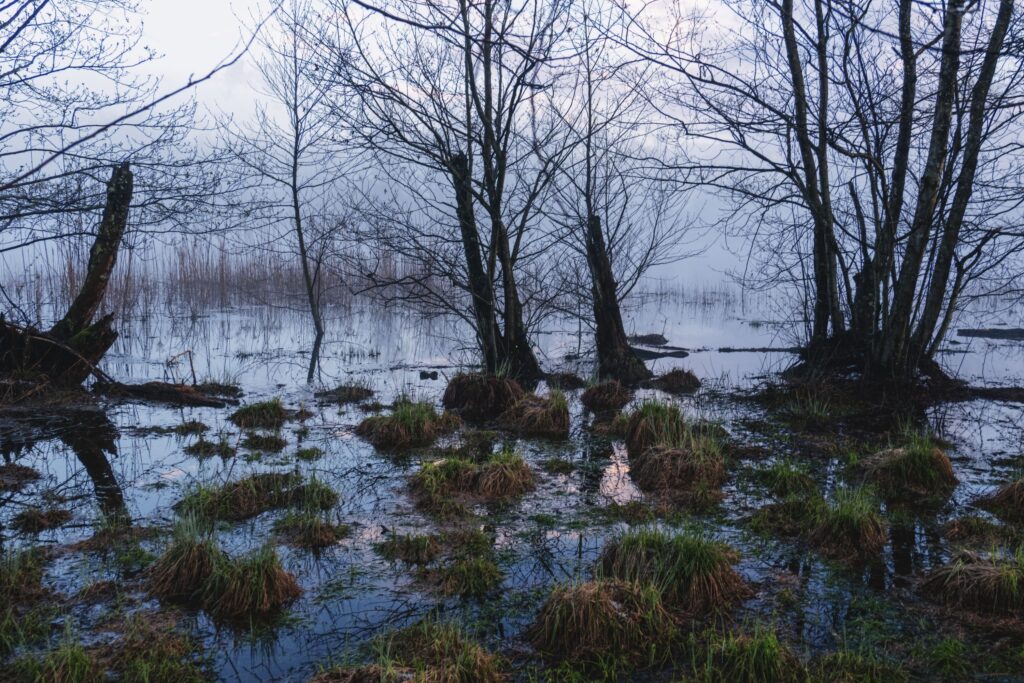
Imagine standing on the edge of a vast swamp forest, the sky hazy with ancient humidity, and realizing how strangely quiet everything is. No birds gossiping in the trees, no mammals chattering, no frogs calling to each other at dusk. Three hundred million years ago, in the late Carboniferous and early Permian, Earth was alive with movement and growth, but to human ears it would have felt uncannily muted, like walking into a movie scene where the soundtrack has been turned down too low. The world was not truly silent, of course. Air, water, and rock were already experts at making noise: wind roared, waves crashed, trees creaked, and thunder rolled. But complex, melodic animal voices had not yet arrived. Most land animals could do little more than hiss, rustle, scrape, or slam their jaws shut. If you were dropped there with your modern ears and asked to describe it, you might say it felt more like industrial ambient noise than a living chorus: constant, physical, even overwhelming at times, yet missing the songs and calls we unconsciously expect from any landscape with life.
The sky and forests without birdsong
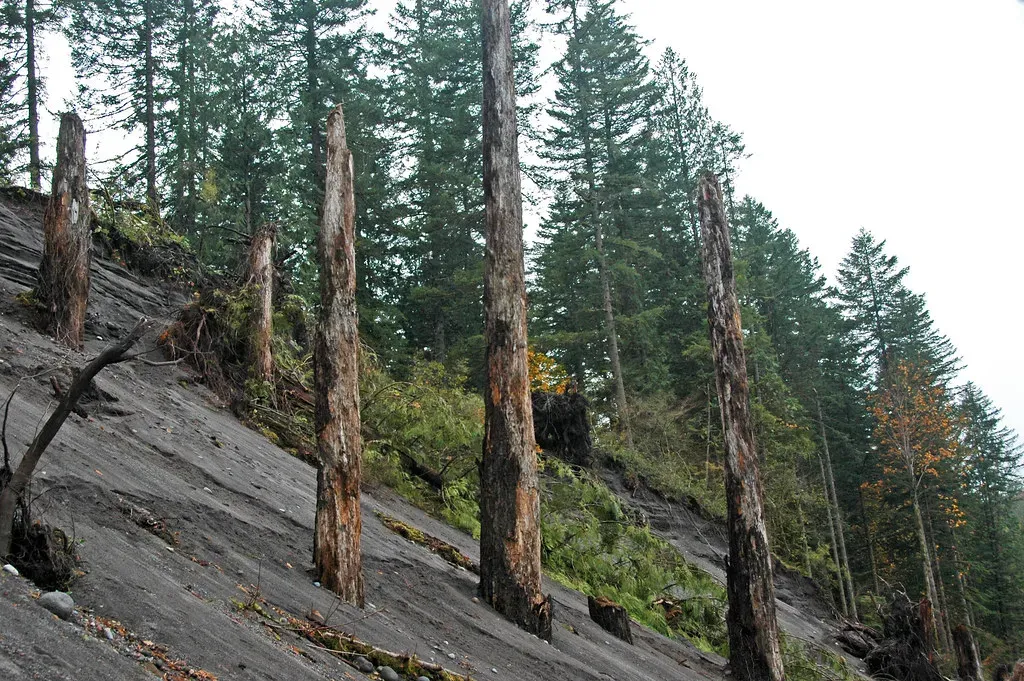
Think about the last time you stepped outside early in the morning and heard birds everywhere, even in a busy city. Three hundred million years ago, that familiar soundtrack simply did not exist. There were no birds yet, no soaring silhouettes crossing the sky, no flocks settling into branches with a burst of chatter. The canopy in those ancient forests would have been visually dense but acoustically sparse, filled with the sigh of wind through enormous tree-like plants, but none of the rapid-fire trills or repeated phrases that dominate modern soundscapes. Forests were dominated by towering lycopsids, horsetails, and seed ferns, forming something like a slow-motion green cathedral. Inside those shadowy spaces, sound would have tended to be low, broad, and physical – branches cracking, bark peeling, leaves rubbing, trunks groaning in the wind. If something suddenly snapped or crashed, it was probably a falling tree, not a startled animal. That alone is eerie to imagine: a forest where the loudest daily events are the plants themselves, not the creatures living among them.
Wind, thunder, and the loudest “voices” on the planet
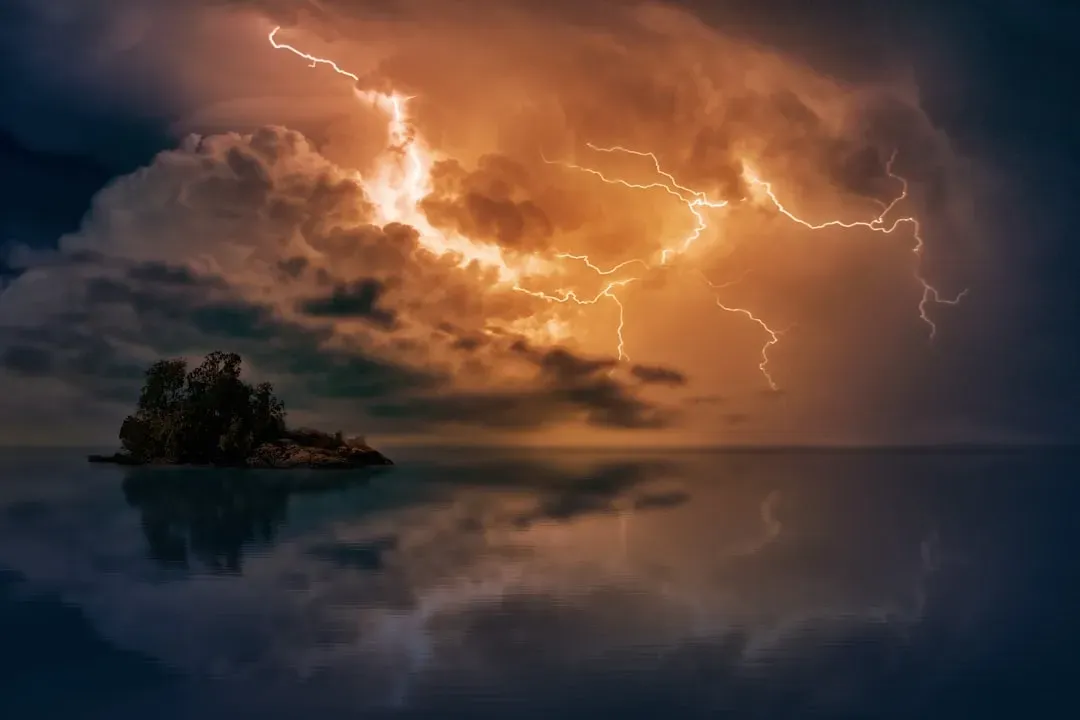
With no birds or mammals sending complex calls into the air, the loudest and most dramatic sounds in the terrestrial world belonged to the weather. Storm systems still built, collided, and released energy in the form of thunder, just as they do today. Thunder over those enormous coal-swamp forests or the early dry interiors of Pangaea would have rolled deeply, echoing over flat floodplains and bouncing between stands of trees. A sudden crack of lightning striking a giant lycopsid would have been terrifyingly loud against a background that, most of the time, was relatively quiet by our standards. Wind itself was probably a constant composer, especially at the edges of vast tropical wetlands. When it moved through the tall, reed-like plants and primitive trees, it would have produced layers of soft hiss, low hum, and occasional sharp snaps as weak branches gave way. On the growing supercontinent, wide, open interiors started to dry out, and there the wind may have picked up dust and sand, scraping it across rock. To human ears, that might have sounded like a never-ending dull roar in some regions – a sound we now associate with remote deserts or coastal storms, not with the heart of a world brimming with evolving life.
The rhythmic roar of ancient shorelines and shallow seas
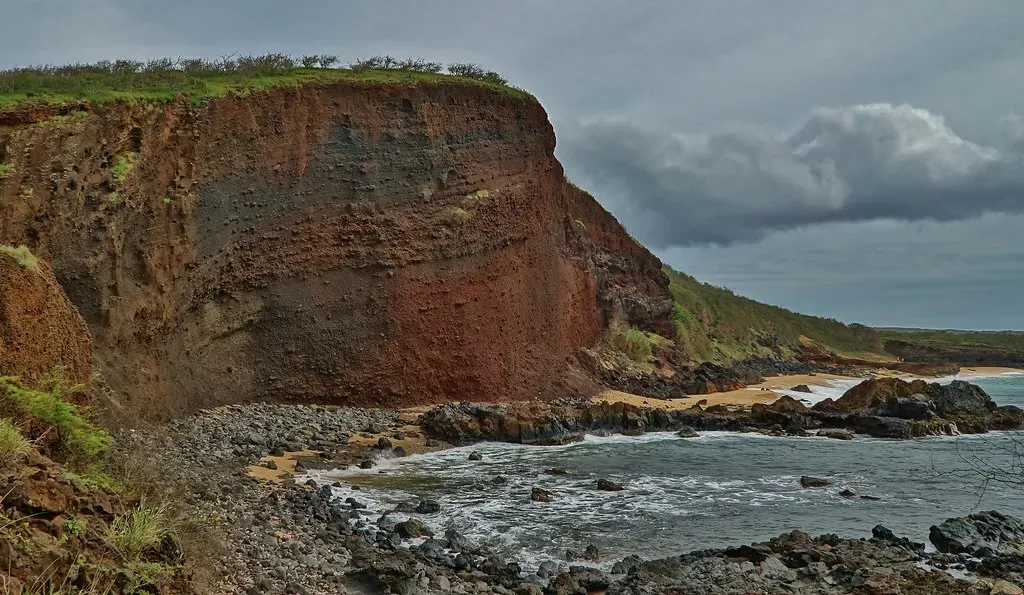
If you walked from the forest out toward the coastline, the soundscape would have shifted gradually from soft, leafy hiss to the deeper rhythm of waves. Shallow inland seas and coastal margins were extensive in this era, and waves crashing against muddy shores, reefs, and sandbars were already playing the same tune they do today, just in slightly different keys depending on water depth and basin shape. The huge, slow motion rise and fall of tides would have created a heartbeat-like cycle of sound: quiet lapping at low tide, heavier pounding during storms and high winds. These watery borders were also where a lot of the more subtle, living sounds were concentrated. Aquatic life was already diverse and busy, and that activity makes noise even when there are no voices involved. Large fish and early amphibians disturbed the surface with splashes and ripples. Shells tumbled, burrowing animals shifted sediment, and water flowing through reefs or dense plant growth produced a muffled, continuous murmur. To your ears, it would feel a bit like listening from just behind a door – a sense that something busy is happening, but without clear, sharp calls to tell you who is there.
Invertebrate noises: clicking, buzzing, and wings in heavy air
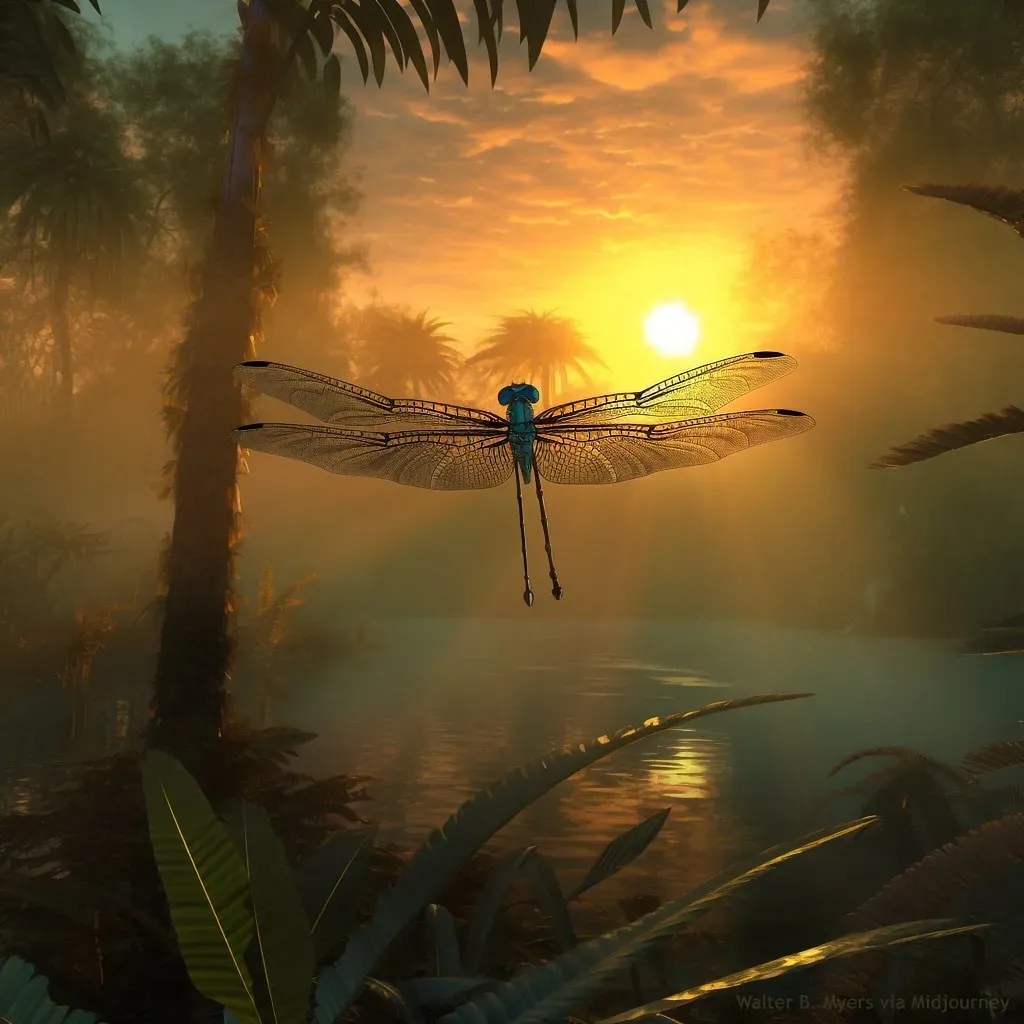
By 300 million years ago, insects were not only present; many were impressively large. Dragonfly-like griffinflies with wingspans wider than your arm, giant roaches, and early relatives of grasshoppers and crickets were all part of these ecosystems. However, the full, familiar orchestra of insect songs may not have been fully developed yet. Some groups that today produce loud chirps and trills were only just emerging, and specialized sound-making structures and ears were still evolving. That does not mean invertebrates were silent. Wings beating through the thick, oxygen-rich air of the late Carboniferous would have generated a deep, physical hum, especially from large flying forms. Hard-bodied insects clacking against leaves, shells scraping over rocks, and countless tiny feet rustling through leaf litter would have built up a constant, whisper-level texture under everything else. It is the kind of sound modern humans barely notice unless we specifically stop and listen for it – a subtle acoustic “grain” that tells you, at a subconscious level, that the ground is alive even if nothing is shouting about it.
What vertebrates could do with sound before true voices evolved
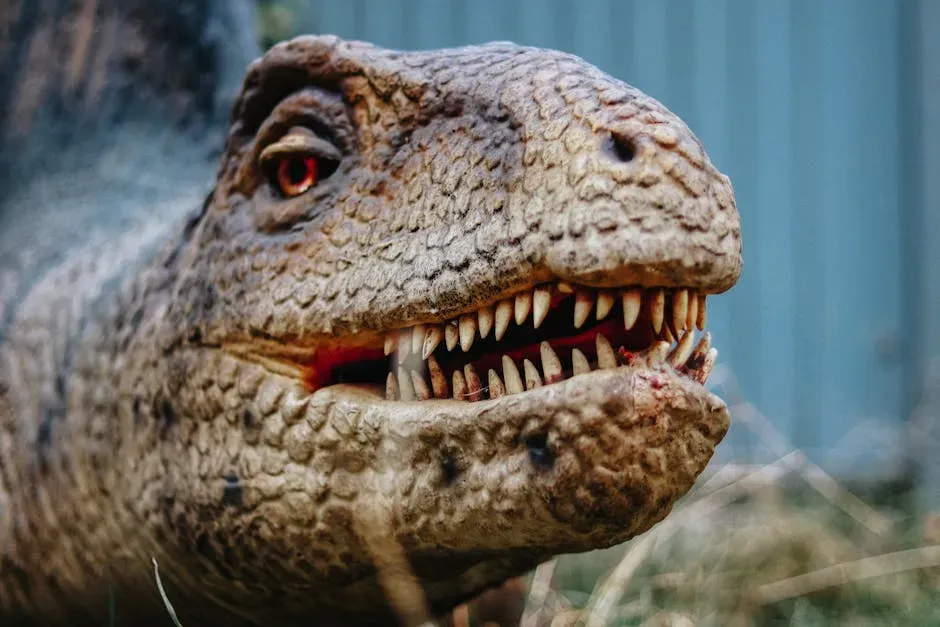
On land, the earliest amniotes – relatives of what would eventually become reptiles, birds, and mammals – were mostly small, stealthy, and limited in their vocal skills. Without highly developed larynxes or syrinxes, they probably produced only simple exhalations, hisses, and maybe rough grunts or snorts, generated as air was pushed through basic respiratory passages. These would have been short, harsh, and close-range sounds, more like the noise you make when you expel breath sharply through your teeth than anything you’d call a call or a song. Many of these animals relied more on posture, movement, and chemical signals than on loud sound to communicate and defend themselves. A sudden hiss, a rapid scramble through dry leaves, or the abrupt crack of jaws snapping shut on prey might have been enough to convey “danger” or “back off” at short distances. To a modern human, these sounds would feel more like jump scares than like conversation: isolated, blunt events that puncture an otherwise low-level background, rather than structured, repeated messages carrying complex information.
Water worlds full of sound: fish, amphibians, and hidden vibrations
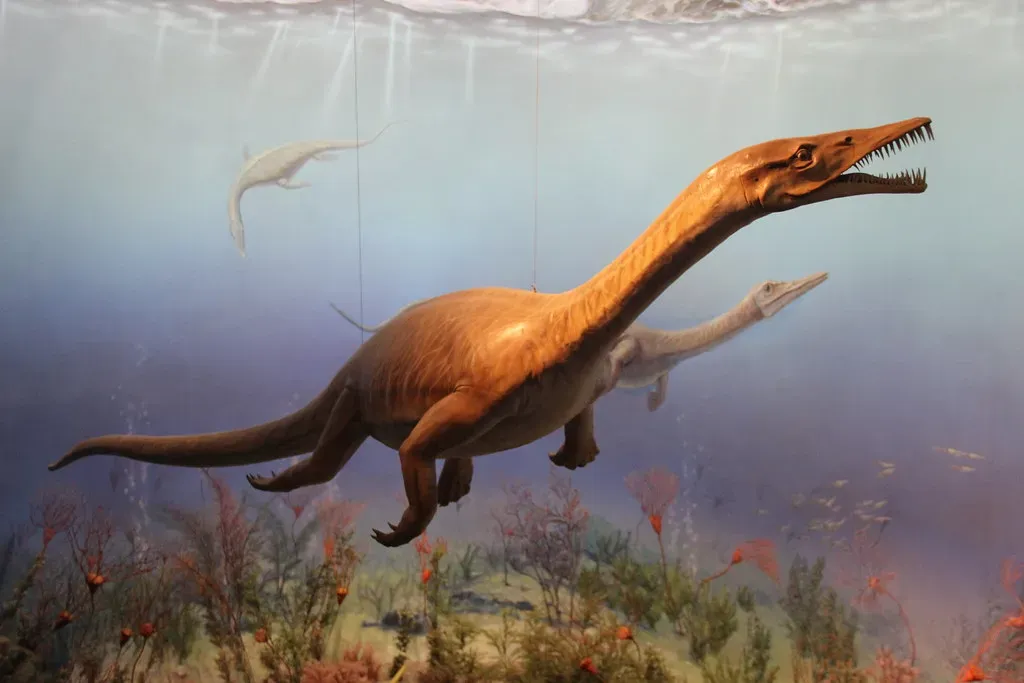
While land stayed relatively quiet, water was already an acoustically active world. Sound travels faster and farther in water, and many aquatic animals had bodies and behaviors that lent themselves naturally to noise. Large fish slapping their tails, schools of smaller fish turning in unison, and early sharks cutting through shoals would all have produced thumps, rushing sounds, and low-frequency pulses. These may not have been intentional signals at first, but any creature with even a basic sensitivity to pressure changes and vibrations could sense them. Early amphibians and aquatic tetrapods probably added to this underwater soundtrack with limb strokes, splashes, and impacts on the riverbed or lake floor. Some researchers suspect that simple forms of communication using vibrations and low sounds may have started in water before complex air-borne calls became common on land. Even if these were crude and not yet refined into “voices,” the bodies of these animals acted like drums and paddles, turning routine movement into a kind of incidental music that echoed through shallow rivers, lagoons, and swamps.
The quiet drama of predation and escape on land
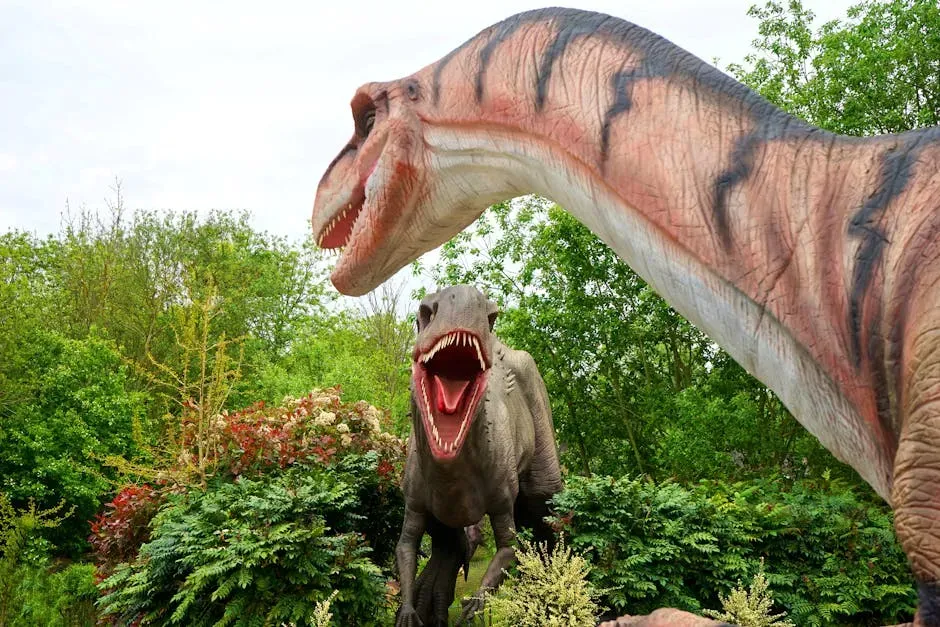
Predator–prey interactions on land, even in a world without roars or screams, were rarely silent. A stalking early synapsid – part of the lineage that would much later give rise to mammals – would have set off a chain of noises long before any direct contact: twigs cracking under its feet, dried fronds crunching, soil and litter shifting under its weight. The prey, startled into motion, would answer with their own series of rustles and scrapes as they bolted for cover. To a human observer, the encounter might sound more like someone tearing paper and snapping kindling than like an animal drama. Because vocal alarm calls were still very limited, sound in these moments was more a by-product of movement than a deliberate warning system. That likely shaped how these animals behaved: staying close to cover, moving in short bursts, and freezing often to minimize noise. In a strange way, the relative lack of loud signals may have made these scenes even more tense. Instead of obvious cries, there would be sudden spikes of chaotic rustling that flare up and then vanish back into an uneasy, watchful quiet.
How the atmosphere itself shaped the ancient soundscape
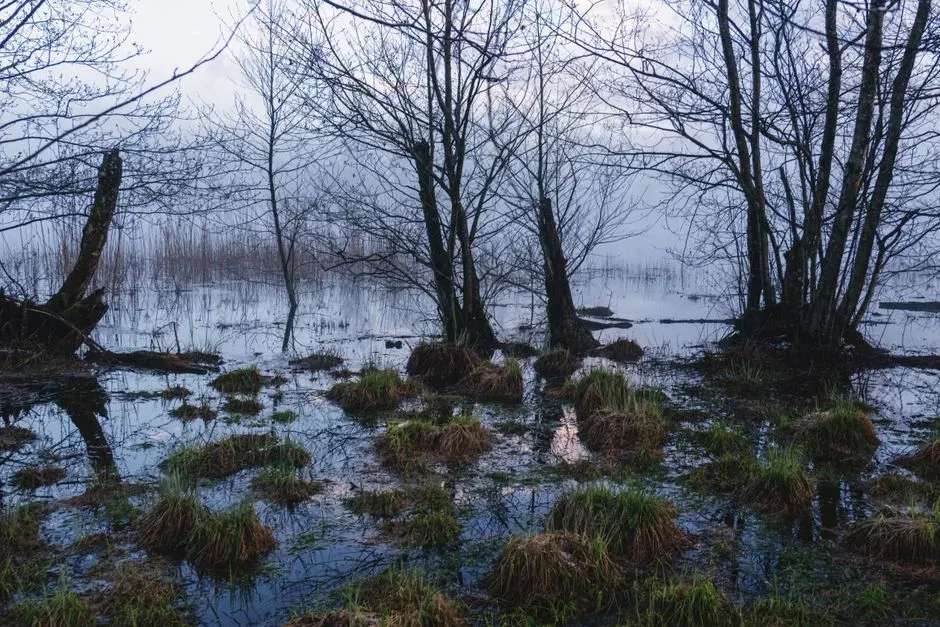
The air three hundred million years ago was not exactly like the air today. Oxygen levels during parts of the late Carboniferous were higher than modern levels, and atmospheric composition shifted as giant swamp forests pulled carbon dioxide out of the air and buried it as organic matter. While the basic physics of sound would still apply, differences in temperature profiles, humidity, and gas composition can subtly change how far and how clearly noises travel. Humid, vegetation-rich lowlands, for example, tend to muffle high-pitched sounds and favor low, rumbling frequencies. That means the hisses, snaps, and wing beats that did exist would have been filtered heavily by the medium around them. The world might have felt acoustically “softer” overall, with fewer sharp, piercing sounds and more diffuse, enveloping noise. If you shouted, your own voice might have felt strangely alone, almost intrusive against an environment that had not yet filled the air with animal messages. We often think about prehistoric worlds visually, but here the air itself probably created a kind of auditory mood, wrapping everything in a blanket of damp, low-frequency whoosh and crackle.
Imagining this alien quiet from a noisy modern planet
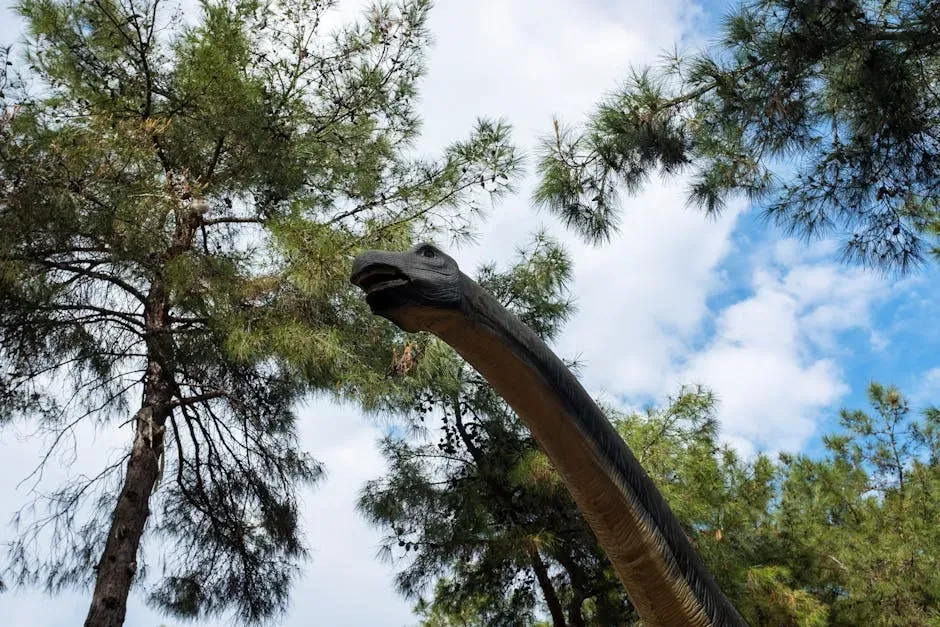
Trying to reconstruct this ancient soundscape from the present day is like trying to guess the melody of a song from just a bass line and a drum track. We have fossils, sediment cores, climate models, and detailed studies of modern animals that give us clues about what could and could not have been heard, but there is no direct recording, no way to be entirely certain about the finer details. Still, when you strip away birdsong, mammal calls, and the mechanical roar of our machines, what is left feels surprisingly consistent: weather, water, plants, and the incidental noise of bodies moving through matter. Personally, I think the biggest shock, if we could visit, would not be how empty it sounds but how physical everything feels. Instead of being led by melodies and calls, you’d navigate by thumps, crashes, rustles, and distant rumbles, like walking through a long, slow thunderstorm that never quite breaks into full chaos. It is tempting to romanticize that past as a peaceful, meditative hush, but I suspect it would have been emotionally unsettling – a reminder that life does not need to speak in the way we recognize for the world to be full, busy, and loud in its own, very alien language. Would you find that kind of quiet soothing, or would it make you long for the first bird to finally open its beak and sing?