Imagine if a paleontologist, a geneticist and a physicist sat down to binge-watch The Flintstones. They would probably enjoy the show, laugh at the puns… and then quietly start losing their minds. Bedrock is a mash‑up of vastly different time periods, biological impossibilities and technological anachronisms that never had a chance of co‑existing in the same reality.
In this ranking, we are not asking whether The Flintstones is realistic overall (spoiler: it is not). Instead, we are lining up some of the most recognizable characters and asking a very specific question: if you tried to drop this character, as shown on screen, into actual Earth history and real biology, how impossible would they be? We move from the least impossible (still absurd, but slightly closer to reality) to the most outrageous violations of science and history.
1. Fred Flintstone – a Stone Age man with a 1960s lifestyle
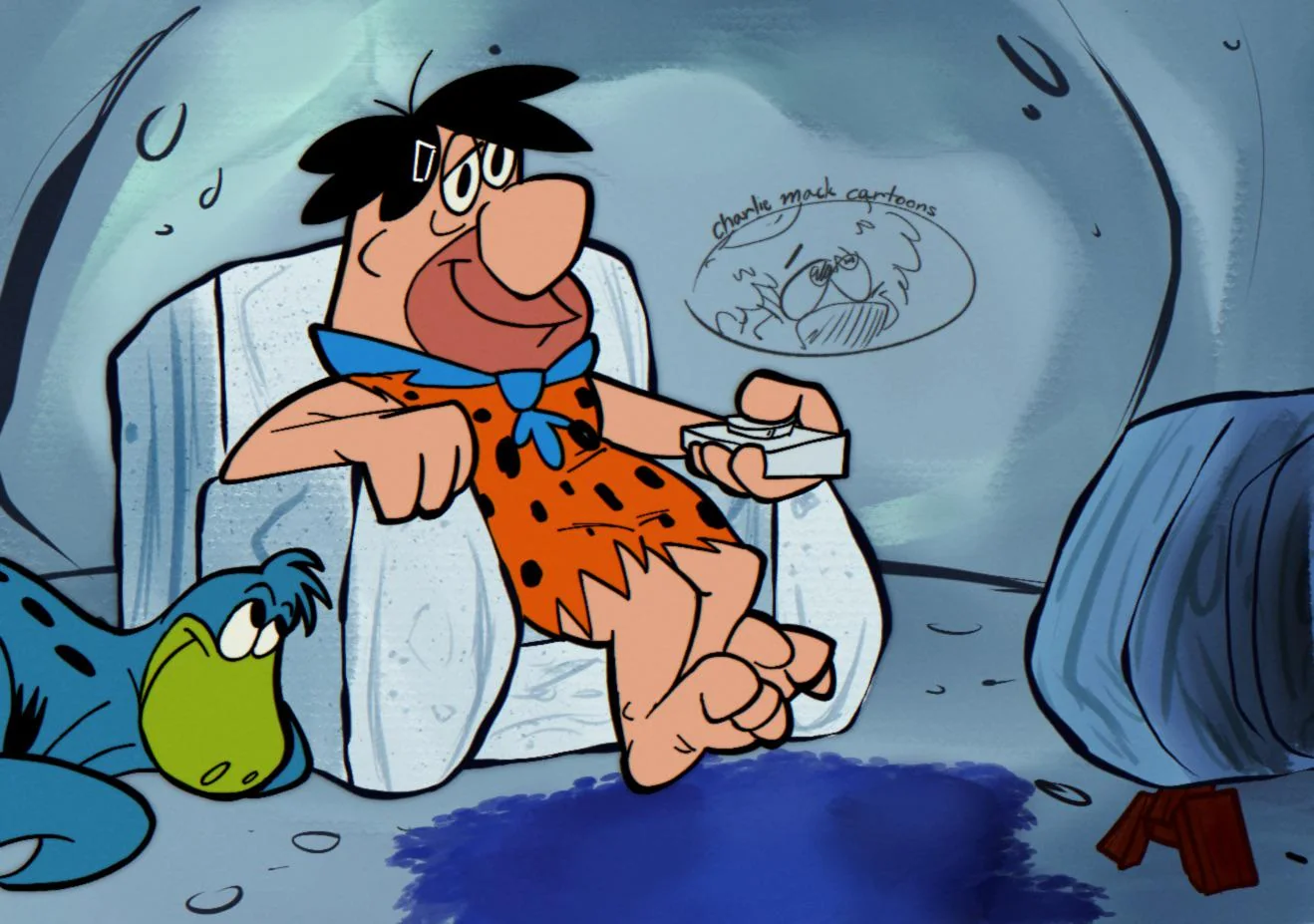
Fred himself is one of the least scientifically impossible elements in the series, simply because he is a human. An adult Homo sapiens living in a prehistoric community is not inherently a stretch; anatomically modern humans have been around for tens of thousands of years. If you stripped away his necktie, bowling league and dinosaur crane at the quarry, you could, in theory, imagine a large, loud hunter with a family in a small settlement somewhere in the late Pleistocene.
The impossibility comes roaring in when you look at Fred’s culture, not his DNA. Bedrock has suburbs, ordered streets, labor unions, sports leagues, organized police, mass‑produced consumer goods and a media landscape, all mapped onto the aesthetic of a 1960s American town. That sort of complex, industrial‑scale social and technological organization belongs to the last tiny slice of human history, not the Stone Age. Fred is therefore the least impossible on this list, but only because being a human male in a made‑up timeline is more plausible than being, say, a friendly house dinosaur that doubles as a dishwasher.
2. Wilma Flintstone and Betty Rubble – prehistoric moms in a modern social script

Wilma and Betty are in a similar boat to Fred: biologically, they are just humans. There is nothing in their anatomy, fertility, lifespan or general health that obviously contradicts what we know about women in prehistory. In fact, early agricultural and late hunter‑gatherer societies definitely had complex social roles, families, child‑rearing traditions and divisions of labor involving food and home. Women managing households, raising children and contributing to the group’s survival is completely compatible with archaeological and anthropological evidence.
What makes them scientifically shaky is the very specific, mid‑twentieth‑century American housewife pattern that defines them. They host dinner parties in a neighborhood of detached stone houses, go shopping in what is basically a prehistoric mall, engage in consumerism, navigate status via outfits and accessories, and live in a world where everything from credit to organized recipe exchanges exists. That whole social machine requires massive agricultural surpluses, complex bureaucracy, transport networks and written records. Prehistoric women certainly had rich, sophisticated lives, but Wilma and Betty are playing out a sitcom script that depends on a future civilization that had not been invented yet.
3. Barney Rubble – cartoon physics, real bones
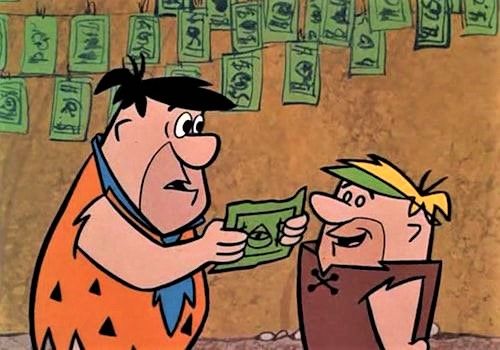
Barney is another human, but he is also one of the more physically implausible caricatures of a human body in the show. His proportions (giant head, extremely short limbs, compact torso) would be brutally hard to sustain in real human biomechanics. Vertebrate skeletons have to distribute loads and leverage in specific ways, and Barney’s body is drawn like a bobblehead doll that somehow sprints, lifts heavy rocks and survives pratfalls. In the real world, problems with balance, joint stress and spine loading would be constant, especially while pushing foot‑powered cars.
On top of that, Barney comfortably participates in every impossible technology and animal co‑existence in Bedrock. He casually drives stone vehicles at urban traffic speeds, uses living animals as household devices and interacts with dinosaurs that went extinct tens of millions of years before humans appeared. So while his basic status as Homo sapiens is fine, the way his skeleton is drawn and the environment he effortlessly survives in push him a notch beyond Fred and Wilma on the impossibility scale.
4. Pebbles Flintstone and Bamm‑Bamm Rubble – Stone Age super‑toddlers
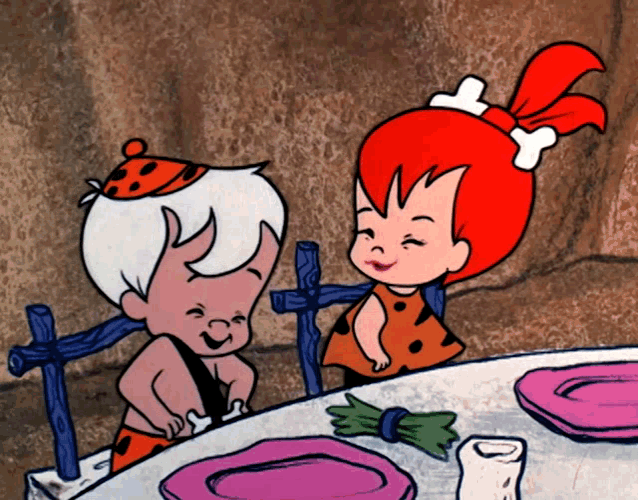
Pebbles and Bamm‑Bamm start with an easy win: prehistoric babies absolutely existed, obviously, and fossil evidence shows that early humans raised children in complex social groups. There is nothing strange about infants and toddlers being part of a small community long before recorded history. Where things go haywire is with Bamm‑Bamm’s comically exaggerated strength and both kids’ astonishing coordination and resilience. Real toddlers are physically fragile, still refining motor control, and their bones and joints are not designed to drag or throw multi‑ton stone objects around.
The idea of a tiny child effortlessly hoisting boulders or swinging an impossibly heavy club would require either a radically altered human musculature or some wild change in physics, neither of which is hinted at anywhere else. Add to that the fact that these kids ride dinosaurs, survive impacts, and generally bounce through an environment full of giant animals and stone technology without serious injury. From a developmental biology standpoint, Pebbles and Bamm‑Bamm are a charming fantasy built on top of a very real core (children in early human groups) but layered with abilities that would shatter actual bones and rip real tendons.
5. Dino – a pet dinosaur living with humans millions of years too late

Dino is where we leave the realm of “maybe, if you squint” and cross into full historical impossibility. Dinosaurs and humans never overlapped in real Earth history; non‑avian dinosaurs died out at the end of the Cretaceous period, while modern humans did not appear until many tens of millions of years later. There is a bigger time gap between Tyrannosaurus and Homo sapiens than between us and any future civilization we can reasonably imagine. So the idea of a pet dinosaur that plays fetch in a human front yard is, at its core, a total chronological mash‑up.
Then there is Dino as an animal. He behaves like a mix between a dog and a kangaroo, with exaggerated emotional expressions, endless stamina and no real constraints from metabolism or body mass. Large reptiles and dinosaur‑like animals would have very different thermoregulation, feeding needs and behavior. Keeping one in a suburban stone house as a loyal, cuddly pet would be a veterinary nightmare. Even if you ignore the time travel problem, you would still need a radical convergence of dinosaur evolution to mimic domestic dogs and human‑directed breeding, which simply did not exist in that era.
6. Baby Puss and the “appliance animals” – household tech that eats and feels pain
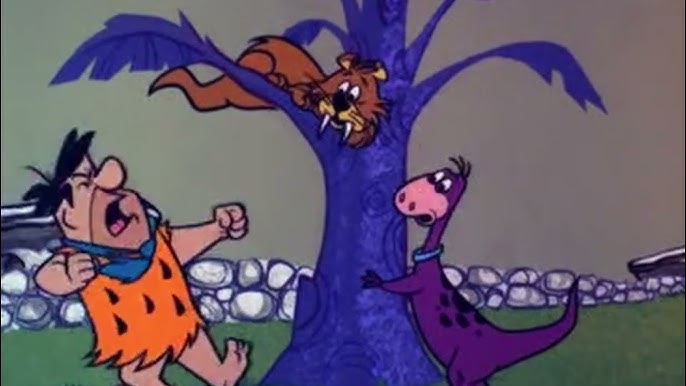
The Flintstones’ world is full of animals used as living tools: birds as record players, tiny mammoths as vacuum cleaners, pelicans as trash compactors and, of course, Baby Puss the saber‑toothed cat as a sort of feline door security system and chaotic pet. From an engineering perspective, this is an absolute disaster. Real animals require food, rest, space, waste management and social interaction. Using them as constant, on‑demand mechanical devices would be horrifically inefficient compared to inanimate tools, and it would burn through calories and water in a way that no prehistoric settlement could sustain.
Biologically, the show also treats these creatures as indestructible, endlessly patient machines that casually survive crushing forces, collisions, repetitive tasks and neglect. Actual vertebrate bodies experience muscle fatigue, joint wear, organ failure and psychological stress. An ecosystem where every household and workplace runs on enslaved, semi‑sentient creatures would collapse under the strain long before you reach cartoon convenience. In a sense, Baby Puss and the other appliance animals are more impossible than Dino himself, because they violate both ecology and basic animal welfare constraints in one go.
7. The Great Gazoo – an omnipotent alien in a Stone Age sitcom
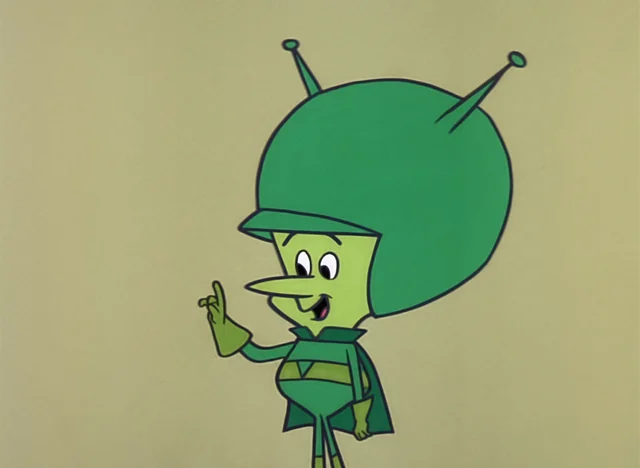
The Great Gazoo is a floating, green alien with advanced technology so far beyond human understanding that it might as well be magic. From a modern scientific standpoint, life elsewhere in the universe is not inherently impossible; in fact, many scientists think it is likely. What breaks plausibility is the entire scenario in which a tiny, humanoid alien with near‑omnipotent powers just happens to show up in a comedic prehistoric town, invisible to everyone except Fred and Barney. It is layering a hypothetical advanced extraterrestrial civilization directly into a setting that already ignores basic evolutionary timelines.
Gazoo’s tech violates pretty much every limit we know: gravity manipulation, instantaneous teleportation, effortless energy production and apparent reality‑bending without any obvious infrastructure. Even in speculative physics, advanced civilizations usually still obey conservation laws, thermodynamics and signal propagation constraints. Gazoo simply wills events to happen, while staying weirdly embedded in low‑stakes domestic plots. If alien contact ever does occur, it will not look like a mischievous, floating neighbor meddling in bowling nights in a world that still thinks the wheel is a big deal.
8. The entire Bedrock ecosystem – dinosaurs, cavemen and pop culture all at once
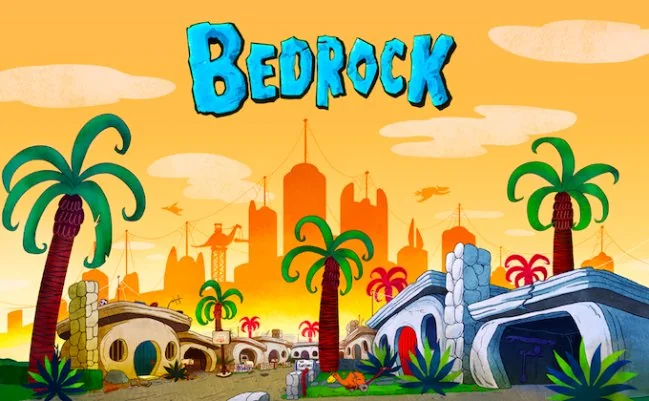
At the top of the impossibility ranking sits not a single character, but the collective character of Bedrock itself, which includes everyone from Mr. Slate to the talking bird‑recorders and celebrity parodies. When you zoom out, you see a single timeline that blends Mesozoic megafauna, Pleistocene humans, twentieth‑century consumer culture and far‑future alien technology into one neighborhood. For Bedrock to exist as shown, you would need a planet where evolution proceeded in a completely different order, extinction events either did not happen or reversed themselves, and cultural evolution jumped to modern suburban life without the intervening thousands of years of cities, empires and industry.
The Bedrock ecosystem has no coherent food webs, energy balance or geological history. Herbivorous dinosaurs share backyards with tiny woolly mammoths, carnivores are conveniently tame, and resources like stone, metal and fuel seem inexhaustible. Traffic jams exist without a corresponding history of roads and civil engineering, and mass media exists without any plausible infrastructure for information storage or transmission. In that sense, every named resident of Bedrock is a symptom of a deeper impossibility: a world that treats Earth’s entire timeline and biology like a toy box dumped out on the floor, then rearranged into a charming but scientifically nonsensical diorama.
Conclusion – why Bedrock’s impossibility still matters
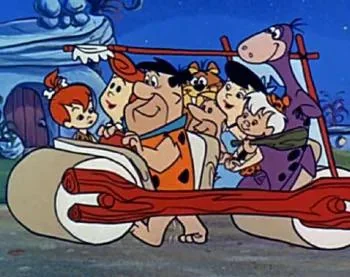
Looking at The Flintstones this way, from Fred’s relatively simple human biology all the way up to the world‑bending absurdity of Bedrock itself, you start to realize how casually we accept scientific impossibilities when they are wrapped in humor and nostalgia. Personally, I do not think that is a bad thing; the show was never meant to be a documentary, and its gleeful disregard for timelines and physics is part of its charm. But ranking the characters by how impossible their existence would be forces us to notice just how wild that mash‑up really is, especially compared to what fossils, genetics and archaeology actually tell us.
At the same time, there is something strangely revealing in the way Bedrock borrows dinosaurs, Stone Age humans and mid‑century suburbia and stuffs them all into one place. It shows how we project our own era’s habits and anxieties backward onto deep time, turning prehistory into a mirror instead of a mystery. Maybe that is the real scientific lesson hidden inside the jokes: when we picture the past, we rarely leave our own world behind as much as we think. The next time you watch Fred yell for Wilma, it is worth asking yourself which part you find more believable – the shouting caveman, or the dinosaur crane at his job?