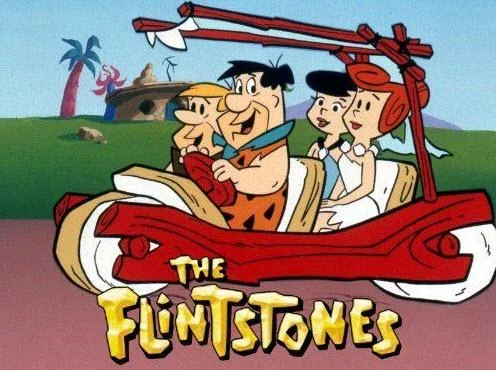
For millions of people, prehistory does not begin with fossils in a museum or diagrams in a textbook. It starts with a stone-age suburb, a brontosaurus crane at a quarry, and a guy yelling “Yabba-dabba-doo!” The Flintstones, which first aired in 1960, is now old enough to qualify as prehistory itself, yet its impact on how we imagine the distant past is still surprisingly strong. Even folks who have never watched a full episode can instantly recognize its visual language: bone hair-clips, leopard-print tunics, and cheerful dinosaurs doing blue-collar jobs. That is the strange power of The Flintstones at sixty-five: a prime-time sitcom that never pretended to be scientifically accurate somehow became one of the main lenses through which a generation saw early humans. It wrapped stone tools, dinosaurs, and suburban life into one playful mash-up, and our brains just… kept it. If you grew up humming that theme song, chances are your mental picture of “cave people” still carries echoes of Fred and Wilma, whether you like it or not.
A stone-age suburb: how Bedrock rewired our mental map of prehistory
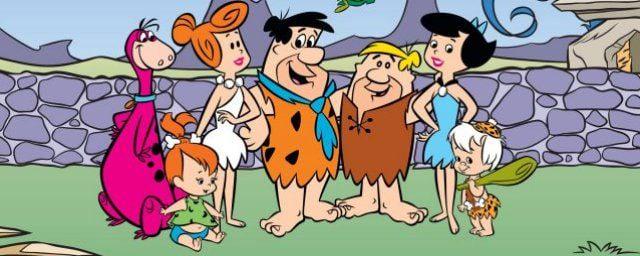
The wildest thing about The Flintstones is that it does not really take place in prehistory at all; it takes place in a parody of 1960s America that just happens to be made of stone. Bedrock has bowling leagues, drive-ins, supermarkets, and newspapers, all thinly disguised with “rock” puns and dinosaur-powered appliances. For a generation that watched it in prime time, this was their first regular, serialized “view” of a world labeled as the distant past, even though it looked suspiciously like their own neighborhood with extra rocks. When a setting is that familiar and that constant, it quietly seeps into the background of how you imagine reality. Kids and adults alike absorbed Bedrock as “what caveman times looked like,” at least emotionally, even if they knew on some level it was a joke. The show turned prehistory from a mysterious, sparse landscape into something cozy and domesticated: a place of car pools, nagging bosses, and backyard barbecues, just with fewer plastics and more granite.
Dinosaurs and humans, together at last (and again and again)
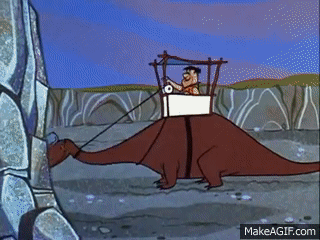
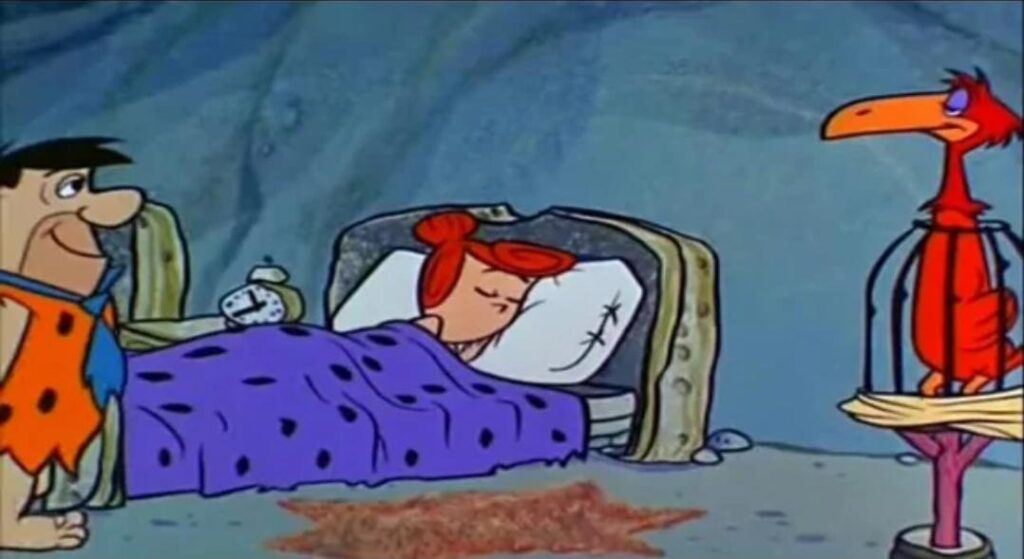
From a scientific point of view, humans and non-bird dinosaurs never shared the planet. They are separated by tens of millions of years. Yet if you ask someone to doodle a “caveman scene,” odds are a dinosaur sneaks into the sketch. The Flintstones did not invent that mash-up, but it broadcast it into living rooms week after week: Fred at a quarry with a brontosaurus, a sabertooth tiger as a pet, a tiny bird acting as a record player needle. The sight gag became a default image. Once that visual pairing is everywhere, it becomes a sticky myth. You see echoes of it in cereal boxes, toy lines, and theme-park rides that blend humans and dinosaurs into one big prehistoric soup. For a long time, pop culture happily rode that wave because it was fun and visually rich, while science educators were left constantly clarifying that, no, your ancestors did not ride triceratops to work. The Flintstones did not set out to misinform; it just leaned into comedy, and the comedy turned into memory.
From black-and-white TV to textbooks: when jokes outpace science
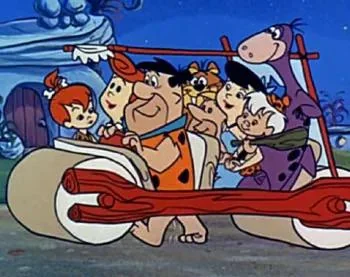
There is a weird asymmetry between how quickly a joke spreads and how slowly a correction does. The Flintstones’ gags about dinosaur dishwashers or mammoth-powered showers flashed across millions of screens in an instant. Teachers and scientists, on the other hand, had to chip away patiently at misconceptions in classrooms, museums, and children’s books. The result was that, for quite a while, what “felt right” visually about prehistory often came from Bedrock, not from paleontology. I still remember sitting in a school library as a kid, being genuinely surprised to learn that dinosaurs vanished long before humans appeared. In my head, there was always at least one “friendly dino” hanging around early humans, because cartoons had quietly built that mental picture. You could argue that one harmless misconception is not a tragedy, and maybe it is not. But it is a good example of how entertainment can outrun education without even trying, simply because it is louder, funnier, and more memorable.
Stone Age, but make it middle class: projecting the 1960s onto deep time
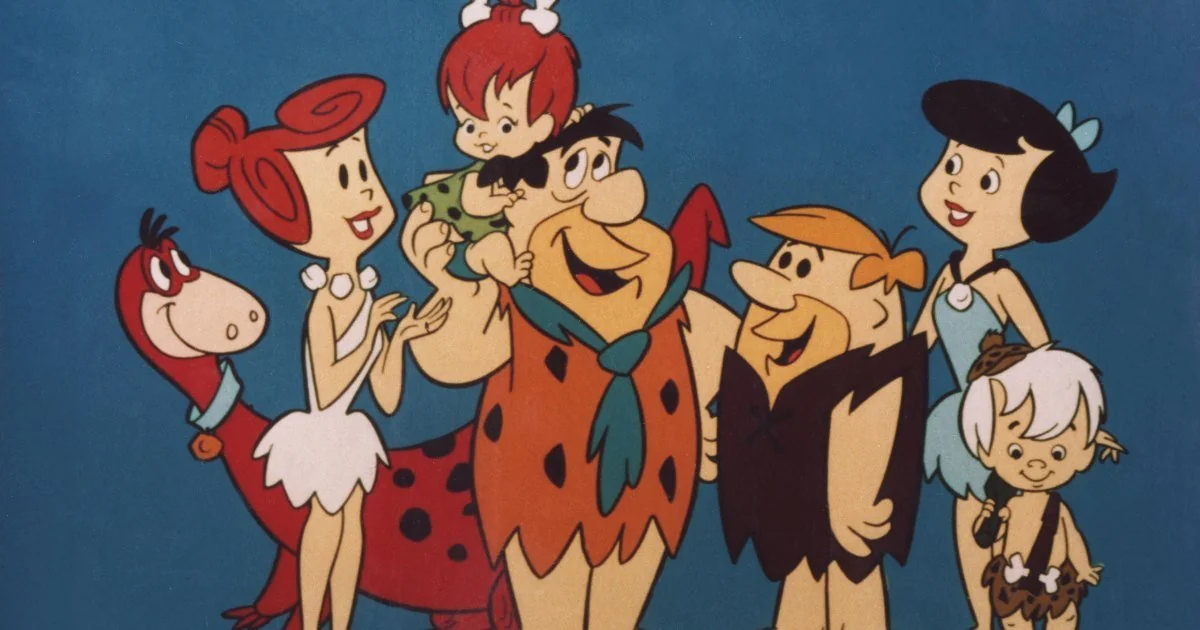
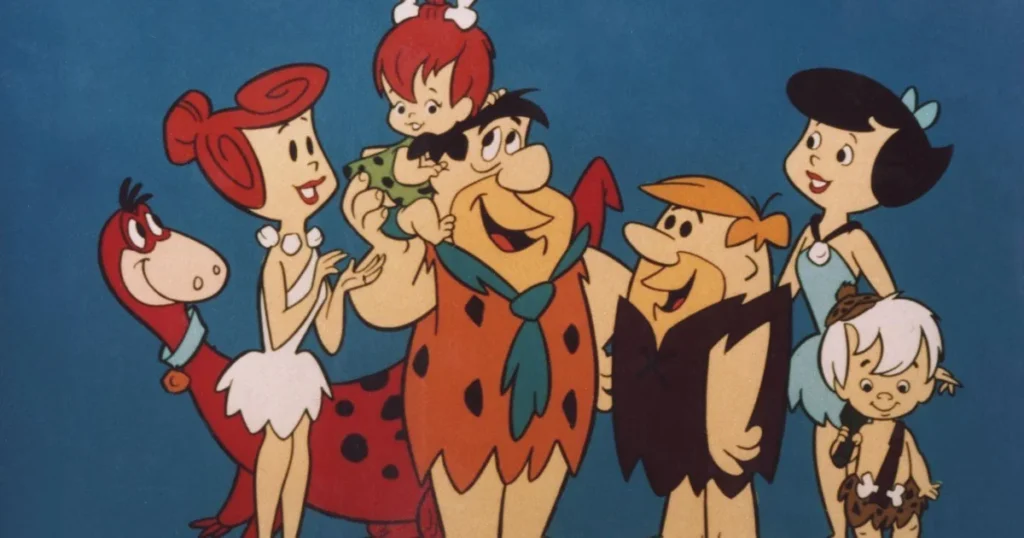
The Flintstones is often called a stone-age Honeymooners, and that comparison tells you everything about what it really is: a mid-century working-class sitcom wearing an animal-skin costume. Fred and Barney go to work at the quarry, worry about bills, play golf, and scheme about promotions. Wilma and Betty handle the home, the shopping, the social life. It is a 1960s nuclear family story first, and a “prehistoric” story only as a backdrop and punchline. That backdrop matters, though. By putting a tidy, nuclear family in a cave-like house with modern values and gender roles, the show quietly suggests that family life and social norms have looked roughly the same forever. You get the impression that humans have always lived in small suburban units, that dads have always gone off to a job site, and that mothers have always run a home. In reality, prehistoric social structures were far more varied and, in many ways, alien to this model. The cartoon shrank the deep complexity of human evolution into something that looked like a stone-age cul-de-sac.
How later generations half-believed the joke
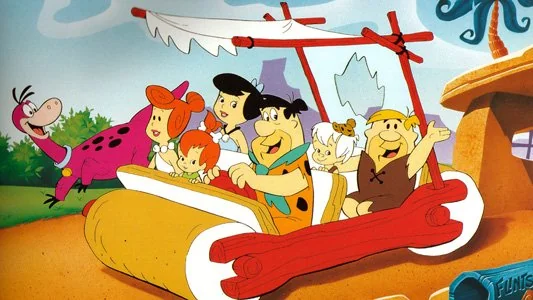
What is fascinating today is how many people both know The Flintstones is ridiculous and still feel it coloring their thoughts. You can sit in a museum in front of a Neanderthal reconstruction and somewhere in the back of your mind a little voice goes, “Right, this is like The Flintstones but without the car.” We learn the correct facts in school, yet the first, vivid, emotional image often comes from those pastel-color stills of Fred, Wilma, and the gang. Media psychologists talk about how repeated exposure makes something feel true, even when you know it is not literally accurate. The Flintstones ran for decades in reruns, then resurfaced in movies, merchandise, and memes. It became a sort of shared childhood language. So when someone casually says “caveman,” most of us do not picture an actual early Homo sapiens foraging on a savanna. We picture a squat, stubbly guy in a spotted tunic who might be late for bowling. The parody became the mental default.
Reckoning with Bedrock: should we be annoyed, amused, or grateful?
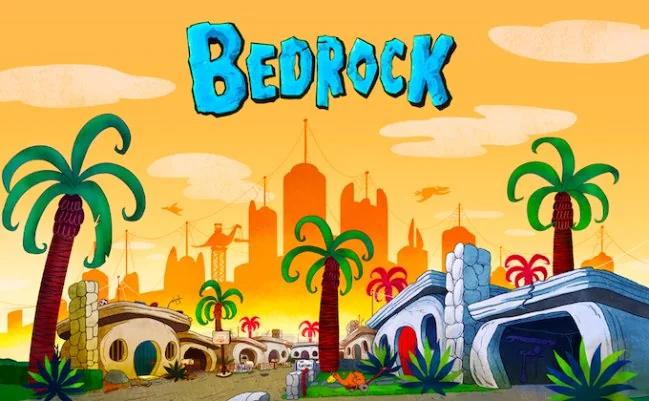
So what do we do with this sixty-five-year-old cartoon that has warped our sense of prehistory? Personally, I fall somewhere between nostalgia and mild irritation. On the one hand, it absolutely muddied some basic facts, especially about dinosaurs and humans. On the other hand, it made the deep past feel close and emotionally accessible in a way that dusty diagrams rarely do. You could argue that The Flintstones opened the door, and it is up to science education to walk people through to a clearer picture. My own view is that we should stop expecting entertainment to behave like a textbook and start using shows like The Flintstones as teaching moments. If someone’s first image of early humans is Fred at the quarry, that is not the end of the world. It is a starting point to say, “Here is what the show got gloriously wrong, and here is what we now know for real.” Prehistory is far stranger and more beautiful than Bedrock, but Bedrock gave a generation permission to care about it in the first place. The real question is: when you think of the distant past, do you still hear that theme song echoing in your head?