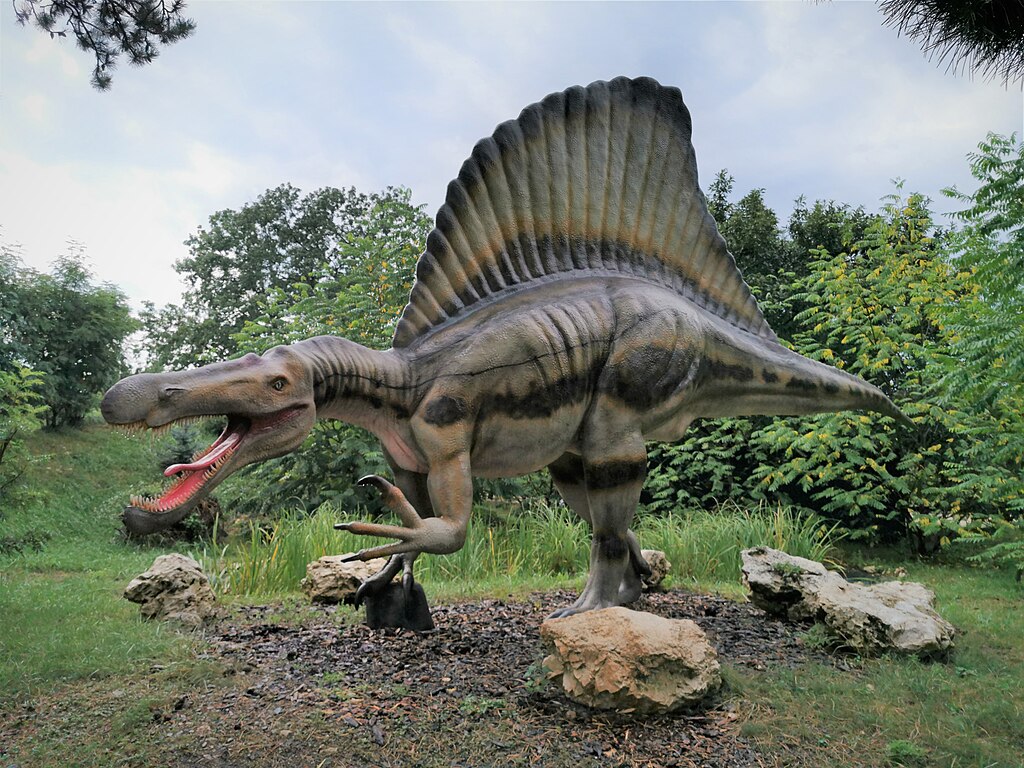
If you ever watched The Flintstones and thought, “Hang on, that’s not how any of this would work,” you’re not alone. The show was hilarious and charming, but as a picture of real prehistory it was about as accurate as a smartwatch in a saber‑tooth cave. Still, that ridiculous mix of stone tools and modern suburbia is exactly what made it unforgettable.
Looking at it from what we know in 2026 about paleontology, archaeology, and physics, the Flintstone universe collapses faster than a stone house in an earthquake. Humans living with dinosaurs, animal-powered dishwashers, and stone televisions all make for fun gags, but scientifically they’re complete nonsense. Let’s dig into some of the most iconic “prehistoric conveniences” from the show and unpack why they’d never survive even one proper science class.
Fred Flintstone’s foot-powered car and the brutal physics of stone

It looks funny and sort of plausible at first: a wooden frame, a stone roller for a front wheel, a canopy, and Fred’s legs working as the engine. But if you take this seriously for even ten seconds, the physics shreds it. Solid stone is incredibly dense and heavy; even a modest stone cylinder big enough to be a car roller would weigh far more than most people imagine, likely hundreds of kilograms if not more, depending on the rock type and dimensions.
Human legs simply can’t provide enough continuous force to accelerate that much mass to a jogging speed on a flat surface, let alone up hills. Friction between stone and ground would be huge, and without ball bearings, lubrication, or even proper axles, the system would grind to a halt quickly. Fred would destroy his joints before he ever “Yabba Dabba Doo’d” his way out of the driveway.
Wilma’s perfect white pearls in an age with no oysters or polish

Wilma’s necklace is a staple of her character design: round, uniform white pearls, neatly strung, completely identical in shape and size. In reality, producing something like that requires either natural pearls from certain mollusks or synthetic beads manufactured with decent precision. In the early Stone Age, people could and did make beads, but they were often irregular shells, bones, teeth, or stones that took a lot of time to shape and smooth.
More importantly, the kind of marine environment and trade networks needed to routinely get high‑quality sea pearls, then shape them to near-perfect spheres, just didn’t exist in a cartoon “generic caveman” era. Prehistoric humans absolutely wore jewelry, and some of it was surprisingly beautiful, but Wilma’s flawless, factory‑perfect pearls are more mid‑20th‑century department store than any plausible Paleolithic fashion. They look stylish on screen, but scientifically they’re just costume jewelry in the wrong millennium.
The dinosaur household appliances that politely ignore biology
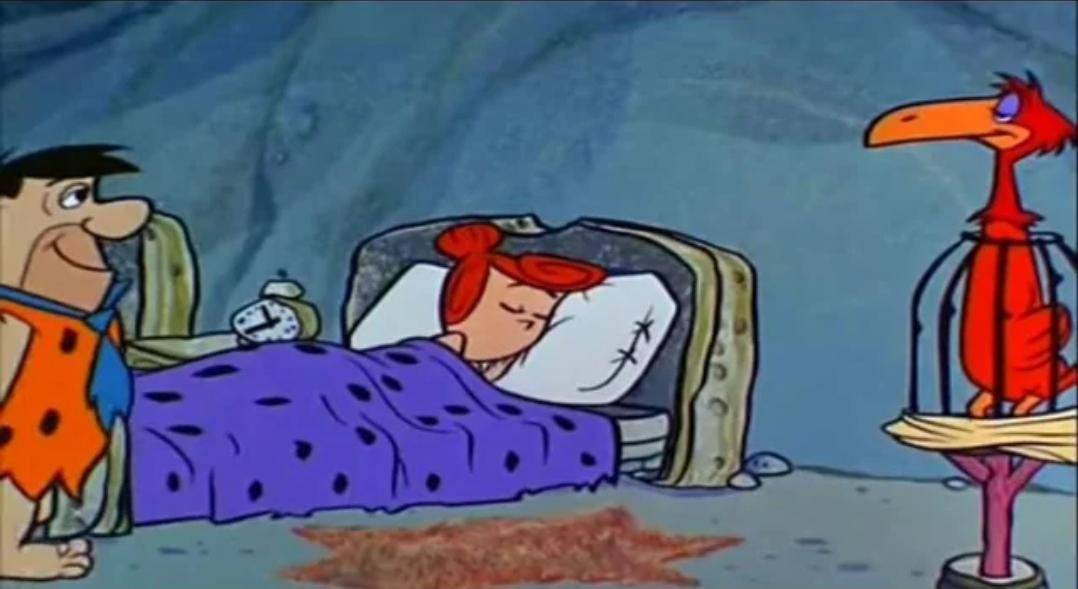
One of the running jokes in The Flintstones is that every modern appliance has a dinosaur or some other animal awkwardly doing the job: a bird as a record player needle, a tiny mammoth as a vacuum, a dinosaur as a garbage disposal. The animal looks at the camera, makes a wisecrack, and the laugh track rolls. From a biology and behavior standpoint, though, none of this holds up.
Large animals need huge amounts of food and space, and they have their own natural behavior patterns that don’t include patiently acting like a dishwasher all day. Training an animal to cooperate with simple tasks is possible, but having a big, potentially dangerous creature calmly handle repetitive, noisy, and sometimes painful work (like grinding trash or blowing hot air for a dryer) would be a disaster. The energy cost of feeding these “appliances” alone would be far worse than just doing the chore by hand with stone-age tools.
Suburban stone houses and glass windows in a fragile ancient world

The Flintstones live in a kind of prehistoric suburbia: single-family stone houses, curved roofs, even decorative elements and large furniture. Real prehistoric housing was typically much more modest and dictated by whatever materials were locally available: caves, wood, animal hides, mud, thatch, or rough stone. Large, precisely shaped blocks and curved stone architecture are the result of advanced masonry skills that appeared much later in human history.
Then there are “windows,” sometimes shown as open holes, sometimes stylized like glass panes. The technology for true glass-making, especially transparent, relatively flat glass suitable for windows, developed many thousands of years after any recognizable “caveman” era. In a realistic Stone Age setting, you’d see simple openings, maybe covered with hides or woven materials, not clean-cut window frames that look like they belong in a 1960s model home, just rebranded as “stone age chic.”
The stone-age TV, radio, and camera that ignore electricity completely
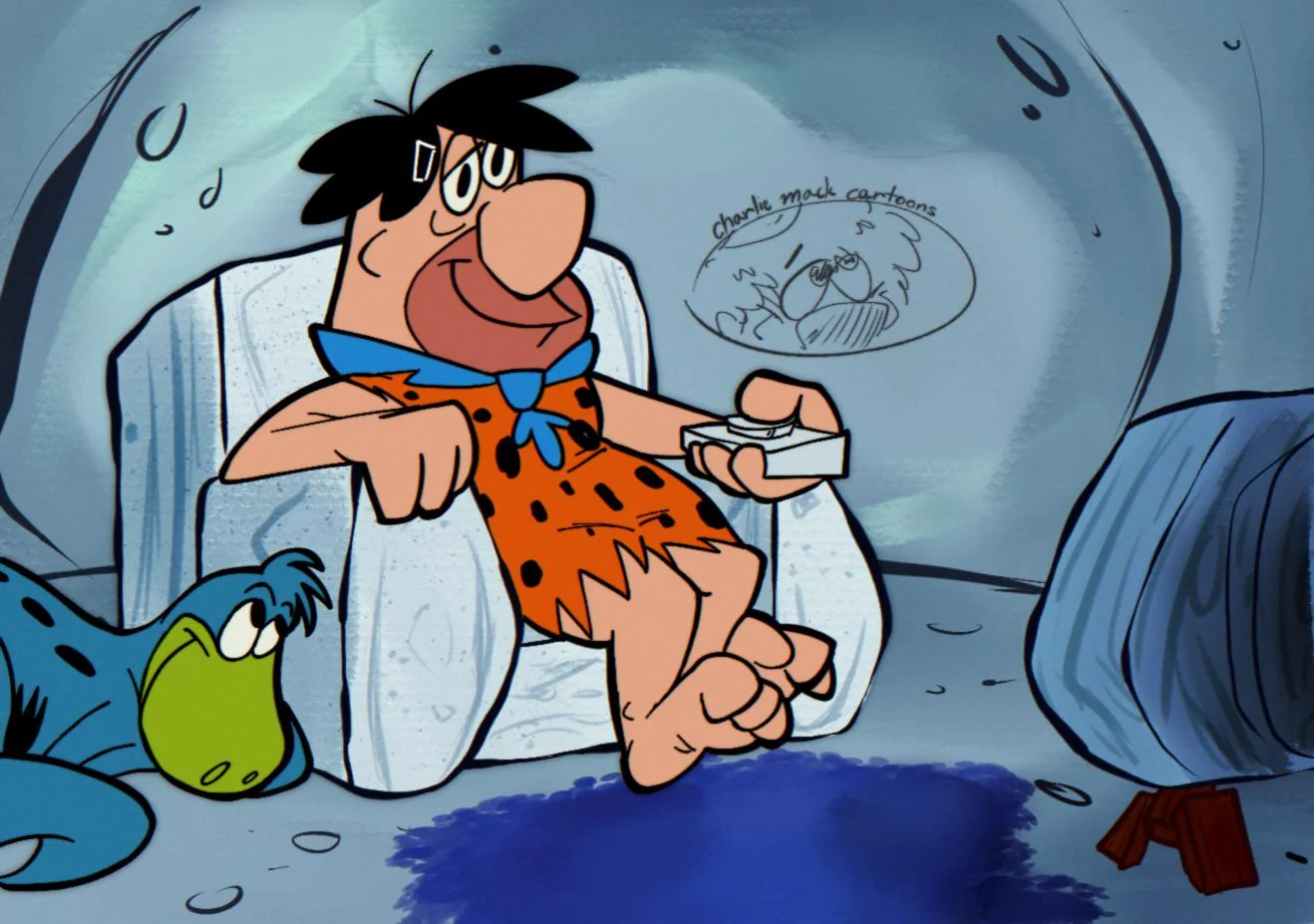
One of the funniest gags is when the Flintstones sit down to watch “television” that is clearly just a stone box, sometimes with a little animal inside creating the illusion of a broadcast. There are also stone-age radios, cameras, and other electronics reimagined with rocks and beasts. The show leans on the comedy of recognition: you see the shape, you know the device. Scientifically, though, it’s nonsense from top to bottom.
Television, radio, and cameras rely on complex physics: electricity, magnetism, optics, and precise materials for wiring, lenses, and circuits. None of that existed in the Stone Age, not even in the vaguest conceptual sense. You cannot replace electromagnetic waves with a bird and a rock and get anything remotely equivalent. It’s like trying to recreate a smartphone with driftwood and a crab; you might get a great meme, but you will never get a signal.
Prehistoric fashion: tailored dresses and neckties without textiles

Fred’s tie, Wilma’s dress, and the whole Bedrock wardrobe look like a funky, stylized version of mid-century fashion, just ripped at the hem and decorated with triangles. In real prehistory, clothing was far more constrained by technology. Early humans used animal hides, furs, and, later, plant fibers, but producing fine, even textiles required spinning, weaving, and long chains of skill and labor that only developed over a lot of time.
Tailored collars, neat hemlines, fitted dresses, and especially a patterned tie are hugely anachronistic. They assume not only access to consistent materials but also advanced cutting, stitching, and sometimes even dyeing. There is archaeological evidence of surprisingly sophisticated clothing in some ancient societies, but the Flintstone look is essentially a low-effort cartoon parody of twentieth‑century style, scientifically justified only if you accept that fashion timelines mean absolutely nothing in Bedrock.
The stone-age city infrastructure that violates population reality

Bedrock has restaurants, bowling alleys, quarries, roads, traffic, and organized work schedules. That setup mirrors modern urban life much more than any plausible Stone Age community. Early human groups were generally small bands or tribes, often nomadic or semi-nomadic, because hunting and foraging required moving with the seasons and the animals. Sustaining a permanent town full of specialized jobs needs reliable surplus food, storage, and complex social organization.
The idea of a large, dense stone-age city with everyone clocking in at the quarry or stopping by a drive-in diner skips over thousands of years of agricultural, social, and technological evolution. It’s funny to watch Fred complain about his boss or go out for a night of bowling with the guys, but scientifically it’s like fast-forwarding human history, then forcing it into a world that still pretends dinosaurs are hanging around out back. It makes for great sitcom setups, just not great anthropology.
Humans and dinosaurs living side by side: the biggest scientific miss of all
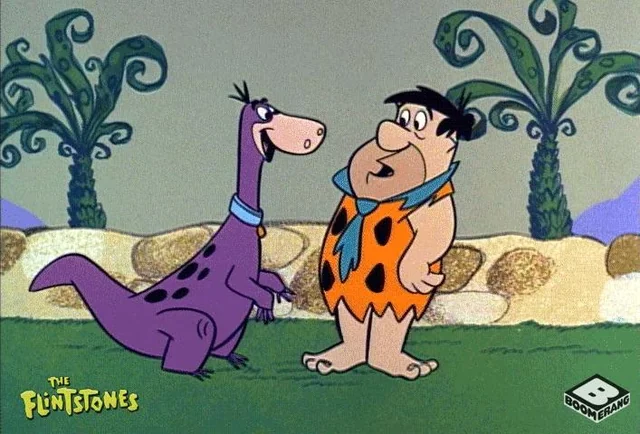
The most glaring problem in The Flintstones is the one most people know: humans and non-avian dinosaurs never lived together. Dinosaurs (aside from birds, which are technically living dinosaurs) died out about sixty-five million years before anatomically modern humans appeared. By the time humans were making tools and forming societies, giant reptiles like the show’s beloved brontosaur cranes and triceratops bulldozers were long gone.
Mixing humans and dinosaurs is a deliberate fantasy choice, not a small mistake. It collapses entire eras of Earth history into one goofy neighborhood so the writers can turn every creature into a gadget. As a kid, I loved that; as an adult, I can’t help wincing a bit when I think about how many people ended up half-remembering the show and assuming cavemen and dinosaurs were roommates. It is fun, but as science, it is wildly, unapologetically wrong.
Conclusion: a lovable trainwreck of science, and why it still matters

Looking back with a 2026 lens, The Flintstones is a scientific trainwreck in slow motion: impossible cars, anachronistic jewelry, dinosaur dishwashers, and a timeline that might as well have been shuffled like a deck of cards. None of it holds up to what we know about geology, evolution, physics, or archaeology, and honestly, that’s part of the charm. The show was never trying to be a documentary; it was a suburban comedy dressed in a goofy prehistoric costume.
Still, I think it’s worth calling out how off the rails it is, because stories shape how people picture the past, especially when they encounter those stories as kids. The Flintstones is great entertainment, but as a picture of prehistory it deserves to be gently but firmly retired from the “maybe there’s a grain of truth” zone. Enjoy the nostalgia, laugh at the rock puns, and then imagine what a truly science‑aware prehistoric show could look like today. Would that version feel as charmingly absurd – or would it surprise us even more than Fred’s ridiculous car ever did?