
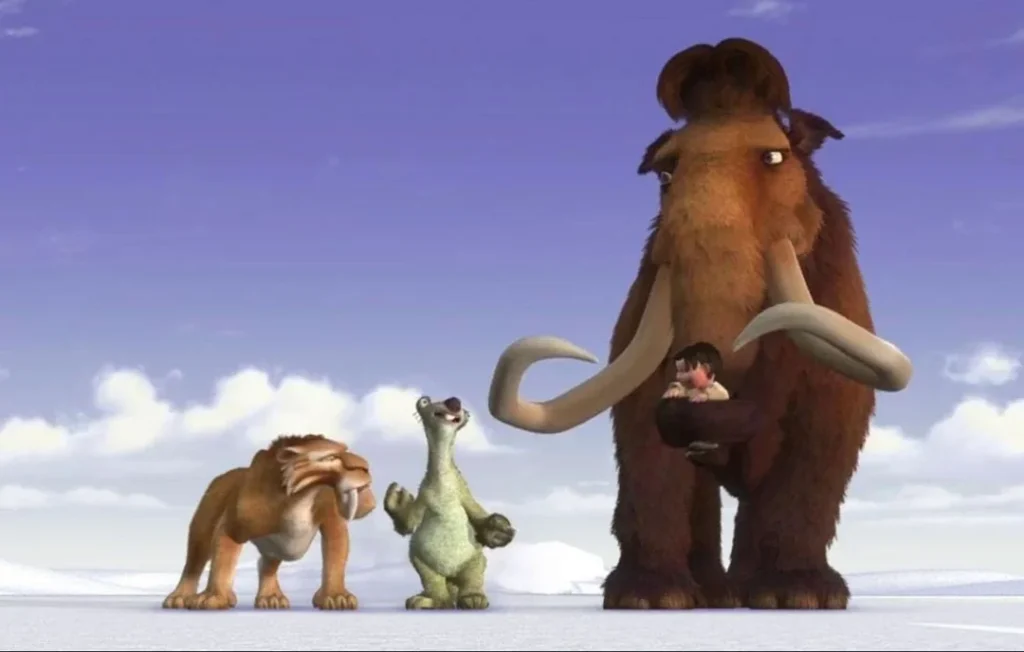
The Ice Age movies feel like pure fantasy: talking mammals outrunning glaciers, impossible herd mashups, and that acorn-obsessed squirrel-thing who never, ever catches a break. But underneath the jokes and chaos is a surprisingly real prehistoric cast. Some of those wide-eyed, animated animals were based on creatures that actually walked the Earth – and the science behind them is way stranger than anything that made it into a family film.
When you look past the slapstick, you find animals that survived volcanic winters, hunted in packs before wolves existed, and carried tusks so huge they twisted like living sculptures. The real versions were tougher, weirder, and often more extreme than their movie counterparts. Once you know the facts, it’s hard not to watch those movies differently and think: they actually toned it down.
Manny the woolly mammoth: a walking fridge in a frozen world
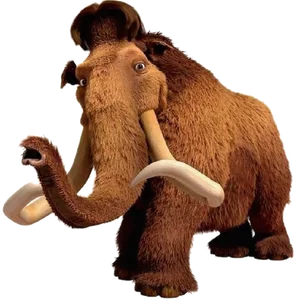
Manny looks oversized and shaggy, but actual woolly mammoths were even more extreme adaptations to the cold. They had a dense undercoat, a long outer layer of guard hairs, and a thick layer of fat that turned their bodies into natural insulation systems, a bit like a living, walking refrigerator. Their ears were much smaller than an elephant’s – almost comically small compared to modern African elephants – to reduce heat loss in brutal Ice Age winds.
The wildest part is how late they survived. Most mammoths vanished as the last Ice Age ended, but small, isolated populations hung on for thousands of years on remote Arctic islands. When the pyramids in Egypt were already standing, there were still tiny mammoths trudging through snow on Wrangel Island in the Arctic Ocean, completely unknown to the rest of the world. Manny’s world may feel ancient and distant, but in deep time terms, mammoths were still around just “yesterday.”
Sid the ground sloth: the real ones were giant, tank-like browsers
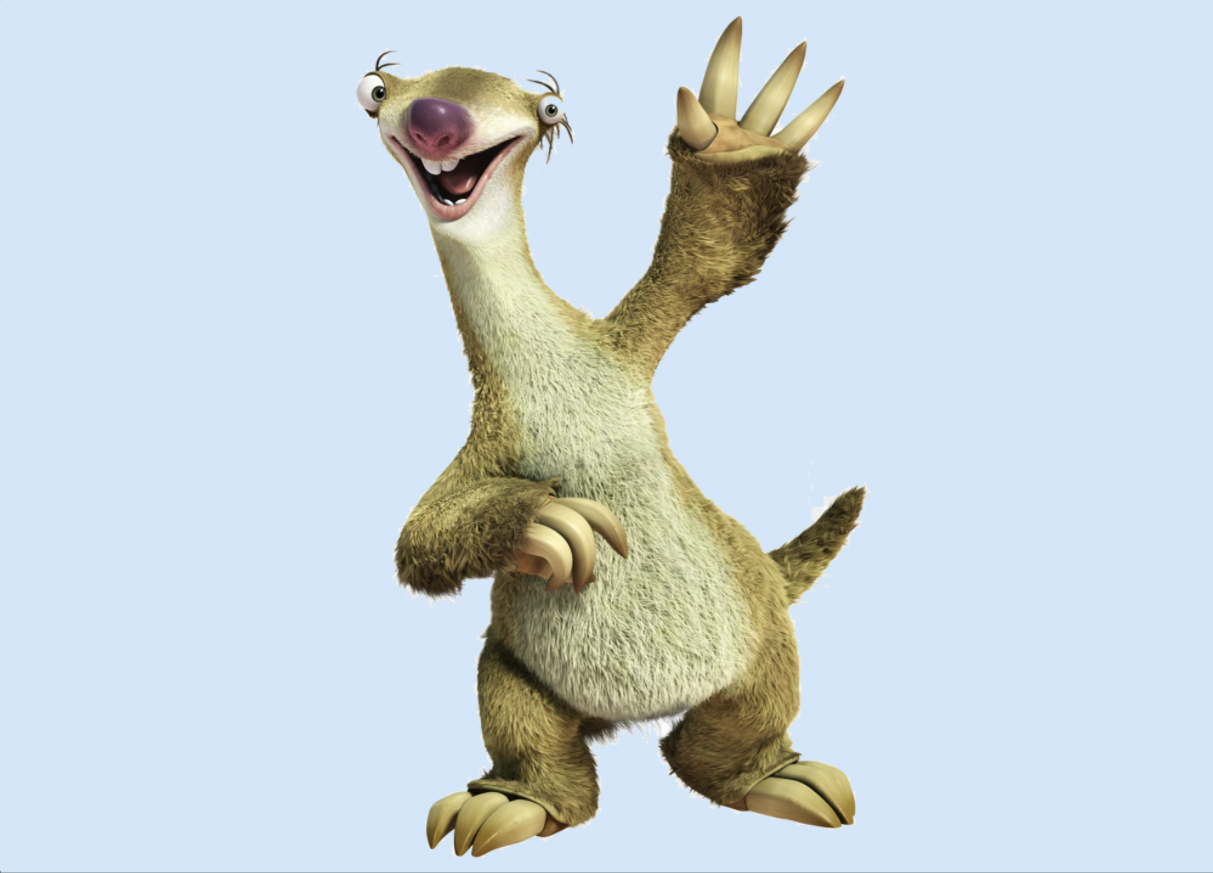
Sid is goofy, clumsy, and always falling on his face, but his real-world cousins were absolute units. The ground sloths of the Ice Age, like Megatherium and Eremotherium, could stand as tall as a small house when rearing up, with massive claws and heavily built limbs. Instead of dangling from trees like modern sloths, they lumbered across open landscapes and forests, using their claws like hooked gardening tools to pull down branches and strip leaves.
Some scientists think they were powerful enough to knock over small trees, reshaping patches of their environment the way elephants do today. Their sheer size would have made them almost untouchable to most predators, and they probably had thick skin to match. The movie turns Sid into comic relief, but if you met the real thing, you’d probably give it a very respectful amount of personal space.
Diego the saber-toothed cat: more than just oversized fangs
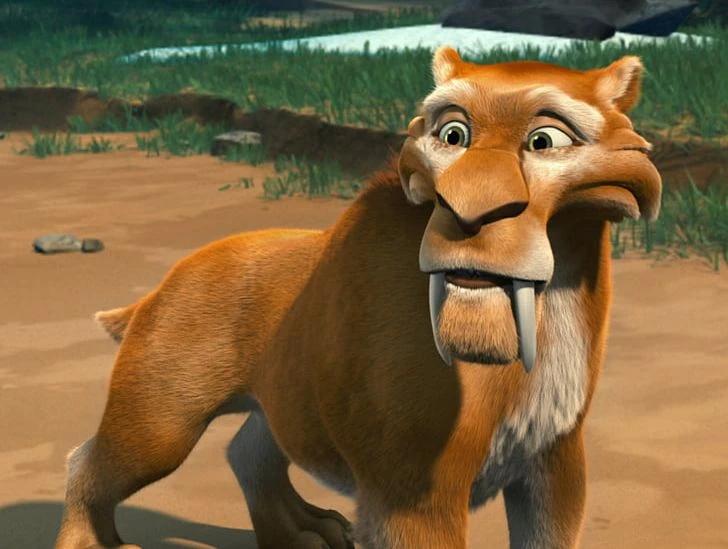
Diego is based on saber-toothed cats like Smilodon, and the real animals were far stranger than just “big cat with big teeth.” Their upper canines could grow longer than your entire hand, but their jaw structure and neck muscles were completely re-engineered to make those teeth work. The bones in their neck show massive muscle attachment sites, suggesting a killing style that relied on powerful neck-driven strikes rather than just a simple bite like today’s big cats.
Even their bodies were different from the sleek, speed-focused lions and cheetahs we know now. Smilodon had stocky, muscular limbs and a relatively short tail, more like a feline wrestler than a sprinter, hinting it ambushed large prey rather than chasing it over long distances. Some studies have even suggested they hunted cooperatively, more like lions than solitary tigers, which would make a pack of saber-toothed cats far more terrifying than the single, suave predator you see in the films.
Ellie and the mammoth herd: real mammoth families were complicated
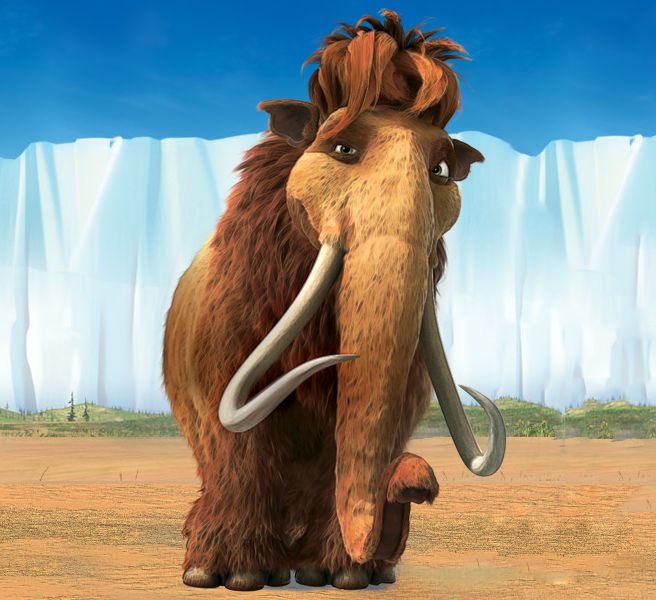
Ellie’s found family storyline is emotional, but actual mammoth social life may have been just as complex. Like modern elephants, mammoths likely lived in matriarchal family groups, with older females leading herds that included younger females and calves. Young males probably left these family herds when they reached adolescence, just like male elephants today, forming looser bachelor groups or wandering solo across the steppe.
What we do know from preserved tusks and bones is that mammoths had long lifespans, slow growth, and patterns of wear and injury that suggest long-term social care. Fossils show healed fractures and dental problems that would’ve made survival difficult without some sort of group support. The movies play their family dynamic for laughs and sentiment, but the real mammoth world might’ve been full of long memories, rivalries, and deep bonds that lasted decades.
Scrat’s inspiration: real “saber-toothed squirrels” did exist
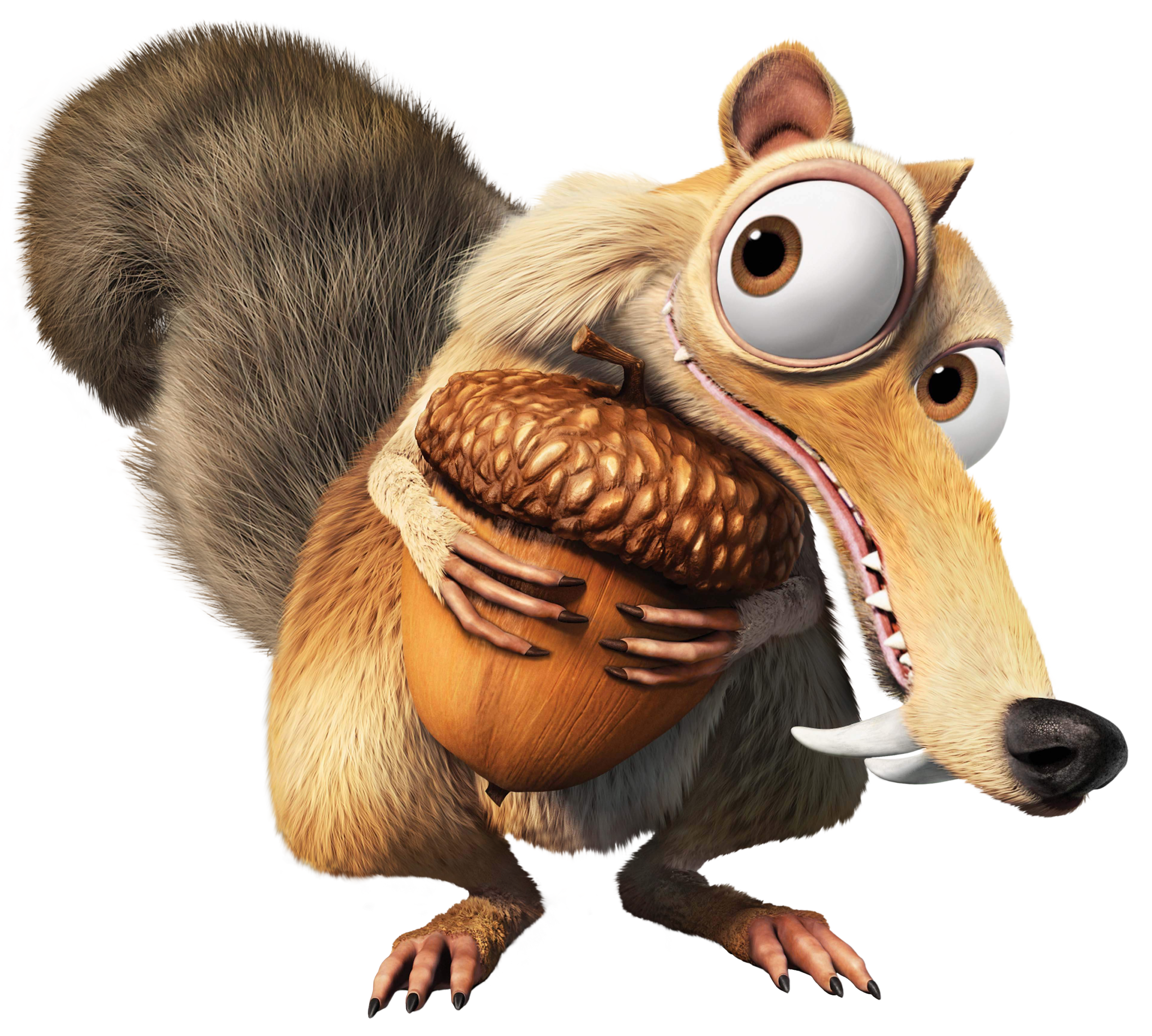
Scrat himself is fictional, but he accidentally lines up with some very real, very strange animals. Paleontologists have discovered small mammal fossils from around the time of the early dinosaurs and later periods that had long, saber-like canine teeth and rodent-like bodies. These animals were not true squirrels, but they did look eerily similar to a stretched, slightly nightmarish version of one, with huge front fangs that seem cartoonishly over-the-top until you realize they actually existed.
Some of these critters probably used their teeth for display, fighting, or specialized feeding, not just random acorn obsession. Their fossils show how evolution keeps remixing the same ideas – small, quick mammals with oversized, dramatic teeth show up repeatedly in different lineages. Scrat is played as a running joke, but the concept of a tiny, nervous animal with ridiculous fangs trying to survive in a world of giants is surprisingly close to reality.
Glyptodonts: the armored “armadillo tanks” of the Ice Age
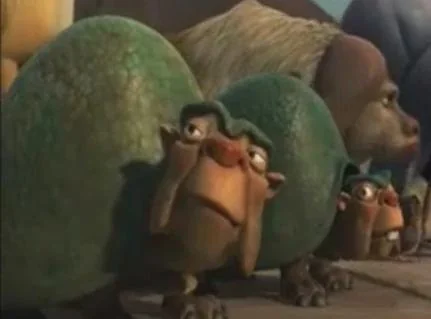
In the movies, you catch glimpses of big, armored mammals that look like armadillos pushed through a prehistoric filter. Those are based on glyptodonts, real creatures that were about the size of a small car and covered in heavy, bony armor. Their shells were made of fused plates that turned their backs into solid domes, and some species had tail clubs like something out of a dinosaur exhibit, able to deliver bone-crushing blows.
What’s wild is how successful this strategy was. Glyptodonts spread through large parts of the Americas, turning themselves into walking fortresses in ecosystems filled with huge predators. Their armor and tails likely forced predators to adapt their tactics, going for the softer underbelly or avoiding them altogether. If you imagine one of those rolling slowly through a modern city street, it would look more like a sci-fi tank than a relative of today’s armadillos.
Woolly rhinos: Ice Age bruisers with built-in snow plows
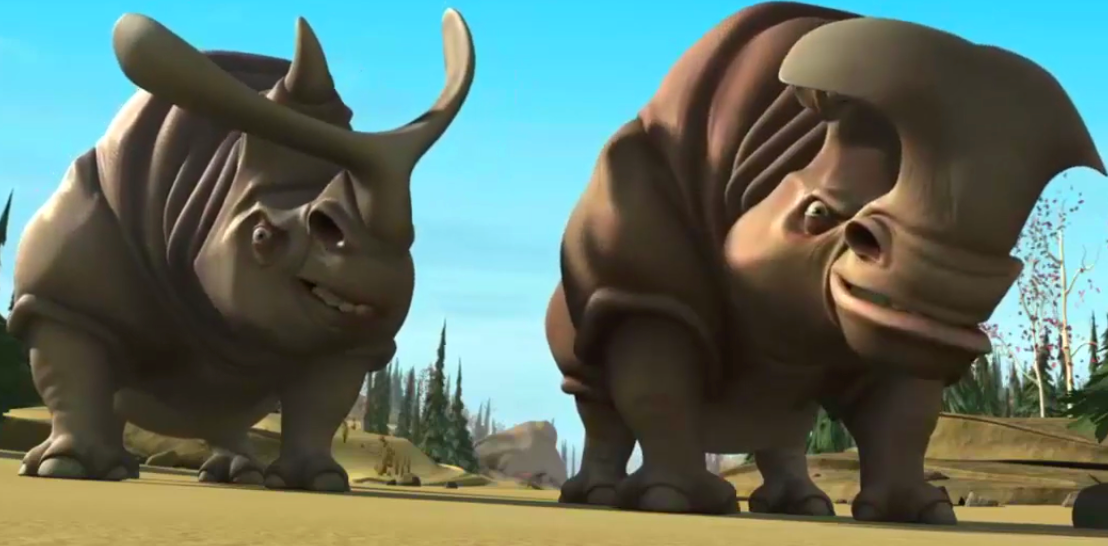
The films feature big, horned, grumpy-looking beasts that resemble rhinos, and they’re not far off. Woolly rhinoceroses actually existed across Europe and Asia, covered in thick fur and carrying massive horns that sometimes grew longer than an adult human is tall. Their skulls and horn orientation suggest they used those horns like snow plows, sweeping aside ice and snow to reach buried grasses and shrubs in frozen landscapes.
Unlike modern rhinos that tend to stick to warmer climates, woolly rhinos thrived in cold, open steppe environments. Cave paintings from Ice Age humans show detailed depictions of these animals, which is a surreal overlap: our species literally drew them from life. The movie versions might act like cranky background characters, but the real woolly rhinos were key players in their ecosystems and shared the stage with early humans in a very real way.
Primitive humans: the neighbors the movies barely show
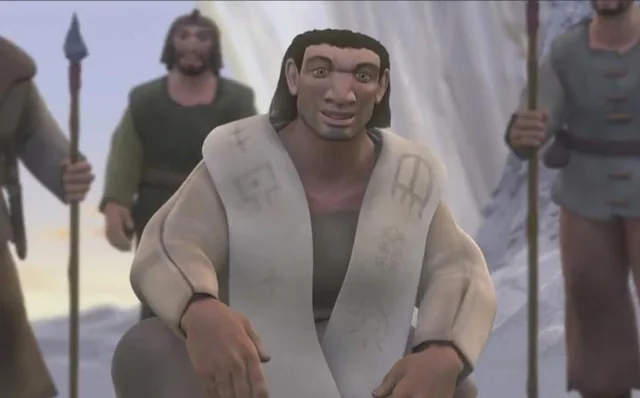
The Ice Age franchise only lightly brushes against humans, usually for comedy, but anatomically modern humans were absolutely present during the late Ice Age, sharing habitats with mammoths, saber-toothed cats, and giant sloths. These people were highly adaptable, using advanced stone tools, tailored clothing, and complex social networks to survive in brutally cold environments. They were not just “cavemen” grunting in the dark; they were skilled hunters, artists, and problem-solvers.
The strangest, and maybe most uncomfortable, truth is that our species played a major role in the extinction of many Ice Age giants. Climate change at the end of the last glacial period put pressure on ecosystems, but human hunting and landscape burning likely pushed several species over the edge. The movies keep things light and mostly sidestep this, yet the real story is that we were both co-stars and, in many cases, the final antagonist in the Ice Age drama.
Conclusion: the real Ice Age was harsher, smarter, and far weirder
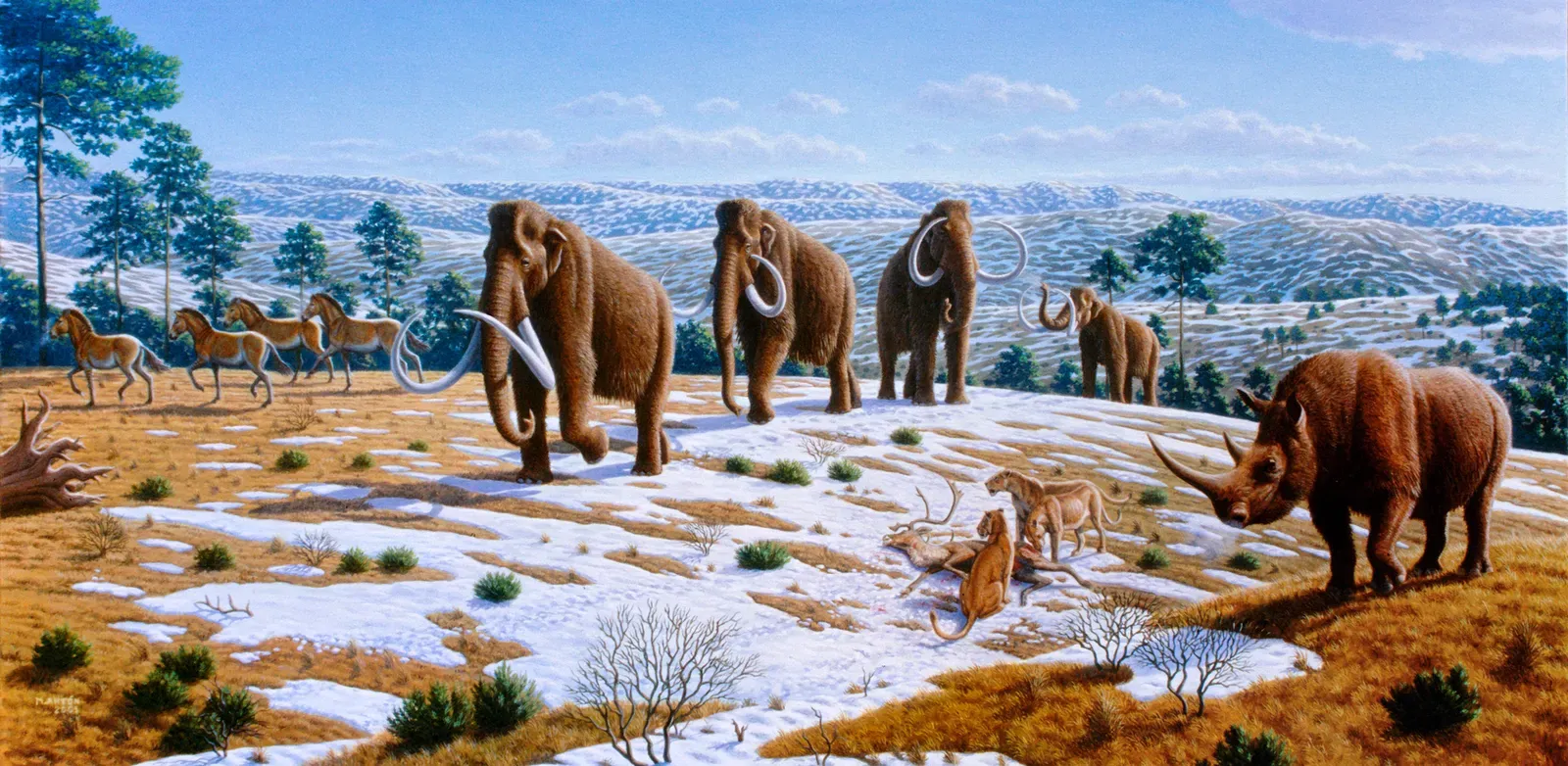
Once you stack the movie versions against the fossil record, it starts to feel like the animators were actually being conservative. Real mammoths outlived ancient empires, ground sloths walked like slow-motion bulldozers, and saber-toothed cats were precision-engineered killers with neck muscles like coiled springs. Our own species stepped onto that stage not as a side character, but as the ultimately disruptive force that reshaped almost every ecosystem we touched.
Personally, I think that makes the Ice Age world more gripping, not less child-friendly: it was a place where resilience, cooperation, and weird adaptations decided who made it and who vanished. The films give us a soft-focus version of that story, but the truth underneath is bolder, messier, and packed with unanswered questions. Next time you watch Manny, Sid, and Diego slide across the ice, it’s worth asking yourself: which parts feel unbelievable now that you know, and which parts suddenly seem not wild enough?