Close your eyes and picture a dinosaur. Chances are you’re seeing something straight out of a blockbuster: leathery gray skin, lizard-like faces, and animals that are basically oversized crocodiles with anger issues. The funny thing is, that mental image is mostly a movie invention, not what many dinosaurs actually looked like.
Over the last few decades, fossils, high-tech scans, and even the microscopic structure of ancient feathers have completely upended the old-school dinosaur look. Some of the most famous species were fluffier, more colorful, and weirder than any special-effects team dared to show. Once you see what the evidence really suggests, those movie monsters start to feel almost old-fashioned.
1. Velociraptor: Not a Naked, Scaly Movie Monster
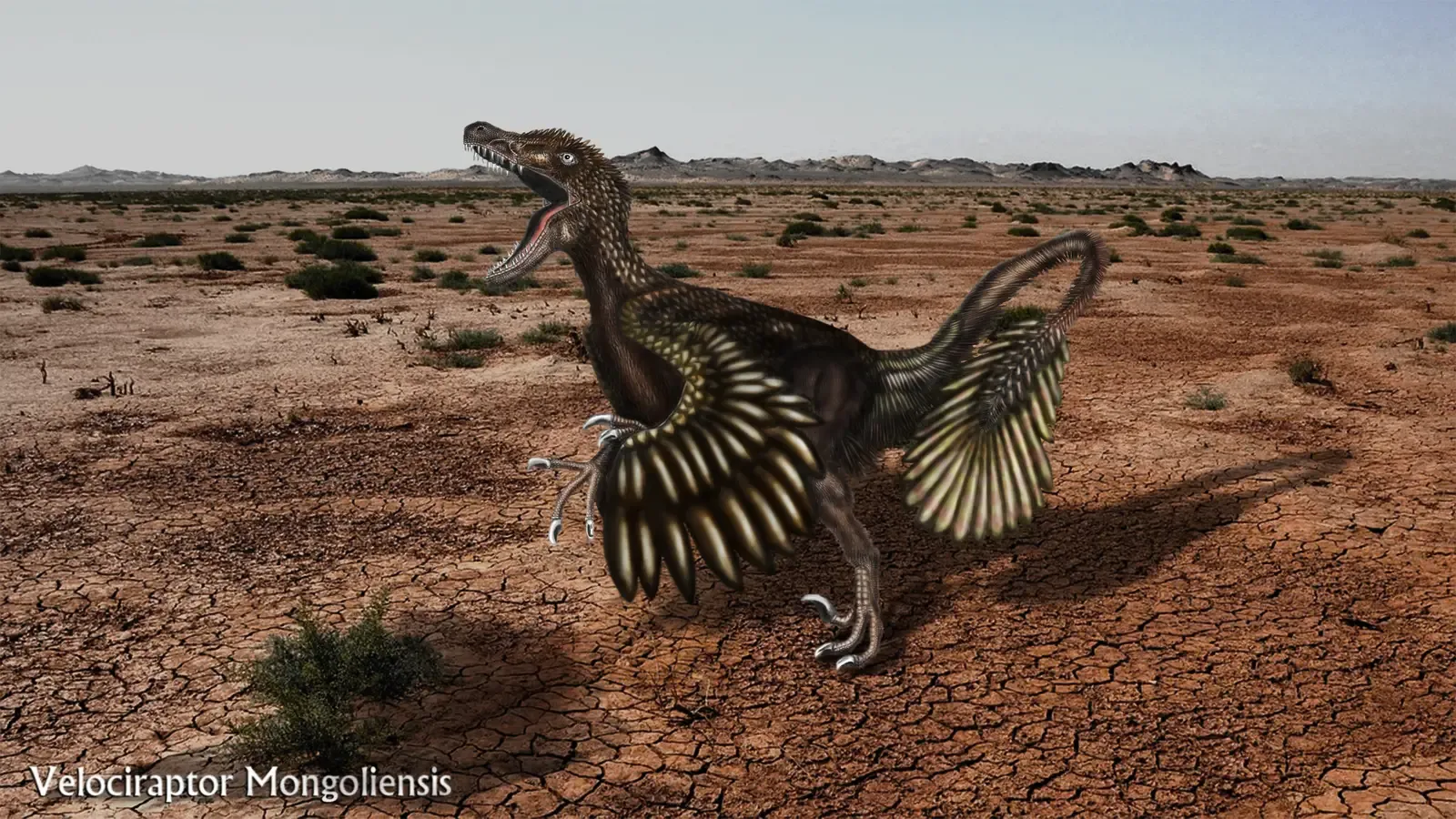
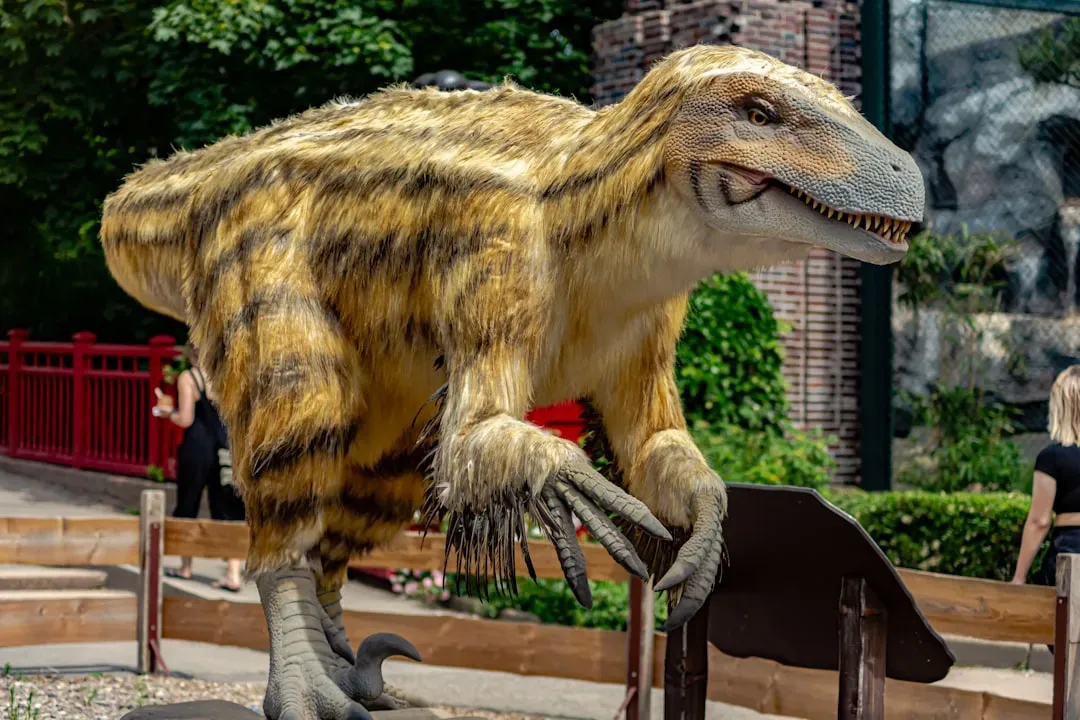
If your brain jumps straight to a human-sized, scaly predator from the movies when you hear the word Velociraptor, you’ve basically been tricked by Hollywood. The real Velociraptor was about the size of a big turkey, and all signs point to it being covered in feathers, including long, quill-like feathers on its arms. Fossilized forearms with clear quill knobs, which in modern birds anchor feathers, are a big giveaway that this dinosaur was far from naked and lizard-like.
That doesn’t mean Velociraptor was less terrifying, just different. Instead of a sleek reptilian horror, imagine a lean, deadly ground bird with a long stiff tail for balance and a huge sickle claw on each foot, built more like a murderous roadrunner than a crocodile. Its feathers probably weren’t for flight, but for display, insulation, and maybe even helping stabilize it while pouncing on prey. Honestly, if Velociraptor walked past you today with modern plumage, you might think it was some nightmare hybrid of an eagle and a cassowary.
2. Tyrannosaurus rex: Less Lizard, More Animal With Layers
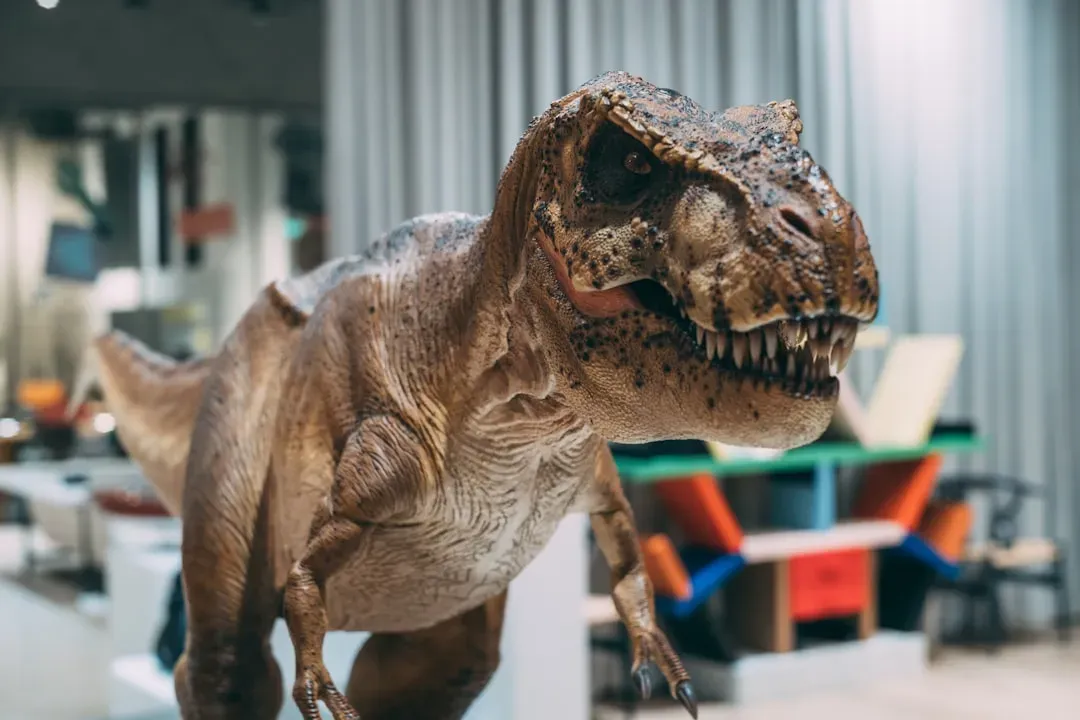
T. rex is the celebrity dinosaur, and Hollywood usually paints it as a simple, scaly, mud-colored monster. In reality, the truth is a lot more nuanced and, to me, more interesting. Skin impressions from related tyrannosaurs show patches of small scales, but there’s still debate about whether juveniles had some sort of fuzzy covering and later shed much of it as they grew enormous. Think less “giant crocodile,” more “complex top predator” with different textures, maybe even subtle patterns, across its body.
Then there’s the head. Movies often give T. rex a crocodile-like, lipless grin with teeth constantly hanging out. Many paleontologists now think it probably had lips or at least soft tissue covering its teeth when the mouth was closed, more like a giant Komodo dragon than a permanent skeleton smile. Add in strong evidence that it had keen senses, complex behavior, and possibly social interactions, and it starts to feel less like a roaring movie monster and more like a real, powerful animal that dominated its ecosystem in a way far richer than any one-note Hollywood roar can capture.
3. Triceratops: Not Just a Horned Battle Tank
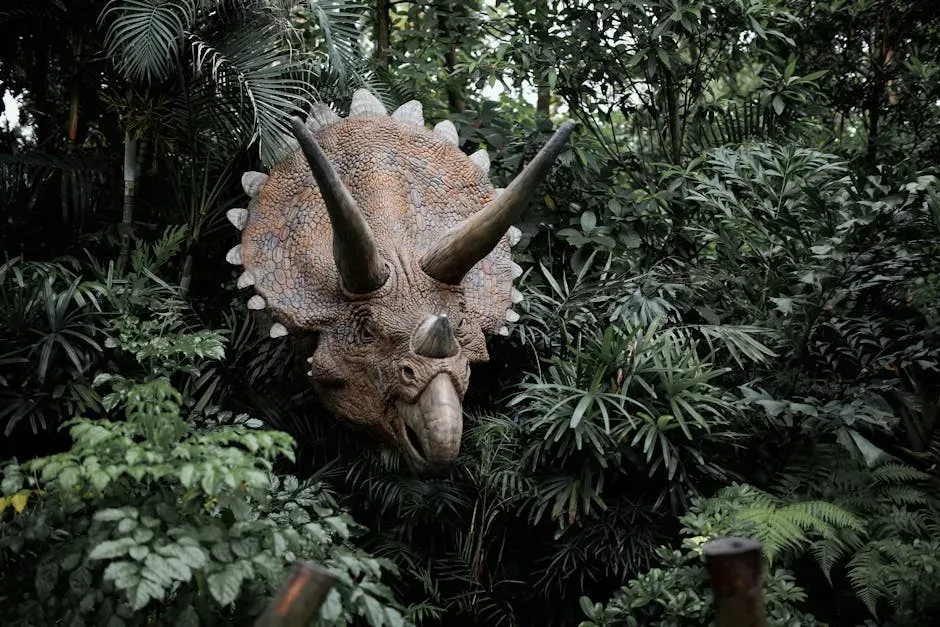
Hollywood usually treats Triceratops like a living tank: gray, bulky, and mostly there to either be hunted or to charge something head-on. The fossil record paints a more detailed picture. Its huge frill was laced with blood vessels and showed signs of growth changes, suggesting it was not just armor but also a display billboard for communication, species recognition, and possibly mating. Many specimens show signs of injuries and healing, especially on the horns, which hints at head-to-head combat or ritualized shoving matches more like modern horned mammals.
The skin impressions we do have for close relatives show a pebbly, somewhat irregular texture with larger scales scattered across the body, not the smooth, uniform hide that films often show. And despite being massive, Triceratops probably had more mobility and agility in its neck and forelimbs than the stiff, slow plodder we see on screen. In my mind, it comes across less like a lumbering tank and more like a dangerous, surprisingly expressive bison-sized reptile, broadcasting mood and status with subtle posture changes and that huge living shield of bone and skin.
4. Spinosaurus: The River Monster, Not the Land-Stalking Giant
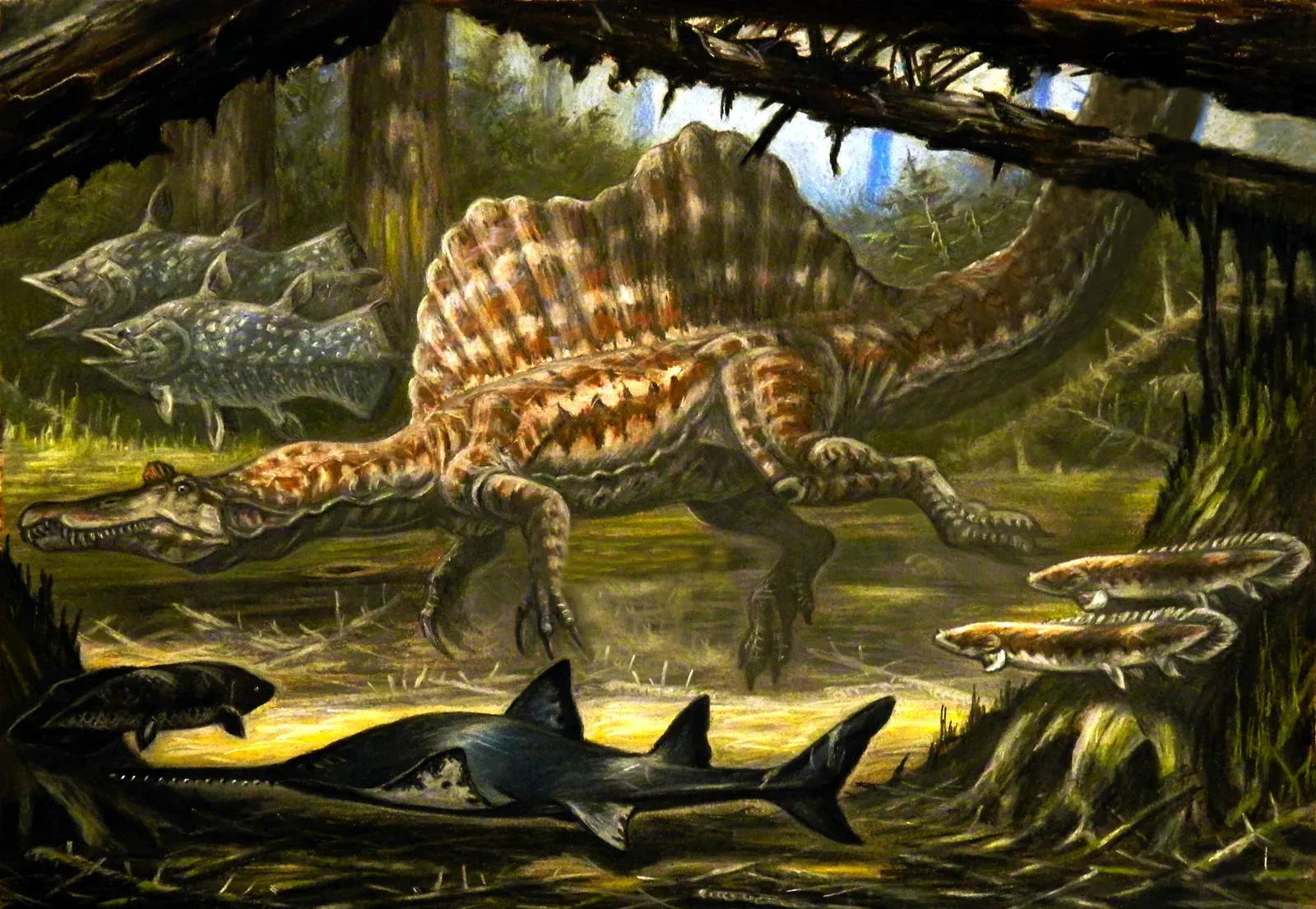
For years, Spinosaurus was portrayed as a bigger, meaner T. rex that just happened to have a sail on its back. That made for a great movie villain, but discoveries over the last couple of decades have completely flipped that image. Its skull is long and narrow, more like a crocodile’s, packed with conical teeth suited for grabbing slippery prey rather than slicing big chunks of meat. The position of its nostrils and the structure of its bones strongly suggest a semi-aquatic lifestyle, spending much of its time in water hunting fish.
Even its body proportions tell a different story from the towering land predator on film. Evidence points to short, powerful hind limbs, a deep body, and a long, paddle-like tail that was probably excellent for swimming. Instead of a fast, upright land runner, think of Spinosaurus as a strange mash-up of a heron, a crocodile, and a sail-backed newt, cruising through rivers and lakes. Hollywood tends to keep dinosaurs anchored to dry land because it looks dramatic, but this one seems to have lived where the water was murky, dangerous, and full of opportunity.
5. Stegosaurus: Not a Brain-Dead Walking Wall of Plates
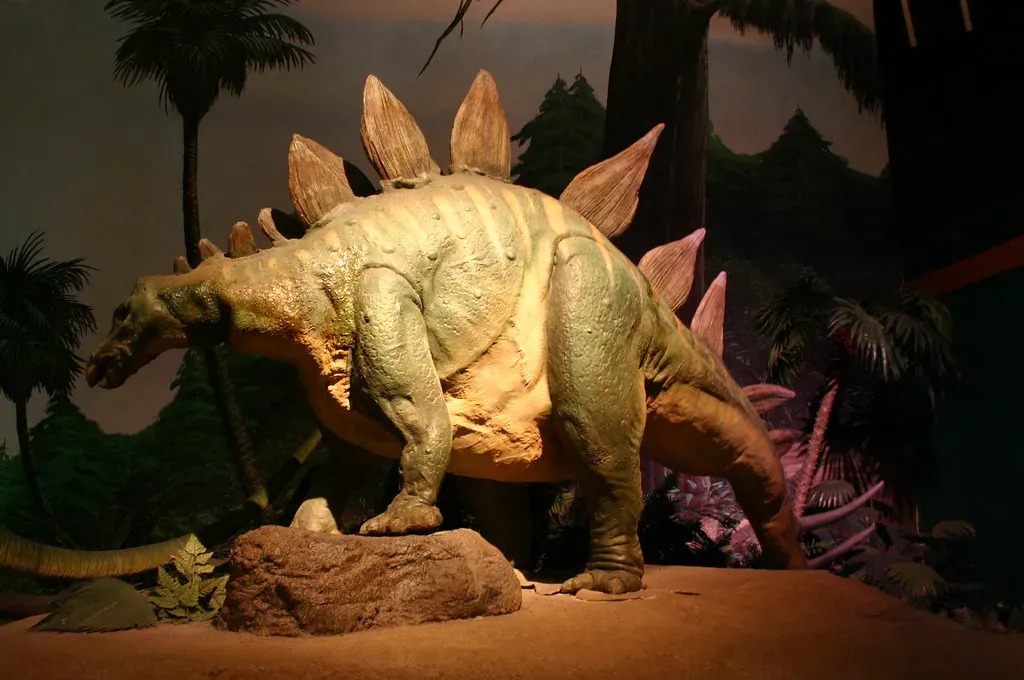
Stegosaurus often gets cast as the dim-witted background herbivore, slowly dragging itself through the scenery with its tail spikes as a last-ditch defense. While its brain was small compared with its body, that simplistic spin doesn’t do it justice. Its iconic back plates were not just random armor slapped on for decoration. They were full of blood vessels, and many scientists think they helped with display, species recognition, or even temperature control, like biological solar panels that could flush with blood.
On top of that, its posture in many older reconstructions is simply wrong. Instead of dragging its tail on the ground, Stegosaurus likely held that tail high and ready, turning those spikes into a serious threat, not an awkward afterthought. Trackways and modern reconstructions point to a more alert, active animal, with forelimbs and hind limbs working together in a coordinated, steady gait. When I think about it now, I see something more like a heavily ornamented, spiky rhinoceros analog, not a clueless plant-eater waiting around to be eaten.
6. Deinonychus: The Feathered Athlete, Not a Scaly Sidekick
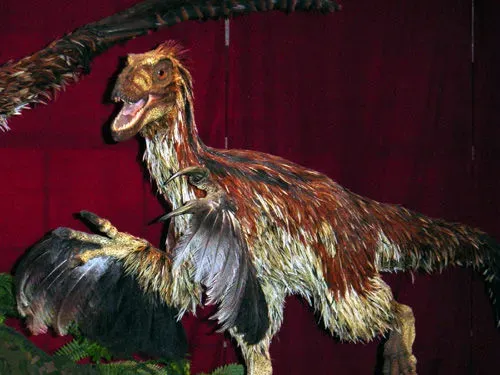
Deinonychus is the real-life inspiration for the “raptors” in many movies, but it rarely gets shown accurately. The evidence strongly favors a feathered body, with a long, stiffened tail acting as a dynamic counterbalance, and bird-like feet tipped with that famous sickle claw. Many of its joints and limb proportions are closer to modern birds than big lizards, suggesting a very active, agile hunter that could pivot and leap with alarming precision.
Instead of the uniform green or dull brown skin we usually see, imagine layered feathers that could have included stripes, patches, or subtle color shifts used for communication or camouflage. Its arms likely moved in a more bird-like arc rather than the strange outward-reaching poses often shown in toys and movies. To me, the feathered version is actually more intimidating: a pack-hunting, hyper-alert predator that feels like a predator bird brought down to earth and super-sized, not a generic, smooth-skinned reptile extra.
7. Ankylosaurus: More Than a Spiky Rock With a Club
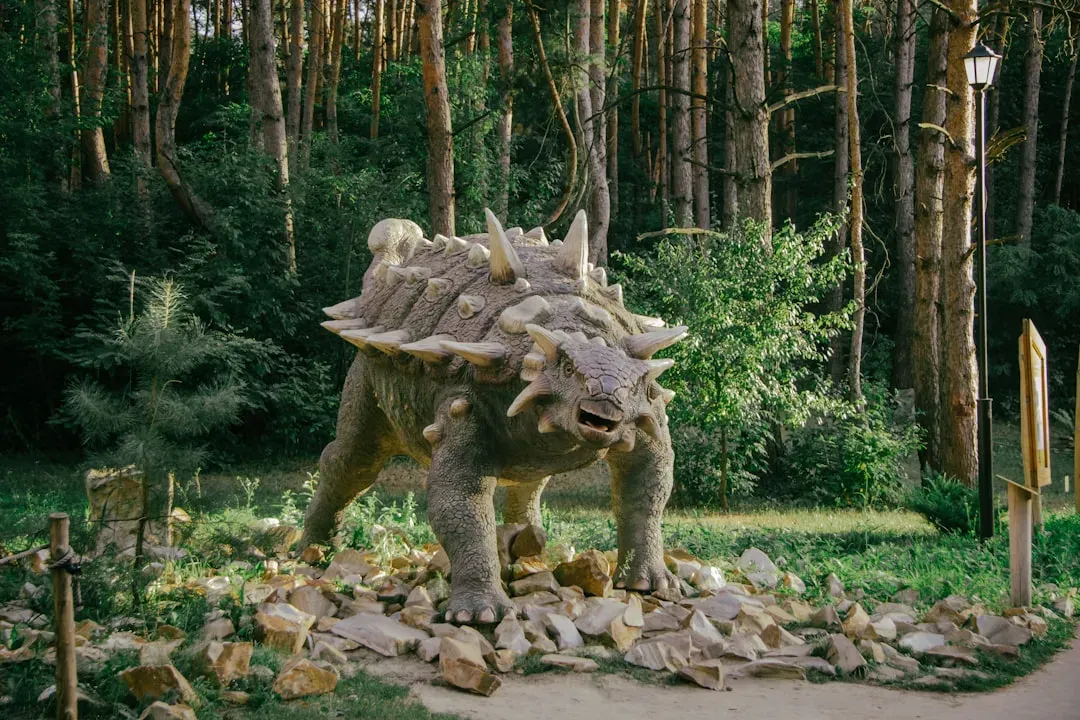
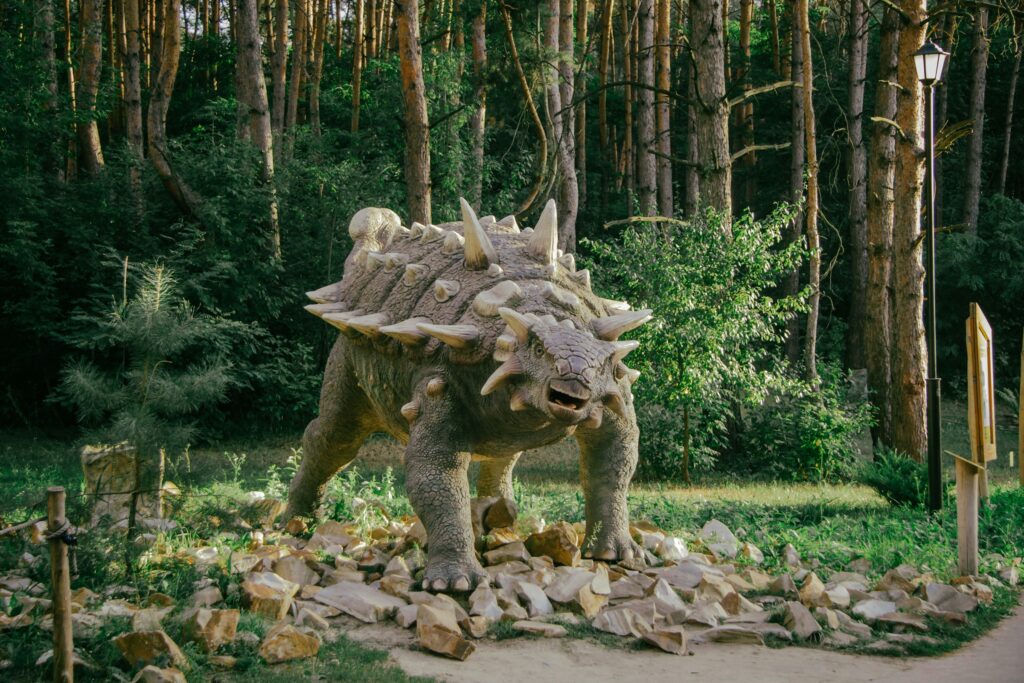
Ankylosaurus tends to be portrayed as a slow-moving armored rock with a tail club, basically dinosaur road furniture. But looking closely at its fossils, you see a carefully engineered defensive machine, not just a random lump. Its armor was arranged in complex patterns with different shapes and sizes of bony plates embedded in the skin, likely covered by keratin sheaths in life, similar to horn or tough fingernails. That means it may have looked more textured and patterned than the smooth, uniform armor shell Hollywood often slaps on.
The tail club, meanwhile, was attached to a reinforced tail built from stiffened vertebrae, suggesting it was an active weapon that could be swung with serious force, not just decorative baggage. Its body was low to the ground, with strong limbs that probably allowed for more maneuvering than we usually see on screen. When I picture Ankylosaurus now, I don’t see a cute, harmless tank; I see something closer to a living armored car with attitude, perfectly evolved to say “try it, I dare you” to any predator that got too confident.
Conclusion: Dinosaurs Were Stranger, Sharper, and More Alive Than the Movies Show
The more I’ve dug into what we actually know about these animals, the more the Hollywood versions feel flat and outdated. Real dinosaurs were not just gray monsters stomping through mud; they were dynamic, evolving creatures with feathers, patterns, complex behavior, and bodies tuned to specific lifestyles. That messy, fascinating reality is so much richer than the simple, scaly clichés that still dominate most big-screen portrayals.
I think we do ourselves a disservice when we cling to the old dinosaur stereotypes just because they feel familiar. The science is telling a stranger, more colorful story, and honestly, it makes the world feel bigger and more surprising. If the animals we thought we knew so well can turn out to be completely different up close, what else in nature is quietly defying our expectations, just waiting for us to look again?