
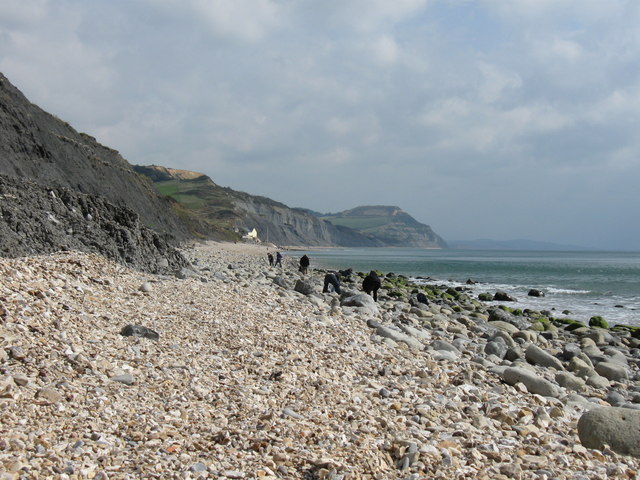
There’s a place on the English coast where, after every winter storm, pieces of the age of dinosaurs literally fall at your feet. Cliffs crumble, rocks crash onto the beach, and hidden in the rubble are fossils that have waited more than a hundred million years to be seen – and, remarkably, you are actually allowed to pick them up and keep them.
This stretch is part science lab, part treasure hunt, and part time machine. I still remember the first time I found an ammonite there; it was small, imperfect, and completely thrilling. You suddenly realise that the deep past isn’t locked away in museums – it’s tumbling out of the cliffs onto the sand, free for anyone willing to look.
A coastline that is literally eroding its secrets in real time
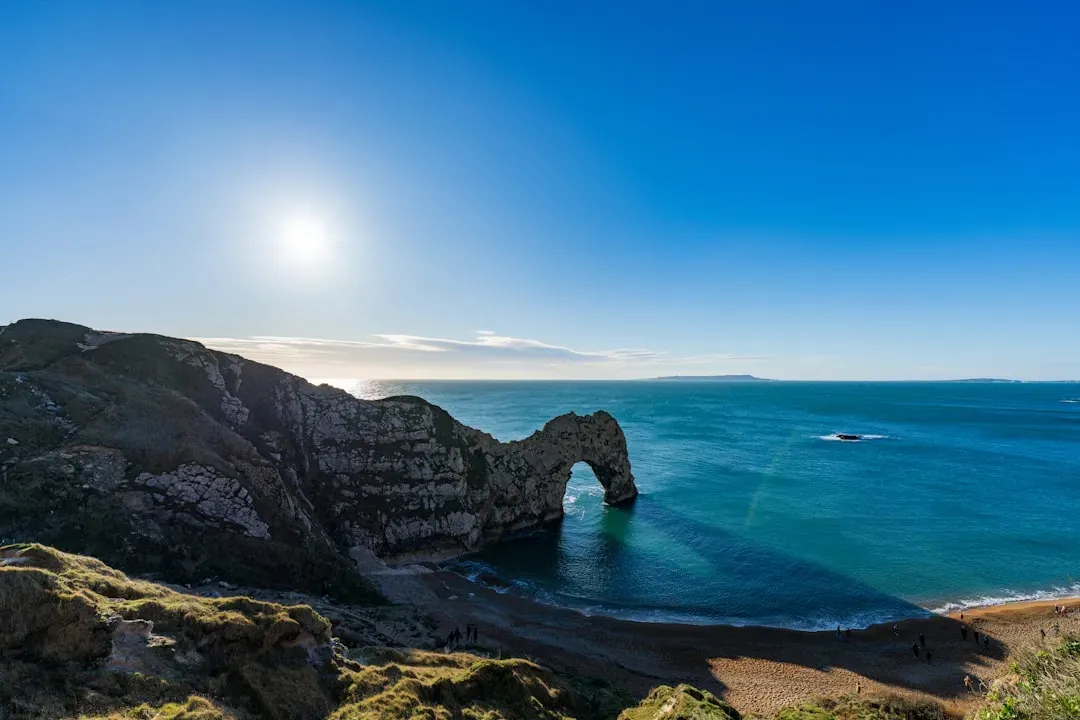
Imagine a library where the shelves constantly fall over, scattering ancient books across the floor, and visitors are encouraged to pick them up. That’s more or less what happens along this famous stretch of England’s Jurassic Coast, where soft cliffs are steadily worn away by wind, waves and heavy rain. Every serious storm acts like a natural excavation, peeling back layers of rock and exposing new fossils that have never seen the light of day.
This relentless erosion is terrible news for houses and roads built too close to the cliff edge, but it’s a dream scenario for paleontologists and curious beachcombers. Instead of needing heavy machinery to dig deep into the rock, nature does the hard work. The cost, of course, is that anything left too long on the beach will also be ground up and lost, which is why finding and rescuing those fossils in time genuinely matters.
Why this coast is so rich in dinosaurs and other ancient life
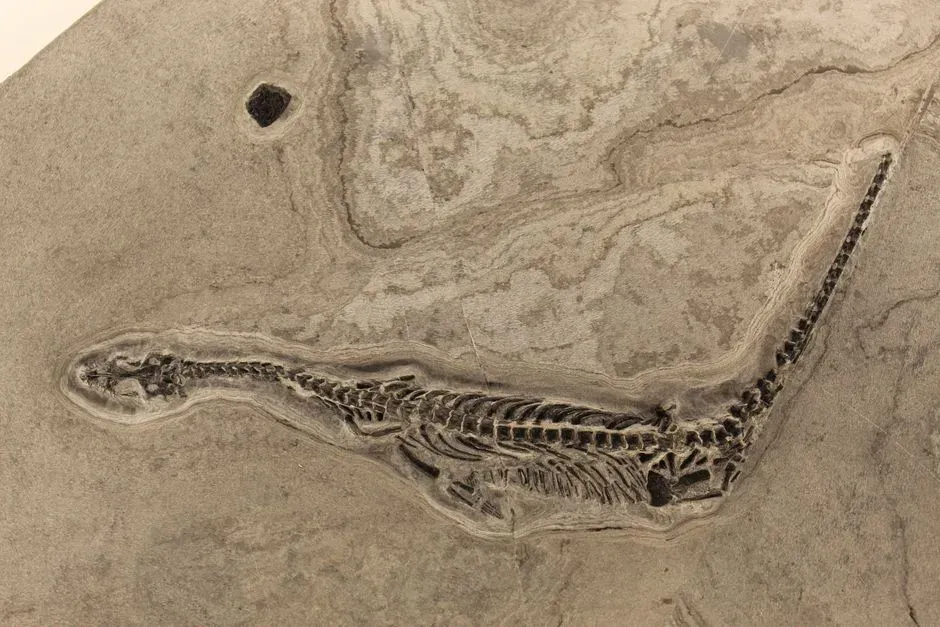
The reason this particular coastline is so special comes down to its layered geology. Over tens of millions of years, muds, sands, and limestones were laid down in ancient seas, lagoons and river deltas, then slowly turned to rock. Those layers just happen to cover a huge slice of Earth’s history, including the time when dinosaurs roamed what is now southern England, and when marine reptiles like ichthyosaurs cruised offshore.
As the cliffs erode, fossils from different time slices spill out side by side: coiled ammonites from marine mudstones, plant material from old swamp deposits, and, more rarely, the bones and footprints of dinosaurs that wandered the shoreline. You can stand on the beach and literally walk across millions of years of changing environments in a few hundred metres. It’s one of the few places where the story of deep time feels physical and immediate rather than abstract.
The surprising freedom: what you can legally collect
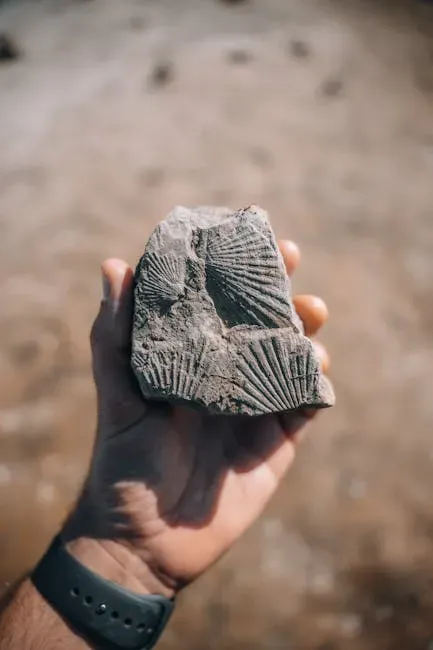
One of the most astonishing things for visitors is how open the fossil collecting rules are. On much of this English coastline, any member of the public can legally pick up loose fossils they find on the beach, as long as they are not hammering into protected rock faces or ignoring clearly posted restrictions. If a fossil has already been washed out and is just lying among the pebbles or in a fallen block, you are usually free to take it home.
This is very different from many countries where fossils are tightly controlled and must be handed over to the state. The philosophy here is more pragmatic: loose fossils are at risk of being destroyed by the sea anyway, so it’s better for them to end up in private hands or local collections than to be ground into sand. That said, if you stumble across something spectacular – like a large bone, a skull or a beautifully articulated skeleton – local museums strongly encourage you to report it so it can be recorded properly before any decisions are made.
How storms turn an ordinary beach walk into a fossil hunt
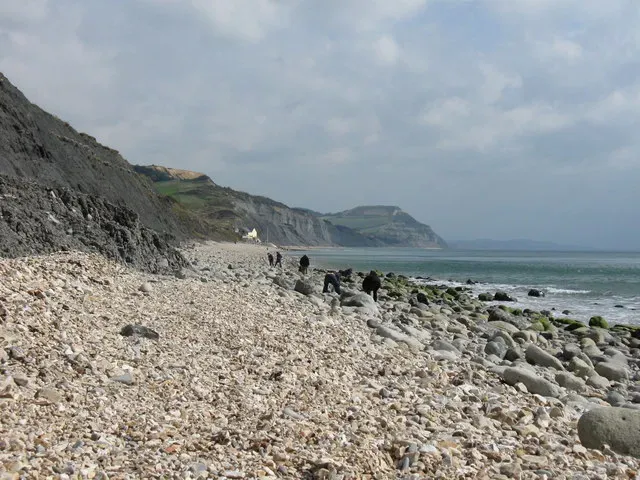
Locals know that the best days for fossils are the ones that send everyone else back to bed. After a heavy storm, the beach can look completely different: fresh landslides on the cliffs, piles of newly churned shingle, and lines of unusual stones that were not there a week earlier. It’s in this messy, freshly disturbed material that new fossils are most likely to appear, often half-embedded in mud or sitting just above the tideline.
There’s a rhythm to it. You start to notice patterns – dark, disc-shaped nodules that might hide an ammonite, pieces of rock with finely ribbed surfaces, or oddly shaped fragments that do not look like normal stones at all. I’ve had days where I walked for an hour and found nothing but broken shells, and other days when a single patch of shingle turned up several beautiful fossils in minutes. It’s a bit like beachcombing, a bit like birdwatching, and a bit like gambling, with the sea as the dealer.
From ammonites to dinosaur bones: what people actually find
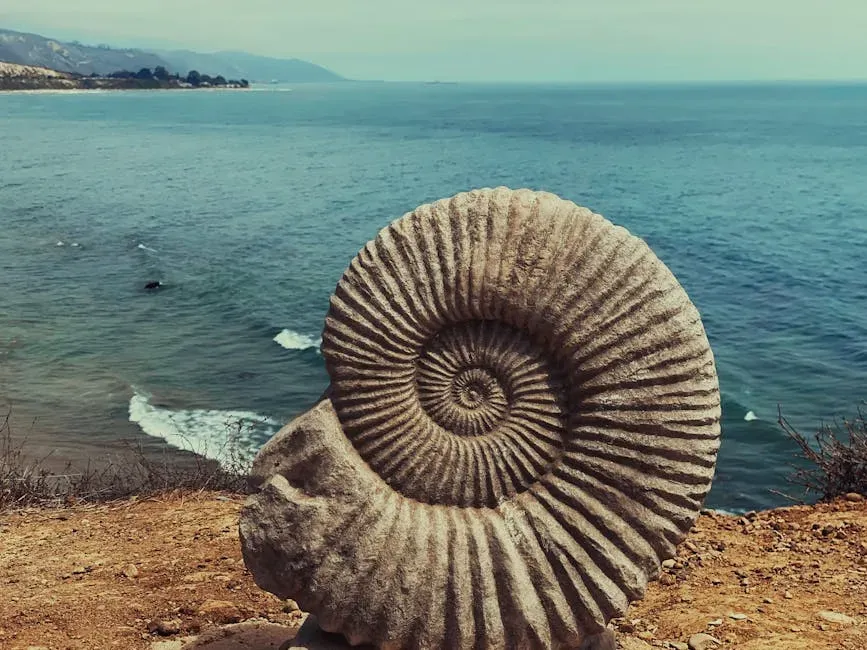
Most people’s first fossil from this coastline is an ammonite: a spiral shell that looks like a stone version of a coiled snail but comes from an extinct group of marine creatures related to modern squid. They turn up in all sizes, from fingernail-small impressions to dinner-plate-sized specimens preserved in heavy nodules. You also see a lot of belemnites, which look like smooth, bullet-shaped stones but are actually the remains of another squid-like animal’s internal skeleton.
Dinosaur bones and footprints are rarer, but they do appear, often in fallen blocks rather than as loose, perfect pieces. Some beachgoers have spotted sections of vertebrae or limb bones sticking out of rocks, prompting proper excavations by experts. There are also remains of giant marine reptiles, fish, ancient wood and even delicate plant fossils preserved in fine mudstones. The range is so broad that it is entirely possible for a curious beginner to pick up something scientifically interesting without realising it at first glance.
Staying safe and respecting a living, fragile landscape
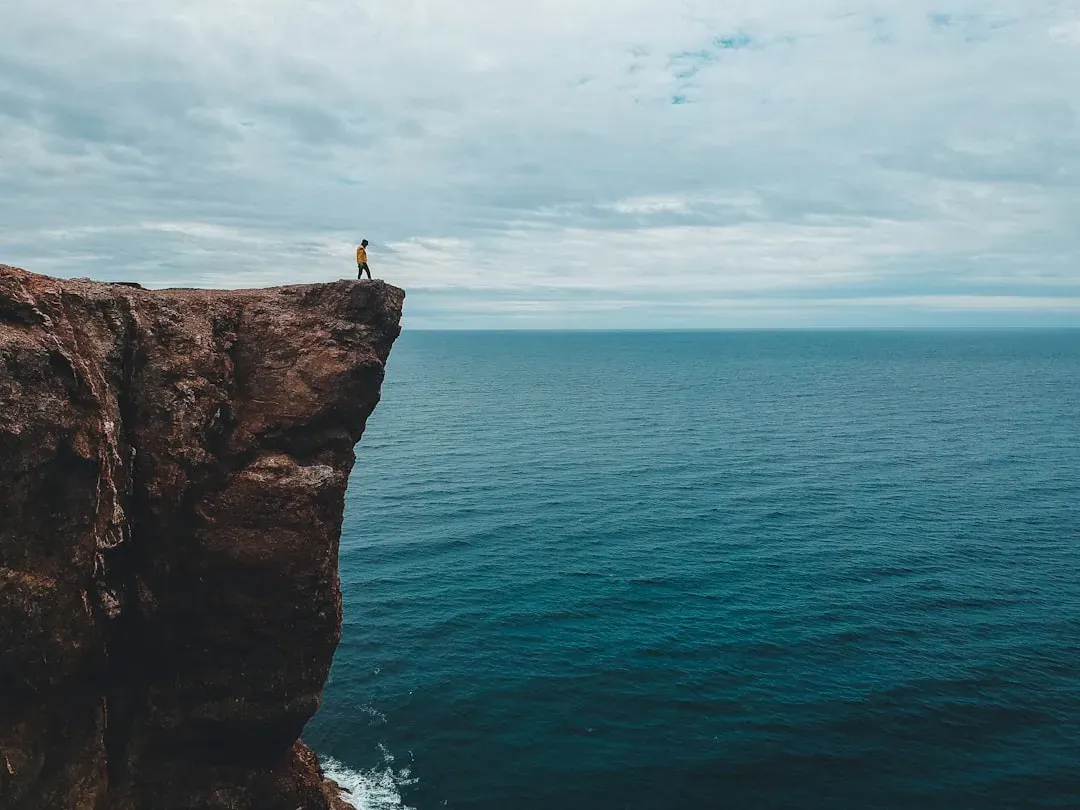
As magical as this coast is, it’s also unforgiving. The very erosion that frees fossils also brings real danger: cliffs can collapse without warning, especially after rain, and falling rocks are no joke. The safest approach is simple but non-negotiable: stay well back from the base of the cliffs, never scramble up unstable slopes, and always check tide times so you don’t get cut off. I’ve had moments where a chunk of cliff fell minutes after I walked past; you only need to see that once to take the warnings seriously.
Ethically, there’s also a balance to strike. Just because you are allowed to collect does not mean anything goes. Avoid using hammers on the cliff face, do not dig into protected rock, and be willing to share information if you think you have discovered something out of the ordinary. In my view, the best fossil hunters here are part collector, part guardian: they rescue pieces from the sea, but they also help make sure that the truly exceptional finds are documented for everyone, not just hidden on a private shelf.
Why this coast matters – and why I hope the rules stay generous
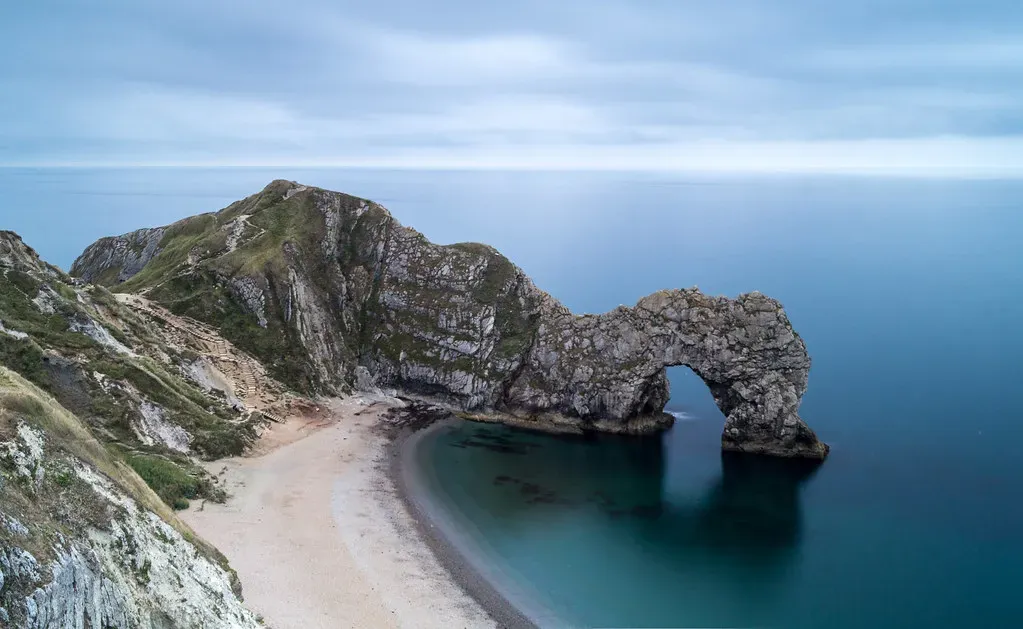
I think this stretch of English coastline might be one of the most democratic scientific sites on the planet. You don’t need a degree, a permit, or expensive equipment; you just need good shoes, patience, and a bit of curiosity. That open access has inspired countless kids and adults to fall in love with deep time, and some of them go on to become the very scientists who later study the fossils in more depth. It’s a virtuous circle that starts with someone stooping to pick up an odd-looking stone.
Of course, there’s always a risk that over-collecting or careless behaviour could push authorities toward stricter rules. Personally, I’d hate to see this coast turn into a place where everything is fenced off and ordinary people can only look from a distance. The current model, where responsible collecting is not just tolerated but encouraged, feels like a rare and brilliant compromise between science, conservation and public joy. As long as visitors treat the place with respect, I think the shoreline will keep rewarding us with new stories from the age of dinosaurs. And honestly, how often in life do you get to say you walked into a storm’s aftermath and came home with a piece of prehistory in your pocket?