
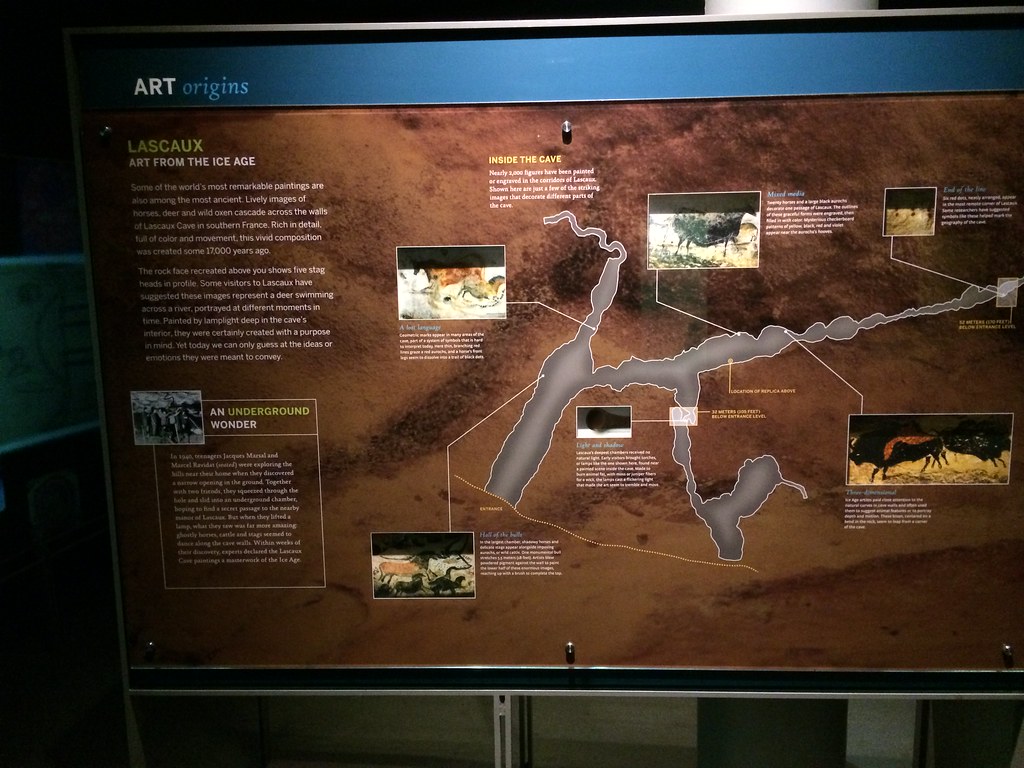
Walk into the story of Lascaux and it feels like stepping into someone else’s dream. You are surrounded by running horses, massive aurochs, and strange abstract signs flickering in torchlight, painted by hands that lived roughly seventeen thousand years ago. For a long time, these images were treated as little more than primal art, the impulsive expressions of people supposedly ruled mostly by instinct and fear.
But what if those same people were also carefully tracking the sky? Over the last few decades, researchers from archaeology, astronomy, and cognitive science have been quietly building a more startling possibility: that at least some Paleolithic cave paintings, including those at Lascaux, may encode patterns of stars, seasonal markers, and mythic maps of the heavens. The evidence is messy and often controversial, but it is strong enough to ask a challenging question: have we been underestimating Ice Age intelligence all along?
The shocking idea: Lascaux as a prehistoric star archive
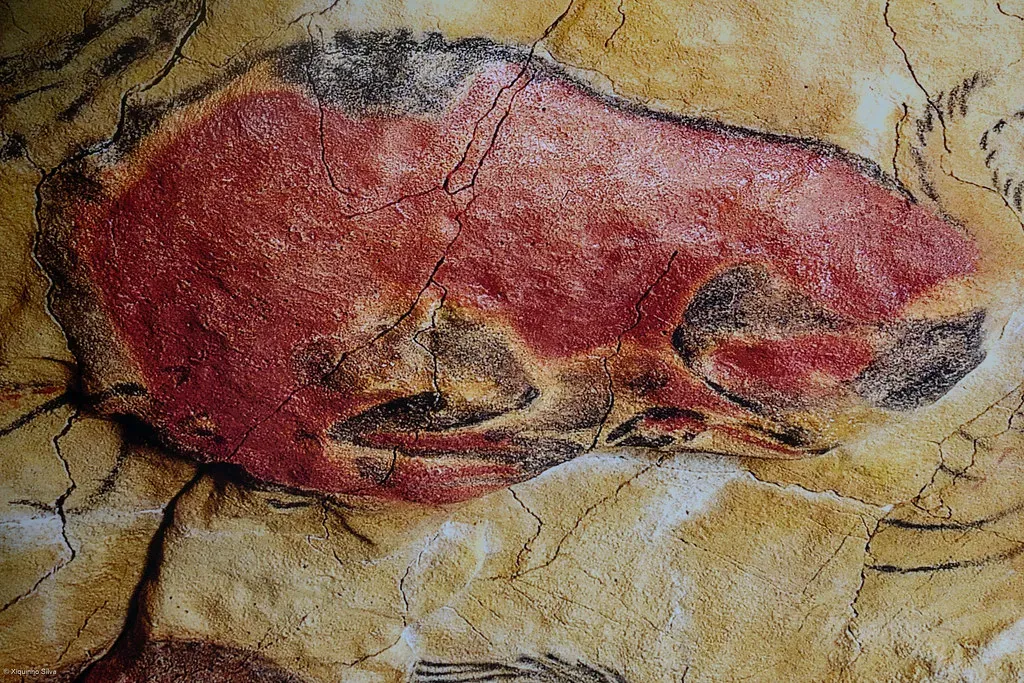
The bold claim is this: parts of Lascaux are not just pictures of animals, but structured diagrams that line up with constellations and celestial cycles. Instead of random decoration, some figures may be positioned and grouped with an underlying logic that mirrors the night sky as seen by people living in southwestern France during the last Ice Age. This does not mean the entire cave is a star chart, but rather that elements within key panels might double as astronomical references.
The idea is shocking mostly because it clashes with a long-standing stereotype. For more than a century, humans of the Upper Paleolithic were often portrayed as brilliant artists but little more than that: skilled hunters, spiritual perhaps, yet not especially systematic thinkers. Astronomy feels like a clean, rational science, while caves feel wild, smoky, and emotional. The possibility that Lascaux could be both a spiritual theater and a scientific notebook forces us to abandon that tidy separation.
From animals to constellations: why some patterns are hard to ignore
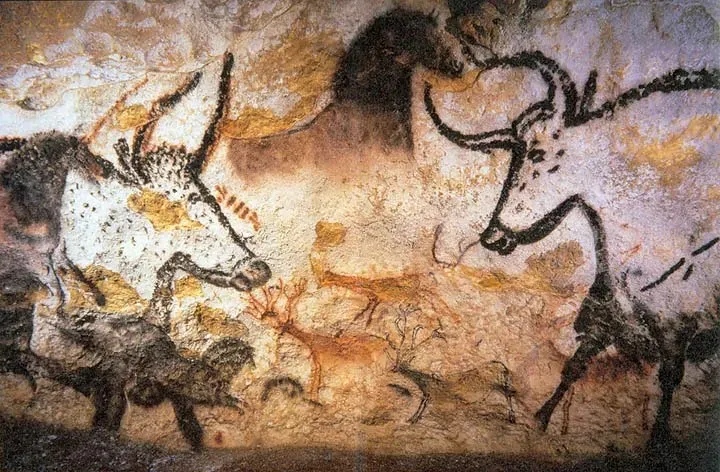
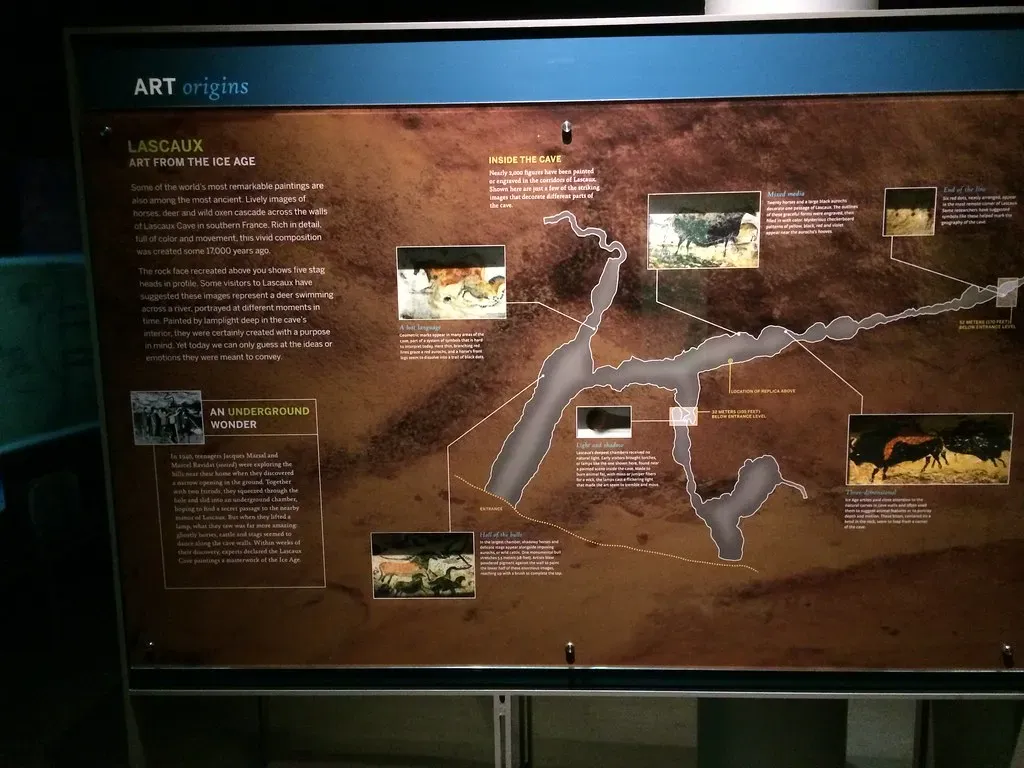
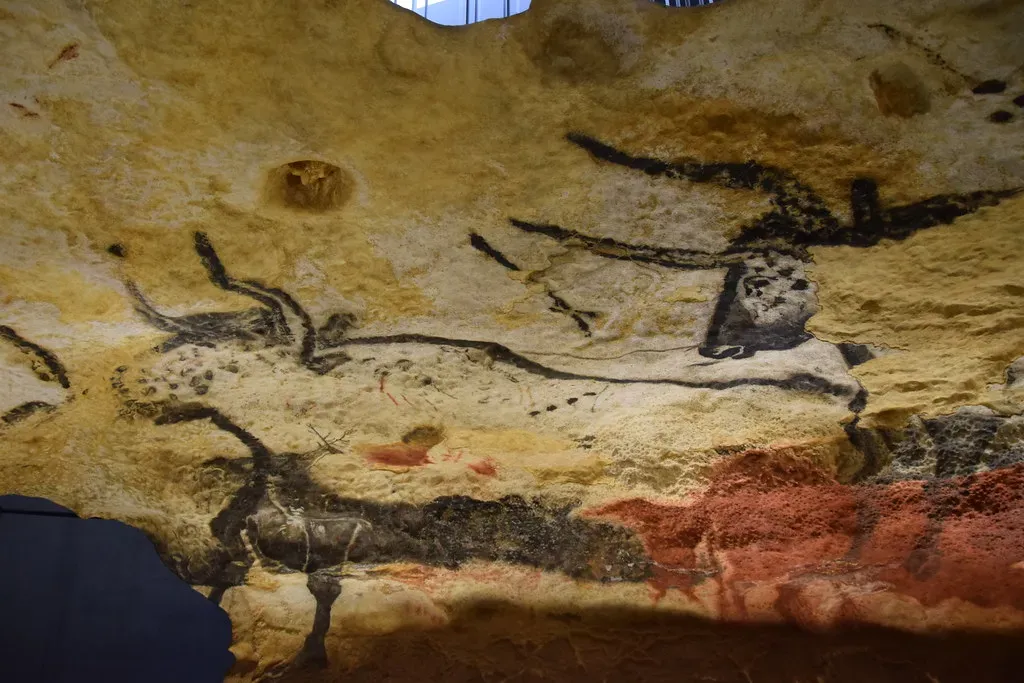
Look at photographs or reconstructions of Lascaux’s famous Hall of the Bulls and you notice more than just animals charging across the walls. There are clusters of dots, carefully placed near certain creatures, and specific groupings of horses, bulls, and deer that echo patterns of brightness and spacing familiar to anyone who has stared up at constellations. Some scholars argue, for example, that combinations of bovids and clusters of points in different caves echo the rough layout of the Pleiades and surrounding stars, or the seasonal movement of key constellations that heralded certain times of year.
Of course, once you go looking for patterns, it is dangerously easy to see them everywhere. Critics of the astronomical reading remind us that humans are experts at finding faces in clouds and shapes in tea leaves, and star maps are especially prone to this kind of projection. The real debate is about rigor: are the proposed matches between painted motifs and star patterns statistically persuasive, repeated across multiple sites, and consistent with what we know about Paleolithic lifeways? The fact that this conversation now spans archaeology, physics, and statistics suggests the question is not trivial.
Ancient skywatchers: why astronomy mattered to hunter‑gatherers

Even if some specific identifications turn out to be wrong, it is not far-fetched to think Ice Age people tracked the sky in a systematic way. For mobile hunter–gatherers, the timing of migrations, mating seasons, and plant availability is everything, and those rhythms are tightly tied to seasonal changes in the heavens. The heliacal rising of certain bright stars, the shifting arc of the Milky Way, and the changing length of twilight would all have been reliable cues in a world without clocks or calendars.
In that context, painting a powerful animal together with a distinctive arrangement of dots could be a way of compactly encoding both an ecological story and a celestial marker. Imagine a group where the appearance of a particular star cluster above the horizon signaled the arrival of bison herds in a nearby valley. Over generations, that stellar pattern and that animal could fuse in myth and image, turning the cave wall into a place where time, memory, and the sky were fused into a single, easily retold narrative.
The Lascaux “code”: dots, signs, and the mystery of repeated symbols
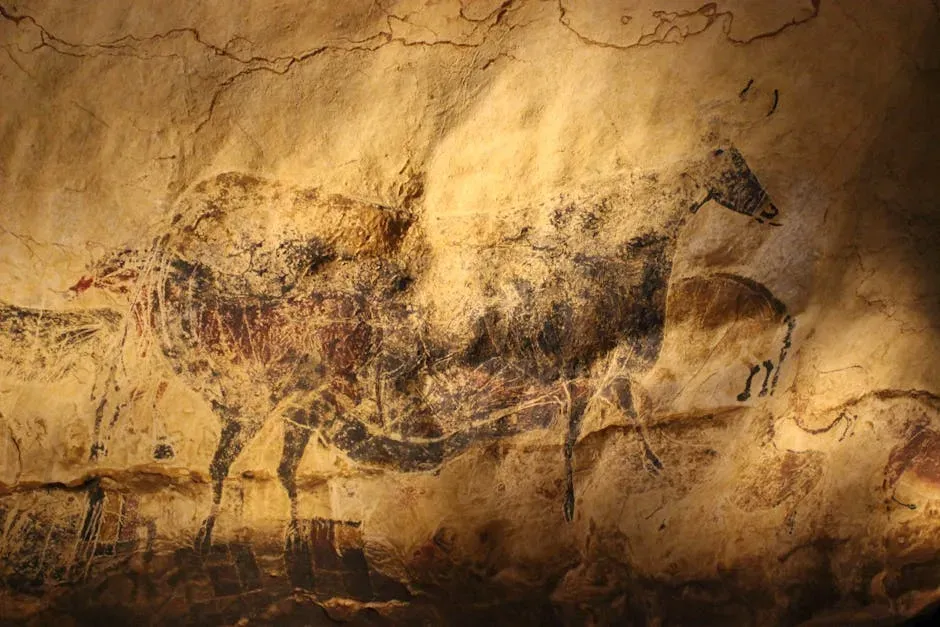
One of the biggest clues that something more than casual decoration is going on at Lascaux is the system of abstract signs that punctuate the animals. Tiny dashes, dots, bar-like marks, and paired or grouped symbols appear again and again, not just in Lascaux but in caves spread widely across Europe. Some researchers have likened this to a proto‑notation system: compact marks that carried meaning recognized within a culture, even if we can no longer read their language.
If some of those marks map onto star clusters or count lunar cycles, the cave walls become a hybrid of art and data. A line of dots near a pregnant animal, for instance, has been interpreted by some as tracking the months of gestation linked to lunar phases or stellar events, while clusters near heads of certain beasts might flag specific times of year when those animals were most important. To me, the most compelling part is not any single match, but the sheer persistence of these symbols across distant regions and millennia, hinting that people were carefully coordinating what they drew with what they saw in the sky.
How modern science is testing star‑map hypotheses
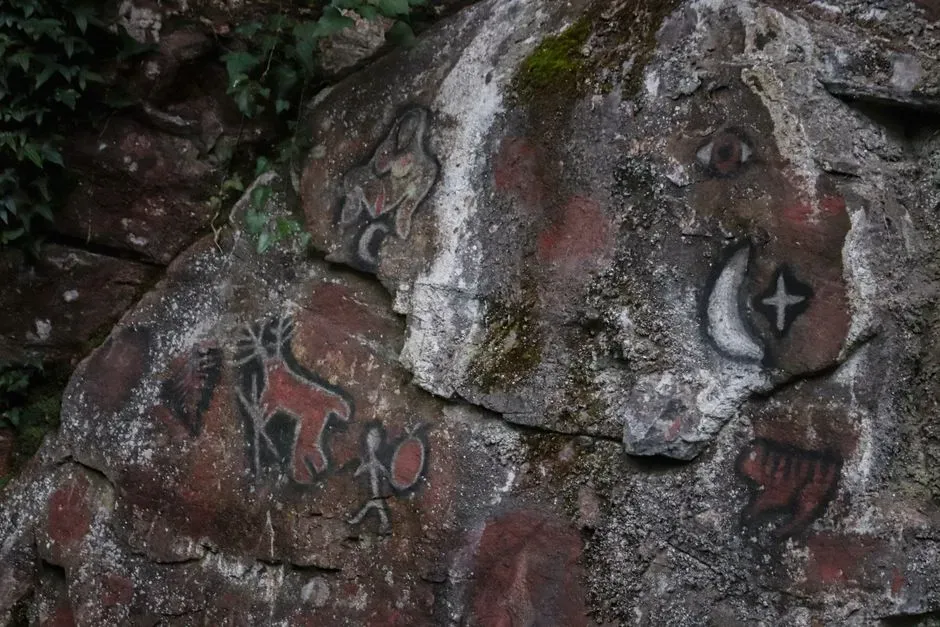
The reason the star‑map theory is getting more serious attention now is that researchers finally have tools sophisticated enough to test it more rigorously. High‑resolution 3D scans of caves, precise dating methods, and planetarium‑grade software allow scientists to reconstruct what the night sky looked like from a given latitude tens of thousands of years ago. This means they can overlay proposed constellations or stellar patterns on cave walls with far more precision than earlier scholars armed only with hand‑drawn sketches and intuition.
Beyond visual matching, some teams have been running statistical analyses to ask whether the correspondences between painted dots and bright stars are better than random chance. Others compare site after site, checking whether similar motifs always seem to line up with similar stellar patterns at different locations and times. The results are not neat; some claims crumble under scrutiny, while others become more intriguing. The big picture, though, is that Lascaux and its sister caves are no longer just the domain of art historians and prehistorians – they are slowly becoming laboratories where we test how deep human observational science really goes.
Between evidence and imagination: what we can and cannot say (yet)
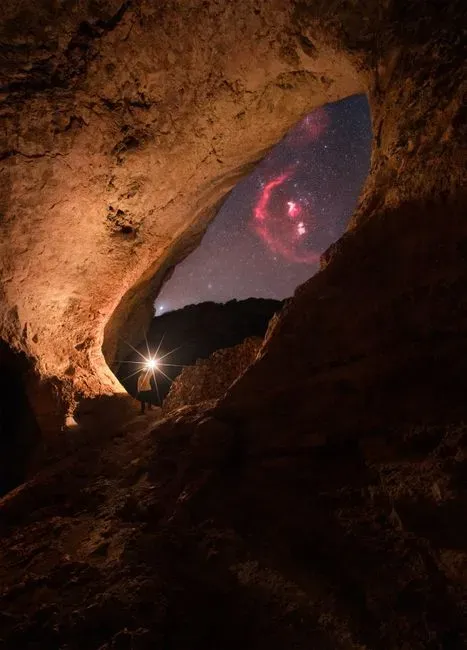
Here is the uncomfortable truth: anyone who tells you that Lascaux is definitely a precise star atlas is overstating the case. The evidence supports a more cautious, layered story. There are compelling overlaps between certain images and known star patterns, and there are repeated sign systems that strongly suggest some kind of notation, potentially linked to seasons or sky events. But there is no Rosetta Stone, no surviving manual that explains exactly what each dot and animal was meant to represent.
At the same time, casually dismissing every astronomical interpretation as fantasy is just as unscientific. When the same clusters of dots recur in similar positions near similar animals across multiple, widely separated caves, and some of those clusters align suspiciously well with prominent star groupings visible in those eras, we owe it to the evidence to consider the possibility seriously. In my view, the most responsible stance is this: Lascaux almost certainly encodes complex knowledge about time, animals, and probably the sky; we are only just beginning to decipher the edges of that system, and some of our favorite specific identifications will likely turn out to be wrong.
Rewriting what it means to be “prehistoric”
If the astronomical reading of Lascaux is even partly right, it does something radical to our sense of human history. It means the separation we often imagine between myth and science simply did not exist for these people. Tracking the sky, telling stories about powerful animals, and surviving harsh seasons were all part of one woven worldview, painted onto stone in a language that blended symbolism, observation, and spirituality without drawing hard borders between them.
Personally, I find this deeply humbling. It suggests that the capacity for pattern‑seeking, for data‑tracking, and for patient, multi‑generational observation is not a recent invention but a very old human habit. Maybe the distance between a Paleolithic painter marking dots near an aurochs and a modern astronomer plotting points on a star chart is smaller than we think; both are trying to hold onto fleeting moments in the sky and tie them to something solid and memorable. In that sense, Lascaux is not a primitive prelude to science but an alternative branch of it.
Conclusion: were the Lascaux painters astronomers? My take
So, did the people who painted Lascaux truly understand astronomy in a way we would recognize? I think the fairest answer is that they were sky‑literate in a deep, embodied sense; they cared about celestial cycles because those rhythms were welded to animal migrations, ritual moments, and group identity. They did not separate astrophysics from storytelling, but that does not make their observations less real. If some of their paintings doubled as star maps or seasonal markers, that would be exactly what you would expect from people whose survival depended on reading the world precisely.
In my opinion, the safest bet is that Lascaux is not a single coded star chart waiting to be perfectly decoded, but a dense tapestry where sky knowledge, animal lore, and myth are braided together. We are probably fooling ourselves if we think we can recover every detail of that code. But we are equally foolish if we assume those painters were naive dreamers who never lifted their eyes beyond the cave entrance. Next time you see an image from Lascaux, it might be worth asking: are you just looking at animals on rock, or are you glimpsing a night sky remembered in paint in a way that our own high‑tech age is only now learning to recognize?