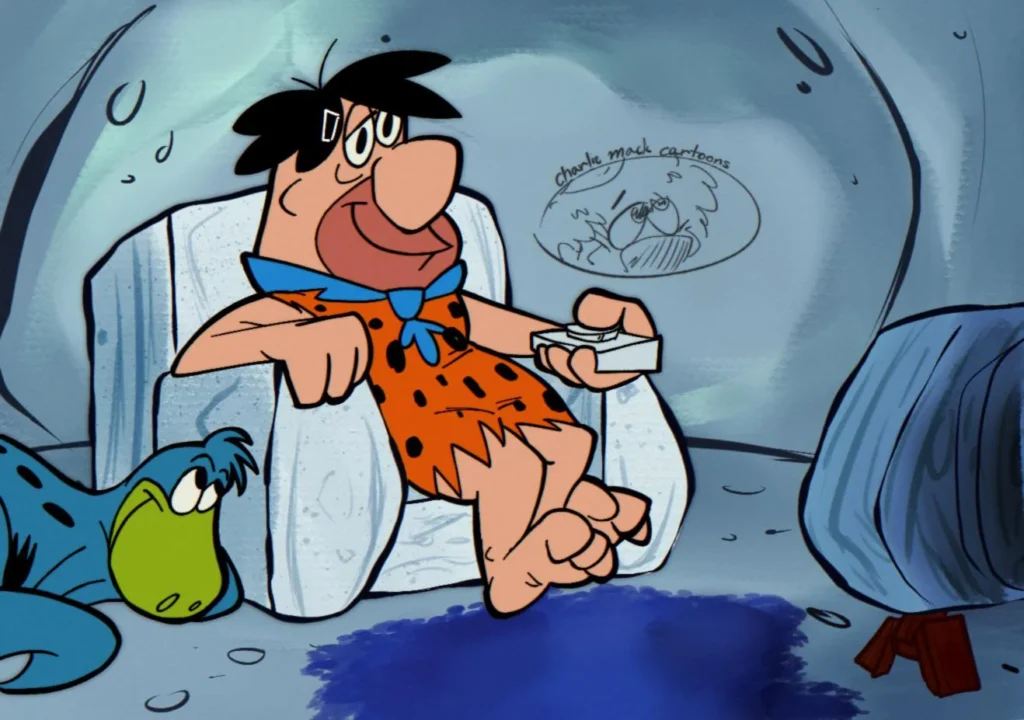
If you grew up watching The Flintstones, you probably remember that oddly satisfying mix of Stone Age and suburbia: bone cars in traffic jams, dinosaurs as forklifts, and yes, a baby mammoth stuck under the kitchen sink acting as a garbage disposal. It was ridiculous, wildly inaccurate from any scientific perspective, and yet somehow it made everyday technology feel magical by turning it into living, sighing, eye-rolling animals.
Looking back now, what’s fun is seeing how those “appliances” accidentally teach us about real prehistoric animals and real-world engineering, while also exposing how much our modern lives depend on invisible machines. The gags are silly, but the ideas behind them – using natural forces to get work done, repurposing biology as tech – are actually pretty clever. Let’s walk through that mammoth under the sink and five more of the funniest “prehistoric” appliances, and unpack why these jokes still land decades later.
The baby mammoth garbage disposal under the sink
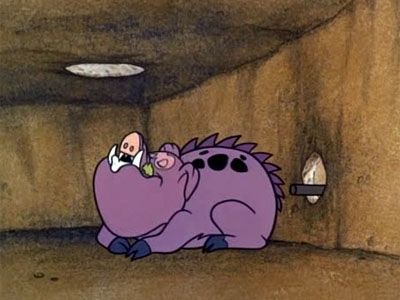
The kitchen garbage disposal in The Flintstones is one of the most memorable gags: open the cabinet under the sink, and there’s a baby mammoth slurping up leftovers like a living vacuum. From a scientific standpoint, mammoths never lived alongside humans in a modern kitchen, and certainly not in the dinosaur-packed world the show invents. Still, the gag works because it exaggerates a real principle of technology: using powerful biological systems to do unpleasant tasks that humans would rather avoid.
In the real world, elephants and mammoths are built for massive intake and digestion of plant material, with huge, muscular trunks and powerful jaws. Translating that into a “disposal” is goofy but not random – the idea is that something with that kind of suction and chewing power would be perfect for dealing with food scraps. Modern waste systems actually do something similar but in a more mundane way, using bacteria in treatment plants to break down organic waste. The mammoth in the cupboard is like a cartoon shortcut for an entire ecosystem of decomposition, shrunk down and shoved under the sink with an exhausted expression.
The bird beak camera that “develops” photos instantly
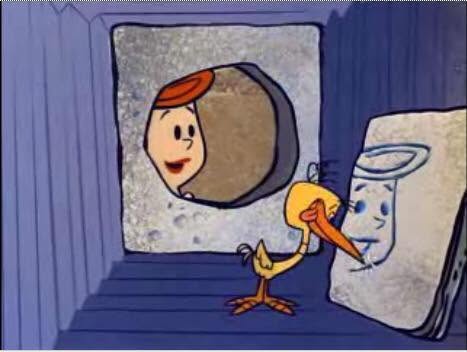
Another classic Stone Age appliance is the camera whose lens is just a bird’s head poking through a box. Someone shouts for a snapshot, the bird blinks, and then a stone tablet slides out with a perfectly carved image. Scientifically, there’s no animal that can instantly engrave a high-resolution picture in stone, but the gag echoes real principles of vision and imprinting: light hitting a surface, an image being captured, and then “fixed” in place.
The idea of a living creature as a camera lens is also a sly nod to how much of our technology is modeled on biology. Modern camera sensors are designed based on how eyes process light, while early photographers relied on chemical reactions to preserve an image. In the show, that entire chemical and optical pipeline gets swapped for a bird doing all the work internally, like a biological printer and processor in one. It’s absurd, but it makes you notice how miraculous photography really is – and how easy it is to take for granted that our phones silently do in milliseconds what once felt like magic.
The pelican or bird-powered clothes washer
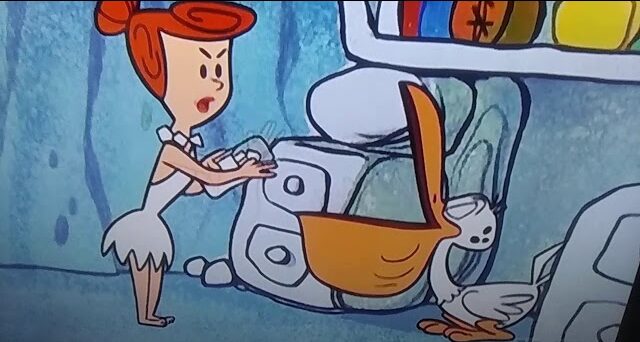
The Flintstones’ laundry setup often involves some unfortunate bird stuck in a stone tub, flapping frantically while clothes spin around in prehistoric suds. From a physics perspective, the basic idea of using rotational force and agitation to remove dirt is surprisingly accurate; modern washing machines do almost the same thing, just with electric motors instead of panicked feathers. The show’s version is like a low-tech Rube Goldberg machine, turning raw animal energy into circular motion.
Of course, no real bird could withstand that kind of constant, repetitive labor without serious harm, which is one reason why the gag lands a bit darker when you rewatch it as an adult. But it also reflects a real historical pattern: for most of human history, work was done by human or animal muscle rather than electricity. Horses pulled plows, oxen powered mills, and people literally scrubbed clothes against rocks. The cartoon’s bird-washer is a parody of that past, but it also highlights how radically our relationship to domestic work has changed – most of us would be helpless if the power went out and the “bird” inside our washing machine suddenly stopped flapping.
The dinosaur record player with a beak for a stylus
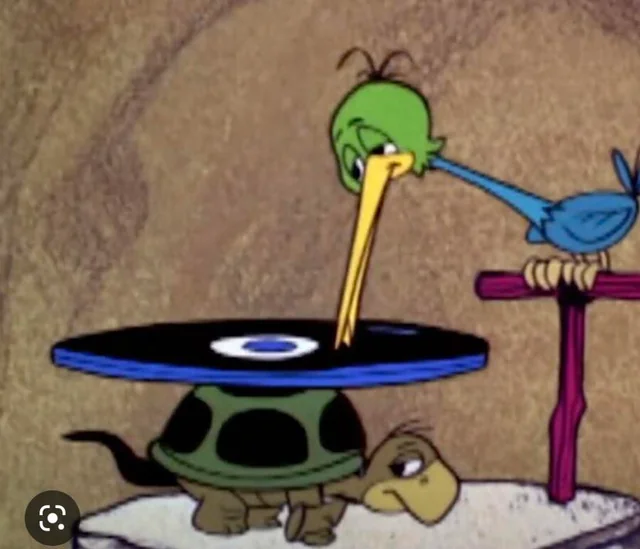
One of the more charming appliances is the dinosaur or bird acting as a living record player. Fred or Wilma places a rock “record” on a turntable, and a small creature leans in, beak scraping along the grooves to produce music. While no animal’s beak can literally read engraved audio waves, the gag riffs on how vibration and sound actually work. Real record players use a tiny stylus tracing micro-grooves, turning physical motion into electrical signals and then into sound waves in the air.
The cartoon swaps out all the electro-mechanical complexity for a little animal that just “knows” how to translate grooves into a song. This is another place where biology and technology quietly intersect: many animals are incredibly sensitive to vibration, from insects that detect the smallest tremors to birds that navigate using subtle sound cues. By turning that sensitivity into a fully functional audio system, the writers take a real biological capability and stretch it to comedic extremes. Watching it now, it feels almost like a commentary on how invisible and fragile our music infrastructure is – pull the needle, or in this case the dinosaur, and the soundtrack of our lives just stops.
The animal-powered vacuum cleaner and floor polisher
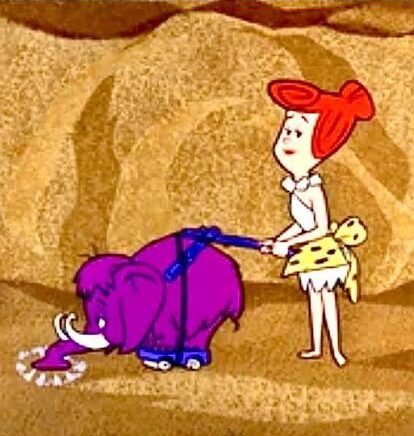
Household cleaning gadgets in Bedrock are basically an anthology of animal exploitation: long-snouted creatures used as vacuums, turtles used as scrubbers, and various lizards dragged around as animated mops. Scientifically, it makes no sense for a single animal to inhale dust all day without collapsing, but the cartoon is exaggerating the real principle of suction and friction. Modern vacuums rely on pressure differences created by a motor to pull in debris, while polishers use rotating pads and abrasion to smooth surfaces.
In the show, all of that complexity is replaced by a creature with the “right” shape or behavior. Long nose? You’re a vacuum now. Hard shell? You’re a floor buffer. It’s funny, but it also underlines how we intuitively match form to function – humans have always looked at animals and imagined new tools based on their bodies. Even now, roboticists design machines inspired by geckos, octopi, and insects. The Flintstones just run that instinct to its most literal extreme, turning the entire animal kingdom into a misplaced cleaning crew that looks like it’s silently questioning its life choices.
The bird-powered alarm clock and timekeeping gadgets
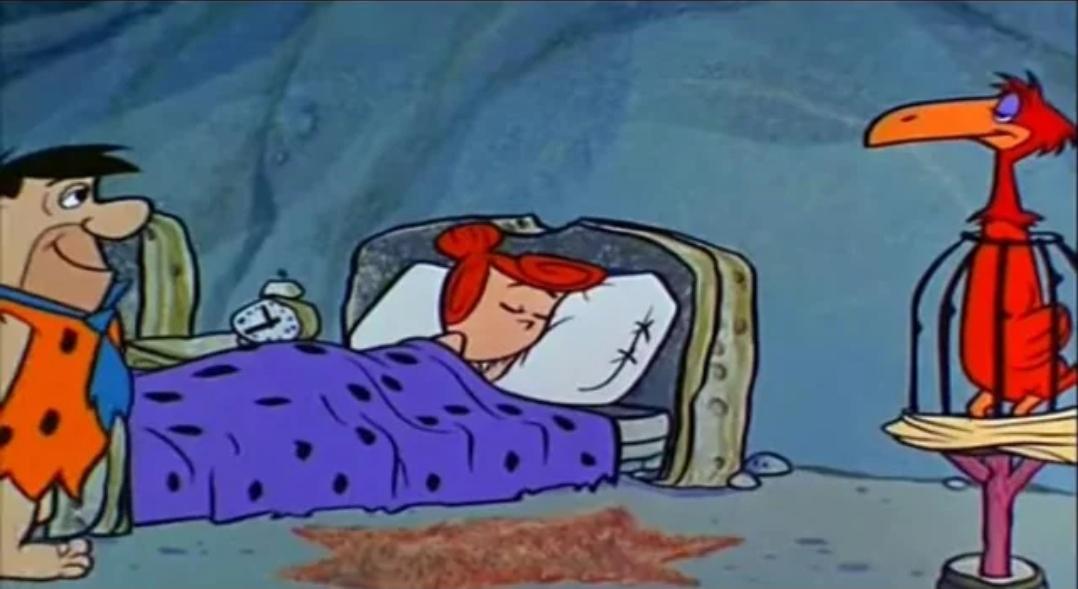
Timekeeping in The Flintstones is another running joke, with birds acting as alarm clocks, sundials mixed with animals, and strange contraptions that squawk at sunrise. Scientifically, birds are indeed sensitive to light and time; many species wake and sing at very consistent hours because their internal clocks sync with daylight cycles. The cartoon stretches that into a full-on alarm system, where a bird literally yells you awake like a feathery, annoyed smartphone notification.
Compared to digital clocks and network-synced time servers, a bird-on-a-perch seems laughably imprecise. Yet for most of human history, people actually did rely on roosters crowing, bells chiming, or the position of the sun to know when to start their day. The joke works because it compresses that old reality into a single oversimplified image: a tired bird forced to stay on schedule for its human owner. It’s a reminder that modern timekeeping is an invisible web of satellites and software, while the Stone Age parody uses just one grumpy, living creature trying its best not to oversleep.
The “living” shower, bath, and grooming gadgets

Bath time in The Flintstones is basically one long parade of animal-based plumbing. You see elephants or mammoth-like creatures used as showers, smaller animals as showerheads, and weird prehistoric fish acting as shower “jets.” Scientifically, there were no domesticated mammoths installed in tiled bathrooms, but the joke leans into a real principle: using gravity and pressure to move water from one place to another. The enormous size of a mammoth or elephant makes it a believable source of water flow in cartoon logic, even if biology and reality disagree.
Even grooming tools – like porcupines as hairbrushes or clams as razors – play on the idea of borrowing textures and sharp edges from nature. In reality, our combs, razors, and shower systems are made from refined materials and carefully engineered designs, yet many of those designs were inspired indirectly by natural forms. The show just erases the middle step and straps the raw animal directly into the job. When you compare that to our sleek gadgets today, you realize how much tech is really about taming and miniaturizing the rough, oversized forces of the natural world into something you can hold in your hand without it snorting or biting.
Conclusion: Why these “prehistoric appliances” still hit home
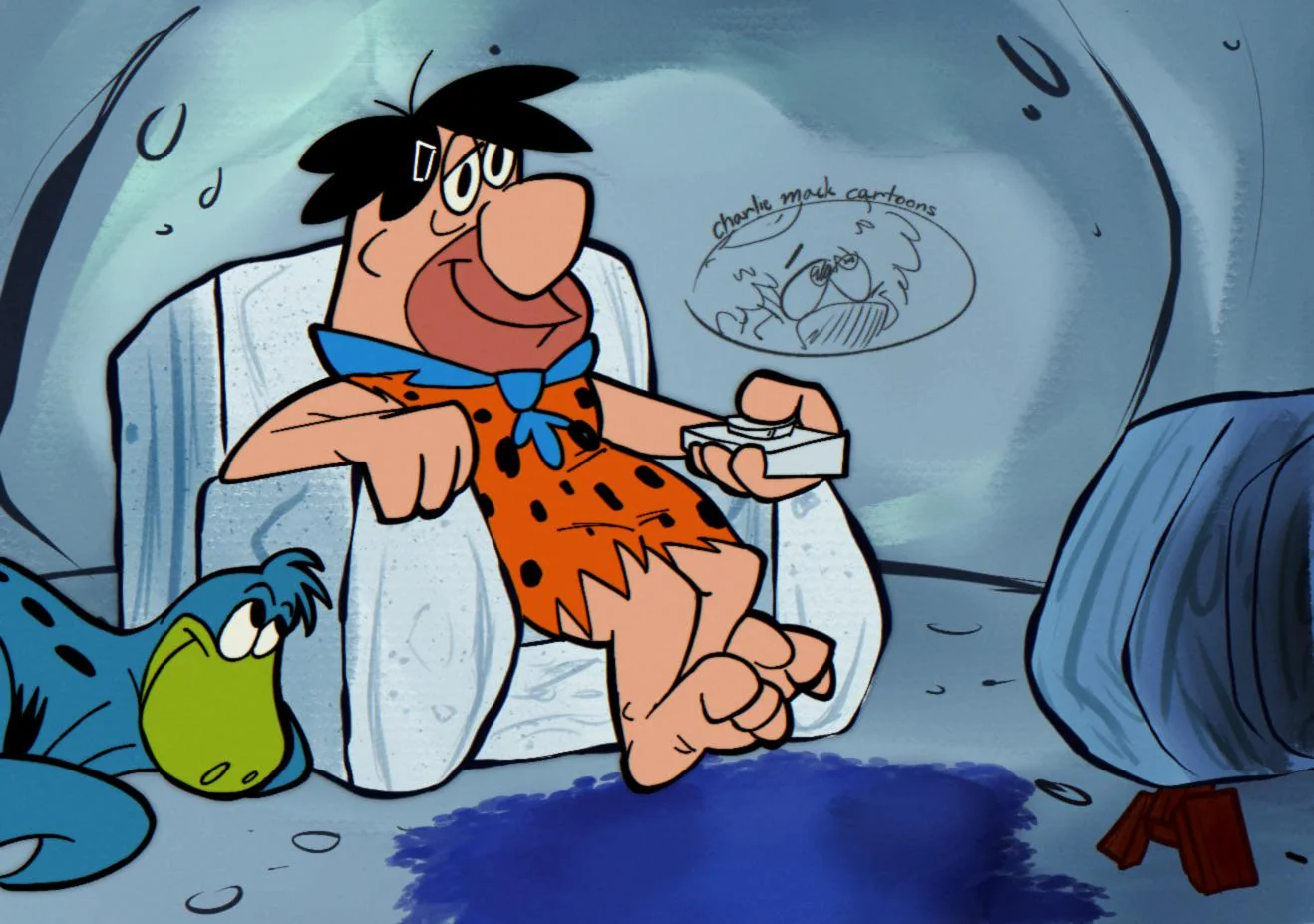
Rewatching The Flintstones in 2026, it’s tempting to dismiss all these animal appliances as just dated slapstick, but there’s something sharper going on underneath the jokes. The show turns our entire household tech ecosystem inside out, making every invisible mechanism loud, alive, and slightly miserable. That’s not just funny; it quietly forces us to notice how dependent we are on complex systems we barely understand, from power grids to microchips, and how strange our homes would look if we could suddenly see the “work” behind every button press.
Personally, I think that’s why the baby mammoth under the sink still feels iconic: it’s ridiculous, but it also captures the truth that comfort always comes at a cost, even if it’s hidden in a cabinet. Today, the “animals” doing the thankless work are servers, algorithms, and factory lines instead of birds and dinosaurs, but the dynamic is similar – effort is out of sight, so we barely think about it. Maybe that’s the real punchline of Bedrock suburbia: by turning technology into exhausted creatures with personality, it nudges us to ask who or what is really doing the heavy lifting in our own homes. When you picture a mammoth swallowing your leftovers for the hundredth time, you can’t help but wonder: if our appliances could talk, would they be laughing with us, or rolling their eyes just like that little guy under Fred Flintstone’s sink?