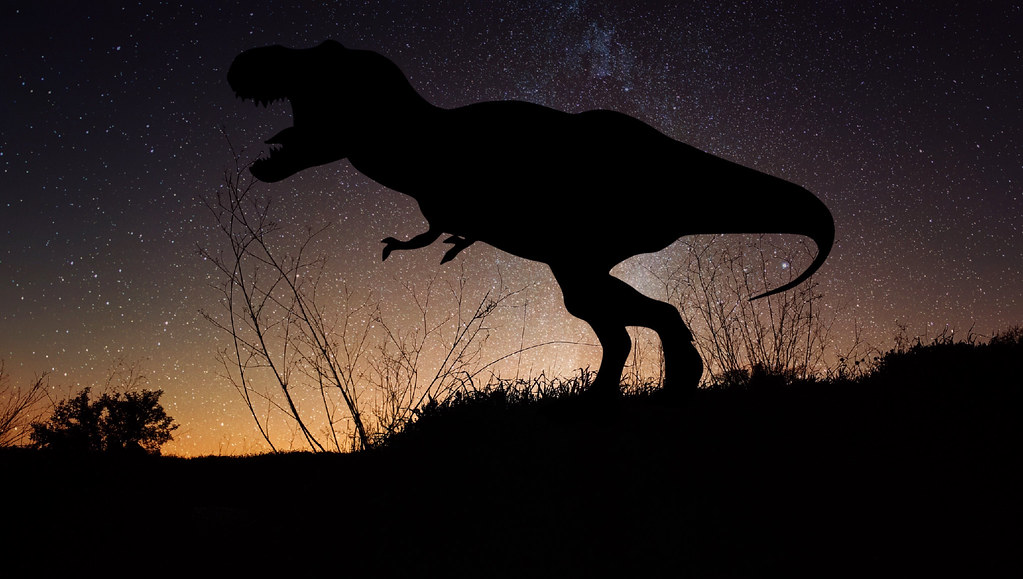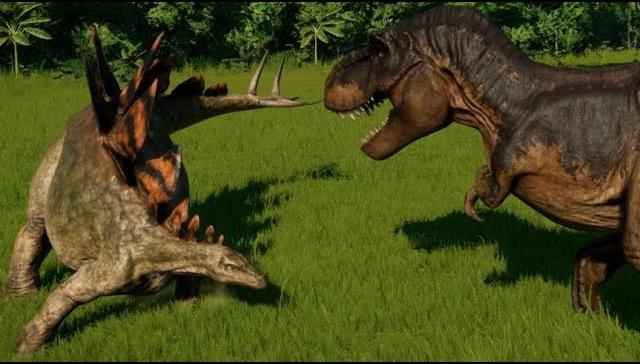
Stegosaurus and Tyrannosaurus rex feel like they belong together. Toys put them in the same plastic bucket, movies throw them into the same jungle, and our childhood drawings happily stage them in the same epic battle. But in reality, they were as separated in time as we are from them – and then some. If you could somehow send T. rex on a time‑travel road trip back to Stegosaurus, it would have to go farther into the past than it would need to travel forward to visit you today. That idea is a little unsettling, almost like realizing your favorite movie crossover could never actually happen. It also reveals something deeper: our mental picture of “the dinosaur age” is wildly compressed compared to what actually happened. The age of dinosaurs lasted for well over 150 million years. In that span, entire worlds came and went, continents wandered, oceans shifted, and whole dynasties of creatures rose and vanished long before T. rex ever set foot on the scene. Once you see the true timeline, you never look at dinosaurs – or geologic time – the same way again.
A Shocking Timeline: Stegosaurus vs. T. Rex vs. You
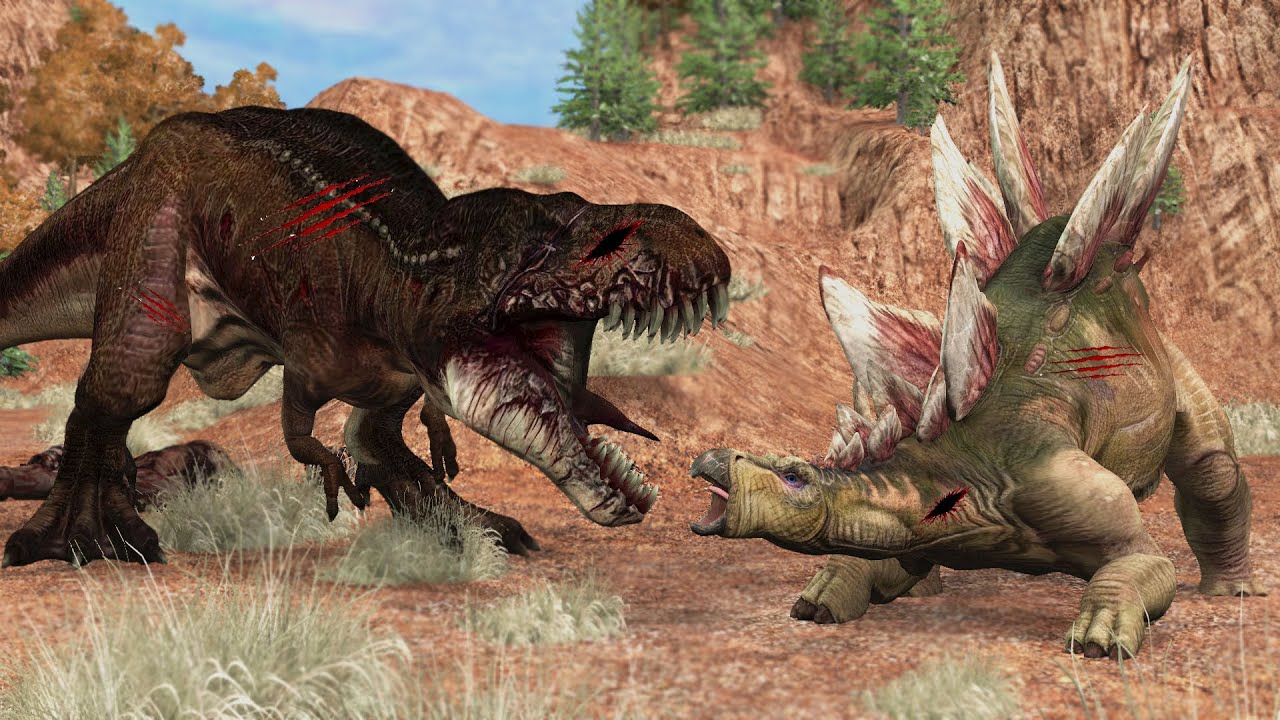
The brutal truth is this: Stegosaurus and T. rex are not “dinosaur neighbors” separated by a small gap; they’re more like distant strangers living on totally different seasons of the same show. Stegosaurus roamed the Earth roughly during the Late Jurassic, around one hundred fifty to one hundred fifty‑five million years ago. Tyrannosaurus rex, on the other hand, lived very late in the Cretaceous, roughly sixty six to sixty eight million years ago. That means the time between Stegosaurus and T. rex was on the order of eighty million years or more. Now compare that to you and T. rex. The last non‑avian dinosaurs, including T. rex, died out about sixty six million years ago. So the distance in time between you and T. rex is around sixty six million years, while the gap between T. rex and Stegosaurus is even larger, somewhere around eighty million years. In other words, T. rex is actually closer in time to you scrolling on a phone than it ever was to a live Stegosaurus swinging its spiky tail. That’s not just surprising; it completely flips the way most of us imagine the “dinosaur era.”
The Dinosaur Era Was Not One Single Moment
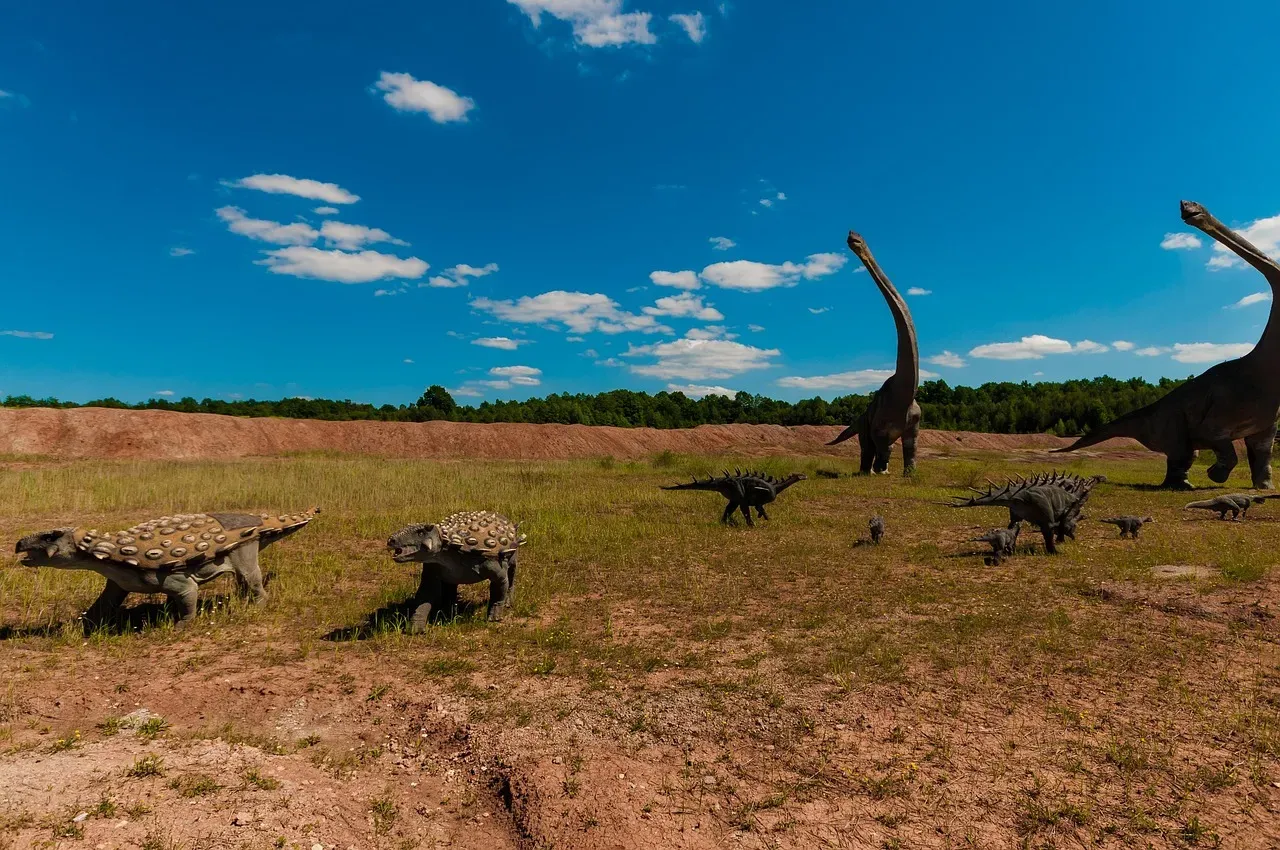
Part of the confusion comes from how we talk about “the age of dinosaurs” like it was one long, unchanging moment – as if Stegosaurus, Triceratops, T. rex, and Velociraptor were all sharing the same forests and hunting the same prey. In reality, the Mesozoic Era, the stretch of time we call the age of dinosaurs, is divided into three huge periods: Triassic, Jurassic, and Cretaceous. Each period is tens of millions of years long, with its own climate shifts, ecosystems, and dominant species. Imagine calling everything from ancient Egypt to modern streaming culture “the age of humans” and picturing pharaohs texting on smartphones. That is basically what we do with dinosaurs. By stuffing all of them into one mental picture, we erase the rise and fall of countless species, evolutionary experiments, and environmental upheavals. Once you see those internal chapters – early, middle, late dinosaurs – the story becomes richer, and a lot more humbling.
Meet Stegosaurus: The Armored Giant of the Jurassic
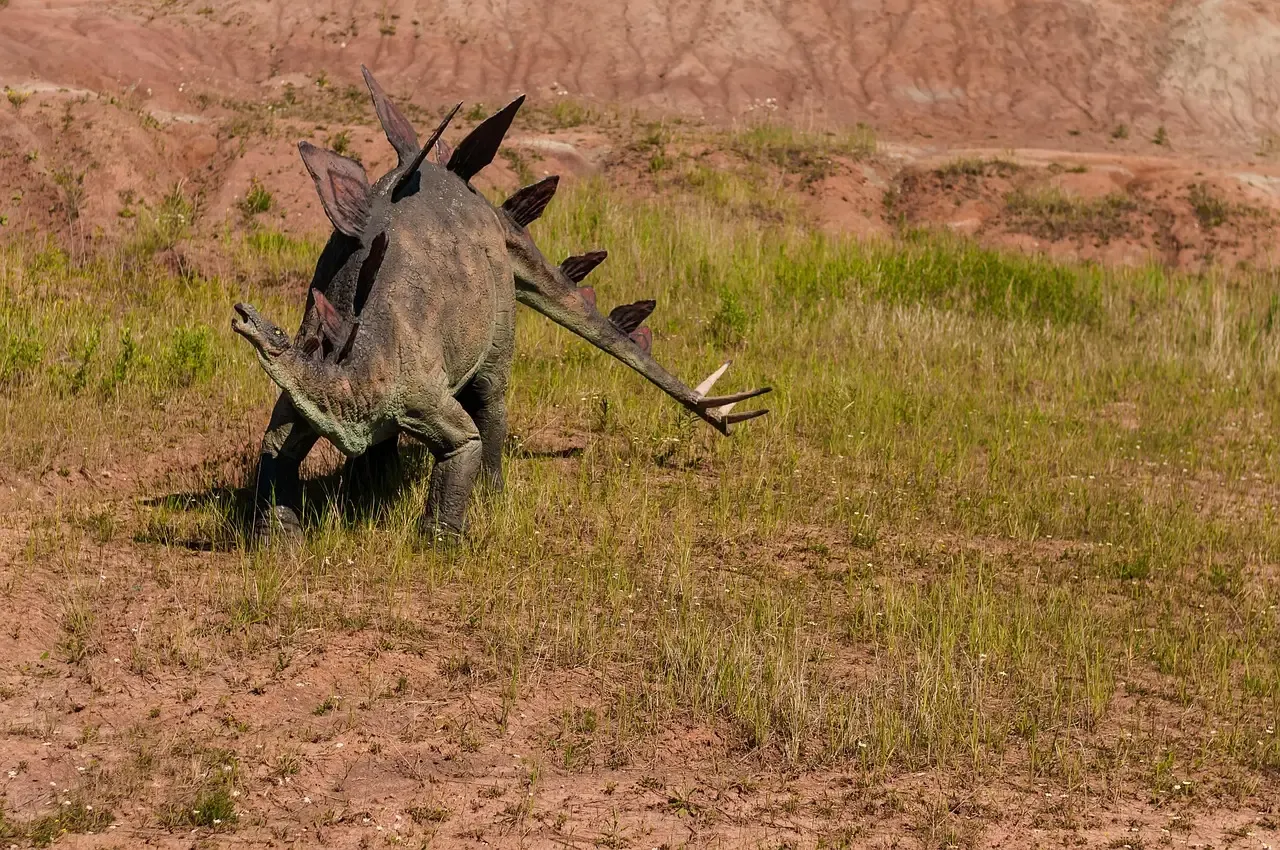
Stegosaurus walked the Earth long before T. rex, in what we’d think of as an older, stranger world. This dinosaur lived in the Late Jurassic, best known from what is now western North America. Stegosaurus was a large, low‑slung plant‑eater, with a tiny head, short front legs, and longer hind legs, giving it a distinctive sloping back. It could reach the size of a bus, yet its brain was famously small, about the size of a lime, which has fed endless jokes about it being a “dumb” dinosaur – a little unfair, honestly, for an animal superbly adapted to its environment. What really made Stegosaurus iconic were those huge bony plates running along its back and the deadly spikes at the end of its tail. The plates may have helped with display – sort of like a biological billboard – or helped regulate body temperature, though scientists still debate their exact role. The tail weapon, often called a “thagomizer” in popular culture, was no joke: fossil evidence shows it could have been used effectively in defense, potentially driving spikes into the flesh of predators. This was an animal built to survive in a world of large Jurassic carnivores, but none of those predators were anything like T. rex.
Enter T. Rex: Apex Predator of a Very Different World
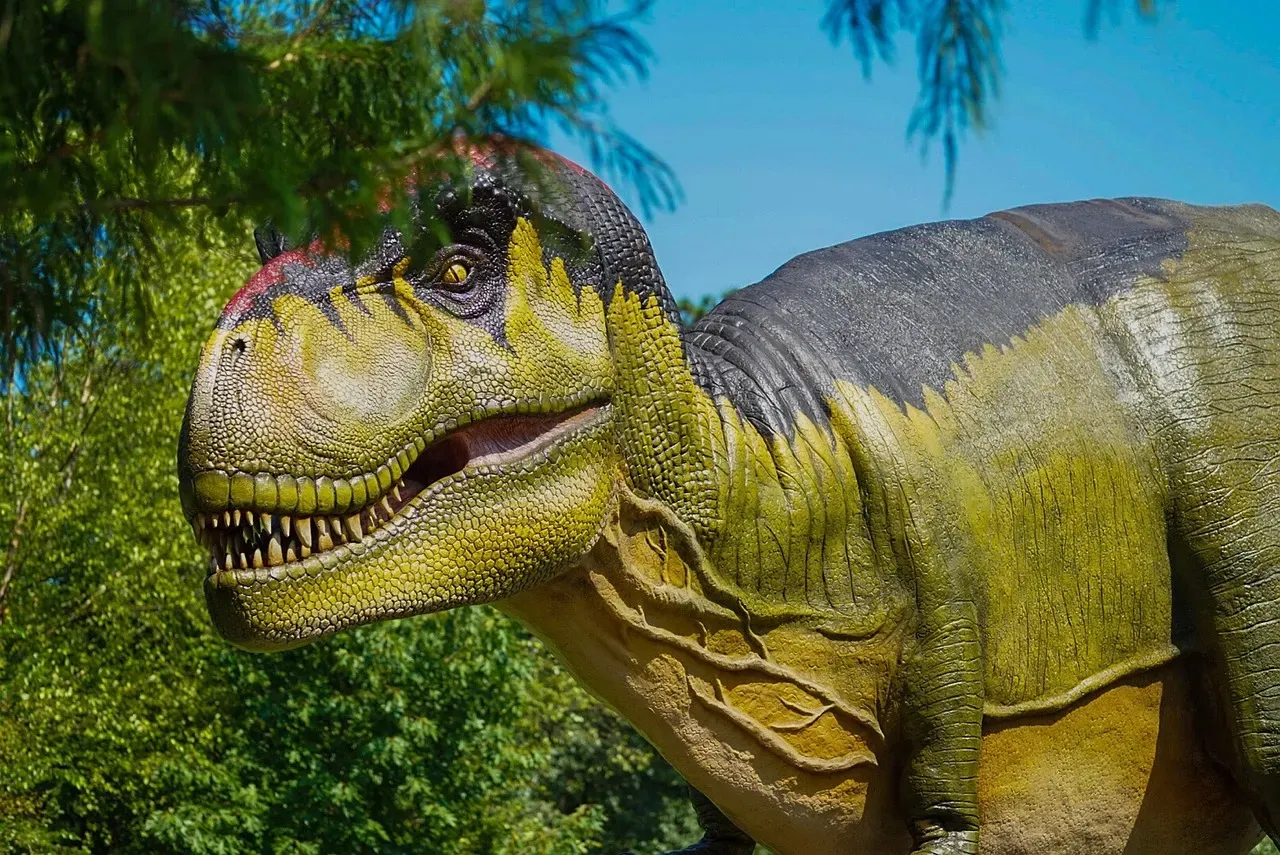
By the time T. rex arrived on the scene in the Late Cretaceous, Stegosaurus had already been gone for tens of millions of years. T. rex lived at the end of the dinosaur age in what is now western North America, in a world of flowering plants, horned dinosaurs like Triceratops, and duck‑billed herbivores. It was an apex predator with a massive skull, banana‑sized teeth built for crushing bone, and a bite force that ranks among the most powerful of any known land animal. Its body plan – huge head, powerful legs, long tail – was tuned for brutal efficiency. Culturally, T. rex has become the unofficial mascot of dinosaurs. It shows up everywhere from museum halls to memes, usually portrayed as the ultimate dinosaur tough guy. But what often gets lost is how specific it was to its time: T. rex is not a stand‑in for all large carnivorous dinosaurs, it is a highly specialized product of a very late, very particular ecosystem. The world it ruled was closer in time to ours than to Stegosaurus’s Jurassic forests, which makes lumping them together feel, once you know the dates, almost as silly as putting Roman legions and space stations in the same historical frame.
Rewriting the Jurassic–Cretaceous Story in Your Head
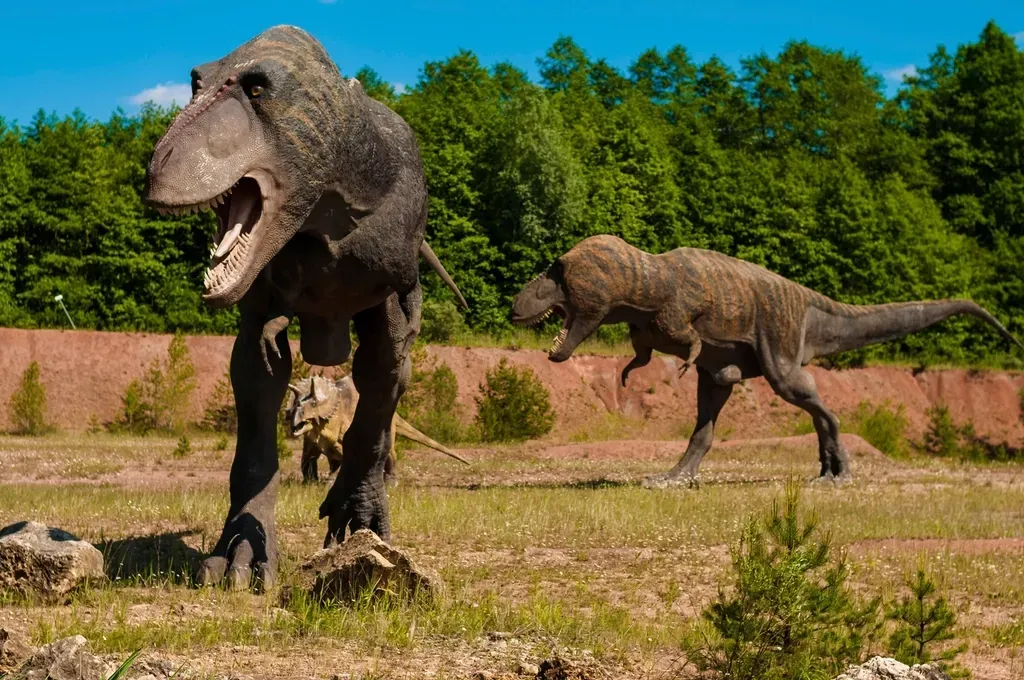
The gap between Stegosaurus and T. rex is not just trivia; it forces a mental reboot of how we picture prehistoric Earth. During the many tens of millions of years that separate them, continents shifted further apart, sea levels rose and fell, climates swung, and different groups of dinosaurs took turns dominating. The Jurassic world of Stegosaurus featured giant long‑necked sauropods and different predator lineages, while the Late Cretaceous world of T. rex had more advanced plant communities and very different herbivores. If you could flip through Earth’s history like a photo album, the snapshots would not slowly blend into one another; they would often look like completely different planets. The vegetation, coastlines, and animal line‑ups would change so much that recognizing a continuous “dinosaur world” would feel like a stretch. To me, that’s the most mind‑bending part: we casually compress a span of time full of revolutions into one vague “prehistoric” backdrop, the way a bad movie montage rushes through decades in thirty seconds.
How Pop Culture Mash‑Ups Mess With Our Sense of Time
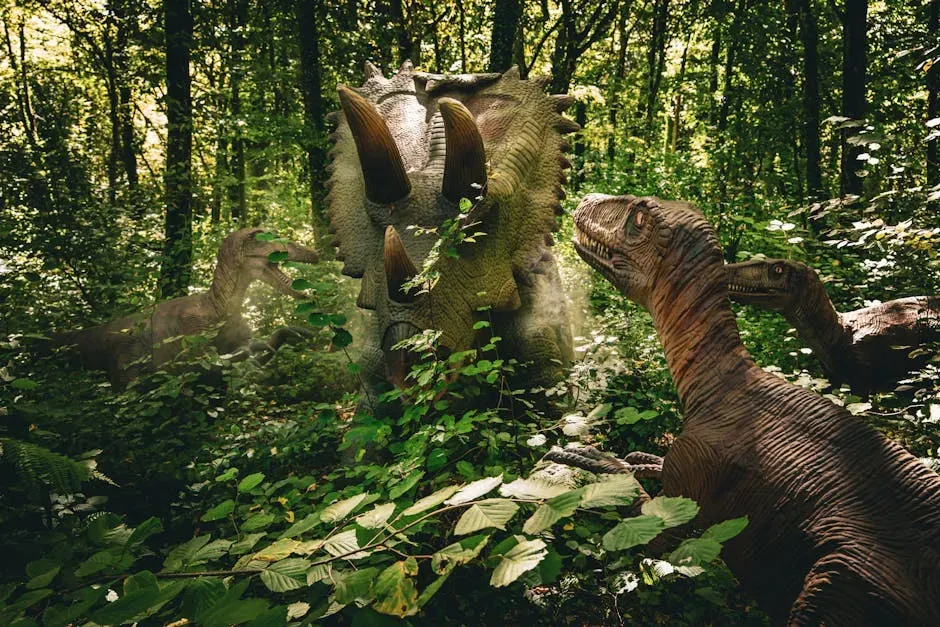
Movies, games, and toys love to throw dinosaurs from different periods together because it looks cool and sells well – and honestly, I get the appeal. Seeing Stegosaurus, T. rex, and Velociraptor all stomping around the same jungle creates instant drama. The problem is that, over time, this mash‑up quietly rewires how we think about deep time. We start to feel that all these dinosaurs must have shared the same ecosystem, when in reality some of them are separated by longer spans than the gap from dinosaurs to humans. In a way, pop culture has turned the entire Mesozoic into a single theme park day, when it was more like a three‑season epic with major cast changes between each season. I still love dinosaur movies – I grew up on them – but I’ve learned to treat them the way I treat historical epics that show knights fighting tanks. They are fun, emotional, and cinematic, but they are not timelines you should trust. Once you understand how off the timing really is, those mash‑ups start to feel more like fantasy than science fiction.
Why Deep Time Is So Hard for Our Brains
Part of why the Stegosaurus‑T. rex timing feels so shocking is that human brains are just not built to intuitively grasp millions of years. Our personal experience tops out at maybe a century, and our history lessons usually focus on a few thousand years. When someone says “eighty million years,” our brains basically shrug. We nod, but we do not feel it. So we flatten everything ancient into one mental bucket labeled “a long time ago.” One way scientists try to make this more tangible is through analogies. Imagine Earth’s history compressed into a single calendar year: dinosaurs as a group appear around December, Stegosaurus shows up late in that month, T. rex walks around on December 30 or 31, and humans appear in the final minutes before midnight. Under that kind of compression, Stegosaurus and T. rex are still separated by days, while T. rex and you are only seconds apart. That is how lopsided the real timing is, and why our casual sense of “dinosaur time” is so wildly off.
The Emotional Gut‑Punch: You Are Closer to T. Rex Than T. Rex Was to Stegosaurus
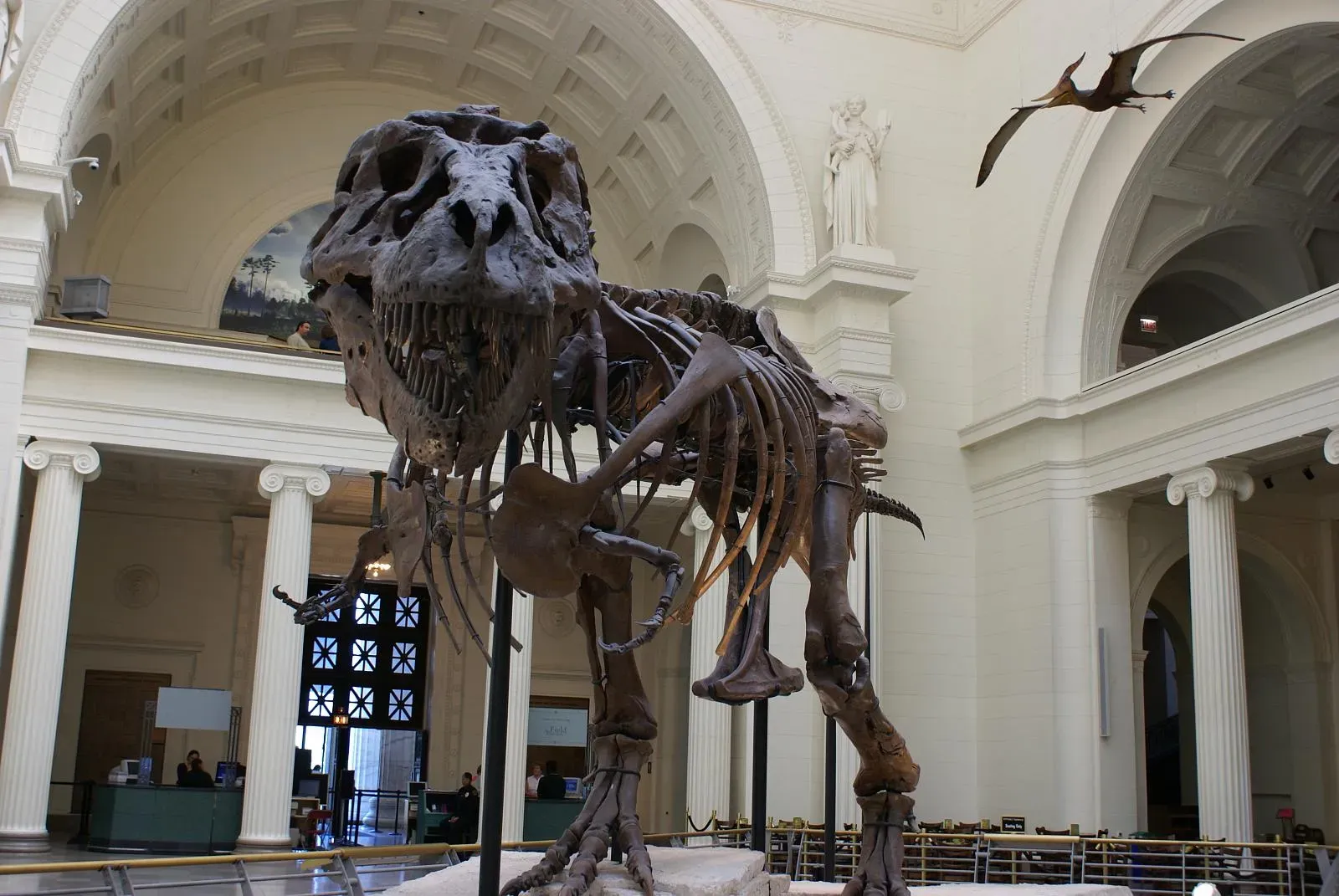
Let that sink in for a second: you, a smartphone‑using primate in the twenty‑first century, are chronologically closer to T. rex than T. rex was to Stegosaurus. That alone should shake up your understanding of where we sit in Earth’s story. We are not perched on some unimaginably distant ledge far removed from “the age of dinosaurs.” In the scale of deep time, we are creeping in right after one of the last acts of the dinosaur era. It is less like we are reading an impossibly old myth and more like we just missed the ending of a very long play. Personally, I find that realization both humbling and weirdly intimate. It makes the past feel less like a sealed vault and more like a hallway we just walked down, even if we only stepped in at the very end. At the same time, it undercuts the lazy idea that dinosaurs were all one indistinguishable blur. If T. rex is almost our temporal neighbor, then Stegosaurus is living in a different city, in a different century, speaking a slightly different language of life. That emotional jolt – that shift from “one dinosaur age” to a layered, dynamic history – is exactly why this timeline matters.
Conclusion: Stop Thinking of Dinosaurs as Roommates
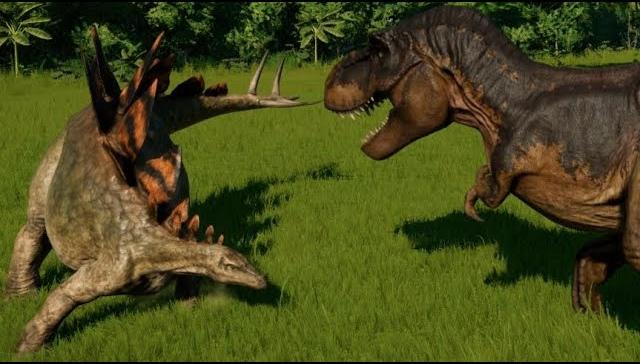
Stegosaurus and T. rex never locked eyes, never fought, never shared the same forests, and never even came close. Treating them as roommates in the same prehistoric house is not just inaccurate; it flattens a rich, multi‑chapter saga into a cartoon. The blunt reality is that T. rex had more in common, in terms of time, with you reading this than with that plate‑backed herbivore from the Jurassic. And I think we should start saying that out loud, even if it ruins a few toy sets and movie posters. My opinion? We do ourselves a disservice when we cling to the cozy, mashed‑up version of dinosaur history just because it is simpler. The more honest story – with its vast gaps, vanished ecosystems, and shifting cast of creatures – is stranger, grander, and far more interesting. It forces us to respect time itself as an active player, not just a backdrop. Once you accept that Stegosaurus and T. rex were strangers across an abyss of millions of years, you start to see our own moment on Earth with different eyes. Knowing that, will you ever again picture all dinosaurs in the same jungle at the same time?