Picture the scariest dinosaur you can think of. Odds are, you just imagined a towering Tyrannosaurus rex with bone-crushing jaws and tiny, almost comical arms. Now imagine something even longer, stranger, and built to stalk rivers and swamps like a reptilian crocodile on steroids. That is Spinosaurus: a dinosaur so odd that when scientists first put it together, a lot of them quietly wondered whether nature had gone a bit too far.
What makes Spinosaurus even more mind-bending is the world it lived in. Its home was not the classic dusty Jurassic parkland you see in movies, but a hot, river-choked landscape where giant fish ruled the water and the air shimmered with heat and humidity. In some ways, it really does feel like a different planet, with different rules. Once you dive into the science behind this creature and its environment, T. rex starts to look almost conservative by comparison.
The Giant That Outgrew T. Rex
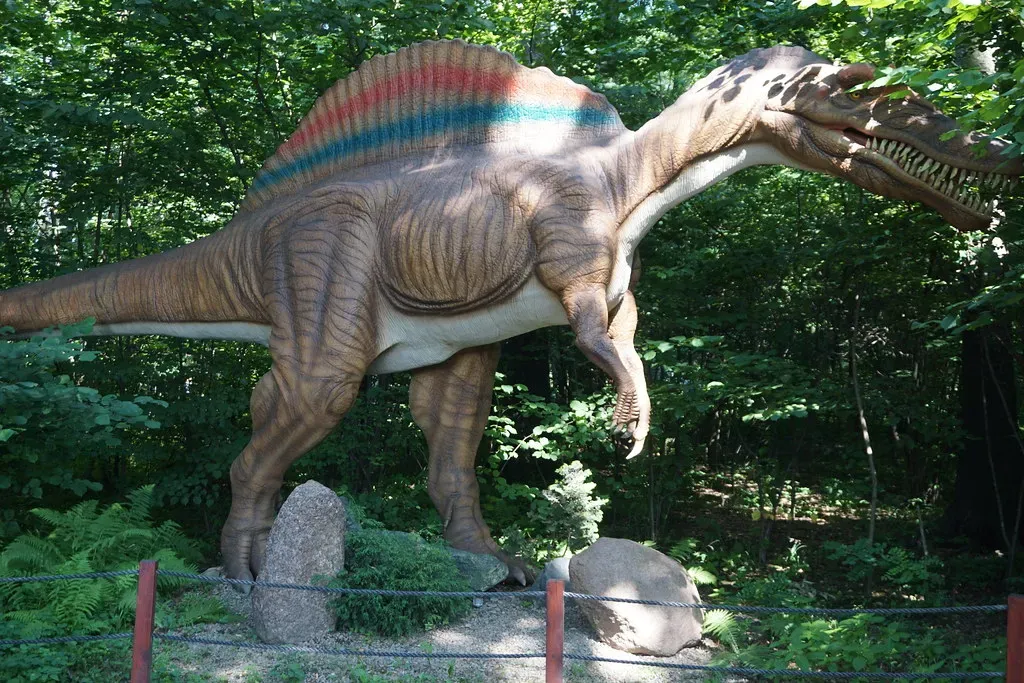
For years, T. rex held the unofficial crown as the ultimate dinosaur heavyweight, but detailed fossil studies suggest Spinosaurus likely edged it out in overall length. Adult Spinosaurus specimens are estimated to have reached around fifteen meters from snout to tail, making them several meters longer than the largest known T. rex individuals. Rather than being built like a chunky, bulldog-style predator, Spinosaurus had a long, low body and crocodile-like skull, stretching its mass across a more elongated frame.
That does not mean Spinosaurus was simply a scaled-up T. rex. While T. rex was a tank on two legs, built for bone-shattering bites on land, Spinosaurus was more like a monstrous heron-crocodile hybrid, with a slimmer torso and long, narrow jaws packed with conical teeth. Its sheer size is impressive, but what really sets it apart is how that size was used. Instead of using bulk to wrestle giant plant-eaters, Spinosaurus pushed its massive body into rivers and lagoons, turning its length into a weapon perfectly tuned for ambush in deep, dark water.
A Body Built for Water, Not Just Land
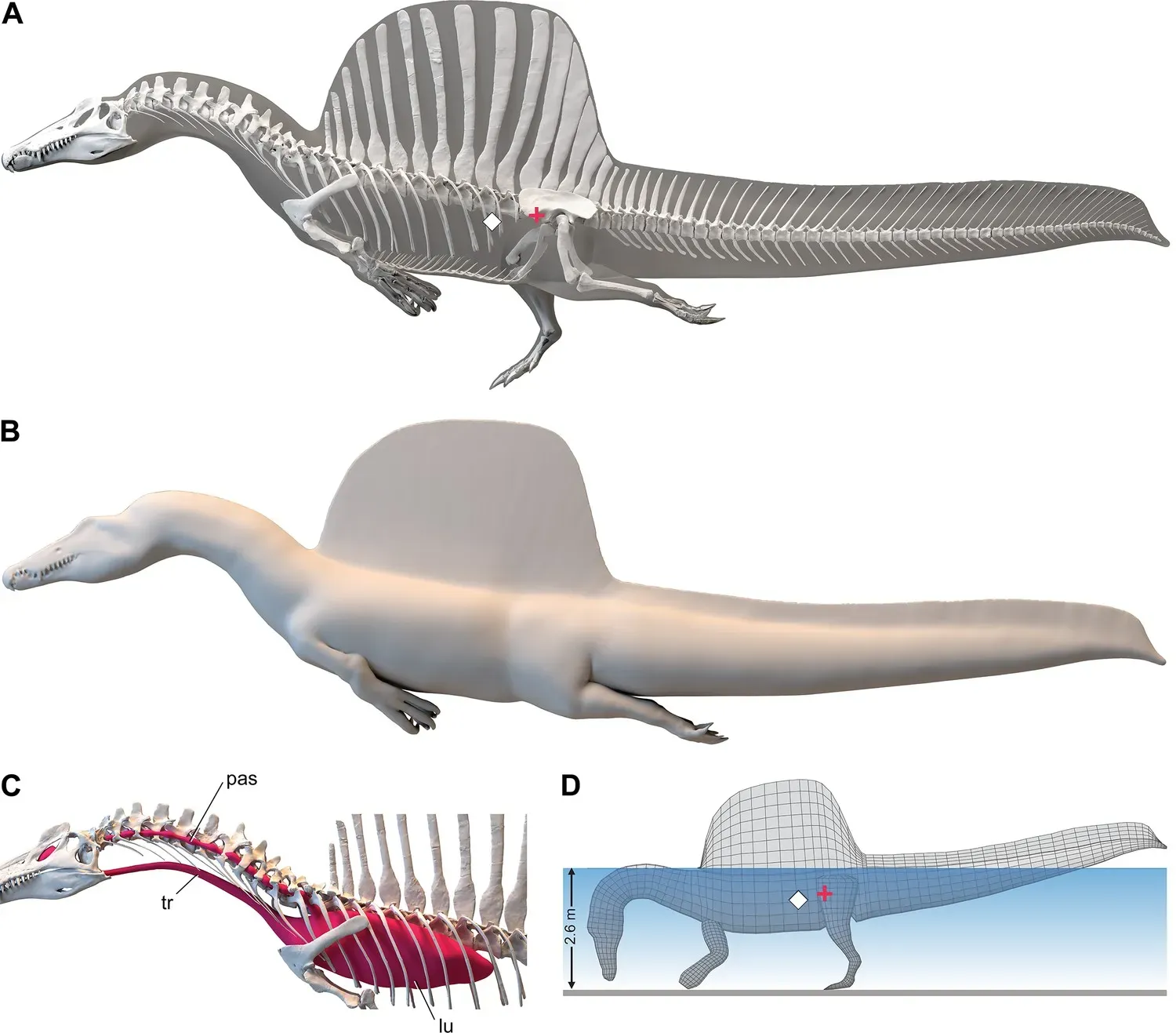
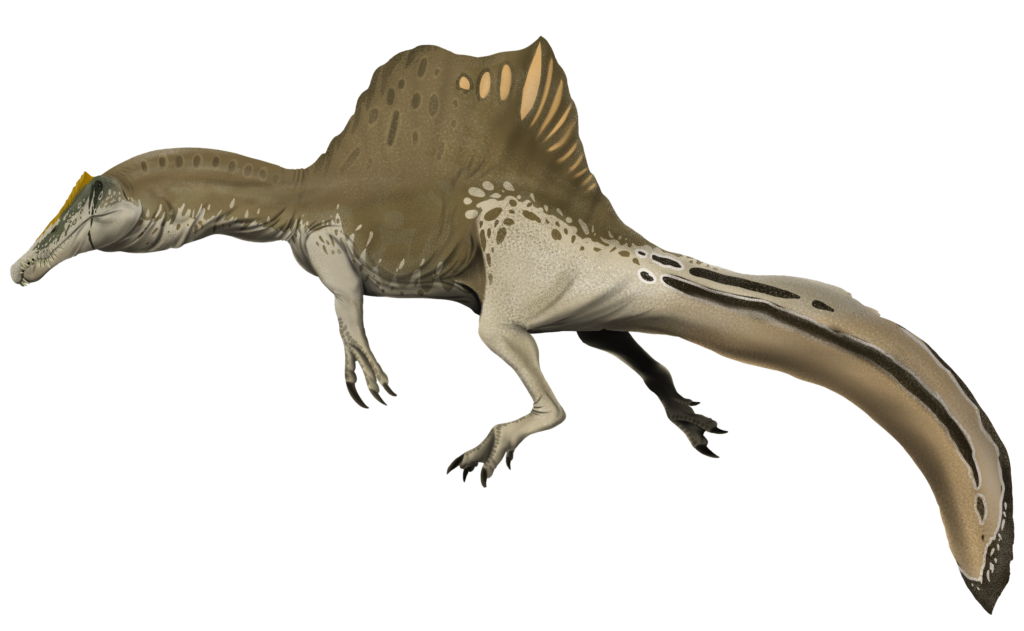
The big twist in Spinosaurus research over the last couple of decades is the realization that it was not just a land-based predator that happened to like fish; it was, in many ways, semi-aquatic. Its skull shows features similar to crocodiles, including pressure-sensitive pits around the snout that likely helped it sense movement in murky water. The limb proportions are also telling, with relatively short hind legs and a center of mass shifted forward, suggesting it was not optimized for sprinting on land the way T. rex was.
Even more striking are the tail and bones. Spinosaurus had a tall, flexible tail with elongated spines that likely acted like a paddle, helping it propel itself through water much more efficiently than most other theropods. Its bones were denser than those of many land-dwelling carnivores, adding ballast to keep it from bobbing like a cork at the surface. Put all of this together and you get a dinosaur that seems to have spent a huge portion of its life in rivers, lakes, and wetlands, treating land as just one part of its hunting ground rather than its primary stage.
The Sail: Display Billboard, Thermal Device, or Hydrodynamic Quirk?
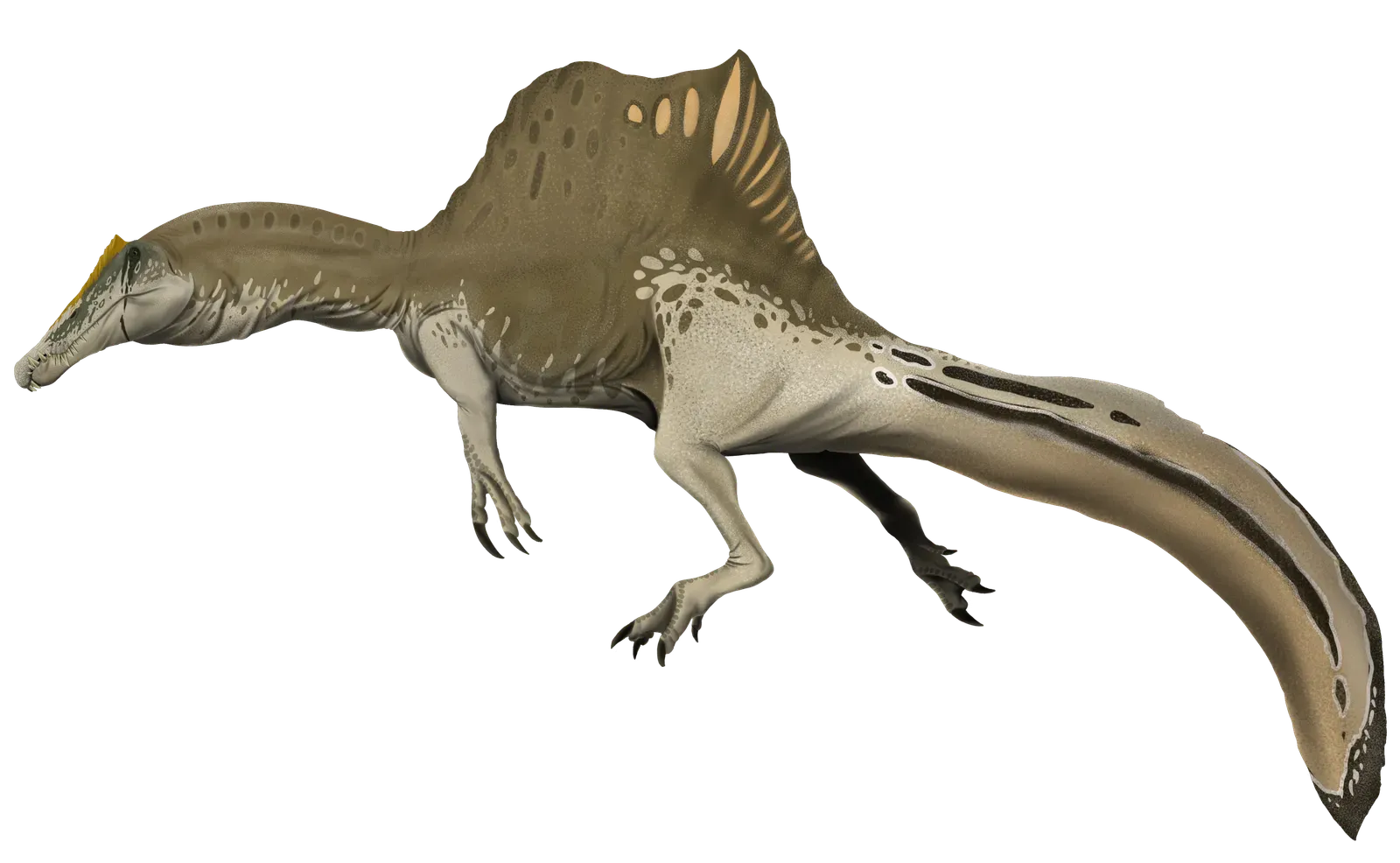
Nothing about Spinosaurus is subtle, and that includes the towering sail rising from its back. This structure was made of elongated neural spines, some taller than a grown human, connected by skin and soft tissue. At first glance, it looks like an evolutionary billboard screaming for attention. Many scientists think it might have played a role in visual display, helping individuals attract mates, intimidate rivals, or signal dominance across muddy riverbanks and open floodplains.
But the sail might have worn more than one hat. Some researchers have suggested it could have helped regulate body temperature by increasing the surface area for heat exchange, though evidence for that is still debated. Others point out that in a semi-aquatic animal, such a big vertical surface could break up the outline when viewed from the side, acting almost like weird camouflage among reeds and shadows. My own take: the sail was probably a multi-purpose feature, like a Swiss Army knife of dinosaur anatomy – part social badge, part species identity flag, and maybe just a bit of evolutionary excess that makes Spinosaurus unforgettable.
An Alien Landscape: Cretaceous North Africa
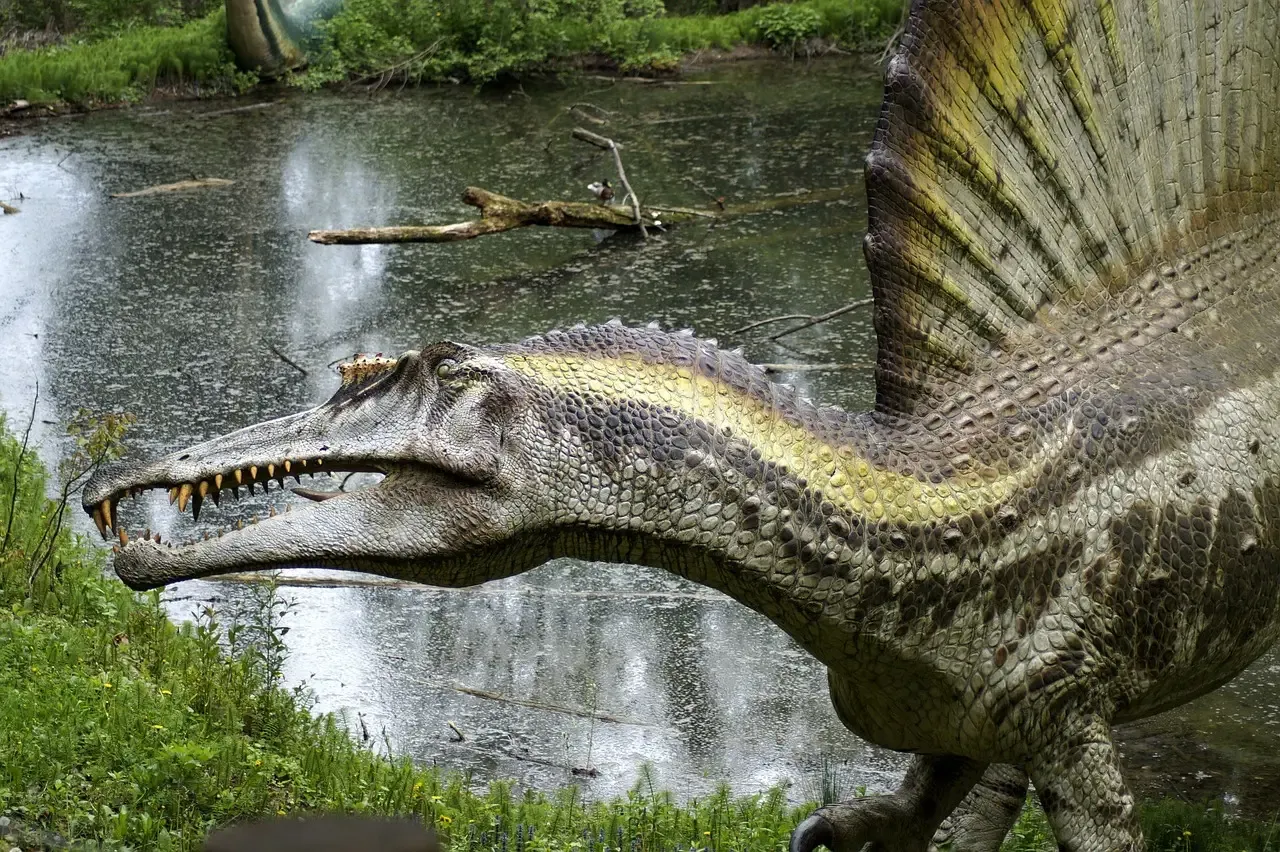
To really understand Spinosaurus, you have to zoom out and look at its neighborhood. It lived roughly about one hundred million years ago in what is now North Africa, during the mid-Cretaceous period. Back then, this area was not a dry desert but a lush, river-threaded environment that some scientists have described as a vast wetland system. Imagine a landscape of broad, slow-moving rivers, deep channels, and sprawling floodplains buzzing with life, more like the Nile crossed with the Amazon than anything we picture when we think of Sahara today.
These waterways were packed with enormous fish, massive sawfish-like creatures, lungfish, and giant coelacanths the size of cars. Crocodile cousins, some as long as buses, patrolled the banks. The climate was hot and humid, with seasonal changes in water levels that could turn shallow basins into feeding grounds or death traps. In that context, a dinosaur that grew enormous, swam well, and specialized in aquatic hunting suddenly stops looking bizarre and starts looking perfect for a world ruled by water and monsters below the surface.
Fish-Eating Specialist in a World of Meat-Eaters
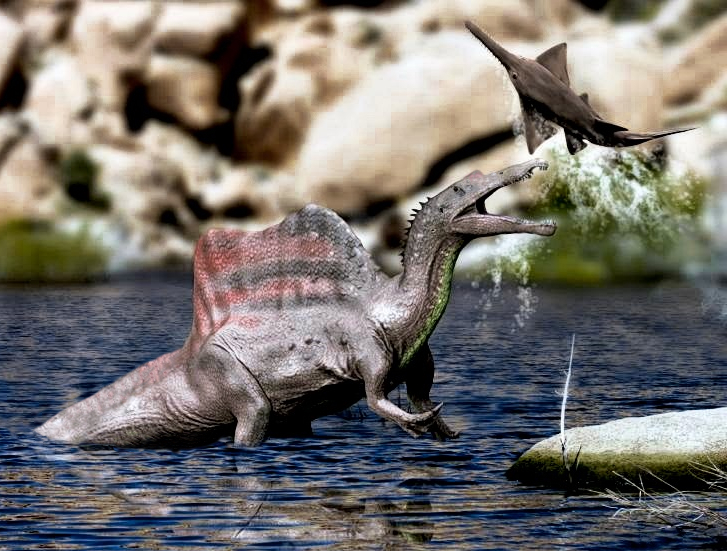
Spinosaurus did something bold: it chose to become a fish specialist in a world where most big theropods focused on land animals. Its long, narrow jaws and straight, conical teeth are exactly the kind of toolkit you would expect from a predator grabbing slippery, thrashing prey in water. Unlike the blade-like, serrated teeth of T. rex designed to tear flesh and crush bone, Spinosaurus teeth were better suited for gripping and holding, a lot like modern crocodiles or certain fish-eating birds.
Evidence from fossilized stomach contents and associated remains supports this picture, with fish scales and aquatic life turning up near Spinosaurus fossils. In a sense, Spinosaurus stepped sideways into an underused niche and blew it wide open, becoming the top predator of rivers and lakes. That choice probably spared it from direct competition with other giant meat-eaters in the region, which mostly stuck to hunting large land animals. To me, that is one of the coolest parts of the story: Spinosaurus became more than just a bigger T. rex; it became something fundamentally different, choosing water over land in a way few other dinosaurs of its size dared to do.
Would Spinosaurus Beat T. Rex in a Fight?
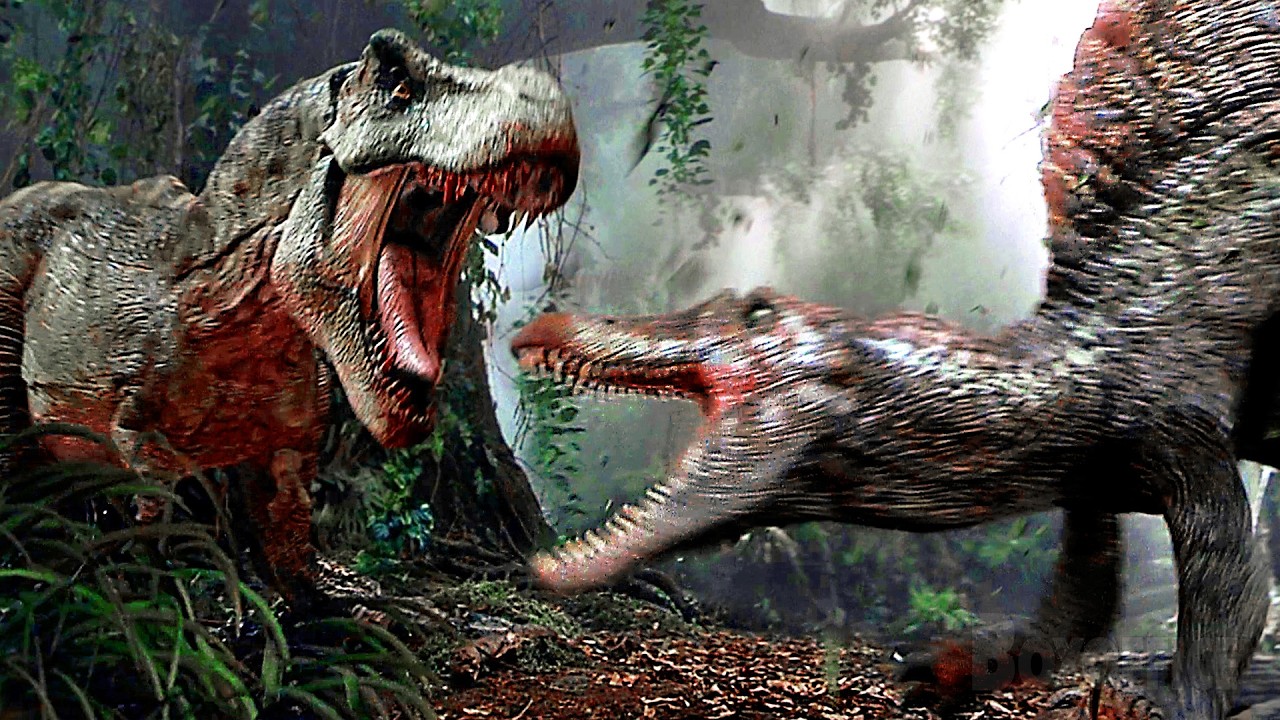
This is the question that refuses to die, and it honestly says more about us than about the dinosaurs. In reality, Spinosaurus and T. rex were separated by millions of years and lived on different continents, so they never met. T. rex roamed what is now North America roughly about sixty-six million years ago, long after Spinosaurus had vanished from North Africa. Still, comparing them reveals just how differently evolution can solve the problem of being a top predator.
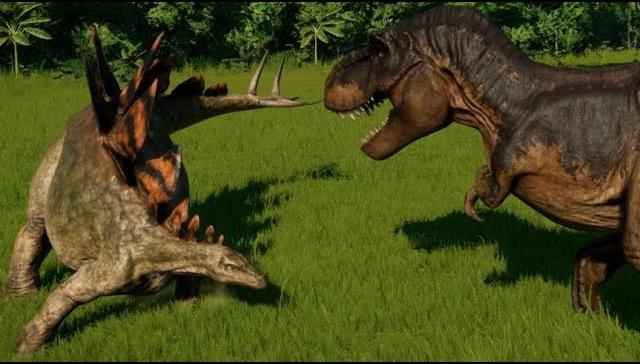
T. rex had a shorter but massively powerful skull, with a bite that could crush bone and tear apart huge land-dwelling herbivores. Spinosaurus had a longer, narrower snout tuned for snapping at fish and aquatic prey, backed by a body better suited to wading and swimming than sprinting over solid ground. If you forced a hypothetical face-off on dry land, I would bet on T. rex as the more robust brawler. In the water, though, Spinosaurus would hold all the cards. The real takeaway is that these two animals dominated totally different arenas. Asking which would win is like asking whether a shark is tougher than a lion; the answer depends entirely on whose turf you are on.
Why Spinosaurus Still Feels Like a Puzzle
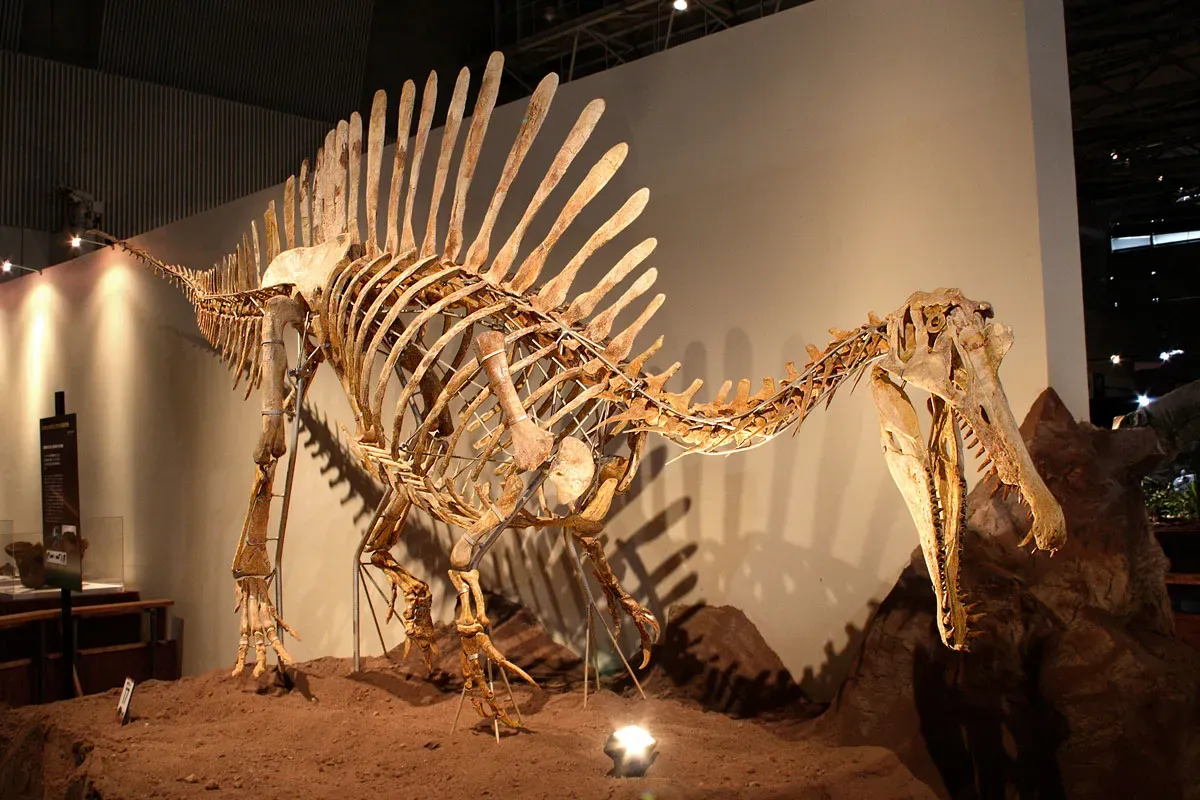
One reason Spinosaurus feels so strange is that our picture of it has changed repeatedly as new fossils turn up. Early reconstructions portrayed it as a fairly typical big theropod with a sail, lumbering across dry ground like a flashy cousin of other meat-eaters. Later discoveries, including more complete skeletons and better-preserved tail and limb bones, transformed it into a semi-aquatic giant with short back legs, a powerful swimming tail, and a very different lifestyle. Each new find has forced scientists to redraw it, like updating a character design in a long-running series.
That constant revision can be frustrating, but I find it exciting. It reminds us that paleontology is detective work built on incomplete evidence, and Spinosaurus is one of the messiest, most fascinating cases. Fossils are still relatively scarce compared to some other famous dinosaurs, and important parts of its skeleton remain poorly known or missing. That means any mental image we have right now is provisional, open to fine-tuning or even major rewrites. Far from being a weakness, I think that uncertainty is part of what makes Spinosaurus feel so otherworldly: we are literally still assembling the monster piece by piece.
Conclusion: A River Monster From Another World
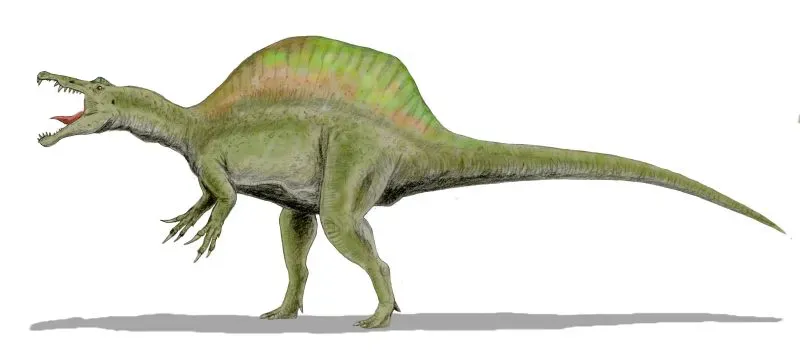
When you stack Spinosaurus up against T. rex, the easy headline is that it was longer and stranger, but the deeper story is that it played by different rules in a different kind of world. It was not trying to be the land’s ultimate bruiser; it was trying to be the rivers’ ultimate stalker. In a landscape of sprawling waterways, scorching heat, and super-sized fish, Spinosaurus evolved into a long, low, semi-aquatic titan with a sail on its back and a tail built for swimming. That is not just bigger; it is bolder, almost like evolution checked how far it could bend the dinosaur playbook without breaking it.
My opinion is that Spinosaurus deserves to stand alongside, not behind, T. rex in our imaginations – not as a challenger for some imaginary title belt, but as proof that dinosaur worlds were far richer and weirder than the usual dry, dusty stereotype. The more we learn, the more its ecosystem feels like a parallel reality: same planet, different rules, different monsters. In the end, Spinosaurus forces us to admit that the age of dinosaurs was not one story but many, and some of those stories are so wild they still feel alien. If this is what we can piece together from a handful of fossils, what else is still hiding in the rocks, waiting to rewrite everything we thought we knew?