Imagine waking up every single day to the sound of rain, not just for a week or a season, but for longer than human beings have even existed as a species. No clear blue sky, no dry ground, just endless clouds and water pouring from the heavens for millions of years. It sounds like something out of a dark sci‑fi movie, but when geologists look deep into Earth’s oldest rocks, they see signs that something like this may actually have happened.
What makes this story even wilder is that life did not just hang on by a thread through this planetary deluge. Early life on Earth seems to have found a way to adapt, reorganize, and in many ways flourish under conditions that would wipe out most modern ecosystems. To understand how that is even possible, we have to zoom way out in time, to an Earth that would look utterly alien to us: no trees, no animals, no continents as we know them, only oceans, volcanoes, and a sky so thick with vapor it may have rained almost without pause.
When the Sky Turned Into an Ocean: The Idea of a Two‑Million‑Year Rainstorm
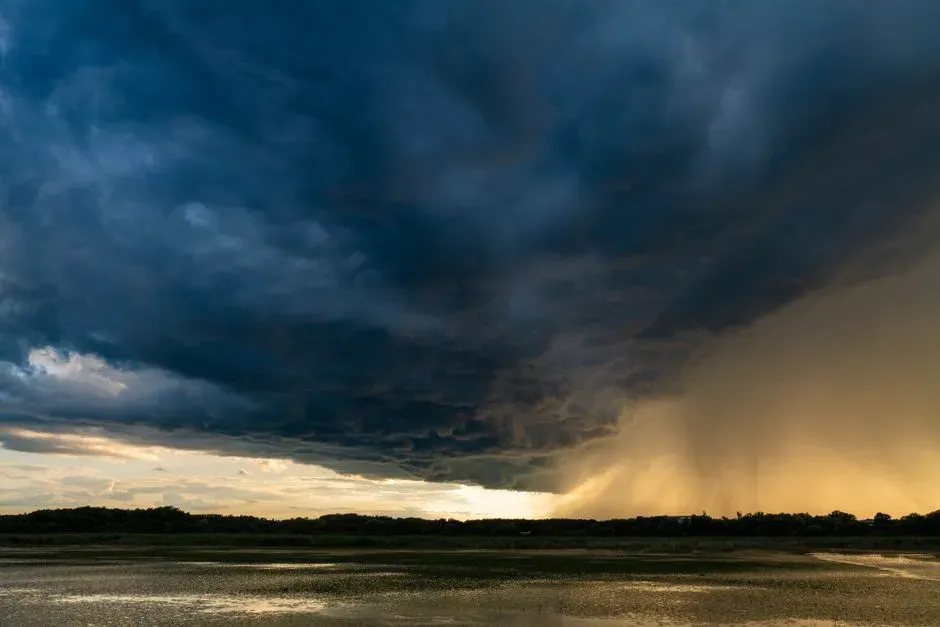
The claim that there was a time when it basically rained nonstop for roughly about two million years is rooted in how scientists reconstruct the very early atmosphere and climate of our planet. In Earth’s youth, especially during what geologists call the Hadean and early Archean eons, the planet was brutally hot, geologically hyperactive, and soaked in volcanic gas. As the surface cooled, the vast amount of water vapor in the air did what water always does when it meets cold: it condensed and fell back down as rain, and then did it again and again.
We are not talking about afternoon thunderstorms. We are talking about a planet‑scale phase change, where steam‑choked skies collapsed into oceans over geological time. When you hear “two million years of rain,” it is not meant like a meteorologist’s forecast; it is a shorthand for a prolonged interval when Earth’s atmosphere was so saturated that precipitation was nearly continuous. There were probably breaks, regional differences, and climate swings, but from the point of view of the rocks and the forming oceans, the water cycle at that time was dominated by epic, long‑lasting rainfall on a scale that is hard to wrap your head around.
How on Earth Do We Know It Rained That Much? Rock Clues and Ancient Signals

Obviously, no one was there with a rain gauge a few billion years ago, so this entire idea comes from detective work written into minerals and sediments. Geologists study oxygen isotopes in very old zircon crystals and marine rocks to infer temperatures and the presence of liquid water on the surface. The chemistry points to an Earth that cooled quickly enough for oceans to condense relatively early, which, by necessity, requires massive, sustained rainfall as the atmosphere shed its steam.
In addition to isotopes, scientists look at the structure of ancient sedimentary rocks – layered deposits that only form when water is transporting and dropping particles. The surprising thing is how early in Earth’s history such water‑worked sediments appear, suggesting that liquid water was not just present but persistent. When you combine thermal models of the early planet, volcanic outgassing estimates, and these geologic signatures, the picture that emerges is one in which the atmosphere could have spent a very long time in a “raining out” mode, transitioning from a steam‑heavy shroud to something closer to the sky we know today.
The Earth Before the Flood: A Steamy, Hostile, Volcanic World
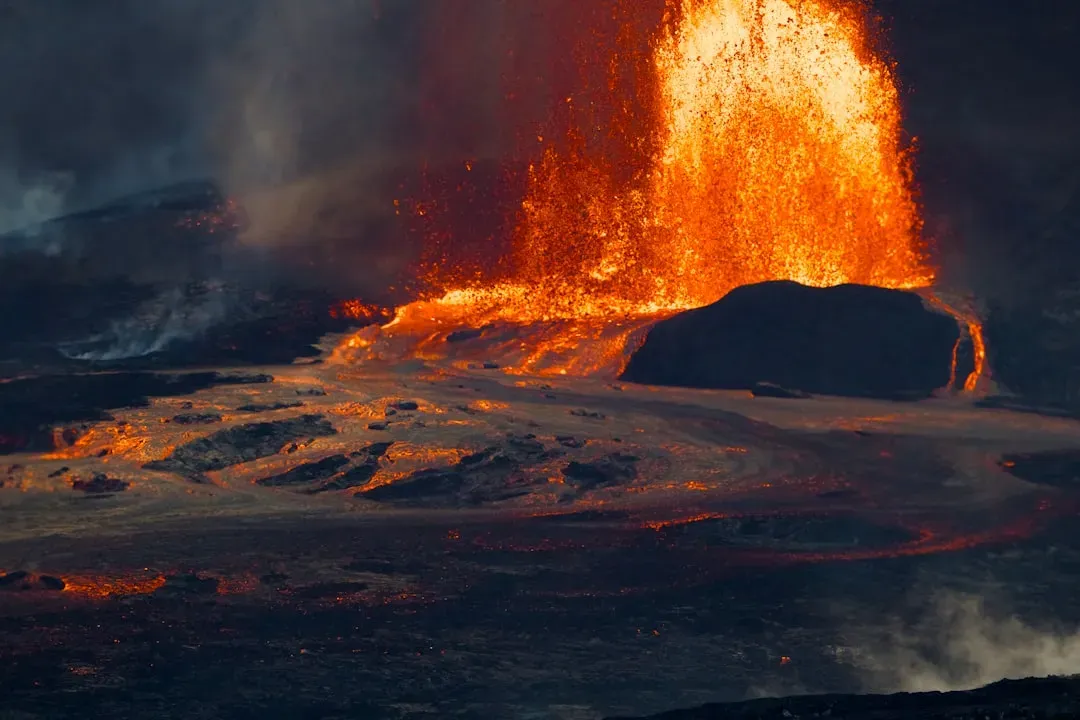
To appreciate the impact of that long rain, you have to imagine what came just before it. Early Earth was dominated by a molten or semi‑molten surface, constant asteroid and comet impacts, and volcanoes that would put anything in modern times to shame. The atmosphere was thick with carbon dioxide, water vapor, sulfur gases, and probably methane, making it more like a soupy greenhouse than breathable air. Under those conditions, water existed largely as steam blanketing the planet.
As impacts eased and the crust thickened, the upper parts of the planet began to cool. This is where things get dramatic: that cooling shifted enormous amounts of water from the gas phase to the liquid phase. The planet was, in effect, exhaling oceans. Instead of a defined coastline and weather patterns like we see today, early Earth may have looked more like a chaotic blend of roiling seas and emerging volcanic islands under a sky constantly wringing itself dry. In that world, “rain” was not just weather; it was a fundamental stage of planetary evolution.
The Great Ocean‑Fill: How Continuous Rain Built the Seas
The idea of two million years of rain is tightly linked to how Earth got its oceans. Some water arrived via icy comets and water‑rich asteroids, while a lot was already locked up in the rocks that formed the young planet. As heat escaped to space and internal activity shifted, that water was driven upward as vapor and then fell back as precipitation. Over long spans of time, this process filled low areas, created basins, and produced the deep global oceans that became the cradle for life.
What constant rain does, beyond simply providing liquid, is violently reshape the crust. Torrents of water erode high ground, move sediments, and trigger chemical reactions between rocks and the atmosphere. In the early Earth, with no established soils or plants to slow anything down, rain would have chewed through raw rock, changed the chemistry of surface minerals, and helped lock away some greenhouse gases like carbon dioxide. In a sense, the never‑ending rainstorm was a global construction project, gradually turning a hellish hot ball into a water‑covered world with more stable surfaces and milder temperatures that primitive organisms could exploit.
Life in the Deluge: Microbes That Refused to Quit
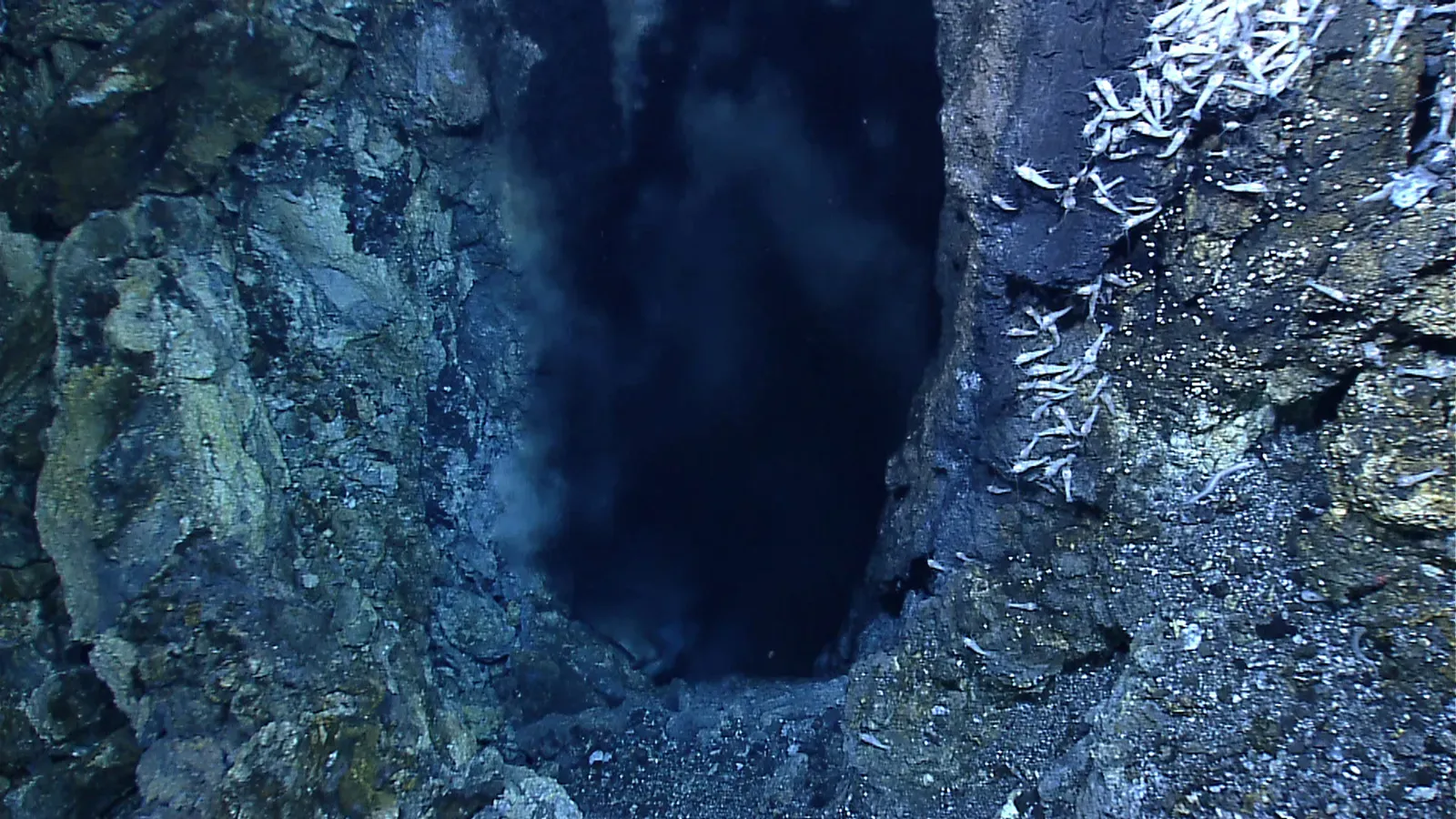
So where was life in the middle of this? The fossil and chemical record suggests that the earliest life on Earth was microbial and may have emerged remarkably early, perhaps within a few hundred million years of the planet becoming even remotely habitable. These organisms were not plants or animals but simple cells that probably fed on chemical energy rather than sunlight alone. Hydrothermal vents on the ocean floor, rich in dissolved minerals and steep chemical gradients, are one leading candidate for where these early communities took hold.
From the perspective of such microbes, endless rain at the surface was not necessarily a disaster. The key thing they needed was liquid water and chemical energy; both were abundant in a world of hot oceans and active geology. Torrential precipitation would have continuously delivered fresh minerals, dissolved gases, and nutrients into the seas, stirring the chemical soup. Instead of being drowned, these early life forms may have found themselves living in a planet‑sized chemical reactor, constantly replenished by rain‑driven erosion and volcanic outgassing, which in turn supported growth, diversification, and experimentation at the microbial level.
Why Life Thrived Instead of Collapsing Under All That Water
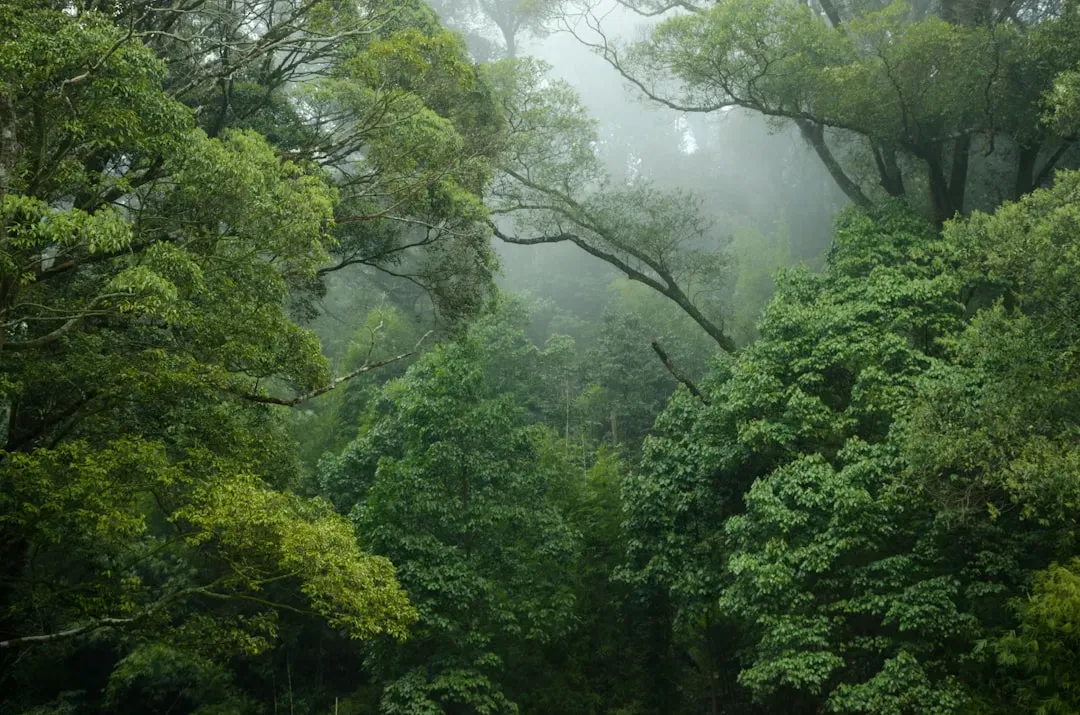
When we hear “two million years of rain,” we instinctively imagine catastrophe: floods, landslides, washed‑out ecosystems. That mindset comes from our experience on a modern, complex Earth with fragile infrastructure and tightly tuned food webs. But early life was not like a delicate city; it was more like a tough film of chemistry smeared across rocks and vents, willing to exploit whatever conditions existed. Constant rain kept the environment harsh but also relatively stable in some key respects: liquid water was always available, temperatures were moderated by thick clouds and oceans, and energy sources from the planet’s interior remained active.
There is also a deeper pattern here: life, especially in its simplest forms, tends to flourish in gradients and change, not in perfectly calm conditions. Continuous rain meant constant gradients – between deep and shallow water, hot vents and cooler surroundings, fresh chemical inputs from continents and old ocean water farther out. These contrasts create countless little ecological niches. Over millions of years, even tiny advantages in how microbes used chemicals or handled stress would have been amplified, driving evolution forward. In my view, the “endless rain” era is less a horror story and more an extreme version of what life always does best: adapt to whatever the planet throws at it.
Rethinking Habitability: What a Two‑Million‑Year Rain Tells Us About Other Worlds
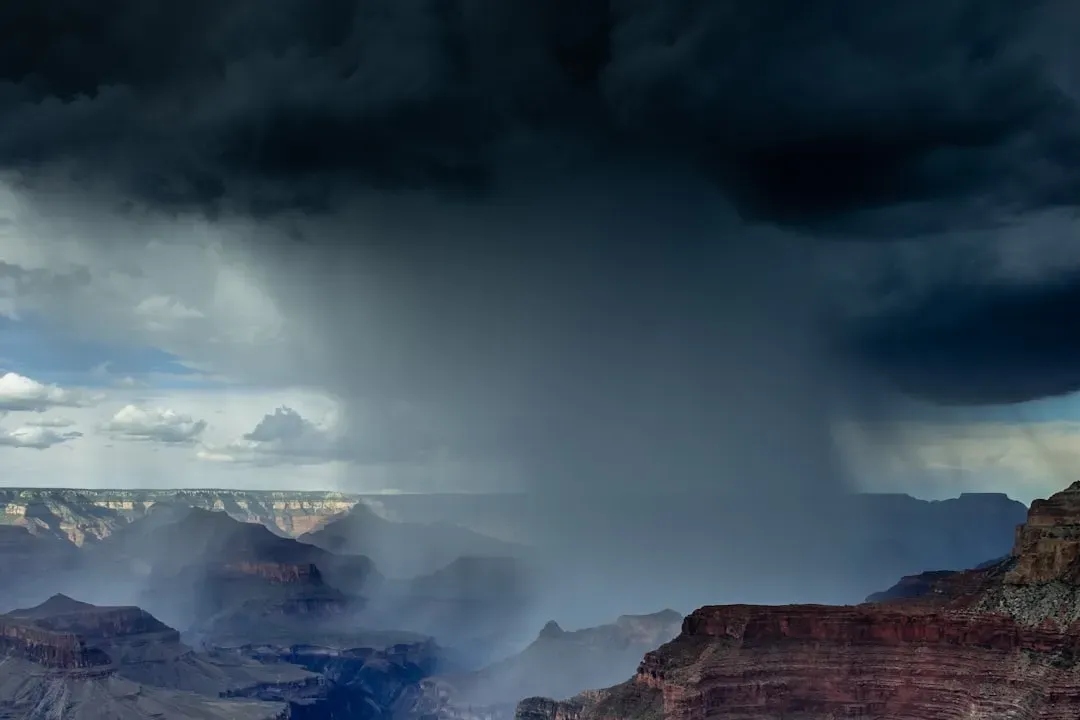
One of the most exciting reasons scientists care about this soggy chapter of Earth’s past is what it implies for planets beyond our own. If life on Earth could emerge, survive, and even thrive through conditions as intense as a quasi‑continuous, million‑year‑scale deluge, then our definition of a “habitable world” might be too narrow. Maybe a planet does not need calm blue skies and tidy continents; maybe it just needs persistent liquid water, energy sources, and time for chemistry to get weird and self‑sustaining.
When astronomers look at exoplanets with thick atmospheres, volatile climates, or ocean‑covered surfaces, it can be tempting to write them off as too chaotic or extreme. The early Earth story pushes back on that impulse. A world locked in a long period of heavy rain or thick clouds might still be nurturing microbial life beneath the clouds or within its oceans. To me, that is the quietly radical lesson here: if life could handle Earth’s drawn‑out stormy youth, then the universe might be full of planets that look hostile to us but are perfectly fine, even fertile, from a microbe’s point of view.
Why This Story Matters Now: A Personal Take on a Planet That Refuses to Break
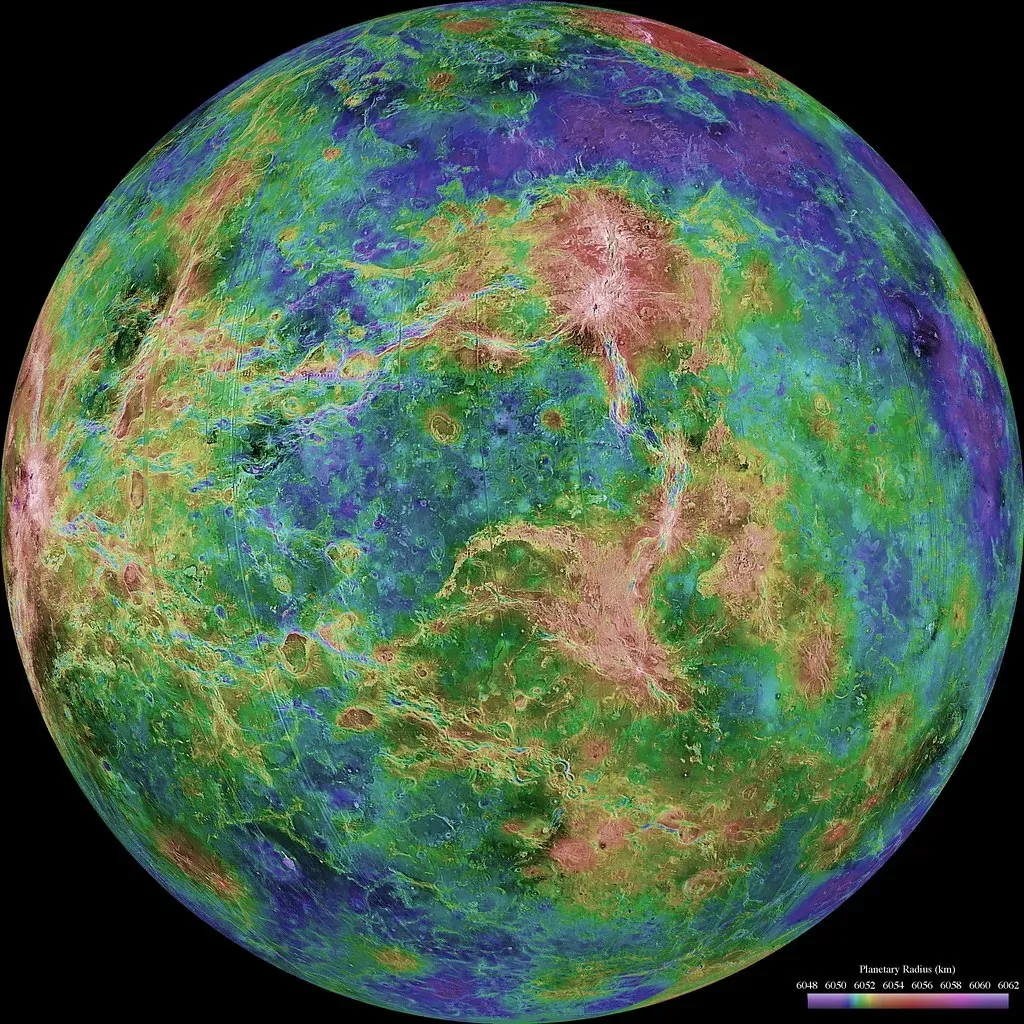
There is something oddly comforting in the idea that our planet once endured an almost unimaginable, two‑million‑year soaking and came out of it carrying life, not just ruins. We often talk about Earth as fragile – and in many ways, especially for human civilization, it absolutely is – but the deeper history painted by geology is one of brutal resilience. The planet has been through impacts, global lava flows, toxic atmospheres, and yes, marathon rainstorms, yet life keeps reappearing, regrouping, and pushing into whatever space it can find.
My opinion is that this story should make us both humble and restless. Humble, because it shows that life does not exist on our terms; it can thrive in situations we would call apocalyptic. Restless, because it hints that we might be underestimating how many worlds out there could support some form of biology. When you realize that Earth’s long, storm‑soaked youth did not smother life but may have jump‑started it, you have to ask yourself: if rain for millions of years could still be part of a success story, what other “impossible” conditions might turn out to be surprisingly alive?