Cahokia does something strange to your sense of history. You stand on a grass-covered mound in the middle of the American Midwest and realize you’re on the ruins of a metropolis that once rivaled, and may have surpassed, medieval London in size. No castles, no stone cathedrals, no marble statues – just earth, wood, corn, and the memory of tens of thousands of people whose names we no longer know. This alone is unsettling in the best way: it forces you to admit that the story you probably grew up with about North America – empty land, a few scattered villages, nothing like “real cities” until Europeans showed up – is simply wrong. Cahokia was a city with skyline-defining monuments, traffic, noise, politics, religion, intensively farmed fields, and social conflict. The more archaeologists uncover, the more Cahokia looks less like an outlier and more like a missing chapter in a global story of urban civilization.
1. Cahokia Was a True City, Not Just a “Big Village”
If you picture pre-contact North America as mostly small settlements, Cahokia feels like a plot twist. At its peak around the twelfth century, it sprawled across a landscape of plazas, neighborhoods, monumental mounds, fields, and ceremonial spaces, covering several square miles near present-day Collinsville, Illinois, just outside St. Louis. Estimates vary, but many researchers put its maximum population in the tens of thousands, dense enough to count as an urban center by any reasonable definition. What makes it a city is not only the headcount but the complexity. Cahokia had planned public spaces, monumental architecture, distinct residential zones, specialized craft production, long-distance trade, and a clear social hierarchy. People there were not just subsistence farmers; some were religious specialists, leaders, artisans, builders, and traders. In other words, this was not a sleepy farming hamlet that happened to grow a bit too big – this was an organized urban experiment in the heart of the Mississippi River valley.
2. At Its Peak, Cahokia Rivaled or Surpassed London in Population
Here’s the fact that blows most people’s minds: around the year 1100 to 1200, Cahokia’s population may have been comparable to, and perhaps even larger than, that of medieval London. London at that time likely had on the order of a few tens of thousands of residents. Cahokia probably sat in a similar range, making it one of the largest cities anywhere in the world outside of long-established centers like those in China, the Islamic world, and parts of Europe. Of course, it didn’t look like London. There were no stone bridges or towering cathedrals. Instead, wooden buildings with thatched roofs clustered around vast earthen mounds and plazas, with fields and managed landscapes extending outwards. The comparison isn’t meant to say Cahokia was “London but American”; it’s meant to correct our scales. When you imagine global urban life in the Middle Ages, you really should be picturing Cahokia alongside London, Paris, and other major cities of the time.
3. Monks Mound Was a Massive Earth Pyramid Shaping the Skyline
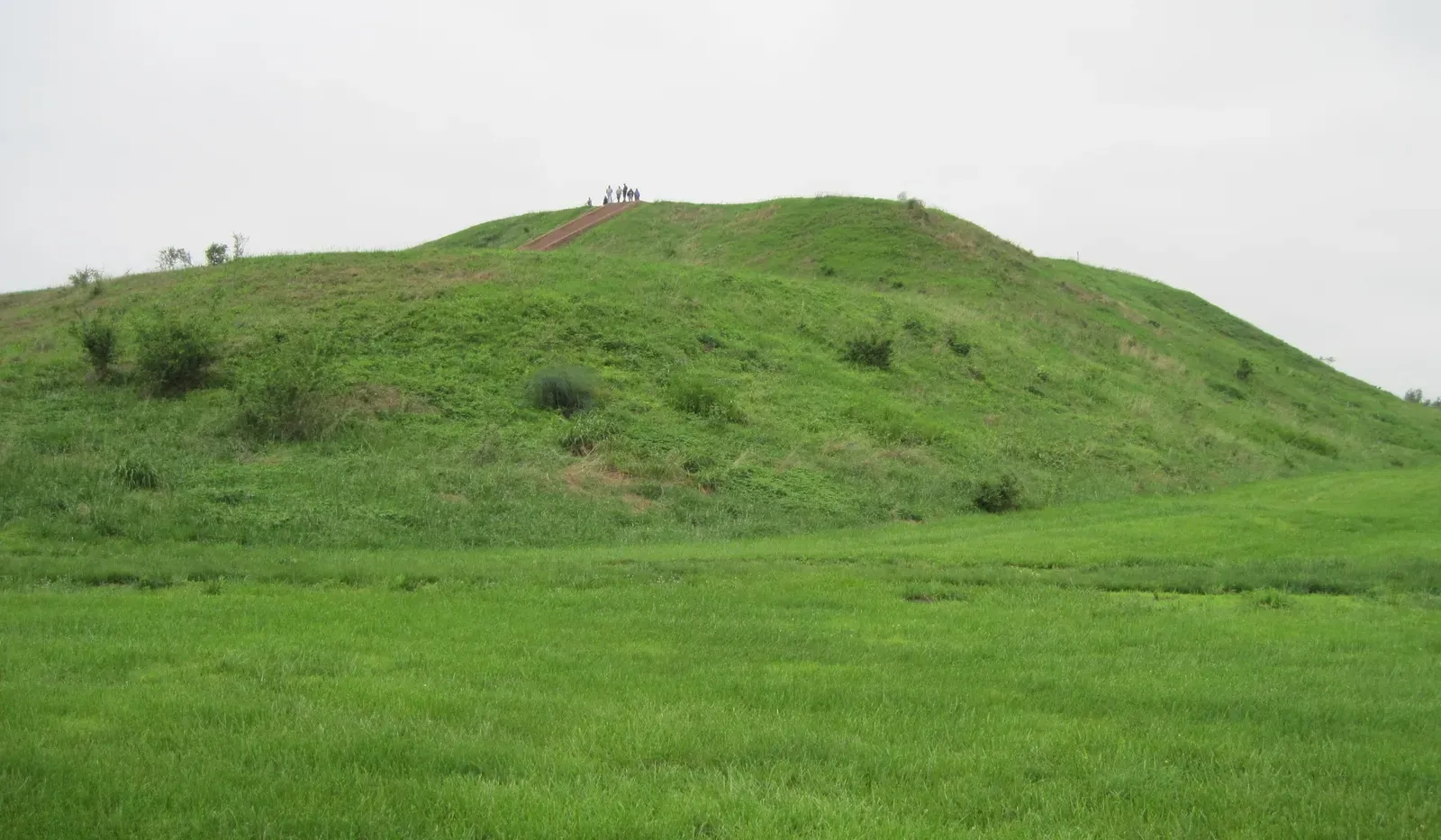
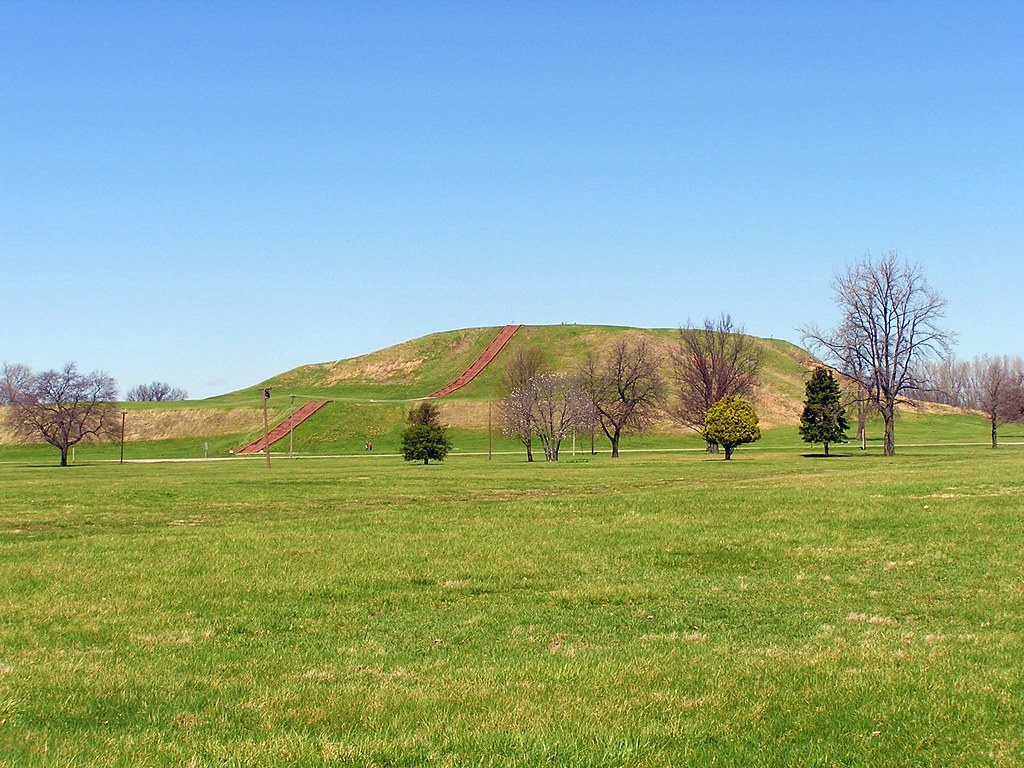
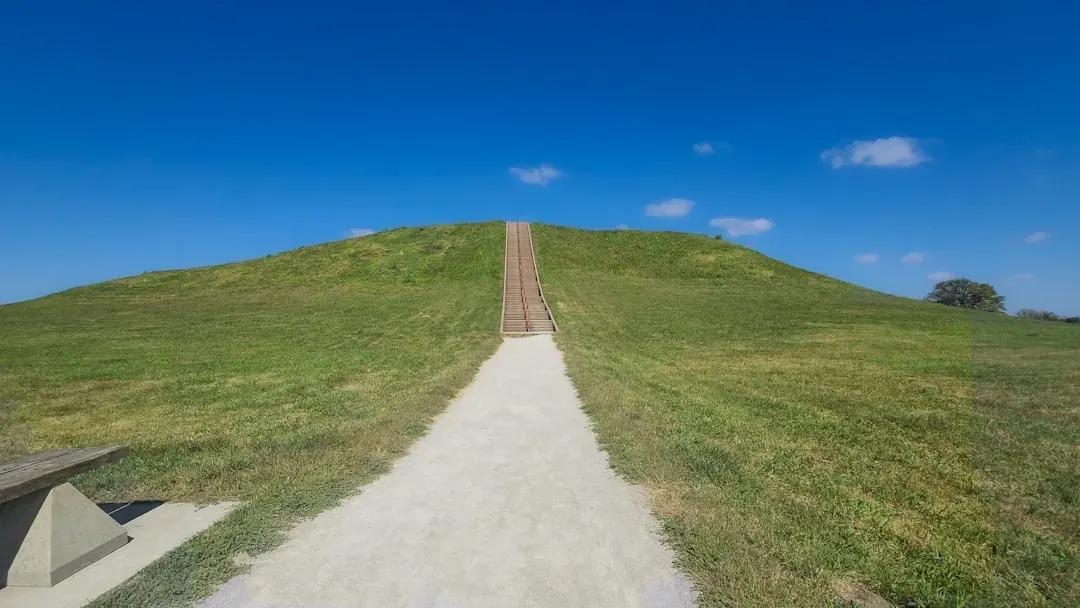
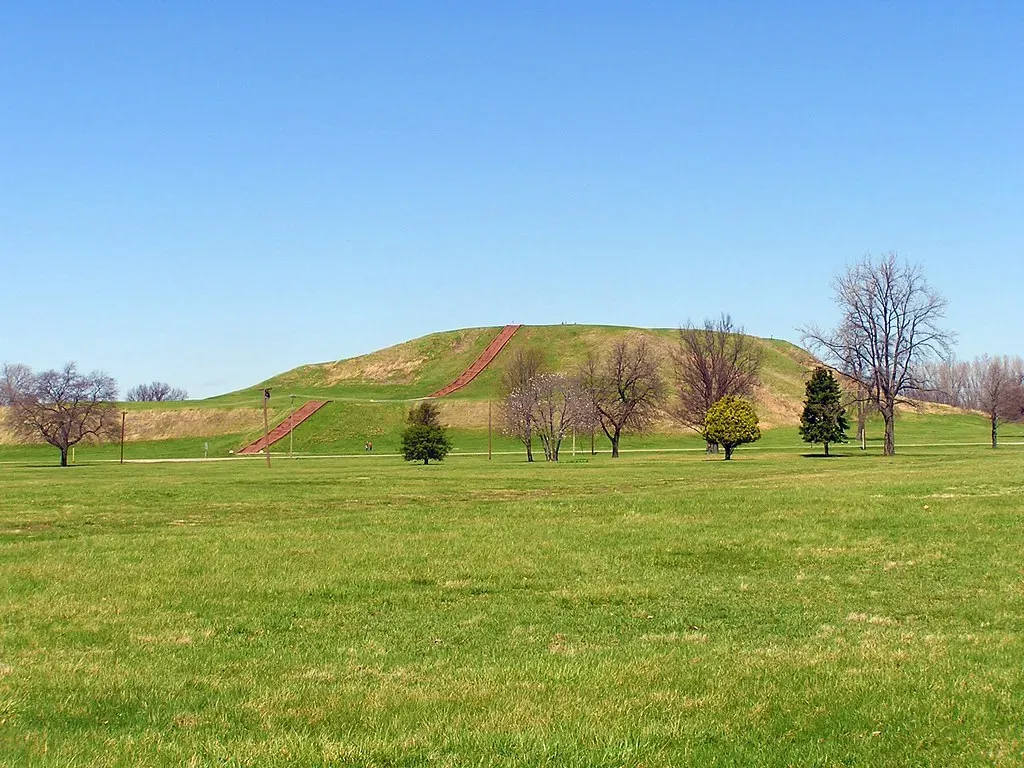
Every great city has a signature landmark, and for Cahokia it was Monks Mound, a colossal earthen platform that still dominates the site today. It rises roughly as tall as a multi-story building and covers an area larger than many modern city blocks, making it the largest earthen mound in North America. Workers moved an almost unimaginable volume of soil basket by basket, layer by layer, to build this artificial mountain. On its flat summit once stood an enormous wooden structure – likely an elite residence, a temple, or a building with both political and spiritual roles. Imagine approaching Cahokia across the floodplain and seeing this stepped earth pyramid looming above everything else, like a Midwestern version of a ziggurat. The effort required to build it speaks volumes about the city’s capacity to coordinate labor and resources, and about how seriously people took the sacred and political meanings tied to that elevated space.
4. A Wooden “Stonehenge” Marked the Sky and the Seasons
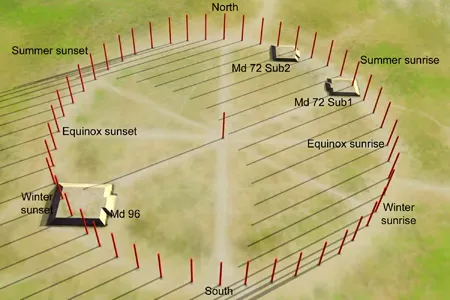
One of the most evocative finds at Cahokia is a series of circular arrangements of tall wooden posts, nicknamed “Woodhenge” because of their resemblance to England’s Stonehenge in purpose if not in material. These timber circles were aligned with the movements of the sun at key times of the year, such as the solstices and equinoxes. When viewed from particular points, the rising or setting sun would line up with specific posts on specific dates. This means Cahokians were not only paying attention to the sky, they were structuring their city and their ritual life around it. These alignments likely helped mark agricultural cycles, ceremonial calendars, and moments of political or religious significance. There’s something quietly stunning in the idea: in a city made of wood, earth, and corn, people used giant posts as precision instruments to synchronize human life with the rhythms of the cosmos, the way other cultures did with stone temples and observatories.
5. The City Was Built on Corn, Rivers, and an Engineered Landscape
Cahokia did not appear out of nowhere; it grew out of a landscape that people had been shaping for centuries. Its power rested on a combination of rich floodplain soils, access to rivers, and a shift toward intensive maize (corn) agriculture. As corn became a staple, it allowed more people to live in one place, freed up labor for building projects, and created surpluses that could be stored, controlled, and redistributed. Food was fuel, but it was also power. At the same time, the Cahokians modified their environment in sophisticated ways – digging borrow pits, reshaping ridges, building levees and mounds, and organizing fields. The city sat in a network of waterways that connected it to distant regions. That river network was like a premodern highway system, bringing in exotic materials and ideas. If you think of Cahokia as a sort of green megacity – dependent on agriculture, wetlands, and river routes – you get much closer to understanding its logic than if you imagine a stone fortress town on a hill.
6. Trade and Influence Reached Far Beyond the Mississippi Valley
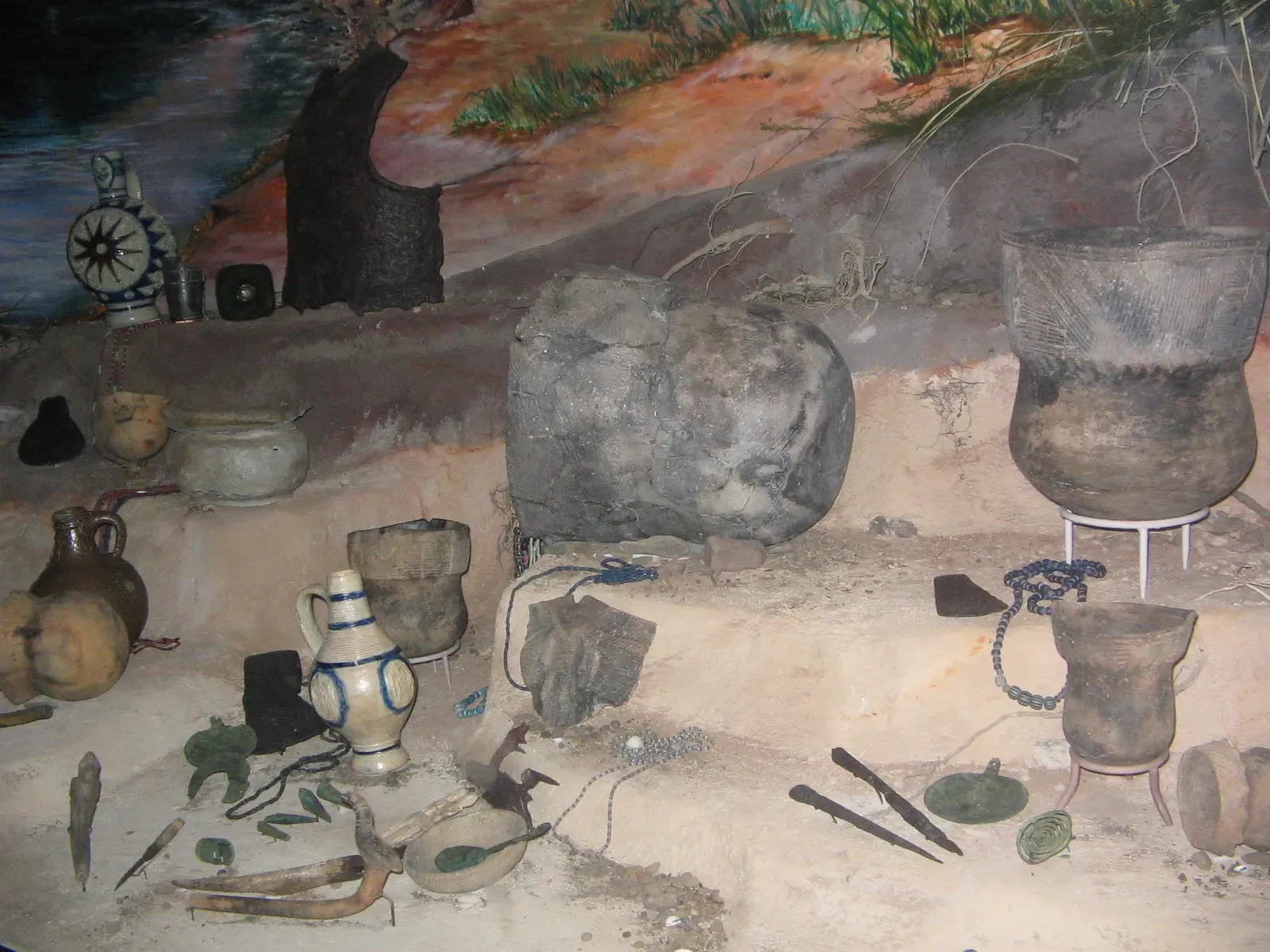
Archaeologists have found materials at Cahokia that originated hundreds of miles away, clear evidence of far-flung exchange networks. There are marine shell artifacts from the Gulf Coast, copper from the Great Lakes region, and other exotic stones and items that point to connections stretching across much of eastern North America. These were not simple one-off curiosities; they seem to have been woven into ritual, status, and identity. The influence also flowed outward. Cahokia’s iconography and certain styles of artifacts show up in distant communities, suggesting that ideas, symbols, and perhaps people were moving along with physical goods. Think of Cahokia not as an isolated city in some wilderness, but as a nodal point in a sprawling web of cultural and economic ties. In our modern terms, it was a regional hub, exporting not only goods but cultural models and religious imagery that others adapted to their own settings.
7. Life in Cahokia Included Inequality, Ritual, and Sometimes Violence
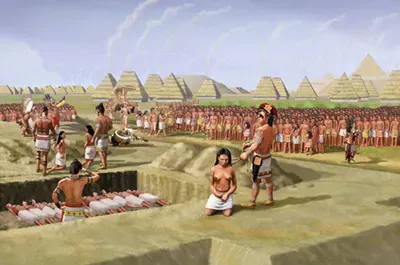
It’s tempting to romanticize a preindustrial city and imagine it as more harmonious or equal than the societies we know today. The evidence from Cahokia points to something more complicated. Elite burials have been found with lavish grave goods – shell beads, copper items, finely crafted stone tools – suggesting a stratified society where some individuals occupied significantly higher status than others. Meanwhile, many people seem to have lived in more modest houses with fewer possessions, working the fields or contributing labor to city projects. Archaeologists have also uncovered burial features that hint at ritualized violence, including mass graves and individuals who appear to have been sacrificed. A famous burial cluster contains a high-status person interred with retainers and offerings, accompanied by multiple individuals who likely died as part of an elite burial rite. None of this makes Cahokia uniquely brutal – cities across the world and across time show similar mixes of splendor and suffering – but it does cut against any comforting fantasy that past urban life was inherently gentler or more equal.
8. The City’s Rise and Fall Happened Shockingly Fast
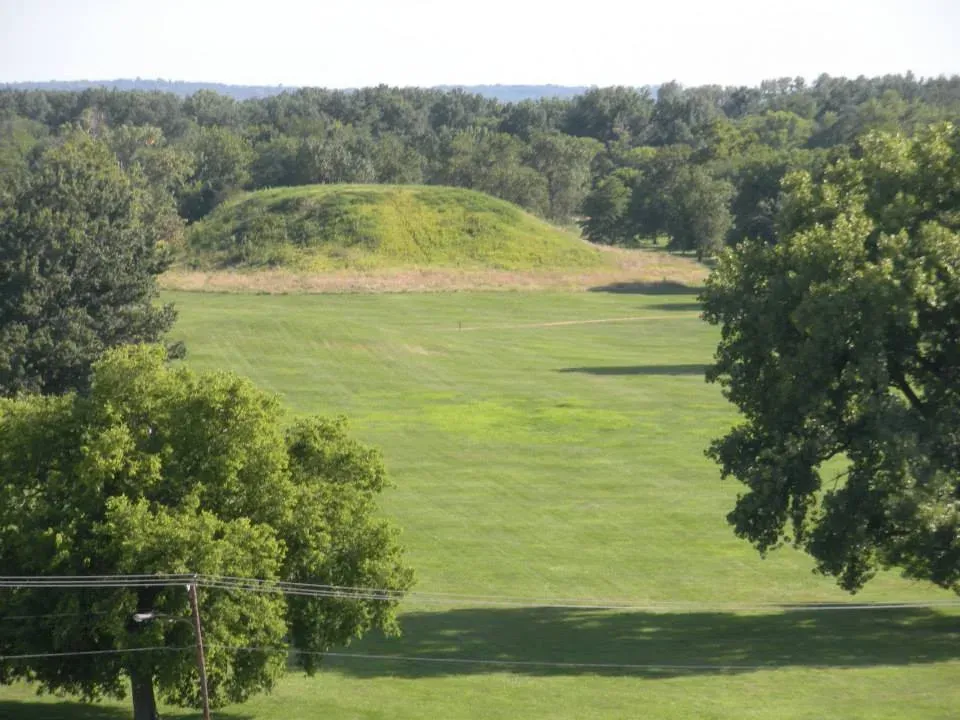
One of the most striking aspects of Cahokia is its rapid boom-and-bust cycle. The city seems to have grown explosively in a relatively short span of time, peaking roughly between the eleventh and early thirteenth centuries. Within a few generations, monumental construction intensified, the population swelled, and the site transformed from a regional center into something much closer to a capital of an entire cultural sphere. Just as quickly, things unraveled. By the fourteenth century, the city was largely abandoned. Scholars debate the exact mix of reasons: environmental stress, deforestation, soil exhaustion, flooding, social unrest, shifting trade routes, climate fluctuations, or internal political crises – all probably played some role. What stands out to me is how modern that feels. A city grows on a fragile balance of environment, politics, and economy; when too many pressures align, the whole system can tip over far faster than anyone expects. Cahokia is a cautionary tale about how quickly complexity can collapse.
9. For Centuries, Cahokia Was Ignored, Dismissed, or Misunderstood
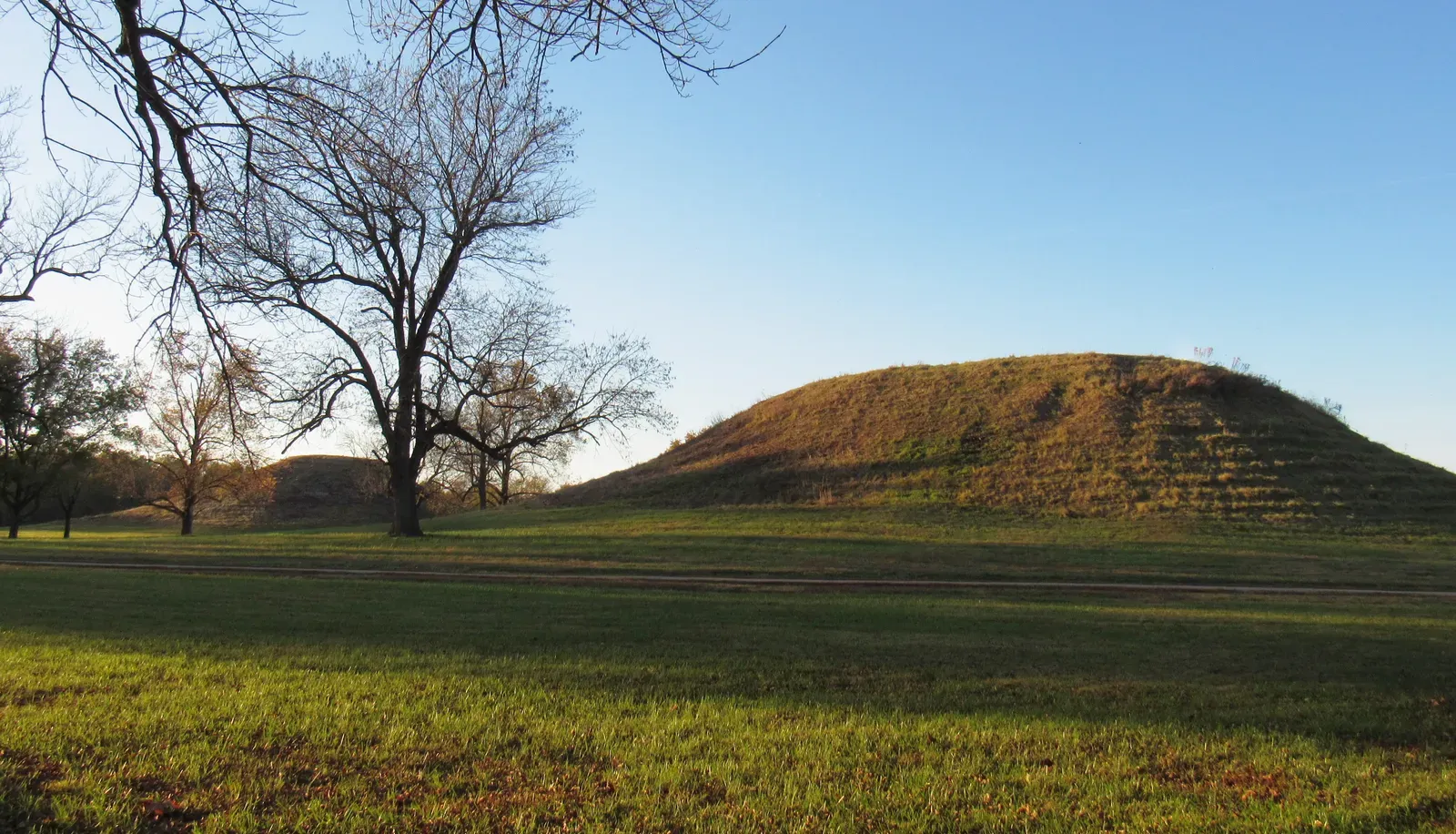
Despite its scale, Cahokia was long treated as a curiosity rather than a central piece of North American history. Early European and American observers either underestimated the size and sophistication of the site or explained it away with myths that attributed its construction to some “lost race” rather than to Indigenous peoples. That attitude said more about colonial prejudice than about archaeology. It took decades of systematic study for scholars to begin to restore Cahokia to its rightful place as an Indigenous achievement. Even today, I’d argue Cahokia still doesn’t occupy the cultural space it deserves. Most school curricula glide past it, if they mention it at all, and many Americans live within a day’s drive of the site without realizing there was once a city there larger than many medieval European towns. When people do learn about it, their surprise reveals a deeper issue: we have built our shared story around Europe and the coasts, leaving inland Indigenous cities like Cahokia as faint background noise. That imbalance is slowly changing, but not fast enough.
10. Cahokia Challenges How We Think About Cities, America, and the Future
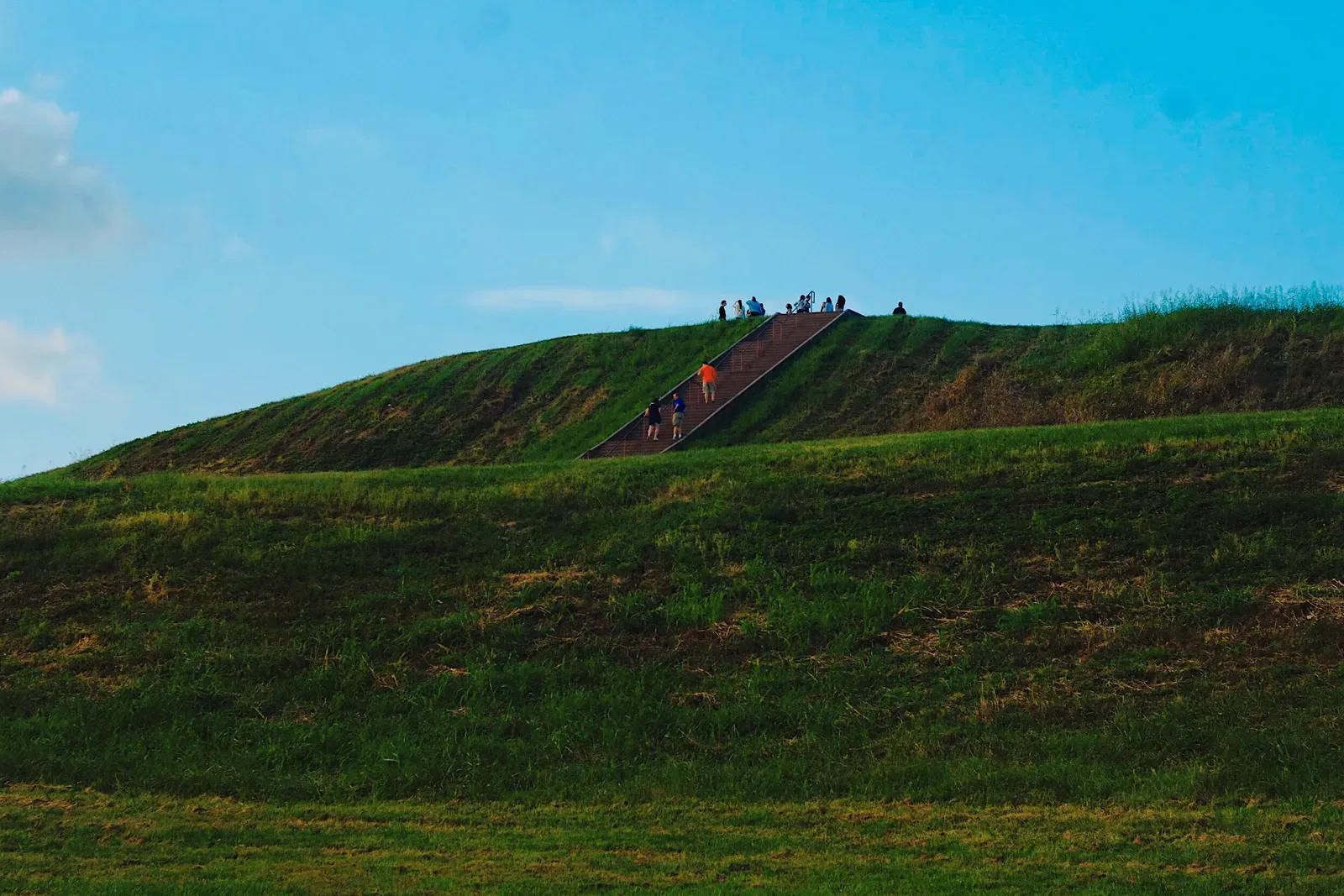
Cahokia is not just an archaeological site; it is a challenge. It forces us to rethink what “urban” means when you strip away stone, steel, and glass. Here was a metropolis built primarily from earth, wood, and plants, integrating fields, forests, and wetlands into its fabric. It shows that large-scale, complex societies do not all converge on the same architectural or political blueprint. There are other ways to be a city, other ways to be powerful, other ways to align human life with land and sky. For me, the most unsettling and useful lesson of Cahokia is that the Americas were already full of history, complexity, and ruin before European colonization. This city rose, transformed its environment, struggled with inequality and conflict, and collapsed – long before colonists arrived. That should shake our sense of inevitability. If a wooden city in the Mississippi floodplain could become larger than London and then vanish, what does that say about the permanence of our own concrete megacities?
Conclusion: The Lost City That Should Change How We See Ourselves
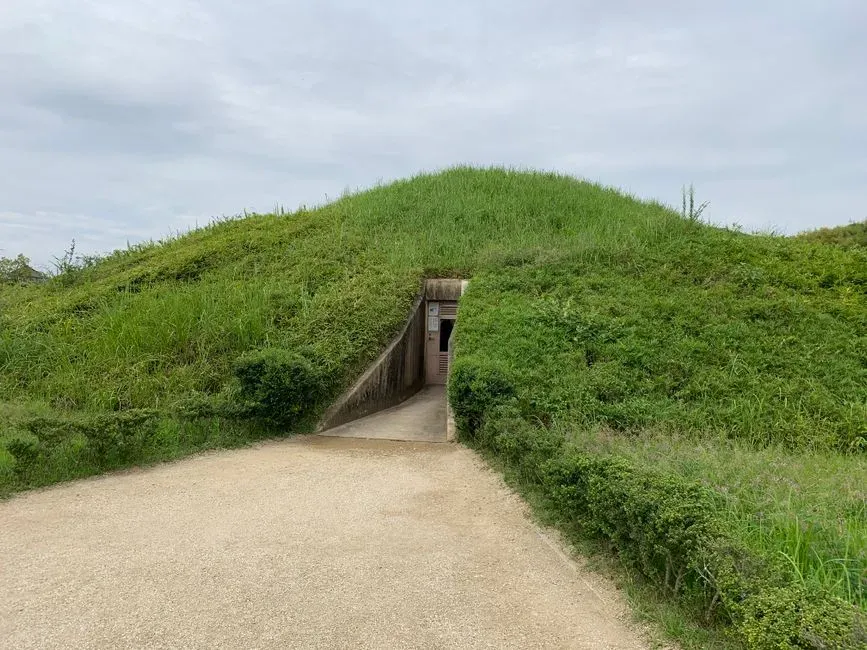
Cahokia should be as familiar a name as Pompeii or Machu Picchu, yet it still feels underground knowledge, something you learn about almost by accident. I think that says a lot about whose stories we have chosen to spotlight and whose we have been comfortable ignoring. This ancient city once larger than London is not a quirky side note; it is a direct rebuttal to the idea that North America needed Europe to teach it how to be complex, urban, or “civilized.” In my view, the most powerful thing we can do with Cahokia’s story is let it unsettle us. Let it rewrite the mental map where history only “really” happens in Old World capitals or along modern coasts. Let it remind us that cities are experiments in living together, always precarious, always entangled with their environments, and always capable of disappearing faster than we think. The mounds are still there, quiet under the grass – how many other Cahokias have come and gone, and how will our own cities look from a distant hill a thousand years from now?