Most people treat “extinct” like a locked door – final, no appeals, case closed. But peer-reviewed journals have quietly confirmed a startling number of species clawing their way back from the dead in just the last fifteen years, backed by genetic sequencing, camera-trap footage, and thousands of hours of drone surveillance most of us never hear about.
The line between “extinct” and “critically rare” turns out to be a lot blurrier than any textbook admits. Here’s what the actual research – not folklore, not wishful thinking – says about which “gone forever” animals might still be breathing somewhere in the wild right now.
#13 – The Zanzibar Leopard
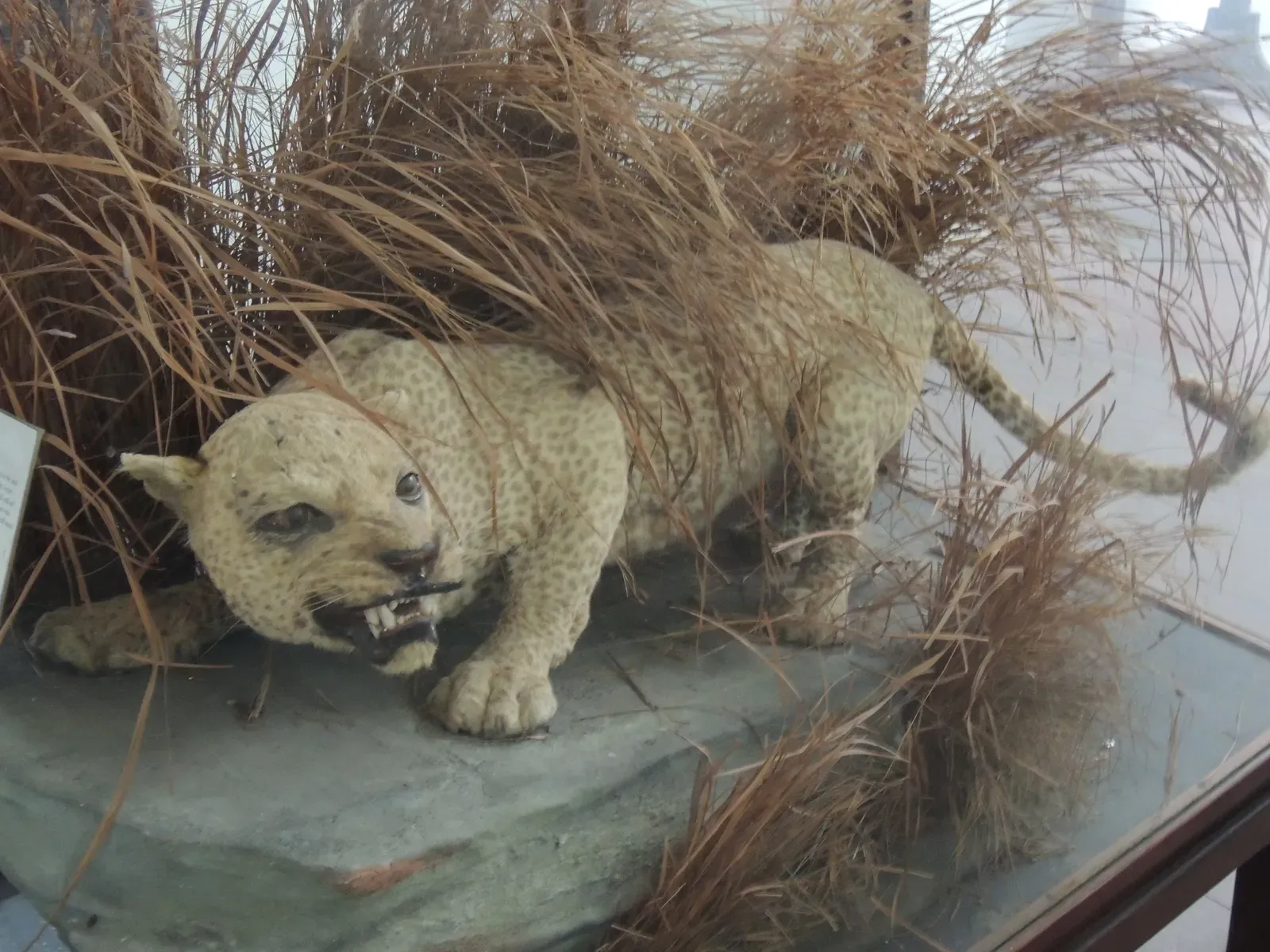
Officially wiped out by a government-sanctioned witch-hunt, this leopard’s story is one of the strangest extinction cases on record. In the 1960s and ’70s, Zanzibari officials organized deliberate eradication campaigns against the cats after locals associated them with witchcraft, believing witches kept leopards as familiars.
Conservationists later tried to reverse course, but by then the population had already collapsed. The IUCN lists the subspecies as possibly extinct, yet villagers on the island still report tracks and fleeting glimpses in the remaining forest patches, and a handful of disputed camera-trap images have kept the debate alive among regional biologists. No specimen has been confirmed since the early 2000s, but the terrain – dense, poorly surveyed, largely inaccessible – is exactly the kind of place a few leopards could vanish into for decades without anyone noticing.
#12 – The Caspian Tiger
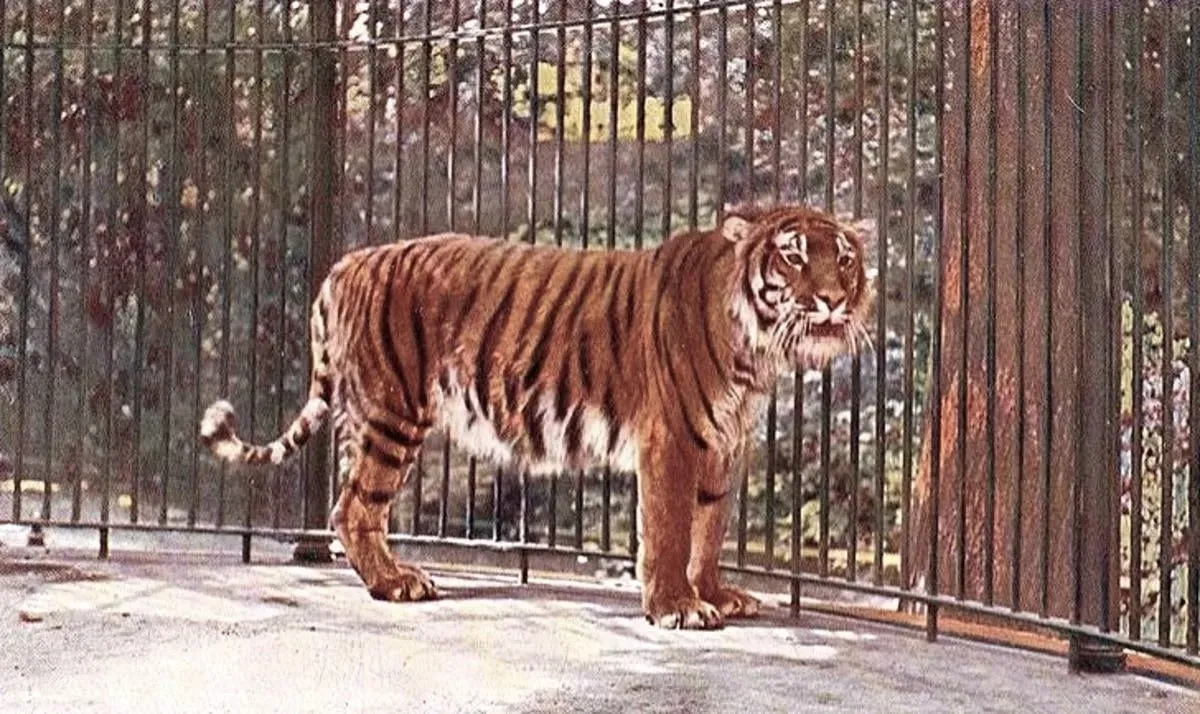
This was once the largest tiger subspecies on Earth, prowling reed forests from Turkey to western China – and its “extinction” may have happened more recently than anyone admits. It was declared extinct in the 1970s after decades of habitat destruction and hunting, following the last confirmed shootings near the Iran-Turkey border.
What makes this case unusual is the genetics: modern DNA studies show the Caspian tiger was nearly identical to the Siberian, or Amur, tiger, meaning it likely could have survived in isolated mountain corridors far longer than population models predicted. Unconfirmed reports trickled in from remote parts of eastern Turkey and Central Asia well into the 1990s, and that genetic overlap is now fueling rewilding proposals that use Siberian tigers as living stand-ins across the Caspian tiger’s former range – a quiet admission that this “extinction” may have been about habitat collapse, not a hard biological endpoint.
#11 – The Yangtze Giant Softshell Turtle
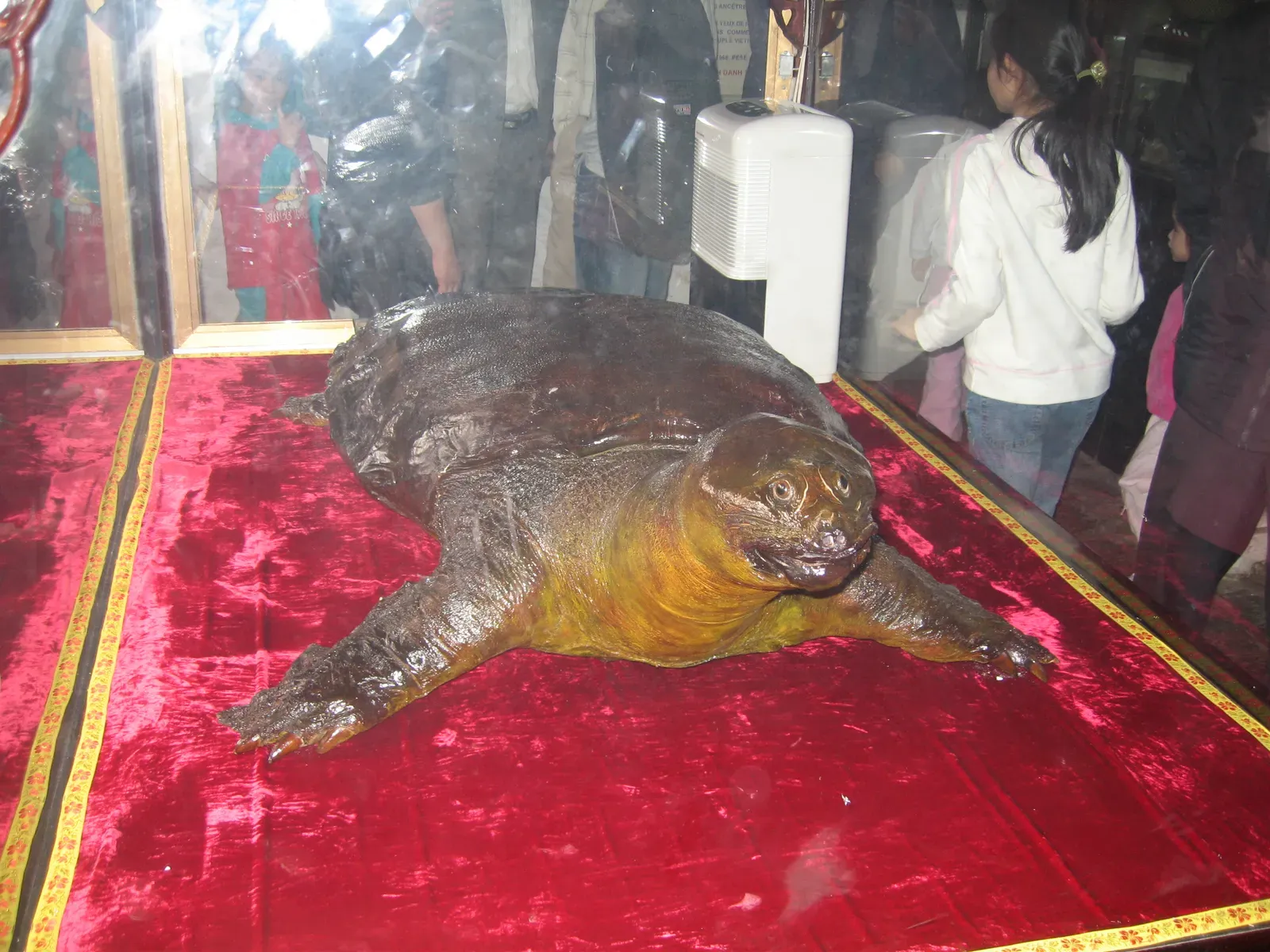
This is the world’s rarest turtle, and its “extinction” has already been declared and quietly walked back more than once. The last known female died in a Chinese zoo in 2019 after a failed artificial insemination attempt, an event widely reported as the practical end of the species.
But that wasn’t the whole story. Conservationists have long suspected individual turtles survive in isolated lakes near Hanoi, Vietnam, where local fishermen have described massive, leathery-shelled creatures for generations, and environmental DNA sampling in some of these lakes has picked up genetic traces consistent with the species. A turtle that can weigh over 200 pounds and grow larger than a dinner table has somehow avoided a definitive photograph in the wild for years, which tells you exactly how murky and overgrown these lake systems really are. If even one wild female exists, the species isn’t extinct – it’s just extraordinarily good at hiding.
Fast Facts
- Also known as Rafetus swinhoei, the world’s rarest turtle species
- Last known female died in 2019 after a failed captive breeding attempt
- Some individuals reportedly weigh over 200 pounds
- Suspected survivors live in isolated lakes near Hanoi, Vietnam
- Environmental DNA testing has detected genetic traces matching the species
#10 – The New Guinea Singing Dog

This isn’t folklore – it’s a rediscovered wild canine population that upended what scientists thought they knew about domestication. For decades, the New Guinea singing dog, famous for its unusual, whale-like harmonic howl, was believed to survive only in captive breeding programs, with wild populations presumed extinct due to interbreeding with village dogs and habitat loss.
Then researchers documented dogs living in the remote highlands of Papua New Guinea that matched the physical profile of the supposedly extinct wild lineage. Genetic comparisons between these highland dogs and captive singing dogs revealed a striking overlap, suggesting the wild bloodline never actually disappeared – it simply retreated into terrain too rugged and remote for anyone to survey. The discovery reshaped conversations about canine evolution, since these dogs may represent one of the most ancient, least-modified lineages left on the planet.
#9 – The New Guinea Big-Eared Bat
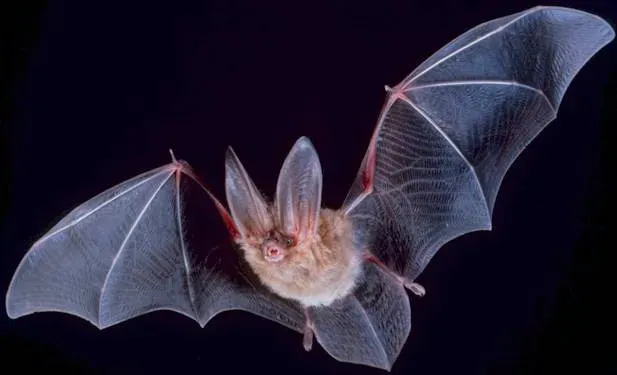
Sometimes a species doesn’t go extinct – it just gets mistaken for something ordinary for over a century. This bat was observed exactly once, in 1890, and was presumed extinct until 2012, when researchers studying the effects of logging on microbats accidentally caught one.
What makes this rediscovery so strange is that nobody even realized what they’d caught right away – the female bat wasn’t identified as a New Guinea big-eared bat until a bat expert recognized it two years later. Its physical differences from common species are subtle: mainly ear size, nostril skin, and the curve of its nose, distinctions so fine you’d need to be a specialist to catch them. Logging continues to erase its habitat at a rapid pace, and researchers openly admit they have no idea if this animal will ever be documented again.
#8 – The Australian Night Parrot
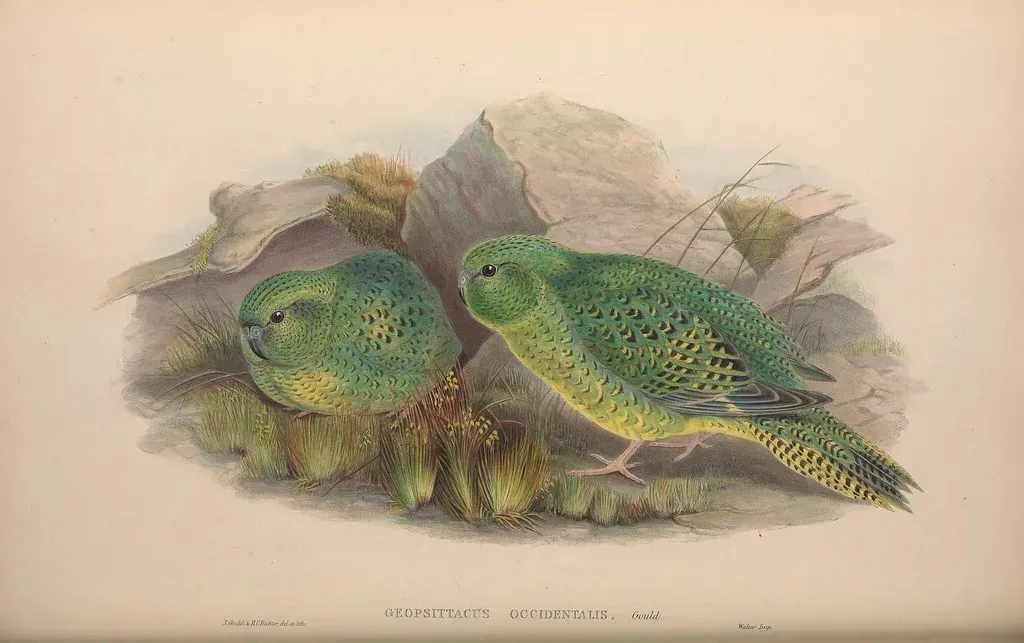
For exactly one century, this bird existed only in museum drawers and old field notes – until a photographer proved everyone wrong. Australian night parrots disappeared from records in 1912 but were rediscovered a hundred years later, in 2013.
The bird is small and short-tailed with yellowish-green plumage that provides near-perfect camouflage against the spinifex grasslands it calls home, which likely explains how an entire population avoided detection through generations of dedicated searching. This wasn’t a fluke buried in obscure paperwork; it triggered a wave of renewed funding for nocturnal bird surveys across the outback, and forced ornithologists to reconsider how many other ground-dwelling, nocturnal species might be quietly persisting in landscapes that are technically “surveyed” but rarely walked at night.
#7 – The Grassland Earless Dragon
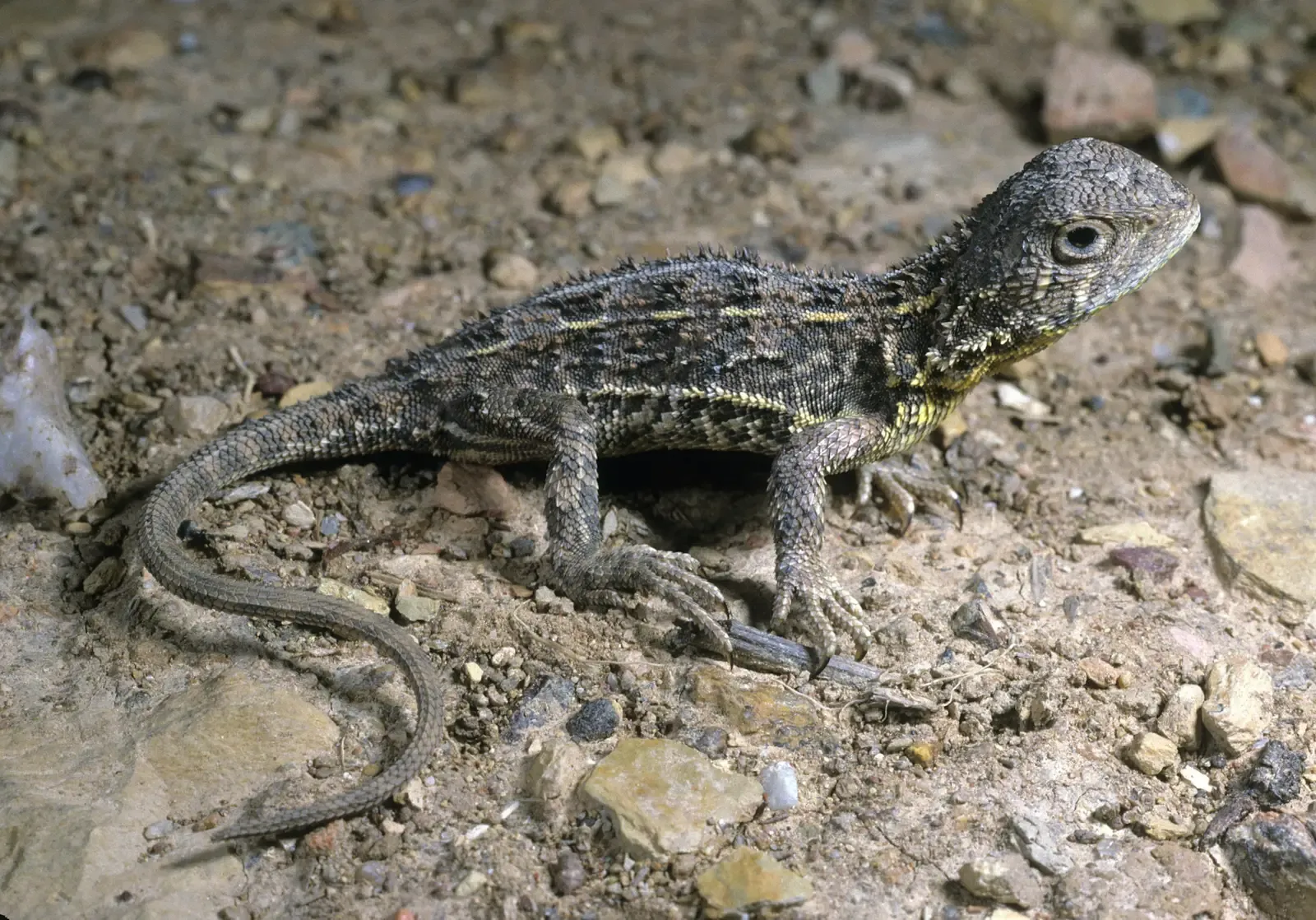
This lizard’s comeback story reads like a scientific thriller compressed into a single field season. Once common in the Australian state of Victoria, it became critically endangered in the 1960s due to extensive habitat destruction, with the last confirmed sighting happening in 1969 and no scientist laying eyes on one for more than 50 years.
By 2019, the outlook was bleak enough that a published study suggested it may have already gone extinct. Then came the twist: hope had lingered thanks to scattered unconfirmed sightings, and those hopes were finally borne out when an ecological survey turned up the first living individual just last year. Two ecologists simply stumbled onto a population that had been presumed gone for half a century, and subsequent fieldwork led to the collection of 16 individuals now living in a breeding programme at Melbourne Zoo.
At a Glance
- 1969: Last confirmed sighting in the wild
- 2019: Published study suggested the species had likely gone extinct
- Recent survey: First living individual found after more than 50 years
- 16 individuals now living in a breeding programme at Melbourne Zoo
#6 – New Guinea’s Lost Marsupials
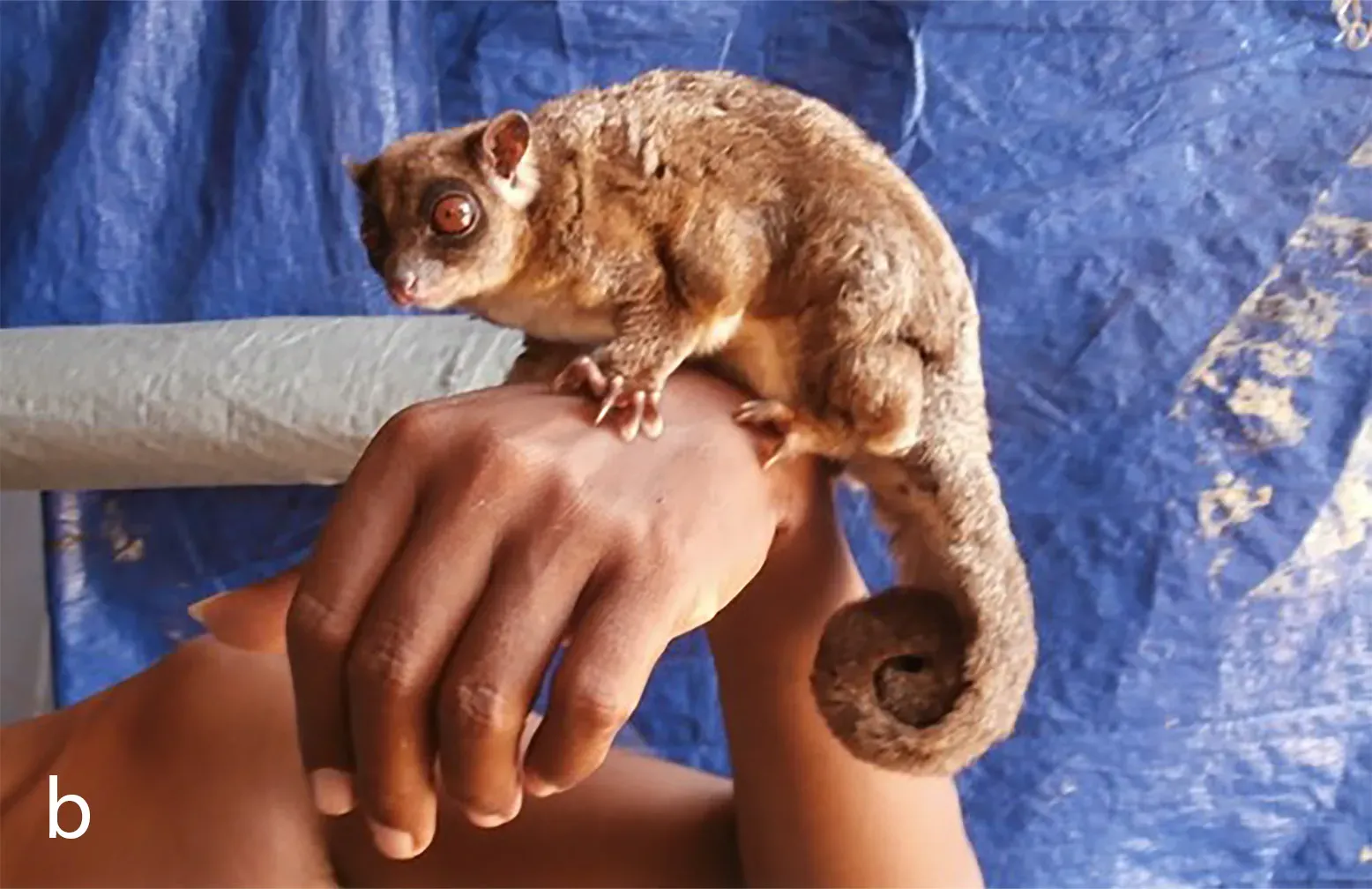
This one didn’t involve a single rediscovered animal – it involved two species that vanished from the fossil record thousands of years before written history existed. Researchers documented the rediscovery of the pygmy long-fingered possum and the ring-tailed glider in New Guinea, both animals previously known only from fossils and presumed extinct for millennia.
Scientists classify this kind of comeback as a “Lazarus taxon,” a club that also includes the coelacanth, the bush dog, the Chacoan peccary, the false killer whale, and the Wollemi pine. The lead researcher on both papers didn’t hide his astonishment, noting that finding even one Lazarus taxon is exceptional, but finding two species thought extinct for thousands of years is “remarkable.” These animals had been extinct longer than the entire history of written language, and they were simply living in a rainforest nobody had properly surveyed.
#5 – The Bermuda Petrel (Cahow)
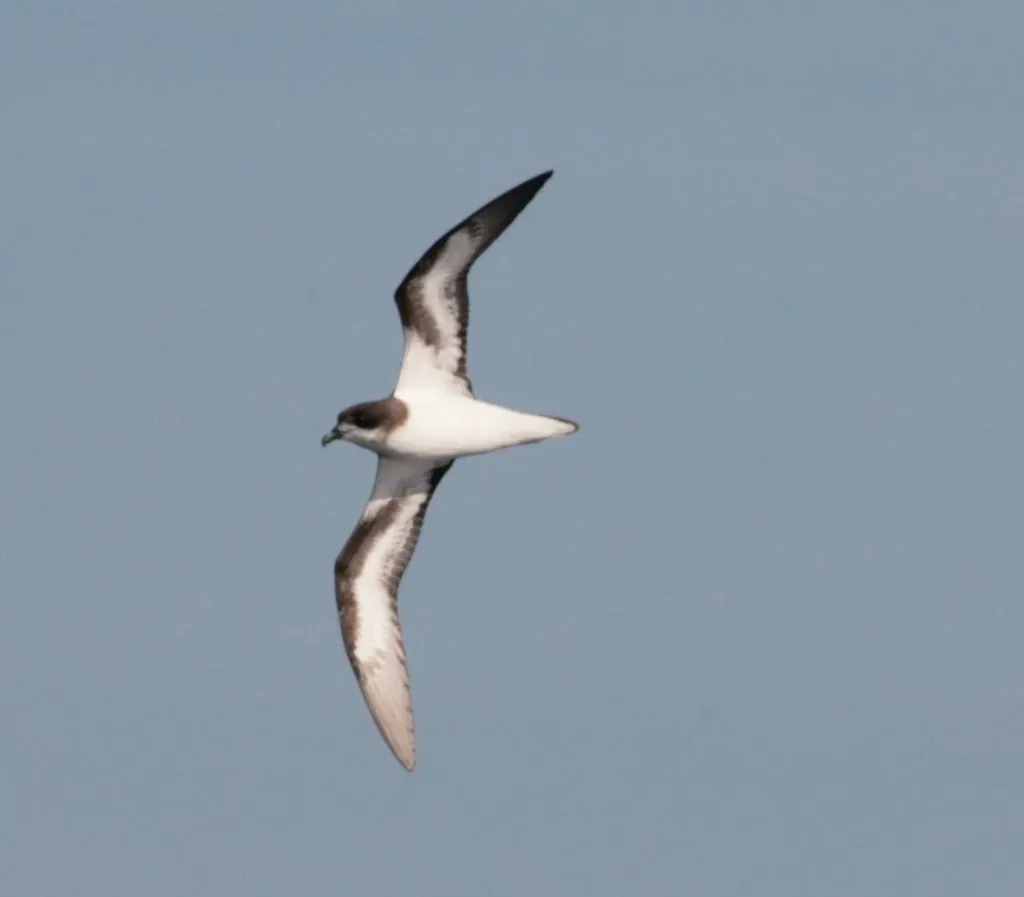
Sailors hunted this seabird so aggressively in the 1600s that it was assumed to have vanished entirely for over three centuries – one of the longest presumed-extinction gaps of any bird ever rediscovered. Early Bermuda settlers slaughtered cahows by the tens of thousands for food, while introduced pigs, rats, and dogs devastated their ground nests, until the species effectively disappeared from human records by the mid-1600s.
For roughly 330 years, naturalists assumed the bird was gone for good, filing it away alongside the dodo as a cautionary tale about colonization and careless hunting. Then, in 1951, a small breeding colony was discovered clinging to a cluster of rocky, wave-battered islets in Castle Harbour – terrain so inhospitable that ground predators simply couldn’t reach it. Decades of dedicated conservation work have since grown that handful of survivors into several hundred breeding pairs, turning the cahow into one of the most celebrated recovery stories in ornithology.
#4 – Attenborough’s Long-Beaked Echidna
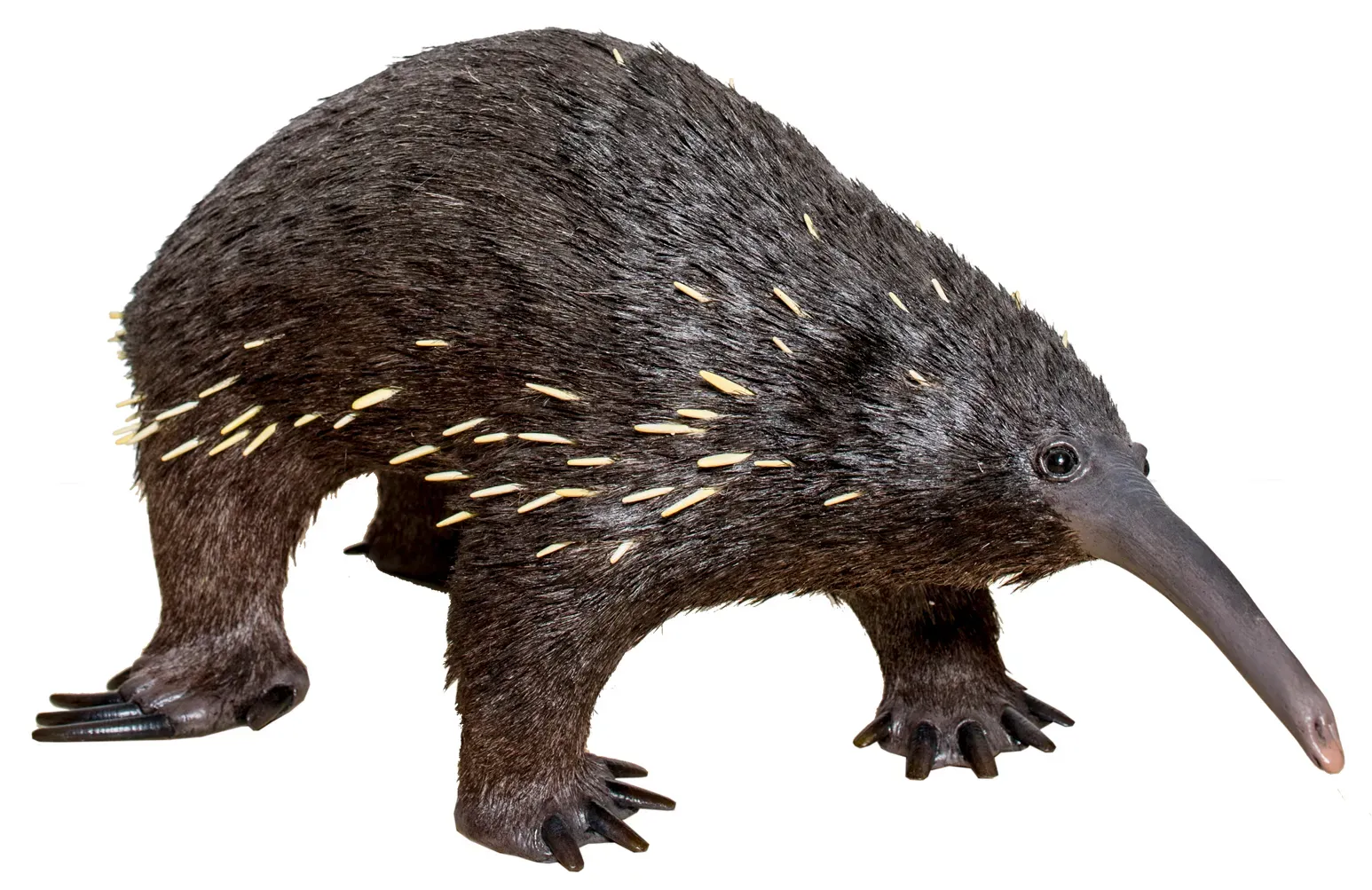
This spiny, egg-laying mammal is arguably the most scientifically significant “extinct” animal ever confirmed alive on camera – and the discovery only happened because scientists finally listened to locals. Biologists confirmed the survival of Zaglossus attenboroughi, the long-beaked echidna named after David Attenborough, with footage captured in 2023 by an Oxford University expedition to Indonesia’s Cyclops Mountains.
The species hadn’t been recorded for more than 60 years, since a dead specimen was found in the region decades earlier. Researchers didn’t stumble onto this by accident: evidence had been building for years, including “nose pokes” found by a 2007 research team, trace signs the echidnas leave while foraging underground, and indigenous groups had reported sightings for the past two decades. The proof finally arrived when camera traps deployed in the Cyclops during 2022 and 2023 captured 110 photos across 26 separate encounters.
Worth Knowing
- Named after naturalist and broadcaster David Attenborough
- Not recorded for more than 60 years before the 2023 confirmation
- A 2007 research team found “nose pokes,” trace signs left while foraging underground
- 2022-2023 camera traps captured 110 photos across 26 separate encounters
- Confirmed alive by an Oxford University expedition in Indonesia’s Cyclops Mountains
#3 – The Ivory-Billed Woodpecker
![#3 - The Ivory-Billed Woodpecker (By Original photo by Arthur A. Allen, 1935 [1], watercolored by Jerry A. Payne, USDA-ARS, CC BY 3.0 us)](https://nvmwebsites-budwg5g9avh3epea.z03.azurefd.net/dinoworld/974a3d1908f792279b2cb4fcf04a64f6.webp)
Nicknamed the “Lord God Bird” for the reaction it once provoked in birdwatchers, this is one of the most bitterly contested extinction debates in modern ornithology. The last widely accepted sighting in continental North America occurred in 1944, and in 2021 the U.S. Fish and Wildlife Service opened a public comment period on a proposal to formally declare the species extinct.
A decade-long Louisiana study pushed back hard, presenting evidence gathered from 2012 to 2022 that included roughly 70,000 hours of acoustic recordings, about 472,550 camera-hours across dozens of trail cameras, and over 1,000 hours of video from more than 3,265 drone flights. Former Cornell Lab director John Fitzpatrick believes the woodpecker could still exist and has called the extinction decision “premature,” saying he continues to respect the evidence from eastern Arkansas. Others, like ornithologist David Sibley, have never found the key video convincing. Nearly half a million hours of camera surveillance and the debate still isn’t settled – which tells you exactly how hard this bird would be to definitively rule out.
#2 – The Fernandina Giant Tortoise
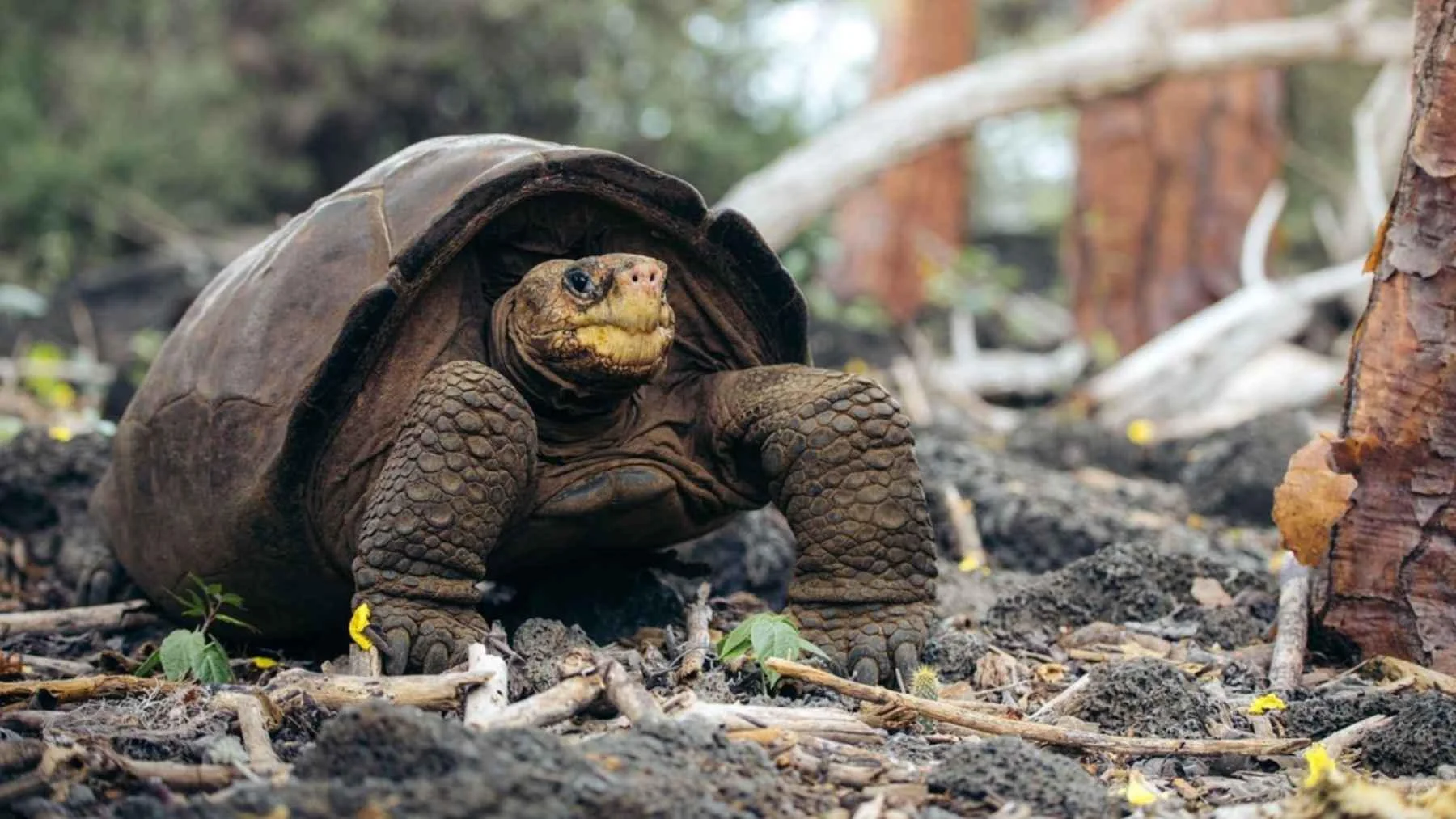
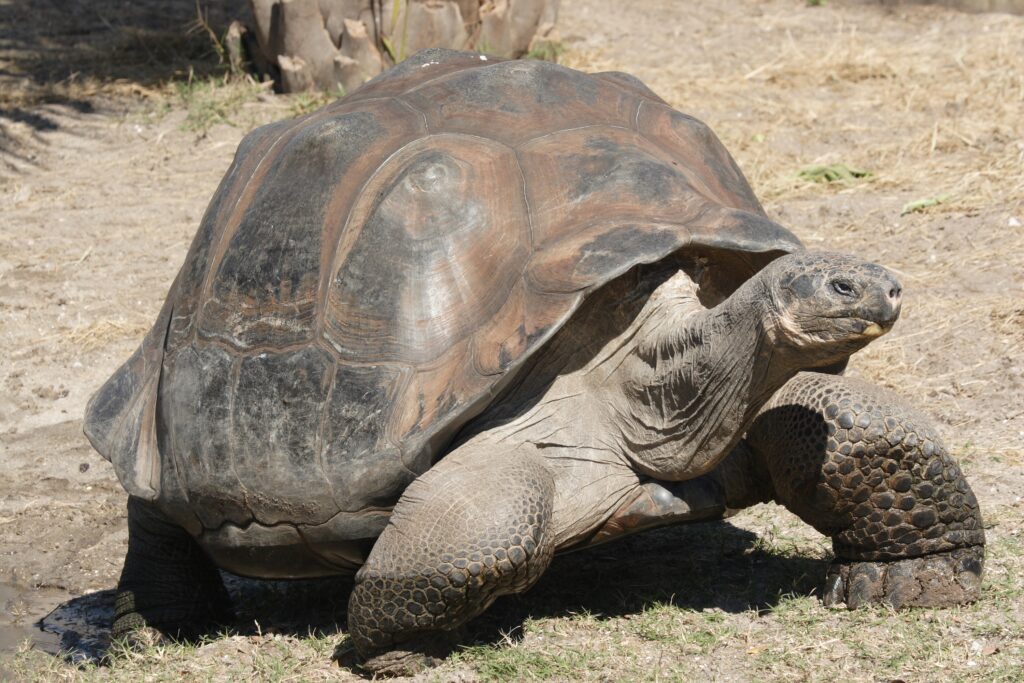
This is arguably the strongest confirmed comeback on this entire list – a species written off after a single specimen collected in 1906, found alive again 113 years later. Scientists confirmed genetic similarity between a lone female tortoise discovered on Fernandina Island and the long-lost Fernandina Giant Tortoise, following a 2019 joint expedition by the Galápagos Conservancy, the Galápagos National Park Directorate, and Animal Planet host Forrest Galante.
A formal genetic study later published in Communications Biology confirmed the animal belonged to a species presumed extinct for more than a century, with genome sequencing showing the two known individuals were genetically distinct from every other Galápagos tortoise lineage. Researchers named her Fernanda, and to avoid repeating the fate of Lonesome George – the last Pinta Giant Tortoise, who died in 2012 without ever finding a mate – conservationists launched new expeditions into Fernandina’s brutal lava fields. Field teams have since found tracks and droppings suggesting two or three additional tortoises may still be alive on the island, meaning this “extinct” species might actually be a breeding population waiting to be found.
Quick Compare
- Lonesome George (Pinta Island): Last of his species, died in 2012 without ever finding a mate
- Fernanda (Fernandina Island): Found alive in 2019 and genetically confirmed by a formal study
- Lonesome George’s outcome: Species declared extinct upon his death
- Fernanda’s outcome: Tracks and droppings suggest two or three more tortoises may still be alive
#1 – The Thylacine (Tasmanian Tiger)
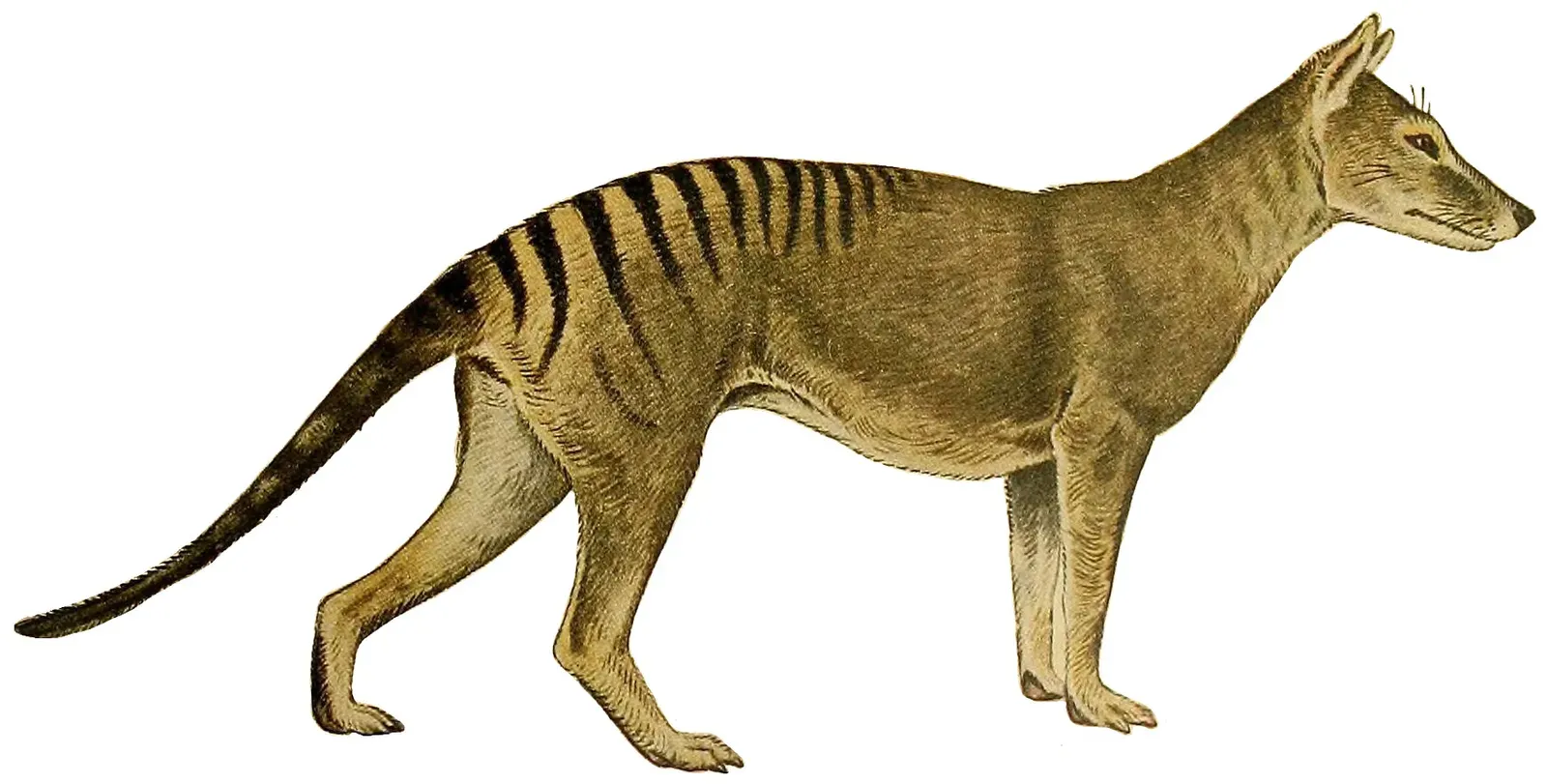
No animal on this list generates more scientific disagreement – or more raw public obsession – than the Tasmanian tiger. The last known captive thylacine died in a Hobart zoo on September 7, 1936, and for decades that date was treated as a hard biological full stop.
Then a 2023 statistical analysis changed the conversation. After analyzing data from 1,237 thylacine sightings in Tasmania dating back to 1910, researchers concluded the animal likely survived into the 1980s, with a slim chance a few individuals are still out there today. Not everyone agrees. Geneticist Andrew Pask, who leads efforts to genetically resurrect the species, remains blunt about the sighting data.
There is no evidence to confirm any of the sightings.
Andrew Pask
Pask argues the thylacine “evolved to look so much like a wolf” that it’s genuinely hard to distinguish from a dog at a distance, which is likely why sightings persist “despite never finding a dead animal or unequivocal picture.” Meanwhile, Colossal Biosciences has taken a wildly different approach, successfully sequencing the entire thylacine genome in early 2025 and using an artificial uterus to culture fertilized marsupial embryos more than halfway through pregnancy. Whether the last wild thylacine died decades ago or is still padding through southwestern Tasmania’s forests right now, science may soon make the question irrelevant – because a lab-grown version could be walking again within our lifetime.
The Bottom Line
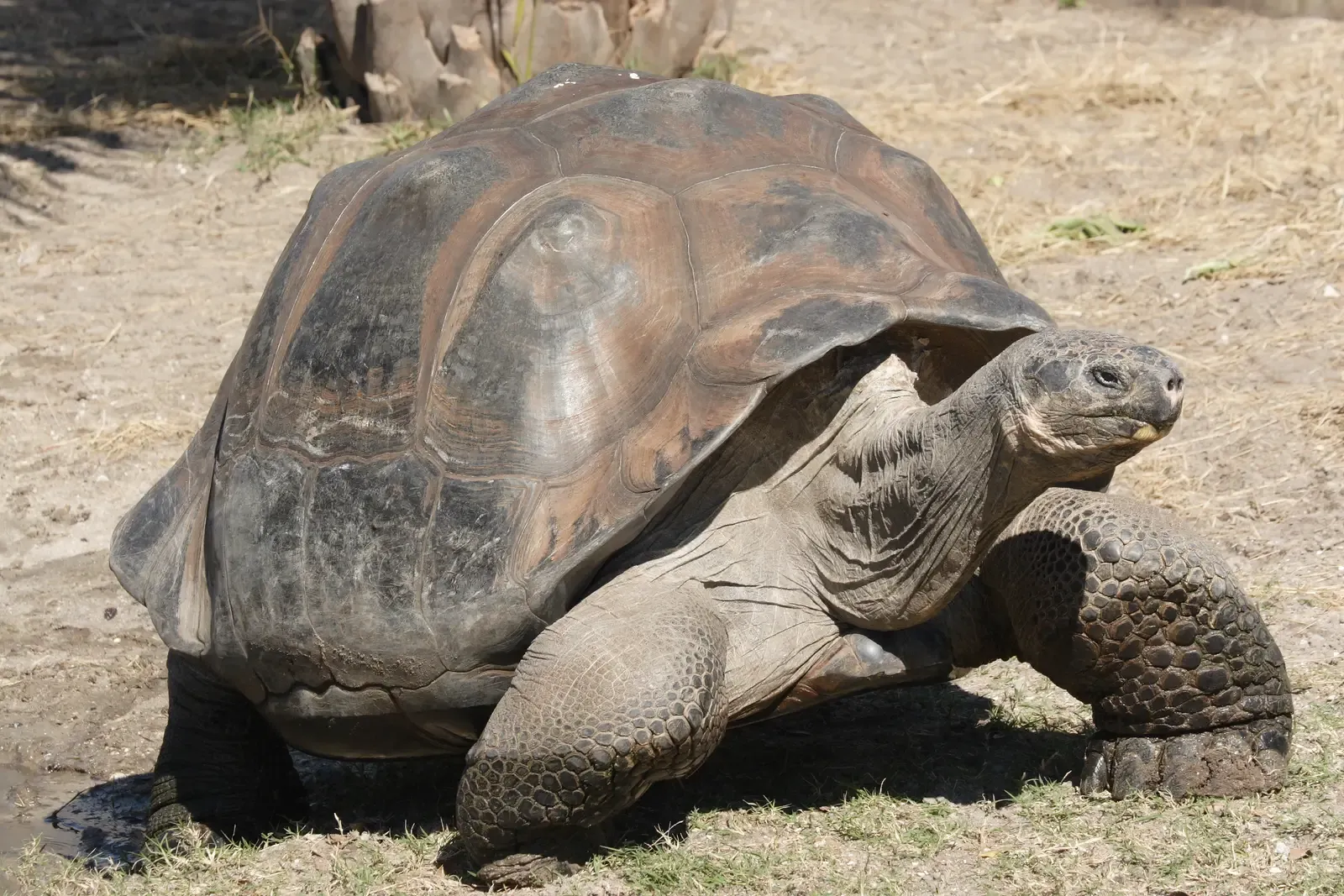
The honest takeaway here isn’t that cryptids are real – it’s that “extinct” has always been a statistical guess dressed up as a fact. The Fernandina tortoise, the long-beaked echidna, and the grassland earless dragon all prove that rugged, poorly surveyed terrain can hide a breeding population for over a century without anyone noticing.
My honest opinion: the ivory-billed woodpecker and thylacine debates say less about the animals themselves and more about how reluctant institutions are to admit uncertainty once a species gets stamped “extinct.” That label feels permanent, but the actual science behind it rarely is. Which one on this list do you think is still out there? Drop your pick in the comments.