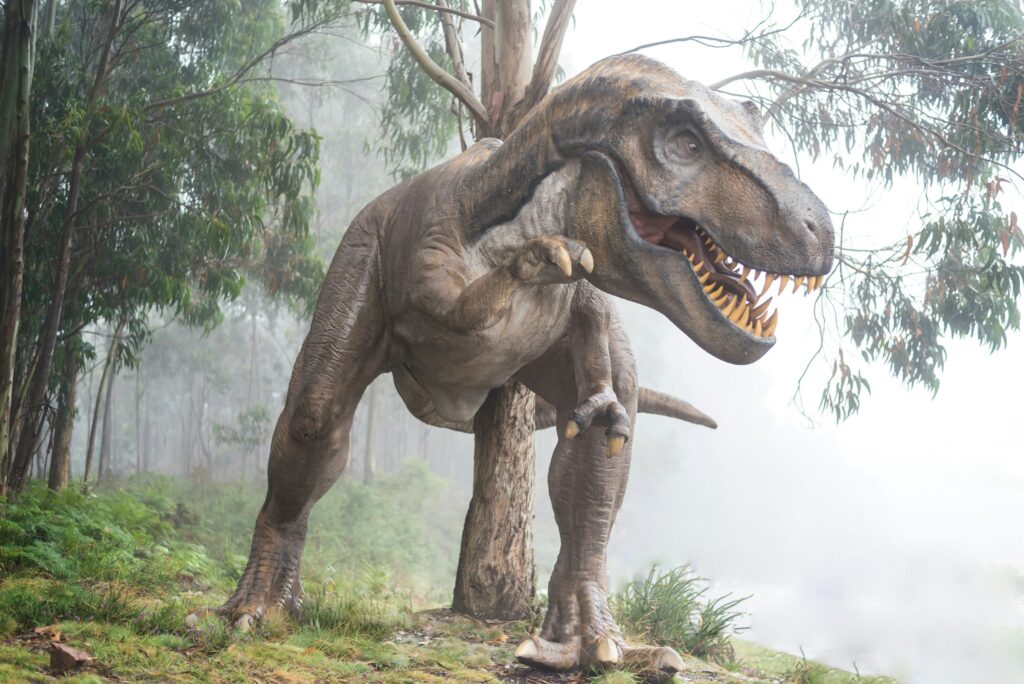
Most people think they know Tyrannosaurus rex – giant teeth locked in a permanent snarl, a top speed that could outrun a jeep, feathers or no feathers depending on which documentary aired last. Almost none of that survives contact with the actual fossil record.
Over the past few years, paleontologists have quietly walked back – or outright reversed – some of the most repeated “facts” about the tyrant king. Skull scans, bone microstructure, and one spectacularly preserved skeleton have forced entire textbooks to get rewritten, and the corrections only get stranger as you go. Here are 13 things scientists have now admitted about T. rex, counting down to the one that undid forty years of classroom teaching almost overnight.
#13 – It Probably Couldn’t Run Like the Movies Show
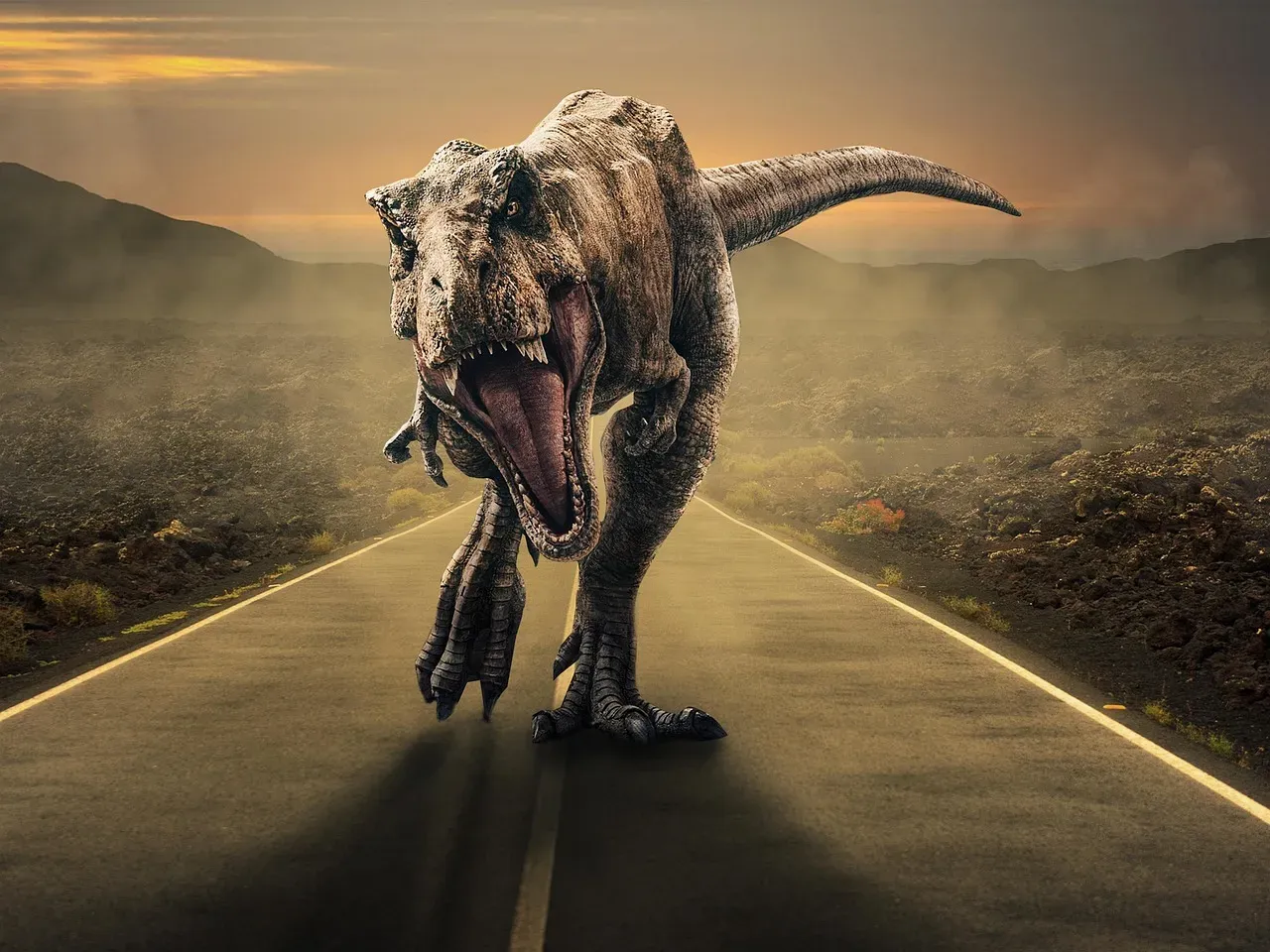
That iconic Jurassic Park scene – the one where a T. rex sprints alongside a speeding Jeep – is basically science fiction wearing a lab coat.
Biomechanical models tell a much less cinematic story. A multi-ton animal running at highway speeds would put catastrophic stress on its leg bones with every stride, meaning one bad step at full speed likely ends in a shattered femur. The math simply doesn’t support a Ferrari-chasing dinosaur.
Most researchers now picture a powerful, efficient walker instead – something built for endurance, ambush, and raw bite power rather than a dead sprint. It didn’t need to outrun anything. It only needed to out-wait it.
#12 – Its Arms Remain One of Paleontology’s Strangest Unsolved Mysteries
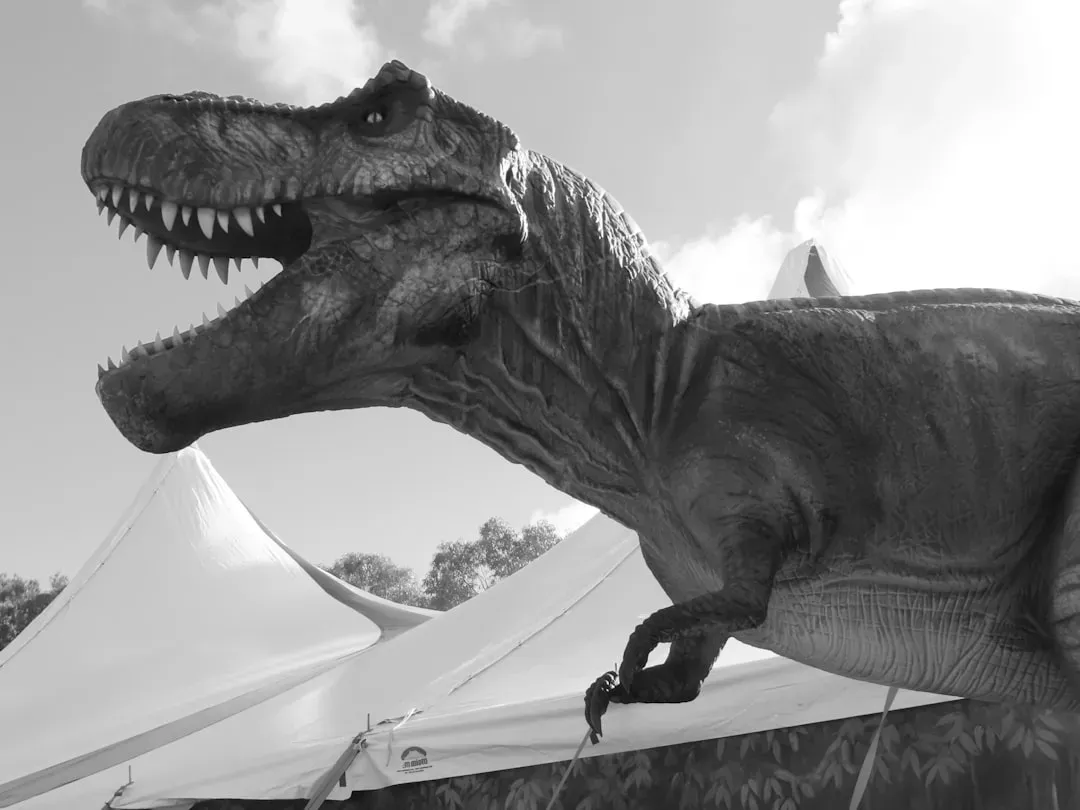
Nobody in paleontology can fully agree on why T. rex hauled around such a massive body on top of two arms that couldn’t even reach its own mouth.
The proportions are genuinely bizarre – powerful hind legs, a skull built like a wrecking ball, and then two stubby forelimbs that look borrowed from a much smaller animal. Theories range from mating grips to close-combat stabilizers to simple evolutionary leftovers that shrank once the jaws took over all the killing work, but none of these explanations has ever been confirmed.
Worth Knowing
- Arms too short to reach the mouth, yet packed with dense, robust bone
- Leading theories: mating grips, close-combat stabilizers, evolutionary leftovers
- No single theory has been confirmed by fossil evidence
- Shrank in size as jaw power took over the “killing” role
This is one of those spots where popular science quietly turns “best guess” into “settled fact.” We’d argue the “useless arms” story is lazier than the animal itself – a structure that persisted across generations of tyrannosaurs almost certainly did something, even if nobody has proven what yet.
#11 – It Was Very Likely a Cannibal
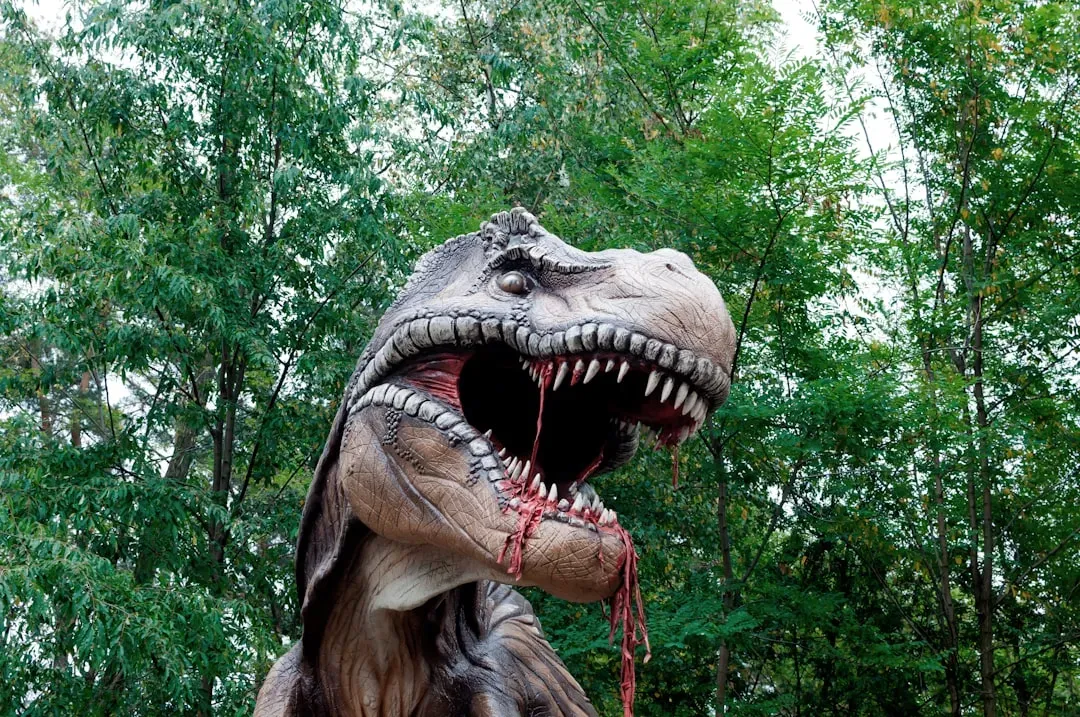
Some of the most damning evidence against T. rex’s reputation doesn’t come from prey animals at all. It comes from other T. rex.
Multiple fossils show bite marks and deep gouges matching T. rex tooth morphology, including wounds that healed – meaning the animal survived getting bitten by one of its own. Studies of bite-marked bones from Wyoming’s Lance Formation provide direct evidence of cannibalism, and researchers keep finding this same pattern across multiple specimens.
The famous skeleton nicknamed “Stan” tells its own brutal story: a bite to the back of the skull that could only have come from a bigger T. rex. These weren’t polite social disputes. They were violent, sometimes fatal encounters between animals of the same species.
#10 – Billions of Them Lived, But Almost None Left a Trace
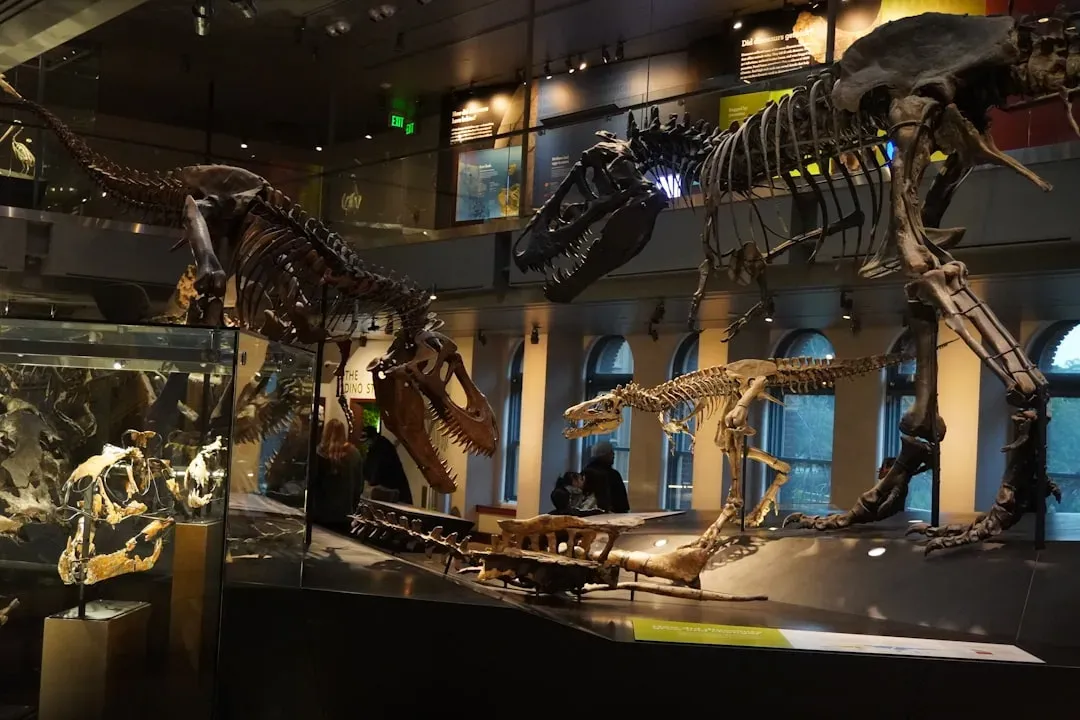
Here’s a number that should humble anyone who thinks paleontology has this animal figured out.
Roughly 2.5 billion T. rex lived and died across the 2.5 million years the species walked the earth, spanning about 127,000 generations one after another. That’s a staggering figure for an animal most people picture as rare, almost mythical, even in its own era.
Fast Facts
- ~2.5 billion T. rex existed over roughly 2.5 million years
- About 127,000 generations, one after another
- Only 1 in 80 million individuals became a fossil
- Every museum skeleton is a statistical long shot
Yet almost none of them survived into the fossil record we study today. Based on population density calculations, only about one in every 80 million T. rex individuals was ever preserved as a fossil. Every skeleton standing in every museum on Earth represents an almost impossibly lucky accident of geology.
#9 – At Any Single Moment, Only About 20,000 Walked the Earth
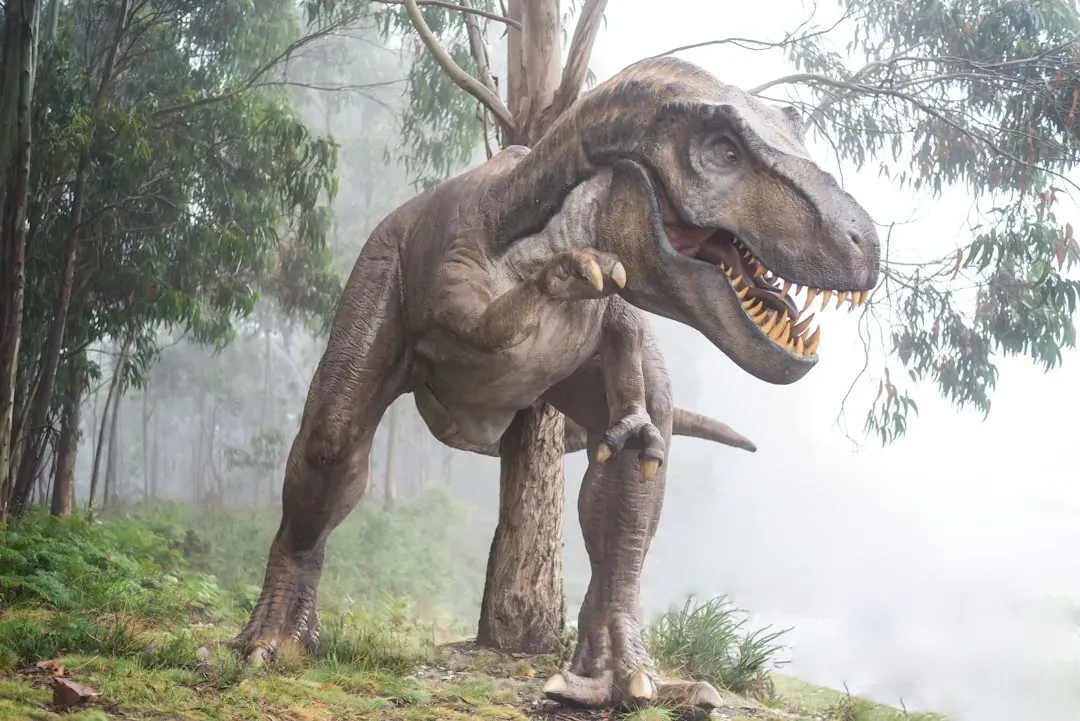
Despite the billions that existed across its full run as a species, T. rex was never exactly common at any given moment.
Berkeley researchers used body size, energy requirements, and geographic range to work backward from fossil density, landing on a standing population of about 20,000 adult T. rex alive at any one time, spread across an area roughly the size of the western half of North America. That’s not much bigger than the population of a small American town, scattered over a landmass most people would need days to drive across.
This low density explains why encountering a T. rex in the wild, statistically, would have been genuinely rare even for the animals living alongside it. The image of packs of T. rex roaming every valley simply doesn’t match the math.
#8 – Its Eyesight Rivaled a Hawk’s
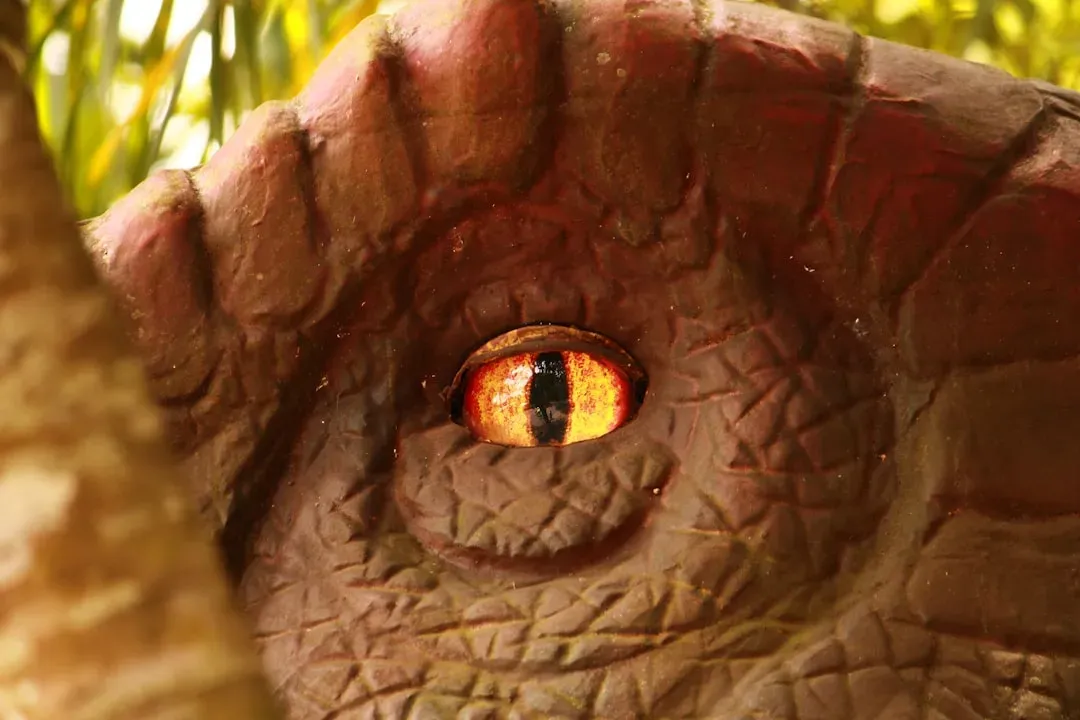
T. rex wasn’t just a nose with legs, and it definitely wasn’t stumbling around half-blind like a stage monster. Its vision was startlingly precise for an animal its size.
Its forward-facing eyes gave it a binocular overlap of about 55 degrees, wider than a modern hawk’s, which means excellent depth perception for judging distance and timing an attack. A narrow snout and deep eye sockets with cheek grooves cleared its sight lines even further, sharpening that visual edge.
A raptor-level visual system riding on a nine-ton body isn’t what most people picture when they imagine a lumbering movie monster. It suggests something closer to a calculating hunter than a mindless brute crashing through the underbrush.
#7 – It Hunted With Its Nose as Much as Its Eyes
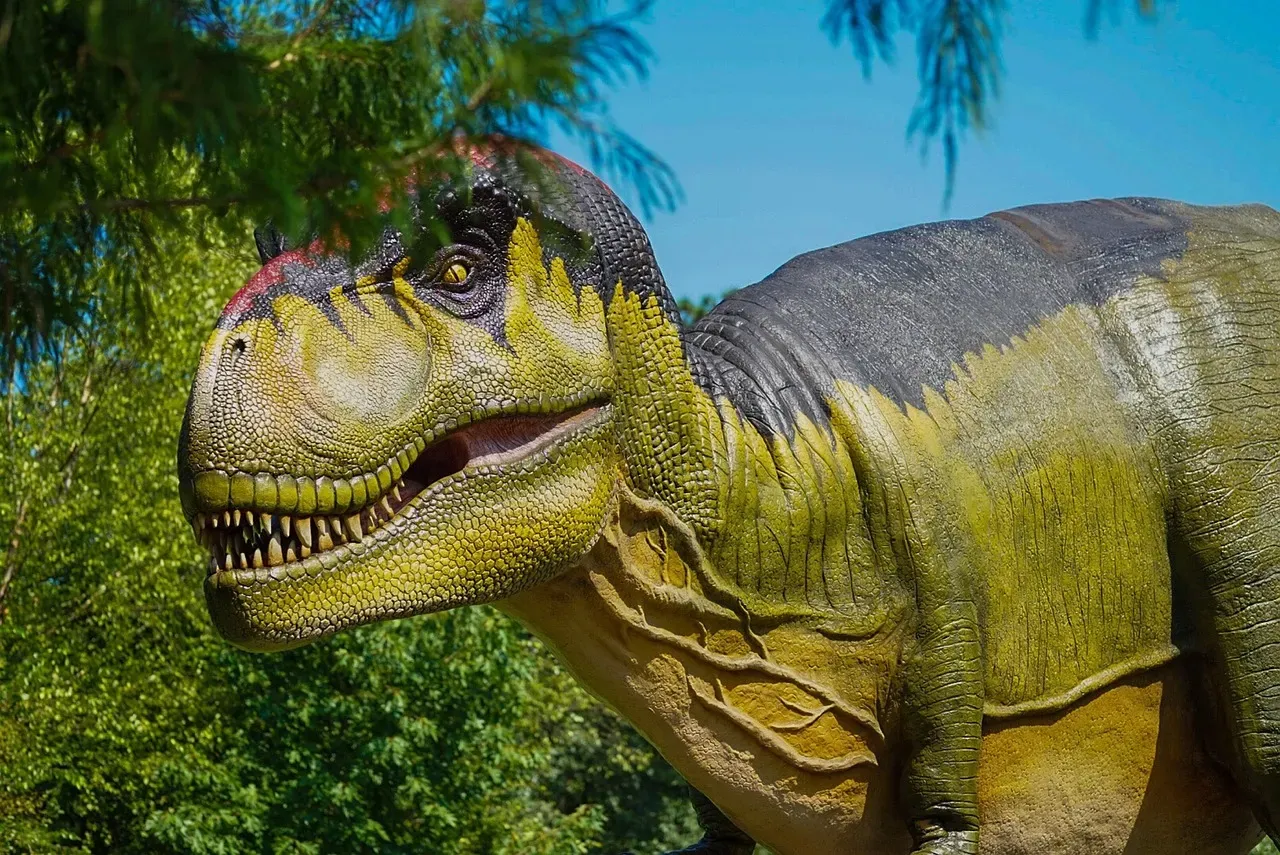
Smell may have been T. rex’s most underrated weapon, and it’s one that modern reconstructions still tend to downplay.
Brain casts show enlarged olfactory bulbs, pointing to a sense of smell comparable to a vulture’s, good enough to detect carrion from miles away and track down injured or hidden prey its eyes alone could never spot. That’s a serious sensory upgrade compared to most other large predatory dinosaurs sharing its world.
A wounded or dead animal miles out had almost no chance of staying hidden. Between the eyes and the nose, T. rex had a sensory package built to leave nothing to chance.
#6 – Its Bite Could Crush Bone Like a Breadstick
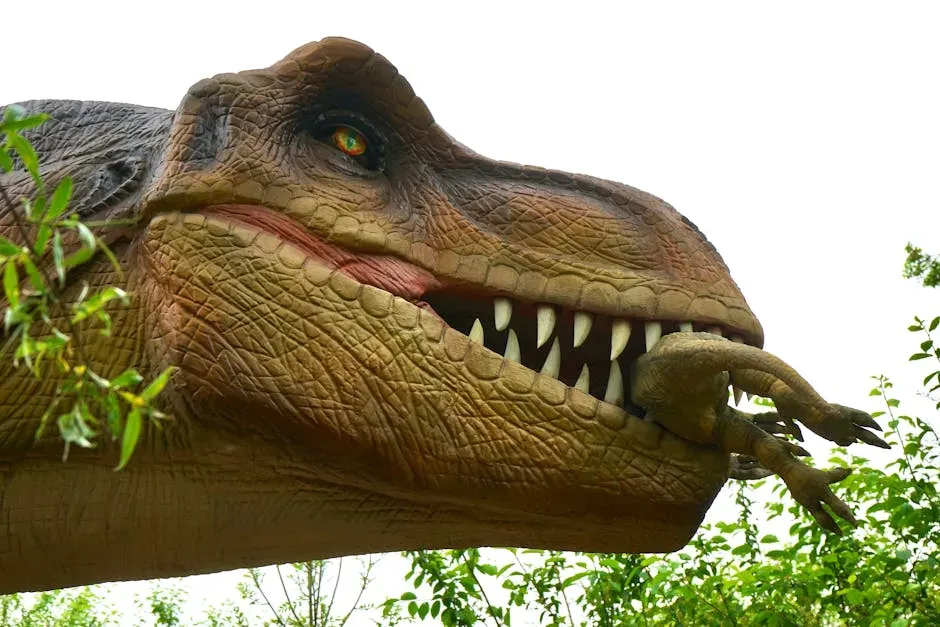
Forget slicing through flesh like a movie villain. T. rex was built to demolish entire skeletons.
Adult T. rex generated sustained bite forces estimated between 35,000 and 57,000 newtons at the back teeth, far beyond anything else that has ever walked on land. Computer models of the jaw translate that force into something like a mid-size elephant pressing its full weight down onto a single point.
Why It Stands Out
- Bite force estimated between 35,000 and 57,000 newtons
- Strongest confirmed bite of any land animal, living or extinct
- Comparable to a mid-size elephant pressing down on one point
- Routinely crushed and swallowed bone – a habit called osteophagy
No land animal, living or extinct, has ever been shown to bite harder. This wasn’t a delicate feeding strategy – T. rex routinely crushed and swallowed bone as a normal part of eating, a habit paleontologists call extreme osteophagy.
#5 – It Gained a Ton a Year, Then Growth Just Stopped
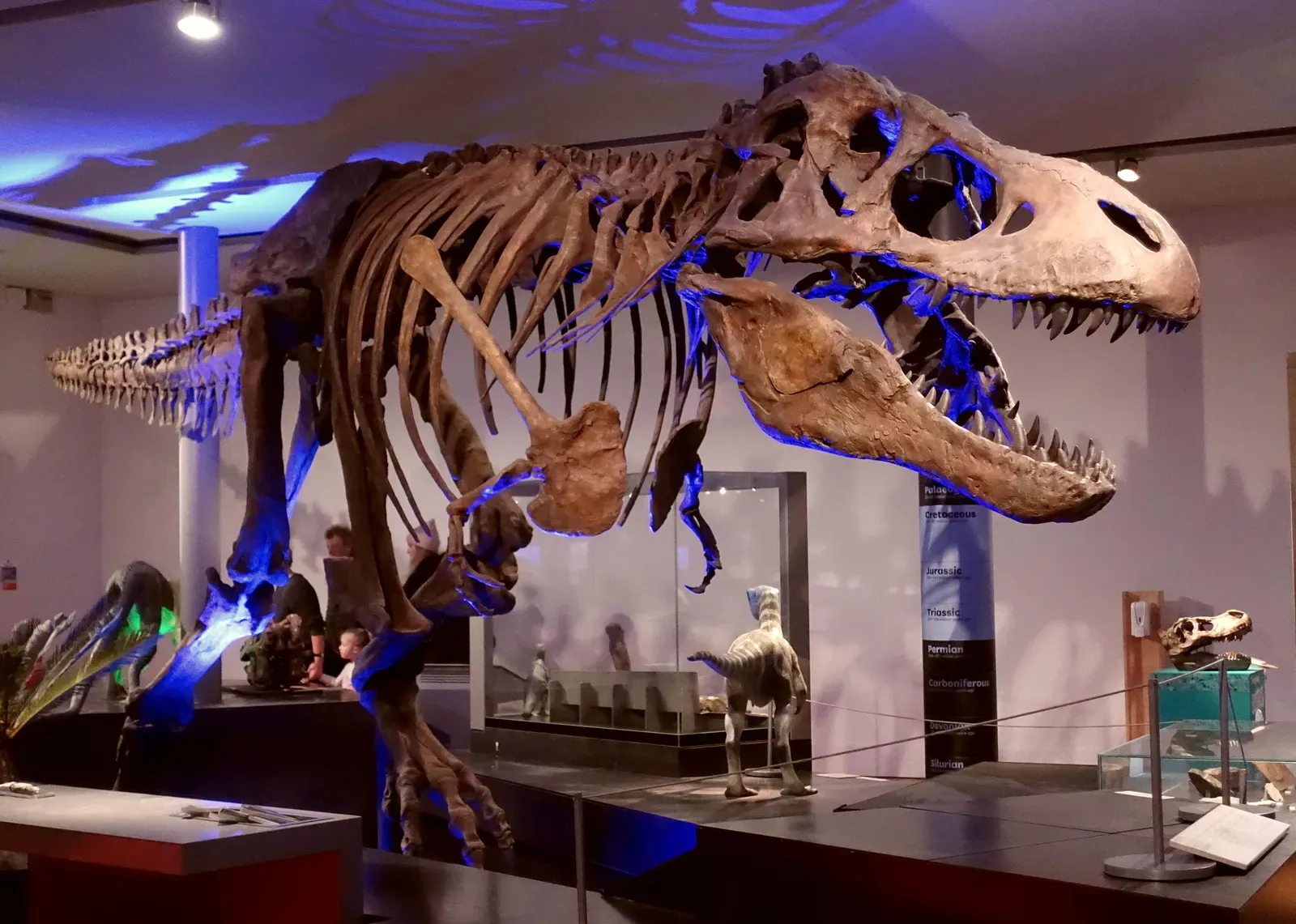
T. rex’s life story reads like a biological growth chart that broke halfway through.
Studies suggest the great tyrannosaurids hit their huge size through accelerated growth spurts, and at the peak of its adolescence, a young T. rex may have packed on the better part of a ton in a single year. That’s an almost unimaginable rate of bone and tissue production crammed into just a handful of teenage years.
Then, just as abruptly as it started, that explosive growth shut down the moment the animal reached physical maturity. A creature that gained roughly a ton a year during its teenage stretch then plateaued almost entirely for the rest of its life. It’s less “slow and steady” and more “everything at once, then done.”
#4 – Its Skin Was Scaly, Not Feathered, as an Adult
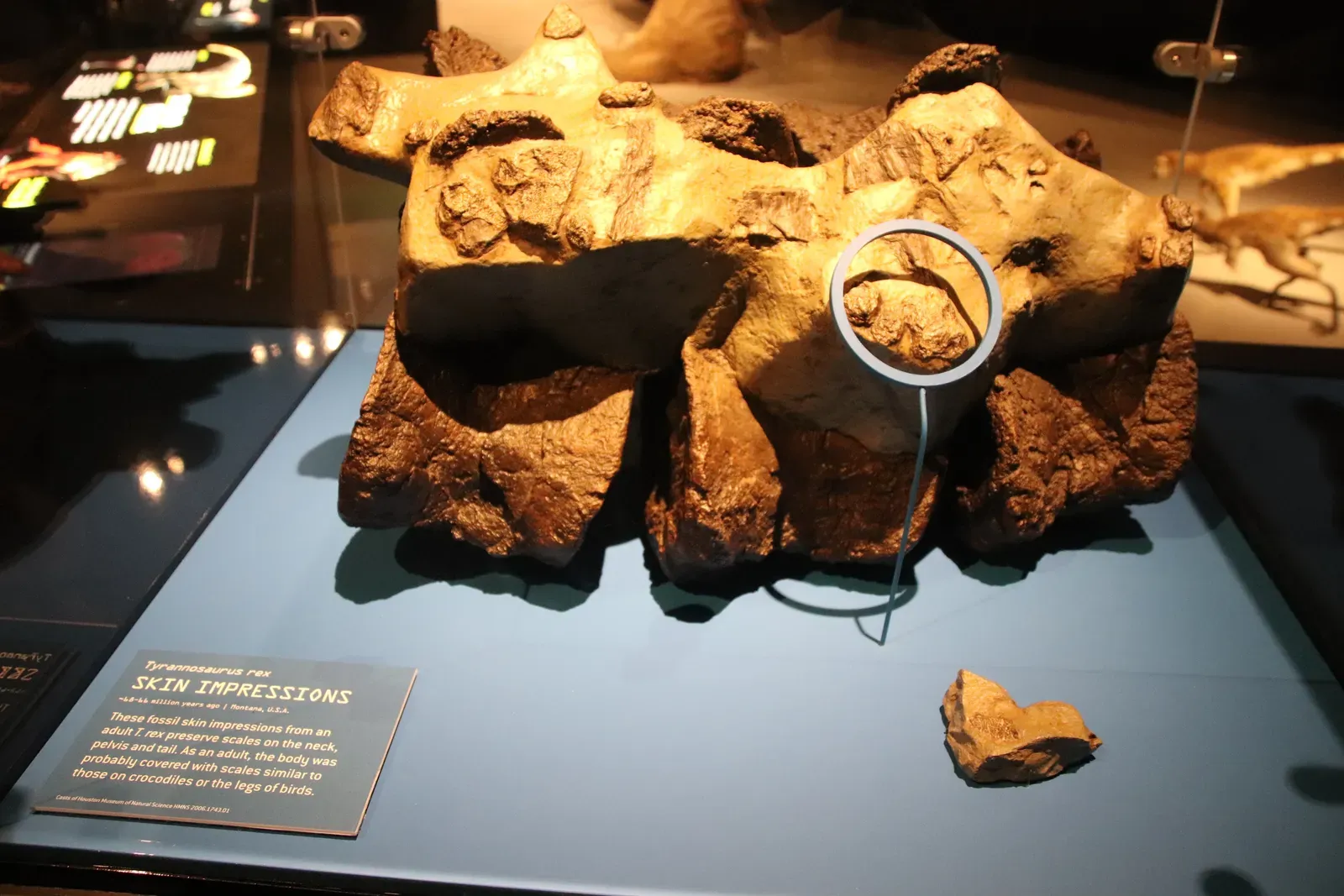
For years, feathered T. rex reconstructions dominated documentaries, textbook covers, and museum gift shop merchandise. Then actual skin fossils showed up and complicated the picture.
Researchers examining the world’s only known T. rex skin, from the neck, pelvis, and tail of a specimen nicknamed “Wyrex,” found no trace of feathers at all, just smooth, scaly skin. That’s a direct physical rebuttal to years of feathered fan art and CGI reconstructions.
Quick Compare
- Early, smaller tyrannosaurs: feathered coats confirmed by fossils
- Adult T. rex: smooth, scaly skin with no feather traces found
- Likely pattern: feathers lost as body size ballooned
- Bigger body appears linked to less insulation, not more
The twist is that this doesn’t erase feathers from the tyrannosaur family tree entirely, since plenty of earlier, smaller tyrannosaurs clearly had them. The likely story is that tyrannosaurs evolved a feathery coat early on, then lost it as their bodies ballooned in size. Bigger apparently meant losing insulation, not gaining it, which means Jurassic Park’s classic scaly look was closer to correct than a decade of “feathered dinosaur renaissance” art ever gave it credit for.
#3 – Its Teeth Were Hidden Behind Lips, Not Bared Like a Movie Villain
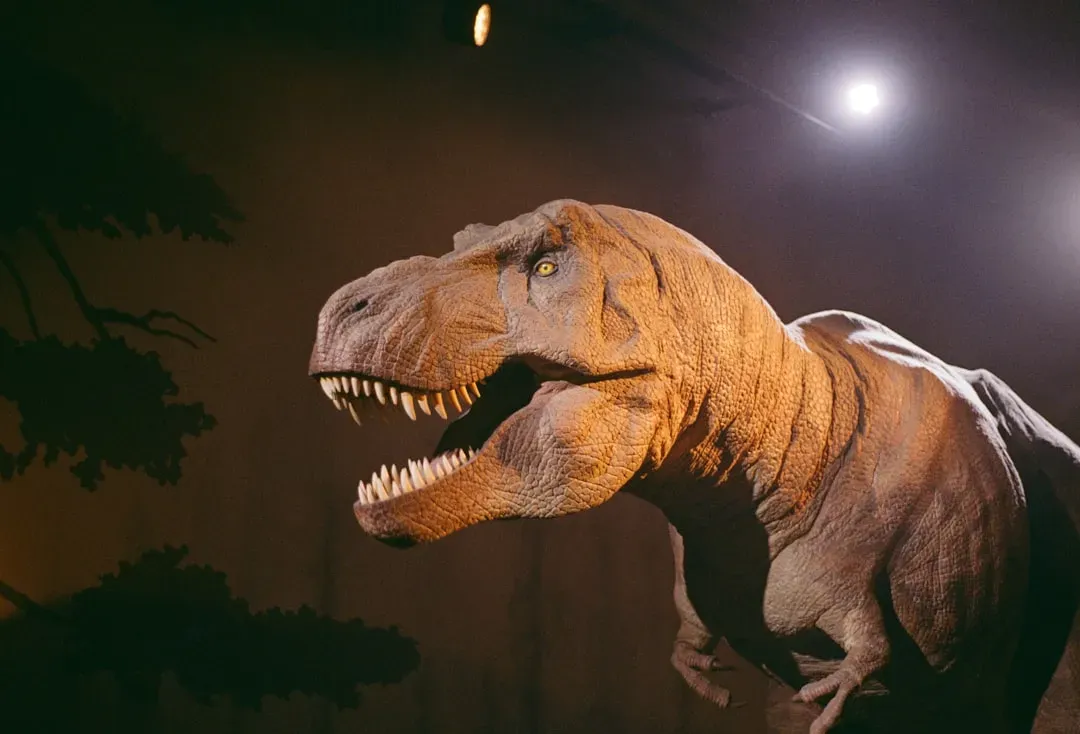
That permanent, banana-toothed snarl plastered across movie posters and toy packaging for thirty years? It’s almost certainly wrong.
Paleontologists comparing tooth-to-skull ratios in living lizards with enamel wear patterns on fossilized theropod teeth concluded that T. rex, along with many other carnivorous dinosaurs, likely had lips covering its teeth. A noticeably thin layer of enamel on the outer surface of a related theropod’s tooth only makes sense if something, like scaly, lizard-style lips, was shielding it from constant exposure to open air.
A lip covering the teeth means T. rex probably couldn’t snarl the way it’s been shown on every movie poster since 1993. It’s a small anatomical detail with a huge visual consequence – a fundamental redesign of the most recognizable face in paleontology.
#2 – Some Evidence Suggests They Traveled in Groups
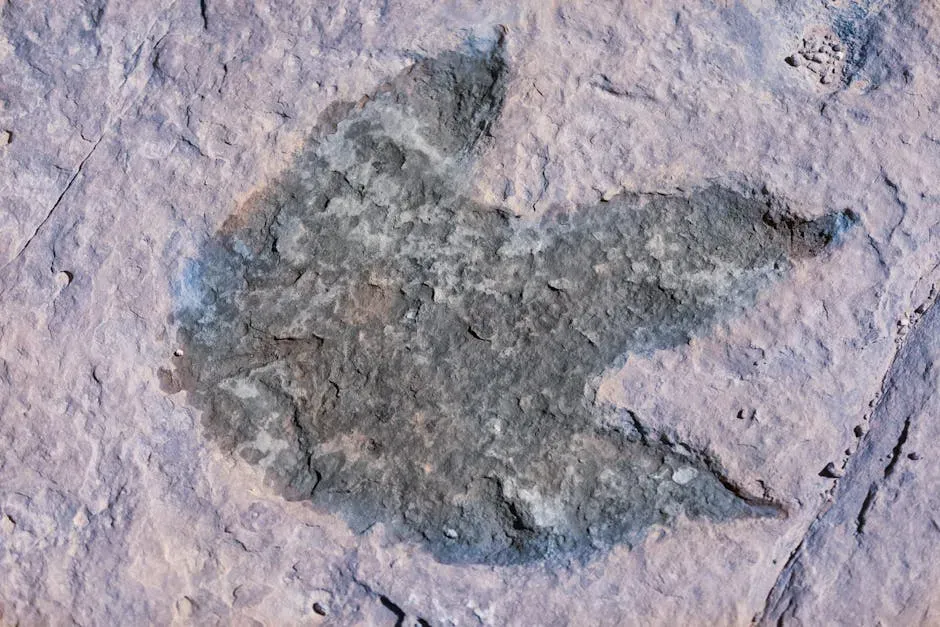
The lone-hunter image of T. rex might be overly simplistic, and the clue didn’t come from bones at all. It came from footprints.
It’s possible some tyrannosaurid species were gregarious, maybe even pack-hunters. The first known tyrannosaurid trackway, found in a Late Cretaceous formation in British Columbia, shows three animals apparently traveling together, moving in the same direction at the same time. That’s a difficult thing to write off as pure coincidence.
That said, a single trackway is thin evidence for a full “wolf-pack” narrative, and plenty of paleontologists remain skeptical that headline writers ran well ahead of what three sets of footprints can actually prove. Walking together once doesn’t prove coordinated hunting, shared kills, or social bonds. The honest answer is that this remains an open question, not a settled fact.
#1 – The “Teenage T. Rex” Everyone Believed In Never Actually Existed
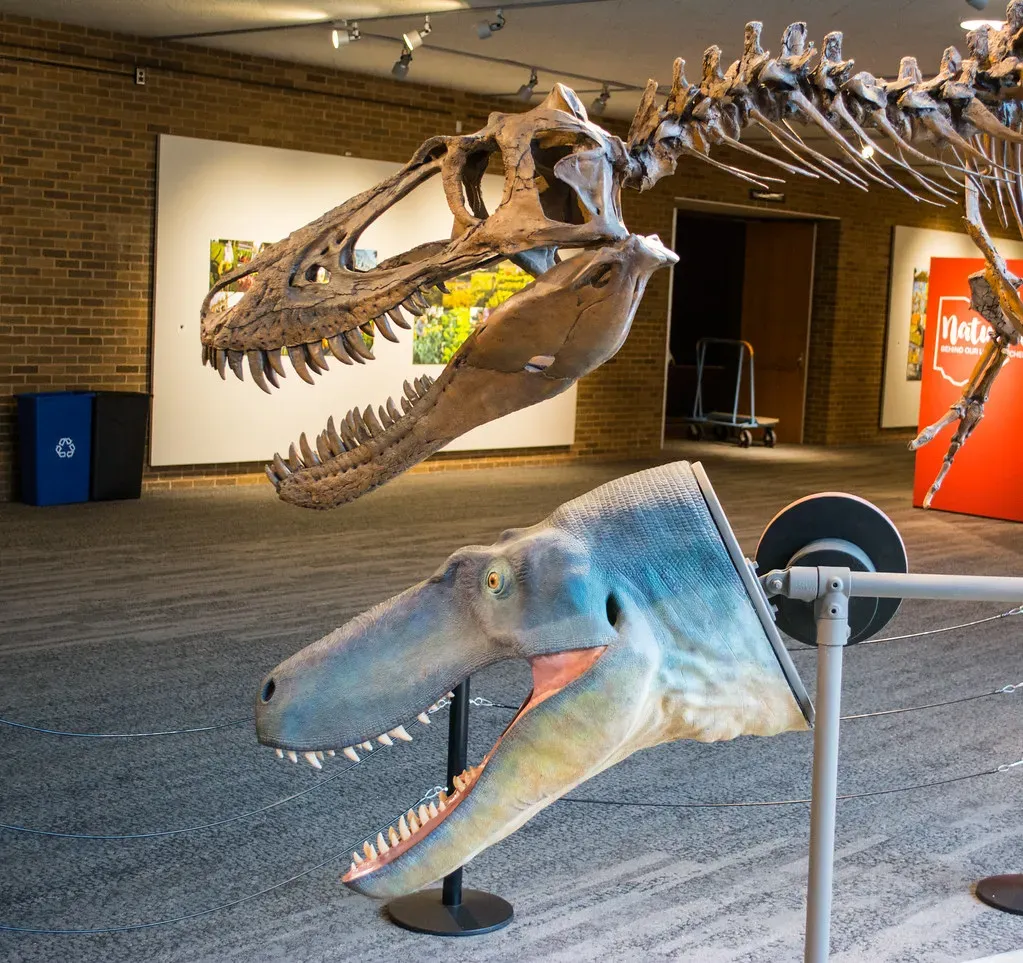
For more than forty years, one of paleontology’s biggest arguments centered on a single small skull, and scientists just admitted they’d been wrong about it the entire time.
Researchers led by Christopher Griffin of Princeton University examined the hyoid bone still intact with the disputed Nanotyrannus holotype skull and determined the animal was a fully grown adult when it died, not a juvenile T. rex still growing into its adult frame, which had been the field’s dominant assumption for decades.
That assumption just collapsed. Fused spinal sutures and growth rings showed the animal was fully mature at around 20 years old, and its skeleton carried features, including larger forelimbs, more teeth, fewer tail vertebrae, and distinct skull nerve patterns, that were locked in early in development and are biologically incompatible with T. rex.
At a Glance
- Nanotyrannus holotype: fully mature at about 20 years old
- Larger forelimbs and more teeth than T. rex
- Fewer tail vertebrae and distinct skull nerve patterns
- Features locked in early, ruling out a “juvenile T. rex” explanation
An entire “awkward teenager” phase of T. rex biology, taught in classrooms and documentaries for generations, turns out to describe a completely different animal. Nanotyrannus was real, distinct, and living right alongside the tyrant king it had been mistaken for all along.
The Bottom Line
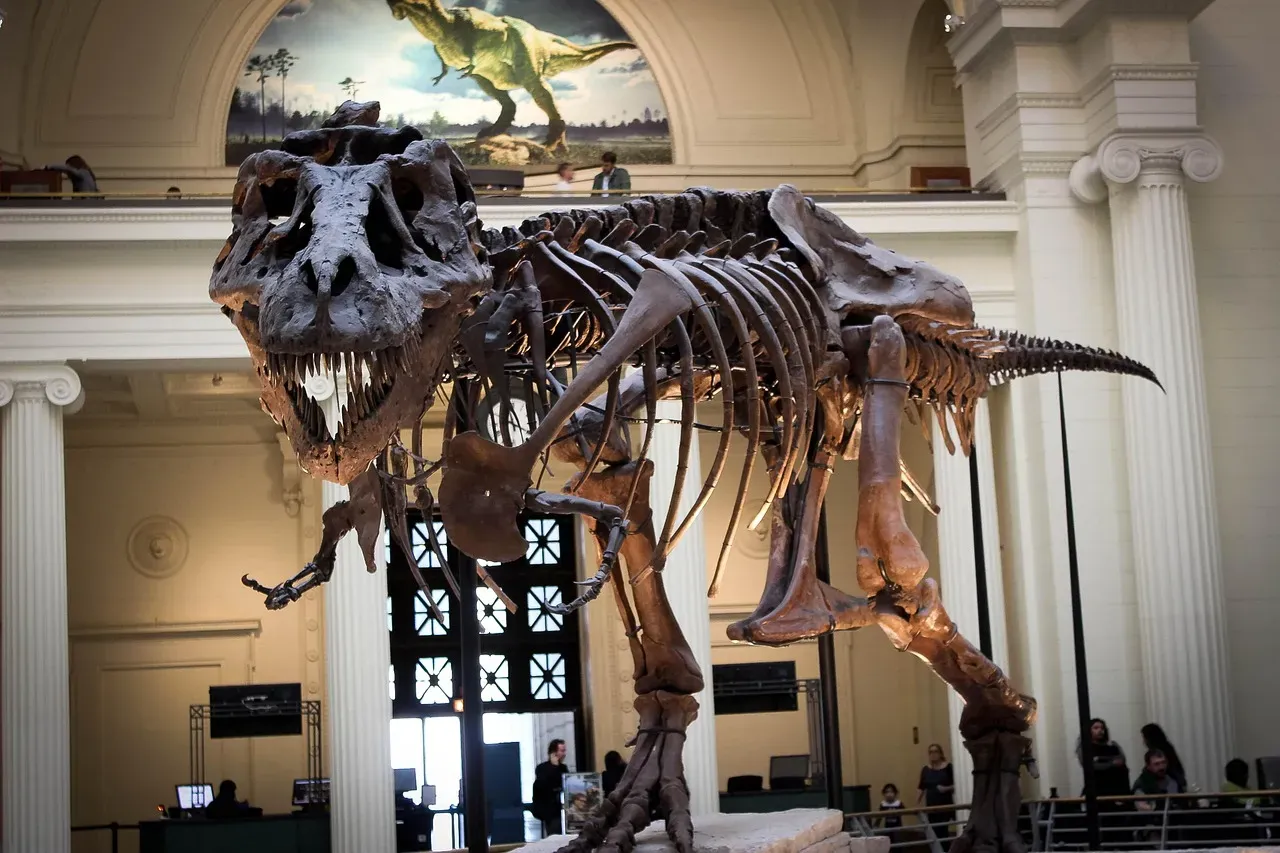
The T. rex from your childhood textbook – snarling teeth, feathered back, terrifying sprint, a lone predator stalking teenage doubles of itself – barely resembles the animal paleontologists describe today.
The biggest shock isn’t any single correction. It’s how many stacked up at once, from scaly lips to a forty-year Nanotyrannus debate that just quietly closed. Science doesn’t get embarrassed admitting it was wrong; that’s the system working exactly as intended.
What actually bugs us is how slowly the corrected version reaches classrooms and documentaries compared to how fast the original myths spread in the first place. Which of these flipped facts surprised you the most? Drop it in the comments.