Most people assume “extinct” means gone forever – a scientific full stop, no exceptions. But that assumption is wrong more often than wildlife agencies like to admit. Around the world, creatures officially written off in textbooks, IUCN reports, and government registries keep turning up in fishing nets, trail cameras, and startled eyewitness accounts decades – sometimes centuries – after their supposed extinction date.
Some of these comebacks are scientifically confirmed, backed by DNA tests and photographs solid enough to rewrite the record books. Others remain hotly disputed, fueling arguments between hopeful conservationists and skeptical biologists who’ve heard one too many blurry-photo claims. Here’s what the data, the field researchers, and the paper trail actually say about the twelve animals that refuse to stay extinct – starting with a bird nobody even realized was missing.
#12 – The New Zealand Storm Petrel That “Died Out” 150 Years Before Anyone Noticed
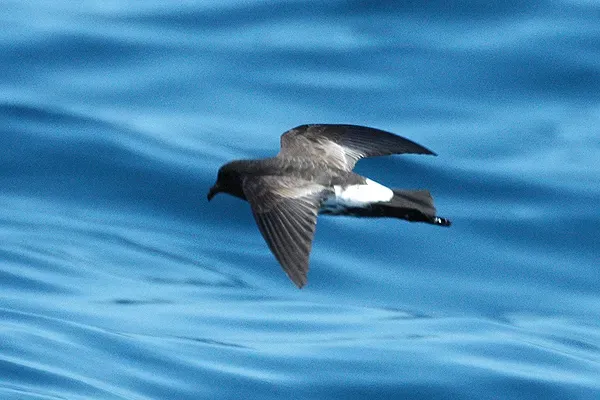
For roughly 150 years, scientists assumed the New Zealand storm petrel had vanished sometime in the mid-1800s, known only from a handful of museum specimens collected before Charles Darwin published On the Origin of Species. It wasn’t studied as a living population – it was studied as a ghost, a footnote in ornithological history.
Then, in 2003, birdwatchers spotted small seabirds behaving strangely off the coast of New Zealand’s North Island. DNA testing confirmed what nobody expected: the species had been alive the entire time, breeding quietly on predator-free islets nobody had bothered to search. It’s one of the cleanest rediscovery stories in modern ornithology – no disputed footprints, just a population that had gone unnoticed by science for a century and a half. Up next is a tortoise that waited even longer to prove everyone wrong.
#11 – The Giant Tortoise That Waited Over 100 Years to Be Found Again
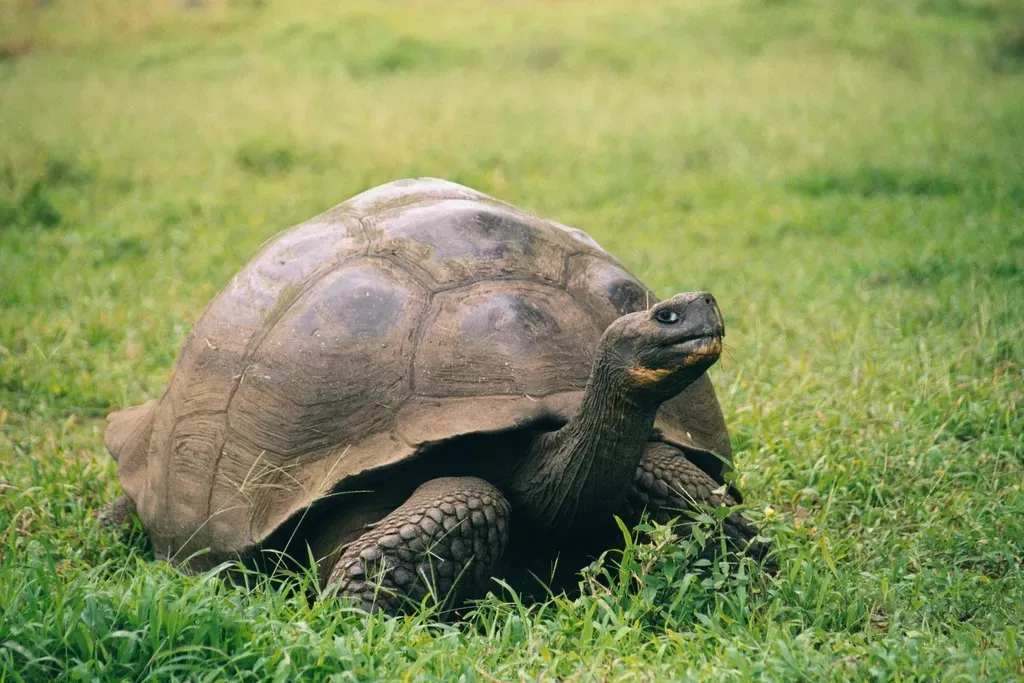
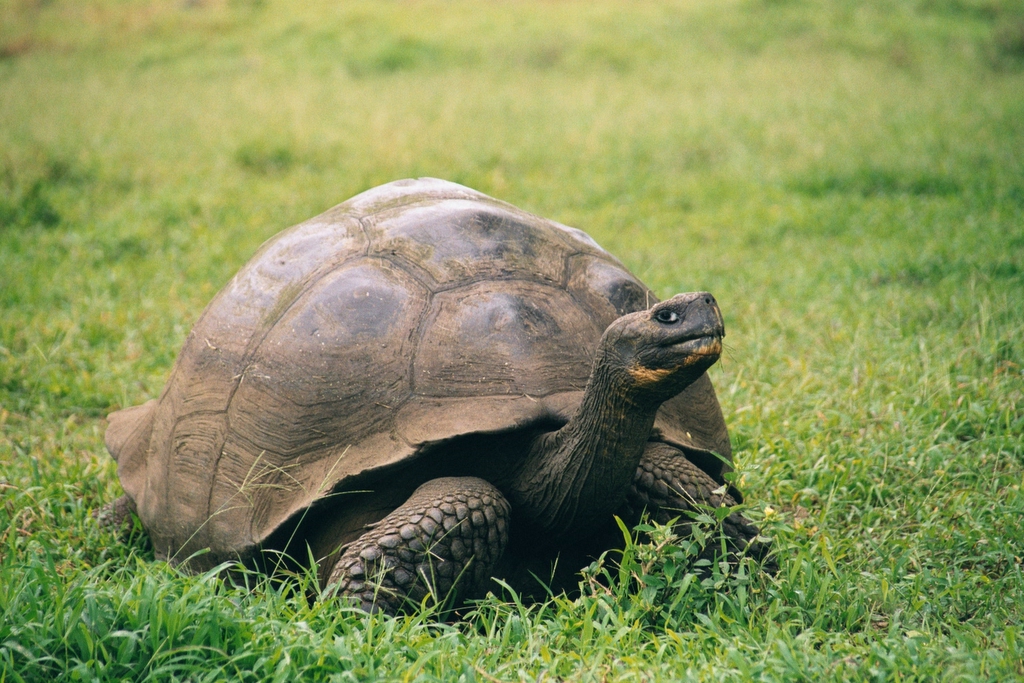
The Fernandina giant tortoise hadn’t been confirmed alive since a single specimen was collected in 1906 on its remote Galápagos island. For more than a century, scientists treated it as a cautionary tale – a species erased before it could even be properly studied, a casualty of invasive predators and volcanic terrain nobody wanted to cross.
In 2019, a research expedition into Fernandina Island’s brutal lava fields found a lone female tortoise, alive and moving. Genetic testing confirmed she belonged to the species presumed gone for over 100 years, reigniting a search for more individuals on one of the most inhospitable islands in the Galápagos. Researchers now suspect a small population may still be surviving in the volcanic interior, effectively unreachable by predators – and largely unreachable by scientists too.
Fast Facts
- Last confirmed specimen before rediscovery: 1906
- Gap between sightings: over 100 years
- Rediscovery: 2019, a single adult female found alive
- Habitat: Fernandina Island’s volcanic lava fields, among the most inaccessible terrain in the Galápagos
The next bird on this list had an even stranger reason for its disappearance.
#10 – The Bird Bermuda’s Own Colonists Wiped Out By 1620
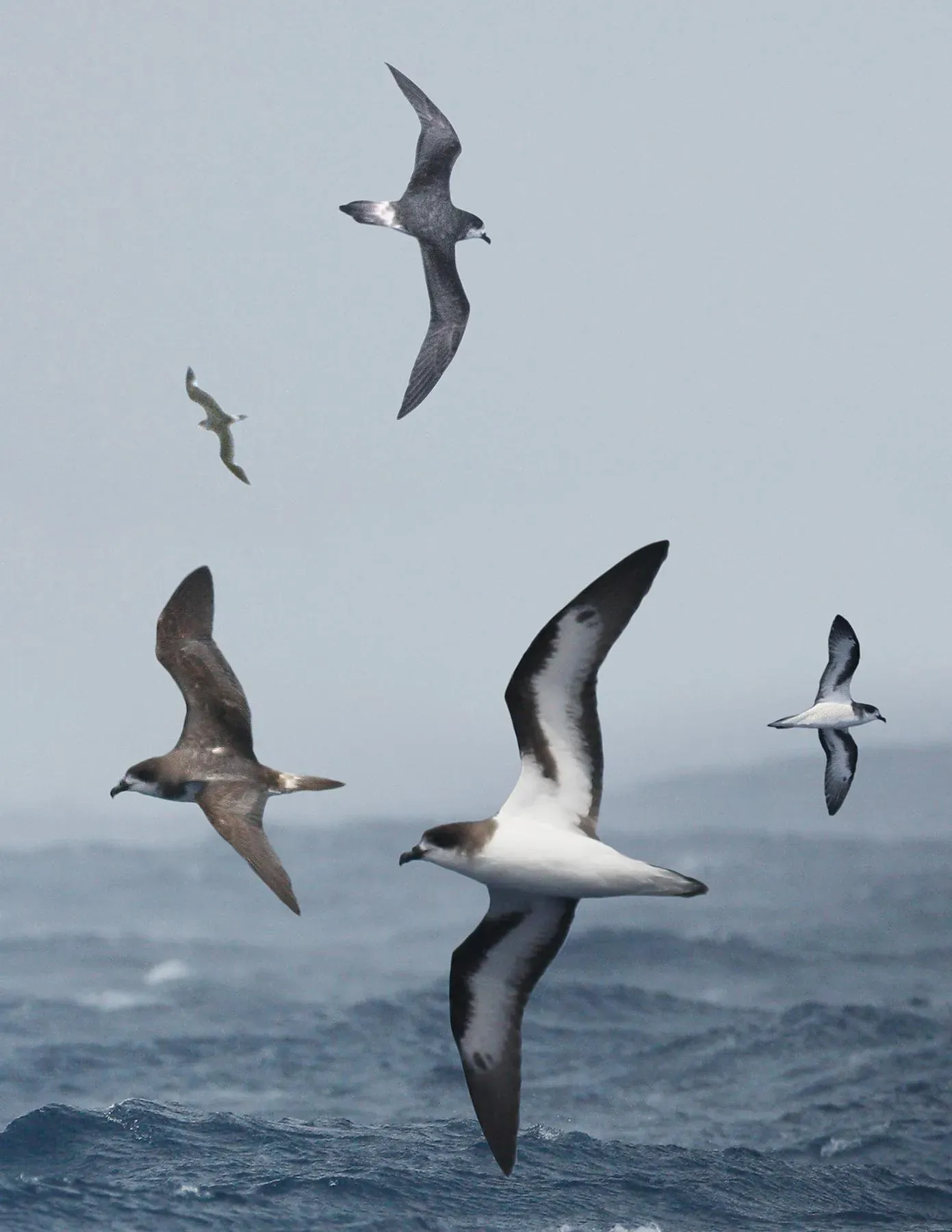
The Bermuda petrel, known locally as the cahow, was once so plentiful that its eerie nighttime calls reportedly convinced superstitious European sailors the islands were haunted by devils. That abundance didn’t last. Colonization in the early 1600s brought rats, cats, dogs, and pigs that tore through the ground-nesting colonies, and the species was assumed extinct by the 1620s.
For over three centuries, the cahow existed only in old ship logs and legend. Then, in 1951, researchers stumbled onto eighteen nesting pairs still clinging to survival – a genuine “Lazarus species” moment, a creature found alive after 300 years of presumed extinction. The recovery has been so successful that by 2022, conservationists reported over 150 breeding pairs, a real turnaround built on decades of patient habitat restoration. Not every comeback story has such a happy ending, though – just ask Japan.
#9 – Japan’s River Otter, Extinct on Paper, Rumored on Riverbanks
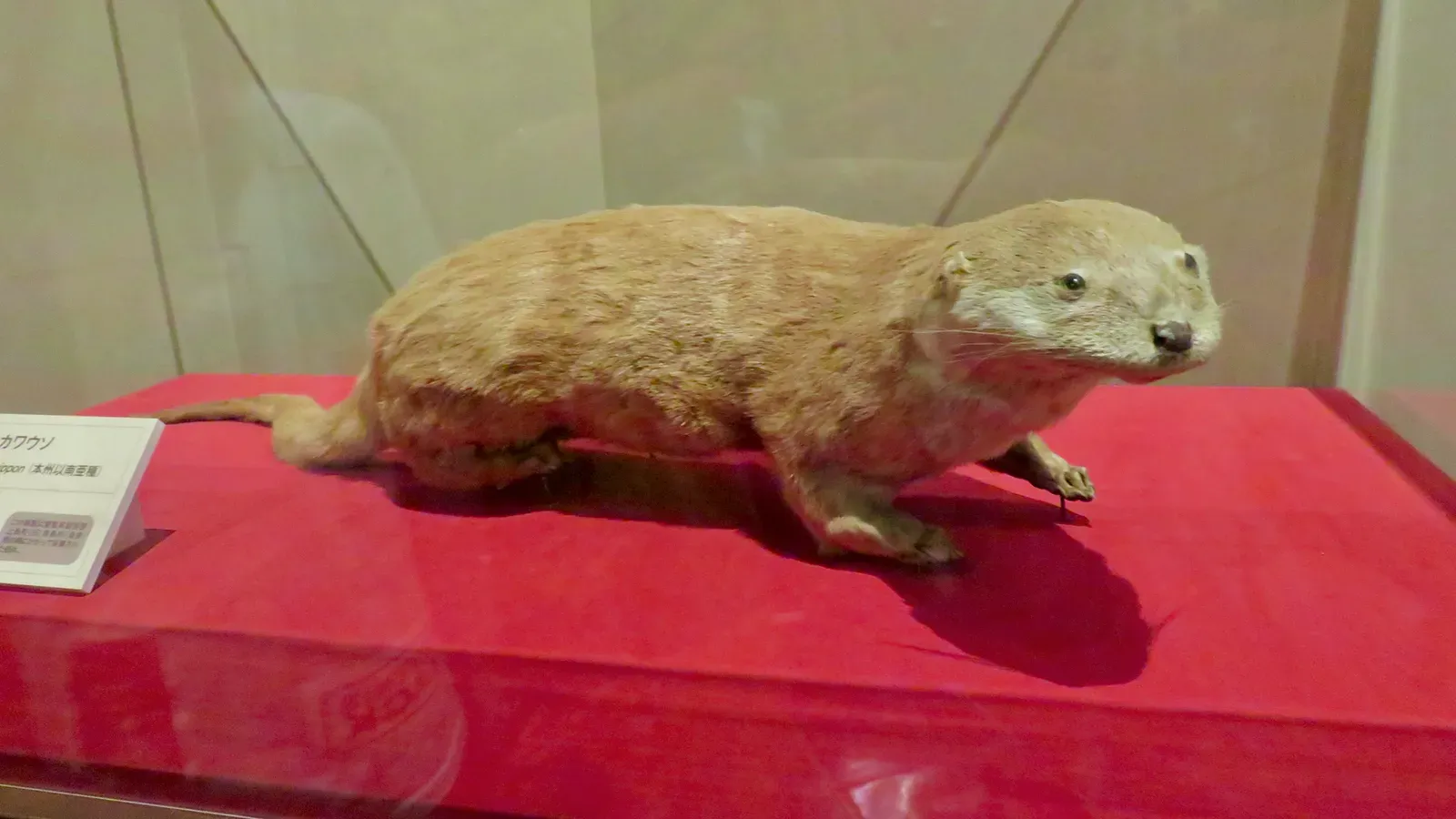
The Japanese otter was last confirmed in the Seto Inland Sea in 1964, and again in the Uwa Sea in 1972 and 1973, before Japan’s Ministry of the Environment officially declared it extinct on August 28, 2012. That’s a startlingly recent extinction date for a creature that once symbolized entire coastal ecosystems in southern Japan.
Since the official declaration, unconfirmed reports have kept surfacing from fishermen and hikers along remote stretches of Shikoku and western Japan, though none have produced the hard evidence – a clear photo, a genetic sample – that would force the government to reverse its ruling. Local folklore, which once cast the otter as a shapeshifting trickster, only adds fuel to the rumor mill. Most biologists remain deeply skeptical, but the emotional pull of “maybe one is still out there” keeps search efforts alive in prefectures that still use the otter as an official symbol. The next disappearance happened on a much bigger, much sadder scale.
#8 – The Arctic Shorebird That Vanished From Migration Routes
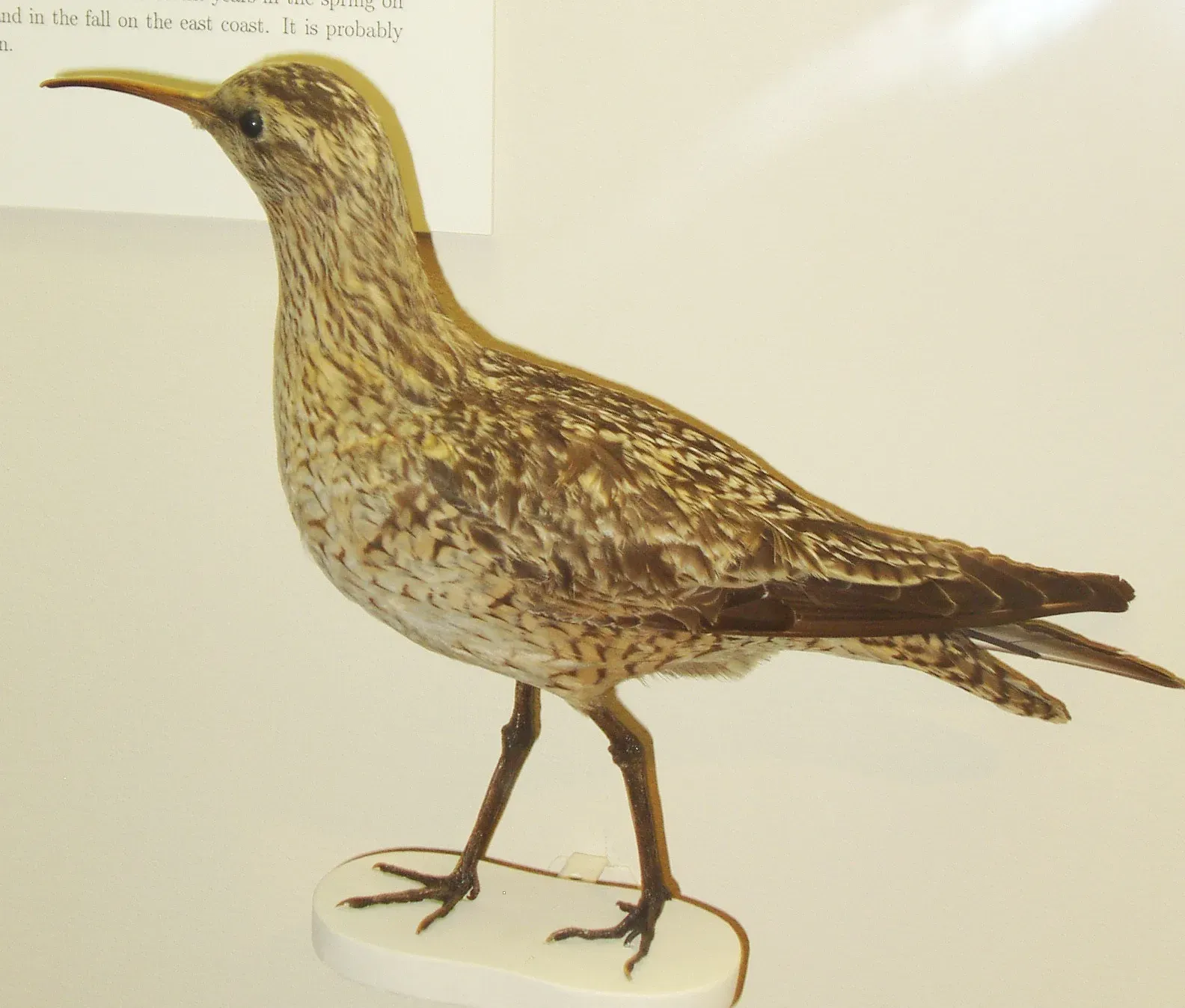
The Eskimo curlew once migrated in flocks so massive that 19th-century hunters described skies darkened by their numbers over the American prairies. Relentless market hunting and habitat loss collapsed the population so fast that by the mid-20th century, sightings had gone from a seasonal certainty to a vanishingly rare event.
The last widely accepted sighting came in the 1960s, and most ornithologists quietly consider the species functionally extinct today. Yet disputed reports have trickled in for decades since – birders in remote Texas, the Canadian Arctic, and even South America occasionally claim glimpses of a curlew matching its distinctive profile. None of these claims has ever been backed by a photograph clear enough to satisfy skeptics, and the bird’s resemblance to the far more common whimbrel makes misidentification a constant risk. Most experts treat every sighting as probable mistaken identity – but in China, an entire tiger subspecies is caught in the exact same argument.
#7 – The Tiger Subspecies China Insists Might Still Be Hiding
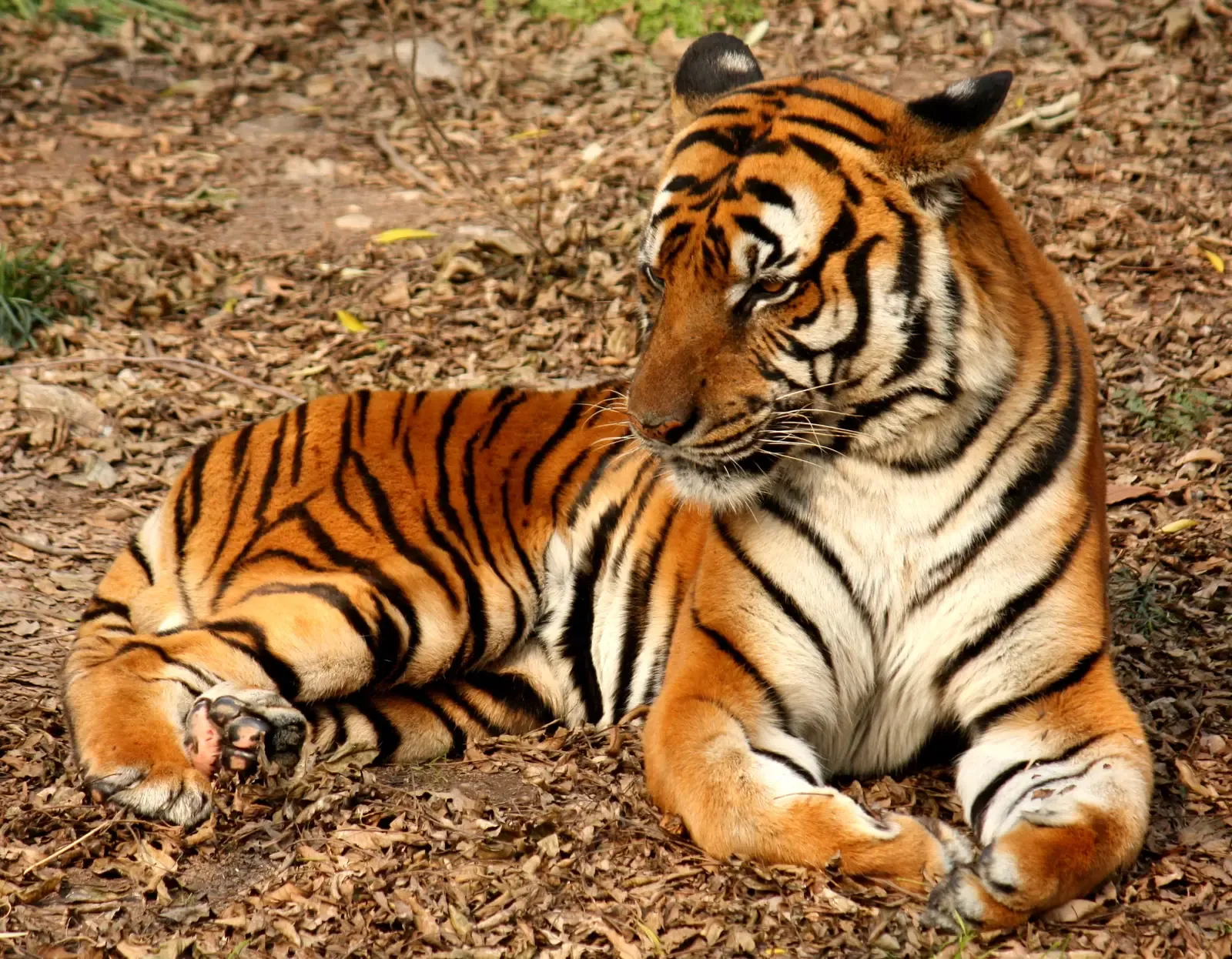
The South China tiger was declared functionally extinct in the wild after decades without a single confirmed sighting, despite the subspecies numbering in the thousands just a century earlier. Poaching, deforestation, and government-sanctioned “pest control” campaigns in the mid-20th century gutted the population before real conservation protections ever arrived.
Since that assessment, local reports of pugmarks, livestock kills, and blurry trail-camera images have periodically surfaced in mountainous provinces like Hunan and Jiangxi, sparking brief waves of media excitement followed by scientific disappointment. Every piece of physical “evidence” submitted so far has failed independent verification, with most experts attributing the images to leopards or domestic dogs. China still maintains captive breeding populations descended from zoo animals and occasionally floats rewilding proposals – a tacit admission the subspecies is likely gone from the wild, even if hope for a few wild survivors refuses to fully die.
Worth Knowing
- Population a century ago: numbered in the thousands
- Current wild status: functionally extinct by most official assessments
- Common misidentification culprits: leopards and domestic dogs
- China still runs captive breeding programs with occasional rewilding proposals
A cousin of this tiger has an even stranger twist waiting in its DNA.
#6 – The Caspian Tiger That Central Asia Won’t Let Go Of
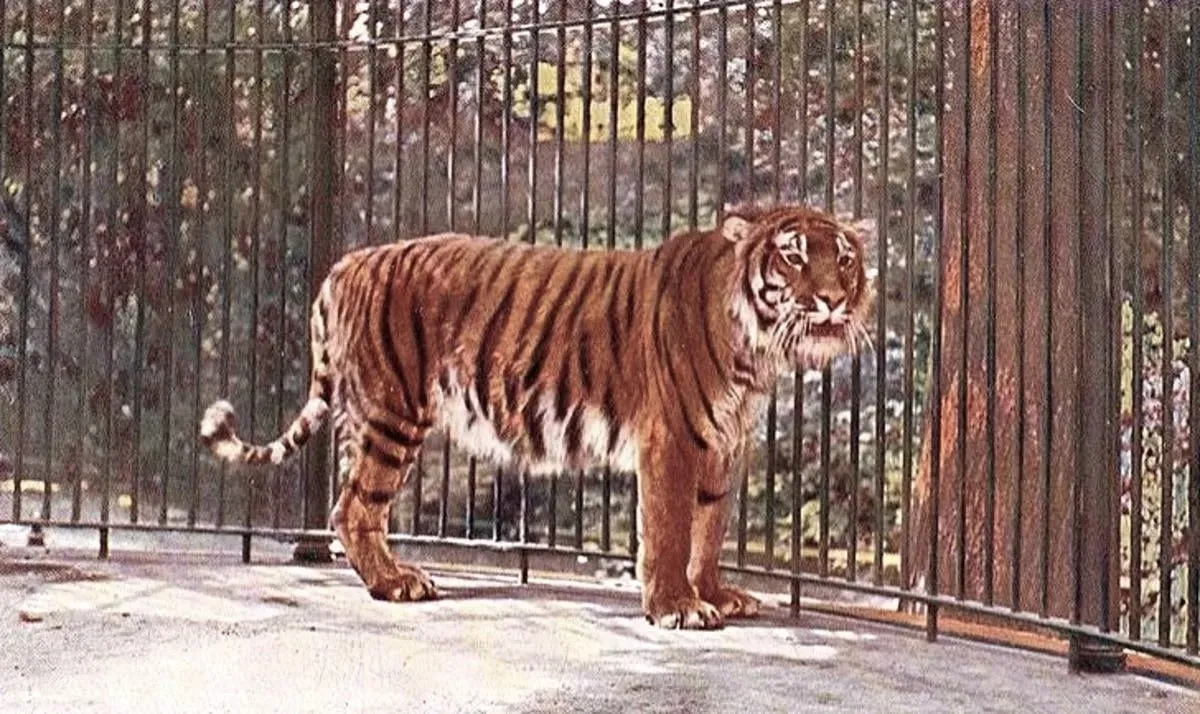
The Caspian tiger once roamed a vast range stretching from Turkey through Iran and Afghanistan into Central Asia, making it one of the largest cat subspecies ever recorded. Habitat destruction, prey collapse, and organized hunting campaigns pushed it to extinction by the 1970s, according to most international assessments.
Despite that official ruling, occasional unverified reports of tiger-like tracks and livestock attacks have surfaced from remote border regions of Iran and Turkey ever since. Genetic studies have since shown the Caspian tiger was nearly identical to the Siberian tiger – a discovery so compelling that conservationists have launched an actual rewilding project, reintroducing Siberian tigers into the Central Asian landscapes the Caspian subspecies once called home. No verified wild Caspian tiger has been documented since the extinction ruling, but that genetic near-identity keeps the “what if a few survived undetected” conversation alive among regional wildlife officials. What happened next in China’s Yangtze River, though, sounds almost too dramatic to be real.
#5 – The Dolphin Declared Extinct, Then Filmed Breaching Months Later
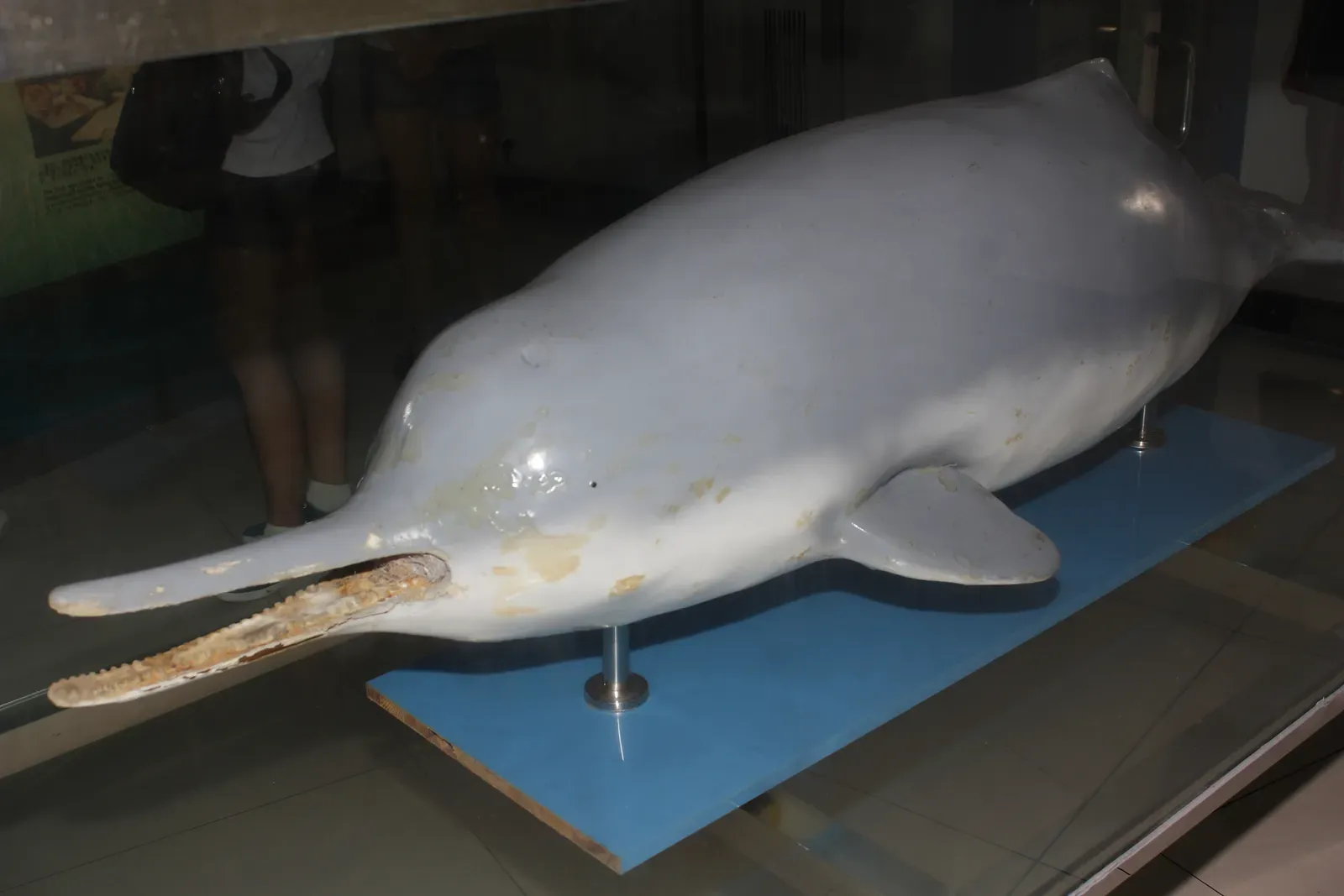
The baiji, or Yangtze River dolphin, spent 20 million years as the sole occupant of its evolutionary niche before industrial shipping, overfishing, and pollution collapsed its population within a few human generations. A dedicated six-week expedition in 2006 failed to find a single one, and the species was formally pronounced extinct in 2007.
What happened next stunned researchers. Months after that grim verdict, amateur investigators spotted what they believed was a baiji breaching near Wuhu, in Anhui province, in full view of their boat. Scientists split down the middle – some called it a legitimate second chance, others noted the last confirmed sighting was back in 2002 and dismissed later claims as cases of mistaken identity with the more common finless porpoise. Alleged sightings have continued to trickle in as recently as 2016, though none have been independently verified, leaving the baiji suspended in a strange scientific limbo between “extinct” and “we really hope not.”
Quick Compare
- Baiji: long, narrow beak, small eyes, pale blue-gray body
- Finless porpoise: rounded head, no dorsal fin, darker gray coloring
- Baiji’s last confirmed sighting: 2002
- Formal extinction declaration: 2007, following a fruitless 2006 survey
The next bird on this list has kept an entire government agency from finalizing its own paperwork.
#4 – The “Lord God Bird” That Refuses a Final Verdict
![#4 - The “Lord God Bird” That Refuses a Final Verdict (By Original photo by Arthur A. Allen, 1935 [1], watercolored by Jerry A. Payne, USDA-ARS, CC BY 3.0 us)](https://nvmwebsites-budwg5g9avh3epea.z03.azurefd.net/dinoworld/974a3d1908f792279b2cb4fcf04a64f6.webp)
Few extinction cases have generated more scientific drama than the ivory-billed woodpecker. More than sixty years after the last confirmed U.S. sighting, a kayaker gliding through an Arkansas bayou spotted an unusually large woodpecker with a pointed red crest, a long neck, and distinctive white patches on its folded wings. A research team took the encounter seriously enough to announce, on April 28, 2005, that at least one male ivory-bill had survived in the vast bottomland swamp forest of the Big Woods.
Skeptics immediately countered that the bird could have simply been a pileated woodpecker, a common look-alike, and the debate never fully resolved. By 2021, federal wildlife officials seemed ready to make it official, citing ‘the best scientific and commercial data available’ as grounds to declare the species extinct. That should have been the end of the story – except the government has now postponed the extinction declaration multiple times since, because the evidence, while never conclusive, keeps refusing to fully disappear either. The next entry, though, actually delivered the photographic proof this bird never could.
#3 – The Parrot That Vanished for 100 Years and Came Back With Photographic Proof
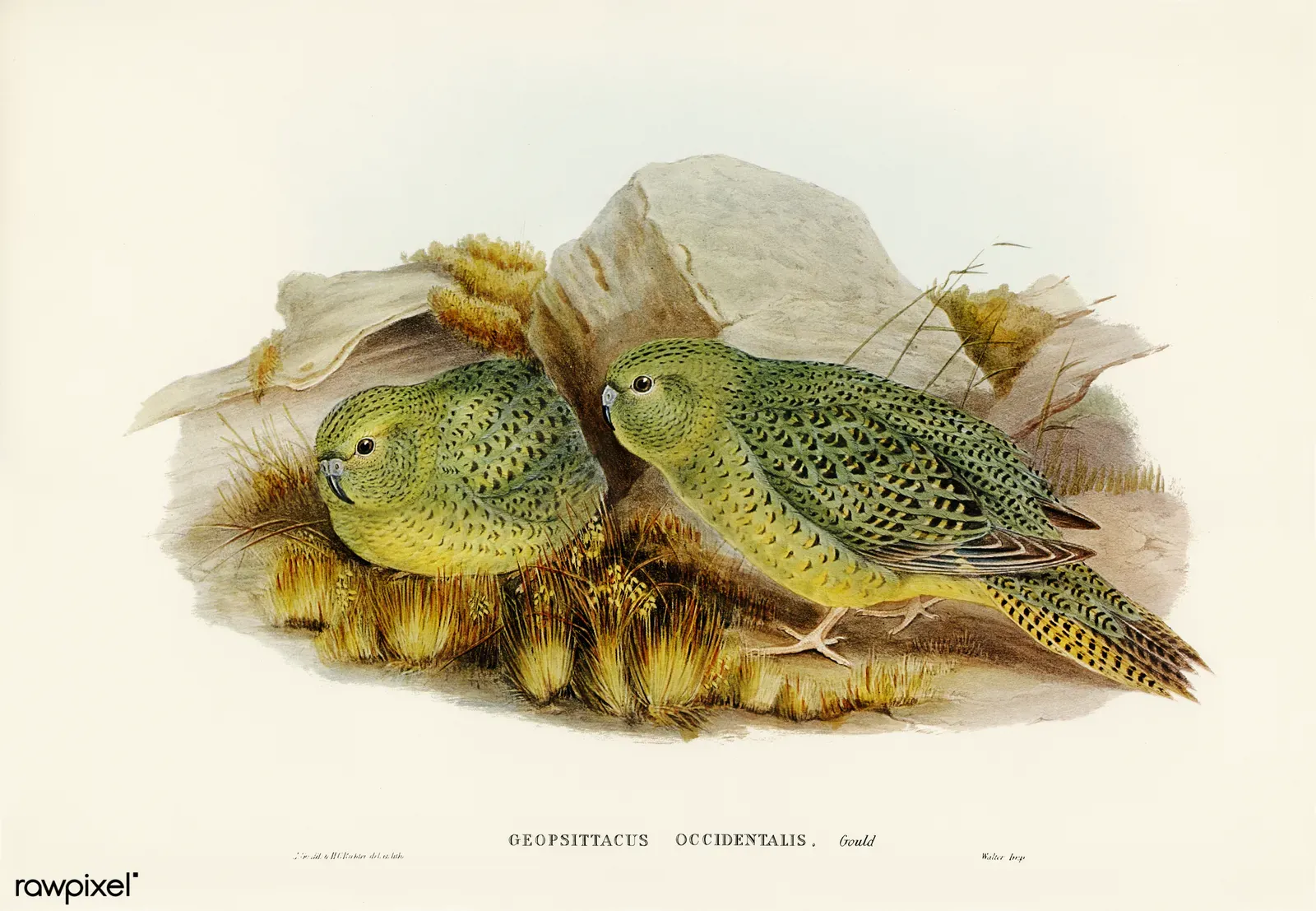
Unlike most entries on this list, the night parrot’s story has an actual happy ending backed by hard evidence. The bird disappeared from records in 1912, and scientists assumed introduced cats and foxes had wiped it out – but in 1990, a dead one turned up on a Queensland roadside. That grim discovery proved the species had survived far longer than anyone realized.
Then, in 2013, naturalist John Young captured the first verified photographs of a living night parrot in Queensland’s arid interior, closing one of ornithology’s longest-running mysteries. Researchers now estimate small, scattered populations survive across Australia’s remote desert regions – but the celebration comes with a warning label. Rediscovery doesn’t guarantee security, and most Lazarus taxa remain critically endangered long after their return to the scientific record. The night parrot proves rediscovery is only step one; survival is a completely different battle – one the next creature on this list has been quietly winning for 66 million years.
#2 – The Fish Older Than the Dinosaurs That Fooled Science for 66 Million Years
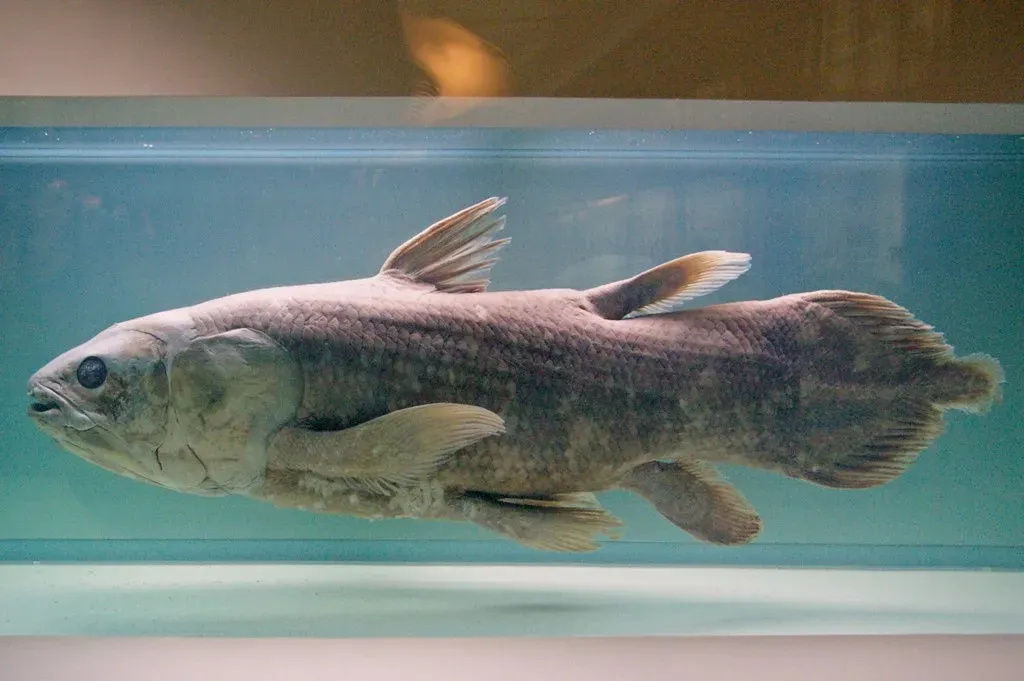
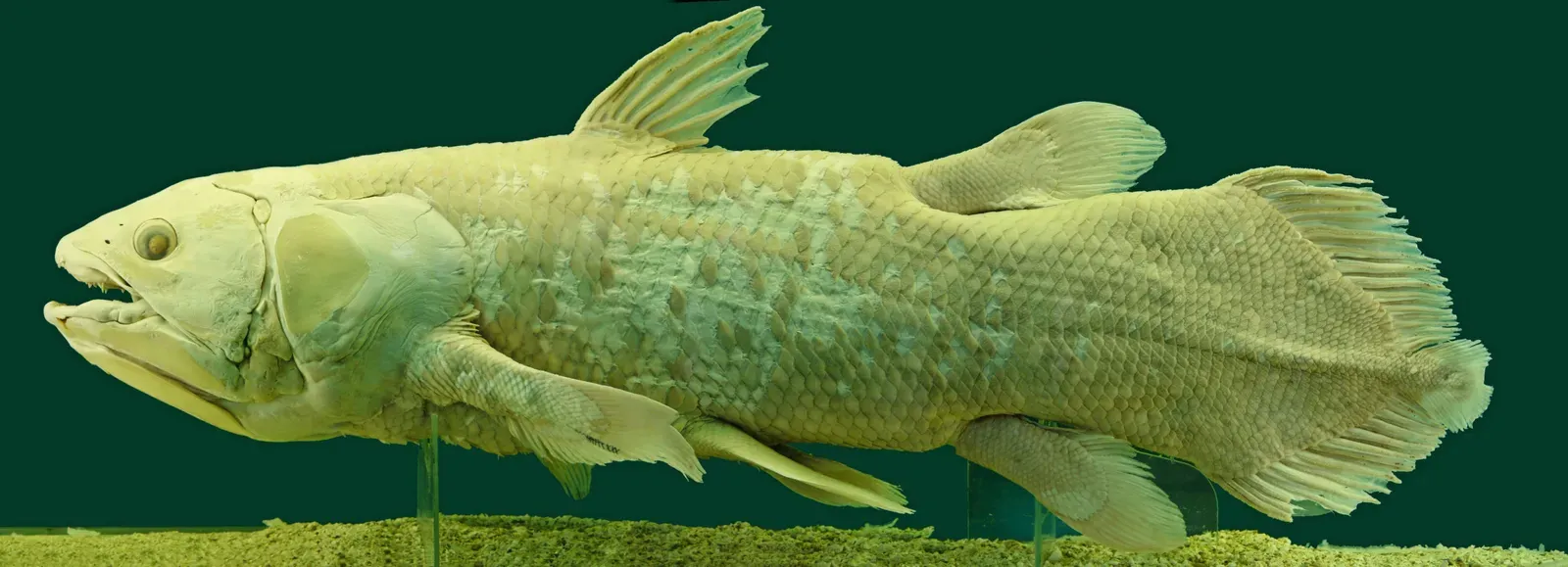
If there’s a gold standard for “declared extinct, actually thriving,” it’s the coelacanth. This heavily armored, lobe-finned fish was known to science exclusively through fossils, and researchers confidently assumed it had died out alongside the dinosaurs. Then a South African museum curator got a phone call that changed evolutionary biology forever.
On December 22, 1938, Marjorie Courtenay-Latimer pulled a strange blue fish from a fishing trawler’s net, tangled among sharks and seaweed – a species scientists had confidently declared extinct for 70 million years. When ichthyologist J.L.B. Smith finally examined it, his reaction became legend.
“I would not have been more surprised if I had seen a dinosaur walking down the street.”
J.L.B. Smith, ichthyologist
The find was so shocking that a New Zealand newspaper declared it had “outdone” the Loch Ness Monster. A second living species was later discovered off Indonesia in the late 1990s, and Latimeria chalumnae was listed as an endangered species by CITES in 2000 – formal recognition that this “extinct” fish needed real protection. It remains the single most famous Lazarus species in zoology, but it’s not the most argued-about. That title belongs to the animal at the very top of this list.
#1 – The Tasmanian Tiger That Won’t Stay Dead in the Public Imagination
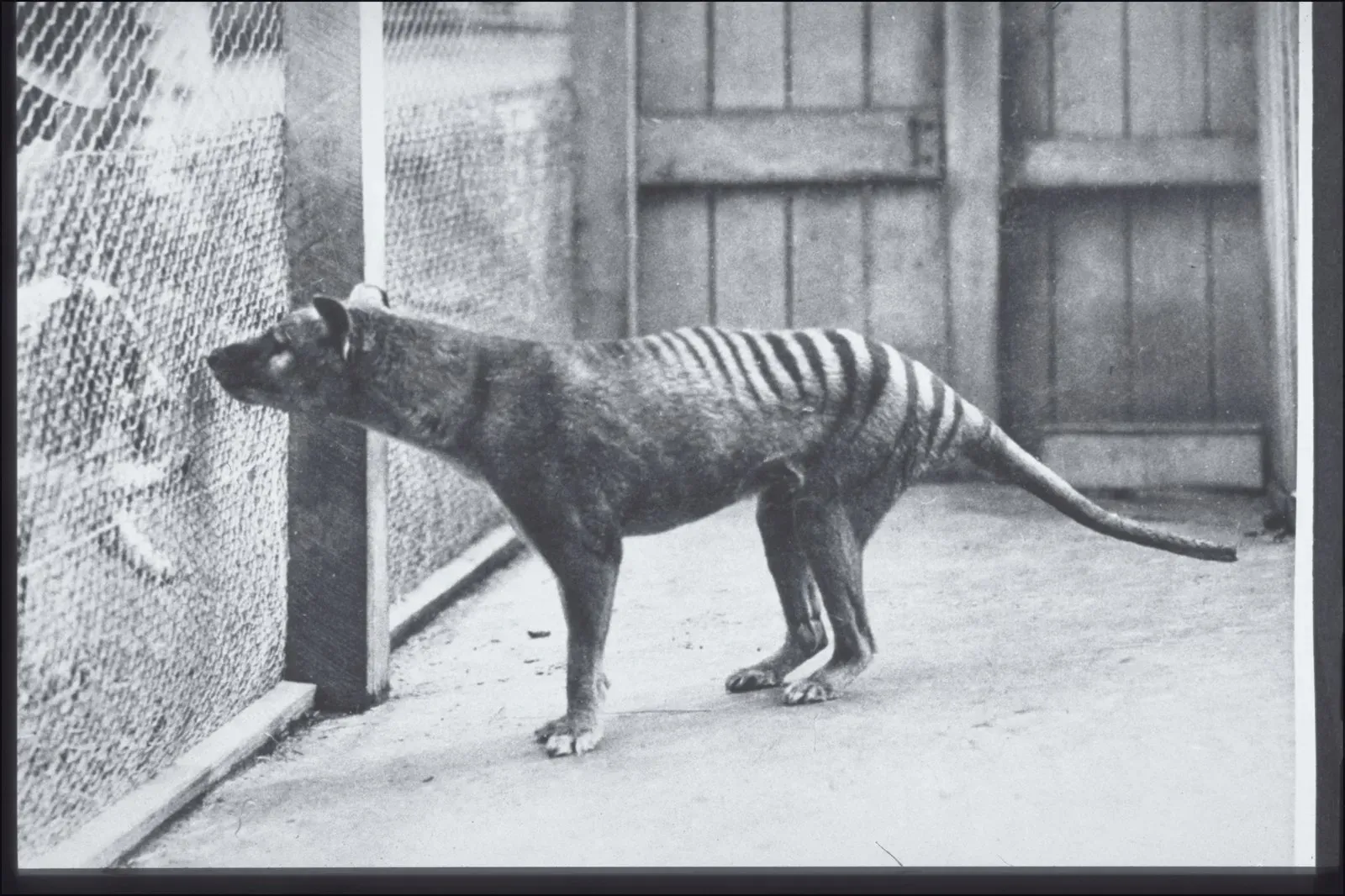
No creature on this list generates more obsessive searching, more disputed footage, or more genuine scientific division than the thylacine. The last known thylacine is believed to have died in captivity in Hobart, Tasmania, on September 7, 1936, and after decades of intriguing but unconfirmed sightings, the International Union for Conservation of Nature officially declared the species extinct in 1982. That should have settled things. It didn’t.
Tasmania’s own Department of Primary Industries, Parks, Water and Environment has released documents detailing eight reported sightings in just the past three years, and even the scientific community has started softening its stance. A 2021 university study analyzing over 1,200 sighting records concluded the animal may have actually survived into the late 1980s or early 2000s – decades longer than the official record admits. No thylacine has ever been captured, filmed conclusively, or genetically confirmed since 1936, but the sheer volume of consistent eyewitness detail keeps professional skeptics from closing the file entirely.
At a Glance
- Last captive death: September 7, 1936, in Hobart, Tasmania
- Official IUCN extinction declaration: 1982
- Recent reported sightings logged by Tasmanian officials: 8 in the past three years
- 2021 study reviewed: over 1,200 historical sighting records
The Bottom Line
The pattern across every case here is the same: extinction declarations are educated guesses, not scientific certainties, and the ones with the least searchable habitat – deep rivers, remote deserts, uncrossable lava fields – are exactly where these “extinct” creatures keep turning up. The coelacanth and the night parrot prove rediscovery is real and possible. The thylacine and the baiji prove that hope can outlast hard evidence for generations.
Frankly, I think wildlife agencies declare extinction too fast and reverse it too slowly, more worried about handing out false hope than about missing the last chance to save something. Which creature on this list do you think is most likely still out there? Drop your theory in the comments.