Walk into a big-name natural history museum and it feels like you’re stepping into deep time. Towering ribs, knife-like teeth, tails sweeping overhead – it all seems authoritative, settled, almost sacred. But a dirty little secret of dinosaur halls is that some of those iconic skeletons have been posed in ways that would have mangled the real animals’ spines, ripped their tendons, or flipped them flat on their faces.
Over the past few decades, paleontologists have quietly gone to war with bad posture. Classic mounts have been torn down, tails have been lifted, necks straightened, backs de-arched, and death poses corrected. The result: a surprising list of famous display dinosaurs that spent years – sometimes generations – frozen in positions that we now know were physically impossible. Let’s look at seven of the most revealing cases, and what they say about how science, spectacle, and a bit of ego have shaped the dinosaurs we think we know.
The New York T. rex That Dragged Its Tail Like a Giant Lizard
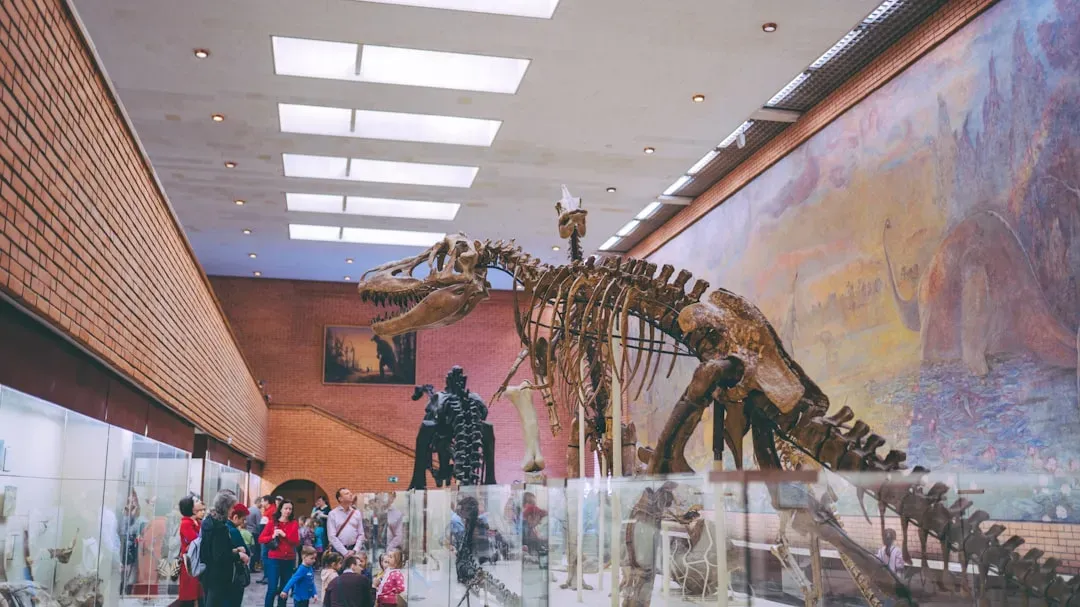
For most of the twentieth century, the Tyrannosaurus rex at the American Museum of Natural History in New York was the definitive king of the dinosaurs – and it stood like a monstrous, angry kangaroo. The mount, based on the early twentieth‑century understanding of large reptiles, had its spine sloping sharply upward, its head high, and its heavy tail drooping along the ground to act as a third support. It looked dramatic and imposing, but later biomechanical studies showed that letting the tail rest on the ground would have thrown the animal’s balance completely off and placed absurd stress on the hips and vertebrae.
As researchers dug deeper into dinosaur anatomy and trackways, they realized T. rex’s tail was a massive counterweight that needed to be held horizontally for the legs to work efficiently. Modeling of joint ranges and muscle attachments made it clear that the classic “tripod” stance simply did not work without breaking basic physics of balance and motion. In the late twentieth century, the mount was completely redesigned into a dynamic, horizontal posture with the tail held free of the ground, transforming T. rex from an upright monster into a sleek, birdlike predator that could actually walk without toppling over.
The London Diplodocus With a Swan‑Neck It Never Had
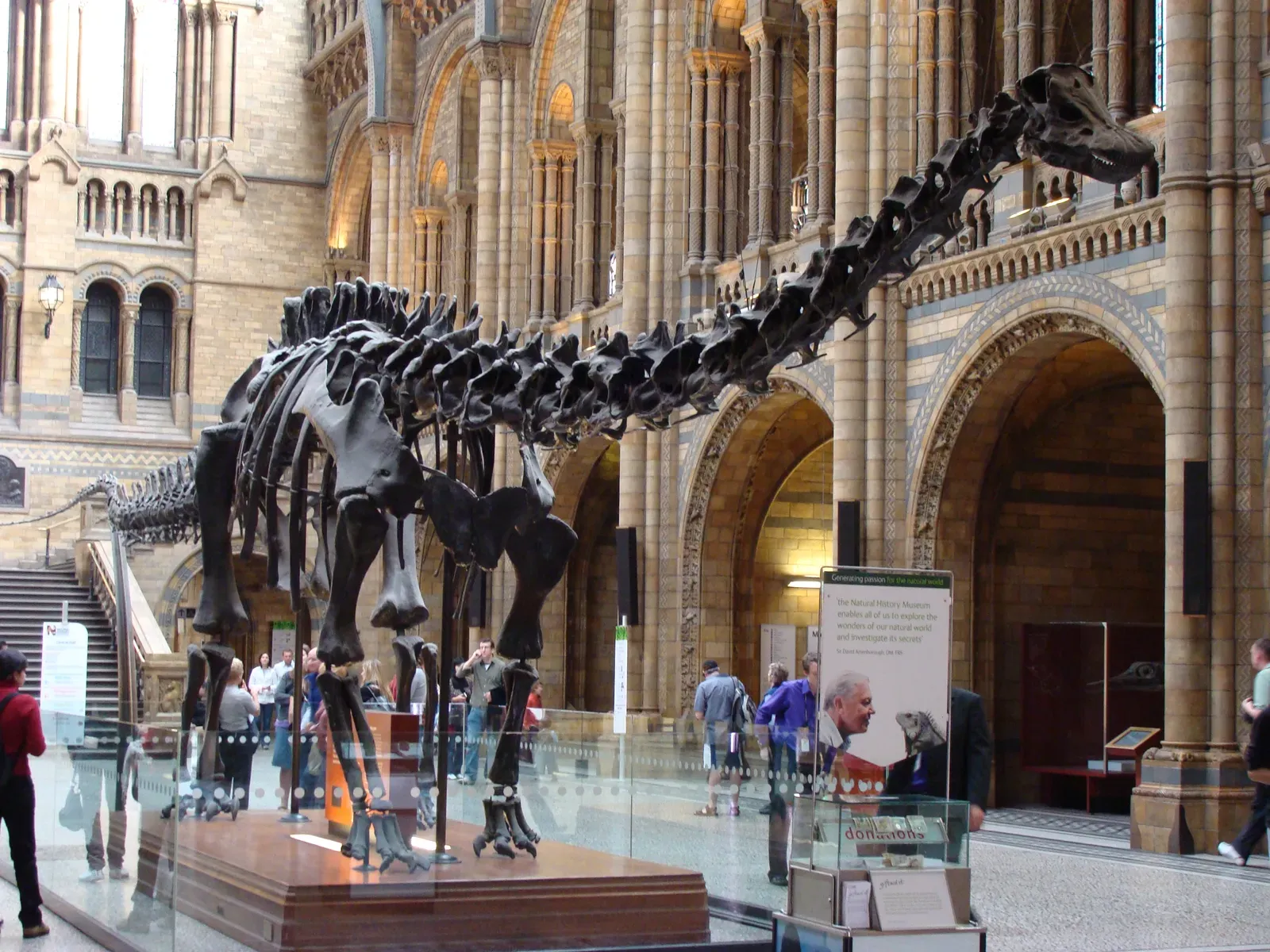
For more than a hundred years, the Diplodocus skeleton known as “Dippy” dominated the main hall of London’s Natural History Museum, its impossibly arched neck sweeping gracefully upward like a swan. It was a spectacular sight – and it also planted the idea that giant sauropods carried their necks in huge vertical curves. Later analysis of neck vertebrae and joint surfaces, however, showed that such a posture would have been both mechanically extreme and energetically costly, far beyond what the bones are built to support over a lifetime.
Detailed reconstructions demonstrated that the articulating surfaces of the vertebrae fit together in a way that favored a mainly horizontal or slightly elevated neck, not the sharp, swan‑like loop popular with early mount designers. In addition, blood pressure requirements for holding the head that high would have been massive, likely unrealistic for a land animal of that scale. As new research spread, museums around the world began quietly lowering their sauropod necks, and Dippy’s overly elegant arch became a textbook example of how aesthetics and Victorian expectations about long‑necked animals had overruled what the bones were actually saying.
The Tail‑Dragging Brontosaurus That Could Not Have Walked That Way
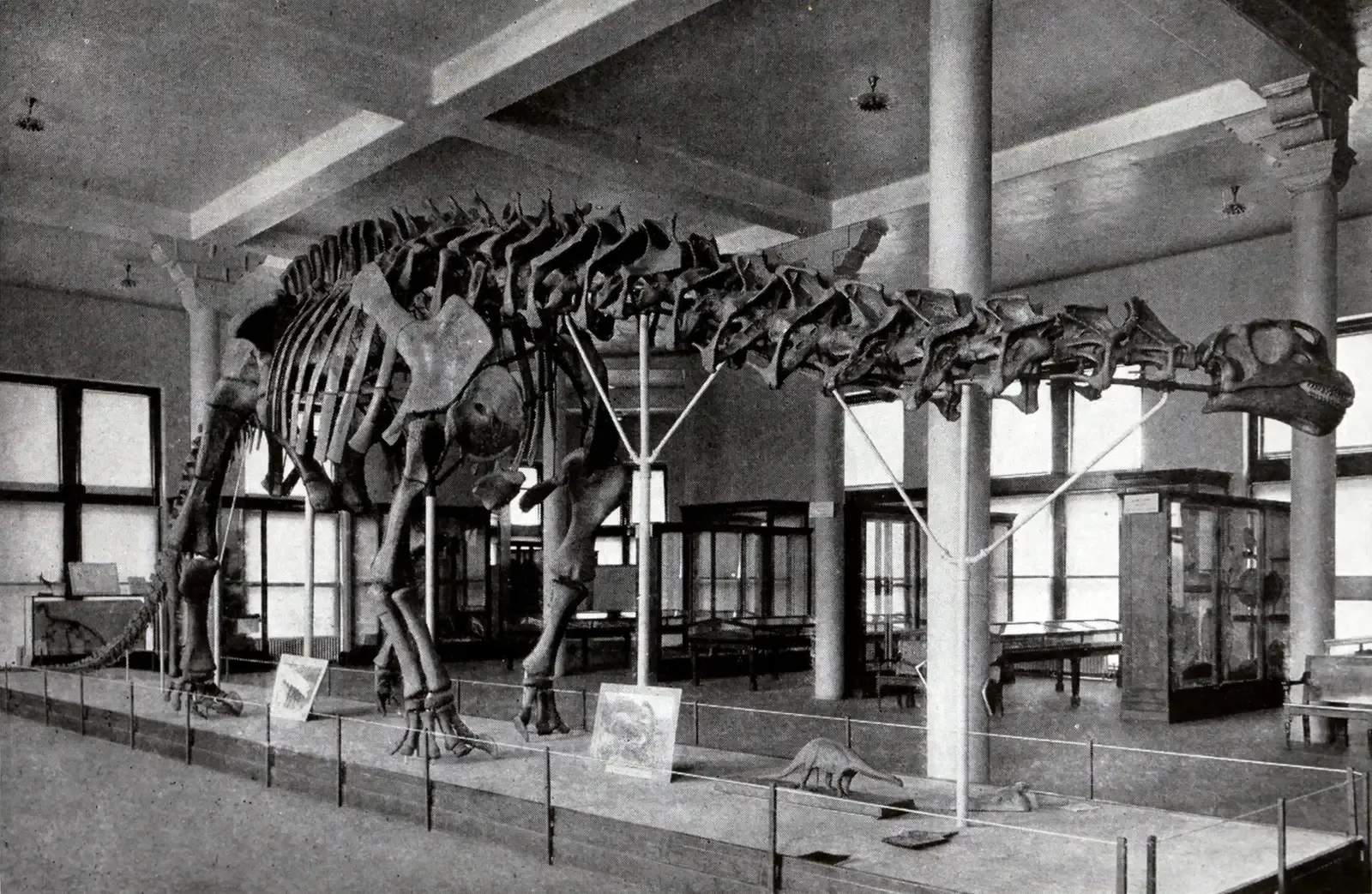
In the early days of dinosaur science, the famous “Brontosaurus” (now more carefully sorted into several related genera) was often shown as a heavy, wallowing creature with a tail dragging like a limp rope behind it. At the Yale Peabody Museum and other major institutions, mounts reflected this picture: the limbs were column‑straight, the body almost elephantine, and the tail trailing on the floor as if it were dead weight. Later work on trackways and tail vertebrae flipped that idea completely on its head.
Fossil footprints from sauropods showed no tail drag marks, even on well‑preserved surfaces where you would absolutely expect to see them if the tail lived on the ground. At the same time, the structure of the tail bones and their chevrons, along with reconstructions of muscle and ligament systems, revealed a stiff but mobile structure built to be carried off the ground as a counterbalance. When biomechanical modeling was applied, the old pose would have strained joints and required the animal to fight its own anatomy with every step. Today, remounted “Brontosaurus‑type” skeletons stand with their tails proudly lifted, making the old tail‑dragging mounts look more like tired props from an outdated monster film than real animals.
The Duck‑Billed Dinosaurs Posed Like Crooked‑Backed Kangaroos
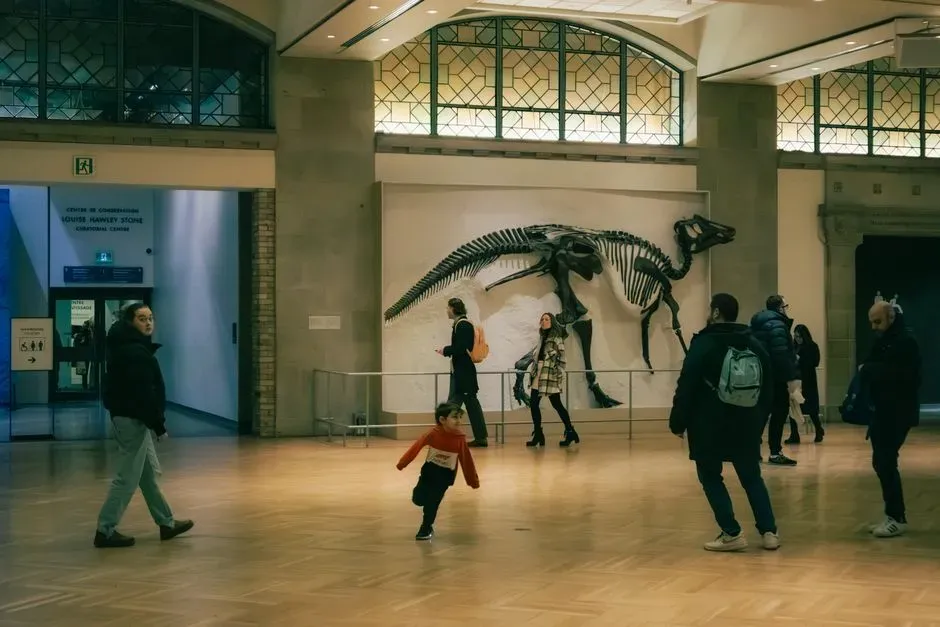
Hadrosaurs – the so‑called duck‑billed dinosaurs – went through a long identity crisis in museum halls. For decades, iconic species like Corythosaurus and Lambeosaurus were mounted semi‑upright, leaning on their tails with their backs curved in an almost human‑like slouch. In some older displays in North America and Europe, the spine was pushed into a near S‑curve and the pelvis rotated in a way that, while visually expressive, did not line up with how the hips and tail vertebrae actually articulate. From a modern biomechanics standpoint, those poses would have stressed the joints in ways that a living animal simply could not sustain for normal walking.
Later studies of hadrosaur skeletons, trackways, and muscle reconstructions strongly supported a primarily horizontal, quadrupedal or facultative bipedal posture, with the tail held stiff and off the ground. The tail vertebrae lock together to create a rigid support beam, not a flexible prop, and the hip joints do not permit the kind of extreme backward lean seen in many mid‑century mounts. As a result, museums have gradually lowered these animals into more realistic stances, sometimes literally sawing apart and rebuilding old supporting armatures. Looking back at photos of upright hadrosaurs, it is hard not to see them as someone trying to make a kangaroo out of a very confused horse.
The Berlin Archaeopteryx Frozen in a Mid‑Air Flap It Likely Never Held
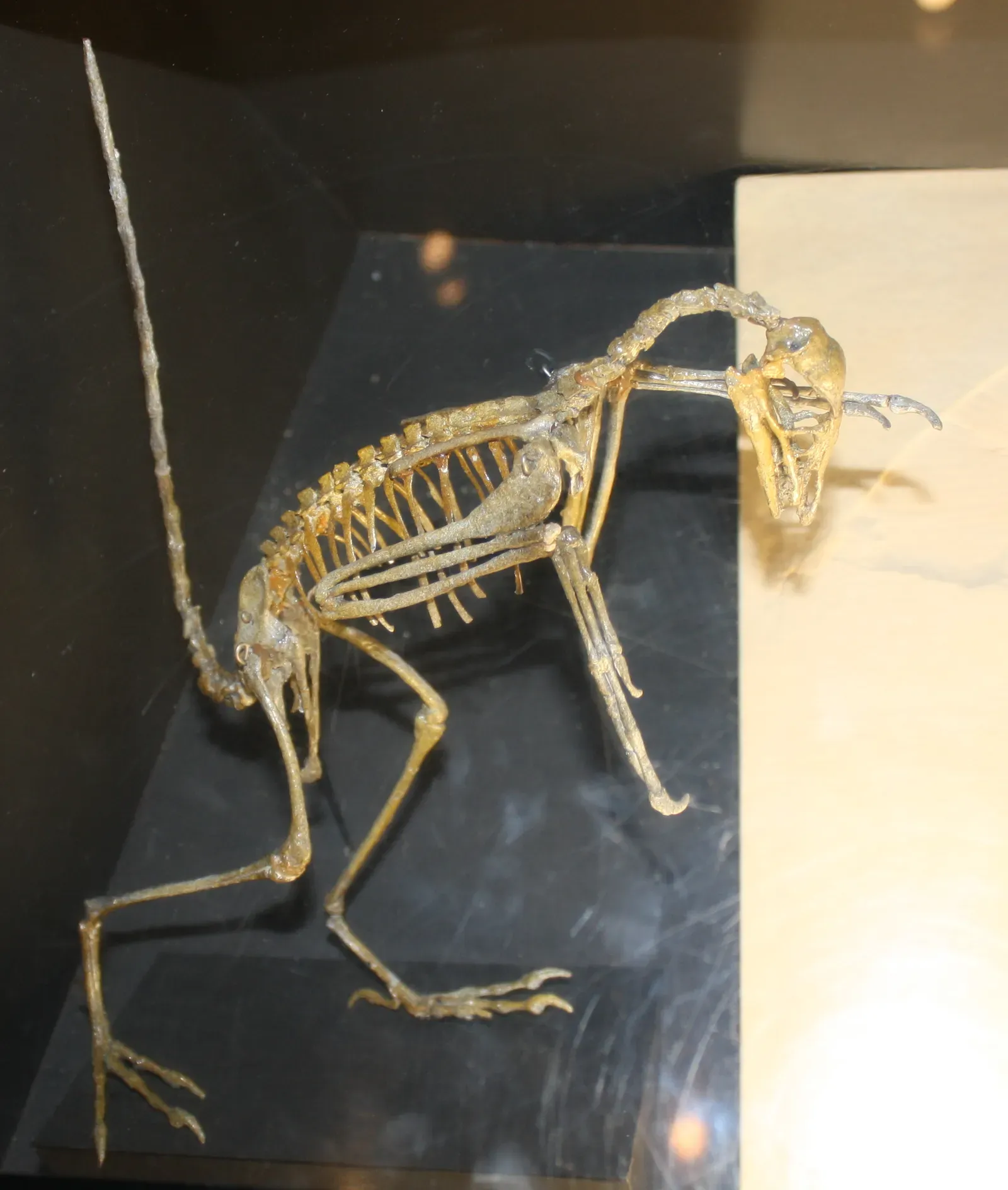
One of the most famous fossils on Earth, the Berlin specimen of Archaeopteryx, inspired some equally dramatic display ideas. In several museums, early skeleton reconstructions and casts were displayed in a pose suggesting a near‑vertical, mid‑flap, almost bat‑like wing position, as if the animal were hanging or hovering rather than gliding or flying forward. Later work on feathered dinosaur and early bird flight showed that the orientation of the shoulder joint and the range of motion in the arm bones did not support such extreme wing positions without dislocating the joint or tearing soft tissues.
Studies that compared the shoulder anatomy of Archaeopteryx to both non‑avian theropods and modern birds suggested that the animal’s wings worked more like a limited, sideways sweep than a dramatic vertical flapping arc. Mounts that pulled the arms sharply upward and backward were effectively forcing the bones into positions outside their natural rotation limits. Over time, displays were toned down, with wings posed in more moderate, flight‑capable arcs that fit the joint surfaces. The overly acrobatic poses now serve as a reminder that even experts can be tempted to exaggerate movement to make a tiny, scrappy fossil look more exciting than the anatomy allows.
The “Death Pose” Raptors Contorted Beyond What Living Animals Could Endure
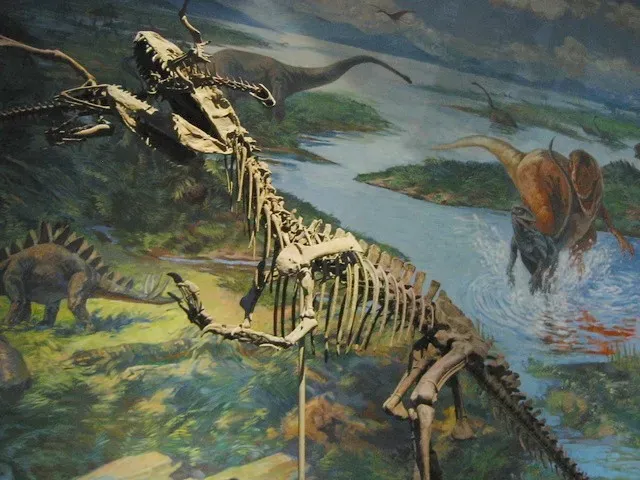
Famous dromaeosaurs – the group that includes Velociraptor and Deinonychus – have often been mounted in aggressively dramatic positions: necks wrenched far back, tails corkscrewed, limbs twisted to the edge of their sockets. Some of these poses were inspired by the classic fossil “death pose,” where a long‑necked animal’s head is curled back over its spine, likely due to postmortem tendon contraction. Mounting full skeletons that way, however, sometimes led preparators to push joints far beyond their reasonable motion limits, especially in museum halls chasing an eye‑catching, cinematic raptor.
As joint‑by‑joint studies of theropod skeletons progressed, it became clear that some widely used display positions were simply not sustainable by living tissue. Vertebrae that were shown bent into tight, permanent curves would have compressed nerves and blood vessels or fractured under repeated movement. In response, many institutions revised their raptor mounts into more grounded, birdlike postures with tails used as balancing rods rather than whips and necks arched realistically instead of dramatically snapped backward. The shift made some older displays look almost cartoonish in retrospect, like anatomically detailed action figures bent into poses that only plastic can survive.
The Over‑Rearing Carnivores That Could Not Stand on Their Toes Forever
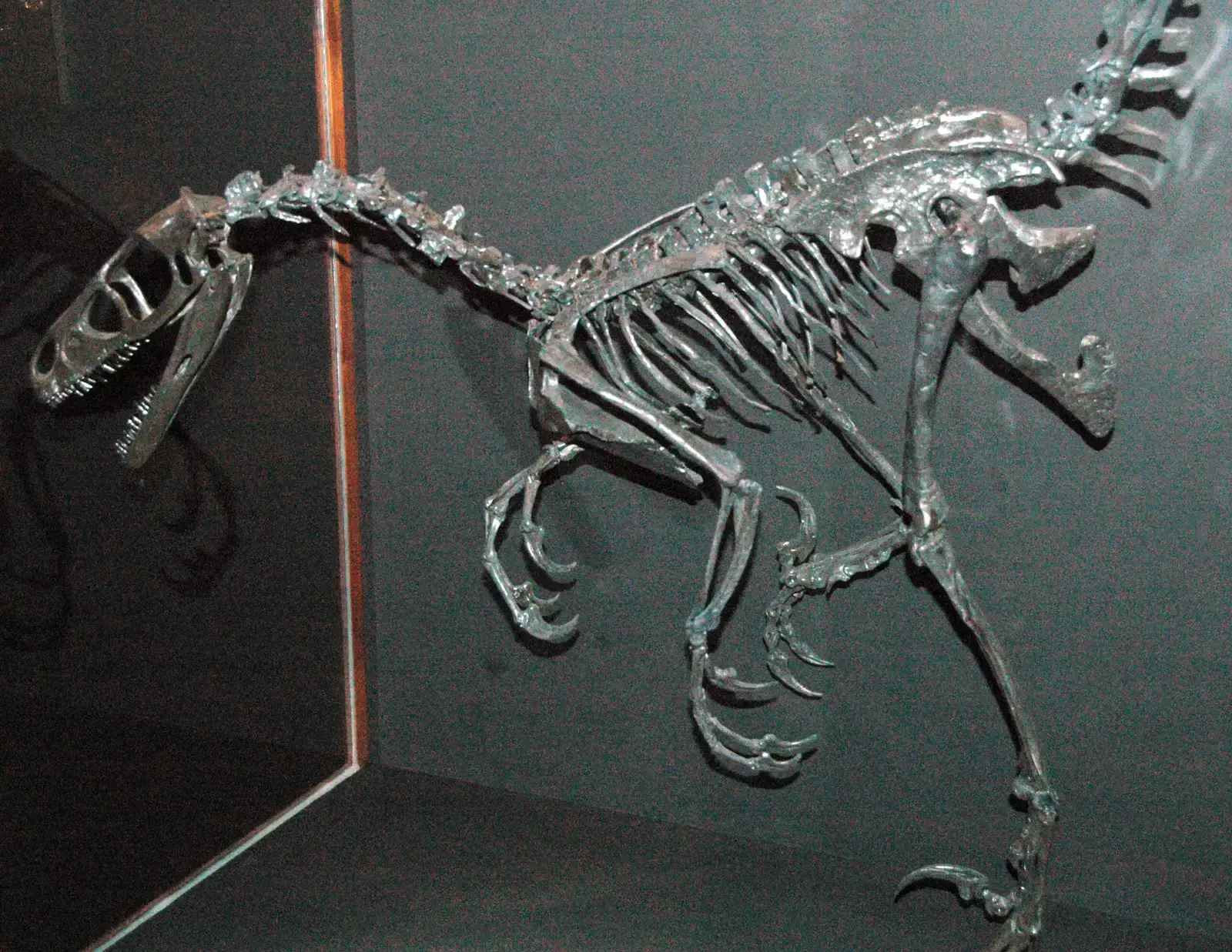
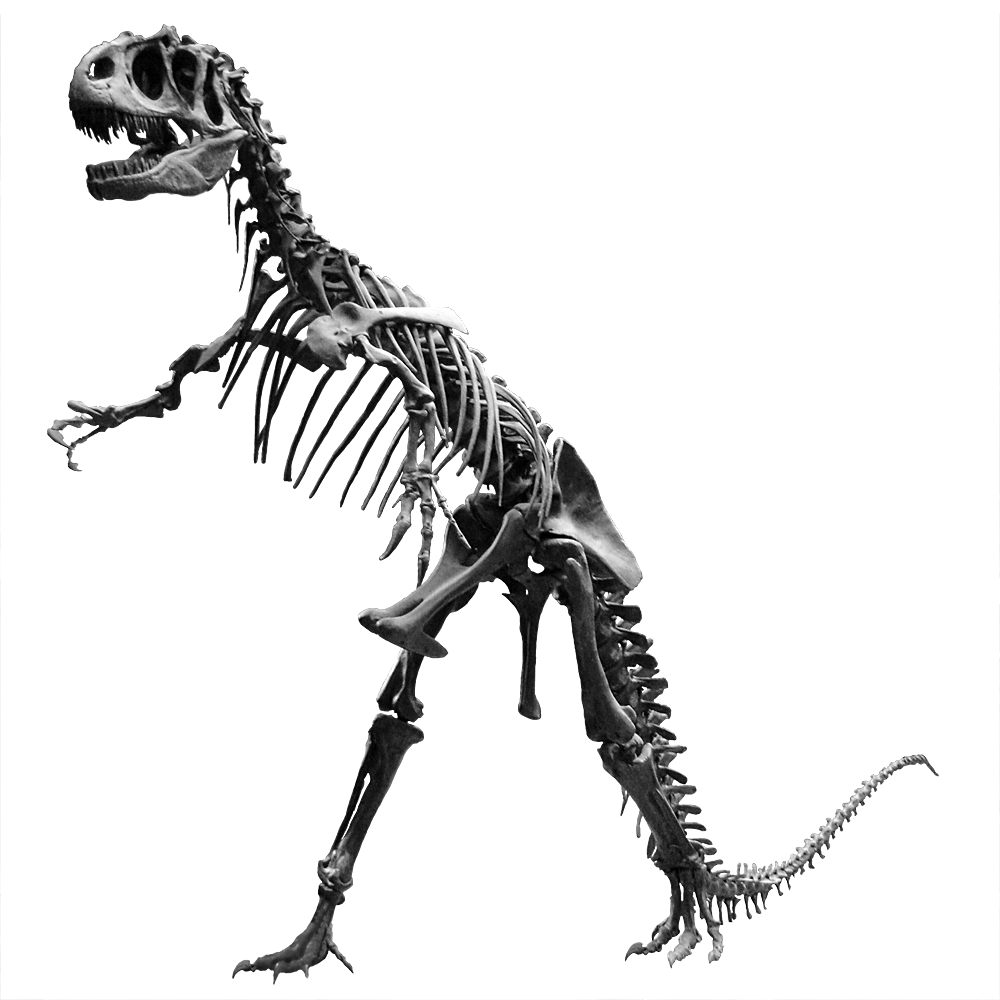
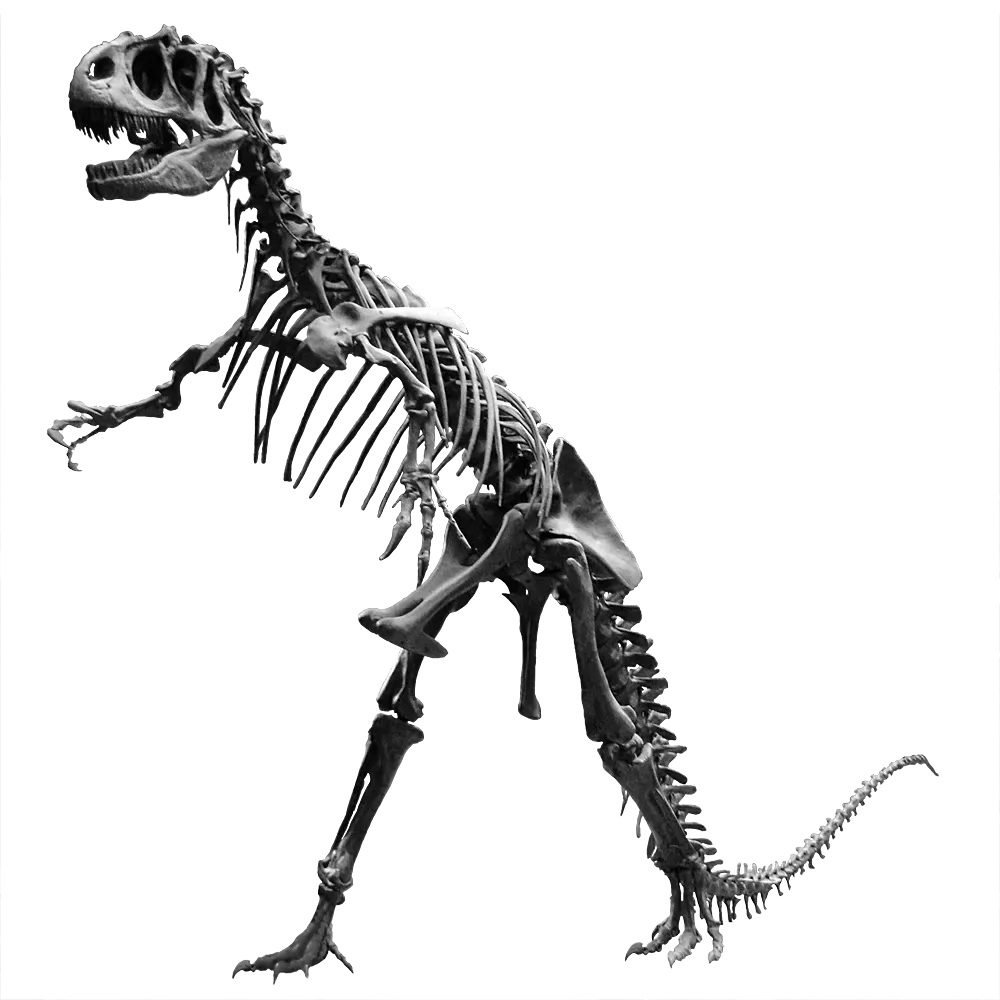
For much of the twentieth century, big theropods in museums – not just T. rex, but also Allosaurus, Gorgosaurus and others – were often shown rearing up, torsos pulled backward, heads high in the air, as if they were halfway through a vertical lunge. This kind of pose stretched the hips and knees into extreme extension and often pushed the ankle joints into a nearly tip‑toe position. Biomechanical analysis eventually showed that such a stance would have been energetically unsustainable and structurally risky for the real animals, especially as a default posture rather than a fleeting movement.
When scientists started analyzing stress loads on dinosaur leg bones and comparing them with how modern birds and crocodilians stand and move, it became clear that massive theropods were built for relatively modest joint angles and stable, forward‑leaning bodies. The highly reared, almost show‑pony‑like positions seen in older mounts would have placed intense forces on the joints and likely caused rapid fatigue or injury if maintained. Many museums have since re‑mounted their big carnivores in more horizontal, mid‑stride poses that line up with trackway evidence and joint modeling, trading theatrical vertical drama for a kind of coiled, predatory realism that actually feels more menacing once you know the physics behind it.
What These Awkward Poses Reveal About How We Imagine Dinosaurs
I still remember standing under an old tail‑dragging sauropod mount as a kid and feeling like I was in the presence of an ancient, lumbering monster. When I went back years later and saw a sleeker, more horizontal version in the same space, it was genuinely jarring – like finding out a childhood photograph had been quietly edited. These seven cases are not just museum trivia; they show how much of our mental image of dinosaurs has been shaped by the guesses, fashions, and ambitions of the people who built the displays, not only by the fossils themselves.
In my view, that is both humbling and healthy. It means we should treat even the most iconic dinosaur skeletons as hypotheses in steel and plaster, not as unquestionable truth carved in bone. Every time a museum corrects an impossible pose, it is admitting that spectacle once came before accuracy – and choosing to reverse that. Some visitors grumble about losing the old, dramatic shapes, but I think the real drama is in knowing that our picture of these animals is still alive, still changing, and still up for revision. When you walk into a dinosaur hall now, the most honest question you can ask yourself might be: which of today’s confident poses will tomorrow’s scientists quietly dismantle next?