If you grew up picturing archaeologists as people brushing dust off pottery shards, the idea that they now read molecules for answers feels almost like science fiction. Yet in the past decade or so, ancient DNA has quietly rewritten enormous chunks of human history, often overturning ideas that seemed rock solid only a few years earlier.
What makes this moment so wild is how fast it’s happening. The stories of who we are, where we came from, and how we spread across the planet are being redrawn not in slow, careful strokes, but in bold, sudden revisions. Sometimes archaeologists have had to admit that their favorite theories did not just need tweaking – they needed replacing. Ancient bones are, quite literally, talking back.
A Molecular Time Machine Hidden in Old Bones
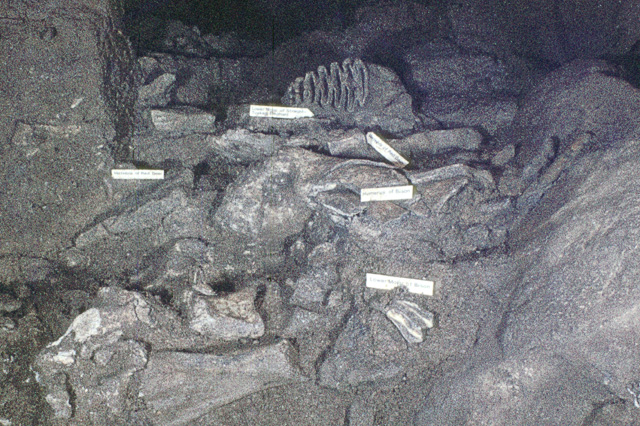
The shocking part is that the most powerful new history tool is often no bigger than a grain of sand. Inside fragments of bone and teeth, tiny spirals of DNA survive for thousands, sometimes tens of thousands of years. With modern sequencing machines, scientists can read those genetic scraps and reconstruct entire genomes from people who lived long before writing, agriculture, or cities.
For a long time, archaeologists assumed that DNA decayed too fast to be useful beyond a certain point, especially in warmer climates. Now, advances in clean-room techniques, ultra-sensitive sequencing, and data analysis mean that what used to be considered hopelessly degraded material can suddenly yield clear genetic signals. It’s like finding a box of old cassette tapes in the attic, assuming they’re ruined, and then discovering a new player that restores the sound better than when it was first recorded.
Ancient DNA Upending Migration Myths
One of the most dramatic shocks has been how ancient DNA has redrawn migration maps. For decades, archaeologists relied on artifacts – pottery styles, burial customs, tool shapes – to track how cultures moved or influenced one another. But DNA has shown that similar-looking objects can spread without many people moving at all, and in other cases, massive waves of people moved with surprisingly little obvious change in material culture at first glance.
In many regions, genomes from ancient skeletons show distinct pulses of newcomers arriving and mixing with local populations, often at times when archaeology alone did not clearly signal such a big demographic shift. This has forced researchers to accept that pots and tools can lie, but genomes are much harder to fake. Ancient DNA has basically turned human migration from an educated guessing game into something closer to a flight log.
Revealing Lost Peoples Who Left Almost No Trace
Some of the most haunting discoveries are about people who barely exist in the traditional archaeological record. In several regions, ancient DNA has revealed entire populations that left only faint material traces, or whose artifacts were misattributed to other groups. Their genetic fingerprints appear suddenly in ancient genomes, then disappear or blend into others over time.
These “ghost populations,” as some researchers informally call them, change how we think about ancestry. Instead of a neat family tree, human history looks more like a tangled river delta, with channels splitting, reconnecting, and sometimes drying out altogether. Without DNA, many of those channels would have remained invisible, and whole peoples would have been reduced to footnotes or forgotten entirely.
Interbreeding With Other Human Species Was Not a Rare Fluke
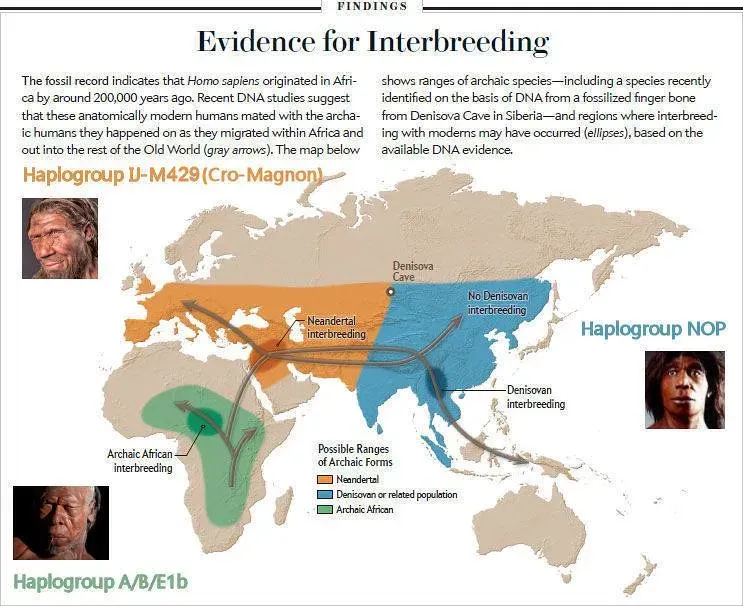
Ancient DNA has also shattered the comfortable idea that Homo sapiens replaced every other human species in a clean, simple sweep. Genetic evidence from bones once thought unremarkable has revealed that our ancestors repeatedly met, mixed with, and absorbed other human lineages, like Neanderthals and Denisovans. These encounters were not one-off accidents; they happened many times, in different places, over long stretches of time.
The result is that nearly everyone alive today carries small echoes of these other humans in their DNA, influencing everything from our immune systems to how we adapt to altitude or cold. Archaeologists once debated whether such interbreeding even happened. Now the discussion has flipped: the real puzzle is working out how frequent it was, where it occurred, and what it meant socially and culturally. The human story has shifted from one of outright replacement to one of complex entanglement.
When Bones Argue With Artifacts
One of the most uncomfortable but productive outcomes of ancient DNA is that it sometimes flatly contradicts what the artifacts seem to say. A burial might contain grave goods associated with one cultural tradition, while the genome of the person in the grave clearly aligns with a different population. In other cases, what looked like a smooth cultural transition in the archaeological layers turns out, genetically, to involve a huge influx of new people.
This kind of conflict has forced archaeologists and geneticists into deeper collaboration. It’s no longer enough to say that a changed style of pottery automatically means a new group of people arrived, or that continuity in stone tools proves the same community stayed put. Now, when bones and artifacts “disagree,” the argument itself becomes the most interesting clue. It suggests intermarriage, identity shifts, power changes, or cultural borrowing that was invisible from objects alone.
Tracing Social Inequality and Power Through DNA
Ancient DNA is not just about who was related to whom; it also opens a window onto social structures that would have been impossible to see otherwise. By comparing the genomes of people buried with rich grave goods to those laid to rest with almost nothing, researchers can test whether social status ran in families or whether power was more fluid. Sometimes elites turn out to be closely related, suggesting dynasties and hereditary power; in other cases, genetic diversity hints at more open, perhaps more merit-based, systems.
Studies of family relationships within cemeteries have also uncovered patterns of who moved and who stayed, which speaks directly to gender roles and marriage customs. For example, in some communities, females show more genetic diversity than males, implying that women often came from elsewhere to join local men. In others, the opposite pattern appears, suggesting very different social rules. Instead of guessing from house sizes or grave goods alone, researchers can now watch inequality and kinship play out in the DNA itself.
The Ethical and Emotional Shock of Reading Ancestors’ Genomes
For all the excitement, ancient DNA comes with a heavy ethical weight that archaeologists never fully faced in the pottery-and-bones era. Sequencing someone’s genome, even from thousands of years ago, feels more intimate than analyzing their tools or diet. When living communities see studies about the DNA of people who could be their ancestors, it can provoke pride, anger, or deep discomfort, especially if the findings clash with long-held oral histories.
Because of this, many scientists are now rethinking how and why they sample ancient remains at all. More research groups are involving descendant communities from the start, sharing data, co-authoring interpretations, and sometimes deciding together not to sequence certain remains. Personally, this is the part that sticks with me: the realization that our new technical power to read genomes forces a harder question about respect. Just because we can look, should we?
Why This Revolution Is Just Getting Started
What makes all of this feel almost overwhelming is that we’re still in the early chapters of the ancient DNA revolution. Every year brings cheaper sequencing, better methods for working with tiny or badly preserved samples, and smarter ways to analyze massive datasets. Regions that were once written off as too warm or too damp for DNA preservation are starting to yield results, slowly filling in gaps on the global map.
At the same time, there’s a growing recognition that DNA alone will never tell the whole story. The most compelling work happens when genetics, archaeology, linguistics, and Indigenous knowledge are all brought to the same table. From where I sit, the most honest view is that ancient DNA is not replacing archaeology; it’s forcing archaeology to level up. The stories we tell about human history are getting messier, stranger, and far more human – and that’s exactly why this field is so electric right now.
Conclusion: A New Kind of Humility About Who We Are
Ancient DNA has done something quietly radical: it has made us less certain and more honest about our own past. Archaeologists once drew sweeping conclusions from a handful of sites and a few stylistic changes in pots; now those same narratives are held up to the unforgiving mirror of genomes that do not care about academic pride. In my view, that tension is healthy, even when it stings, because it forces us to admit how much of human history we still do not fully understand.
At the same time, there is something deeply grounding about learning that our ancestors mixed widely, migrated repeatedly, and invented identities that did not map neatly onto genetics or artifacts. It suggests that today’s ideas about nations, purity, and fixed heritage are far thinner ice than many people like to believe. If the bones are teaching us anything, it is that humans have always been complicated, entangled, and in motion. The real question is whether we are ready to update not just our textbooks, but our sense of ourselves – are you?