Take a moment and imagine watching an actual dinosaur-era landscape: giant reptiles moving through swamps, armored fish in murky rivers, bizarre invertebrates creeping slowly across the seafloor. Now realize this: some of those creatures, or at least their almost unchanged descendants, are still here. They are quietly living alongside smartphones, skyscrapers, and streaming services, wearing nearly the same biological “outfits” they had hundreds of millions of years ago.
Scientists argue (fairly) about what exactly counts as a “living fossil,” but a handful of modern animals are so astonishingly similar to their deep-time ancestors that the label feels almost too weak. These species are not frozen in time, but their core body plans have stayed so stable that fossils from ages long before humans look like snapshots of today. Let’s meet eight of the most jaw-dropping examples – and by the end, you may feel like the modern world is just a thin layer painted over a prehistoric planet.
1. Coelacanth: The “Extinct” Fish That Refused To Leave
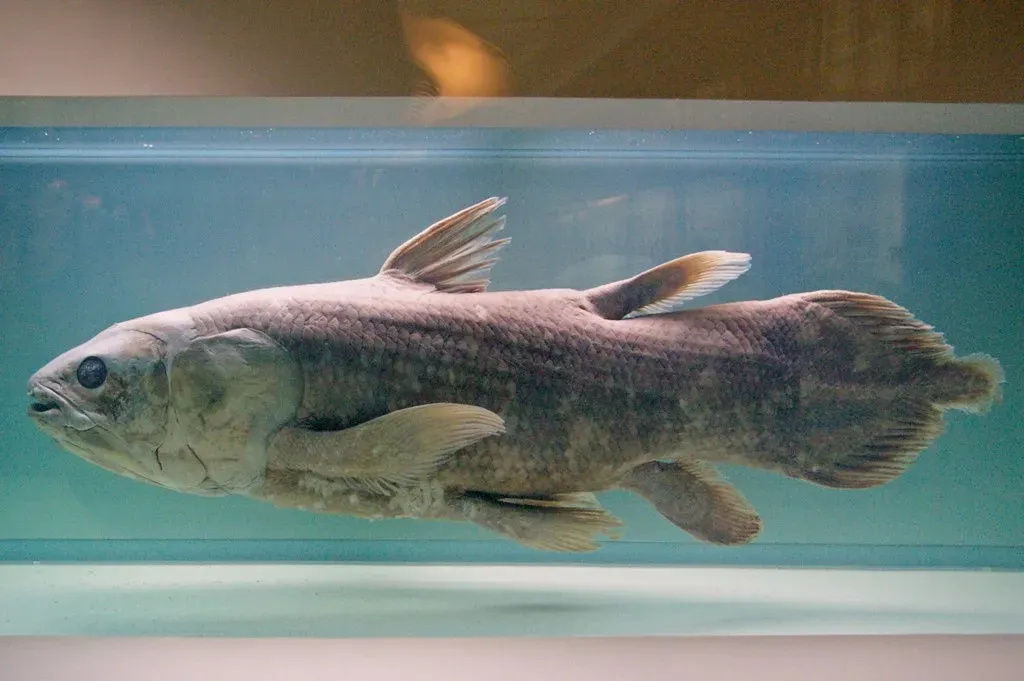
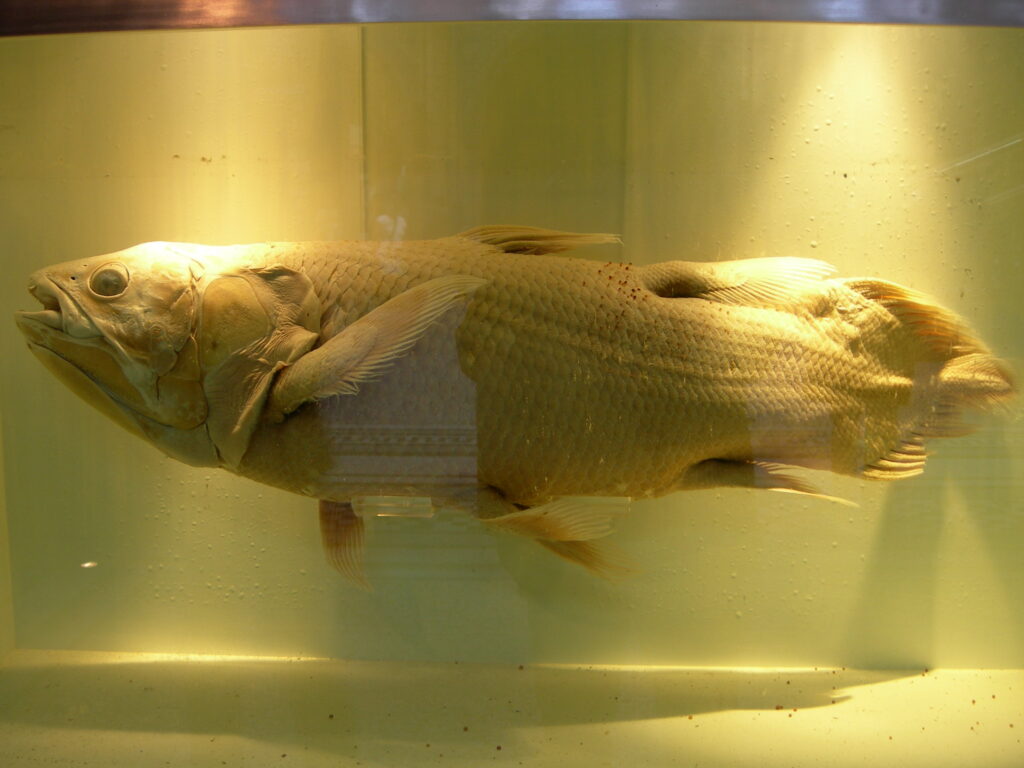
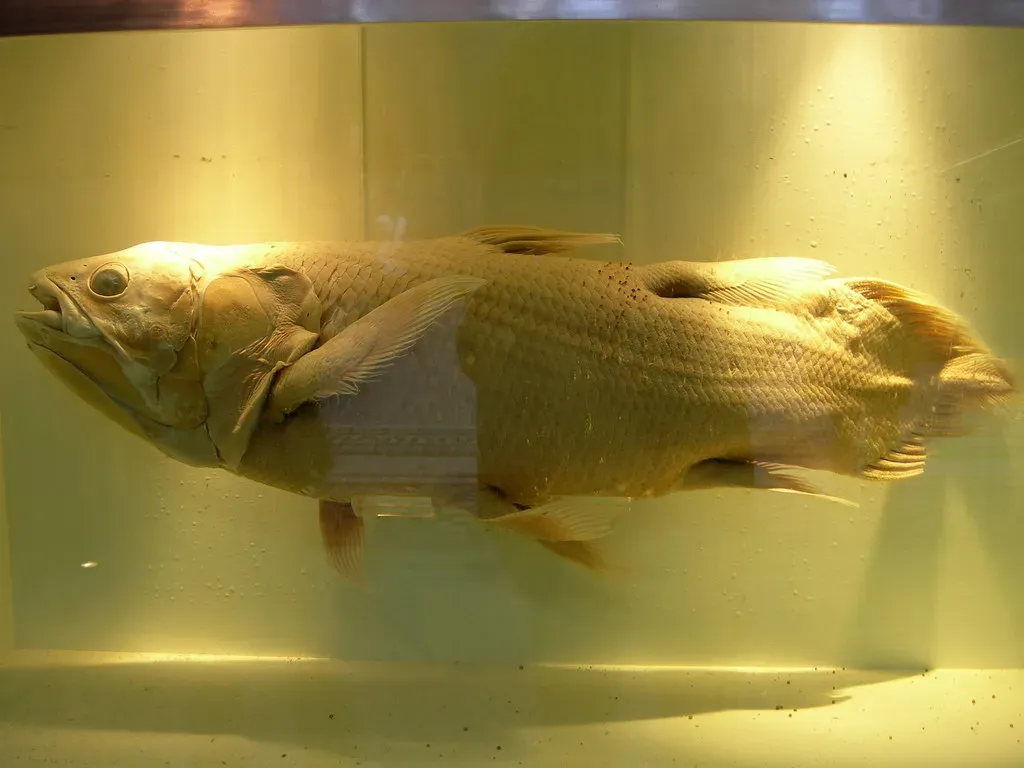
Few animals have embarrassed science quite like the coelacanth. For decades, it was the textbook example of an extinct group of ancient lobe-finned fishes that vanished with the dinosaurs, until a perfectly alive specimen turned up in a South African fish market in the twentieth century. When researchers compared modern coelacanths with fossils more than three hundred million years old, the similarities were so strong it was like pulling the same species out of two wildly different eras.
Today’s coelacanths still have that unmistakable blueprint: a massive, lobed tail, fleshy paired fins that almost look like awkward legs, and a body covered in thick, armored scales. Genetic studies show that they’ve evolved, of course – they are not literally identical copies – but they’ve done so at a remarkably slow pace compared with many other vertebrates. They lurk in deep, dark waters off the coasts of eastern Africa and Indonesia, living long, slow lives that feel utterly out of sync with our rushed human timelines, and honestly, that might be part of why their lineage has lasted so long.
2. Horseshoe Crab: The Helmeted Survivor From Before The Dinosaurs
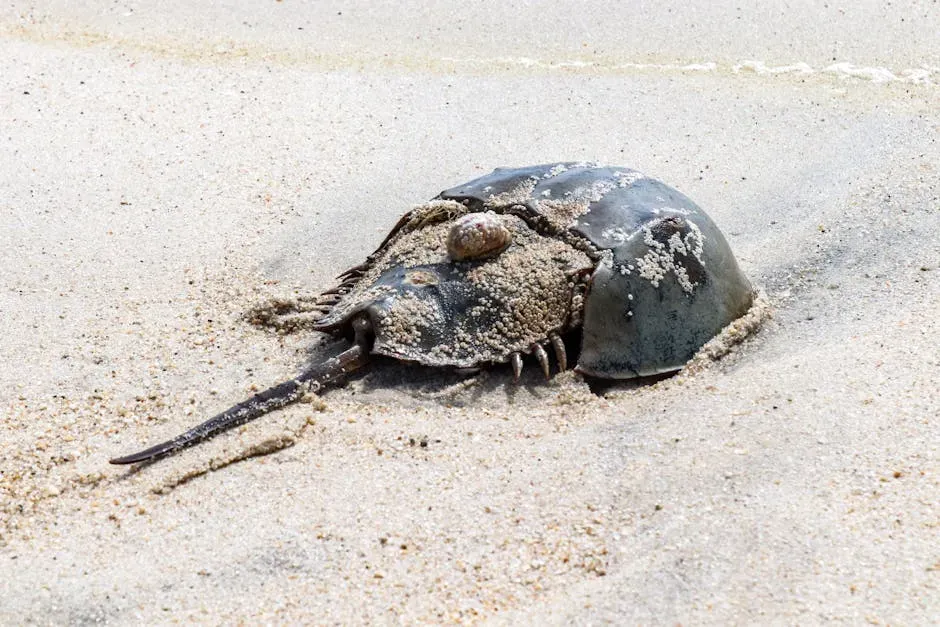
If you’ve ever walked a beach on the Atlantic coast of North America and seen something that looks like a World War I army helmet with a tail, you’ve met the horseshoe crab. Fossils of its ancestors stretch back more than four hundred million years, to a time before the first dinosaurs appeared, yet the basic design has hardly budged. The same dome-shaped shield, the same spike-like tail, the same cluster of legs tucked underneath – it is as if time tried to update the model and then just gave up.
Despite the name, horseshoe crabs are more closely related to spiders and scorpions than to actual crabs. Their blue blood (yes, literally blue) is used in medicine to test the safety of vaccines and medical devices, making this ancient creature a silent partner in modern healthcare. Watching them swarm onto beaches to spawn under a full moon feels like a ritual lifted straight out of the Paleozoic, and it’s incredibly humbling to realize that your entire species is a new neighbor to something that has already survived multiple mass extinctions.
3. Nautilus: The Living Logo Of Deep Time
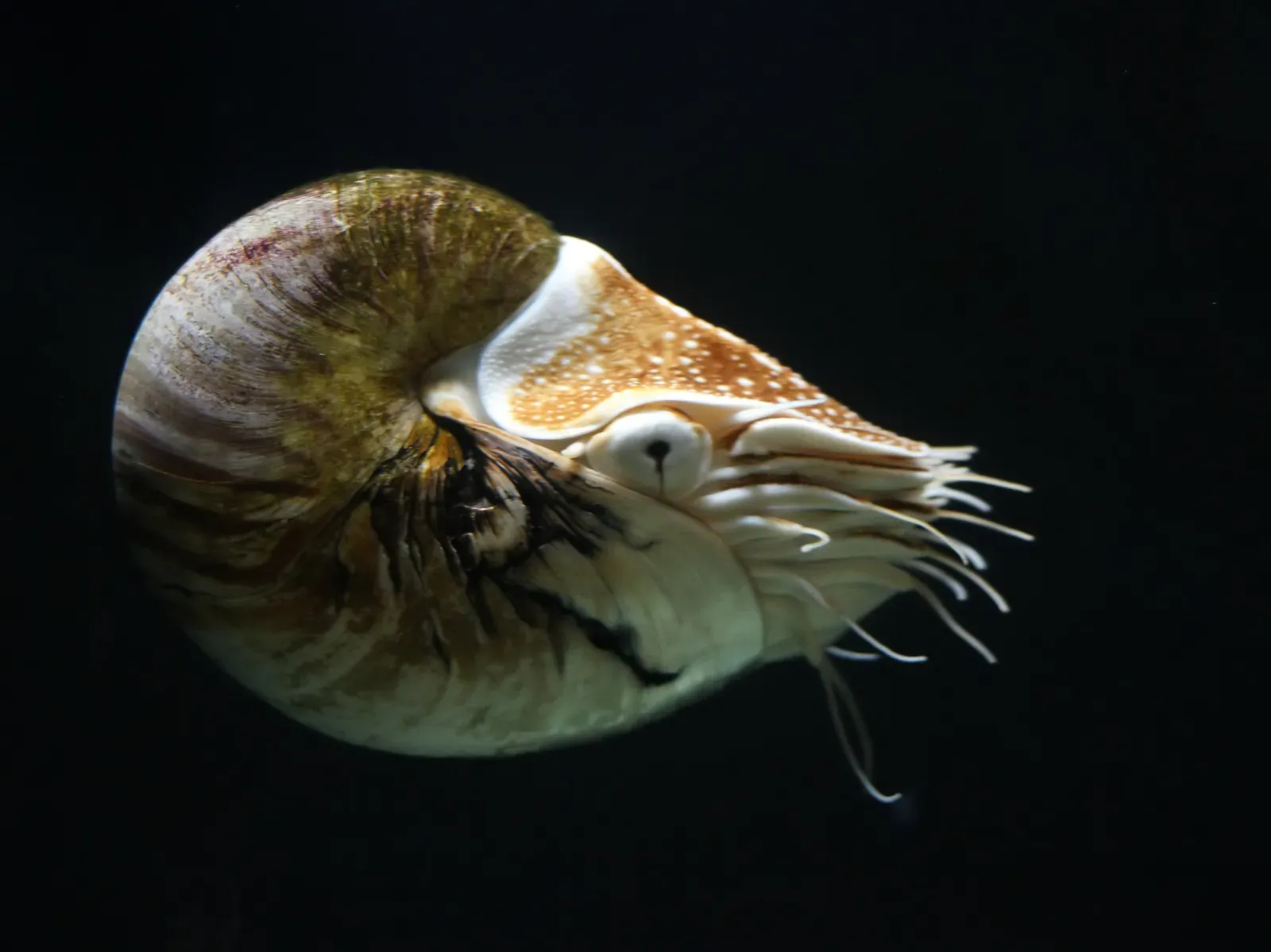
The nautilus looks like it was designed by an artist who loved spirals and symmetry. That iconic coiled shell has barely changed from fossils dating back hundreds of millions of years, when its relatives ruled the oceans as dominant predators. While many of those shelled cephalopods vanished, the nautilus kept gliding on, like a tiny submarine that never needed a redesign.
Inside that shell lives a soft-bodied animal with numerous tentacles, primitive compared with its octopus and squid cousins but perfectly adapted to its slow-motion lifestyle. It hovers in deep ocean waters, adjusting its buoyancy using gas-filled chambers, just like its ancient relatives did before mammals ever appeared on land. In a world obsessed with constant innovation, the nautilus is proof that if your design works across multiple geological eras, you do not fix what is not broken.
4. Crocodile: The Modern Echo Of Ancient Archosaurs
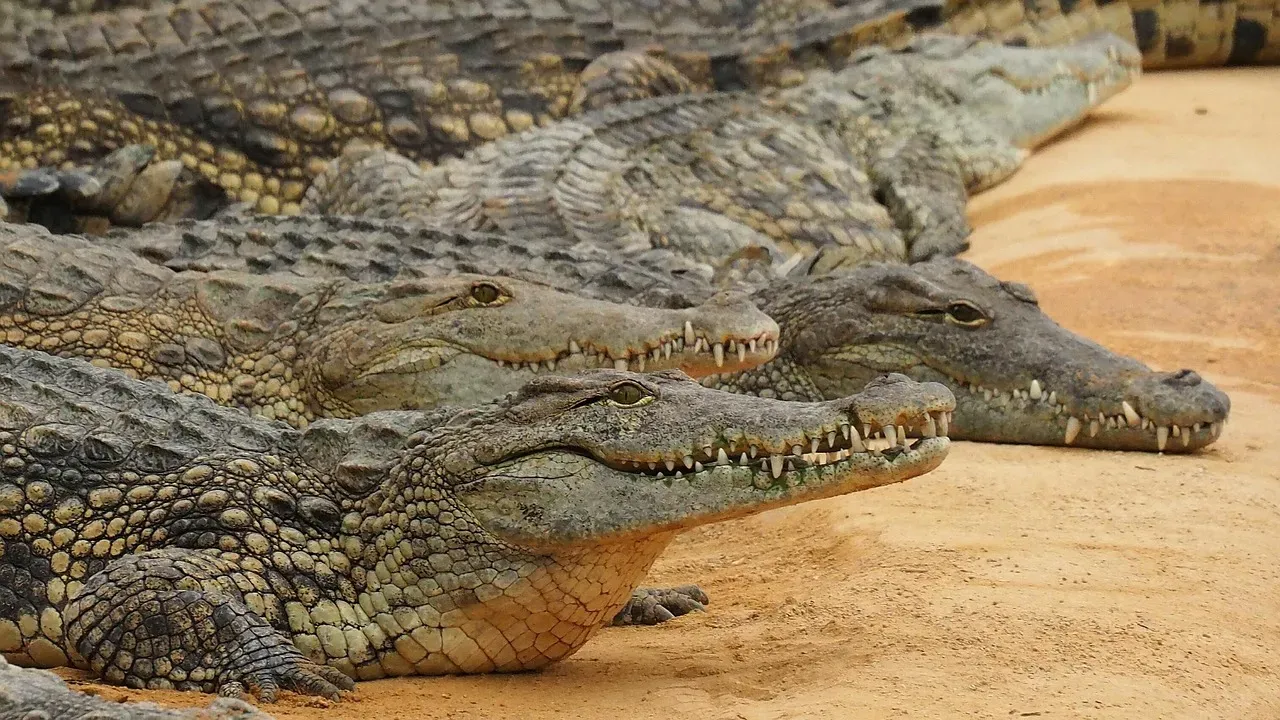
When you see a crocodile basking on a riverbank, you are not just looking at a scary reptile – you are looking at an echo of ancient archosaurs, the broader group that includes the ancestors of both crocodilians and dinosaurs. Fossils of crocodile relatives from more than two hundred million years ago already show that familiar long snout, heavy armor, and stealthy, semi-aquatic body plan. The details have shifted over time, but the main idea has stayed eerily stable.
Crocodiles today are apex ambush predators in tropical and subtropical waters, using slow, patient stillness and explosive bursts of power in essentially the same way their ancestors did when giant dinosaurs roamed nearby land. What makes them feel so prehistoric is not just their appearance, but their whole vibe: the slow metabolism, the long lifespan, the minimal need to change anything about how they hunt or live. They are a brutal reminder that evolution does not reward novelty; it rewards whatever keeps you alive, even if your look would not be out of place in a Jurassic mural.
5. Tuatara: The Last Survivor Of A Lost Reptile World
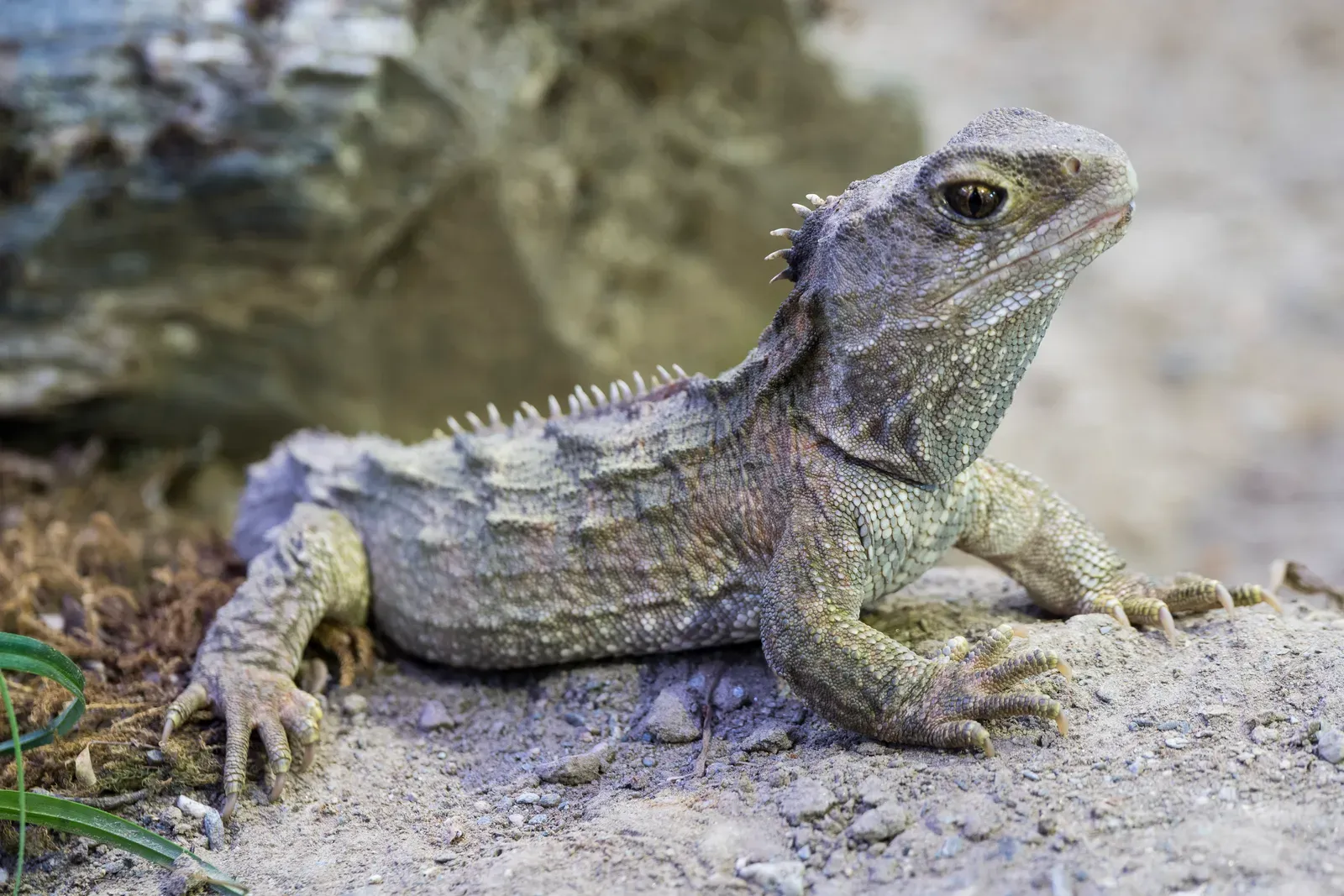
The tuatara, found only in New Zealand, is one of those animals that makes biologists weirdly emotional. It looks, at a glance, like just another lizard, but genetically and anatomically it belongs to its own ancient lineage, separate from all modern lizards and snakes. Fossils of its relatives from more than two hundred million years ago are so similar to the living tuatara that paleontologists often do a double take.
This reptile carries a grab bag of ancestral features: a unique skull structure, a slow metabolism, and even a so-called “third eye” on the top of its head when young, linked with light-sensing functions. Tuataras grow slowly, can live for many decades, and reproduce at a painfully slow pace, which is not exactly ideal in a fast-changing, human-dominated world. Yet somehow, this quiet survivor has kept its ancient blueprint alive into the twenty-first century, turning isolated New Zealand islands into time capsules of a vanished reptile empire.
6. Lungfish: The Fish That Remembers How To Be A Land Animal
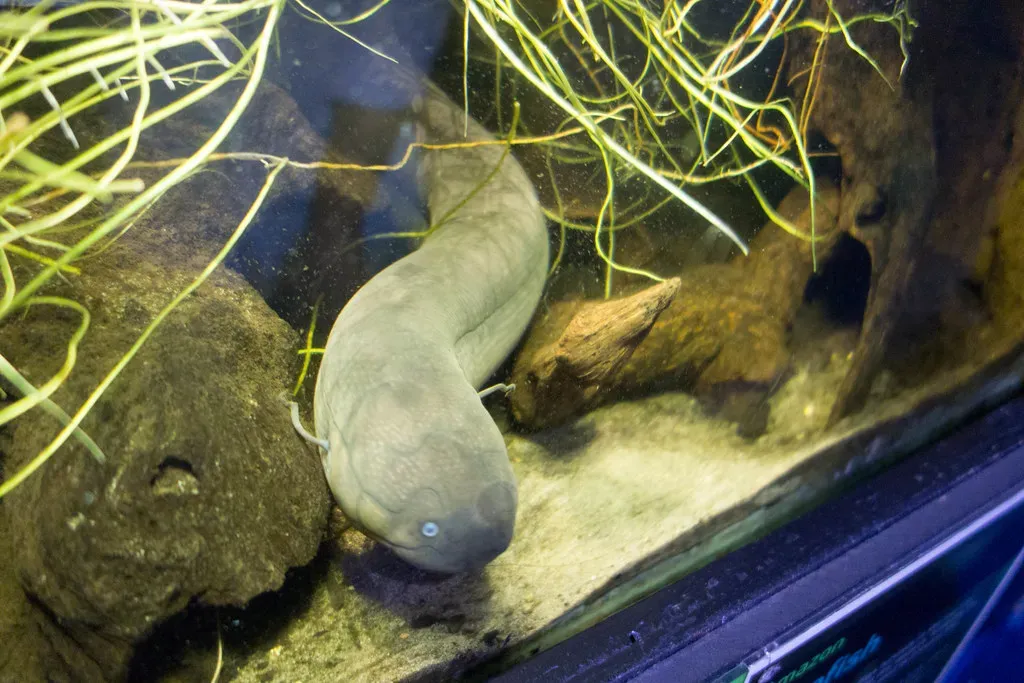
Lungfish are like living reminders that your distant ancestors were once fish figuring out how to walk on land. Fossils of lungfish relatives go back more than four hundred million years, and when you line them up with modern species, the core plan is almost spookily consistent: an elongated body, fleshy paired fins, and, crucially, the ability to breathe air using lungs. In evolutionary terms, they sit right at the crossroads between water and land.
Some modern lungfish can survive seasonal droughts by burrowing into mud and slowing their metabolism so dramatically that they can wait out months of dry conditions. That trick has roots in ancient adaptations for unstable freshwater environments, and it is yet another feature preserved across vast swaths of time. Watching a lungfish gulp air at the surface feels like watching a rerun of a moment that eventually gave rise to amphibians, reptiles, birds, mammals – and us – yet the actor on screen is still remarkably close to its original script.
7. Sturgeon: The Armored Ghosts Of Ancient Rivers
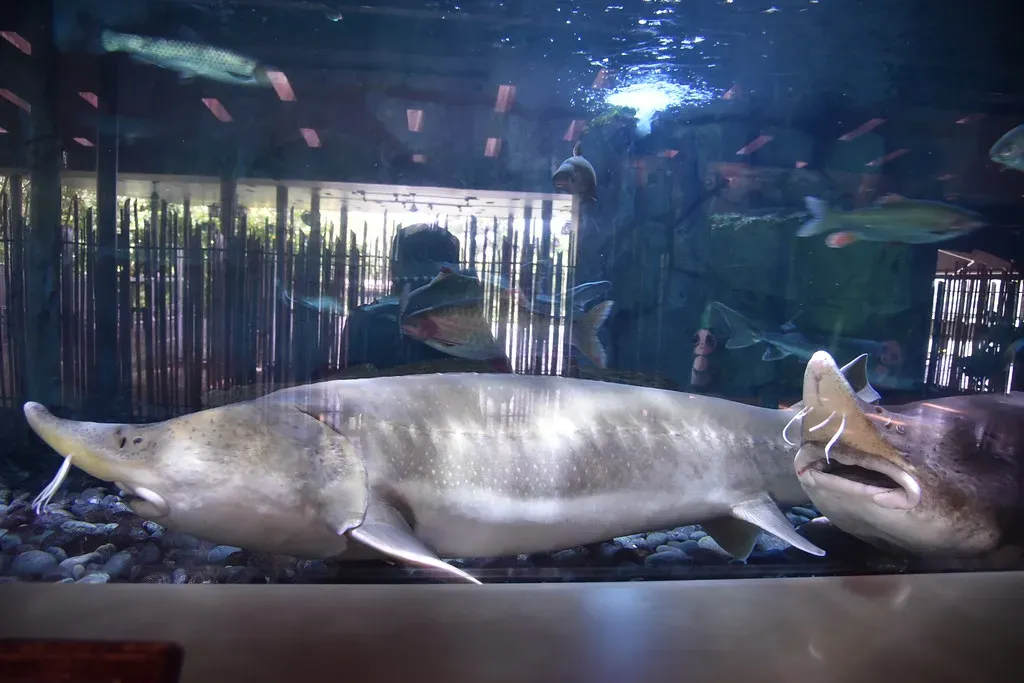
Sturgeons look like someone welded a shark to a tank. Their bodies are long and torpedo-shaped, but instead of smooth scales, they wear rows of bony plates called scutes that give them a distinctly armored appearance. Fossils from more than one hundred million years ago show sturgeon ancestors with nearly the same overall shape and armor layout, roaming ancient rivers and coastal waters long before humans started building dams and fishing them heavily.
These fish grow slowly, live a very long time, and take many years to reach sexual maturity, all classic traits of lineages that change gradually over immense timescales. Sadly, those same traits make them extremely vulnerable to overfishing, habitat destruction, and pollution. There is something almost tragic about the idea that a group of fish which effortlessly cruised through multiple mass extinctions might be pushed to the edge by a few centuries of human pressure, after carrying their ancient body plan safely through eras of asteroid impacts and climate upheavals.
8. Goblin Shark: The Deep-Sea Relic With A Nightmare Face
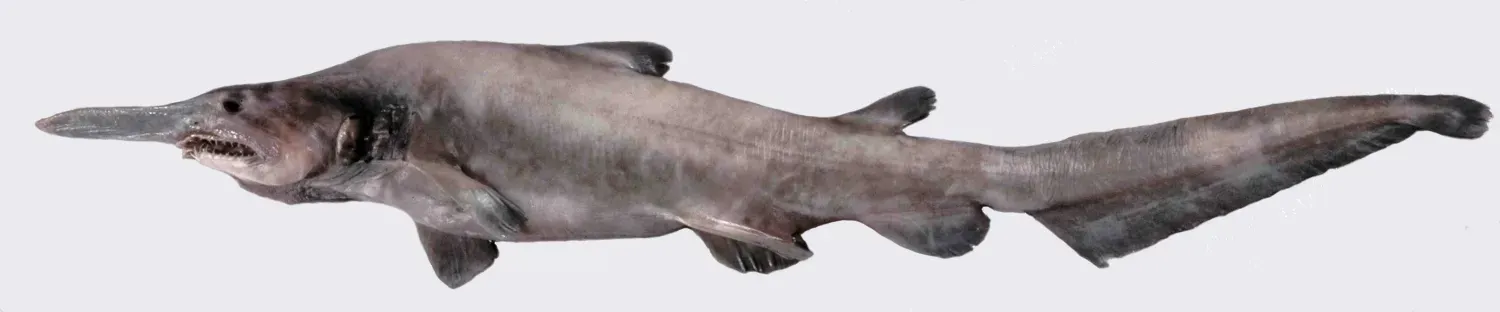
The goblin shark looks like a creature designed after a bad dream about sharks and alien weapons. Its long, flattened snout and jaws that can sling forward to grab prey are not modern experiments; fossils of related sharks from tens of millions of years ago already show that distinctive, elongated snout and similar jaw architecture. This lineage sits near the base of the modern shark family tree, giving it a claim to genuine deep-time status.
Living in the deep sea, far from sunlight and human disturbance, goblin sharks have had the luxury of changing slowly and quietly, sticking with the same rough design that has worked for ages. They are rarely seen alive, which only adds to their mysterious, almost mythical reputation, but when they do appear on camera, they look uncannily like something that has swum straight out of an ancient ocean. If you wanted a reminder that evolution sometimes keeps the original “beta version” for an absurdly long time, the goblin shark is it.
Conclusion: When “If It Ain’t Broke” Lasts Hundreds Of Millions Of Years
Calling these creatures living fossils is not just dramatic language; it is an admission that our human sense of time is hilariously small compared with theirs. Coelacanths, horseshoe crabs, nautiluses, crocodiles, tuataras, lungfish, sturgeons, and goblin sharks have all ridden out mass extinctions, shifting continents, and radical climate upheavals with a stubborn refusal to abandon what works. In an era obsessed with rapid innovation and constant updates, there is something almost rebellious about a lineage that simply says: this design is good enough to survive the apocalypse, thanks.
Personally, I think we underestimate what these animals represent. They are not primitive leftovers waiting to be replaced; they are proven success stories that show another side of evolution – one where stability, not flashy novelty, is the real flex. Next time you see a horseshoe crab on a beach, a crocodile in a river, or even a photo of a bizarre deep-sea shark, remember that you are looking at a chapter of Earth’s history that was written long before humans and is still being quietly updated. It makes you wonder: in a few million years, which of our own familiar species will look like the ancient originals – and would you bet on us being one of them?