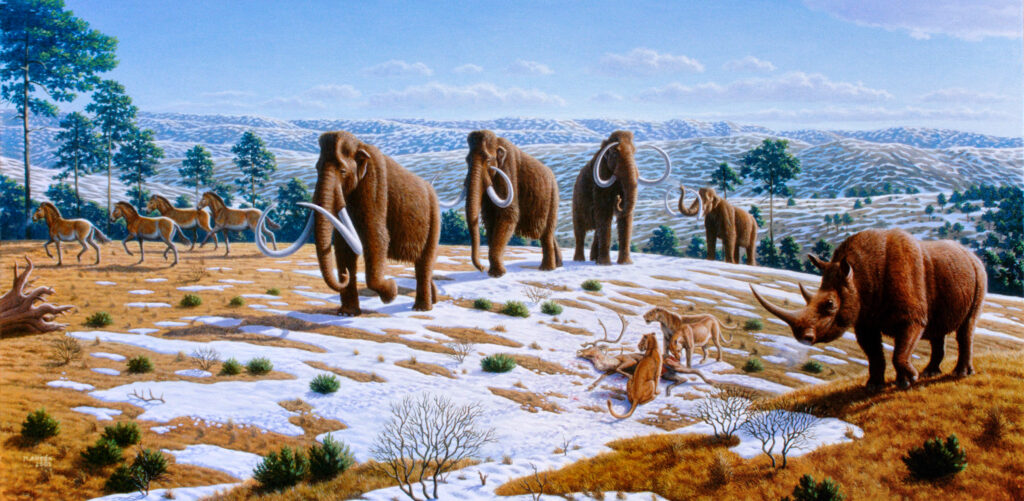
Most people picture the Ice Age as a snowy backdrop for woolly mammoths and shivering cavemen huddled around a fire. That picture is dangerously incomplete.
The real Pleistocene was a 2.6-million-year arms race between predators so specialized, so overbuilt, and so terrifyingly efficient that a modern lion or tiger would have struggled to survive a single season in their territory. We’re talking about bears that could outrun a racehorse, birds too heavy to fly but too fast to outrun, and cats whose entire skeletons were reshaped around one brutal killing move.
Here’s what paleontologists actually know about the fourteen deadliest hunters that ever walked, swam, or stalked the frozen world – and why almost none of them get the credit they deserve.
#14 – Titanis walleri, the Terror Bird That Invaded North America
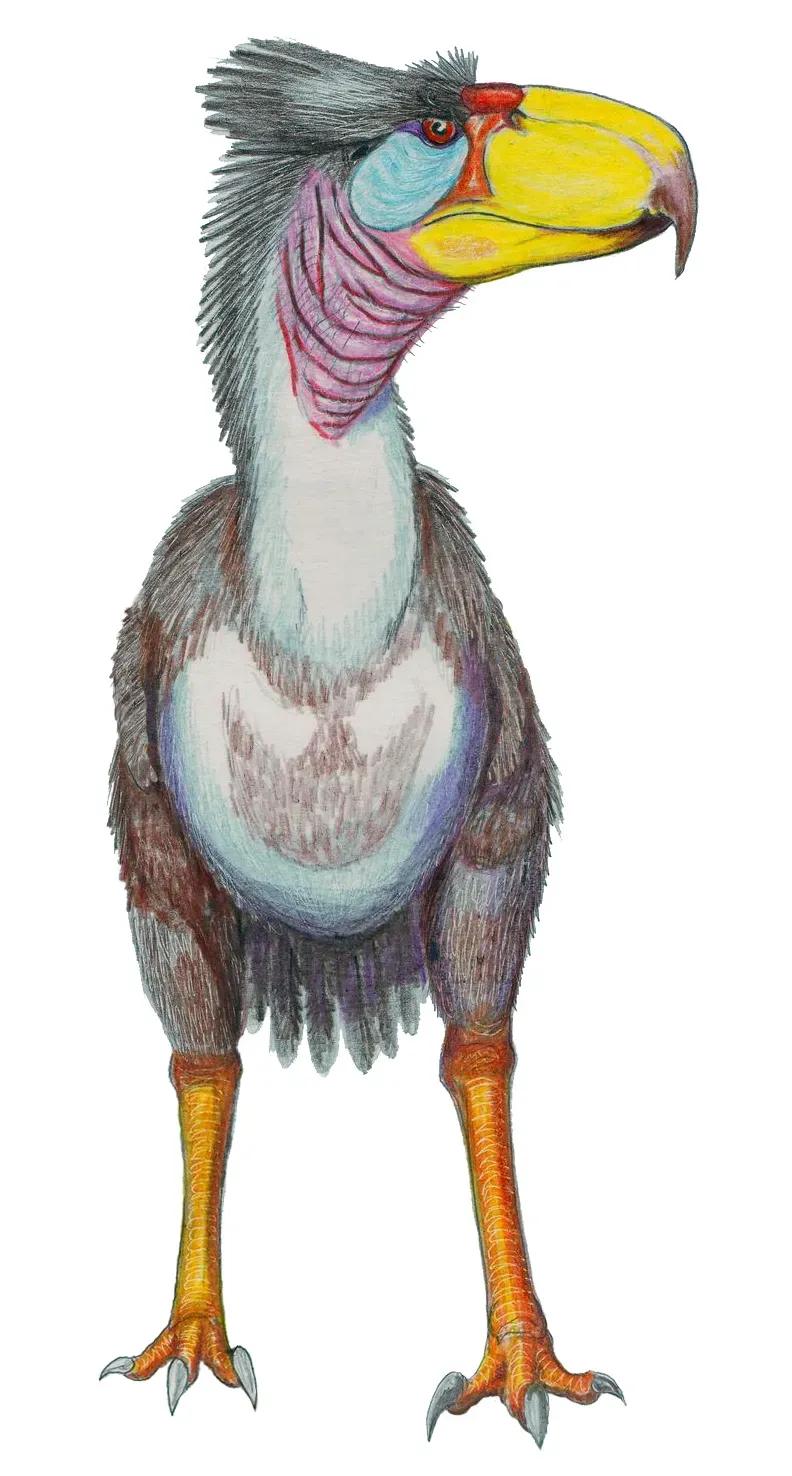
A two-meter-tall, flightless bird with an axe for a face doesn’t sound like a Pleistocene resident, but Titanis proves the Ice Age started with a bang. This phorusrhacid, part of the “Terror Bird” family, was one of the largest ever known, standing two meters tall and weighing over 300 kilograms, with a massive skull and a hooked beak researchers believe it used to peck prey to death.
What makes Titanis genuinely remarkable is its migration story. It’s the only predator known to have successfully crossed from South America into North America during the Great American Interchange, while almost every other predator that made the same journey was quickly outcompeted by North America’s wolves, cats, and bears. Researchers have estimated Titanis could run up to 65 km/h, fast enough to run down almost anything on the open plains. It survived exactly because it out-competed everything else that tried the same crossing.
Fast Facts
- Height: about 2 meters tall
- Weight: over 300 kilograms
- Top speed: up to 65 km/h
- Only predator to successfully migrate north during the Great American Interchange
#13 – Xenosmilus, the “Cookie-Cutter” Cat Nobody Talks About
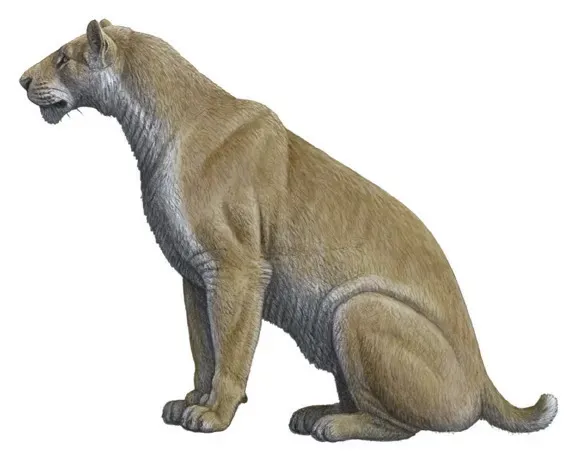
Forget elegant ambush predators – Xenosmilus was built like a tank with steak knives for teeth.
This bizarre hybrid of a saber-tooth and a scimitar-tooth cat combined the worst features of both designs into one animal. Fossil records show Xenosmilus lived in Florida roughly 1.7 to 1 million years ago, a robust cat with short legs and thick, stout canine teeth. Unlike the slender, sprinting Homotherium, Xenosmilus was thickset and powerfully built, suggesting it didn’t chase prey across open ground – it bulldozed through brush and grabbed whatever was closest. Paleontologists believe its short, blunt teeth combined with its bear-like bulk to inflict massive, gaping wounds rather than a single precision strike, tearing chunks of flesh away with each bite. That short-legged, heavyweight build made it one of the most physically punishing cats of the entire Ice Age – a brawler in a world full of sprinters.
#12 – The Cave Hyena, Europe’s Bone-Crushing Nightmare
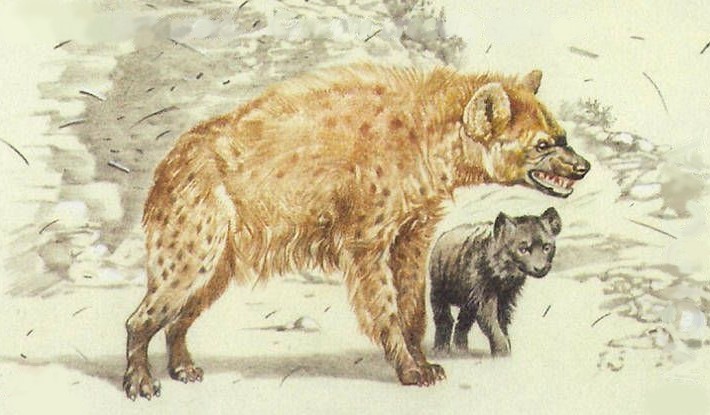
Modern spotted hyenas already have the strongest bite relative to body size of any living land mammal – now imagine one built noticeably larger and hunting in packs across Ice Age Europe.
The cave hyena (Crocuta crocuta spelaea) was a close relative of today’s African spotted hyena, adapted to the cold Eurasian steppes and forests of the Pleistocene. It competed directly with cave lions and early humans for the same caves, den sites, and megafauna carcasses, and fossil evidence from European caves shows it regularly hunted young mammoths, rhinos, and horses rather than simply scavenging. Its jaw was engineered to crack open the femurs of animals no other predator could touch, giving it exclusive access to marrow nothing else in its ecosystem could reach. Most people assume hyenas were scavengers first – the cave hyena flips that stereotype entirely. It was a dominant, pack-hunting apex predator that Neanderthals actively avoided when choosing shelter.
#11 – The American Cheetah That Wasn’t Actually a Cheetah
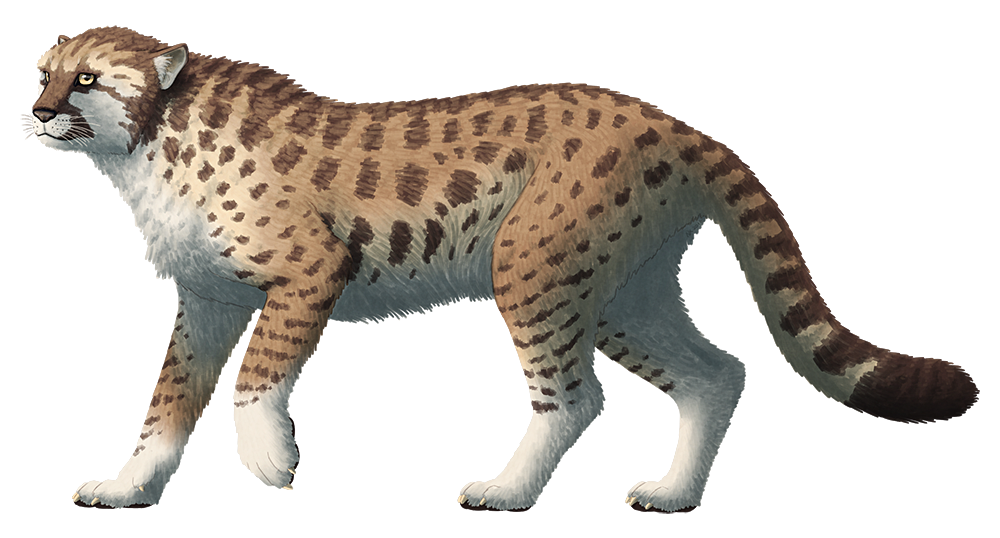
Here’s a genuine plot twist: the “American cheetah” isn’t related to African cheetahs at all – it’s a cougar cousin that evolved the exact same body plan by pure coincidence.
Miracinonyx trumani roamed Ice Age North America with a lightweight skeleton, long legs, and a flexible spine strikingly similar to a modern cheetah’s, a textbook case of convergent evolution. Scientists believe it evolved this sprinter’s build specifically to chase down pronghorn antelope, animals that still display bizarre bursts of speed today, a leftover survival instinct from an era when this cat was breathing down their necks. Unlike the ambush hunters that dominated the Pleistocene, Miracinonyx relied almost entirely on raw speed over open grassland. It’s the reason modern pronghorn can outrun every living North American predator – they’re still running from a ghost.
#10 – The Ice Age Jaguar That Dwarfed Its Modern Cousin
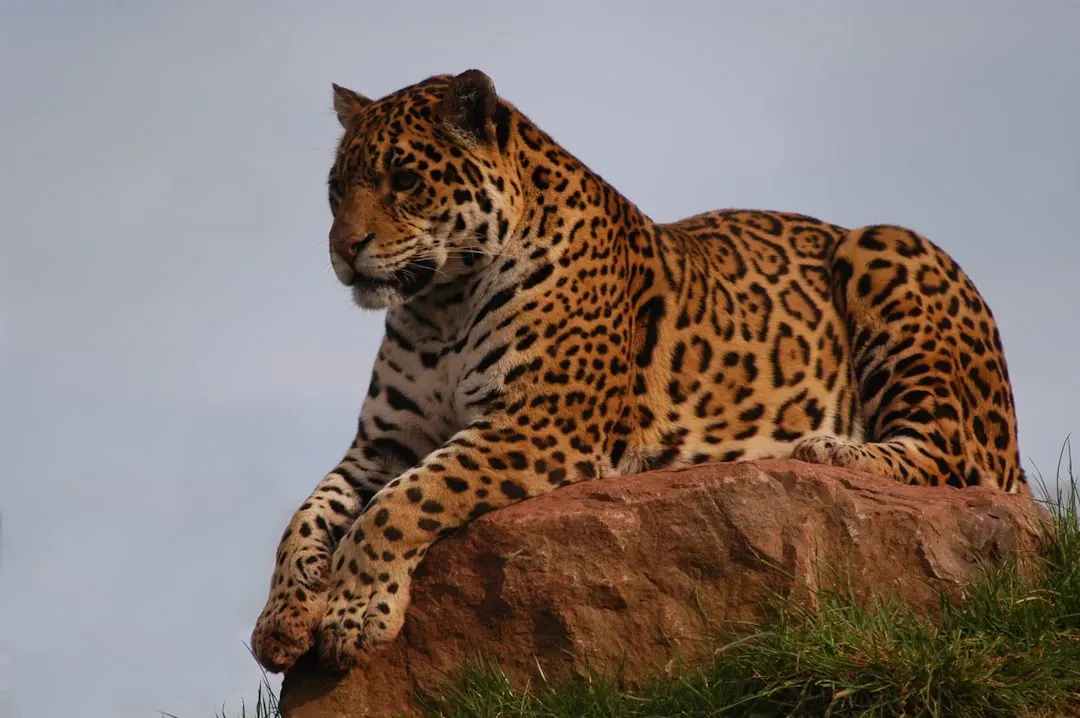
The jaguars prowling Central and South America today are already frightening enough – their Pleistocene ancestor was noticeably bigger and even more heavily built.
Panthera onca augusta prowled North and South America during the Ice Age, and fossil remains recovered from sites like the La Brea Tar Pits show a cat considerably larger than the modern jaguar, with proportionally more powerful jaws suited for crushing thick hides and bone. Modern jaguars already have one of the strongest bite forces relative to body size of any big cat, and the Ice Age version needed even more power to compete directly with saber-tooths, dire wolves, and short-faced bears for the same forested territory. This wasn’t an animal built for open-plain chases – it was a specialist forest ambusher, relying on stealth and overwhelming bite strength rather than speed. Living in the same neighborhood as Smilodon and giant bears forced this jaguar to get bigger just to survive – a Pleistocene arms race in miniature.
#9 – Haast’s Eagle, the Largest Eagle That Ever Lived
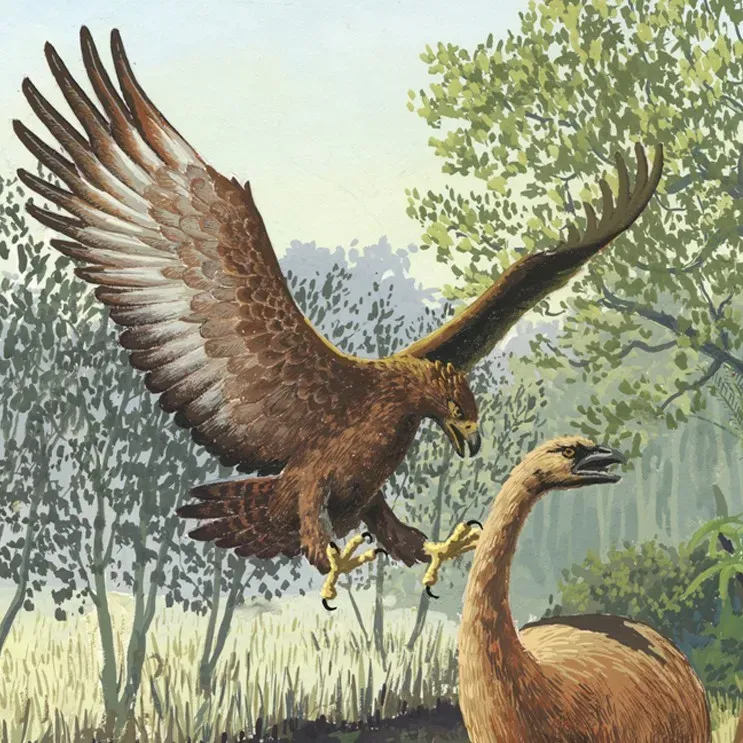
New Zealand had no large land mammals during the Ice Age, so evolution built a flying apex predator instead – and it remains the biggest eagle science has ever documented.
Haast’s eagle weighed roughly 18 kilograms and had a wingspan approaching three meters, making it the largest eagle species currently known to science. It primarily hunted moas, giant flightless birds that could weigh 230 kilograms, twice as heavy as today’s largest flightless bird, the ostrich. To take down animals many times its own body weight, it relied on huge, curved talons, a hooked beak, and, according to its depictions in historic Māori cave art, a bald head built for reaching deep into carcasses. Researchers acknowledge that while there’s no evidence it actually hunted humans, it would have been more than capable of doing so. Its extinction wasn’t due to climate collapse – it was collateral damage from humans hunting its only food source, since by overhunting moas, the Māori may have inadvertently driven Haast’s eagle to extinction.
#8 – Megalania, the Dragon That Actually Existed
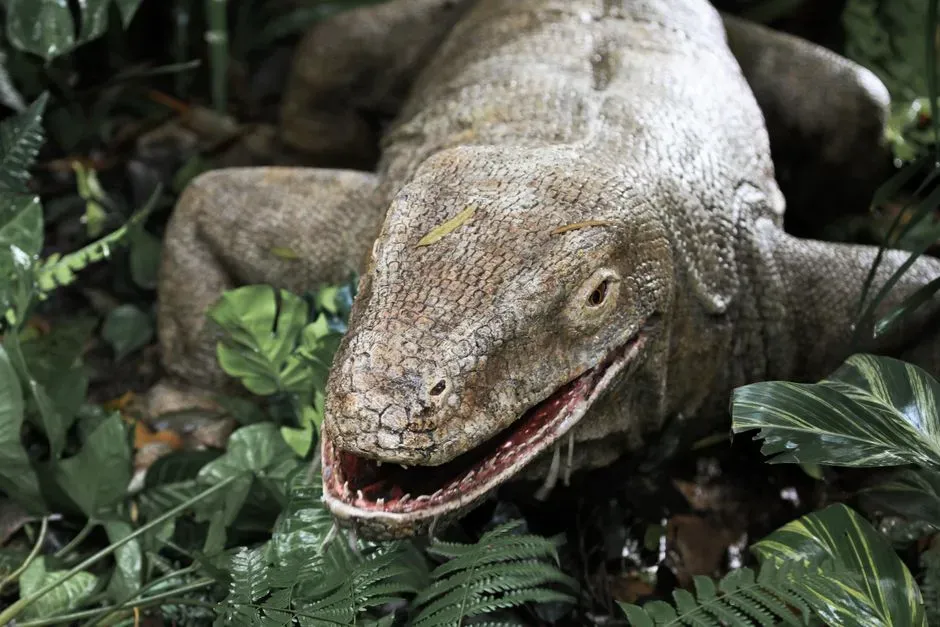
Australia’s Ice Age megafauna gets overshadowed by mammoths and saber-tooths, but the continent was quietly home to a monitor lizard that makes the Komodo dragon look like a house pet.
Varanus priscus, better known as Megalania, was a genuine apex predator lurking in Pleistocene Australian woodlands, scrublands, and semi-desert areas near water. Fossil estimates put this lizard at a staggering size – most reconstructions suggest it ranged from 14.7 to 23 feet long, longer than most cars, with some researchers arguing the true maximum may have been even larger. Unlike mammalian predators that rely on raw muscle, Megalania likely used a combination of powerful jaws, serrated teeth, and possibly toxic saliva similar to living monitor lizards to bring down prey many times its own size. A reptile this large sharing territory with marsupial lions and giant crocodiles made Ice Age Australia arguably the deadliest continent on Earth.
#7 – Thylacoleo, Australia’s Marsupial Lion
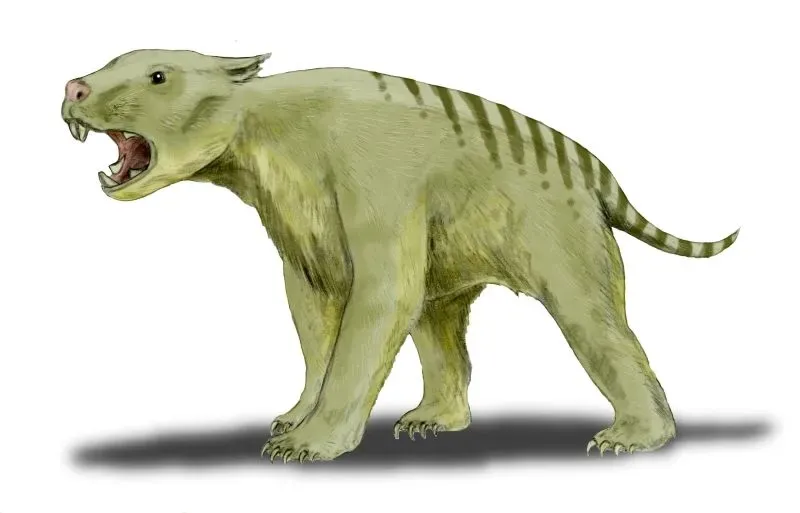
Nature rarely builds an apex predator out of a herbivore lineage – but Australia’s marsupial lion did exactly that, and the result was terrifying.
Thylacoleo carnifex belonged to the diprotodont group, a family otherwise packed with kangaroos and wombats, yet it evolved into a true apex predator despite possibly descending from herbivorous ancestors. It ranged across most of Australia from the late Pliocene through much of the Pleistocene, roughly 1.6 million to 11,700 years ago, hunting with retractable claws and shearing premolars unlike anything seen in modern carnivores. It wasn’t the only threat in its ecosystem, either – Thylacoleo had to compete with frankly terrifying neighbors, including Quinkana, a land crocodile that ranged from 6.5 to nearly 20 feet long, plus the aforementioned Megalania. An apex predator descended from plant-eaters, competing against giant land crocodiles and dragon-sized lizards, sounds like fiction – it was simply Tuesday in Ice Age Australia.
#6 – Homotherium, the Scimitar Cat Built for Speed, Not Ambush
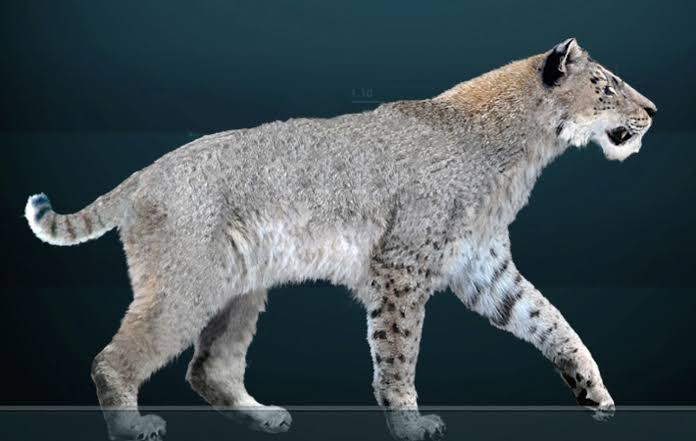
While Smilodon gets all the movie deals, its lesser-known cousin Homotherium may have actually been the more dangerous hunter, because it was built to chase rather than hide.
Scientists believe Homotherium was adapted to running down prey rather than ambushing it, an unusual strategy among saber-toothed cats. It achieved this through a genuinely bizarre feature: an unusually large, square nasal opening, similar to a cheetah’s, that likely allowed quicker oxygen intake for rapid running and cooling the brain, paired with a large, complex visual cortex that gave it sharp daytime eyesight. Its canines were shorter than Smilodon’s but flat, serrated, and longer than those of any living cat – essentially built-in steak knives – and this wasn’t a localized predator, either, since it ranged across North America, South America, Eurasia, and Africa during the Pliocene and Pleistocene. A saber-toothed cat with cheetah-like daytime vision and pack-hunting behavior is arguably scarier than the ambush predators everyone fears.
Quick Compare
- Homotherium: built for running, cheetah-like nasal passage, flat serrated canines, hunted in daylight
- Smilodon: built for ambush, longer curved canines, powerful wrestling arms, relied on stealth
#5 – The Dire Wolf, Real Science Behind the Fantasy Name
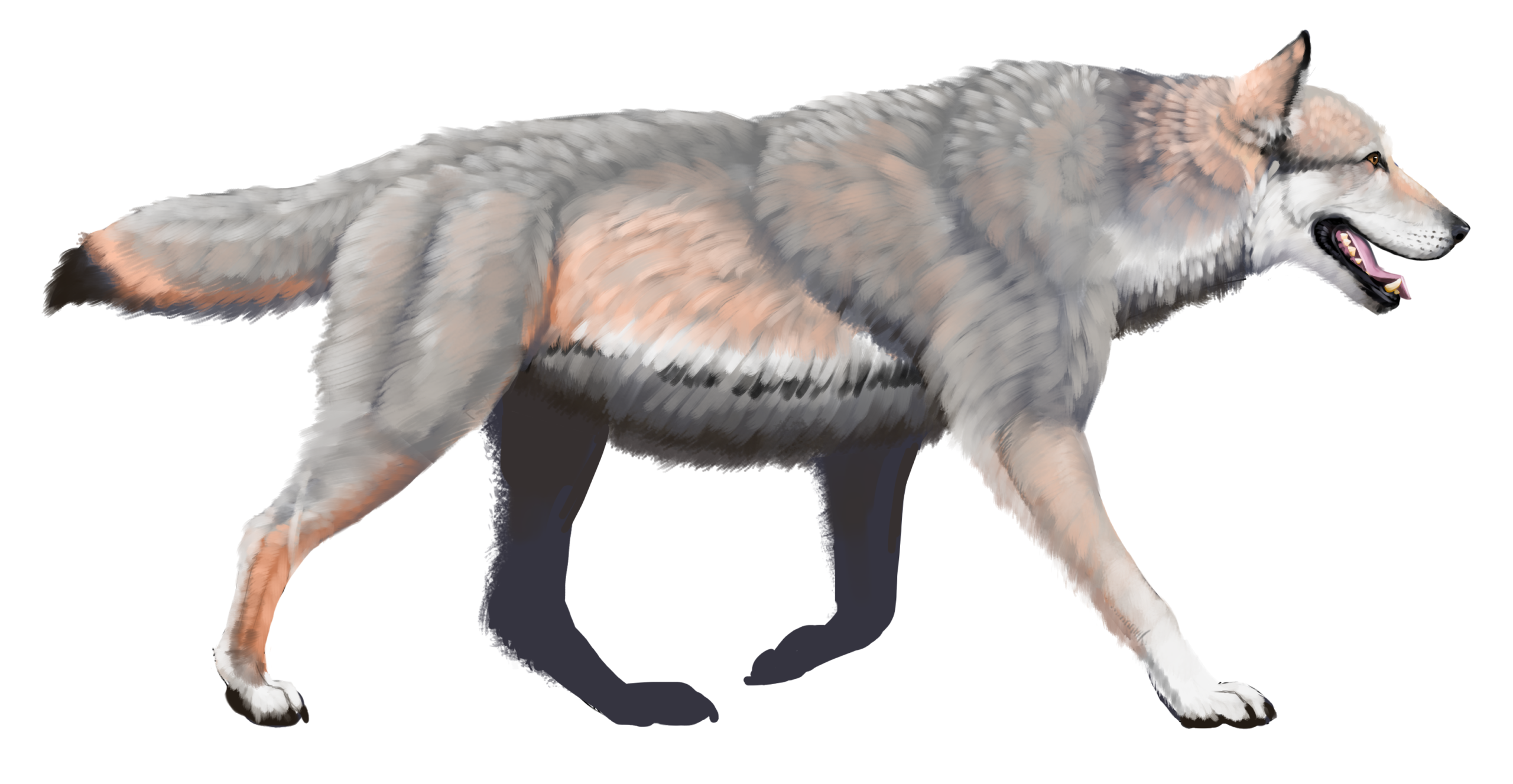
Long before television made it famous, the dire wolf was already one of the most successful predators in Ice Age North America – and considerably more brutal than its Hollywood portrayal suggests.
According to the National Park Service, the dire wolf was the largest of the late Pleistocene canids of North America, with a skull that could reach up to 12 inches in length and teeth larger and more robust than those of today’s gray wolves. Despite popular belief, dire wolves weren’t simply oversized gray wolves – they had shorter limbs relative to body mass and a stockier build, trading speed for raw crushing power. Their larger, more powerful jaw muscles made them extremely efficient at capturing and killing prey, even with a smaller brain and lighter limbs than their modern cousins. They weren’t the fastest predator on the plains – but pound for pound, their bite was engineered to end a fight instantly.
#4 – The Cave Lion, Europe’s Ice Age Superpredator
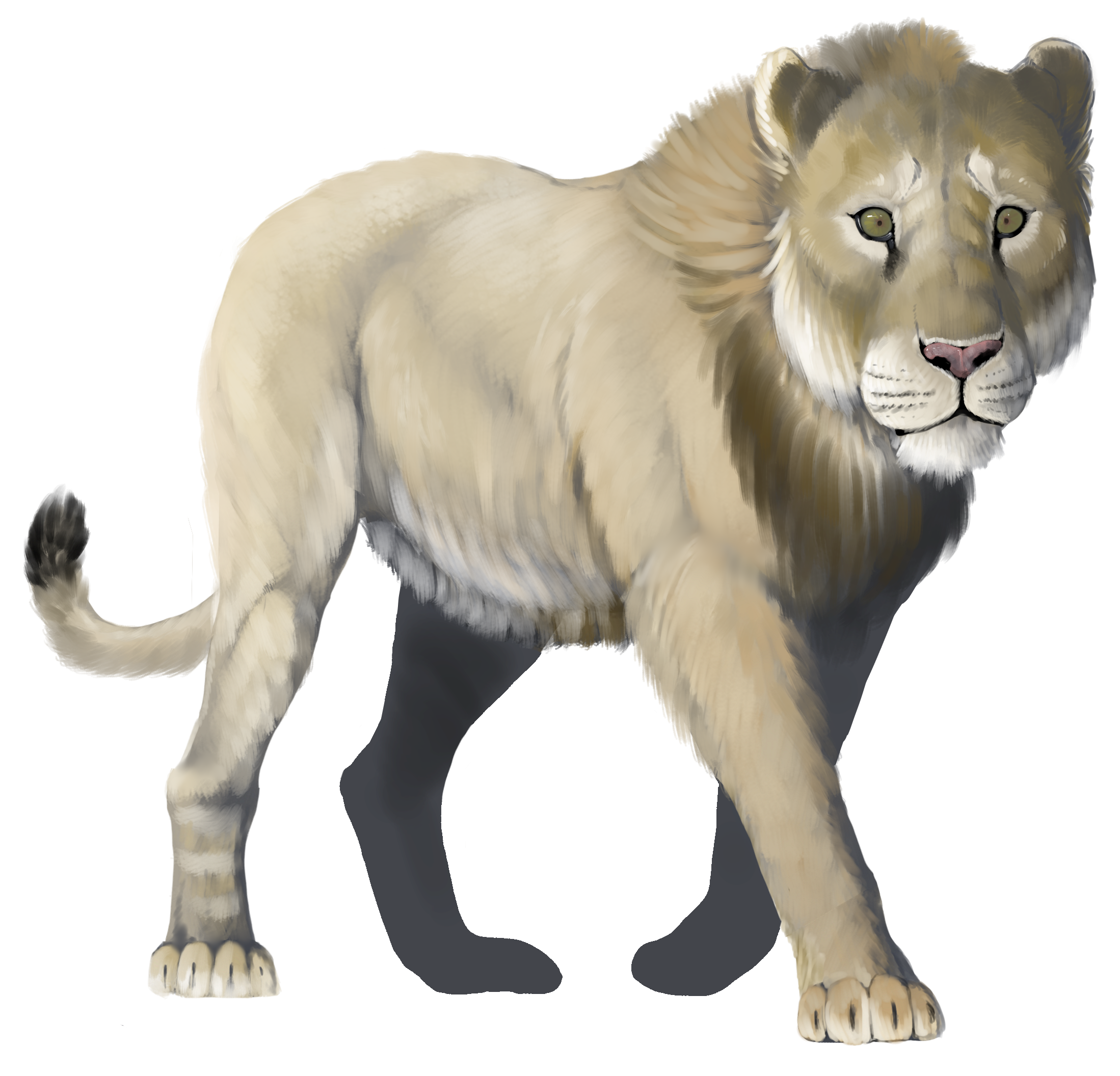
Long before African lions became the “king of the jungle,” their Eurasian ancestor ruled an empire stretching from Spain to Alaska.
The cave lion, Panthera spelaea, diverged from the closely related African lion between 1.9 million and 600,000 years ago, and researchers confirm it was up to 12 percent larger than any modern lion, ranging widely across North America and Eurasia during the last Ice Age before dying out just 13,000 years ago. Early populations were even more massive, with some individuals reaching 1.1 to 1.2 meters tall at the shoulder, 2 to 2.1 meters in body length, and a possible mass of 200 to 350 kilograms. What makes this predator uniquely fascinating is its relationship with humans – cave lions lived alongside our ancestors, who depicted the animal in Ice Age cave paintings. This is the only Ice Age apex predator we have direct artistic eyewitness testimony of, painted by people who genuinely feared and revered it.
At a Glance
- Up to 12% larger than modern lions
- Shoulder height: 1.1–1.2 meters
- Body length: 2–2.1 meters
- Estimated mass: 200–350 kilograms
- Range: Spain to Alaska
#3 – The American Lion, North America’s Biggest Cat
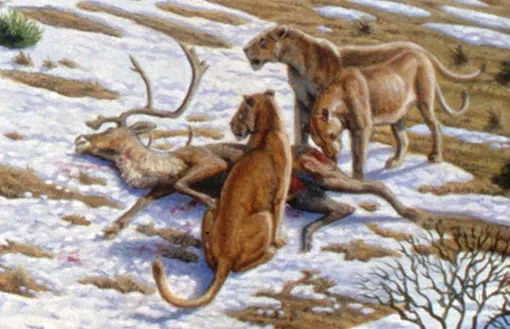
Rancho La Brea in Los Angeles wasn’t just a tar pit – it was a graveyard for the continent’s most dominant feline, and its size still shocks paleontologists today.
Studies using postcranial allometry estimate the American lion’s mass at roughly 200 to over 400 kilograms, making it noticeably heavier than any lion alive now. It was one of the most abundant large carnivores at Rancho La Brea, preserved alongside Smilodon fatalis and dire wolves, meaning these three apex predators were direct competitors fighting over the exact same carcasses. Interestingly, its skeleton tells a different story than you’d expect – its long, relatively gracile limbs suggest it was more cursorial, built for covering ground, than modern lions, fitting the open Ice Age landscape it patrolled. A lion this size still lost the size contest to its own neighbors, like Smilodon populator and the giant short-faced bear, which tells you everything about how brutal the competition really was.
#2 – Smilodon, the Saber-Tooth That Broke Every Assumption
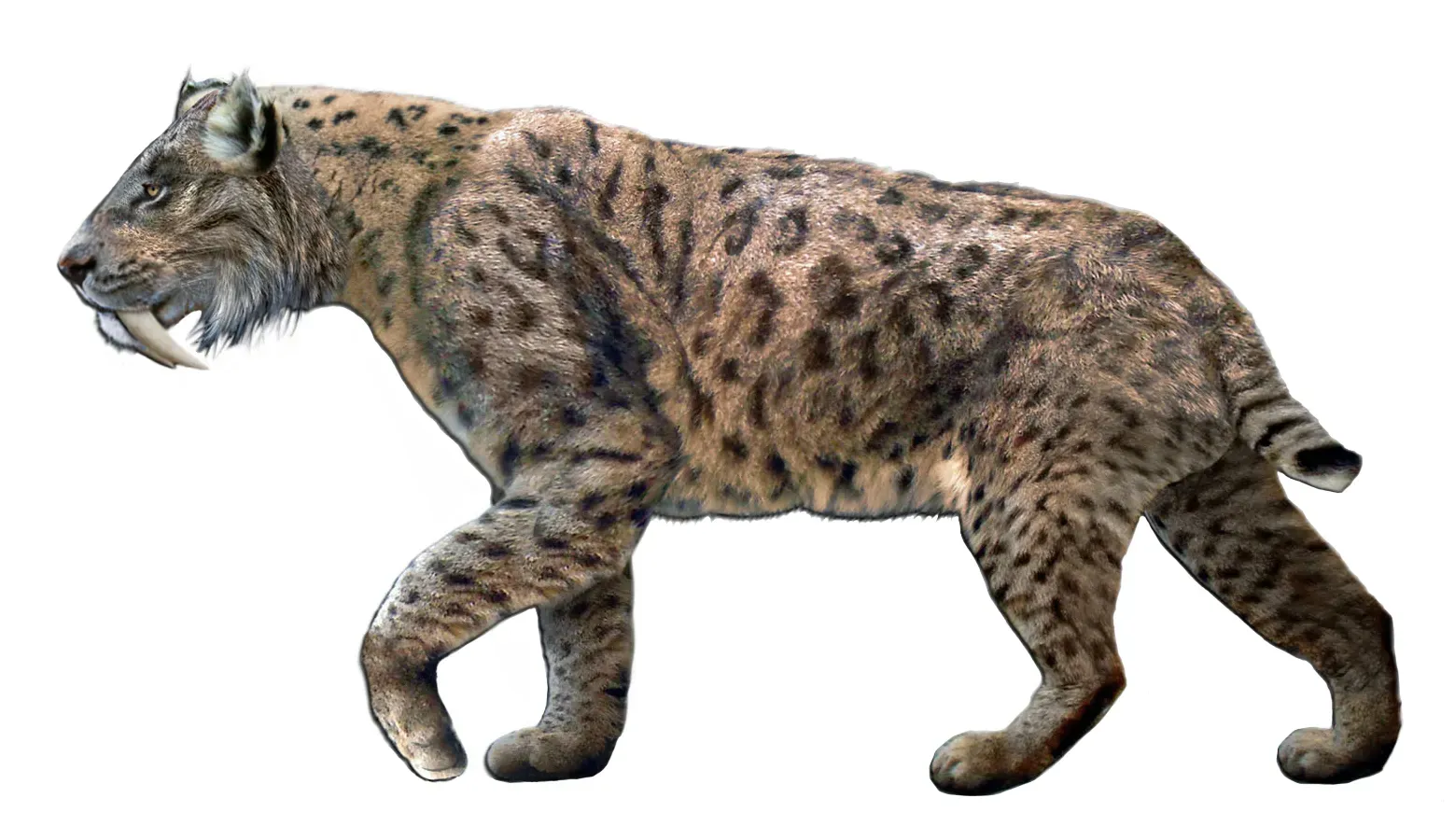
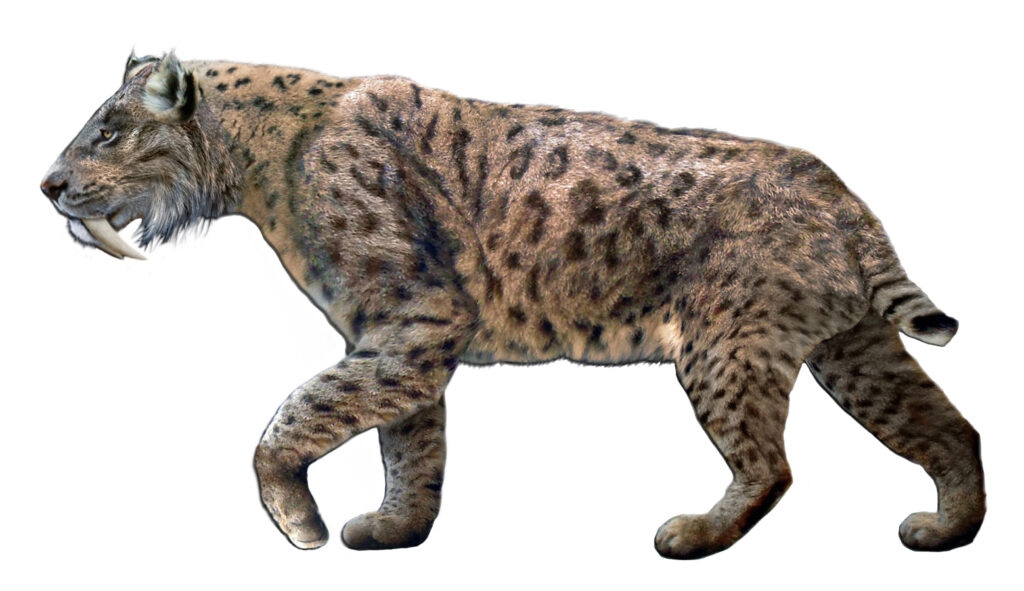
Everyone assumes Smilodon’s giant canines were its ultimate weapon – but modern biomechanics research reveals a far stranger truth about how this legendary cat actually killed.
Its most famous species carried canines measuring up to 28 centimeters, or 11 inches, yet computer modeling shows its bite was surprisingly restrained. Researchers found that a lion’s skull actually outclassed Smilodon’s in raw power, with the “king of beasts” chomping down at over 3,000 newtons of force while a 229-kilogram Smilodon managed only around 1,000. So how did it actually kill? Scientists discovered saber-toothed cats had powerful arms, stronger than those of any cat alive today, which they used to pin down prey and protect their fearsome teeth, which were actually fragile enough to fracture. The most iconic weapon in prehistory was actually a finishing move, not the primary weapon – the real killing power was in its wrestler’s arms.
#1 – The Giant Short-Faced Bear, the Deadliest Land Mammal in History
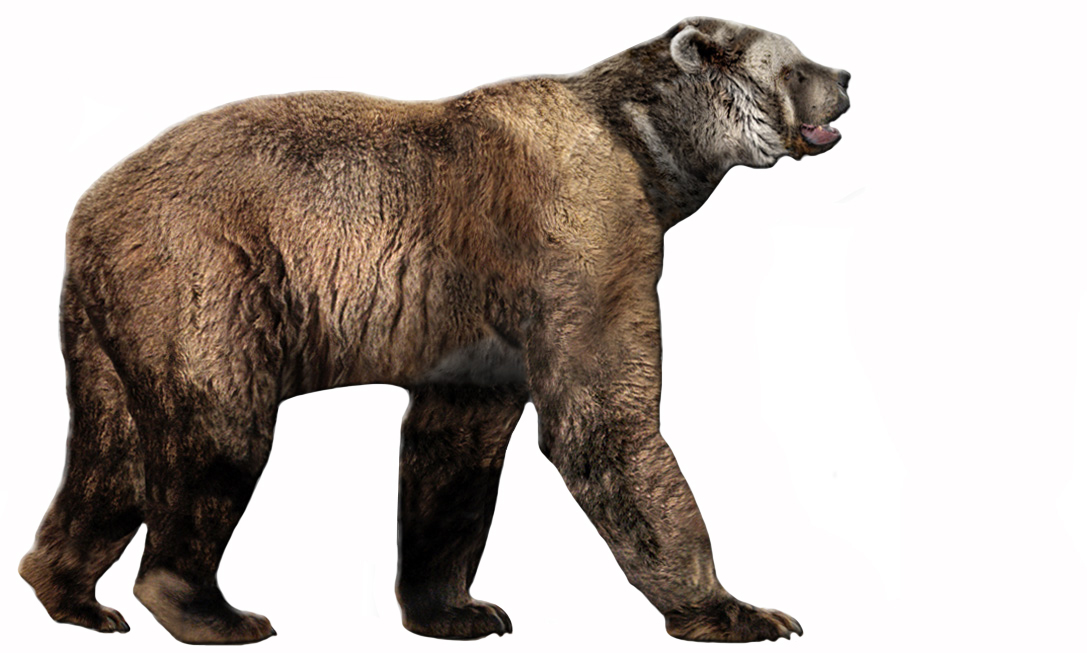
If you had to survive an encounter with only one animal on this entire list, Arctodus simus is the one you’d pray never crossed your path.
Researchers describe it plainly as mainly a flesh-eater, and by far the most powerful land predator in Ice Age North America. Unlike modern bears, built for short bursts of speed, Arctodus had a skeletal structure engineered specifically for endurance running – rangier and longer-legged than any bear alive today, standing about five feet at the shoulder while walking and as tall as 12 feet on its hind legs. Experts believe it probably could run over 40 miles per hour despite weighing more than 1,500 pounds, and its skull delivered a vise-like killing bite along with the ability to crush bones for marrow that no other Pleistocene carnivore could match. A 1,500-pound animal that could outrun a modern racehorse over open ground had no true predator of its own – it simply went extinct when its ecosystem collapsed around it, disappearing roughly 11,000 years ago as the Ice Age itself ended.
Worth Knowing
- Stood roughly 5 feet at the shoulder on all fours, up to 12 feet on hind legs
- Weighed more than 1,500 pounds
- Could reportedly run over 40 mph
- Went extinct about 11,000 years ago
The Bottom Line
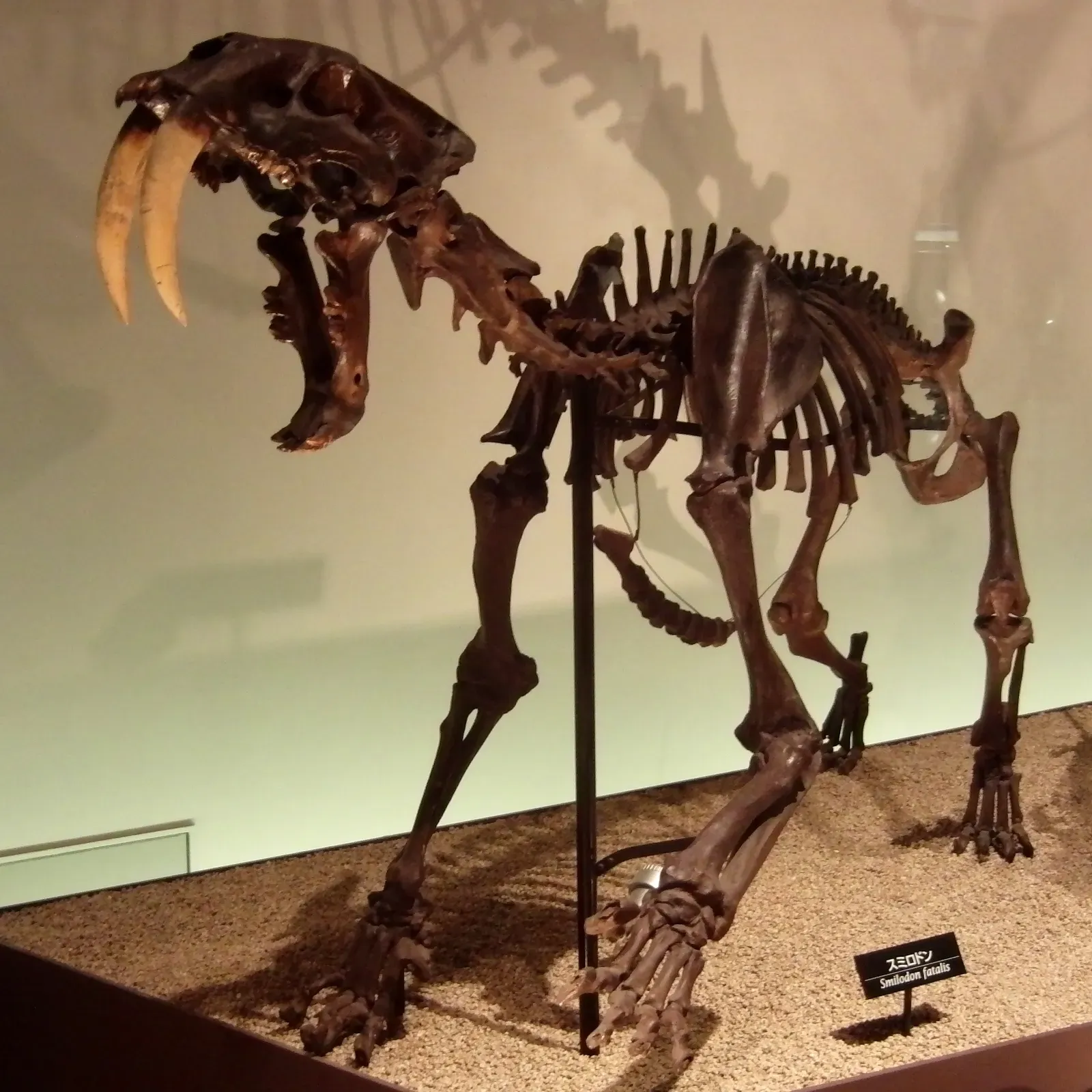
The uncomfortable truth is that modern Africa’s “big five” would have been mid-tier competitors in the Pleistocene. Nothing alive today combines the raw speed of Arctodus, the wrestling power of Smilodon, and the sheer scale of Megalania into one ecosystem.
We got comfortable ranking lions and tigers as nature’s ultimate predators simply because we forgot what actually came before them. If anything, modern apex predators look almost restrained by comparison – evolutionary leftovers from a world that no longer needs to build monsters this extreme.
Which one of these fourteen would you least want to run into on an open plain at dusk? Drop your pick in the comments.