
You know that strange jolt in your stomach when a loud room suddenly falls completely silent? The joke dies halfway, cutlery pauses mid‑air, and for a second you feel like you should brace yourself for… something. It feels irrational, but it is surprisingly consistent: offices, classrooms, family dinners, bars, even group chats that just stop mid‑chaos can all trigger that tiny flash of unease.
This reaction is not just social awkwardness or your brain being dramatic. Beneath the surface is a deeply wired survival system, shaped over tens of thousands of years, that treats sudden silence as a potential warning siren. When noise drops, your nervous system quietly ramps up. Once you see it through that ancient lens, the uncomfortable hush in a meeting or subway car suddenly makes a lot more sense.
The Predator Problem: When Silence Once Meant Danger

Imagine a group of early humans gathered around a fire, chatting, cracking jokes, maybe arguing about who gets the best sleeping spot. Then, in an instant, everything goes quiet: no birds, no insects, no rustling, just a heavy, unnatural stillness. In the wild, that kind of silence is often the moment before something very bad happens. Predators move quietly. Prey animals shut up when they sense them.
Our ancestors who were more sensitive to those sudden dips in sound had a better chance of surviving. If you tensed up faster, scanned your environment, or froze instead of carrying on obliviously, you were simply more likely to pass on your genes. Today, we rarely have to worry about a big cat creeping through the office, but our nervous system never got the memo. A sudden hush in a crowded room still pings that old, inherited alarm system.
How Your Brain Treats Silence Like an Alarm Bell
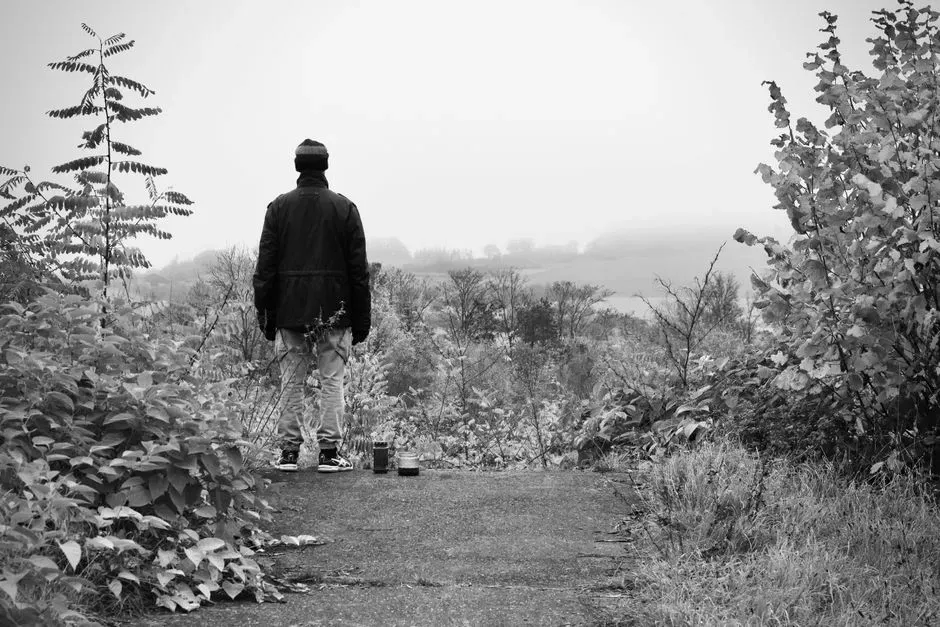
Your brain is constantly running predictions in the background: how loud should it be, what should happen next, what is normal in this situation. In a buzzing environment, it relaxes, because the pattern is stable and nothing stands out. When noise vanishes out of nowhere, that pattern is broken. The brain does not interpret that as neutral; it treats it as a potential threat that needs immediate explanation.
That is why a sharp silence feels louder than any sound. Your attention slams into high gear, your senses sharpen, and you might hold your breath for a second without even realizing. This is the same system that makes you jump when music cuts out in a horror movie right before something terrifying happens. The film is not teaching you a new trick; it is exploiting a very old one your nervous system already knows by heart.
The Role of the Startle Response and Fight‑or‑Flight

When a room suddenly goes quiet, your body does something incredibly fast and subtle: it flips into a low‑level startle state. Your muscles tighten a little, your heart rate may tick up, and your attention narrows, even if you still look relaxed from the outside. This is a lightweight version of the same system that makes you jump when a balloon pops or a door slams unexpectedly.
Evolution favored a hair‑trigger startle response because it is better to react to ten false alarms than to miss the one real danger. The cost of tension and a bit of awkwardness is small compared to the cost of being eaten, ambushed, or attacked. So that uneasy feeling in a suddenly silent room is your fight‑or‑flight circuitry doing its job on a tiny scale, rehearsing for threats that rarely show up anymore but once decided who lived and who did not.
Animals Do It Too: What Nature’s Quiet Really Means

Watch a flock of birds or a group of monkeys, and you will see the same pattern play out. Under normal conditions, the environment is noisy: birds call, monkeys chatter, insects buzz, leaves rustle. When a predator appears, or even just something unusual, that soundscape often collapses. Animals freeze, stop vocalizing, and listen, because movement and noise increase their chance of being spotted.
Humans evolved inside this chorus of natural sound, so our brains learned to treat background noise as a sign that things are okay. When nature’s soundtrack suddenly cuts out, it has always been a clue that some other creature sensed trouble before we did. Modern life has swapped forests for offices and savannas for subways, but that association between silence and risk stayed stitched into our nervous system.
Group Behavior: Why Collective Silence Feels So Intense
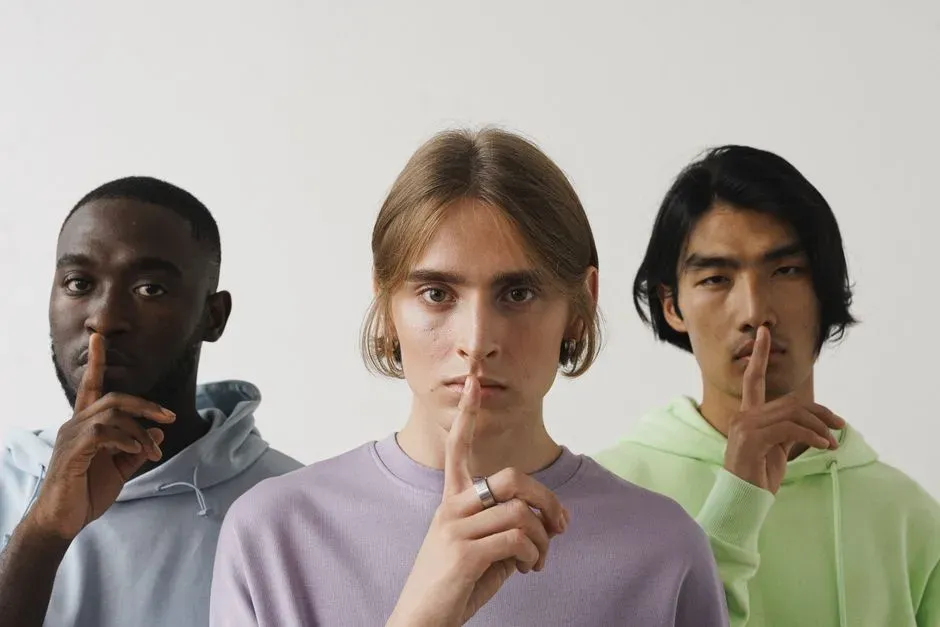
There is a second layer that makes the quiet feel almost electric: we do not just listen to the environment; we also watch each other. In a group, people constantly and mostly unconsciously copy one another’s posture, tone, and reactions. If everyone stops talking at once, your brain reads it as a coordinated signal, not just random chance. It is like a dozen alarms going off together, but without sound.
This is part of why a silent elevator full of people can feel more uncomfortable than sitting alone in a quiet room. You are not just sensing the absence of noise; you are sensing the shared tension of other nervous systems doing what yours is doing. That mutual, unspoken synchronization can feel heavy, even when no one says a word and nothing bad is actually happening.
Social Threats: From Sabertooth Tigers to Social Rejection
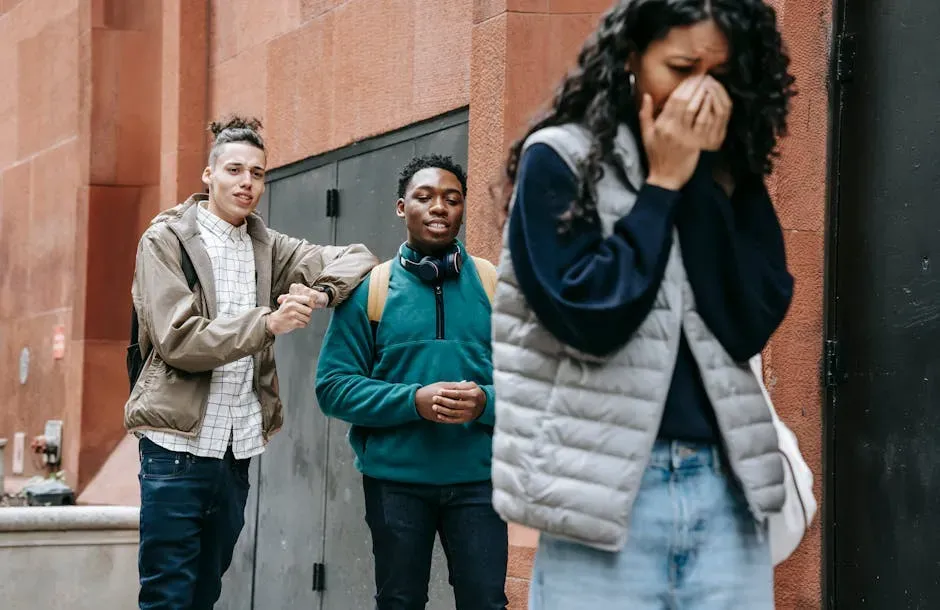
Over time, the human brain started treating social danger almost as seriously as physical danger. Being excluded from your group in a prehistoric context could have meant worse access to food, protection, and mates. In extreme cases, it could mean life or death. So our threat detectors expanded their job description from spotting predators to spotting awkwardness, disapproval, and subtle signs of rejection.
When everyone suddenly falls quiet after something is said, your brain may interpret that pause as a social warning: did I say something wrong, did I misread the room, am I about to be judged? That sense of social peril hooks into the same stress systems as physical threats. The sabertooth is gone, but now the imagined danger is embarrassment, conflict, or being quietly pushed out of the group.
Cultural Scripts and Awkward Silences

Every culture has unwritten rules about conversation: how long a pause is acceptable, when to jump in, when to stay quiet. In many modern, fast‑paced societies, especially in cities and online, silence in a lively group is treated as a glitch. If the flow of talk suddenly stalls, people often scramble to fill it with jokes, questions, or random comments, not because they have deep thoughts to share, but because the quiet itself feels like a problem.
Those cultural scripts sit on top of our evolved wiring and amplify it. If you grew up learning that a good host keeps conversation constant, or that silence in a meeting signals failure or conflict, then any unexpected hush can feel more loaded. Your ancient brain is whispering that something might be wrong out there, while your social brain is insisting something must be wrong in here, between us.
Modern Life: Old Brains in New Rooms

The funny part is that most of the time, absolutely nothing dangerous is happening when a room goes quiet. Someone lost their train of thought, a topic ran out of steam, or people are just tired. But our nervous systems are not calibrated for open‑plan offices, Zoom calls, or crowded coffee shops. They are ancient survival machines doing their best in environments that did not exist for almost all of human history.
Once you see it that way, your discomfort starts to feel less like a personal flaw and more like a predictable side effect of being human. That tiny spike of unease is not proof that you are socially awkward; it is proof that your biology is still trying to keep you alive using old rules in new situations. In a strange way, the awkward silence is a compliment to your ancestors’ survival skills.
Conclusion: An Old Alarm in a Quiet Room

When everyone suddenly goes quiet and your stomach flips, you are feeling the echo of a very old alarm clock that once kept your ancestors from becoming dinner. Silence used to mean predators, ambushes, or group tension with real survival costs. Today it usually means nothing more than a conversation running out of fuel or a moment of shared uncertainty, but your nervous system does not fully trust that modern update.
Personally, I find it oddly comforting to remember that my own awkwardness in those moments is not some unique personal defect; it is just an ancient survival feature running on autopilot. You do not have to love the silence, but you can at least see it as your body doing what it was built to do: notice, prepare, and protect. The next time a noisy room suddenly drops into hush, you might even smile and think, there it is again, my inner cave‑person checking for tigers – did you ever realize you were carrying that history into every quiet room you walk into?